


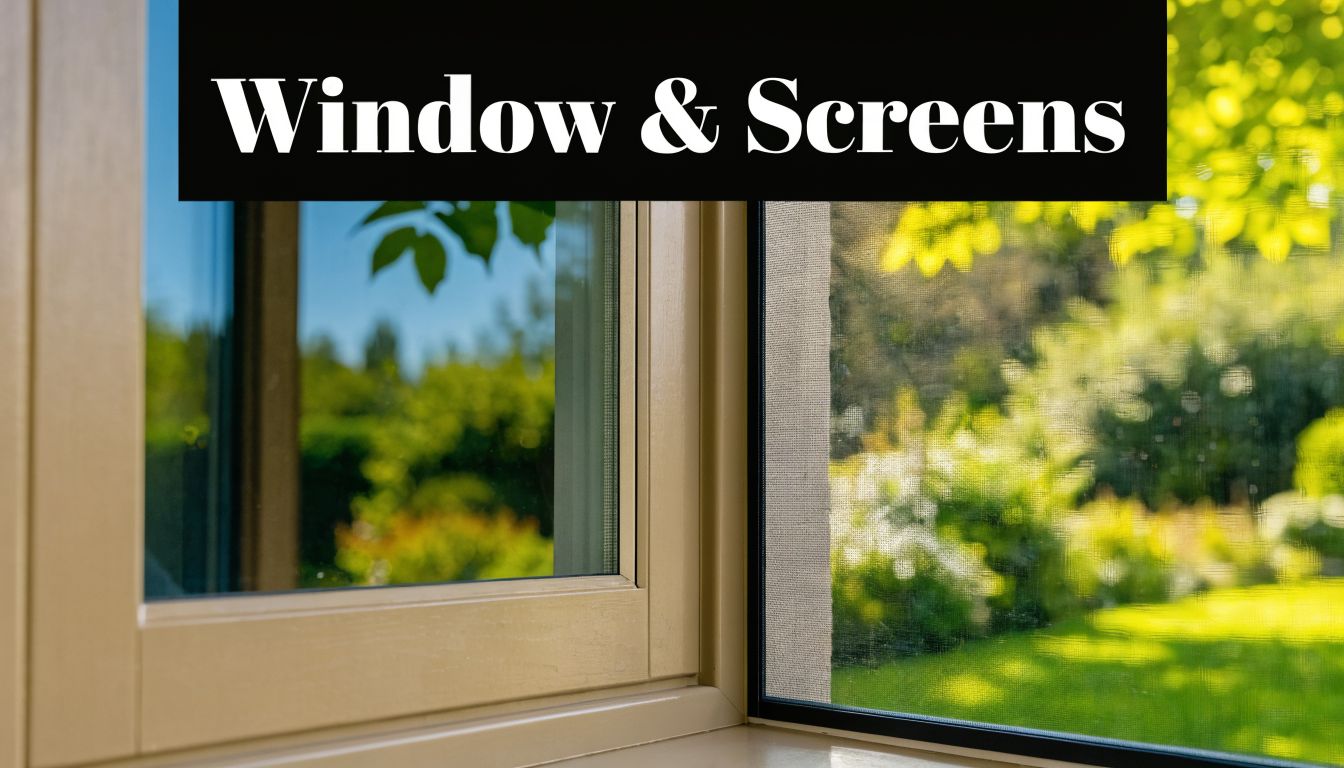

You notice your west-facing room gets hammered every afternoon. The light is harsh, the glass radiates heat, and the old screen on the window has a tear big enough for every bug in the neighborhood to find its way in. Or maybe your patio slider drags, pops off track, and never quite closes right.
That's usually when homeowners start searching for help with window and screens. Not because screens are exciting, but because once they stop doing their job, you feel it right away. Less airflow. More insects. More glare. More frustration every time you open a window or slide a door.
In a hot climate like Phoenix, screens aren't just an accessory. They're part of how the house breathes, shades itself, and stays comfortable day to day.
Why Your Window Screens Matter More Than You Think
A lot of homeowners treat screens like trim pieces. They only notice them when one rips, bows, or falls out. In practice, screens affect comfort every single day.
A good screen lets you open the house when the weather cooperates. It keeps insects out, softens the look of the opening, and helps the window feel finished instead of exposed. In hotter areas, the right screen setup also changes how much sun and heat you deal with at the glass.
The market reflects that. The residential application segment accounts for 58% of the total $2.8 billion window screen market in 2024, which shows homeowners drive most demand for these products, not just commercial projects, according to the Market Intelo window screen market report.
Screens affect more than bugs
Homeowners usually call about one obvious problem. A hole. A bent frame. A slider that won't roll. But the real issue is often broader:
- Airflow loss: If a screen sags or clogs with dust, the window won't feel as open.
- Heat exposure: Bare glass on a sunny side of the house can make one room harder to live in.
- Appearance: Crooked, faded, or patched screens can drag down the look of otherwise clean windows.
- Usability: If removing and reinstalling a screen feels like a fight, people stop using the window.
A screen should make the window easier to live with. If it makes the opening harder to use, it's the wrong fit or it's worn out.
If you're comparing window styles themselves along with screen needs, the Vivid Skylights guide to residential windows is a useful overview because it helps you think about the whole opening, not just the mesh. For homeowners trying to sort out repair, rescreening, or replacement options, it also helps to look at local service pages that focus specifically on screens and windows.
What works in hot climates
In Phoenix-area homes, the screen has to survive more than casual use. Sun exposure, dust, repeated removal, pets, and patio traffic all matter. A basic insect screen may be enough on a shaded elevation. On a punishing west side, that same choice might solve bugs but do very little for comfort.
That's why homeowners get better results when they treat screens as part of the home's comfort system, not just a barrier stretched over a frame.
Decoding Your Screen Options Bug Solar and Slider Screens
Most homeowners don't need every type of screen. They need the right type in the right place. That's where generic advice falls short.

Bug screens for airflow first
Standard bug screens are the everyday workhorse. Their main job is simple. Keep insects out while letting air move through the opening.
They're usually the right choice when:
- You open the window for ventilation: Bedrooms, bathrooms, kitchens, and shaded sides of the home fit this category.
- You want the clearest outward view: Standard insect mesh generally feels less visually heavy than darker solar fabrics.
- You're replacing torn mesh in otherwise solid frames: If the frame still fits tightly and comes in and out cleanly, rescreening often makes sense.
Bug screens are often the most straightforward option. But in hot climates, they don't solve every comfort problem. If the complaint is, “This room gets blasted by sun all afternoon,” a regular insect screen may not move the needle enough.
Solar screens for heat control
Solar screens are the sunglasses of the screen world. They're built to cut down solar exposure before it enters the home through the glass.
That matters because some performance-oriented window systems with integrated solar screening target a Solar Heat Gain Coefficient under 0.32, which signals the assembly is designed to block solar heat effectively in hot climates, as shown in the Quaker Commercial Windows guide specification.
What homeowners need to understand is the trade-off. Solar screens can improve comfort and reduce glare, but they usually change the look out of the window. The denser or darker the mesh, the more you may give up in brightness and view clarity.
Practical rule: Use solar screens where the sun is the problem. Use bug screens where airflow and visibility matter more.
If you're comparing screens to other heat-control options, the The Tint Guy residential window solutions page is worth a look because film and screens solve related problems in different ways. For material differences like fiberglass, aluminum, and specialty mesh, this guide to types of window screen material helps narrow the choice.
Slider screens for doors and high-use openings
Slider screens live a rougher life than most window screens. They get shoved, bumped, racked, pulled by kids, and leaned on by pets. A slider can have perfectly good mesh and still be a bad screen if the frame is weak or the rollers don't track properly.
For patio doors and large openings, look at three things:
Frame stiffness
A flimsy frame twists easily. Once it racks, the screen starts dragging or popping out.Track behavior
If the screen binds, people force it. That usually causes more frame damage.Mesh purpose
A slider on a shaded patio may only need insect mesh. A slider facing brutal afternoon sun may benefit from a solar product if visibility loss is acceptable.
Window Screen Type Comparison
| Screen Type | Primary Use | Average Cost | Key Benefit |
|---|---|---|---|
| Bug Screens | Insect control and ventilation | Varies by size, frame condition, and mesh choice | Best balance of airflow and everyday visibility |
| Solar Screens | Heat and glare reduction on sunny exposures | Usually higher than standard bug screens | Helps reduce solar heat before it enters |
| Sliding Screens | Patio doors and large moving openings | Varies by frame, roller, and mesh needs | Easy access and ventilation when built to track smoothly |
If a homeowner asks which one works best, the honest answer is that each one wins in a different situation. The wrong mistake is using one screen type everywhere just because it's cheaper up front.
Common Screen Problems and When to Repair or Replace
The most common screen call starts with a simple statement. “It's just a little torn.” Sometimes that's true. Sometimes the torn mesh is the only visible part of a screen that's already on its way out.

In harsh climates, the true cost question is often whether it's smarter to keep rescreening or replace the frame entirely. That depends on whether the mesh is failing first or the frame is failing first, which is a gap many generic guides skip, as noted in this discussion of window treatment solutions for awkward window shapes.
When a repair is enough
Small repairs make sense when the rest of the screen is still sound. That usually means the frame is square, the corners are tight, and the screen still seats properly in the window or track.
Repair is often reasonable for:
- Minor holes or edge damage: Especially if the damage is isolated.
- Loose spline in one area: If the frame groove still grips properly.
- A slider with a roller issue but a solid frame: Rollers and alignment problems can sometimes be corrected without rebuilding the whole unit.
The key is whether the repair restores function, not just appearance. A neat patch on a loose, warped frame rarely solves the underlying problem.
When rescreening makes more sense
Rescreening is usually the sweet spot when the frame still has life left, but the mesh is tired. This is common in Arizona homes where sun exposure breaks down the screen fabric before the frame gives up.
Rescreen if:
- The mesh is brittle, faded, or stretched
- You have multiple small tears instead of one isolated rip
- You want to upgrade from bug mesh to solar mesh without replacing every frame
- The old screen no longer holds tension well
A proper rescreen should leave the mesh flat and evenly tensioned. Too loose, and it looks sloppy and can flap. Too tight, and the frame can bow.
If the frame still fits the opening cleanly, rescreening often gives the best value. If the frame is bent, loose at the corners, or won't sit correctly, new mesh won't fix it.
For homeowners who want a direct service option, window screen repair services can help sort out whether a screen needs a quick fix, full remesh, or a complete rebuild.
When replacement is the better call
Replacement is the smarter route when the frame itself has become the problem. A few signs show up again and again:
- Bent or racked frame: The screen never sits flat in the opening.
- Repeated pop-outs: Common on sliders and large screens with weak frames.
- Corner failure: The frame may separate or twist under normal handling.
- Bad fit from older work: Sometimes the screen was never built correctly in the first place.
If a screen has already been repaired several times and still performs poorly, replacement usually saves aggravation. Homeowners sometimes focus only on the visible tear, but the long-term cost comes from repeating a cheap fix on a screen that no longer has structural integrity.
A simple decision filter
Use this quick check before spending money:
| Condition | Best Move |
|---|---|
| Small isolated mesh damage, solid frame | Repair |
| Worn mesh across an otherwise square frame | Rescreen |
| Bent frame, loose corners, poor fit | Replace |
| Slider drags badly and frame twists | Replace or rebuild the slider unit |
That framework won't cover every oddball screen, but it catches most of the actual jobs homeowners face.
Essential Screen Maintenance for a Longer Lifespan
Most screens don't fail all at once. They get dirty, loosen gradually, start rubbing in one corner, and then finally tear when someone pushes a little too hard. A basic maintenance routine catches those problems early.

A simple seasonal routine
Twice a year is enough for most homes. In dusty areas or near heavy traffic, a little more attention helps.
Use this checklist:
- Remove and inspect: Take the screen out carefully and look at the corners, spline, and mesh tension.
- Clean gently: Use mild soap, water, and a soft microfiber cloth or sponge. Aggressive scrubbing can stretch or damage mesh.
- Check the frame edges: Look for bends, white oxidation on metal parts, or corners starting to separate.
- Examine sliders on the track: Dirt in the track makes people force the door screen, and that's when rollers and frames get damaged.
- Let screens dry fully before reinstalling: Moisture trapped in place can create grime buildup and make future cleaning harder.
What homeowners often do wrong
The biggest mistake is using too much force. Pressure washers, stiff brushes, and rough handling can do more damage than the dirt ever did.
Another common issue is ignoring fit. If a screen starts resisting removal or reinstalling, that's not something to muscle through. It usually means the frame is slightly bent, the track has debris, or the screen was tensioned poorly last time.
Clean screens like you'd clean something you want to keep in shape, not something you're trying to blast back to life.
What regular maintenance actually buys you
Routine maintenance won't make a low-quality screen last forever. But it does help you spot a loose corner, worn spline, or damaged roller before the screen turns into a bigger repair.
That matters most on patio sliders, sun-heavy exposures, and homes where screens come in and out often for cleaning or seasonal use.
How to Choose a Local Screen Installer You Can Trust
A good installer saves you time and avoids repeat problems. A bad one leaves you with loose mesh, bowed frames, and a slider that still doesn't roll right.
That matters because this is a large and active market. The North American window coverings market represented over 39% of the $34.50 billion global market in 2023, according to Grand View Research on the window covering market. In practical terms, homeowners have options. The challenge is picking a company that actually understands screen work.
Questions worth asking before you hire
Not every installer handles bug screens, solar screens, and sliders equally well. Ask direct questions.
What screen types do you work on most often?
You want someone who regularly handles standard bug screens, solar products, and door sliders, not just one category.Do you repair, rescreen, and replace?
Companies that only sell new units may push replacement when a rescreen would do.What materials do you use?
The answer should be specific. Generic answers usually mean generic results.How do you handle slider issues?
If they only talk about mesh and say nothing about rollers, frame alignment, or tracking, that's a red flag.
What the work should look like
A competent installer should be able to explain trade-offs clearly. For example, they should tell you when a darker solar mesh will reduce heat but also reduce brightness. They should explain why a weak slider frame won't be cured by new mesh alone.
They should also make quoting easy. Homeowners usually need a fast answer because the problem is immediate. Torn bug screen, dragging patio slider, sun-heavy room. Waiting around for basic pricing or scheduling is a bad sign.
Signs you're dealing with a pro
Look for these practical markers:
They inspect the frame, not just the tear
That shows they're solving the whole problem.They talk through fit and use-case
A kitchen window, a west-facing bedroom, and a patio slider don't need the same recommendation.They give a realistic turnaround
Screen issues affect daily use. Responsiveness matters.They stand behind the work in plain language
You shouldn't need to decode vague promises.
A trustworthy installer doesn't oversell. They help you spend money where it improves function and avoid spending where it doesn't.
Your Go-To Phoenix Area Screen Service Solution
If you're in the Phoenix area and need help with window and screens, the most useful service is one that handles the full range of everyday jobs. New bug screens, solar screens, rescreening, slider repair, slider remeshing, patio rescreening, and custom-fit replacements.
That's where a local shop with practical field experience matters. The work isn't just about cutting mesh. It's about checking frame condition, matching the screen to the exposure, and making sure the finished screen fits and functions in the opening. One local option that covers that scope is Sparkle Tech Screen Service, which offers new, rescreened, and repaired bug and sun screens, along with window sliders, same-week service, quick quotes, and same-day pickup.
Why current product knowledge matters
Screen products are changing. One important development is the new AAMA 1901-25 specification for security screens, which defines these products as high-tensile stainless-steel woven mesh systems intended to deter intrusion while still allowing ventilation, visibility, and insect resistance, as discussed in this Window + Door article on high-performance screens.
That doesn't mean every homeowner needs a security screen. It does mean your installer should know the difference between a standard insect screen, a solar screen, and a more specialized performance product. The right recommendation depends on the opening, the exposure, and the goal.
Service areas homeowners usually ask about
Phoenix-area screen work often includes homes in Scottsdale, Peoria, Sun City, Surprise, Mesa, Tempe, Chandler, Avondale, Buckeye, Queen Creek, Litchfield Park, Anthem, Cave Creek, Carefree, Ahwatukee, and surrounding communities. Some homeowners also need service in places like Payson, Prescott, Sedona, Flagstaff, and Munds Park.
If you need a quote, make the request specific. Mention whether you need bug screen repair, solar screen replacement, slider repair, patio rescreening, or a new custom screen. That helps the installer give you a faster and more accurate answer.
If your screens are torn, sun-faded, dragging, or just not doing the job anymore, Sparkle Tech Screen Service handles new screens, rescreening, and repairs for bug screens, sun screens, and sliders across the Phoenix area. For quick quotes or service scheduling, you can text or call 623-233-0404 or call 800-370-3998.


