


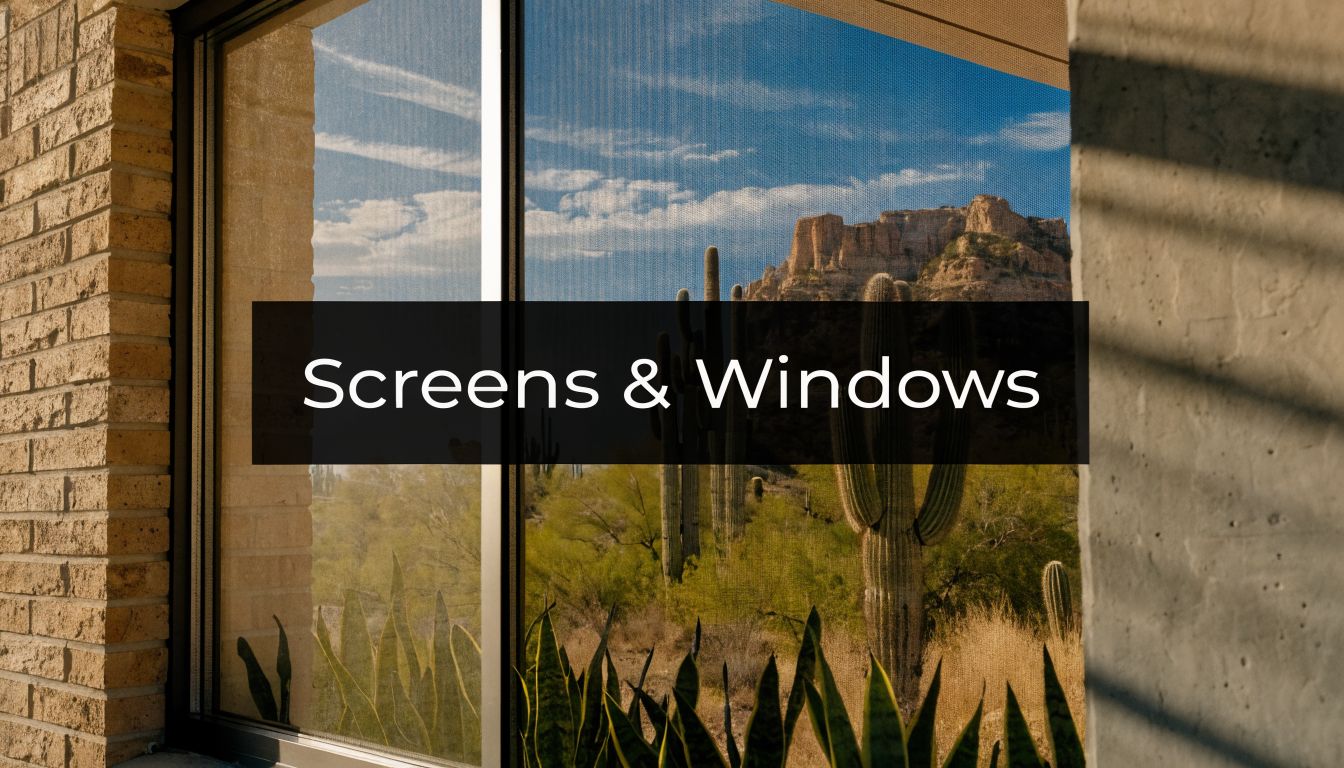

By June in Phoenix, a lot of homeowners are living the same routine. The blinds stay half-closed. The air conditioner runs hard by late morning. The west-facing rooms heat up first. Then someone notices the patio slider screen scraping the track, a bedroom screen with a corner tear, or a living room window that suddenly feels like it’s letting in more glare than it used to.
That’s usually when screens and windows stop feeling like minor trim items and start acting like what they really are. A working part of the house. In the desert, they affect comfort, how much heat pushes indoors, how long furniture keeps its color, and whether you can crack a window at sunrise without inviting every bug in the neighborhood.
Your Home's First Defense Against the Arizona Sun
A Phoenix home can look fine from the curb and still be losing comfort through tired screens all day long. I see this most often on south and west exposures, where the mesh is brittle, the frame has a slight bow, and the room behind it feels hotter than the rest of the house by midafternoon. People often think the problem is only the glass or only the HVAC. A lot of the time, the screen setup is part of it.

What changes the conversation is how much time people now spend indoors looking through those same openings. In hot climates like Arizona, where prolonged indoor screen time is common, the need for effective sun and bug screens is heightened. U.S. teens average 7 hours 22 minutes of screen time daily, excluding school, and 90.9% stream TV and movies online, which makes home comfort and energy efficiency more noticeable in everyday life according to these screen time findings.
Screens do more than keep bugs out
A standard bug screen and a solar screen are not interchangeable, even though homeowners often group them together. One is mainly there to let air in and insects out. The other can become part of your heat-management strategy.
That matters in Phoenix because the sun exposure is relentless. A weak or poorly chosen mesh can leave you with all the downsides at once: glare on the TV, faded flooring near the slider, and a room that never seems to cool evenly.
Practical rule: If a room feels bright, hot, and uncomfortable at the same time every afternoon, don’t just inspect the glass. Inspect the screen, frame, spline, and orientation of the opening.
Where homeowners usually notice failure first
The first complaints are rarely technical. They sound like this:
- The front room feels hotter: Usually a west-facing exposure with aging mesh or no solar protection.
- The slider won’t move right: Often dirty tracks, worn rollers, or a bent screen frame.
- The patio isn’t usable at dusk: Torn mesh or loose screen panels let insects in.
- The blinds stay shut all summer: Glare and heat gain make the room uncomfortable.
For Phoenix homes, it helps to think of screens and windows as a layered system. Glass handles one part of the job. The frame handles another. The screen material handles a third. If you want to see what that looks like in practice, these sun block window screens show the kind of upgrade that makes sense when bug control alone isn’t enough.
Choosing the Right Screen Material for Your Windows
Picking screen material in Arizona is a lot like picking clothing for the season. If the job is light and simple, standard fiberglass may be enough. If the opening gets hammered by sun, sees pet traffic, or faces a busy street, you need a different material because the screen is doing a different job.

Standard fiberglass
Fiberglass is the common starting point. It’s easy to work with, gives decent visibility, and suits windows where the main goal is airflow and bug control. For a shaded elevation or a guest room window that doesn’t get much abuse, it can be perfectly reasonable.
Its weakness in Phoenix is that it’s not the right answer for every opening. Direct sun, repeated removal, rough handling, and pets can shorten its useful life. When homeowners try to use one basic mesh type for the whole house, that’s where disappointment usually starts.
Aluminum screen
Aluminum is stiffer and has a more rigid feel than fiberglass. Some homeowners prefer it on windows that get more wear, and it can hold up well when properly installed in a sound frame.
The trade-off is that metal screen can crease, and once it creases, it never really returns to clean, flat appearance. On homes where visibility matters a lot, some people also prefer the look of other mesh types. Aluminum has its place, but it isn’t automatically the best material just because it feels tougher in your hand.
Solar screen
For Phoenix, solar screen is often the material that changes how a room feels. Advanced UV protection screens can reject over 99% of UVA and UVB radiation and prevent up to 78% of solar heat gain, which can lead to 15% to 25% cooling-cost savings in markets like Phoenix and extend the life of interior fabrics and furniture by 5 to 10 years, based on UV protection screen performance data.
That’s why I don’t treat solar mesh as an optional add-on when a window gets hammered by afternoon sun. It’s often the right material, not the premium material.
Solar screen works best when the room has a repeat heat pattern tied to sun exposure, not when the issue is only poor insulation or failing weatherstripping.
Pet-resistant screen
Pet screen is built for a different problem. If a dog pushes against the lower half of a slider or a cat keeps climbing the corner of a bedroom screen, regular mesh won’t last. Pet-resistant material is heavier and better suited to impact from claws and repeated pressure.
The trade-off is airflow and visibility can feel a bit different depending on the product. That doesn’t make it worse. It just means you should use it where pet damage is predictable, not automatically on every opening in the house.
Privacy screen
Privacy screen can help on street-facing windows, side yards, or patio areas where homeowners want less visibility from outside during the day. It’s useful in dense neighborhoods where homes sit close together.
It’s not a cure-all. Privacy effects change with lighting conditions, and it shouldn’t be chosen only because the name sounds appealing. If heat control is the primary problem, solar screen is usually the first material to evaluate.
What usually works best in Phoenix
Most homes do better with a mix than a single material throughout. A practical setup often looks like this:
- Standard bug mesh on shaded windows: Good for basic airflow and insect control.
- Solar screen on west and south exposures: Better for glare, heat, and interior protection.
- Pet screen on sliders or low openings: Smart where animals make contact with the mesh.
- Privacy screen in selected locations: Useful where sight lines matter more than perfect openness.
If you want a broader breakdown of options before ordering or rescreening, this guide to types of window screen material is a helpful reference.
Window Screen Material Comparison
| Material Type | Best For | UV Block | Durability | Cost |
|---|---|---|---|---|
| Standard Fiberglass | Basic bug protection on lower-stress windows | Low | Moderate | Low |
| Aluminum Screen | Openings that need a stiffer mesh | Moderate | Moderate to high | Moderate |
| Solar Screen | West and south exposures, glare and heat control | High | High | Moderate to high |
| Pet-Resistant Screen | Sliders and pet-contact areas | Varies by product | High | Moderate to high |
| Privacy Screen | Street-facing or close-neighbor windows | Moderate to high | Moderate | Moderate |
Signs Your Screens and Windows Need Attention
A failing screen rarely collapses all at once. It usually starts with a small symptom that homeowners ignore because the opening still sort of works. In Phoenix, that small symptom tends to grow faster because heat, dust, UV exposure, and frequent use all work against the mesh, frame, and moving parts.

With screens now occupying about 44% of waking hours and U.S. adults averaging over 7 hours of daily screen time, homeowners are more sensitive to glare, heat gain, and insect intrusion caused by failing window screens, as noted in this screen time research.
The damage most homeowners spot first
Tears and holes are obvious, but they aren’t just cosmetic. Once mesh rips, the tension across the screen changes. That can pull stress toward the corners and spline channel, especially if the frame already has some bend to it.
Loose corners tell a similar story. If the spline starts backing out or the mesh goes slack, the whole panel loses stability. On a windy monsoon day or a frequently used slider, that weak spot gets worse.
A warped frame is another common one in our climate. Homeowners often describe it as “the screen never sits right anymore.” They’re usually correct. The frame may still go in, but it won’t seal consistently against the opening.
If you can press the center of the mesh and it moves too easily, or if one corner sits proud of the frame, treat it as a structural problem, not just a nuisance.
Window and slider clues people miss
Not every problem is in the mesh. Sometimes the window system is telling you the screen assembly needs attention too. Look for these signs:
- Tracks filled with grit: Sliders scrape, jump, or drag when the track is dirty or worn.
- Frames that rattle in wind: The fit is no longer tight, or the frame has twisted.
- Uneven light through the mesh: This often means the screen isn’t sitting flat.
- More bugs near one edge: Tiny gaps around the perimeter can be enough.
If you’re comparing repair options or planning a broader exterior update, it helps to understand how screen work fits into the larger category of residential and commercial windows, especially when you’re evaluating frame condition and not just the mesh itself.
When the problem is bigger than a patch
A pinhole from impact can sometimes be managed. A long tear near the edge, repeated spline failure, or a frame that no longer stays square usually points toward rescreening or replacement.
Homeowners also run into trouble when they keep reinstalling a damaged screen that doesn’t fit well. Every removal and reinsertion puts more stress on corners, tabs, and frame joints. The screen might remain in place for now, but it won’t perform like a properly tensioned panel.
This short video shows the kind of screen issues that often look simple until you inspect the frame and spline more closely.
Effective DIY Maintenance and Quick Fixes
A Phoenix screen can look worn out after one dust storm, but appearance is not the same as failure. Before buying mesh or a repair kit, check whether the problem is dirt, track wear, sun-brittled spline, or a frame that has gone out of square. That quick inspection saves money and keeps a small fix from turning into a full rescreen.

Start with cleaning, especially after wind and monsoon dust
In the Valley, screens collect fine dust fast. If that dust stays packed into the mesh or track, airflow drops and sliders start dragging. Aggressive scrubbing creates a different problem by wearing coatings, fraying mesh, and loosening screen corners.
Use a light hand.
- Knock off loose dust first. A soft brush, vacuum with a brush attachment, or a gentle hose rinse works well.
- Wash with mild soap and water. Skip abrasive pads, strong degreasers, and high pressure spray.
- Rinse completely. Leftover soap grabs more dust.
- Dry the panel and the track before reinstalling. Damp tracks turn dust into packed grit.
That matters even more with solar screen fabric, which can crease or scuff if it is handled roughly. For a simple homeowner routine, this guide on how to clean window screens covers the basics.
DIY fixes that usually hold up
Small repairs are often worth doing yourself when the frame is straight and the screen is not in a highly visible front window.
- Patch a tiny puncture in standard bug mesh. This works best as a short-term fix.
- Clean and inspect slider tracks. Vacuum out sand, wipe the channel, and clear compacted debris from the corners.
- Replace a basic pull tab or latch. Good DIY work if the attachment points are still solid.
- Check how the screen sits in the opening. It should sit flat, with no rocking and no daylight around the edge.
Patio sliders deserve extra attention here because Phoenix dust settles low and packs hard. A dirty lower track can make a usable screen feel bent or worn out. Clean the channel first, look for bent metal or worn rollers, and then decide whether the screen itself needs repair.
Field note: Homeowners often replace mesh when the actual problem is a dirty or damaged track. Inspect the track and movement hardware before ordering new material.
Repairs that get risky fast in Arizona heat
Large openings are less forgiving. So are older frames that have spent years on a west-facing wall. Once aluminum rails bow, corners loosen, or spline dries out from heat, a hardware-store rescreen kit rarely gives a clean result.
Stop and reassess if you see any of these:
- The frame rocks on a flat surface
- Corners have loosened or started separating
- The mesh span is large enough that tension must stay even across the full panel
- The screen uses solar, pet, or privacy material
- The panel looks worse by late afternoon than it does in the morning
That last one is common in Phoenix. Heat exposes flaws. A screen that seems acceptable in the garage can ripple, pull unevenly, or pop loose after a few hours in direct sun.
A clear DIY versus pro line for Phoenix homeowners
Handle the job yourself when the repair is small, the frame is square, and a minor cosmetic flaw will not bother you. Bring in a pro when the panel is large, faces heavy afternoon sun, uses specialty mesh, or already has frame and roller issues.
That line matters more in Arizona than it does in milder climates. Desert heat punishes weak corners, loose spline, and uneven tension quickly. A careful DIY fix can buy time on a simple window screen. A big patio slider or solar screen usually needs better tools and a straighter frame than most homeowners have on hand.
The Professional Rescreening Process From Quote to Completion
Most homeowners only see the beginning and the end. They notice the damaged screen, then later they see the finished one installed. The part in between is where quality gets decided.
A professional job usually starts with good intake. That means identifying whether you need a remesh, a frame replacement, a slider repair, or a material upgrade. In Phoenix, that also means asking where the opening faces, how much afternoon sun it takes, whether pets hit it, and whether the issue is comfort, bugs, privacy, or all three.
The quote stage
A useful quote doesn’t just put a price on “one screen.” It separates the parts of the job that matter. Material choice matters. Frame condition matters. Slider size matters. Access matters. A west-facing bedroom needing solar mesh is not the same job as a small bath window needing standard bug screen.
For homeowners, the best quote process is simple. Send dimensions if you have them. Send photos if the frame is damaged. Mention whether the screen is a window panel, a slider, a patio section, or a specialty application like a horse stall or screened enclosure.
Why fabrication quality changes the result
Professional screen services quickly diverge from DIY efforts, utilizing specialized equipment like adjustable window screen tables to ensure uniform tension and precise spline insertion, reducing defects by over 25% and cutting production time per screen from over 15 minutes to under 10, according to window screen manufacturing benchmarks.
That matters because tension is the whole game. If the mesh isn’t evenly set, the panel may look acceptable at first glance but still perform poorly. You’ll see waves, edge pull, poor seating in the opening, or early failure around the spline channel.
What the shop or service team is actually checking
A competent process includes more than rolling in new mesh. During fabrication or rescreening, the technician should be paying attention to:
- Frame straightness: A bowed frame won’t install cleanly even with new mesh.
- Corner condition: Worn or loose corners reduce long-term stability.
- Spline fit: The wrong spline size causes loose mesh or stressed channels.
- Material match: The mesh should suit the opening’s job and exposure.
- Slider movement: On door screens, rollers and frame alignment matter as much as the screen cloth.
This is why “just remesh it” isn’t always the right call. Sometimes the mesh is the least important problem on the unit.
A clean-looking screen with poor tension won’t stay clean-looking for long in Arizona. The sun exposes every shortcut.
Installation day
Installation should be quick, but it shouldn’t feel rushed. A proper fit check matters. The screen should sit flush. The tabs should be usable. The slider should move without dragging or jumping. If it’s a solar screen, the appearance from inside and outside should be consistent from opening to opening.
For homes with several damaged units, grouping the work often gives better visual consistency than replacing one random panel now and another much later. That’s especially true on the front elevation where mismatched materials or colors stand out.
What a homeowner should expect afterward
A good finished screen should feel boring in the best way. It goes in easily. It sits correctly. It doesn’t buzz in the wind. It doesn’t scrape unnecessarily. It does the job without calling attention to itself.
If it’s solar material, the difference often shows up in comfort before anything else. The room may feel calmer and less harsh in the afternoon. If it’s a slider, you’ll notice operation right away. If it’s a bug screen, you should be able to open the window without watching every corner for insect entry.
That’s the true value in professional rescreening. Not just convenience. A better-built screen behaves like part of the house instead of a temporary patch.
How to Choose the Right Phoenix Screen Installer
Phoenix homeowners don’t need generic advice here. You need someone who understands what desert sun does to mesh, vinyl, spline, tracks, and frame corners over time. A company that does fine work in a mild climate may still make poor material choices here.
What to ask before hiring
Start with the basics, but keep the questions practical.
- Ask what materials they recommend for west-facing windows. If they don’t change recommendations based on exposure, that’s a weak sign.
- Ask whether they repair frames or only replace mesh. Some jobs need more than remeshing.
- Ask about sliders specifically. Patio door screens have their own failure points.
- Ask about service area and scheduling. In Phoenix, quick turnaround matters when multiple openings are down.
- Ask how they handle specialty jobs. Patios, horse stall sun screens, and oversized openings need real experience.
What good answers sound like
Good installers usually speak in specifics. They’ll ask about orientation, room use, pets, and whether comfort or insect control is your bigger concern. They won’t treat every opening the same, because every opening isn’t the same.
They should also be clear about what they won’t promise. Anyone who acts like every old frame can be restored perfectly is overselling. Some frames are worth saving. Some aren’t.
A simple Phoenix decision framework
Use this checklist when comparing companies:
| Decision Point | What You Want |
|---|---|
| Climate knowledge | Material advice tied to sun exposure and desert wear |
| Repair scope | Ability to assess mesh, frame, spline, tracks, and sliders |
| Communication | Fast quote process with clear next steps |
| Scheduling | Reasonable turnaround for common repairs and rescreens |
| Fit and finish | Clean tension, proper seating, smooth slider operation |
A good installer should make the process feel straightforward, not vague. For a homeowner, that means fewer surprises and a better chance the screen will still be doing its job after another long Phoenix summer.
Frequently Asked Questions About Phoenix Screens
Do sun screens really make a difference in Phoenix
Yes, when the opening gets direct sun and the material is matched to that problem. The biggest gains usually show up on west and south exposures where rooms get bright and hot in the afternoon.
Can old screen frames be reused
Sometimes. If the frame is straight, the corners are sound, and the spline channel is still in good condition, rescreening can make sense. If the frame is bent, loose, or never fit well to begin with, new mesh alone usually won’t solve the problem.
How long do screens last in Arizona
It depends on sun exposure, material type, use, and maintenance. A shaded window can last much longer than a slider that gets daily use and full afternoon sun. In Phoenix, orientation matters as much as age.
Is a small tear worth fixing right away
Usually yes. Small tears tend to grow, especially near corners or edges where the mesh is already under stress. Bugs only need a small opening, and loose mesh can put more strain on the rest of the panel.
Can patio and specialty screens be rescreened too
Often, yes. Screened patios, sliders, and horse stall sun screens can usually be evaluated the same way as standard units: material condition, frame condition, fit, and the purpose of the screen.
If your screens and windows are making the house hotter, brighter, or harder to enjoy, Sparkle Tech Screen Service handles new, repaired, and rescreened bug and sun screens, along with sliders, patios, and specialty screen work in the Phoenix area. You can text photos or call 623-233-0404 or 800-370-3998 for a quick quote and next-step advice.


