


Picking the right window screen is a bit like choosing tires for your car. The standard set is fine for getting around town, but you wouldn't take them off-roading. Similarly, the types of window screen material you choose should match the job you need them to do, whether that's maximizing airflow, saving on energy bills, or standing up to your dog's enthusiastic greetings.
Choosing The Right Shield For Your Windows
A window screen does a lot more than just keep the bugs out. Think of it as a key part of your home’s outer shell, directly impacting your comfort, your cooling costs, and even how quickly your furniture fades. Here in a climate like Phoenix, where the sun doesn't pull any punches, the right screen material isn't just a nice-to-have—it’s a critical decision for any homeowner.
This guide will walk you through the real-world performance of each material. We'll look at the four main players on the market, each with its own unique pros and cons perfectly suited for different homes and different needs.
The Core Screen Material Options
Let's break down the primary choices you'll come across. Each one strikes a different balance between performance, durability, and price.
- Fiberglass: This is the go-to, affordable industry standard. It’s flexible, won't rust or corrode, and gets the basic job done well.
- Solar Screens: Built for sunny climates, this specialized mesh is woven tightly to block a huge chunk of the sun's heat and damaging UV rays before they ever hit your glass.
- Aluminum: A classic choice for a reason. This rigid metal screen offers fantastic clarity and holds its shape without sagging for years.
- Pet-Resistant Screens: Made from a heavy-duty, vinyl-coated polyester, this stuff is engineered to handle claws, paws, and anything else your furry friends can throw at it.
This flowchart gives you a simple way to connect your biggest priority—whether it's saving energy, getting maximum durability, or sticking to a budget—with the right type of screen.
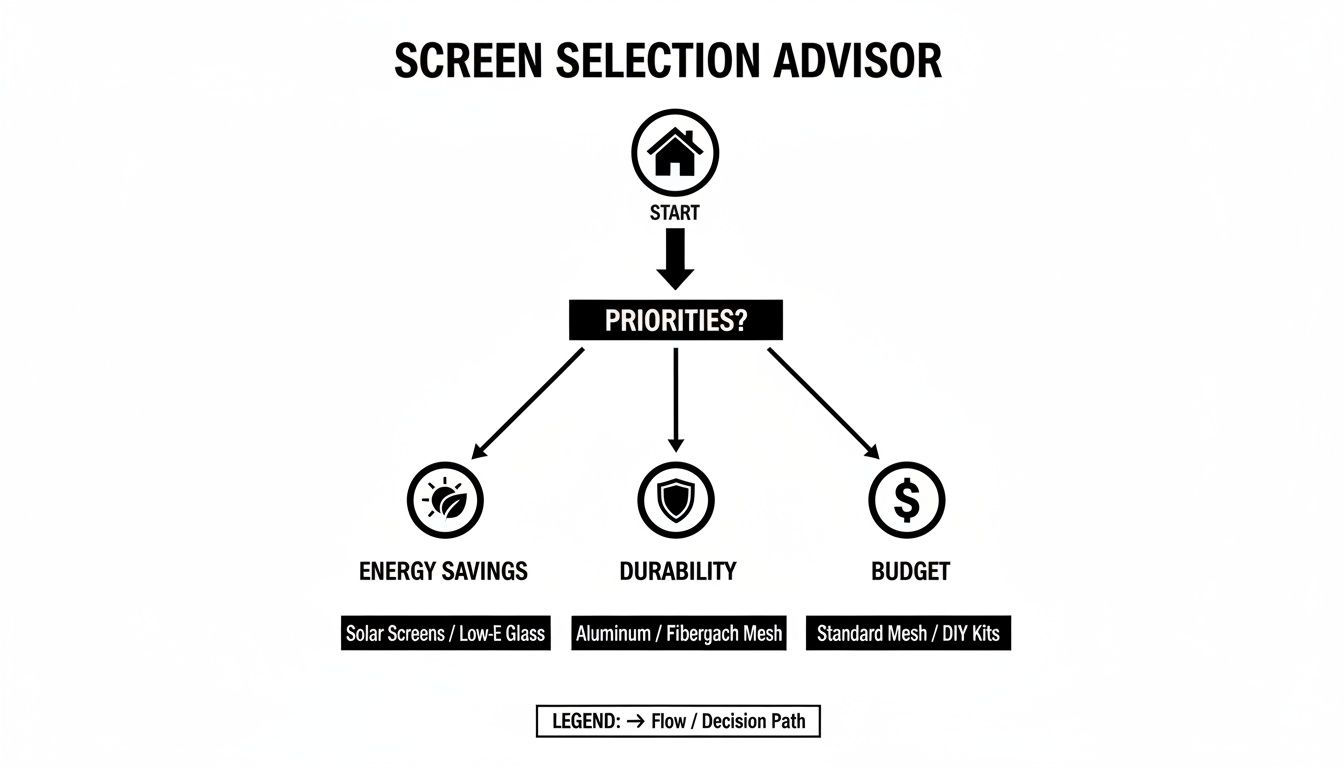
As you can see, if energy savings is your top concern, solar screens are the clear winner. If you need something that will last, pet screens or aluminum are your best bet. And if you're watching your wallet, you can't go wrong with standard fiberglass. Figuring out these trade-offs is the first step. You can dive deeper into what makes the most sense for your home right here: https://sparkletechscreenservice.com/best-window-screen-material/
Choosing the right screen material is like setting your home's first line of defense. A solar screen actively repels heat, reducing the workload on your AC, while a durable pet screen prevents the frustration of constant repairs.
To help you quickly compare your options, here’s a simple breakdown of the most common screen types.
Window Screen Materials at a Glance
This table provides a quick comparison of the most common screen types to help you identify the best fit for your needs.
| Material Type | Best For | Key Benefit | Average Lifespan |
|---|---|---|---|
| Fiberglass | General use, budget-conscious projects | Cost-effective and flexible | 10-15 years |
| Aluminum | Clarity and long-term durability | Resists sagging, excellent visibility | 20-30 years |
| Solar Screen | Hot, sunny climates (like Phoenix) | Reduces heat, lowers energy bills | 10-15 years |
| Pet Screen | Homes with pets or high-traffic areas | Resists tears and punctures | 15-20+ years |
Each material has a clear purpose, and seeing them side-by-side makes it easier to weigh what’s most important for your home.
Of course, the screen is just one part of the equation. If you're building or doing a major renovation, understanding choosing the best windows for new construction is equally important. When your window frames, glass, and screens all work together, you get a system that truly enhances your home’s comfort, efficiency, and value for years to come.
Fiberglass Screens: The Do-It-All Standard
If you close your eyes and picture a window screen, you’re almost certainly imagining fiberglass. There’s a good reason for that—it’s the default material for most new homes and the go-to for standard rescreening jobs across the country.
Think of fiberglass as the comfortable pair of jeans in the screen world. It’s versatile, affordable, and just works for almost any situation. Made from woven fiberglass strands coated in protective vinyl, it strikes a great balance between letting the breeze in and keeping the bugs out, all without breaking the bank.
This practicality is why fiberglass dominates the market, accounting for over 42% of global window screen sales. Homeowners and builders love it for its unbeatable mix of low cost, easy installation, and solid resistance to rust and corrosion. You can dig into the numbers yourself in this window screen market industry analysis.
Its biggest selling point is how forgiving it is. Unlike metal screens that can get dented or creased permanently with one wrong move, fiberglass is flexible. It bounces back from bumps and pushes, which makes handling it a whole lot easier.
How Does It Hold Up?
For most homes, fiberglass screen performance is more than enough. It's built to handle the elements without the rust or corrosion you might see on older metal screens. While rust isn't a huge worry in Phoenix, this quality points to the material's overall durability.
The vinyl coating also gives it crucial UV protection. This means it won’t get brittle and start falling apart after a few years baking in the intense Arizona sun. With proper care, you can easily expect a good 10 to 15 years out of a quality fiberglass screen before it's time to think about rescreening.
Of course, it’s not indestructible. Fiberglass has a couple of key weaknesses you should know about.
- It can stretch. Over time, especially in large openings like a patio door, the mesh can start to sag and lose that tight, clean look.
- It’s not very tough. A sharp branch, a stray tool, or the claws of a determined pet can easily puncture or tear the material. One good scratch and you've got a rip.
Where Does Fiberglass Shine?
Thanks to its well-rounded nature, fiberglass is the perfect choice for most standard jobs where you don't need specialized features.
It’s the ideal material for:
- Your Everyday Windows: For most windows in your home, fiberglass gives you exactly what you need—great bug protection and clear views at a fantastic price.
- Screened-In Patios: Its flexibility and weather resistance make it a smart, cost-effective way to enclose a large patio or Arizona room.
- Keeping Costs Down: If you have a lot of windows to rescreen, fiberglass keeps the project affordable without cutting corners on core function.
For the typical Phoenix homeowner, fiberglass is a solid, sensible starting point. It does the job of keeping pests out and letting air in, and the price is right. But it's important to see it for what it is: a general-purpose screen, not a high-performance solution for our extreme heat.
While it’s a fantastic all-rounder, fiberglass has one major blind spot for those of us in the Valley: it does next to nothing to block solar heat. A lot of that intense sunlight passes right through, forcing your AC to work overtime. If cutting down on your cooling costs is a top priority, you’ll definitely want to look at more specialized solar screens.
Solar Screens: Your Defense Against the Arizona Sun
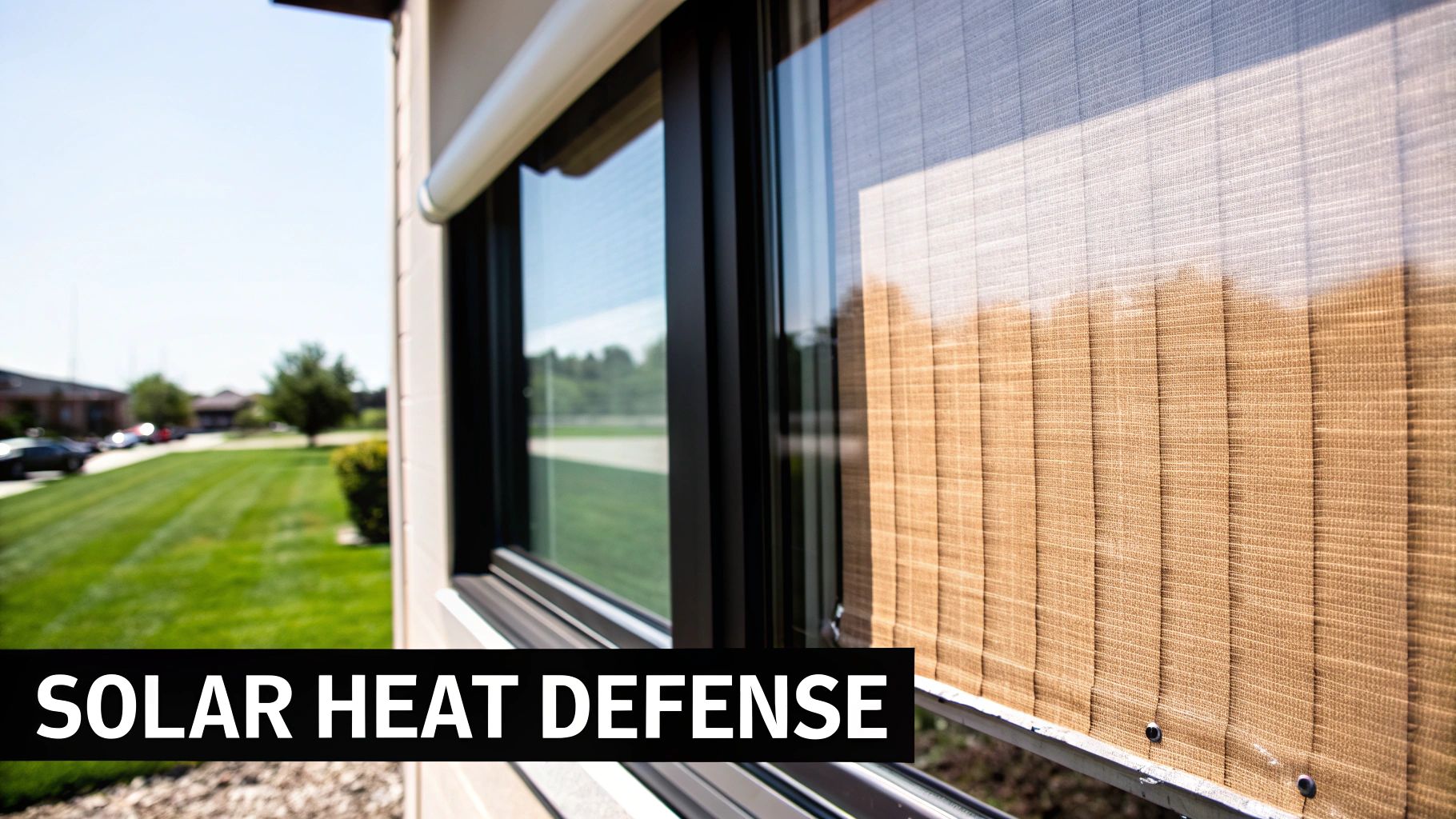
Think of solar screens as a set of high-performance sunglasses for your house. For anyone living in Phoenix, that's not just a catchy phrase—it's the reality. Unlike standard screens built just to keep bugs out, a solar screen’s main job is to battle the sun. It stops a massive amount of solar heat and damaging UV radiation before it even has a chance to heat up your window glass.
This impressive defense is all thanks to its unique construction. Solar screens are made from a very tightly woven, PVC-coated polyester mesh. This material is specifically engineered to absorb and then dissipate a huge portion of the sun's energy, creating a thermal barrier between the brutal Arizona heat and your cool, comfortable home.
Unpacking the Benefits for Phoenix Homes
The perks of installing solar screens in a place as sun-drenched as Phoenix are both immediate and significant. They offer more than just simple shade; they directly impact your wallet, your comfort, and the lifespan of everything inside your home.
The most celebrated benefit? A serious reduction in your cooling costs. By stopping solar heat gain right at the window, your air conditioner doesn't have to run nearly as hard to keep your home cool. That efficiency translates directly into lower monthly energy bills.
Beyond the savings, solar screens are also fierce protectors of your belongings. Those same UV rays that give you a sunburn are also responsible for fading your furniture, flooring, and artwork. Solar screens act as a powerful shield, preserving the vibrant colors and integrity of your home’s interior for years.
Balancing Performance and Practicality
While they are incredibly effective, solar screens do come with a few trade-offs to keep in mind. The same tight weave that makes them so good at blocking heat also means they reduce a bit of natural light and airflow compared to a standard fiberglass screen. Visibility is also slightly affected, though modern materials still provide a surprisingly clear view looking out.
Another great feature is the daytime privacy they provide. From the outside during the day, it's very difficult to see into a home with solar screens, which adds a welcome layer of seclusion. Just remember that this effect reverses at night when your lights are on inside.
The real performance of a solar screen is measured by its blockage percentage—basically, how much solar energy it deflects. The two most common options you'll find are 80% and 90%.
- 80% Solar Screens: This is a fantastic middle-ground. It's the go-to choice for homeowners who want a great balance between blocking heat and keeping their rooms bright and views clear.
- 90% Solar Screens: For windows that get absolutely blasted by the direct afternoon sun, this is your best bet. It provides maximum heat blockage but will make the room noticeably darker.
Choosing between them is all about looking at each window individually and deciding what matters most for that specific spot.
Think of it this way: a west-facing bedroom window that gets cooked every afternoon is a perfect candidate for a 90% screen. But a north-facing kitchen window with a beautiful view might be better served by an 80% screen to preserve the light and scenery.
The Numbers Behind Solar Screen Efficiency
The push for energy-efficient homes has put solar screens in the spotlight, and for good reason—the data proves they work. As one of the most effective types of window screen material for sunny climates, they deliver results you can actually measure.
Industry studies show that high-quality solar screens can block up to 90% of UV rays and cut indoor heat gain by a staggering 60-70%. For homeowners in Arizona, that's not just a statistic; it's a game-changer. It’s not uncommon for homes in the Phoenix area to see their energy bills drop by up to 30% after installing solar screens.
This amazing performance also cuts down on glare by about 65% and can extend the life of your interior fabrics by 5-7 years by preventing sun damage. If you're interested in the market forces driving these innovations, this comprehensive window screens market report offers a deeper look.
When you're thinking about an upgrade, it's helpful to see how all the materials stack up against each other. Our guide on the best solar screens for windows digs even deeper to help you make the perfect choice for your specific situation. At the end of the day, for anyone living under the Arizona sun, solar screens are simply a smart, strategic investment in comfort, privacy, and long-term savings.
Durable Screens for Tough Jobs
Sometimes, your standard fiberglass screen just isn't up to the task. High-traffic areas like a sliding patio door or any window within reach of a curious pet need something with a lot more muscle. For these spots, you're looking for a screen that’s built for strength and resilience, not just keeping bugs out.
This is where specialized, durable screen materials come into play. They’re engineered to handle bumps, resist punctures, and stay tight for years, saving you the headache and cost of constant repairs. Let’s dive into two of the toughest contenders on the market: classic aluminum and modern pet-resistant screens.
Aluminum Screens: The Classic Heavyweight
Long before fiberglass became the go-to material, aluminum was the undisputed king of window screens. This rigid metal mesh earned its reputation for being exceptionally durable and providing a crisp, clean look. Unlike fiberglass that can stretch over time, aluminum holds its tension perfectly, so you’ll never see it sag or look sloppy in the frame.
That rigidity is also great for visibility. The thin, strong metal strands don't get in the way of your view, making it an excellent choice for anyone wanting a timeless, traditional appearance that’s built to last for decades.
But aluminum’s greatest strength is also its main drawback. While it won't tear, it can dent or crease if it takes a hard hit. Picture a thin sheet of metal—once you bend it, it's nearly impossible to get it perfectly flat again.
Think of aluminum screens like a well-made metal watchband. They are strong, hold their shape perfectly, and offer a crisp, premium feel. But a hard knock against a doorway can leave a permanent dent or scratch.
Luckily for Phoenix homeowners, a major concern for aluminum in other parts of the country—corrosion from salty air—is a non-issue here. Our dry climate makes it a highly reliable and long-lasting choice.
Pet-Resistant Screens: The Modern Champion
If you have furry family members, pet-resistant screen material is an absolute game-changer. Anyone tired of constantly patching up claw marks and holes in their patio door screen will find this to be the solution they've been waiting for.
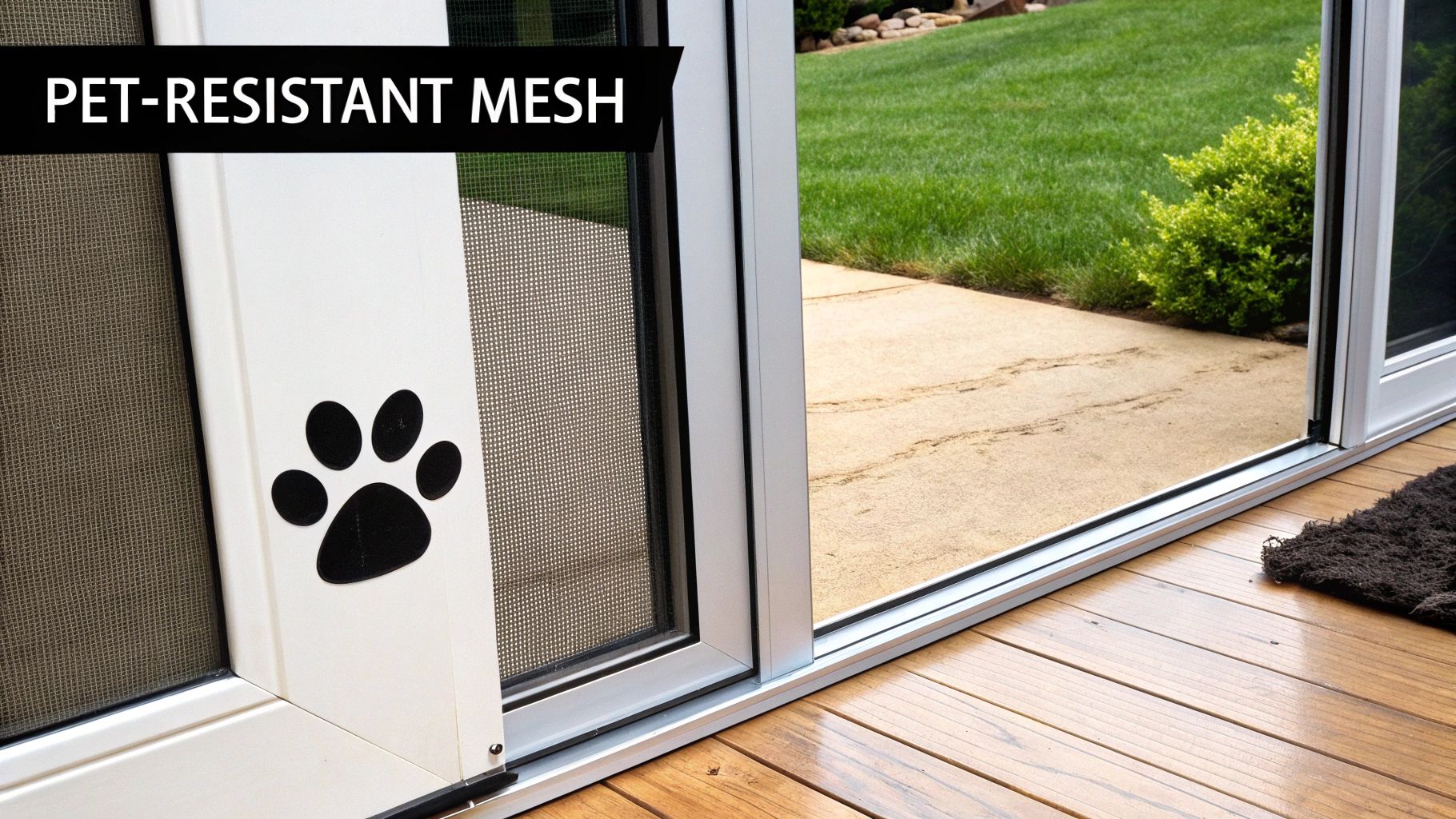
This stuff is made from an incredibly tough, vinyl-coated polyester. To give you an idea of its strength, it's often rated as being seven times stronger than standard fiberglass mesh. It was designed from the ground up to resist the tears and punctures that cats' and dogs' claws can inflict.
The secret is its blend of strength and flexibility. It reminds me of the fabric on a trampoline—it's unbelievably tough, yet it has enough give to absorb an impact without breaking. This allows the screen to handle pushing, scratching, and even the occasional climb without getting shredded.
This impressive durability makes it the obvious choice for a few key spots:
- Sliding Patio Doors: These are always the #1 casualty of pet damage.
- Low Windows: Any window a pet can easily reach or jump against.
- Screened-in Patios: Gives you peace of mind in enclosed outdoor areas.
- Any High-Traffic Area: Perfect for any screen that gets a lot of use.
The trade-off for all this toughness is slightly reduced visibility and airflow. The strands are thicker to provide that strength, which creates a denser mesh. This can make the screen a bit more noticeable and block some of the breeze. For most pet owners, though, this is a tiny compromise for the massive benefit of not having to replace their screens every season. It’s an investment in both durability and your own sanity.
Deciding When to Repair, Rescreen, or Replace
So your window screen is damaged. What now? Knowing whether you need a quick patch, a rescreen, or a whole new unit can save you a lot of headache and money. Not every tear means you need to start from scratch.
Let's break down the common scenarios so you can figure out what your screens really need and ask for the right service.
The Quick Fix: Patching Small Holes
If you've got a single, small hole—maybe from a clumsy pet or a wind-blown twig—a simple patch kit might be all you need. These are cheap, easy to find, and usually involve a small, sticky piece of screen material that you just press over the tear.
This is a great little band-aid solution, especially for newer screens where the rest of the mesh is still in good shape. It gets the job done and keeps the bugs out. Just keep in mind, if your screen is old and brittle from years of Phoenix sun, a patch won’t hold for long.
Time for a Refresh: When to Rescreen Your Windows
Most of the time, the solution is rescreening. This is the sweet spot for screen repair. We keep your existing aluminum frames—which are usually perfectly fine—and just replace the worn-out mesh with brand-new material. It’s efficient, affordable, and makes your screens look brand new again.
You'll know it's time to rescreen when you see:
- Big Rips or Lots of Holes: Patch kits just won't cut it when the damage is widespread.
- Brittle or Faded Mesh: If you poke the screen and it feels stiff or makes a crackling sound, that material is toast. Sun exposure eventually breaks down the fabric.
- Stretching and Sagging: Over the years, screen mesh can lose its tension, leading to a wavy, unkempt look that just doesn't do your home any favors.
Think of rescreening like putting new tires on your car. The car itself is fine, but the part that meets the road is worn out. You just replace the mesh to get it performing and looking its best again—all for much less than buying a whole new screen and frame.
Rescreening is also the perfect chance for an upgrade. If you've been dealing with standard fiberglass, you can easily switch to a tough pet screen or a high-performance solar screen to block out that intense Arizona heat. To see exactly how it's done, check out our guide on rescreening a window screen.
Starting Over: Knowing When a Full Replacement Is Necessary
Sometimes, the problem isn't the mesh—it's the frame itself. When that happens, a full replacement is the only real answer. This means we build you an entirely new screen, frame and all, measured perfectly for your window.
There's no patching or rescreening your way out of these issues. You'll need a full replacement if you notice:
- Bent or Broken Frames: A bent frame leaves gaps, and what’s the point of a screen that lets pests walk right in? It completely undermines the seal.
- Warped Frame Corners: If the corners of the frame are pulling apart or look bent out of shape, the whole structure is compromised and won't hold the screen taut.
- A Bad Fit: A screen that rattles around in the window or is a struggle to get in and out isn't just annoying—it's not doing its job. It's time for a new one that fits just right.
Got Questions About Window Screen Materials? We've Got Answers.
Even after you've looked at all the options, a few practical questions always pop up. It's totally normal. Let's walk through some of the most common things people ask, so you can feel confident you're picking the perfect screen for your home.
What's the Best Way to Keep Out Tiny Bugs Like No-See-Ums?
If you're battling those infuriatingly small insects, the answer is all in the mesh count. Your typical fiberglass screen has what's called an 18×16 mesh—that's 18 threads running one way and 16 the other in every square inch. To stop pests like no-see-ums, you'll need to upgrade to a much tighter 20×20 mesh.
This denser weave is a game-changer for bug control. Just keep in mind the trade-off: those smaller holes mean a slight dip in both airflow and how clearly you can see outside compared to a standard screen.
How Much More Will Solar Screens Cost Than Basic Fiberglass?
There’s no sugarcoating it—solar screens are a bigger upfront purchase than standard fiberglass. You can expect them to cost anywhere from 50% to 150% more, depending on the brand and how much sun you want to block (an 80% screen versus a 90% one, for example).
But it helps to think of this as an investment, not just a cost. In a place like Phoenix where the sun is relentless, the money you save on your AC bills can often pay back that initial difference in just a few summers.
Can I Put Pet-Resistant Screens on My Sliding Glass Door?
Yes, you absolutely can! In fact, sliding screen doors are one of the best places to use pet-resistant screens. Think about it—they're high-traffic areas that take a constant beating from claws and paws, making them prime candidates for rips and tears.
Pet-resistant material is engineered to be incredibly tough, but it's still flexible enough to be installed in just about any standard door or window frame. It’s the perfect fix to end the cycle of constant patching and replacing.
Which Screen Material Gives the Best, Clearest View?
For a view that’s as close to invisible as you can get, you'll want to look at screens marketed as "invisible" or "bettervue." These are made from a super-fine fiberglass mesh that uses threads much thinner than the standard stuff.
The result is a screen that lets in a ton of natural light and gives you a stunningly crisp view of your yard. The only catch is that those delicate threads make them a bit less durable than standard fiberglass or tough aluminum, so they’re best for windows that don't get a lot of physical contact.
Ready to upgrade your home's defense against bugs, sun, and everyday wear? The team at Sparkle Tech Screen Service handles expert rescreening and new installations for every type of window screen material out there. We can get you a quick quote and often provide same-week service.
Find the perfect screen for your Phoenix home at Sparkle Tech Screen Service


