


For most people I talk to, the best solar screens are the ones that hit that sweet spot of blocking 80% to 90% of the sun's heat. This range really gives you the best of both worlds: serious energy savings and great UV protection, all without making your house feel like a cave. When you get into durable materials like PVC-coated polyester, you're looking at a smart, long-term investment that keeps cooling costs down and protects your furniture from fading.
What Do Solar Screens Actually Do for Your Home?
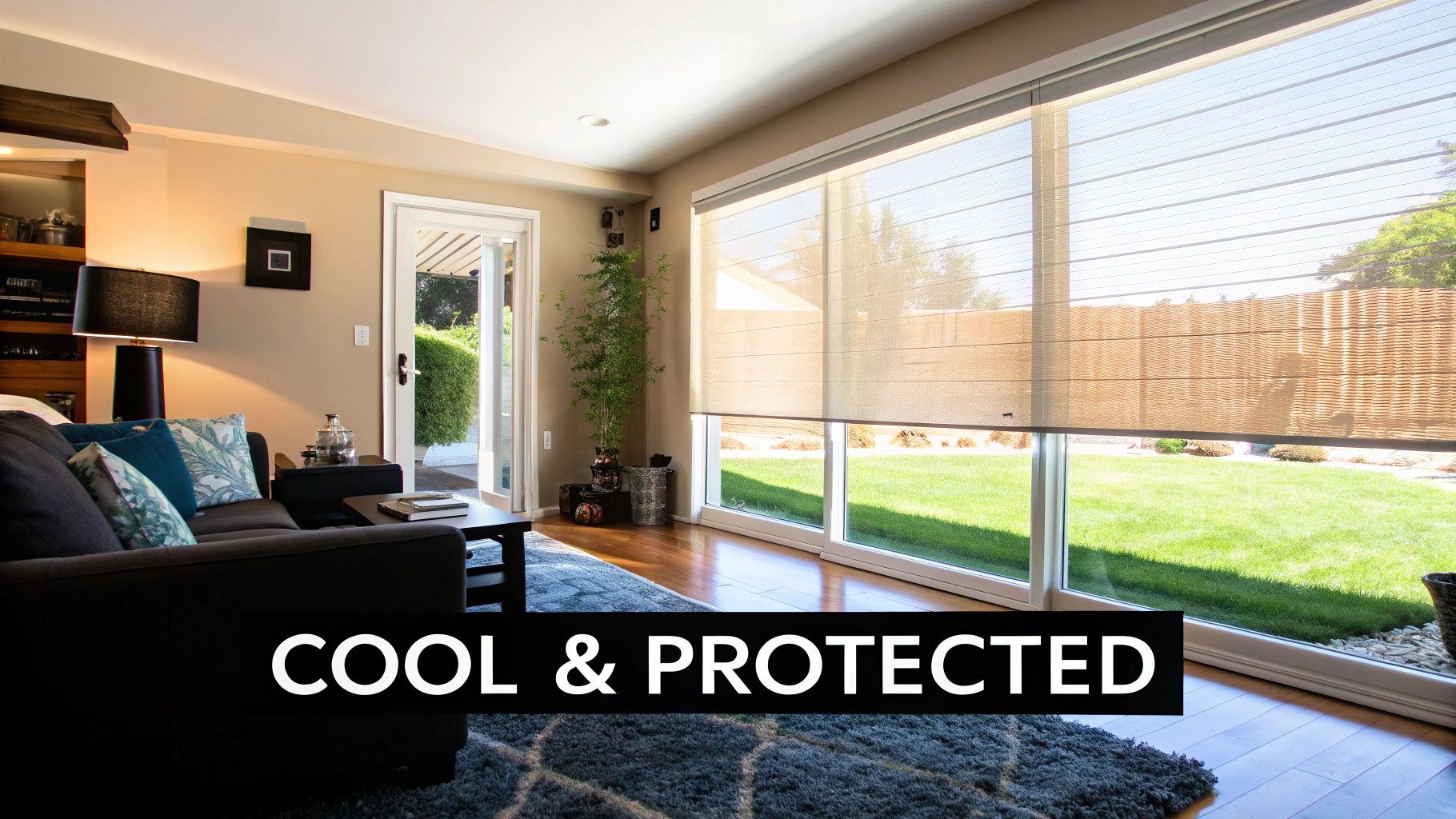
Think of solar screens as your home's first line of defense against the sun. They're specifically designed to absorb and deflect the sun's heat before it ever touches your window glass. It's a straightforward concept, but it's incredibly effective at keeping your indoor temperatures comfortable, especially if you live somewhere with intense sun.
You don't have to take my word for it—the market speaks for itself. The global solar screen industry was valued at around $2.5 billion in 2024 and is expected to nearly double to $4.8 billion by 2033. This isn't just a trend; it shows that more and more homeowners are realizing how practical these screens are for cutting down on solar heat gain and lowering those stubborn energy bills.
The Key Benefits You'll Notice Right Away
The advantages of solar screens go way beyond just a cooler house. They deliver a mix of practical perks and financial wins that make them one of the most popular home upgrades I see.
- Real Energy Savings: When you block that much solar heat, your AC unit doesn't have to run constantly. You'll genuinely see the difference in your monthly utility bills.
- Protection from UV Rays: These screens can block up to 99% of damaging UV rays. This is huge for preventing your wood floors, couches, and artwork from fading over time.
- Glare Be Gone: They drastically cut down on that blinding glare, which makes watching TV or working on a laptop near a window so much more pleasant.
- Daytime Privacy: From the outside, it's tough for people to see in during the day. From the inside, your view of the outdoors remains crystal clear.
Choosing and Installing Your Screens
Picking the right screen is half the battle; proper installation is the other half. Getting the right fit is absolutely critical for them to work effectively, whether you decide to tackle it yourself or bring in a professional.
To make sure you get it right from the start, we've put together a complete walkthrough. Our guide on how to install screens covers the process step-by-step, helping you get the maximum performance out of your new screens.
Comparing Solar Screen Materials and Weaves
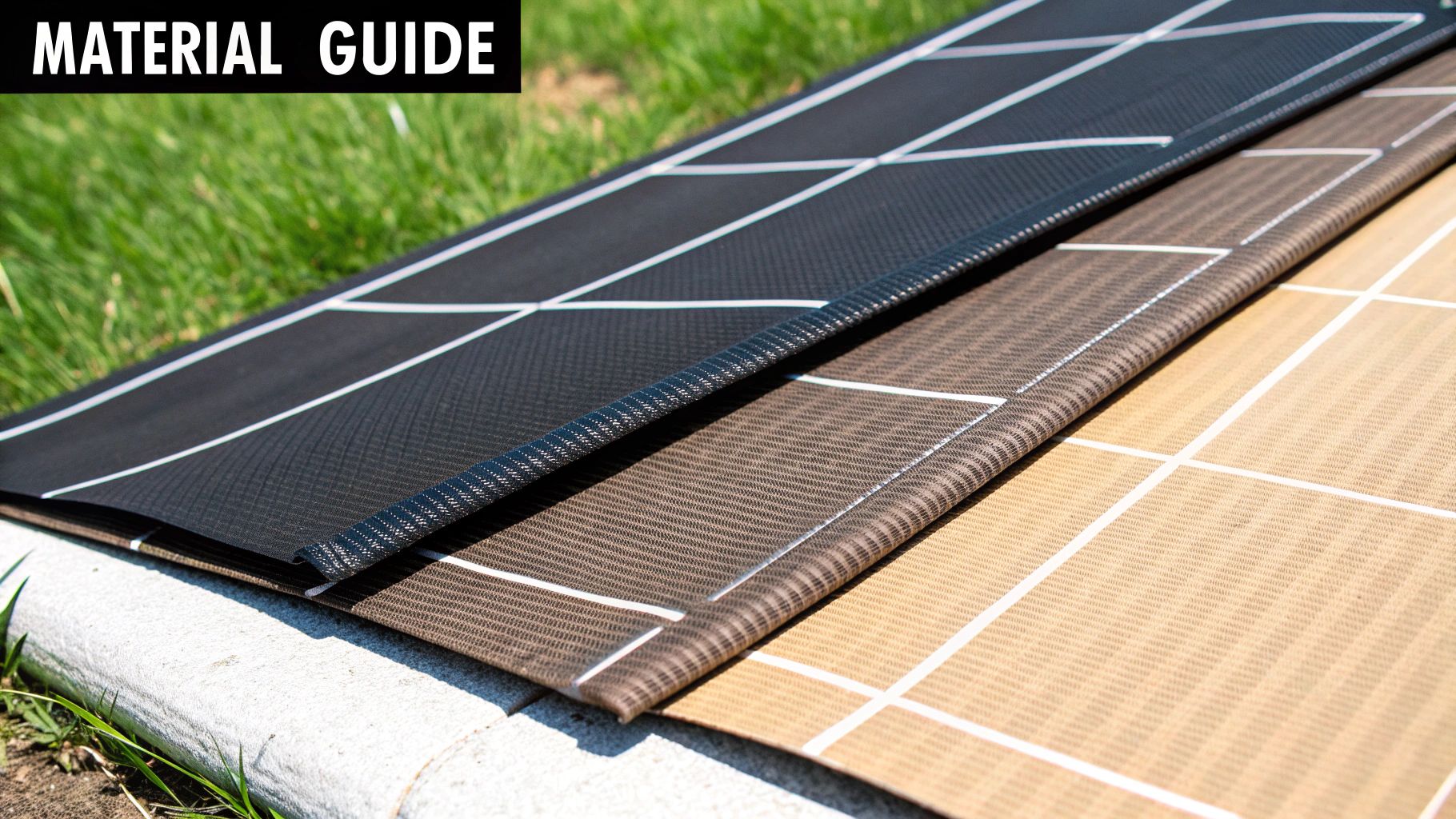
When you’re looking at solar screens, the first thing to get a handle on is what they’re actually made of. The material and the way it's woven together are the two biggest factors that will determine how well they perform, how long they last, and what your view to the outside looks like. Get this part right, and you'll be happy with your investment for a long, long time.
You’ll find two main players on the market: fiberglass and polyester. At a glance, they can seem pretty similar, but they're built for different situations and different budgets.
Fiberglass: The Accessible Standard
Fiberglass is the go-to for many homeowners because it’s so accessible. It's a cost-effective material that does a solid job of blocking heat and UV rays, giving you good performance without a hefty price tag.
The trade-off, however, is in the durability department. Fiberglass is more prone to stretching and tearing than its tougher counterpart, especially if it’s exposed to harsh weather, curious pets, or scraping tree branches. For a more detailed look at how it measures up, our guide on the best window screen material breaks it down even further.
Polyester: The Durable Powerhouse
If you’re after something that can really take a beating, PVC-coated polyester is the clear winner. This stuff is seriously tough. It's much stronger and more resistant to tears than fiberglass, making it the perfect choice for high-traffic areas, homes with pets and kids, or climates with intense weather patterns.
You’ll pay a bit more for polyester upfront, but that investment often pays for itself over time thanks to its incredible lifespan. For windows that get blasted by the afternoon sun or for anyone who wants a solution they won't have to worry about, polyester is the way to go.
Key Takeaway: Fiberglass is a smart, budget-friendly choice for most standard applications. But if you need something that will hold up against pets, kids, or extreme weather, paying a little extra for polyester is money well spent.
Understanding Mesh Density and Weave
After you've picked a material, the next decision is the tightness of the weave, also called mesh density or "openness factor." This is what controls how much light and heat get through, and it's usually shown as a percentage—like 80% or 90%—that tells you how much of the sun's energy is being blocked.
A good way to think about it is like sunglasses for your home.
An 80% screen is your everyday pair of shades. It cuts the glare and heat significantly while still letting you see outside clearly and keeping the room feeling bright. A 90% or 95% screen is more like a pair of dark, polarized sunglasses—it offers maximum protection from the sun, but it also makes things a little darker inside.
Here's how to decide what's right for you:
- 80% Solar Screens: This is the sweet spot for most homes. You get fantastic heat reduction while preserving plenty of natural light and a crisp, clear view of the outdoors.
- 90% Solar Screens: Reserve these for your problem windows—the ones that get hammered with direct sunlight all afternoon. They provide the ultimate heat defense, which is a lifesaver in punishing climates like Arizona, but they will noticeably dim the room.
It all comes down to your priorities. If a particular room feels like an oven, a higher-density screen is your best bet. If keeping the view and natural light is more important, the 80% screen will do the job perfectly.
Choosing the Right Solar Screen for Your Home: A Situational Guide
Picking the best solar screens for your windows isn't a simple, one-size-fits-all task. The perfect screen for your home hinges on your specific needs—your climate, which way your windows face, and what you value most. A screen that’s just fine for a north-facing window in a cool region won't stand a chance against the brutal afternoon sun on a west-facing window in Arizona.
This guide goes beyond generic feature lists. I'm going to walk you through how to choose based on real-world situations, helping you match the right screen to the right window for the best possible results.
For Maximum Heat Blocking in Intense Sun
If you’re battling extreme heat, your number one priority is heat rejection. This is non-negotiable for windows that get blasted by direct sun for hours on end, especially those facing south or west. In these spots, you need to stop as much solar energy as you can before it ever hits the glass and turns your room into an oven.
Your best bet here is a high-density screen—specifically, a 90% or 95% polyester screen. The tight weave on these models blocks an incredible amount of solar heat, and it’s not uncommon for homeowners to see temperatures drop by as much as 15°F in rooms with these screens.
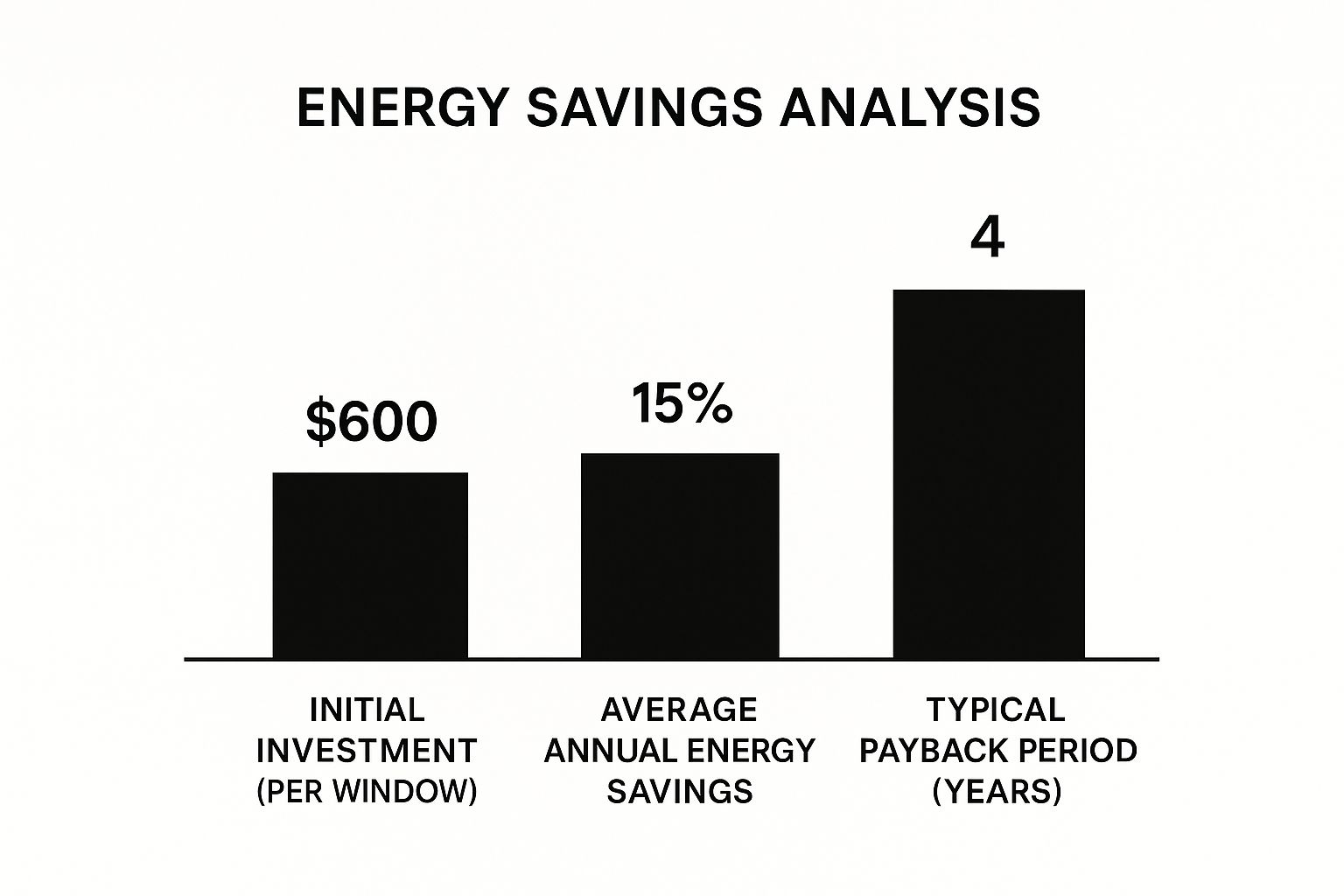
As you can see, even though high-performance screens cost more upfront, their ability to slash your energy bills means they pay for themselves much faster. It's a smart long-term investment if you live somewhere hot.
My Take: For a west-facing window in a hot climate, a 90% or 95% dark-colored screen is the only way to go. You'll sacrifice a bit of natural light and your view will be slightly darker, but the improvement in comfort and the savings on your cooling bill are massive.
For Balancing Natural Light and Outdoor Views
Not every window needs to be a fortress. For rooms where you want to keep things bright and airy while preserving a great view, a heavy-duty screen would be overkill. This is usually the case for north-facing windows or any window that’s already shaded by trees, porches, or overhangs.
In these situations, an 80% solar screen is the sweet spot. It does a fantastic job of blocking most of the heat and damaging UV rays but still lets plenty of natural light stream in. Critically, this density also gives you excellent outward visibility, so your view stays sharp.
Pro Tip: To make your view even clearer, always choose a dark-colored screen like black or charcoal. It's counterintuitive, but your eyes see through the dark mesh much more easily than a light-colored one.
For Durability in High-Traffic or High-Risk Areas
Sometimes, toughness is the most important factor. If you have pets who love to scratch at screens, kids playing ball in the yard, or you live where high winds can kick up debris, a standard screen just won't cut it for long.
This is where PVC-coated polyester screens, often called pet-resistant screens, really prove their worth. Their tear strength is far superior to traditional fiberglass. While fiberglass is a perfectly fine and budget-friendly choice for most windows, polyester is the hands-down winner for any screen that might take a beating. Think of it as an investment in peace of mind—and in not having to repair or replace your screens every other year.
Solar Screen Feature Comparison
To help you visualize the trade-offs, this table breaks down the key characteristics of the most popular solar screen types. Use it to see how each option stacks up against your main priorities, whether that's heat blocking, visibility, or sheer toughness.
| Feature | Fiberglass Screens | Polyester Screens | High-Density (90%+) Screens |
|---|---|---|---|
| Primary Use Case | Standard, budget-friendly sun & insect protection | High-durability needs (pets, kids, high-traffic) | Maximum heat & glare reduction in intense sun exposure |
| Durability | Good, but prone to tearing and stretching | Excellent; highly resistant to tears, punctures & sagging | Excellent; the tight weave and material are very strong |
| Heat Blockage | Moderate (60%-80%) | Good (75%-90%) | Maximum (90%-97%) |
| Visibility | Very good, especially in lighter weaves | Good to Very Good, best with dark colors | Fair; noticeably darker view from inside |
| Cost | Most affordable option | Mid-range; more expensive than fiberglass | Highest initial cost |
| Best For… | Low-traffic areas, moderate climates, tight budgets | Homes with pets/children, ground-floor windows | South/West-facing windows, hot climates (AZ, TX, FL) |
Ultimately, the best choice comes down to a simple analysis of each window's unique situation. A high-density screen might be perfect for your living room, while a more open-weave fiberglass screen is all you need for a shaded kitchen window. Mixing and matching based on need is the most effective and cost-efficient strategy.
Maximizing UV Protection and Glare Reduction
Sure, saving money on your energy bill is a fantastic benefit, but the best solar screens do so much more. They're all about protecting what's inside your home and making your daily life more comfortable. Their most critical job is acting like a powerful sunscreen for your house, capable of blocking up to 99% of the sun's damaging UVA and UVB rays.
Think about what constant sun exposure does over time. It fades beautiful hardwood floors, bleaches the color right out of your area rugs, and causes permanent damage to furniture and artwork. Solar screens stop those harmful rays before they even enter the room, creating a much-needed protective shield for your most valued possessions.
From Unusable Glare to Comfortable Spaces
Beyond just UV defense, solar screens are absolute pros at taming glare. If you've ever tried to watch TV or work on a laptop with the sun blasting through a window, you know the frustration. Blinding reflections and eye strain can make a room feel completely off-limits during certain times of the day.
This is where solar screens really shine—by diffusing and absorbing that intense light. They turn those sun-drenched, unusable areas back into functional, comfortable spaces.
Here’s what that looks like in real life:
- Your Home Office: Imagine trying to focus on a monitor with a bright glare washing it out. A solar screen on that window solves the problem instantly, letting you work comfortably without having to shut out all the natural light with heavy blinds.
- Your Living Room: You can finally watch a movie on a sunny afternoon without squinting or rearranging the furniture to dodge the bright spots on the TV.
Key Insight: The real magic of solar screens is how they let you reclaim your home. They don't just cool a room; they make it more livable and pleasant all day long by controlling the sun's intensity.
It's also worth remembering that sunlight is more than just what we see. Some high-performance options, like certain solar control films, can block about 96% of the sun's infrared radiation. This is the invisible energy that's largely responsible for making a room feel hot. By stopping so much of this heat from getting inside, these solutions can drastically cut down on how much you run your air conditioner. For a deeper dive, you can learn more about how these films reduce cooling expenses on researchnester.com.
Evaluating the Long-Term Value of Solar Screens
It’s easy to look at solar screens as just another line item on a home improvement budget. But that view misses the bigger picture entirely. A better way to think about them is as a strategic upgrade that pays you back, both in your wallet and in your daily comfort.
The initial cost is, of course, a factor. It will depend on the materials you choose, the size of your windows, and whether you hire a professional or tackle the installation yourself. But the real story is the long-term value, and that's where solar screens truly shine.
The Financial Payback and Beyond
The most direct return you'll see is on your monthly energy bills. Solar screens are incredibly effective at blocking solar heat before it ever hits your window glass, which means your air conditioner doesn't have to fight nearly as hard to keep your home cool. In sunny climates like Arizona or Florida, those savings can be substantial, often letting the screens pay for themselves in just a few years.
But the financial savings are only part of the equation. The other benefits—the ones that improve your quality of life—are just as important. These are the perks that make the investment feel truly worthwhile.
- Improved Home Comfort: Those rooms that used to feel like a sauna by midafternoon? They become comfortable, usable spaces you can enjoy all day long.
- Enhanced Daytime Privacy: You can see out perfectly clearly, but anyone trying to look in during the day will just see a dark screen. It's privacy without sacrificing your view.
- Increased Property Value: In today's market, energy-efficient upgrades are a major selling point for homebuyers.
Thinking about it this way shifts the conversation from cost to value. You’re not just buying a product; you're investing in a more comfortable, private, and efficient home. The total window screen installation cost is certainly part of the calculation, so be sure you understand the full picture when budgeting.
Key Insight: The real value of solar screens is a blend of tangible financial savings and the priceless improvement in your home’s day-to-day comfort and usability.
A Smart Component of Modern Homes
The whole idea behind solar screens fits perfectly with modern, energy-efficient home design. Windows can be a huge source of energy loss—up to 30% of a home's heating and cooling energy can escape through them. Technologies like solar control films are designed specifically to combat this heat gain.
By stopping the sun's energy at the source, solar screens become a fundamental part of reducing a home's overall energy footprint. For a deeper dive into the data, you can explore the full research on the solar control market.
Ultimately, choosing the right solar screens is an investment in your home's future. They reduce your energy consumption, protect your furniture and floors from fading, and make your living space more enjoyable. That consistent, multi-faceted value makes them one of the smartest upgrades any homeowner can make.
Answering Your Top Questions About Solar Screens
As you get closer to choosing the right solar screens for your windows, some practical questions always pop up. I hear them all the time from homeowners. Getting these details ironed out will help you feel confident in your final decision, so let's walk through the most common ones.
What Color Solar Screen Is Best?
Choosing a screen color is about more than just matching your home's trim; it directly impacts both performance and your view. The best color really comes down to what you're trying to achieve.
If preserving a crisp, clear view of your yard is your top priority, you can't beat darker colors like black and charcoal. Your eyes naturally look through the dark mesh instead of at it, which also does wonders for cutting down on harsh glare. They work by absorbing solar heat into the screen material itself, stopping it before it can radiate into your home.
On the other hand, lighter colors like tan or grey are technically better at reflecting solar heat away from the window entirely. The trade-off, however, is visibility. Your eye tends to focus on the lighter-colored screen, which can make your view feel a bit hazy or muted.
Can You See Through Solar Screens at Night?
This is probably the most frequent question I get, and it touches on a key aspect of how these screens function. During the day, they're fantastic for privacy. The bright light outside makes the screen reflective to anyone trying to look in, while you can see out perfectly from the darker interior.
That entire effect flips at night. Once you turn on your lights inside and it’s dark out, the tables turn—people outside can now see in. If nighttime privacy is important, you’ll still want to have your curtains, blinds, or other traditional window coverings to use after sunset.
Key Takeaway: Think of solar screens as providing "one-way" daytime privacy. They rely on the light difference between inside and outside, so that privacy benefit disappears once your interior is brighter than the exterior.
How Much Do Solar Screens Reduce Temperature?
The cooling power of solar screens is genuinely impressive and often the number one reason people install them. While the exact temperature drop depends on factors like your local climate, which way your windows face, and the screen's density, the results are always significant.
A quality solar screen can lower the temperature inside your home by as much as 10 to 15°F. They pull this off by blocking the sun's heat before it ever touches your window glass. By stopping the heat at the source, you take a massive load off your air conditioner, leading to a much more comfortable home and real savings on your energy bill.
How Do I Clean My Solar Screens?
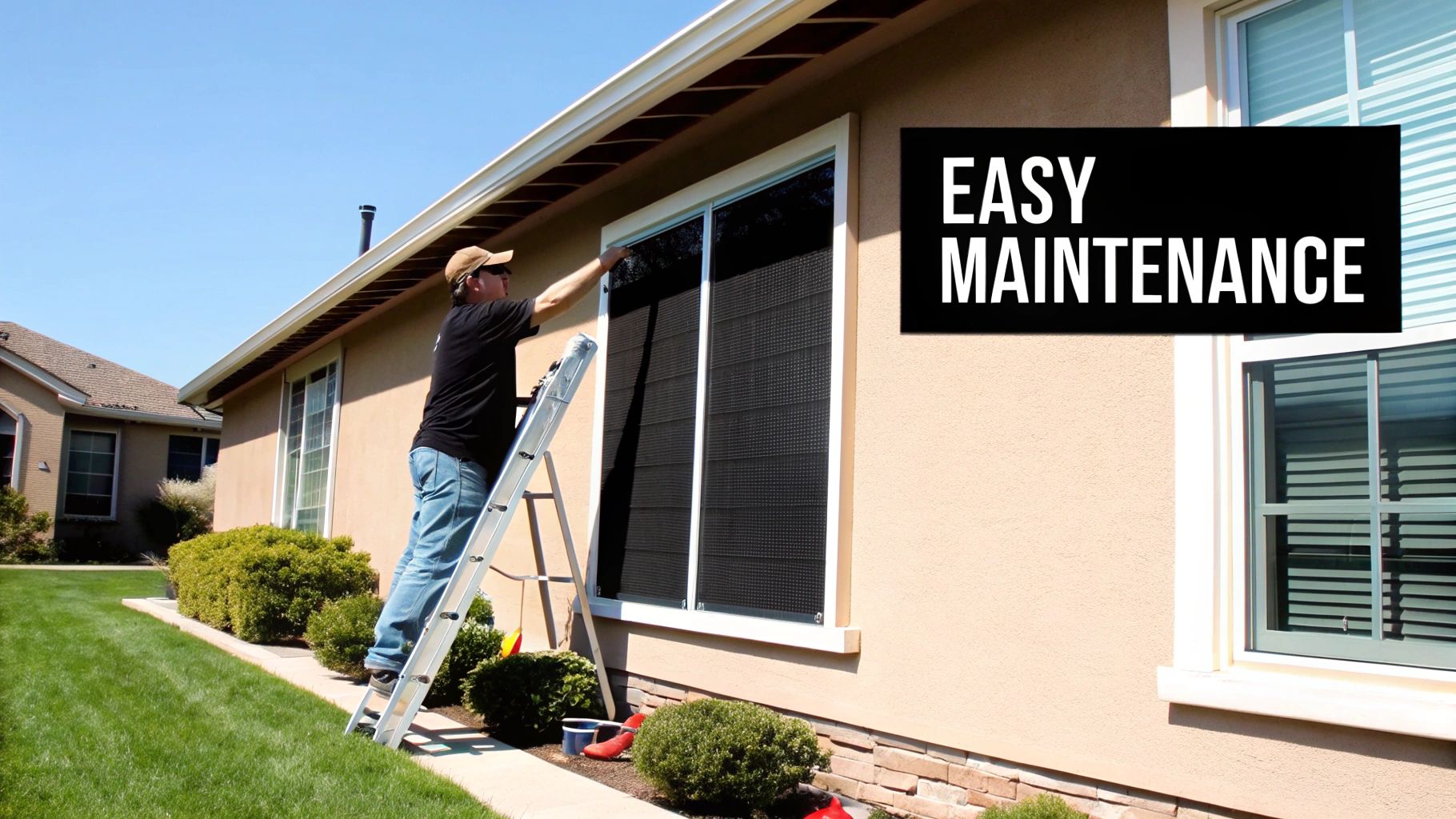
Keeping your screens in top shape is surprisingly easy. You don't need any special gadgets or harsh chemicals. A little bit of gentle cleaning now and then will keep them looking great and working effectively for years.
Just follow these simple steps for routine maintenance:
- Brush a"way Debris: First, use a soft-bristled brush to gently knock off any loose dirt, cobwebs, or dust.
- Wash Gently: In a bucket, mix a little mild soap with warm water. Use a soft sponge or cloth to wipe down both sides of the screen.
- Rinse Completely: Use a garden hose on a low-pressure setting to rinse away all the soap. It's crucial to avoid using a power washer, as the high pressure can easily damage the mesh.
- Let Them Air Dry: Simply let the screens air dry completely before you put them back in place. That's all it takes to keep them performing like new.
Ready to enjoy a cooler, more comfortable home with lower energy bills? The experts at Sparkle Tech Screen Service can help you choose and install the perfect solar screens for your windows. We offer new screens, rescreening, and repairs with fast, friendly service.


