


Let's be honest, window screens are probably the last thing on your home maintenance checklist. They're just… there. Quietly doing their job, letting in the breeze while keeping the bugs out. But the moment you spot that tiny rip, sagging corner, or bent frame, their importance suddenly comes into sharp focus.
That small tear is more than just an eyesore. It's an open invitation for every mosquito and fly in the neighborhood.
Why Your Window Screens Deserve a Second Look
Most of us only pay attention to our screens when something goes wrong. A pet’s claw marks, a stray ball from the kids' game, or just the slow, steady wear and tear from years of sun and rain. But waiting for a complete failure is never the best approach.
Think about it: a damaged screen doesn't just fail at its primary job of blocking pests. It can also block your view, reduce the natural light coming into your home, and if you have solar screens, it can even mess with your energy efficiency. A little proactive care goes a long way.
More Than Just a Bug Blocker
It’s easy to underestimate the role your screens play. They’re a crucial part of your home’s ventilation system, letting you enjoy a cool evening breeze without having to turn on the AC. That simple act of opening a window can actually translate into real savings on your energy bills over the warmer months.
And let's not forget about curb appeal. Clean, tight, perfectly fitted screens give your home a sharp, well-cared-for look. On the flip side, torn, faded, or bent screens can make even the most beautiful house look a bit neglected.
This guide is here to walk you through everything you need to know about professional window screen repair services. We'll help you make smart, confident decisions for your home.
Here's what we'll cover:
- Identifying Screen Types: We’ll break down the differences between standard fiberglass, heavy-duty pet screens, and energy-saving solar materials.
- Repair vs. Replacement: Get a clear, simple framework for knowing when a quick patch will do and when it’s time to invest in a brand-new screen.
- The Professional Process: Learn what to expect when you call in the pros, from the first measurement to the final, perfect installation.
- Choosing a Reliable Provider: We'll give you practical, actionable tips for finding a trustworthy company that stands by its work.
By the end of this guide, you'll see your window screens not as a minor detail, but as a key investment in your home's comfort, value, and overall health.
Choosing the Right Screen Material for Your Home

When you call a professional for window screen repair, one of the first things they'll ask about is the material. It's a bigger deal than most people think. Not all screens are created equal, and your choice can seriously affect everything from your home's comfort to your energy bills.
Think of it like buying tires for your car. You wouldn't put racing slicks on a truck you take off-roading, right? The same logic applies here—the right screen depends on what you need it to do.
The material you see in most homes is standard fiberglass. It’s the reliable, all-purpose workhorse of the screen world. It’s affordable, flexible, and doesn’t crease or dent easily, which is why it’s such a common go-to. But like any standard option, it has its limits.
The Most Common Screen Materials
Let's walk through the main options a pro will likely present to you. Each one has its own unique strengths, whether you just need to keep bugs out or you're looking for serious sun protection. Getting a handle on these differences is the key to a smart repair or upgrade.
- Fiberglass Screen Mesh: This is the industry standard for a reason. It's a vinyl-coated fiberglass yarn that gives you good visibility and won't rust or corrode. For most windows and patios where the main goal is basic protection, it’s an excellent all-around choice.
- Aluminum Screen Mesh: If you want a step up in durability, aluminum is a great pick. It offers a crisp, clean look and won't sag over time the way older fiberglass screens sometimes can. The trade-off is that it can dent from a stray baseball or heavy hail, but its rigidity is a big plus for many homeowners.
Beyond these two, you get into the world of specialty screens. These are engineered to solve specific problems that homeowners—especially those in sunny climates—deal with every single day.
Your window screen material is more than just a barrier. It's an active part of your home’s performance, influencing indoor temperature, UV protection, and even how well it stands up to pets and weather.
Specialized Screens for Modern Homes
Today's screen services offer materials that do a lot more than just block mosquitos. These advanced options provide real, tangible benefits that can make your home more comfortable and even save you money down the road.
A solar screen, for example, is like putting a high-quality pair of sunglasses on your house. It's made from a specially woven mesh that absorbs and dissipates a huge chunk of the sun's heat before it ever hits your window glass. In fact, solar screens can block up to 90% of solar heat, leading to a noticeable drop in your cooling costs during those brutal summer months.
Another fantastic specialty option is pet-resistant screen. If you have a cat who loves to climb or a dog who scratches at the door, you already know how fast they can shred a standard screen. Pet screen is like flexible armor for your doors and windows. Made from an incredibly tough vinyl-coated polyester, it’s seven times stronger than traditional fiberglass and built to resist damage from claws and paws.
To help you see how these options stack up, here’s a quick look at the most common choices.
Comparing Common Window Screen Materials
This table breaks down the key features of each material, making it easier to see which one fits your lifestyle and home environment best.
| Material Type | Key Benefit | Best For | Average Lifespan |
|---|---|---|---|
| Fiberglass | Affordability and flexibility | General use on most windows and doors | 10-15 years |
| Aluminum | Durability and crisp visibility | High-traffic areas where sagging is a concern | 20+ years |
| Solar Screen | Energy efficiency and UV protection | Homes in sunny climates with high cooling costs | 15-20 years |
| Pet Screen | Extreme tear and puncture resistance | Households with active pets that scratch screens | 20+ years |
Ultimately, the best choice comes down to your home's unique needs and your biggest frustrations. Whether you're fighting the intense afternoon sun or a very determined golden retriever, there's a screen material designed specifically for that job.
To explore these materials in greater detail, you can find more information in our complete guide on how to choose the best window screen material.
Repair or Replace? Making the Right Call for Your Window Screens
It’s a classic homeowner question: is that damaged window screen just in need of a quick fix, or is it time to start fresh? Getting this right saves you money and keeps your home looking sharp and protected. The decision really boils down to a simple cost-benefit analysis.
Think of it like this. A tiny tear in your screen mesh is like a small hole in a favorite pair of jeans—a simple patch gets the job done without much fuss. But a screen with a bent frame and sun-rotted mesh? That's more like a pair of jeans that are completely threadbare. Trying to patch that is just throwing good money after bad.
Taking Stock of the Damage
First things first, you need to get a good look at the problem. A single small rip or a couple of pinholes, especially if they aren't near the frame's edge, are usually perfect candidates for a simple repair. Most window screen repair services can handle these minor issues quickly, and you're typically looking at a cost between $50 and $100.
Now, if you're seeing multiple large tears, a bunch of holes, or the whole screen is sagging, you've got a bigger issue on your hands. Patching won't bring back the screen's tension or make it look right. This is where a full replacement becomes the more sensible option.
When a Repair Is the Smart Move
Going for a repair makes perfect sense when the damage is contained and the main parts of the screen are still in solid condition. If your screen checks these boxes, a repair is probably your best bet:
- Minor Mesh Damage: Small holes or tears under a few inches long can often be patched. In some cases, a pro can just replace the mesh fabric itself without touching the frame.
- A Loose Spline: That little rubber cord holding the screen mesh in the frame channel can sometimes work its way loose. This is a super easy fix for a technician, who can pop it back in and get the tension right in no time.
- The Frame Is Intact: If the metal frame is straight, undamaged, and isn't corroded, it almost always pays to just get new mesh installed. The frame is the backbone of the screen and the most durable component.
A professional repair doesn't just fix what you can see; it extends the life of your existing screen. It's a cost-effective way to preserve the investment you've already made in your home's windows.
Signs It’s Time for a Full Replacement
Sometimes, a repair is just a band-aid on a much bigger problem. It's not a great feeling to pay for a fix only to have the screen fail again a few months later. When you spot these clear warning signs, it’s time to stop repairing and start replacing:
- Bent or Damaged Frame: A warped or broken frame means the screen will never sit properly in your window. This creates gaps for bugs to sneak in and just looks bad from the outside.
- Brittle or Faded Mesh: Years of baking in the sun take a toll. If the mesh material feels stiff or crumbles when you touch it, its useful life is over. It's only a matter of time before a new tear appears.
- Widespread Damage: If your screen has more holes than mesh, looking like a piece of Swiss cheese, replacement is the only real answer. Patching dozens of spots is a waste of time and money, and the result is never pretty.
This handy chart can help you visualize whether you're dealing with a simple fix or need to call in the pros for a full replacement.

As you can see, the extent of the damage is the biggest factor, but things like your own schedule and whether you have the right tools also play a part in deciding to hire a professional.
What to Expect from a Professional Repair Visit

So, you’ve decided to call in a pro for your window screen repair services. Smart move. But what actually happens when they show up at your door? Knowing the step-by-step process can give you peace of mind and help you spot a true expert.
Think of a screen technician as a specialist—they're not just patching a hole. They’re restoring a key part of your home’s comfort and defense system. They bring experience and specialized tools to the job, which makes all the difference between a quick fix and a lasting repair.
Let's pull back the curtain on what a typical professional service call looks like from start to finish.
The Initial On-Site Assessment
First things first, a good technician will want to see the problem firsthand. They’ll do a thorough walkthrough to evaluate every screen you’re concerned about, looking for more than just the obvious rip or tear.
This initial check-up is crucial. They’re sizing up the frames, identifying the exact screen material you currently have, and checking for hidden issues like bent frames or worn-out hardware. This detailed look ensures you get an accurate quote with no last-minute surprises.
They’ll also take the time to talk with you. Are you trying to block the harsh afternoon sun? Is the family dog constantly clawing at the patio screen door? This conversation helps them recommend the right materials for your actual needs.
Frame Inspection and Material Recommendations
With the initial overview done, the technician will zero in on the screen's foundation: the frame. A perfect new screen won't last long in a bent, cracked, or corroded frame, so they’ll inspect each one carefully.
If your frames are in solid shape, the conversation will shift to material options. This is where their expertise really shines. They’ll likely show you samples and explain the pros and cons of standard fiberglass, tough aluminum, or even specialty options like solar screens or extra-durable pet-resistant mesh.
A key part of professional service is this consultative approach. The goal isn't just to fix what's broken but to provide a solution that truly improves your home and holds up over time.
Once you’ve settled on a material, they’ll provide a clear, itemized quote for the job.
The Rescreening and Installation Process
Now for the main event. This is where professional craftsmanship and proper tools come into play, creating a result that’s nearly impossible to replicate with a DIY kit from the hardware store.
Here’s a quick look at how they bring a screen back to life:
- Old Material Removal: They start by carefully pulling out the old spline—that rubbery cord holding the mesh in place—and removing the damaged screen.
- Precise Cutting: New screen material is measured and cut to the perfect size, with just enough extra material to ensure a tight, secure fit.
- Spline Installation: Using a special tool called a spline roller, they expertly press the new mesh into the frame’s channel, locking it in place with new spline. This takes a practiced hand to get consistent pressure and avoid any sags or wrinkles.
- Trimming and Finishing: Finally, they trim off the excess mesh with a sharp utility knife, leaving a crisp, clean edge.
The difference is in the tension. A pro gets the screen drum-tight, which not only looks fantastic but also makes it far more resilient. You can learn more about the specific window screen repair tools that make this possible in our detailed guide.
After the rescreening is complete, the technician will reinstall each screen, making sure it fits snugly and operates smoothly. They’ll double-check any pull tabs, springs, or other hardware before calling the job done.
Why Bother with Professional Screen Repair? A Look at the Market
Deciding to call in a professional for your window screens might seem like a small thing, but it’s actually a smart move that taps into some major home improvement trends. We're seeing a real shift in how homeowners think about their properties. It's no longer just about the big-ticket items; people are realizing that even small details like well-kept screens play a huge role in a home's value and efficiency.
What used to be a DIY weekend task or a minor nuisance is now seen for what it is: an essential part of maintaining your home. This growing demand comes from a simple realization—functional screens make a home more comfortable, save money on energy bills, and boost curb appeal.
What's Driving the Demand?
A few key things are pushing professional screen services into the spotlight. First, homeowners are more focused than ever on maximizing their property's value. Think about it: a home with crisp, clean, intact screens just looks better and sends a signal to potential buyers that the property has been well-maintained.
On top of that, energy efficiency is a huge priority for almost everyone. We're all looking for ways to trim our utility bills and be a little greener. In sunny climates, high-quality solar screens aren't a luxury; they're a necessity that can seriously slash your air conditioning costs.
Investing in professional screen repair is more than just a quick fix. It’s a small upgrade that aligns your home with larger trends toward preserving property value and sustainable living.
A Strong and Growing Industry
The data backs this up. The global window repair services market was recently valued at around USD 3.2 billion. It's not stopping there—experts project it will grow at a rate of about 6.5% each year, potentially reaching a whopping USD 5.5 billion by 2033. This growth is happening all over, from North America to Europe and Asia. If you're curious, you can explore more market growth insights to see the detailed analysis.
What does this mean for you? A booming industry is a competitive one. Service providers are constantly upping their game with better materials and more advanced techniques. This competition is great for homeowners, ensuring you get top-notch work from skilled professionals. When you hire an expert, you’re plugging into a dynamic industry focused on making your home better.
How to Choose the Right Screen Repair Company
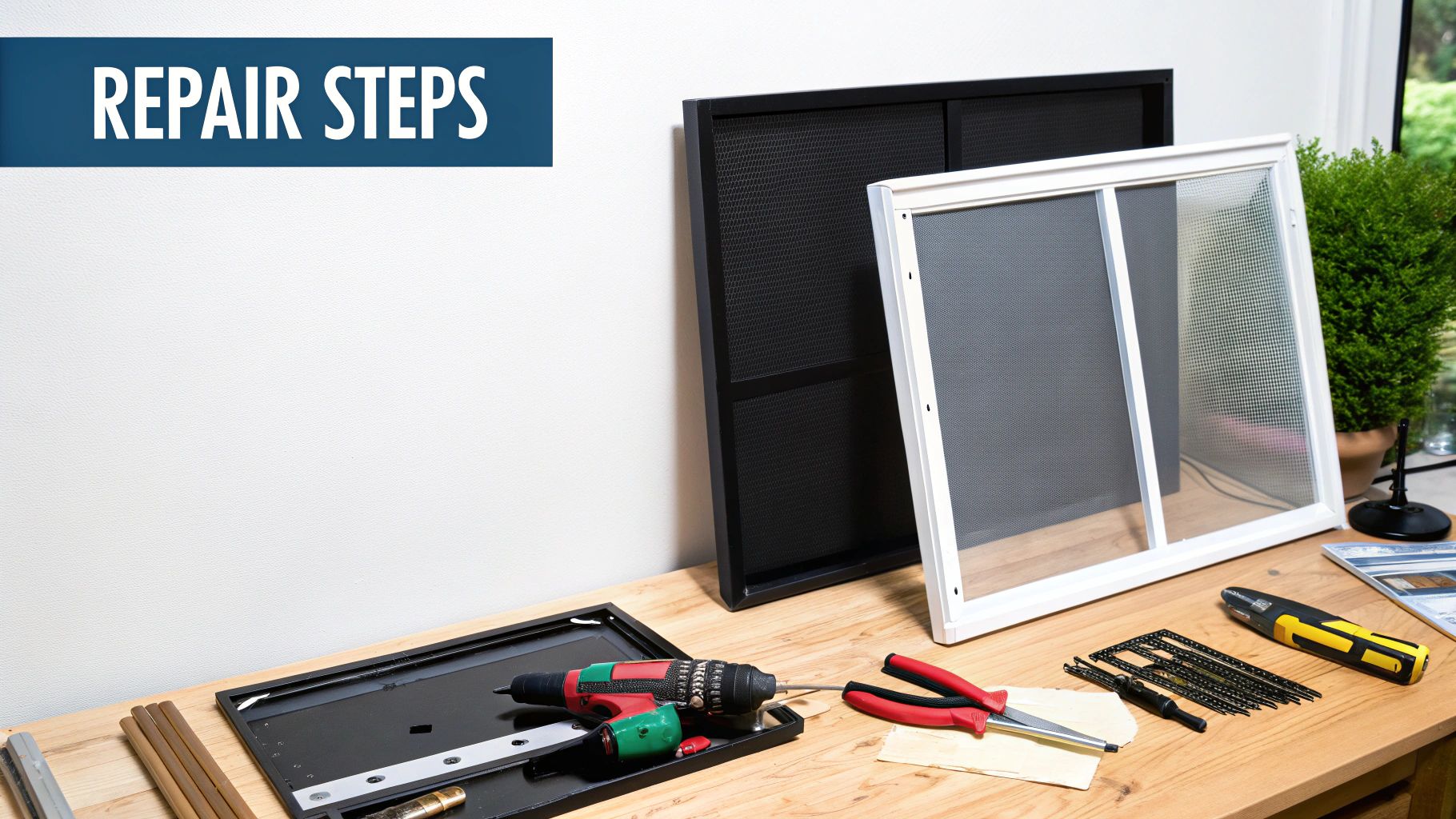
Choosing the right company for your window screen repair is just as crucial as picking the right mesh. You’re not just buying a service; you're finding a partner to help maintain your home. A great technician delivers more than a fixed screen—they provide quality craftsmanship and, frankly, peace of mind.
With so many companies out there, it’s easy to feel overwhelmed. The trick is to know what to look for. A little homework now can save you a world of headaches later, from shoddy work to surprise bills. It’s all about finding someone who stands by their work and delivers a lasting fix.
Verify Credentials and Experience
First things first: make sure you’re dealing with a legitimate, established business. A professional company won’t hide its qualifications or history. Don’t hesitate to ask them how long they’ve been providing window screen repair services.
Look for a company with deep roots in your community. A long-standing local presence is usually a good sign—it means they’ve built a reputation worth protecting. You absolutely want to confirm they are properly licensed and insured, too.
- License: This proves they meet local or state standards to do business.
- Insurance: This is your safety net. It protects you and your property if any accidents happen during the repair. Consider this a non-negotiable.
Check Online Reviews and References
In this day and age, online reviews are an invaluable tool. A quick search on Google, Yelp, or Angi can tell you a story about a company’s work quality and how they treat their customers.
Look beyond the star ratings and read the actual comments. Are people consistently praising the company's professionalism and skill? Or do you see a pattern of complaints about missed appointments, sloppy work, or hidden fees? A few bad reviews are normal for any business, but recurring problems are a major red flag.
Don't just rely on star ratings. Reading the actual comments gives you valuable context about the customer experience, helping you understand a company's strengths and weaknesses before you even pick up the phone.
And don’t stop there. A reputable company should be more than willing to provide references. Speaking directly to a few past clients can give you honest, firsthand insight you won’t find anywhere else.
Get Detailed Written Estimates
Never, ever accept a vague quote over the phone. A true pro will insist on seeing the job in person to give you an accurate, detailed estimate. Think of this document as the project's roadmap.
A thorough estimate should break everything down for you:
- The cost of all materials, including the specific type of screen mesh.
- The labor charges for the repair.
- Any extra fees, like travel or new hardware.
- The final, all-in cost.
Getting it all in writing prevents any confusion and protects you from last-minute charges. It’s also the only way to fairly compare quotes from different companies. If you're searching for a trustworthy pro, it helps to know what a local window screen repair company should provide.
Finally, always bring up warranties. A company that’s confident in its work will have no problem backing it up. Ask specifically what guarantees they offer on both the screen materials and the installation labor.
Got Questions? We've Got Answers
Even with all the details laid out, you probably still have a few questions buzzing around. That's a good thing—it means you're thinking like a smart homeowner. Let's tackle some of the most common things people ask before they book a screen repair.
Think of this as the final walkthrough before you make a decision. Getting these last few details sorted will give you the confidence that you're making the right call for your home.
So, What's This Going to Cost Me?
This is usually the first question out of the gate, and for good reason! The honest answer is: it depends. For a standard window rescreening, you’re generally looking at a range of $30 to $80 per screen. The final price really comes down to the screen's size and the mesh you pick.
Of course, larger jobs or specialty materials will shift that number.
- Solar Screens: They cost more upfront, but they're an investment that pays you back in lower cooling bills.
- Pet-Resistant Screens: The tougher material has a higher price, but it saves you from having to replace screens every time your dog gets excited.
- Frame Repairs: If the aluminum frame is bent or damaged, fixing it will be a separate line item on the quote.
Here’s a pro tip: Always get a written quote. A reputable company will happily break down the costs for you, so there are no surprises when the bill comes. Transparency is everything.
Should I Just Do This Myself?
The temptation to DIY is strong, I get it. You see a little hole, head to the hardware store, and grab a patch kit. For a tiny puncture, that might work in a pinch. But getting a full screen to look professionally done? That's a whole different ballgame.
The real trick is getting the mesh perfectly tight—no sags, no wrinkles. Pros have special tools and techniques to get that drum-tight finish. It’s incredibly easy for a first-timer to accidentally crease the mesh or, even worse, bend the frame while wrestling with the spline.
Hiring a professional isn't just paying for a repair; it's an investment in a flawless finish. They have the right gear and experience to make your screens look brand new and last for years, something a DIY kit just can't promise.
If you're dealing with anything more than a single, tiny tear—especially on a second-story window or if the frame is bent—calling a pro is the smarter, safer bet. You guarantee the job gets done right the first time.
How Long Will a New Screen Even Last?
The lifespan of your new screen really hinges on two things: the material you choose and the weather it has to put up with. A standard fiberglass screen that’s been installed correctly should easily give you 10-15 years of service. If you upgrade to a tougher aluminum screen, you could be looking at 20 years or more.
Specialty materials like pet-resistant or solar screens are built to be even tougher and last longer. But keep in mind, constant harsh sunlight or coastal air can take a toll on any material. A little bit of maintenance—just a gentle cleaning now and then to get rid of grime—will go a long way in helping your screens last as long as possible.
Ready to get your screens looking perfect again and boost your home's comfort and curb appeal? Contact Sparkle Tech Screen Service today for a fast, friendly quote. We offer same-week service for all your repair and rescreening needs. Head over to our website to get started


