


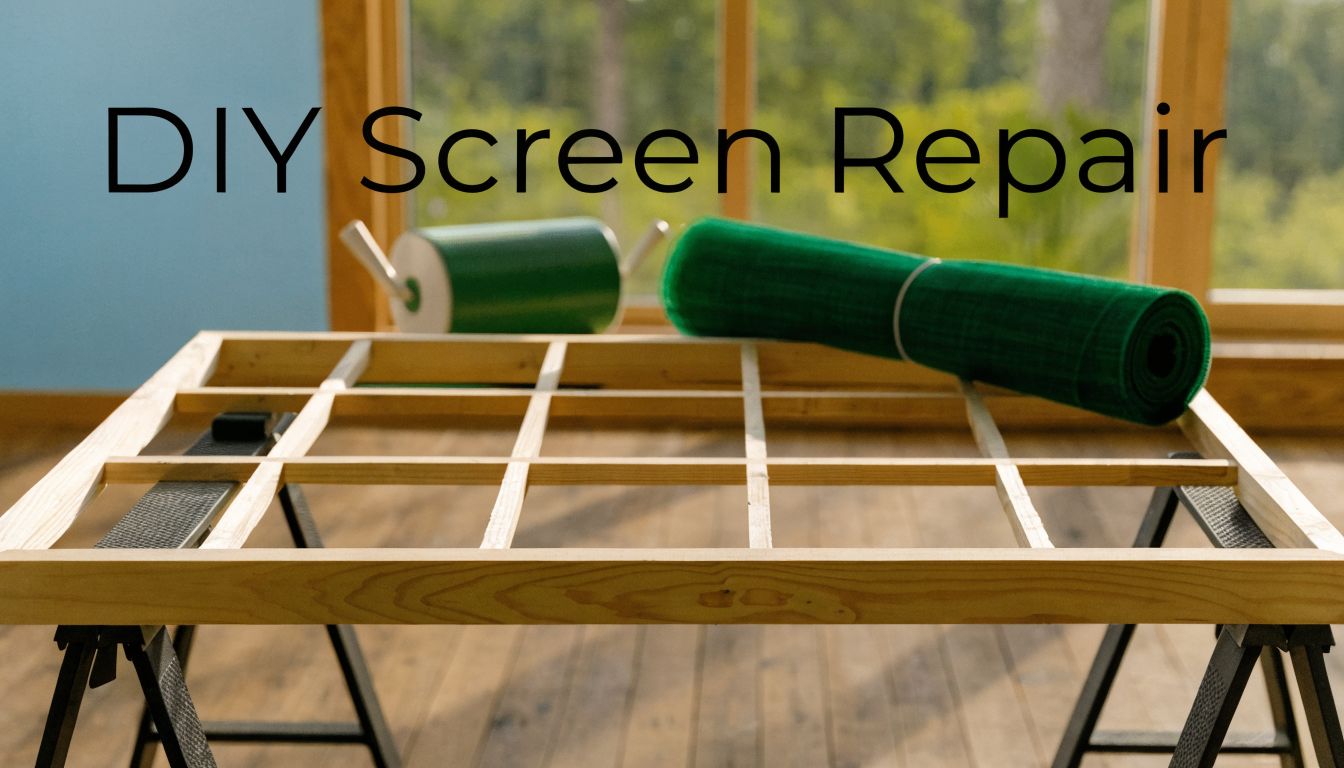

A torn screen door usually gets your attention at the worst time. You slide the door open for some evening air, and there it is. A split corner, a sagging panel, or a hole big enough for every flying pest in the neighborhood.
The good news is that learning how to replace screen door mesh isn't out of reach for a careful DIYer. The bad news is that a lot of generic guides skip the details that determine whether your repair lasts, especially in Arizona where sun exposure is brutal on the wrong material.
At Sparkle Tech, we work on bug screens, sun screens, sliders, and rescreening jobs across the Phoenix area, so the difference between a quick patch and a durable finish shows up fast. If you're doing this yourself, the goal isn't just to get mesh back in the frame. The goal is a screen that sits straight, stays tight, and makes sense for your climate.
That Ripped Screen Is an Eyesore but You Can Fix It
A common reason people start this job is simple. The screen looks bad, and it keeps getting worse.
A small tear near the bottom rail turns into a long rip after the dog noses it once or somebody catches it with a shoe. Then the screen starts bowing, the edge frays, and you stop opening the door because letting in fresh air also means letting in bugs. That gets old quickly.
A standard fixed screen door is usually very repairable if the frame is still straight. When the aluminum frame isn't bent and the corners are solid, replacing only the mesh is often the smartest move. You keep the frame, swap the worn material, and restore the door without turning it into a full replacement project.
A clean rescreen looks simple when it's done right. Getting there depends on prep, mesh choice, and tension.
In Arizona, the material choice matters more than many homeowners expect. A screen that works fine in a milder climate may not hold up the same way under heavy sun exposure. That's why the proper fix starts before the roller tool ever touches the spline.
If you're standing in the garage with a loose screen door and a roll of mesh, you're already at the point where good habits matter. Measure carefully. Clean the groove well. Don't overpull the material. And don't assume the cheapest mesh is the right mesh just because it fits the frame.
What makes this project manageable
A screen door rescreen is very doable when these conditions are true:
- The frame is square: It sits flat and doesn't rock on your work surface.
- The corners are tight: No separation, no twisted rails.
- The groove is intact: The spline channel can still grip new spline firmly.
- You're working on a standard frame: Fixed doors are much more forgiving than retractable systems.
If one or more of those isn't true, the job changes fast. That's where DIY can shift from satisfying to frustrating.
Gathering Your Tools and Choosing the Right Mesh
Good rescreen jobs are decided before the new mesh ever touches the frame. The tool list is short, but the material choice matters a lot, especially in Arizona where sun, dust, and heat punish cheap screening fast.
The core tools that matter
For a standard screen door rescreen, keep these within reach:
- Spline roller: Use the correct wheel size for your spline. A loose match can tear mesh or leave the spline sitting proud of the groove.
- Flathead screwdriver: Good for lifting an old spline end without digging into the frame.
- Utility knife: Use a fresh blade. Dull blades drag and can fray the edge instead of trimming it cleanly.
- Tape measure: Measure the frame and buy enough extra mesh to work comfortably.
- Work gloves: Helpful around sharp aluminum edges.
- Clean rag or small brush: Dirt left in the groove can stop the new spline from seating fully.
If you want to build out a better home repair kit, this list of essential tools for homeowners is a practical place to start.
A couple of extras make the work easier. Clamps help hold a light frame still. Sawhorses support the door better than a driveway or patio table. I also like having a marker nearby so the screen roll stays oriented the same way once I cut it.

Screen mesh comparison at a glance
The easiest mesh to install is not always the one that lasts longest on an Arizona patio door.
| Mesh Type | Best For | Durability | Cost |
|---|---|---|---|
| Fiberglass mesh | Standard insect screening, easiest DIY handling | Fair in mild conditions, weaker under intense sun over time | Lower |
| Aluminum mesh | Stronger feel and a more rigid finish | Durable, but easier to crease during install | Moderate |
| Pet-resistant mesh | Homes with dogs or cats that push on screens | Heavy-duty, but stiffer to work with | Higher |
| Solar screen mesh | Arizona sun control and glare reduction | Strong choice for harsh sun exposure | Higher |
What works in Arizona and what tends to fail early
Standard fiberglass is still the easiest option for a first-time DIYer. It stretches and trims cleanly, and it is forgiving if your roller pressure is not perfect. On a shaded opening, that can be a sensible choice.
On a west-facing or full-sun door in Phoenix, Mesa, or Scottsdale, fiberglass often becomes a repeat job. The material dries out, loses strength, and starts looking tired long before homeowners expect. Solar mesh or pet-resistant mesh usually holds up better when the opening gets punished every afternoon.
That trade-off is real. Heavier mesh lasts longer, but it takes more hand strength, cleaner technique, and often a second pass to get the spline seated evenly. DIYers can handle it, but this is the point where rushed work starts to show.
Practical rule: Match the mesh to the door's sun exposure, traffic, and abuse level. Do not choose by price alone.
Picking the right mesh for the job
Use this filter before you buy:
- For a shaded bug screen: Fiberglass is usually the simplest DIY option.
- For strong afternoon sun: Solar mesh is often the better long-term value.
- For pets pushing or scratching at the lower panel: Pet-resistant mesh helps prevent the same tear from coming back.
- For appearance and visibility: High-visibility products can look cleaner, but check how they handle heat and daily wear.
If you want a clearer side-by-side before buying, this guide to different window screen mesh types covers the common options well.
One honest note from the field. The harder the mesh, the less forgiving the install. Sparkle Tech Screen Service handles both bug screen and solar screen rescreening, which can save time when you want the cleaner finished look without fighting heavy material or redoing a bad fit.
Preparing the Door and Removing the Old Screen
A clean removal sets up the whole repair. If the frame gets bent, the groove gets nicked, or old debris stays packed in the channel, the new mesh will fight you all the way through the install.
Take the door off and lay it on a flat, supported surface. Sawhorses are ideal, but a sturdy workbench or two evenly spaced supports also work. The goal is simple. Keep the frame from twisting while you pull spline and handle the mesh.
Before you remove anything, inspect the frame like a technician would. Look for loose corners, bent rails, corrosion in the channel, and signs the door has been dragged or dropped. In Arizona, I also watch for heat damage. Frames that sit in full sun for years can warp just enough to make a DIY rescreen look wavy even when the mesh is installed correctly.
Remove the old spline without damaging the channel
Start at a corner where the spline end is visible or easiest to lift. Slip a flathead screwdriver or pick under the edge and raise it just enough to grab. Then pull it out steadily along the groove.

Go gently. The old spline is disposable. The channel is not.
On older Arizona doors, the spline often comes out in short, dry pieces because the sun has baked the rubber hard. That is normal. Keep working around the frame until all of it is out, then lift away the old mesh.
A few habits help here:
- Start at a corner: You usually get the cleanest lift there.
- Pull along the groove: That lowers the chance of gouging the aluminum.
- Clear out every fragment: Old spline bits left behind can keep the new spline from seating fully.
- Check the corner joints again: Once the mesh is gone, hidden looseness is easier to spot.
Clean the groove and measure from the right place
Brush out the channel thoroughly. A dry rag, soft brush, or plastic pick works well. Dirt, oxidized rubber, and windblown grit are common on Arizona screen doors, and even a small buildup can create high spots that make the spline roll unevenly.
Measure from the inside spline groove, not the outside edge of the frame. Cut or buy mesh with enough extra material to extend past every side so you have room to keep the weave straight and correct minor drift as you install it. If you want to confirm the opening before cutting material, use this screen door measurement guide.
That overhang gives you control. Mesh cut too tight leaves no room for adjustment, and that is one of the fastest ways to end up with wrinkles, pull-out corners, or a second trip to buy more material.
If the frame is bent, the corners are separating, or the groove is chewed up from past repairs, stop and reassess. A new screen can only look as good as the frame holding it. In those cases, Sparkle Tech Screen Service often sees homeowners spend more time fighting the door than replacing the mesh itself.
Installing New Mesh and Spline for a Perfect Fit
A clean install comes down to control. The mesh has to stay square, the spline has to seat fully, and the frame cannot be forced out of shape while you work.

Lay the mesh flat and square
Set the mesh over the frame with even overhang on every side. Line the weave up with the frame rails before you touch the spline roller. If it starts crooked, it usually finishes crooked.
Do not pre-stretch the material. Let it rest flat on the frame, then lock it in a little at a time.
If you want to verify that the screen opening was measured from the correct points before committing to a cut, use this guide on how to measure a screen door opening.
Arizona homeowners should pay close attention to material behavior here. Standard fiberglass is forgiving and easy to roll, but in high sun it can loosen sooner and show waves faster than heavier solar or pet-resistant mesh. Those upgraded materials hold up better in harsh heat, but they also fight back during installation because they are stiffer and less tolerant of uneven pressure.
Set the first side, then balance the tension
Start on one long side. Roll the spline into the groove while keeping the mesh straight with your free hand. The goal is light control, not force.
Once the first side is seated, move to the opposite side and apply gentle, even tension as you roll that run in. Then finish the two shorter sides. That sequence keeps the pull balanced across the frame and lowers the chance of a bowed rail.
Use the roller wheel that presses the spline down firmly without dragging the mesh. If the spline wants to ride up, stop and reset that small section before you keep going. Forcing it usually twists the weave or cuts the edge coating on darker solar fabrics.
Let the roller do the work. Your hands should guide the mesh, not stretch it like a drum.
Match the tension to the mesh type
The screen should look flat, not strained. Overpulling is one of the fastest ways to ruin an otherwise decent repair, especially on older aluminum doors that already have a little flex.
Fiberglass can hide minor mistakes until the door goes back in the track. Solar mesh and pet screen show mistakes sooner. If one side is tighter than the other, you will see diagonal wrinkles, corner pull, or a slight hourglass shape through the middle. In Arizona, that matters more because heat expands materials and exaggerates weak spots after a few hot afternoons.
I usually tell DIYers to aim for consistent tension, not maximum tension. A screen that looks a touch softer on the bench often settles better than one pulled hard in every direction.
A quick visual walkthrough can help if you learn better by seeing the motion of the tool:
Slow down at the corners
Corners decide whether the finished job looks clean or patched. Guide the spline into each turn carefully and watch for bunching under the edge.
If the mesh starts to pucker, pull the spline back a few inches and reseat that area while the problem is still isolated. Do not try to bury a bad corner under more spline. That almost always leads to a loose edge or a wrinkle across the panel.
This is also the point where many DIY jobs go sideways with thicker mesh. Pet screen and solar fabric can be stubborn in tight corners, and worn frames make it worse. If the spline groove is shallow, the frame is slightly twisted, or the corners keep creeping out of square, a professional install from Sparkle Tech Screen Service often saves time, wasted material, and a second repair.
Finishing Touches and Troubleshooting Common Problems
The final trim and cleanup decide whether the repair looks homemade or professionally finished. This part doesn't take long, but it rewards patience.
Trim the excess mesh cleanly
Once all spline is fully seated, use a sharp utility knife to trim the overhanging mesh. Keep the blade tight to the outside edge of the spline and angle it away from the channel so you don't nick the new material or pull the spline loose.

Use smooth, controlled passes instead of sawing at it. A fresh blade matters. Dull blades snag mesh, especially thicker pet or solar materials.
Fixing the issues DIYers run into most
If the screen doesn't look right after the first pass, that doesn't always mean total failure. Many problems are fixable if you catch them before reinstalling the door.
- Wrinkles across the middle: Remove the spline from one affected side and reseat it with more even tension. Don't try to stretch the wrinkle out from a corner.
- Loose spots near an edge: Check whether the spline fully seated in that section. Sometimes it only looks installed from above.
- Spline pops back out: The groove may still have debris, or the spline may not match the frame well. Clean the channel again and try a fresh piece.
- Puckered corner: Back out that corner section and reset it with less bunching underneath.
- Frame bows inward: You've likely pulled too hard during installation. Release one side and reinstall with lighter tension.
A short finishing checklist
- Run your finger around the edge: You should feel a consistent spline seat.
- Look across the mesh in side light: Waves show up more clearly from an angle.
- Check corner alignment: Corners should lie flat, not gather.
- Lift the frame carefully: The screen should stay taut when moved.
A good screen is tight enough to stay stable and relaxed enough to let the frame stay square.
Reinstall and test
When trimming is done, put the door back in place and test its movement. If it's a sliding screen, make sure it tracks smoothly and doesn't rub because of frame distortion. If it's a hinged screen door, check latch alignment and confirm the frame didn't twist during handling.
A clean rescreen should look flat, feel firm, and disappear into the doorway instead of calling attention to itself.
When a DIY Project Is Better Left to the Pros
You pull the door shut after a long Arizona afternoon, and the new screen still ripples, drags, or slips out at one corner. That is usually the point where a simple rescreen turns into a second trip for materials and another hour on the floor.
A standard screen door with a square frame is manageable for many homeowners. The trouble starts when the door is large, the frame is tired, or the mesh choice changes from basic fiberglass to something stiffer that makes more sense in desert heat.
Retractable screen doors give DIYers the most trouble. The roller system, spring tension, and track alignment all have to go back together correctly. Get one part slightly off and the screen may retract unevenly, bind, or fail early. I also see a lot of callbacks on oversized patio sliders where the frame looked fine until fresh mesh exposed a twist or weak corner.
Jobs that often make more sense to hand off
Some projects are still possible as DIY work, but the margin for error gets small fast:
- Retractable doors: Internal tension parts and reassembly errors can ruin the screen's operation.
- Oversized patio screens: Bigger frames show every tension mistake and are more likely to bow.
- Security doors or heavy-duty mesh: Pet screen and solar mesh hold up better in Arizona, but they are stiffer and harder to seat cleanly.
- Loose, bent, or corroded frames: New mesh will not fix structural problems.
- Sun-exposed upgrades: Switching from standard fiberglass to solar screen is smart in many Arizona openings, but the install has to stay square or the finish looks rough.
There is also a point where the screen is not the whole problem. If the entry is worn out, dragging, or no longer sealing well, it helps to compare a rescreen with a broader fix like patio door replacement.
Homeowners usually call for three reasons. They want the door to look right, last longer, and avoid buying mesh twice.
That is a practical decision, not a cop-out.
A pro can tell whether the frame is worth rescreening before you waste time stretching new material into a bad door. We can also match the mesh to the opening. In Arizona, that matters. Basic fiberglass is easy to install, but west-facing doors, homes with pets, and high-use sliders often do better with solar or pet-resistant material. If you want a cleaner result on those tougher jobs, Sparkle Tech's window screen repair services cover the kinds of repairs and replacements that tend to fight back.
DIY works well for a straightforward door and a homeowner with patience. If the door is specialty, oversized, or exposed to hard sun every day, professional installation is often the better buy for a clean fit and a longer service life.
Frequently Asked Questions About Screen Replacement
Can I reuse my old spline
Sometimes, but it usually isn't worth the gamble. Old spline often hardens, flattens, or loses grip after years in heat. If you're already replacing the mesh, fresh spline gives you a better chance at a firm, lasting seat.
What size spline should I buy
Match the spline to the frame groove and the thickness of the mesh you're installing. There isn't one universal answer for every door frame. If you're unsure, bring a sample of the old spline and a frame measurement to the supplier.
Is pet screen installed the same way as regular screen
The process is similar, but pet-resistant mesh is stiffer and less forgiving. That means alignment matters more, and trimming usually takes a sharper blade and a steadier hand.
How long does this project take for a beginner
It depends on the frame condition, your setup, and how quickly you work through mistakes. A clean standard door can go smoothly. A brittle frame or a heavier mesh can slow things down.
Why does my new screen still look wavy
Usually because the mesh drifted out of square, the spline wasn't seated evenly, or the screen got pulled too hard on one side and not enough on the other. In most cases, the fix is to back out one section and reinstall it evenly rather than trying to patch the tension from a corner.
Is fiberglass always the best choice
Not in Arizona. Fiberglass is easy to work with, but some openings benefit more from solar or pet-resistant mesh depending on sun exposure and household wear.
If you'd rather skip the trial and error, Sparkle Tech Screen Service handles rescreening, bug screens, solar screens, sliders, and repairs for homeowners who want a clean fit without the hassle. For Phoenix, Scottsdale, and surrounding Arizona areas, it's a practical option when the job needs to look right and hold up in harsh sun.


