


Picking the right window screen mesh really boils down to what you need most: protection, durability, or a clear view. For many homeowners, standard fiberglass mesh hits that sweet spot between cost and function. If you're looking for something a bit tougher with a cleaner look, aluminum is a solid step up. But if you've got pets or live where the sun is relentless, specialty screens like pet-proof or solar mesh are designed to handle those specific challenges.
How to Choose the Right Window Screen Mesh
Finding the perfect window screen mesh isn’t about some one-size-fits-all solution. It's about looking at your home’s specific needs and deciding what matters most to you. You'll want to think about your local climate, whether you have pets, your budget, and just how important an unobstructed view is to your daily life.
The demand for these tailored solutions is growing, and the numbers back it up. The global market for screen mesh—covering everything from aluminum to synthetics—was valued around USD 752.73 million in 2023 and is expected to climb. Verified Market Reports has more on these trends, which really highlights how people are looking for specific mesh types to solve real-world problems.
To make things easier, just focus on these key areas:
- Durability: How tough does it need to be? Think about weather, kids, or accidental bumps.
- Visibility: Do you want a view that feels like there’s nothing there, or is a little less clarity okay if it means other benefits?
- Cost: What are you prepared to spend per window, or for the whole house?
- Special Needs: Are you trying to block intense sun, keep out no-see-ums, or stop a cat from clawing its way out?
Here’s a simple starting point: what’s your biggest frustration? Are you fed up with your dog tearing through another screen? Or is your main priority cutting down that brutal afternoon heat? Answering that one question will usually steer you straight to the best mesh for the job.
Comparing Fiberglass and Aluminum Screen Mesh
When it's time to choose a window screen, you’ll quickly find yourself deciding between two industry mainstays: fiberglass and aluminum. Both will keep the bugs out, that’s a given. But their real differences in durability, looks, and cost are what will steer you toward the right choice for your home. It’s less about which one is "better" and more about which one is better for you.
Fiberglass mesh is the go-to for most homes, and for good reason. It’s made from woven fiberglass threads coated in vinyl, which makes it incredibly flexible and forgiving. This is a huge plus for DIYers—it doesn't crease or dent easily, so you can pull and stretch it into a frame without much worry. Think of it as the reliable, budget-friendly workhorse of screen materials.
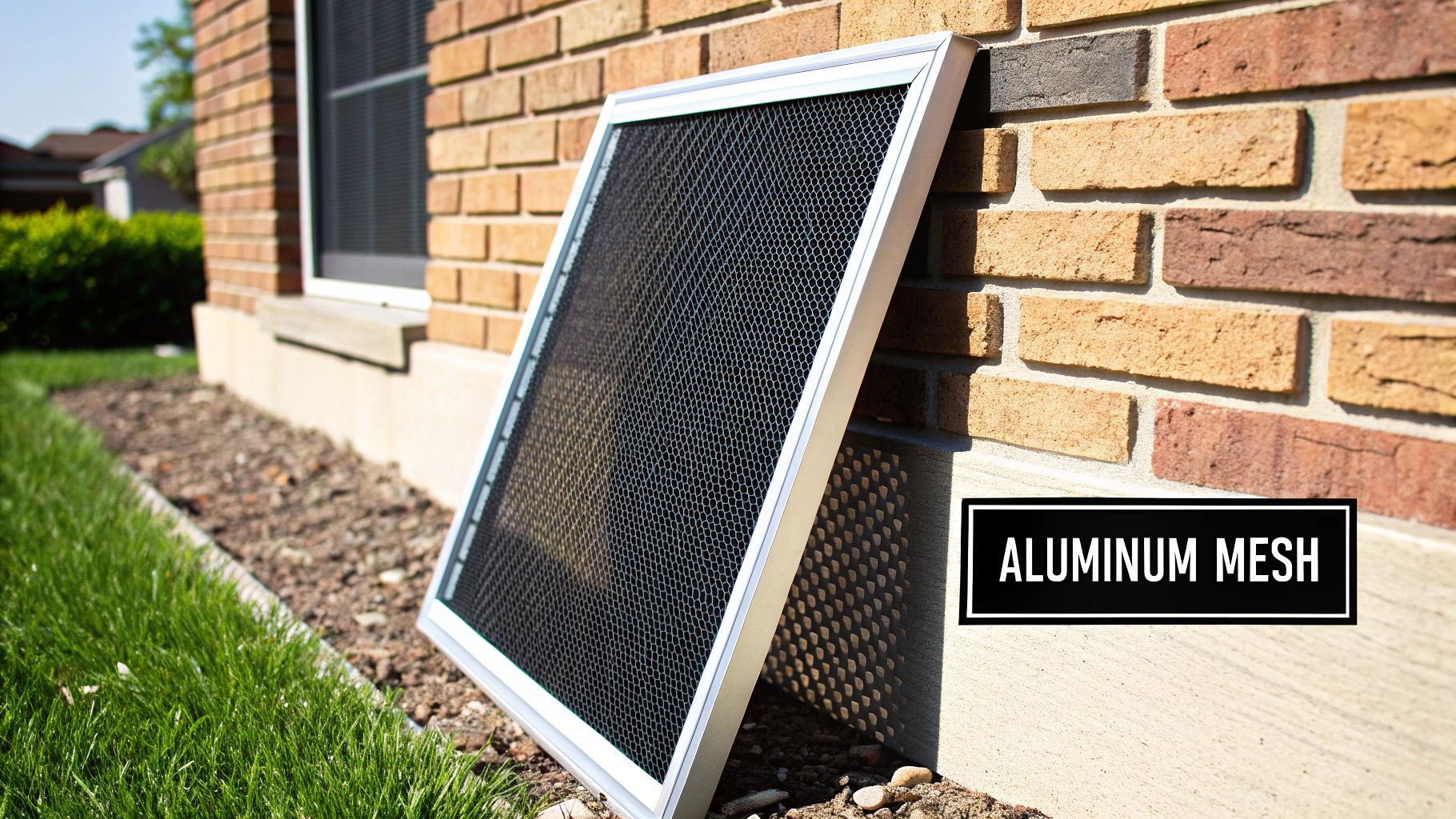
On the other side, you have aluminum. This mesh offers a noticeably crisper, more premium feel. It's stiffer and stronger than fiberglass, so it holds up better against everyday wear and tear. That rigidness also means the strands can be thinner, giving you a sharper, clearer view of the outdoors.
Installation and Durability
The experience of installing these two materials is night and day. Fiberglass's flexibility is a lifesaver during installation. If you don't get it perfectly tight the first time, you can often pop it out and readjust without leaving a mark.
Aluminum, however, demands more precision. Its rigidity means that if you bend or crease it, that mistake is likely permanent. This makes it a bit more challenging for a first-timer, but that same stiffness is what gives it superior long-term durability.
Where fiberglass might tear if a branch hits it or stretch over time in a windy area, aluminum holds its shape remarkably well. It also stands up to sun exposure far better; UV rays won't make it brittle like they can with fiberglass over the years. This makes aluminum a smart investment, especially in sunny climates.
Key Insight: Your choice really boils down to priorities. If you need a low-cost, easy-to-install screen for a standard window, fiberglass is perfect. But if you're looking for a screen that will last for years, provide a crystal-clear view, and you’re confident with a more careful installation, aluminum is the way to go.
Cost and Visuals
When it comes to your wallet, fiberglass is the clear winner. It's significantly cheaper and widely available, which is why builders often use it as the standard for new construction. Its cost-effectiveness is the main reason it dominates the market.
This is a great example of how a well-installed fiberglass screen can look.
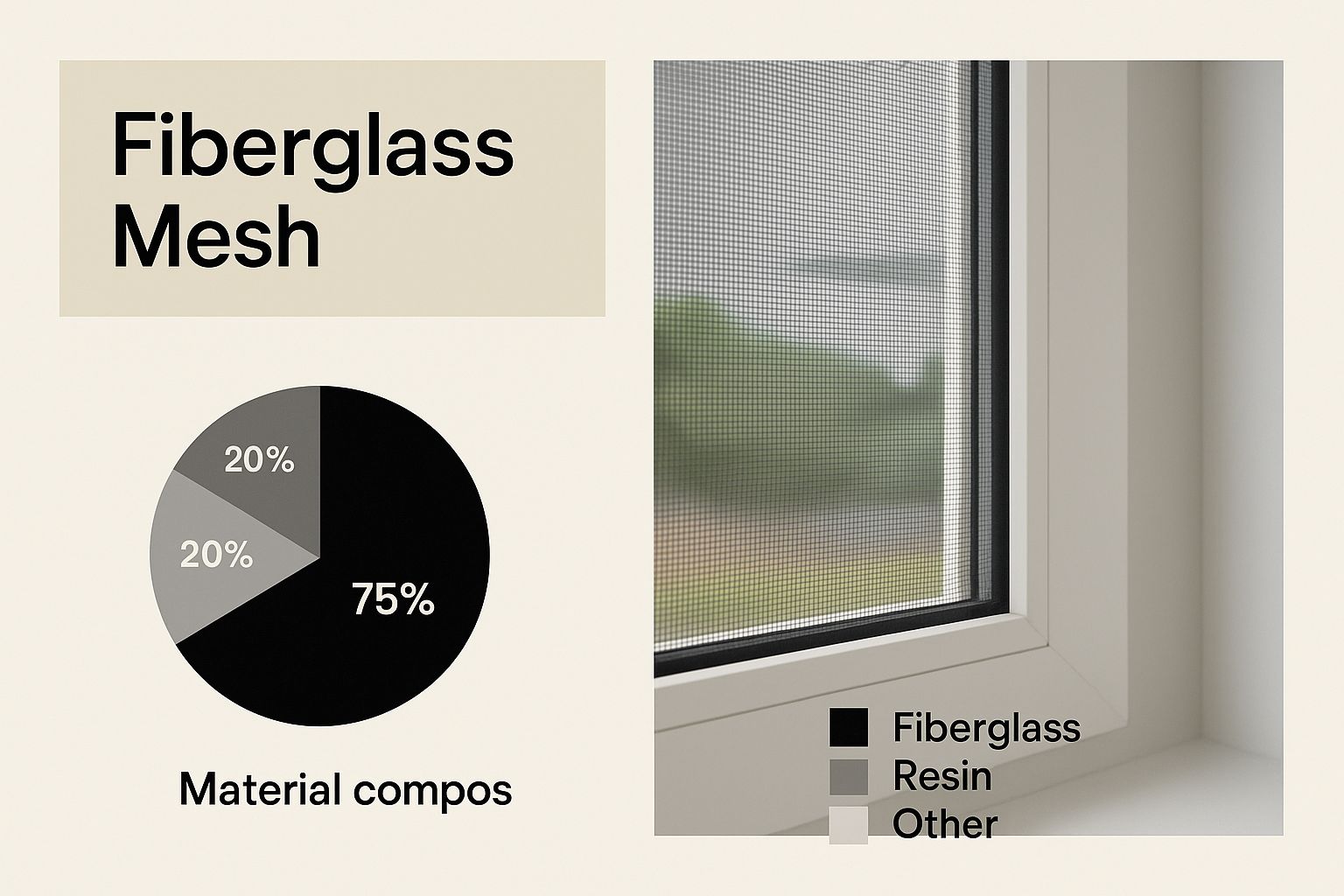
As you can see, the right mesh can blend seamlessly with your home's design while still doing its job perfectly.
Fiberglass vs. Aluminum Mesh Quick Comparison
To make the decision even easier, here’s a straightforward breakdown of how standard fiberglass and aluminum stack up against each other.
| Attribute | Fiberglass Mesh | Aluminum Mesh |
|---|---|---|
| Durability | Good; flexible and resists denting but can tear or stretch over time. | Excellent; rigid and strong, resists sagging, but can crease permanently. |
| Visibility | Good; charcoal color is standard and reduces glare. | Excellent; thinner strands offer a sharper, clearer view. |
| Installation | Easy; very forgiving for DIY projects due to its flexibility. | Moderate; requires care to avoid permanent creases or dents. |
| Cost | Low; the most affordable and widely available option. | Moderate; costs more than fiberglass but offers greater longevity. |
| UV Resistance | Good; but can become brittle and degrade after many years of sun exposure. | Excellent; not affected by UV rays, maintaining its strength over time. |
| Ideal For | Standard residential windows, DIY repairs, budget-conscious projects. | Homes in sunny or coastal areas, high-traffic areas, and for homeowners wanting maximum clarity and longevity. |
Ultimately, there isn't a single "best" material—just the one that fits your specific needs and budget.
In fact, fiberglass mesh is so versatile that it has become the most popular choice for retractable screens, thanks to its blend of durability, cost, and ease of use. It consistently leads sales in residential markets across North America and Europe. Figuring out the best window screen material is all about balancing these practical factors for your home.
Solving Problems with Specialty Screen Mesh
While your standard fiberglass and aluminum screens get the job done for most homes, some situations demand something more. When you’re dealing with a persistent problem—like a screen-shredding cat or a living room that bakes in the afternoon sun—it’s time to look at specialty mesh. These screens are engineered with specific properties to tackle challenges that go far beyond just keeping bugs out.
Think of them as precision tools. You wouldn't use a standard screwdriver on a specialized screw, and the same thinking applies here. For a homeowner whose dog paws at the patio door, the right screen isn't a luxury. It's a practical upgrade that saves you from replacing torn screens year after year.
Protecting Windows From Pets and Pests
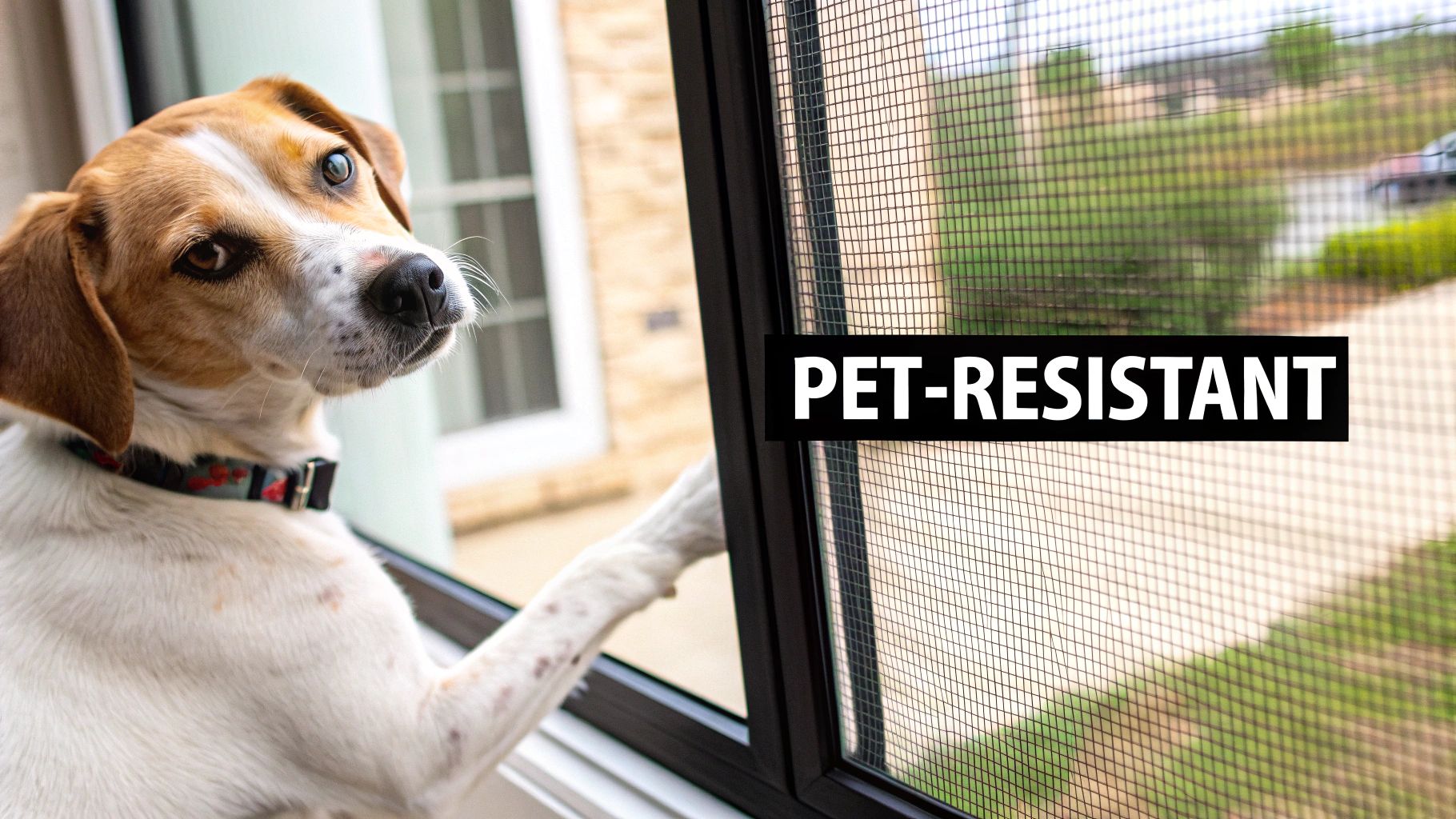
If you have cats that climb or dogs that scratch, you already know that a standard screen doesn't stand a chance. This is exactly where pet-proof screen mesh proves its worth. It’s not just a little stronger than regular fiberglass; it’s in a completely different class.
Made from a tough, vinyl-coated polyester, this mesh is built to resist the tearing, scratching, and puncturing that claws and paws inflict. While I’ve seen a truly determined pet manage to damage just about anything, this material is roughly seven times stronger than traditional screens, giving you a fighting chance against daily abuse.
- Material Strength: The thick, robust polyester fibers absorb impact without ripping.
- Ideal Application: It’s a lifesaver for ground-floor windows, screen doors, and enclosed porches where pets spend most of their time.
- Visibility Trade-off: The thicker strands do reduce visibility compared to standard mesh, but for most people, the peace of mind is well worth the compromise.
Ultimately, this type of window screen mesh gives you a durable barrier that keeps your pets safely inside and protects your investment.
Managing Heat and Glare With Solar Screens
Does one side of your house feel like an oven every summer afternoon? If so, solar screens are a powerful, and often overlooked, solution. These aren't just tinted screens; they're high-performance fabrics designed to block a huge amount of the sun's heat before it ever hits your window panes.
Solar screens work by absorbing and dissipating that solar energy. Depending on the specific weave and color you choose, they can effectively block anywhere from 65% to 90% of the sun's heat. The result is a noticeable drop in your indoor temperature and, almost always, a lower air conditioning bill.
By preventing this solar heat gain, these screens can cut cooling energy costs by up to 30%. In hot, sunny climates like Arizona or Florida, they're practically a necessity. They essentially act like sunglasses for your house, cutting that harsh glare and protecting your furniture, floors, and artwork from fading.
Of course, this impressive performance comes with a trade-off. The dense weave needed to stop heat also reduces the amount of natural light that comes in and can darken your view, especially with the darker-colored screens. Finding the right balance for your home is key.
Maximizing Your View and Airflow
For anyone who treasures a crystal-clear view, a standard screen can feel like a hazy film clouding the landscape. This is where high-visibility screens—sometimes sold as "invisible" or "better-vue" screens—come in. They’re engineered to be there, but not be seen.
The magic is in the construction. These screens are woven from ultra-fine threads that are far less noticeable to the human eye. The effect is remarkable; it often feels like there’s no screen there at all, even though you’re still fully protected from insects.
Here's how they deliver that premium experience:
- Thinner Threads: The fine-gauge fibers create a less obtrusive mesh pattern, putting the focus on your view, not the screen.
- Improved Airflow: The more open design naturally allows for better airflow, improving your home's ventilation on breezy days.
- Delicate Nature: This incredible clarity comes at the cost of durability. High-visibility mesh is much more fragile than standard or pet-proof options and is best for windows in low-traffic areas where it won’t get poked or pushed.
When you opt for one of these specialty types of window screen mesh, you're making a conscious choice to prioritize a specific function—whether that’s unmatched durability, energy efficiency, or a pristine view of the world outside.
How Your Climate Affects Screen Durability
When you're picking out a new window screen, it's easy to just focus on the material itself. But where you live plays a massive role in how long that screen will actually last. A mesh that works wonders in a dry, mild area might fall apart surprisingly quickly when faced with intense sun, constant humidity, or salty coastal breezes.
Think about it like this: you wouldn't wear a winter parka on a Florida beach. In the same way, putting a standard aluminum screen on a coastal home is asking for trouble. The relentless salty air is incredibly corrosive and will cause pitting and decay over time. For those environments, a vinyl-coated fiberglass or polyester screen is a much smarter investment, as that coating shields the mesh from salt and moisture.
This growing awareness of needing climate-specific, durable insect screens is a big deal. The global market for them hit around USD 3.45 billion in 2024 and is expected to keep climbing as homeowners look for solutions that are both effective and long-lasting. Concerns about pollution and preventing insect-borne illnesses are also pushing demand for tougher, more resilient materials.
The Battle Against Sun and Humidity
If you live in a hot, sunny state like Arizona or Nevada, your screen’s number one enemy is UV degradation. Constant, harsh sunlight is brutal on certain materials, especially standard fiberglass. Over the years, those UV rays break down the vinyl coating, leaving the mesh brittle, faded, and ready to tear at the slightest touch.
This is exactly why solar screens were invented. They're built with UV-stabilized materials specifically to handle non-stop sun without becoming weak or damaged. While aluminum is naturally good against UV rays, it has a downside—it gets hot and radiates that heat into your home. This makes solar screens the better choice for both durability and energy efficiency.
Expert Insight: Think of your local weather as the ultimate field test for any window screen. In humid, rainy places, rust is the main problem for uncoated metals. In sunny regions, UV resistance is an absolute must if you want to avoid replacing your screens every few years.
Making a Climate-Smart Choice
To make sure you get the best performance and longest life out of your screens, you need to match the material to your local climate.
- Coastal or High-Humidity Areas: Stick with materials that have a protective coating. Vinyl-coated fiberglass and polyester are excellent at resisting corrosion and moisture.
- Hot, Sunny Climates: Solar screens are the hands-down winner. They offer top-notch durability and can seriously cut down your cooling costs by blocking solar heat.
- Temperate or Dry Climates: You have more flexibility here. Standard aluminum or fiberglass are both fine choices, and your decision will likely come down to your budget and how much visibility you want.
When you understand how different types of window screen materials hold up under pressure, you can make a choice that saves you money and headaches down the road. It’s about thinking ahead to ensure your screens don’t just look good on day one, but for years to come.
Balancing Cost, Visibility, and Airflow
When you're choosing between different types of window screen mesh, you're always making a trade-off. It really comes down to balancing three things: what you can afford, how clear your view is, and how much air gets through. Getting a handle on how these factors play off each other is the key to picking a screen you'll actually be happy with for years to come.
It’s a bit like picking out sunglasses. Those super-dark, heavy-duty lenses give you incredible glare protection, but they also make everything look darker. On the flip side, a stylish pair with light lenses might look fantastic but won't do much against the bright afternoon sun. Screen mesh works on that same principle—it’s all about compromise and what matters most to you.
The High-Visibility and High-Airflow Option
On one side of the coin, you have high-visibility screens. These are impressive feats of engineering, woven with incredibly fine threads that make the screen seem to disappear. What you get is a gorgeous, wide-open view and fantastic airflow, making your home feel more connected to the world outside.
Of course, this premium experience comes with a couple of catches. First off, these screens are the most delicate ones you can buy. They can get damaged pretty easily, so they're not a great fit for busy areas or homes with curious pets and kids. Second, they're definitely at the top end of the price range.
Choosing a high-visibility screen means you’re putting aesthetics and ventilation first. It's an ideal choice for a second-story bedroom window with a stunning view, but it's a gamble for a high-traffic patio door.
The Durability and Protection Option
At the other extreme, you find the workhorses: heavy-duty options like solar screens and pet-proof screens. Think of these as the tanks of the window screen world, built from the ground up for serious durability and protection. A pet-proof screen uses a thick, vinyl-coated polyester that easily shrugs off claws, while a solar screen’s tight weave can block up to 90% of the sun's heat.
All that toughness means you have to give something up, and in this case, it's visibility and airflow. The thicker, denser materials will noticeably reduce the amount of daylight coming in and can stifle a nice breeze. While they cost more upfront than standard fiberglass, they often pay for themselves over time by preventing screen repairs or lowering your energy bills.
Finding Your Perfect Balance
The "best" screen isn't a one-size-fits-all product; it's the one that perfectly matches your main priority for a specific window in your home. Before you pull the trigger, take a moment to figure out what you're trying to accomplish.
- For an Unobstructed View: If a crystal-clear view and a fresh breeze are what you're after, a high-visibility screen is the way to go—just make sure it’s in a low-traffic spot.
- For Lower Energy Bills: If your living room gets blasted by the afternoon sun, a solar screen is a smart investment, even if it makes the room a bit dimmer.
- For a Resilient Barrier: If you’re tired of replacing screens torn by pets or kids, the peace of mind you get from a durable pet-proof screen is well worth a little less natural light.
By understanding these compromises, you can move forward and confidently pick the right type of window screen mesh that gives you the performance you need without forcing you to give up more than you want to.
Your Guide to Making the Final Decision
So, how do you choose the right screen mesh? It really boils down to answering one simple question: What's the main thing you need your screen to do? Once you pinpoint your primary goal, you can cut through the noise and land on the perfect material for your home.
Let’s walk through a couple of common situations. If you're on a tight budget, live in a moderate climate, and don't have pets trying to claw their way outside, standard fiberglass mesh is your most sensible bet. It gets the job done—keeping bugs out—without you overspending.
On the flip side, imagine a family with two big, energetic dogs in a hot, sunny place like Arizona. Their best move would be a smart combination of pet-proof and solar screens. The tough pet screen on the sliding patio door can take a beating, while solar screens on the windows facing the sun will make a huge difference in their summer cooling bills.
A Final Checklist for Your Home
Before you pull the trigger, run through these quick questions. Your answers will steer you right to the perfect fit.
- What’s my biggest headache with my current screens? Is it constant tears, blinding glare, or feeling like you're looking through a hazy filter?
- What’s my realistic budget per window?
- Do I care more about a perfectly clear view or having a screen that will last forever?
- Do I need extra protection? Think pets, intense sun, or those tiny "no-see-um" bugs.
Thinking this through helps you zero in on what truly matters for your home.
For instance, if you’re trying to preserve that gorgeous mountain view from your living room, a high-visibility screen is absolutely worth the investment. But for a ground-floor window right next to a busy sidewalk, a sturdy aluminum screen gives you better peace of mind and longevity.
Remember, the price tag on the mesh itself is only part of the story. To get the full picture and budget properly, it's a good idea to understand the complete window screen installation cost. That way, you avoid any surprises and choose a screen that provides real, long-term value for your specific needs.
Frequently Asked Questions
https://www.youtube.com/embed/xqE8wmBFGjA
Even after learning about the different types of window screen mesh, a few questions might still be lingering. Let's tackle some of the most common ones to help you nail down your final choice and keep your screens in top shape for years to come.
Key Screen Mesh Questions Answered
What is mesh count and why does it matter?
Mesh count tells you how many strands are woven into one square inch of screen. For instance, a standard 18×16 mesh has 18 vertical strands and 16 horizontal ones. When you see a higher number, like a 20×20 mesh, it means the weave is much tighter.
This detail is absolutely critical if you're battling tiny insects. Gnats, no-see-ums, and other minuscule pests can wiggle right through standard screening, but a higher mesh count stops them in their tracks.
Can I install new window screen mesh myself?
Absolutely. Replacing screen mesh is a classic DIY project, and flexible fiberglass makes it pretty straightforward for a first-timer. You'll just need basic tools like a spline roller and a utility knife.
That said, getting a perfectly tight, professional-looking finish can be trickier than it looks, especially with more rigid materials like aluminum. If you’re doing several windows or just want a flawless result without the hassle, calling in a pro is often the smarter move.
Pro Tip: Never clean your screens with a pressure washer. The high-powered blast can easily stretch, tear, or outright ruin the mesh, drastically cutting its life short. A soft brush with a bit of soap and water is all you need to protect both the screen and your view.
How do I clean my window screens to make them last longer?
The best method is also the simplest. Gently scrub both sides of the screen with a soft bristle brush and a mild mix of soap and water. After that, just rinse them thoroughly with a hose and let them air dry completely before popping them back in.
This quick cleaning routine removes dirt and grime that can slowly corrode the material over time, extending the life of any type of mesh you choose.
For a flawless installation or repair of any window screen mesh, you can count on the professionals at Sparkle Tech Screen Service. Get a quick quote and schedule same-week service today.


