


When it's time to choose new window screens, you’ll find the options go way beyond just keeping bugs out. It's a balancing act between durability, how clear you want your view to be, and what fits your budget. You have standard choices like fiberglass and aluminum, but there are also specialized screens built to stand up to pets or block intense sun.
Navigating Your Window Screen Options
Picking a window screen can feel surprisingly complicated once you realize how many types are out there. There's no single "best" option for everyone; it's about what matters most for your home.
The right choice usually comes down to four key questions:
- Durability: How much abuse does this screen need to take? Think kids, pets, or just general wear and tear from the weather.
- Visibility: Do you want a screen that practically disappears, giving you a crystal-clear view, or is a bit of privacy more important?
- Climate: Where do you live? A hot, sunny climate has different needs than a coastal area with salty, corrosive air.
- Budget: What are you prepared to spend upfront for a screen that will last for years?
This chart gives you a quick visual breakdown of the main material categories, showing how the common choices stack up against the more premium ones.
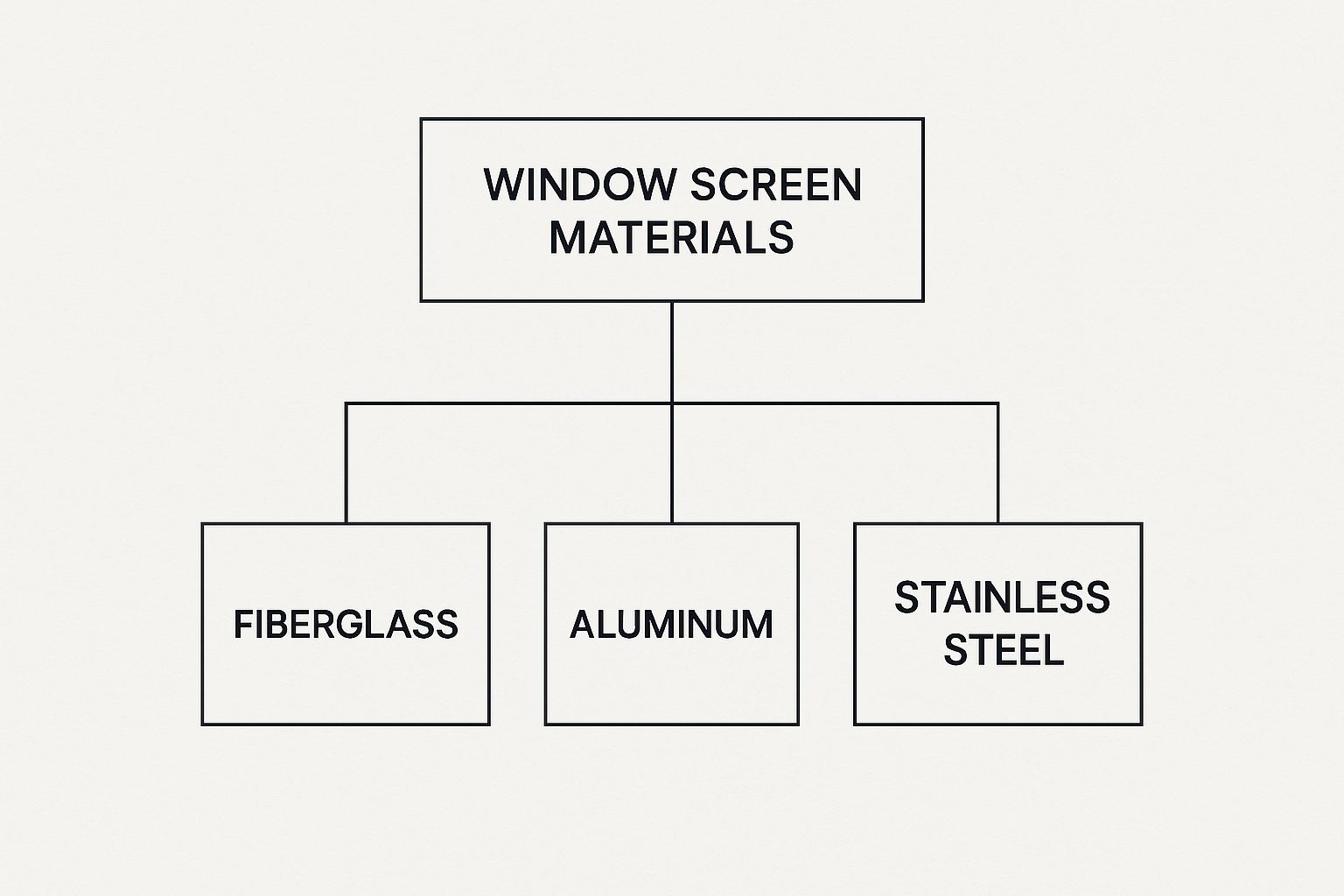
As you can see, fiberglass, aluminum, and stainless steel are the foundational tiers. Each one offers a noticeable step up in strength and resilience.
Finding Your Perfect Match
Think of this guide as your map. We'll walk through the main players, from budget-friendly fiberglass to tougher aluminum and the premium feel of stainless steel. We’ll also look at specialty screens designed to solve modern problems, like protecting your furniture from sun damage or surviving an encounter with your dog's claws.
A window screen isn't just a barrier against bugs; it's a functional part of your home's ecosystem, influencing light, airflow, and even your energy bills.
To help you get started, the table below gives a quick snapshot of the primary materials. It’s designed to help you quickly narrow down the contenders for your home before we get into the nitty-gritty details.
Quick Comparison of Window Screen Materials
This table summarizes the primary types of window screen materials, highlighting their key features, typical use cases, and relative cost to help homeowners make a quick initial assessment.
| Material Type | Key Benefit | Best For | Cost Level |
|---|---|---|---|
| Fiberglass | Most affordable and flexible | General use in low-traffic areas; budget-conscious projects | $ |
| Aluminum | Crisp visibility and good durability | Areas needing a clear view and moderate strength | $$ |
| Pet-Resistant | Resists tears from claws and paws | Homes with dogs, cats, or small children | $$$ |
| Solar/Sun-Control | Blocks UV rays and heat | Sunny climates to reduce cooling costs and prevent fading | $$$ |
| Stainless Steel | Superior strength and corrosion resistance | Coastal homes, security applications, high-end projects | $$$$ |
With this overview, you’re already on your way to making a great choice that will boost your home’s comfort and curb appeal for years to come. Now, let's dive deeper into what makes each of these materials tick.
The Everyday Champions: Fiberglass and Aluminum
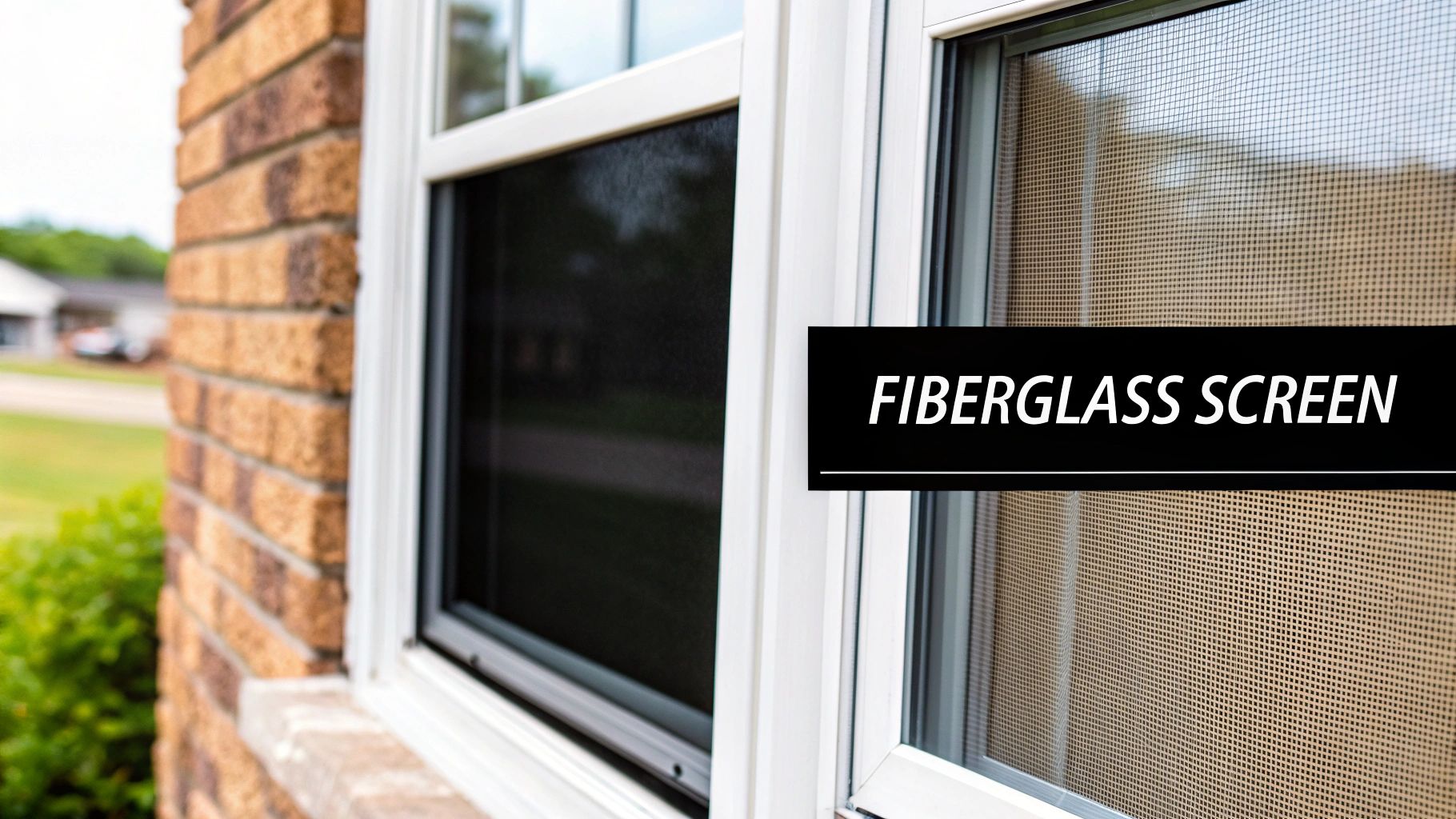
When you picture a classic window screen, you’re almost certainly thinking of either fiberglass or aluminum. There's a good reason for that. These two materials are the reliable workhorses of the residential world, dominating the market for millions of homes. While both get the basic job of keeping bugs out done right, their performance couldn't be more different. Choosing between them really comes down to balancing your budget, how much durability you need, and the look you're going for.
Think of fiberglass as the flexible, all-around player on the team. It’s hands-down the most common and affordable screen material out there, making it the go-to for new homes and quick DIY replacements. It’s made from woven fiberglass threads that are coated in protective vinyl, which gives it a forgiving nature.
If a stray soccer ball or a clumsy pet bumps into a fiberglass screen, it usually just pops right back into shape without any permanent damage. That flexibility is its greatest asset.
But that same flexibility is also its biggest weakness. While it won't dent, fiberglass is much more likely to tear or rip compared to its metal cousins. After years of baking in intense sun, it can get brittle and fragile, meaning you might find yourself replacing it more often.
Fiberglass at a Glance
Here’s a quick rundown of where fiberglass really shines and where it tends to fall short:
- Pro: It's extremely affordable, which is perfect when you're on a tight budget or rescreening the entire house.
- Pro: It’s flexible and will not dent or crease on impact, a huge plus for high-traffic areas.
- Pro: It naturally resists rust and corrosion, making it an ideal pick for coastal homes or anywhere with humid, salty air.
- Con: It’s not as durable as metal and can be torn or punctured by sharp objects or a determined pet.
- Con: It can sag or stretch out over time, especially in larger screen panels if it isn't installed with just the right tension.
The Durable Classic: Aluminum
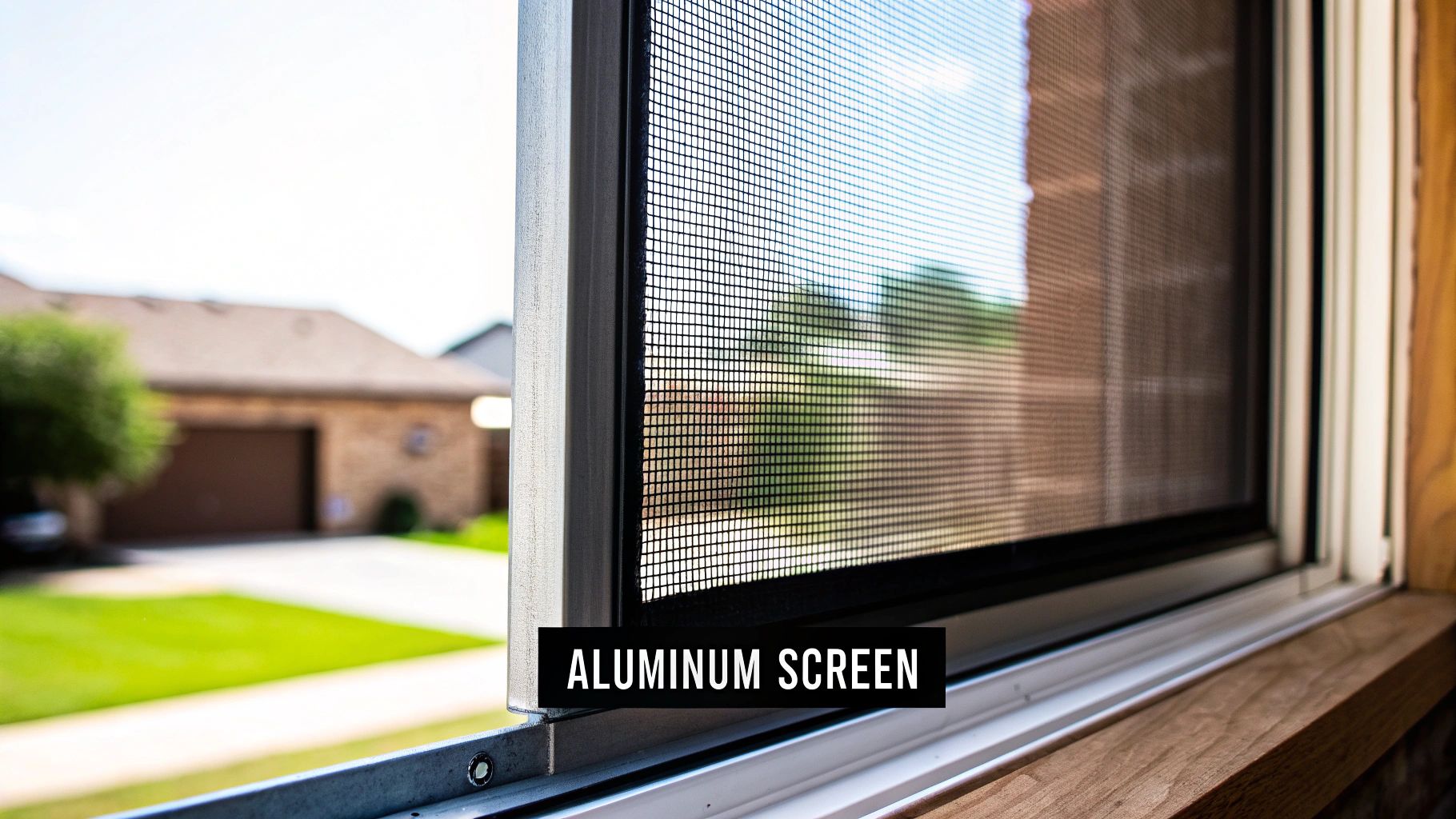
Now, let's talk about aluminum—the crisp and durable veteran of the screen world. If fiberglass is the flexible all-rounder, aluminum is the rigid defender. It gives you a much sharper, cleaner look from the street because the metal mesh holds its shape perfectly. This also translates to excellent outward visibility, often with less glare.
This rigidity is aluminum's key advantage. It’s significantly stronger and far more resistant to tearing than fiberglass, making it a smart long-term investment for ground-floor windows or anywhere you need a bit more toughness.
Aluminum's strength gives it a more permanent feel, but it comes with a trade-off. Unlike fiberglass, aluminum will absolutely dent. A direct hit from a ball or a dropped tool will leave a permanent crease in the mesh that’s pretty much impossible to fix without replacing the whole screen.
And while most modern aluminum screens are treated to resist corrosion, an uncoated or deeply scratched screen can oxidize and develop a chalky, white film over time. Even with these points in mind, its longevity and crisp appearance make it a very popular upgrade from standard fiberglass. For a detailed breakdown comparing even more options, you can check out our guide on the best window screen material for different home styles. It'll help you see where aluminum fits into the broader spectrum of choices available today.
Premium Materials for Strength and Style
Sometimes, the standard options just don't cut it. When you need more than what fiberglass or aluminum can offer in terms of sheer toughness or visual flair, it's time to look at the premium stuff. These high-end materials are less about just keeping bugs out and more about making a lasting investment in your home's security, durability, and overall character. You're getting a major upgrade in performance, but it naturally comes with a bigger price tag.
In this top tier, two materials really shine: stainless steel and copper. Each one brings something special to the table, catering to homeowners who want the absolute best in either strength or style. They aren't the go-to for every single project, but for the right home, their advantages are impossible to ignore.
Let's dig into what makes these materials a worthy upgrade, starting with the heavyweight champion of the screen world.
Stainless Steel: The Fortress
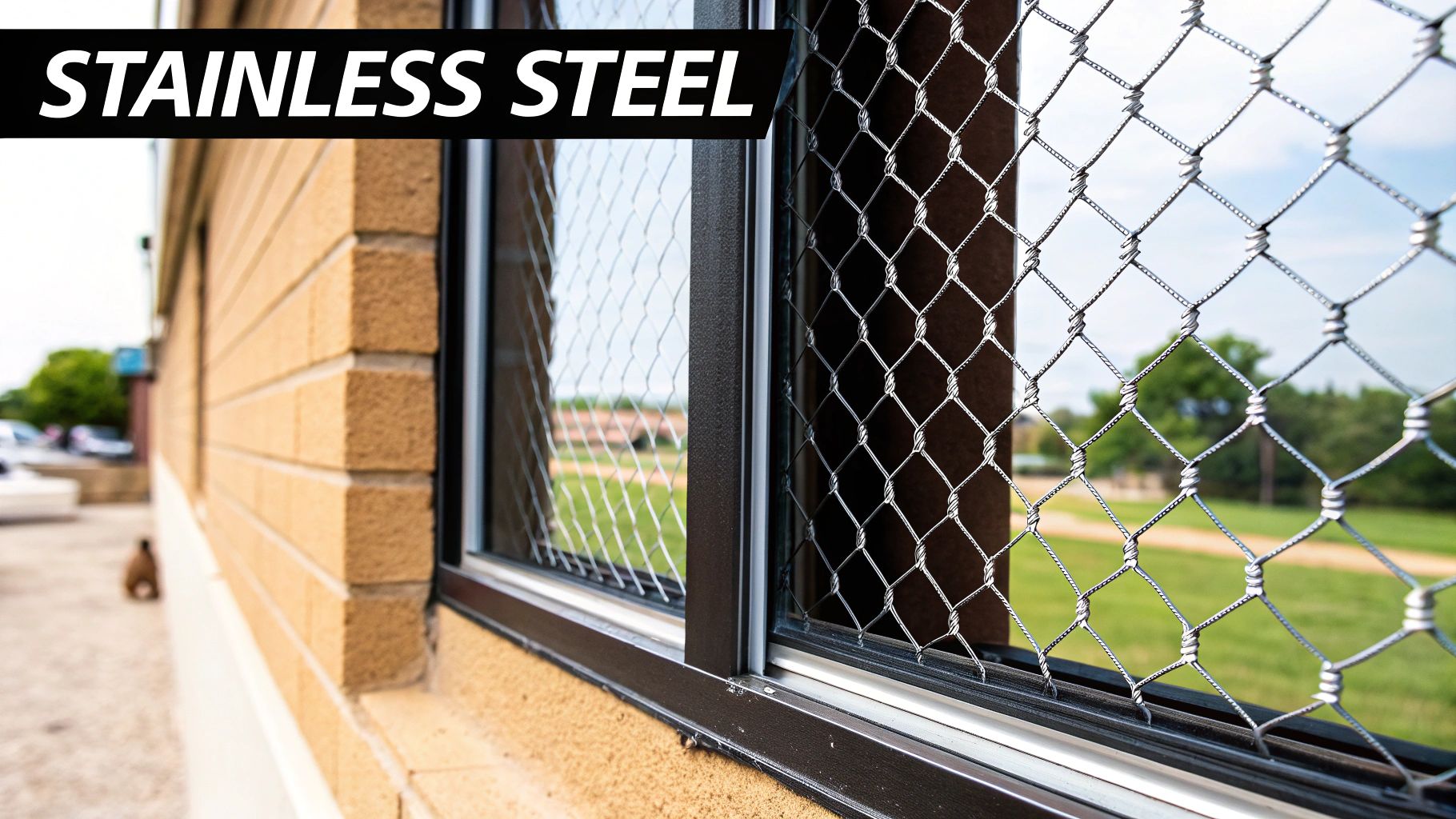
Think of stainless steel mesh as the fortress for your windows. It is, by a long shot, the strongest and most durable residential screen material you can buy. Its incredible tensile strength makes it ridiculously resistant to tearing, punctures, or damage from debris kicked up during a storm. This raw toughness is also why it’s the go-to for high-end security screens.
Unlike aluminum, which can dent or crease on impact, stainless steel holds its ground. It keeps a clean, sharp appearance for decades. It also boasts superior corrosion resistance, making it the perfect choice for coastal homes where salty air can eat away at lesser metals. You get a sleek, modern look with fantastic visibility that won’t ever rust.
Stainless steel offers a unique combination of brute strength and refined looks. While the initial cost is high, its ability to withstand extreme conditions and provide an extra layer of security makes it a practical investment for homeowners prioritizing resilience and peace of mind.
Copper: The Architectural Statement
If stainless steel is all about modern strength, copper is chosen for its timeless beauty and evolving character. A copper screen is as much an architectural detail as it is a functional part of your window. When it's brand new, it has a brilliant, shiny finish that instantly adds a touch of luxury.
But here's where the magic happens. Over time, as it's exposed to the weather, the copper develops a stunning, rich patina—that classic greenish-blue or deep bronze coating. This natural aging process is highly sought after, especially for historic homes or custom builds where you want to add an element of old-world charm that simply can't be faked.
This aesthetic transformation is copper's biggest draw. Here’s a quick breakdown of how these two premium choices stack up:
| Feature | Stainless Steel | Copper |
|---|---|---|
| Primary Benefit | Unmatched strength & security | Timeless beauty & unique patina |
| Durability | Highest resistance to damage | Very durable, but softer than steel |
| Corrosion | Will not rust or corrode | Develops a protective patina |
| Best For | Security, coastal areas, high-end modern homes | Historic renovations, luxury builds, architectural style |
| Cost | Very High | Highest |
Ultimately, choosing between these premium materials comes down to your main goal. If you're focused on creating a secure, damage-proof home that can handle anything thrown at it, stainless steel is the obvious winner. But if your aim is to add a touch of timeless elegance and unique character, the evolving beauty of copper is in a class of its own.
Specialty Screens for Modern Home Needs
Sometimes, the standard screen materials just don't cut it. Your home has unique challenges, and thankfully, the world of window screens has evolved to meet them. We're talking about specialty screens designed to solve very specific problems—from rambunctious pets to the scorching afternoon sun.
These aren't your grandmother's window screens. Think of them less as simple bug blockers and more as active upgrades for your home's comfort and efficiency. If you find yourself frustrated with traditional fiberglass or aluminum, one of these advanced options might be exactly what you need.
Pet Resistant Screens for Durability
If you're a pet owner, you know the struggle. A dog scratching at the slider or a cat attempting a spiderman-esque climb can shred a standard fiberglass screen in seconds. That's precisely why pet-resistant screens were invented.
This stuff is tough. Made from a vinyl-coated polyester, it's engineered to be seven times stronger than the standard material. The thicker, more resilient mesh is designed to withstand punctures and tears from claws and paws. While the weave is a bit more noticeable, the trade-off is well worth it for the peace of mind. No more constant patching and replacing!
Pet-resistant screens are a game-changer for households with furry family members. They’re a practical investment that lets you stop worrying about screen damage and just enjoy your pets.
High Visibility Screens for a Clearer View
Do you feel like your current screens put a hazy filter over your beautiful backyard view? You’re not alone. High-visibility screens, sometimes called "invisible screens," are the perfect solution.
The secret is in the weave. These screens use incredibly fine threads to create a mesh that’s much less noticeable to the eye. The result is a surprisingly crisp, unobstructed view that feels more like an open window. They also let in more light and improve airflow, making any room feel brighter and more connected to the outdoors. They're an obvious choice for picture windows or any room where the view is the star of the show.
Solar Screens for Energy Efficiency
Think of solar screens as a pair of high-performance sunglasses for your entire house. Their main job is to stop the sun's heat and harmful UV rays before they ever hit the glass. They do this with a dark, tightly woven mesh that absorbs and dissipates a huge amount of solar energy.
How effective are they? A good solar screen can block up to 90% of the sun's heat. That translates directly into a cooler home, a less overworked air conditioner, and lower energy bills. This focus on efficiency is a big deal; the market for advanced coated screens is projected to hit USD 1.8 billion by 2033, largely because homeowners are discovering they can cut cooling costs by 12% to 33%. You can read more about these energy-saving trends.
As you can see, screen technology has come a long way. Once you’ve picked the perfect material for your home, the next step is getting it installed. If you're tackling the job yourself, our guide on how to install screens will walk you through the process for a perfect, professional-looking fit.
Security Screens for Ultimate Peace of Mind
https://www.youtube.com/embed/x6udqwksDtk
When your number one priority is keeping your home and family safe, standard insect screens just don't cut it. For real protection, you need to look at security screens. These aren't just beefed-up versions of your typical window screen; they're fully engineered systems built from the ground up to prevent forced entry.
It helps to think of them less like a screen and more like a transparent security door for your windows.
The core of any good security screen is its mesh. We're not talking about flexible fiberglass or even standard aluminum here. These systems almost always use a high-tensile stainless steel mesh. This isn't your average screen material—it's woven metal that's incredibly tough to slash with a knife. Its sheer strength also means it can take a serious impact from a kick or a heavy object without giving way. This powerful mesh is then anchored into a heavy-duty aluminum frame, creating a truly formidable barrier.
More Than Just Strong Mesh
But a tough mesh is only part of the equation. What makes a true security screen is the way the entire system works together. To earn the name, these screens have to pass a battery of intense industry tests that mimic a real-world break-in.
To stand up to that kind of abuse, a security screen relies on several key features:
- Reinforced Frames: The frame isn't the flimsy aluminum you're used to. It's significantly thicker and stronger, specifically designed to resist being bent or pried away from the window.
- Specialized Locking Systems: Forget simple clips. These screens often use multi-point locking systems that secure the screen to the window frame at several different points, making it incredibly difficult to dislodge.
- Tamper-Resistant Hardware: Every screw and fastener is intentionally designed to be non-standard or impossible to access from the outside. This stops a would-be intruder from simply unscrewing the whole assembly.
A security screen is a holistic system where the strength of the mesh, frame, and locks combine to create a unified defense. It provides a physical deterrent that is always active, whether your window is open or closed, offering peace of mind without sacrificing airflow.
This powerful combination creates a serious obstacle for intruders while still giving you excellent visibility and letting the breeze flow through. You get to enjoy fresh air without ever compromising your home's security.
It's no surprise that more homeowners are turning to these solutions. The global anti-theft window screen market, covering materials like steel and aluminum, is expected to climb from an estimated $1.5 billion in 2025 to nearly $2.8 billion by 2033. This surge is driven by a growing demand for better home security and new innovations in reinforced materials. You can discover more about these market insights on Data Insights Market.
For anyone serious about upgrading their home's defenses, investing in one of these high-performance systems is a smart, effective move. They’re proof that you don't have to choose between feeling safe and enjoying the simple pleasure of an open window.
Your Window Screen Questions, Answered
Alright, so you've learned about the different materials, but that's usually when the real-world questions pop up. What do you do about those tiny, persistent bugs? How do you keep your new screens looking brand new? Let's dive into some of the most common questions we get from homeowners.
We'll cover the practical details that go beyond just picking a material, so you feel confident about installing and caring for your screens long-term.
How Do I Keep Tiny Bugs Out?
When you’re dealing with minuscule pests like no-see-ums or gnats, the secret isn't just the screen material itself—it's the tightness of the weave. For this, you need what we call a fine mesh or "no-see-um" screen.
You'll want to look for a mesh count of 20×20 or higher. That number just means there are more strands packed into every square inch. Fiberglass is a fantastic choice here; it can be woven into a super-fine, tight mesh without losing its flexibility or becoming too expensive. It really hits the sweet spot between performance and cost for keeping those annoying little bugs out.
What Is the Best Way to Clean My Screens?
A little bit of regular cleaning can make a huge difference in how long your screens last. The good news? It's easy.
For standard materials like fiberglass and aluminum, a gentle touch is all you need. Grab a soft-bristled brush and mix up some mild soap and water. Gently scrub both sides of the screen, then give it a good rinse with a garden hose on a low-pressure setting. Definitely stay away from pressure washers—they’re way too powerful and can tear right through the mesh.
A quick heads-up for premium materials like copper: stick to just water. Soaps and detergents can mess with the natural aging process, stripping away that beautiful, unique patina. And no matter the material, always let your screens air dry completely before popping them back in.
Can I Replace the Screen Mesh Myself?
Yes, absolutely! This is a fantastic DIY project. If the frames are still in good shape but the screen fabric is ripped, faded, or full of holes, there's no need to replace the entire unit.
This job is called rescreening, and it just means you're replacing the fabric itself. It's a great way to save a good chunk of money compared to buying brand-new framed screens. All you really need is a roll of new screen material, some spline (that's the little rubber cord that holds the mesh tight), and a spline roller tool. If you're putting together a shopping list, our guide to the essential window screen repair tools will make sure you have everything you need to get started.
Ready to upgrade your home with the perfect screens? At Sparkle Tech Screen Service, we specialize in everything from new bug and solar screens to expert repairs and rescreening. We offer same-week service and quick quotes to get your project done right. Contact us today for a fast, professional solution.


