


When you start thinking about installing new window screens, the first question on your mind is probably, "What's this going to cost me?" It’s a fair question. On average, you can expect the window screen installation cost to be somewhere between $147 and $514 per window, with the national average landing right around $316.
But that's just a ballpark figure. The final price tag depends on a few key things, like the size of your windows, the specific screen material you pick, and what labor costs look like in your area.
What Is the Real Cost to Install Window Screens?
Before we get into the nitty-gritty, it helps to have a clear financial starting point. Knowing the typical cost range lets you set a realistic budget and keeps you from being caught off guard when the quotes start rolling in. Think of it as a financial snapshot—the key numbers you need before digging into the details that will shape your final bill.
The truth is, there's no single, flat rate for installing a new window screen. The cost exists on a spectrum. A simple rescreening job with standard material will be on the lower end, while a full-blown replacement using a high-end or specialty screen will push you toward the higher side.
A General Price Breakdown
So, let's talk numbers. The average cost to replace a window screen in the U.S. is about $316 per window. Most homeowners end up spending between $147 and $514. On top of the material cost, you can expect labor and installation to add another $20 to $50 per screen.
It's also worth noting that replacing just one screen usually costs more per window than if you were to do several at once. For a more detailed look at pricing in your area, you can find a lot of great information in this guide to screen installation costs from HomeAdvisor.com.
Choosing the right material is one of the biggest decisions you'll make for your budget. Standard fiberglass is easy on the wallet, but if you opt for something like brass or a heavy-duty security screen, the price can climb pretty quickly.
This wide range is exactly why getting a custom quote is so crucial. A professional installer can give you an accurate estimate based on your home's unique needs, so you won't have to worry about any last-minute surprises.
To give you a clearer idea, the table below breaks down what you might expect to pay for different types of window screen projects.
Estimated Window Screen Installation Costs at a Glance
This table provides a quick overview of estimated costs for different types of window screen installations, from a single standard screen to high-end security options.
| Project Type | Average Cost Range (Per Window) |
|---|---|
| Standard Fiberglass Screen | $60 – $260 |
| Durable Aluminum Screen | $80 – $390 |
| Pet-Proof Screen | $150 – $560 |
| Solar Screen (UV Protection) | $60 – $850 |
| High-End Security Screen | $100 – $1,000 |
As you can see, the choice of material makes a huge difference. Whether you need something basic to keep the bugs out or a premium screen for added security, there's an option to fit just about any budget.
Key Factors Driving Your Installation Cost
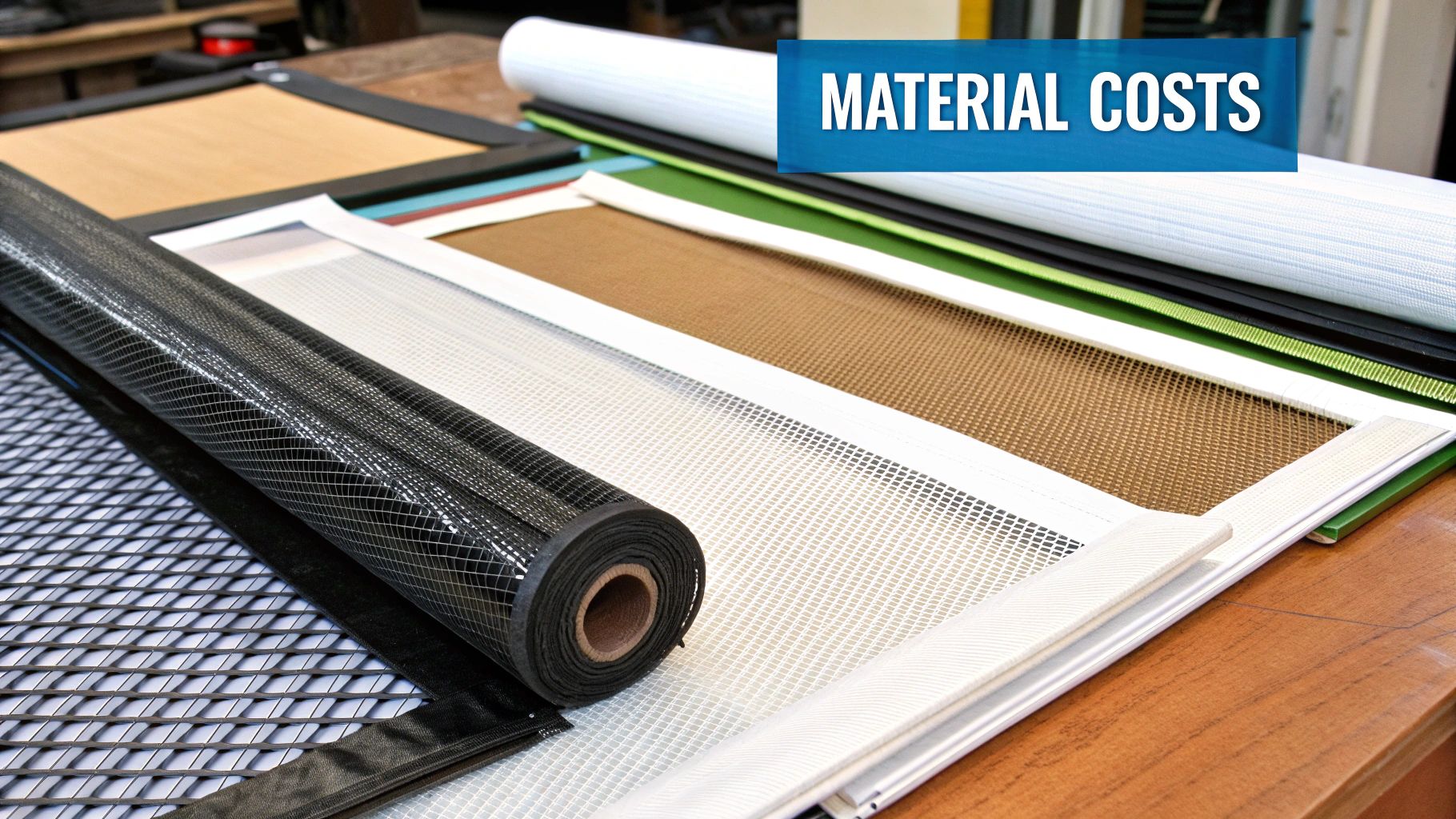
If you've ever gotten a few quotes for a window screen project, you've probably noticed the prices can be all over the map. This isn't just contractors pulling numbers out of thin air. Several key variables directly impact that final bill, and understanding them helps you see exactly where your money is going.
Think of it like buying a car. A base model will get you around just fine, but once you start adding a bigger engine, leather seats, or high-tech features, the price tag climbs. The same logic applies to the window screen installation cost—every choice you make, from the material to the window size, has a real financial impact.
The biggest single factor is usually the screen material itself, which we’ll dive into a bit later. For now, let's break down the other critical elements that will shape your quote.
Window Size and Shape
It probably comes as no surprise that the physical size of your windows is a major cost driver. Bigger windows simply require more screen mesh and more frame material, so a large picture window will naturally cost more than a small bathroom window.
But it’s not just about square footage; complexity plays a huge role, too.
- Standard Windows: Your typical rectangular, single-hung, or double-hung windows are the bread and butter of screen installation. They're straightforward to measure and fit, keeping labor costs down.
- Custom Shapes: Got an arched, circular, or trapezoid-shaped window? These require completely custom-built frames and meticulous mesh cutting. The specialized labor involved can push the cost for these screens to $200 to $600 or even more.
To put it in perspective, a standard 28×55 inch screen might run anywhere from $65 to $440, depending on materials. A custom-shaped screen of a similar size could easily be double that price because of the extra skill and time involved.
The rule of thumb is simple: the more unique the window's design, the more time and skill are needed to create a perfect fit. This specialized attention is a key component of your installation cost.
Labor and Location
Labor is the human element in your quote, and it’s where things can really vary. Professional installation typically adds $20 to $50 per screen, but your mileage may vary. Where you live is a big part of it—labor rates in a major city are almost always higher than in a rural town.
The accessibility of your windows also matters. A ground-floor window is a quick job. A third-story window, on the other hand, might require tall ladders or specialized safety equipment, increasing both the time and risk for the installer. That extra effort will be reflected in the labor charge.
Project Scope and Complexity
Finally, the size of the job itself influences the cost per screen. A contractor spends time and money on travel and setup whether they’re replacing one screen or fifteen.
- Single Screen Replacement: Getting just one torn screen fixed is convenient, but you'll pay the highest per-screen cost because of those fixed overheads.
- Full Home Replacement: While the total invoice will be larger, replacing all your screens at once almost always brings the cost per window down. Many companies, like Sparkle Tech Screen Service, will offer a better rate for bigger projects.
This is just economies of scale in action. When you bundle the work into a single visit, the job becomes more efficient for the contractor, and they can often pass those savings on to you, lowering the overall window screen installation cost on a per-unit basis.
Choosing the Right Screen Material for Your Budget
When you’re pricing out a window screen project, the material you pick is easily the biggest factor driving the final cost. It's not just about the upfront price, though. You're really weighing the pros and cons of the most common options—fiberglass, aluminum, solar, and pet-proof screens—and figuring out what makes sense for your home and your wallet.
Think of it as a balancing act. Do you go with a standard, affordable fiberglass screen? Or does it make more sense to invest in a solar screen that could cut down on your cooling bills? The right answer really comes down to your priorities.
A Look at Common Screen Materials
Let's walk through the main choices. Each one has its own price tag and a unique set of benefits that will shape your installation quote.
- Fiberglass: This is the go-to for most people and the most budget-friendly. Installed, you’re looking at $60 to $260 per window. It’s flexible, won’t dent or crease, and gives you a clear view, making it a fantastic all-around option.
- Aluminum: A solid step up in toughness, aluminum screens are more rigid than fiberglass and hold their shape better over time. They typically cost between $80 and $390 installed and give your windows a sharp, clean appearance.
- Pet-Proof Screens: If you have cats or dogs, you know the struggle. Made from a vinyl-coated polyester, this stuff is about seven times stronger than regular fiberglass and built to handle claws and paws. Expect to pay $150 to $560 per window for that peace of mind.
- Solar Screens: These are designed to do one thing really well: block the sun’s heat and harsh UV rays. This can translate into real energy savings, but the initial cost is higher, usually $60 to $850, depending on how much sunlight you want to block.
To help you compare these options side-by-side, I’ve put together a table that breaks down the costs and core benefits of each material.
Comparing Window Screen Materials Cost and Benefits
| Material Type | Avg. Cost per Sq. Ft. | Typical Installed Price (Per Window) | Primary Benefit |
|---|---|---|---|
| Fiberglass | $0.50 | $60 – $260 | Most affordable and flexible |
| Aluminum | $0.65 | $80 – $390 | Durable, rigid, and long-lasting |
| Pet-Proof | $1.25 | $150 – $560 | Resists tears from pet claws |
| Solar | $1.50+ | $60 – $850 | Blocks UV rays and reduces heat |
Ultimately, the goal is to find the material that offers the right mix of durability and performance for a price you’re comfortable with.
How Your Window Type Affects the Price
While the screen material is the star of the show, the type of window you have plays a big role in the labor cost. Take a look at the chart below—it shows the average installation costs for some of the most common window styles.
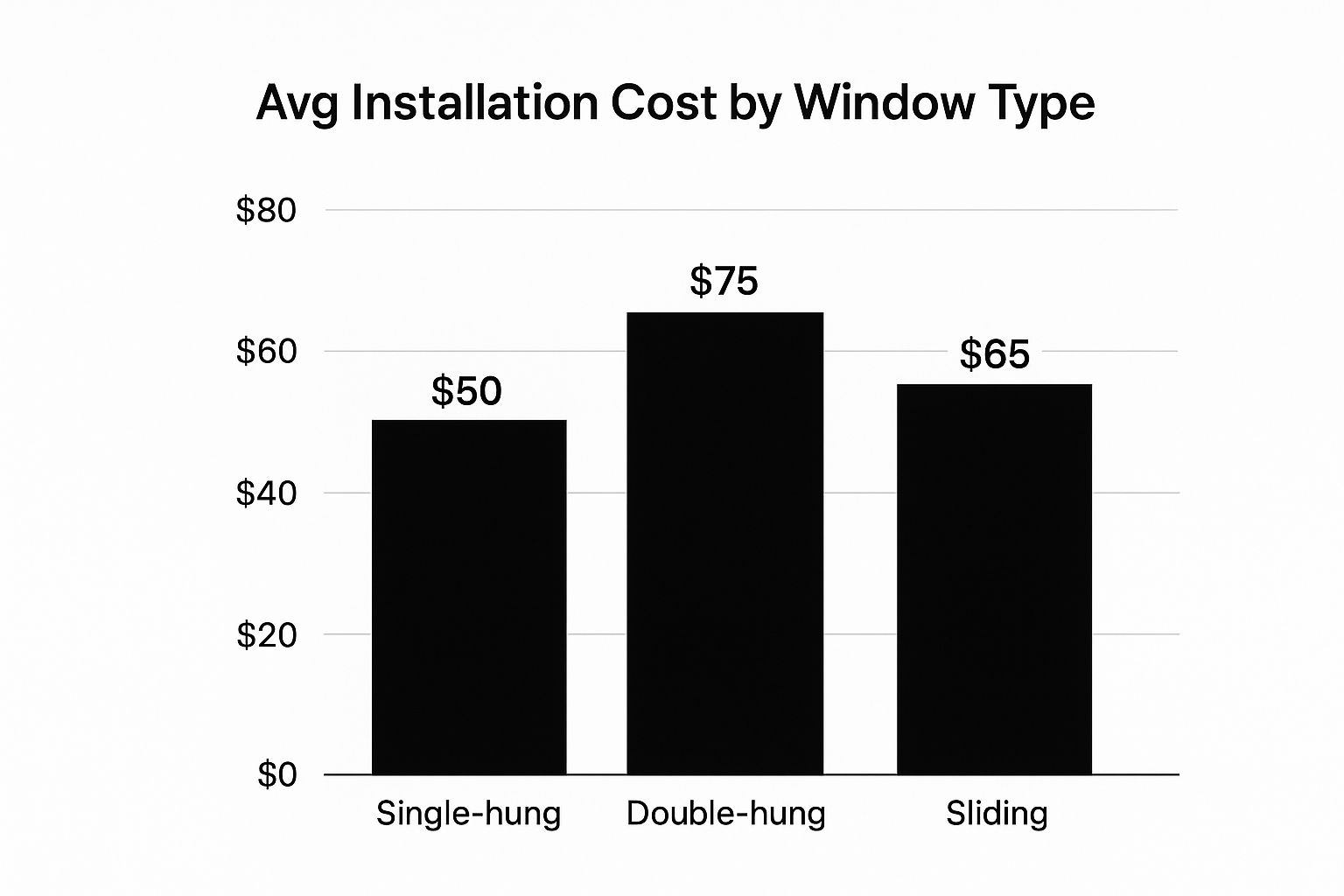
As you can see, straightforward single-hung or sliding windows are typically cheaper to install screens on. Double-hung windows, with their more complex moving parts, often require a bit more time and effort from the installer.
Your final decision should weigh the initial expense against the long-term benefits. A pricier pet-proof or solar screen might save you money over time by preventing frequent repairs or lowering your energy bills.
If you want to get even more granular, we have a complete guide on choosing the best window screen material that explores what might work best for your climate and lifestyle. The best choice isn't just about what fits your budget today, but what will keep you happy for years to come.
So, you're thinking about replacing all the window screens in your house? It sounds like a big job, but it's often the smartest financial move you can make. While fixing one torn screen is a quick patch, a full-home replacement is a strategic investment that pays off.
The magic here is something called economies of scale. Think about it like doing a big grocery run at a warehouse club versus popping into the corner store every day. When you buy in bulk, the per-item price drops. It's the same idea with the window screen installation cost. When a pro can knock out every screen in a single trip, they save a ton on travel and setup time, and a good contractor will pass those savings on to you.
Getting a Handle on the Numbers
What does a full-home project actually cost? The final price tag depends heavily on how many windows you have and what kind of screens you choose. Generally, homeowners can expect the total cost for replacing every screen to land somewhere between $1,550 and $7,750.
To give you a clearer picture, a smaller home with about 5-6 windows might cost around $1,705. A much larger house with 23-25 windows? That could be closer to $7,440. You can explore more detailed cost breakdowns to see how different screen types and home sizes affect these numbers. These figures show why you need to plan, but they also prove how a bigger job can lower the cost for each individual screen.
A full replacement isn't just about fixing damage. It's about upgrading your entire home at once. You get a consistent look and uniform performance, avoiding that mismatched, piecemeal look that comes from replacing screens one at a time over the years.
Plus, it just makes life easier. You schedule one job and pay one bill. No more juggling multiple appointments and invoices. This efficiency is a huge part of why the cost per screen is so much better.
What to Expect for Your Home's Size
Let's break down some realistic scenarios. Keep in mind, these are just ballpark figures. Your final quote will shift based on the materials you pick and the specific style of your windows.
-
Small Home or Condo (5-8 windows): Even on a smaller scale, you’ll see some savings compared to one-off repairs. The installer is on-site once, gets the job done quickly, and moves on.
-
Medium-Sized Home (10-15 windows): This is where the savings really start to add up. A pro can get into a great workflow, and you'll notice a significant drop in the average price per screen.
-
Large Home (20+ windows): With big projects, the per-screen savings are usually the most substantial. The initial investment is higher, of course, but you're getting the absolute best long-term value because each screen installation costs less.
When you bundle the work together, you're not just buying screens—you're buying efficiency. A complete overhaul might seem like a huge project, but in the end, it’s almost always the most cost-effective way to go.
Professional Installation vs. a DIY Project
It’s the classic home improvement crossroad: roll up your sleeves and do it yourself, or call in a pro? When it comes to window screens, this decision is all about balancing cost savings against the guarantee of a perfect, frustration-free outcome. Let's break down what each path really looks like.
The biggest draw for a DIY project is, of course, the money you can save. By cutting out the professional, you avoid labor costs that usually run between $20 to $50 per screen. That means your main outlay is just for the screen mesh and a handful of tools. The savings can add up fast, especially if you're replacing screens on every window in your home.
But as anyone who's ever tackled a seemingly simple project knows, the reality can be a bit more complicated than the YouTube tutorial makes it look.
The Realities of a DIY Installation
Going the DIY route for screen installation involves more than just picking up a roll of mesh at the hardware store. You need the right gear—a spline roller is non-negotiable, along with a sharp utility knife. If you’re building new frames from scratch, the complexity (and tool list) grows.
The number one challenge for nearly every DIYer is getting the screen tension just right. It’s a delicate balance.
If the screen is too loose, it will sag and flap in the breeze, looking sloppy and unprofessional. Pull it too tight, and you can easily bow or even snap the aluminum frame. That's a mistake that can quickly erase your cost savings. Nailing that perfect, drum-tight finish is a true skill, one that pros hone over countless installations. If you want a peek into the process, our guide on how to install screens breaks it down.
A professional installation is more than just labor—it’s an insurance policy for quality. Pros bring experience, specialized tools, and the know-how to handle tricky windows or custom frames, delivering a perfect fit every time.
The Value of Professional Expertise
Hiring a professional is about buying precision and peace of mind. Their experience shines in a few key areas that can make all the difference:
- Spot-On Measurements: Pros get it right the first time. This is absolutely critical for non-standard window sizes or unique architectural shapes where there’s no room for error.
- Pro-Grade Materials and Tools: They work with commercial-grade materials and have tools designed for one job: installing screens perfectly. This means a more durable, longer-lasting result.
- Flawless Tension: As we mentioned, this is where the pros really earn their keep. They know exactly how to stretch the mesh for a taut, wrinkle-free finish that looks fantastic and holds up over time.
- Speed and Efficiency: A job that could eat up your entire weekend is often just a few hours of work for an experienced installer. They get it done quickly and correctly, giving you your time back.
In the end, the decision comes down to you. If you have the patience, the right tools, and a knack for hands-on projects, DIY can be a genuinely rewarding way to cut down your window screen installation cost. But if you'd rather avoid the potential headaches and guarantee a polished, professional result, paying for an expert is an investment you won't regret.
Smart Ways to Reduce Your Installation Costs
Everyone loves that feeling of finishing a home project under budget. Thankfully, when it comes to window screens, a little strategic thinking can go a long way in lowering your final bill without compromising on quality. It's really just about making smart, value-driven choices.
A great place to start is by looking at the bigger picture. If you have a few other small jobs on your honey-do list, see if your contractor can bundle them together. Many pros are willing to give you a better overall price if they can knock out multiple tasks in one visit, which saves you from paying multiple service call fees.
Get Multiple Quotes and Time It Right
One of the best moves you can make is to comparison shop. Don't just go with the first quote you get. Make it a rule to get at least three detailed estimates from different, reputable installers. This does more than just help you find the best price; it gives you a solid understanding of the fair market rate for the job.
Timing can also be your secret weapon.
Like a lot of home improvement trades, screen installers have their busy and slow seasons. The rush is usually in the spring and summer. If you can schedule your project for the off-season, like late fall or winter, you might find contractors are more flexible on pricing to keep their teams working.
Be Strategic with Materials and Repairs
You can also find significant savings in your material choices. For example, that heavy-duty, pet-proof screen is probably a must-have for the sliding patio door your dog barrels through. But for a second-story bedroom window that rarely gets opened? The standard, more affordable fiberglass mesh is likely more than enough. Mixing and matching materials based on the window's location and use is a brilliant way to keep costs in check.
Before you commit to a full replacement, take a moment to assess if it's truly necessary.
- Assess the Damage: Is the frame itself still in good shape? If only the mesh is ripped, just getting it rescreened is much, much cheaper than replacing the entire unit.
- Simple Fixes First: For small holes or minor tears, a simple patch kit can often extend the life of your screen for just a few dollars.
- DIY Potential: If you're dealing with minor repairs, you might be able to handle it yourself. The key is having the right gear, and you can check out our guide to essential window screen repair tools to see if it’s a project you want to take on.
By combining these simple steps—shopping around for quotes, timing your project wisely, choosing the right materials, and repairing instead of replacing when you can—you'll have much more control over the final cost and make your project far more affordable.
Frequently Asked Questions About Window Screen Costs
Even with all the details, you probably still have a few questions rolling around in your head. That’s perfectly normal. Let's tackle some of the most common things people ask when they're figuring out their window screen budget. Think of this as the final piece of the puzzle to help you move forward with confidence.
Is It Cheaper to Rescreen or Just Buy a New Screen?
Nine times out of ten, if your frame is still in good shape—not bent, cracked, or warped—rescreening is the way to go for saving money. It’s a no-brainer, really. You're reusing the most expensive part (the frame), so you only pay for the new mesh and the labor to install it.
A DIY rescreening kit might only set you back $10-$20. Compare that to a brand-new, ready-to-install screen, which usually starts in the $30-$50 range and goes up from there. Even if you hire a pro, their fee for rescreening will be less than building and installing a completely new unit. It's the most budget-friendly choice for fixing tears or just refreshing old, faded mesh.
How Long Should I Expect My Window Screens to Last?
The lifespan of a window screen really boils down to two things: what it's made of and what kind of weather it has to endure day in and day out.
Your standard fiberglass screens, which are on most homes, will typically give you a solid 10-15 years of service. If you upgrade to tougher materials like aluminum or one of the heavy-duty pet-resistant screens, you could easily see them last 20-30 years.
Keep in mind, that's under normal conditions. Intense, direct sunlight, salty air, or a rambunctious pet can definitely shorten that lifespan. A little bit of gentle cleaning now and then can go a long way in helping them last as long as possible.
Does the Type of Window Affect the Installation Price?
Oh, absolutely. The installation cost is directly linked to how complex the job is. A simple, rectangular screen for a standard single-hung or sliding window? That’s about as straightforward as it gets, and the price will reflect that.
But things get more complicated with other window styles. Casement or awning windows, and especially custom shapes like arches or circles, require more time, precision, and sometimes specialized hardware to get the fit just right. That extra effort and skill will naturally lead to a higher labor cost on your final invoice.
Ready to get a crystal-clear quote for your project? Sparkle Tech Screen Service offers quick quotes and same-week service for all your screen needs, from new installations to repairs. Get your free estimate today!


