



If you're in Arizona, you probably already know which windows get blamed first. The west-facing living room turns harsh by late afternoon. The bedroom gets bright too early. The sliding glass door feels warm even when the AC is running. You close blinds, but then the room feels dark and shut in.
That’s usually when homeowners start looking into tinted screens for windows, often called solar screens. They’re one of the most practical ways to make a home feel calmer, cooler, and easier to live in without covering every window with heavy treatments.
What makes them different is simple. They work on the outside of the window, where the problem starts. Instead of waiting for sunlight to hit the glass and heat up the room, they intercept much of that energy first. In a desert climate, that difference matters.
Beat the Heat An Introduction to Tinted Window Screens
Arizona sun doesn’t just brighten a room. It changes how the room feels.
You notice it in small ways first. A couch arm that’s always warm. Glare on the TV. Floors that fade near the patio door. Then you notice it on your electric bill and in the way certain rooms never seem to cool down evenly.
That’s where tinted screens for windows come in.
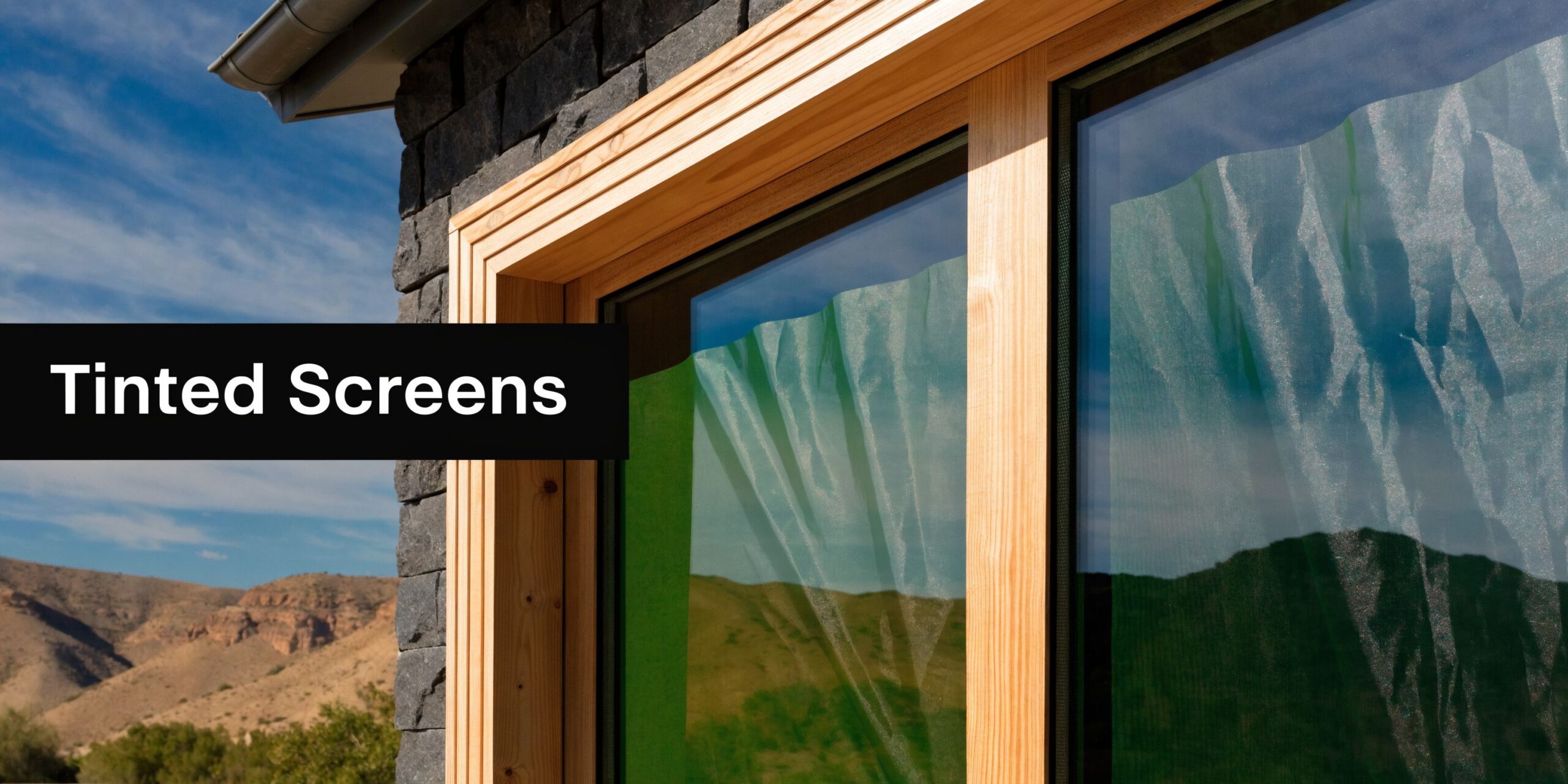
These screens are made from specialized mesh that shades the glass from the outside. Think of them as a first line of defense. They’re not the same thing as dark interior blinds, and they’re not the same as adhesive film stuck to the glass. Their job is to soften the sun before it gets a chance to build heat inside your home.
For Arizona homeowners, that matters for more than comfort alone. The right screen can help with:
- Heat control for rooms that get hammered by morning or afternoon sun
- Glare reduction so you can use your living room, office, or kitchen table comfortably
- UV protection for flooring, furniture, curtains, and artwork
- Daytime privacy while still keeping your outward view
Some homeowners also need a solution beyond standard windows. A screened patio might feel too exposed and bright. A sliding glass door may need a custom-fit screen that still looks clean from the street. Horse stables can need shade and airflow at the same time, which makes standard window treatments a poor fit.
Practical rule: If the main problem is heat and glare from direct sun, start by looking at what can stop that sun outside the glass, not after it has already entered the window system.
A lot of the confusion comes from the word “tinted.” People assume darker always means better, or that any tinted product works the same way. It doesn’t.
Some products are built to preserve views. Some are built for stronger shade. Some make sense for patio enclosures, and others are better for standard house windows. The best choice depends on the window location, how much light you want, and how you use the space.
Understanding How Tinted Solar Screens Work
The easiest way to understand solar screens is this. They’re sunglasses for your house.
But that analogy only works if you take it one step further. Sunglasses help because they intercept light before it bothers your eyes. Solar screens help because they intercept sunlight before it reaches the glass.

What the screen is actually doing
When sunlight hits a bare window, the glass takes the full impact. Heat and light move through the glass, and part of that energy ends up inside the room.
A solar screen changes that sequence.
According to this explanation of common solar screen performance questions, solar screens can reflect and diffuse up to 96% of incoming solar radiation before it reaches the glass surface. That same source says this external defense can stop 80%+ of heat ingress upfront and lower AC loads by 25-30% in provider benchmarks.
That “before it reaches the glass” part is the key idea.
If you remember only one thing, remember this:
Solar screens work at the outside edge of the problem.
The three things homeowners usually want to stop
Homeowners aren’t thinking in technical terms when they call about sun screens. They’re thinking about discomfort.
Still, it helps to translate the problem into three parts:
| What you notice | What’s happening |
|---|---|
| The room feels hot | Solar heat is entering through the window |
| The room feels too bright | Visible light is creating glare |
| Fabric and floors are fading | UV exposure is damaging interior surfaces |
A good tinted screen addresses all three at once, but not in the same way.
- Heat gets reduced because the mesh shades and diffuses the sun outside the window.
- Glare gets reduced because the screen softens intense visible light.
- UV exposure gets reduced because the material filters harmful rays before they blast your interior.
Simple terms that sound technical
Homeowners often hear a few terms that sound more complicated than they really are.
Openness factor
This refers to how tightly woven the screen material is.
A tighter weave usually means more shade and stronger glare control. A more open weave lets in more light and can preserve a more open view. The tradeoff is simple. More openness usually feels brighter. Less openness usually feels cooler and more private.
UV blockage
This tells you how much harmful ultraviolet light the material filters. That matters if you’re trying to protect wood floors, rugs, leather, or drapes.
SHGC
You might see Solar Heat Gain Coefficient, or SHGC, when reading about films and glass. You don’t need to memorize it. Think of it as a heat-entry score. Lower values mean less solar heat gets through.
For screens, most homeowners don’t shop by SHGC first. They shop by comfort, view, privacy, and room orientation. That’s usually the right instinct.
Why the view still works
A common concern is, “If the screen is dark, won’t I lose my view?”
Usually, no, at least not the way people fear.
During the day, darker screen fabrics often let you look out better than you’d expect because your eyes adjust to the darker mesh while the bright exterior stays visible beyond it. It’s similar to looking through sunglasses or a shaded visor. From inside, you can still see outside. From outside, people get a much harder look in during daylight.
That’s one reason tinted screens for windows feel so useful in Arizona. They reduce harshness without forcing you to live behind closed blinds all day.
Solar Screens vs Window Film A Head-to-Head Comparison
Solar screens and window film both aim at the same basic problem. Too much sun, too much glare, too much heat.
But they solve that problem in very different ways.

The core difference
A window film goes on the glass.
A solar screen sits outside the glass.
That sounds small. In Arizona heat, it isn’t.
This guide comparing solar screens and window tint is useful because it frames the decision around where heat gets stopped. That’s the first question I’d want any homeowner to answer.
According to this breakdown of window film technical specifications, window tint films are measured partly by SHGC, and a film such as 3M Prestige Series may have an SHGC of about 0.40 while rejecting 97% of infrared light. The same source explains the tradeoff clearly. Because the film is applied internally, heat is absorbed at the glass, and that warmed glass can still radiate heat indoors.
That doesn’t make film useless. It just means film and screens aren’t doing the same job in the same place.
Side-by-side decision points
Here’s the cleanest way to compare them.
| Decision factor | Solar screens | Window film |
|---|---|---|
| Where heat is addressed | Outside the glass | At the glass surface |
| Glare control | Strong, especially on sun-heavy exposures | Strong, depending on film choice |
| Daytime privacy | Usually better from the street side | Varies by film type |
| Exterior look | Adds a visible mesh and frame | Keeps the outside appearance closer to plain glass |
| Removal | Easier to remove or replace as a screen unit | More permanent once applied |
| Best fit | High-sun homes, patios, sliders, specialty shade uses | Homes prioritizing a glass-only look |
When solar screens usually make more sense
If your home has windows that get blasted by afternoon sun, exterior screening often gives the more intuitive result. The room feels less aggressive because the sunlight is being interrupted before it can load the window with heat.
Screens also shine in spaces where airflow and shade need to work together.
That includes:
- Sliding glass doors where glare and brightness are the daily complaint
- Screened patios where homeowners want cooler shade without closing the space off
- Horse stables where sun control and ventilation both matter
- Windows with intense west exposure that make a room uncomfortable by late day
When film may be the better choice
Film can still be the right tool in some situations.
You want no exterior frame look
Some homeowners care strongly about keeping the outside appearance close to plain glass. Film can preserve that cleaner glass-only look because it sits on the window itself.
You’re concerned about emergency egress
This deserves more attention than it gets. Screens can sit over a window opening. That means removability matters, especially on certain windows. I’ll address fire safety directly in the FAQ, but this is one reason some homeowners choose film for specific openings and screens for others.
You want a hybrid setup
Some houses benefit from using both, but on different parts of the property. A patio enclosure may call for solar screen mesh. A decorative front glass panel may call for film. A horse setup may need shade cloth or screen material rather than anything adhered to glass.
Not every sun problem in Arizona is a glass problem. Sometimes it’s an exposure problem, and exterior screening is the cleaner fix.
The deciding question
If you’re stuck between the two, ask this:
Do I want to stop the sun before it hits the window, or manage it after it reaches the glass?
If the answer is “before,” solar screens are usually the stronger match.
If the answer is “I mainly want a subtler glass treatment,” film may fit better.
That’s the most honest comparison. Both products have a place. For intense desert sun, exterior interception is often the difference homeowners feel first.
The Top Benefits of Installing Solar Screens
The biggest reason people choose solar screens isn’t that they love screen mesh. It’s that they want the house to feel better.
They want a room they can use in the afternoon. They want less glare on screens. They want their AC to stop fighting the same battle every day.

Cooler rooms and less AC strain
The first benefit is usually the one homeowners notice fastest. Rooms with strong sun exposure feel less intense.
According to these window tinting statistics, tinted screens and films can reduce up to 60% of solar heat, block over 99% of UV rays, and block up to 60% of visible light. The same source says homeowners and businesses typically see return on investment within 6 months to 3 years, and 75% achieve ROI in under 3 years.
Those numbers matter, but the lived experience matters more. The couch by the window stops feeling baked. The nursery stays more stable during nap time. The office doesn’t force you to shut blinds at noon.
If you’re trying to cut cooling waste across the whole house, it also helps to pair solar screens with HVAC basics. Comfort Experts has a practical list of Top 10 HVAC Energy Saving Tips that complements exterior shading well.
Protection for what the sun slowly ruins
Sun damage is sneaky.
Most homeowners don’t notice it day to day. Then one day they move a rug and see the color difference. Or they rotate a chair and realize one arm is faded. Or the hardwood near the slider no longer matches the rest of the room.
That’s why UV filtering matters so much. Solar screens don’t just make a room more comfortable. They help protect the finishes you’ve already paid for.
Good candidates for UV protection
- Wood floors near large windows
- Leather furniture that dries and fades in direct sun
- Area rugs and runners by patio doors
- Curtains and woven shades
- Art and framed photos on bright walls
A solar screen isn’t only for comfort. It’s also a way to slow down the wear the sun puts on your home every single day.
Better daytime privacy without closing the house off
Many homeowners want privacy but hate the cave-like feel of blinds being shut all day.
Tinted screens for windows help because they make it harder to see in from outside during daylight hours while still preserving a usable outward view from inside. That’s especially helpful on front-facing windows, breakfast nooks, and street-side living spaces.
It’s not blackout privacy. It’s more like visual softening.
People walking by see less detail. You still get natural light. Your room feels lived in, not sealed up.
A quick visual example helps if you’ve never seen the effect in person:
Less glare and more usable space
A room can be bright and still be uncomfortable.
That’s what glare does. It bounces off TV screens, washes out laptops, and makes you squint at the kitchen island. Solar screens soften that harsh direct light so the room feels more balanced.
This is one of the most overlooked reasons people end up loving them. They don’t just “save energy.” They make more of the house usable during the brightest parts of the day.
How to Choose the Right Tinted Screens for Your Home
Choosing screen material gets easier when you stop thinking only in terms of “dark” or “light.”
The better questions are these. How hot is that side of the house? How important is your outward view? Is the screen going on a standard window, a patio, a slider, or a stable opening?

Start with exposure, not color
A west-facing family room and a shaded north-facing bedroom usually shouldn’t get treated the same.
The hotter and brighter the exposure, the more likely you’ll want a denser, darker solar screen fabric. If the room already feels dim, you may want a balance that still gives sun control without making the interior feel too muted.
That’s why samples matter. Looking at material in your hand is useful, but looking at it against the actual window is better.
Understand the basic material choices
Modern screen products are far better than the early generations many people imagine.
According to this history of tinting and modern screen development, rudimentary tint sprays appeared in the 1940s, and the major breakthrough came in 1966 with durable polyester films. The same source notes that today’s advanced woven meshes build on that progress, offering up to 30% heat rejection with improved durability over early solutions.
That history matters because it explains why current solar screen mesh isn’t just “dark screen.” It’s engineered material.
For homeowners comparing options, this guide to solar window screen material is a helpful reference because it breaks down how mesh choices affect visibility, durability, and shade.
A simple way to pick the right mesh
Here’s a practical framework.
For living spaces
Choose a material that balances comfort and view. You’ll likely care about glare control, but you also don’t want the room to feel closed off. Family rooms, kitchens, and home offices usually benefit from moderation rather than the darkest possible screen.
For patios and outdoor enclosures
Go a little more shade-focused. In a screened patio, the goal is often broader comfort, not a crystal-clear view through one pane of glass. A darker or tighter screen can make the space feel more usable in bright conditions.
For sliding glass doors
Think about traffic and appearance. Sliders get handled more, seen more, and noticed more. You want a clean fit, a frame that operates well, and screen material that keeps the doorway comfortable without making it awkward to use.
For horse stables or utility structures
Airflow matters as much as shading. Stable openings and service spaces often need a screen that reduces harsh sun while still letting the area breathe. In those settings, function usually leads the decision.
Don’t ignore the frame
Homeowners often focus on the mesh and forget the frame color and fit.
That’s a mistake because the frame is what ties the whole look into the house. A well-matched frame looks intentional. A poor match can make even good screen fabric look like an afterthought.
A few things to check:
- Color match: Choose a frame finish that works with the window trim and exterior tone.
- Fit quality: Tight fit matters for appearance and performance.
- Removability: Some windows benefit from screens that are easier to remove when needed.
- Use case: A patio panel and a bedroom egress window may need different handling.
Darker mesh usually gives stronger daytime privacy and glare control. It doesn’t automatically mean “too dark.” The right choice depends on where the window faces and how you use the room.
The best choice is room-specific
One of the most common mistakes is trying to make every window in the home match one exact screen formula.
That sounds tidy, but homes don’t get equal sun. A breakfast nook facing east, a west-facing den, and a shaded hallway window have different jobs to do. Many Arizona homes get better results when the screen plan follows exposure and use, not one blanket preference.
Installation Options Cost and Maintenance
Once you know what kind of screen you want, the next questions are practical. Should you install new screens or reuse existing frames? Is this worth trying yourself? What does maintenance involve?
New screens versus rescreening
Not every project starts from scratch.
If your current frames are still in good shape, rescreening can make sense. That means removing worn mesh and installing new material into the existing frame. It’s often a smart option when the frame is structurally sound but the fabric is faded, torn, loose, or outdated.
A full replacement is usually better when:
- Frames are bent or damaged
- Corners are loose
- The fit is poor already
- You’re changing the screen type entirely
- A slider or specialty opening needs a better-built unit
Many homeowners save money by getting an honest inspection first rather than assuming every screen needs to be replaced.
DIY versus professional installation
A handy homeowner can install some screens, but solar screens are less forgiving than people expect.
The difference usually comes down to fit. A screen that’s even slightly off can rattle, bow, gap, or look crooked from the curb. On sliders and large openings, small measuring errors become obvious fast.
Professional installation also helps when:
| Situation | Why a pro helps |
|---|---|
| Large windows | Bigger screens need better frame stability |
| Sliding doors | Operation and fit need to be precise |
| Patios | Custom openings often vary more than expected |
| Older homes | Window openings may not be perfectly square |
What about cost
This is the part homeowners want straight, and the honest answer is that cost depends on window count, opening sizes, frame condition, and whether you’re doing new units or rescreening.
Because pricing varies so much by opening type, it’s better to look at a local guide built around real service conditions rather than rely on a generic national average. This breakdown of how much solar screens cost is useful for understanding what pushes a project price up or down.
What I’d focus on most isn’t the cheapest initial option. It’s whether the screen fits correctly, holds up in sun, and solves the actual comfort problem you’re trying to fix.
Maintenance is simple if you stay consistent
The good news is that solar screens don’t require complicated care.
Dust, pollen, and monsoon grime will collect on them over time, so occasional cleaning helps preserve both appearance and airflow. Gentle rinsing and soft cleaning methods are usually the right place to start.
If you want a local example of what proper upkeep looks like, these sun screen cleaning services show the kind of maintenance homeowners often use when screens need more than a quick hose-off.
A basic care routine
- Inspect the mesh: Look for tears, loose spline, or warping.
- Clear dirt gently: Avoid overly aggressive scrubbing that can stress the fabric.
- Check the frame corners: Loose corners can affect fit and longevity.
- Watch slider operation: If the screen drags or jumps, address it early.
A little maintenance beats waiting until the screen looks bad from the street or stops doing its job well.
Your Arizona Solar Screen Experts Sparkle Tech
If you’re in the Phoenix area and need new solar screens, rescreening, bug screen repair, slider repair, or screened patio work, Sparkle Tech Screen Service focuses on fast, practical help for local homeowners.
They handle new, rescreened, and repaired bug and sun screens, along with window sliders, same week service, quick quotes, and same day pickup. That’s especially helpful when a torn screen, damaged slider, or sun-heavy window is making part of your home uncomfortable right now.
Sparkle Tech serves homeowners across a wide area, including Phoenix, Scottsdale, Cave Creek, Peoria, Sun City, Surprise, Mesa, Tempe, Chandler, Maricopa, San Tan, Avondale, Queen Creek, Litchfield Park, Buckeye, Anthem, Carefree, Waddell, Ahwatukee, Payson, Munds Park, Sedona, Flagstaff, and Prescott.
They also handle more specialized needs such as horse stable sun screens, screened-in patio rescreening, security door screen repair, and slider remeshing.
If you want a quick, no-pressure quote, contact Sparkle Tech Screen Service at:
Text or Call 623-233-0404
800-370-3998
If your Arizona home has rooms that stay too hot, too bright, or too exposed, this is the kind of project where the right fit and fast turnaround make a real difference.
Frequently Asked Questions About Tinted Screens
Will solar screens make my house too dark
Usually not, if you choose the material based on the room.
Many homeowners get nervous about this. They picture a dark mesh and assume the room will feel gloomy. In practice, the goal is to reduce harsh direct sun, not eliminate usable daylight. A bright west-facing room often feels better with screened light than with bare glass and closed blinds.
Can people see in at night
Daytime privacy is usually much better than nighttime privacy.
During the day, the brighter outside light makes it harder for people to see in. At night, if your interior lights are on and it’s dark outside, visibility can reverse. That means you still may want curtains or blinds for nighttime privacy in certain rooms.
How long do they last in Arizona sun
Life span depends on material quality, exposure, frame condition, and maintenance.
Arizona is hard on exterior products. Good screens hold up much better than cheap or poorly fitted ones, but no exterior product gets an easy ride in desert sun. A well-made screen with proper care will generally age far better than one that starts loose, warped, or overstressed.
Are tinted screens safe in wildfire or emergency situations
This is an important question, especially in wildfire-prone areas.
According to this solar screen FAQ covering safety considerations, solar screens can potentially obstruct emergency escape routes. The same source recommends quick-release or easily removable frames, especially for homes in wildfire-prone areas. That tradeoff matters when comparing screens with non-obstructive interior films.
If a window may serve as an emergency exit, ask specifically how that screen removes and who in the household can do it quickly.
Safety matters more than shade. If a window could become an escape route, the screen design should reflect that from the start.
Are solar screens only for standard house windows
No. They’re also useful for patios, sliders, utility spaces, and horse stable applications.
That’s one reason they’re so popular in Arizona. The same basic idea, reducing direct sun while preserving airflow and usability, can solve problems in more places than a standard interior window treatment can.
If you’re ready to make your home cooler, more comfortable, and easier to live in, Sparkle Tech Screen Service can help with new solar screens, rescreening, slider repairs, patio screens, and quick local service across the Phoenix area. Text or call 623-233-0404 or 800-370-3998 for a fast, no-obligation quote.


