



Staring at a brutal summer energy bill is an all-too-familiar ritual for Phoenix homeowners. When the sun hits, our windows can feel more like radiators, pumping heat directly into our living spaces. The single most important decision you can make in this battle against the heat is choosing the right solar window screen material.
This isn't a one-size-fits-all problem; it's about making a smart, strategic investment in your home's comfort and long-term efficiency.
Beating the Arizona Heat with the Right Solar Screens
Think of picking solar screen material like buying tires for your truck—what you need for daily commuting on the I-10 is completely different from what you'd want for an off-roading trip up to Sedona. The material you choose directly dictates how much heat gets blocked, how clear your view of the backyard is, and how many years your screens will last under that relentless Arizona sun.
This guide is your roadmap. We’ll break down everything from tough-as-nails fiberglass to advanced heat-reflecting textiles, helping you find that perfect balance for your home. This is about more than just buying a screen; it's about turning an overwhelming choice into an investment that pays you back every single summer.
And remember, while solar screens are a fantastic first step, they work even better when you pair them with other proven strategies to reduce cooling costs to really maximize your savings.
Why Solar Screens Are a Smart Investment
It's no secret that homeowners everywhere are looking for smarter, more energy-efficient solutions. You can see this trend in the numbers. The global market for solar control window films was recently valued at a whopping USD 1.54 billion.
Experts project that market to explode to USD 4.02 billion by 2034. What's driving this? A surge in new construction and a serious focus on shrinking the carbon footprint of our homes and businesses. This incredible growth just goes to show how effective these materials are at making our living spaces more comfortable and affordable. You can dig into the full analysis on this energy efficiency market growth.
Here’s what you’ll learn in this guide:
- The different types of solar screen materials on the market.
- The key specs that actually matter, like UV blockage and visibility.
- How to match the right material to what you care about most.
Once you get a handle on these basics, you can confidently pick a material that will keep your home cooler, slash your energy bills, and stand up to our desert climate for years to come.
A Practical Comparison of Solar Screen Materials
Choosing the right solar screen material can feel a bit overwhelming, but it really boils down to a simple idea. Think of it like picking the right tires for your car; you wouldn't put racing slicks on an off-road truck. The goal is to match the material’s strengths to what your home actually needs—whether that's fighting off the brutal afternoon sun, surviving playful pets, or keeping your beautiful backyard view.
Let's walk through the most common options you'll see here in the Phoenix area. We'll cut through the technical jargon and get straight to what each material actually does for your home. This way, you can easily picture how each one would perform on your windows and make a choice you’ll be happy with for years.
This infographic really gets to the heart of why Phoenix homeowners invest in solar screens. It's all about tackling those sky-high electric bills and hot spots to make your home more comfortable and efficient.
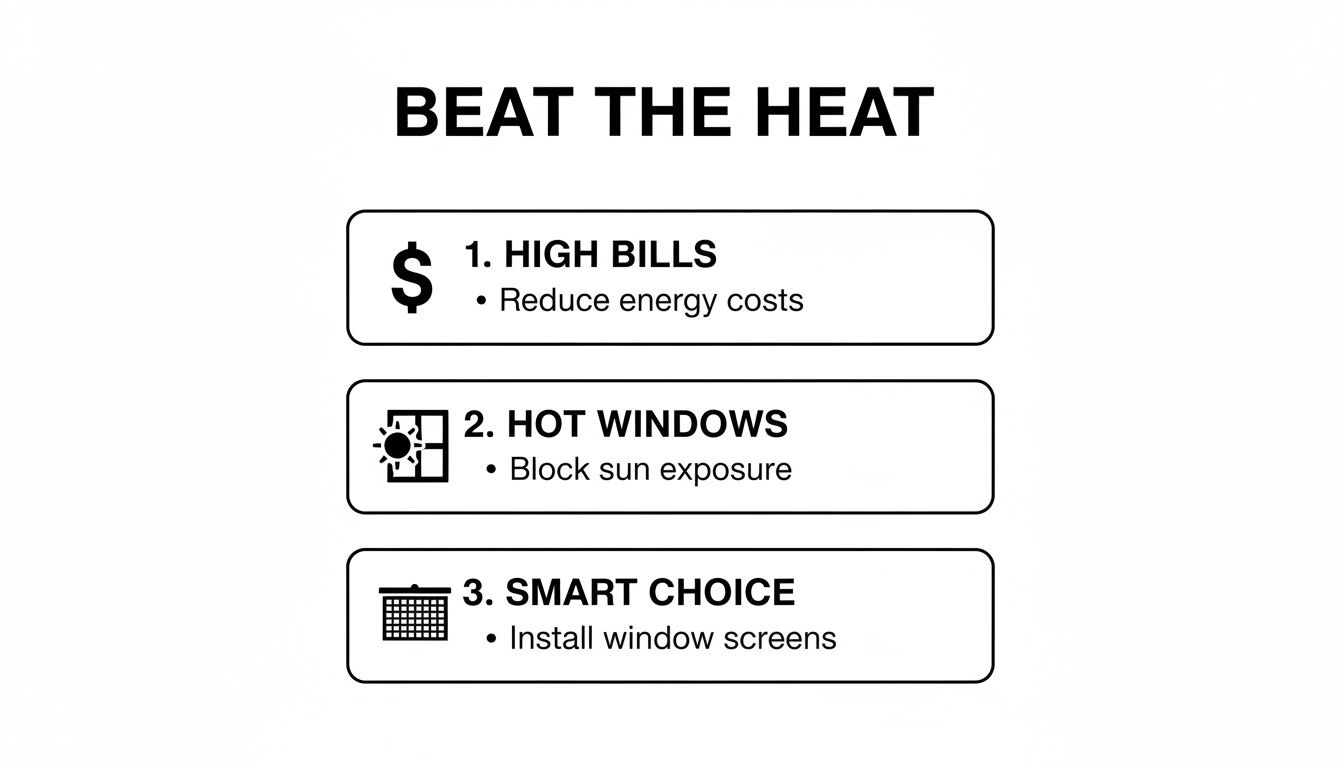
As you can see, it’s a clear line from a common problem (heat gain and high costs) to a practical solution (upgrading to effective solar screens), showing just how valuable they are as a home improvement.
The Everyday Workhorse: PVC-Coated Fiberglass
By far the most common material you'll find is PVC-coated fiberglass. Think of this as the reliable workhorse of the solar screen world. It’s affordable, highly effective, and just plain works. The inner fiberglass core gives it strength, while the tough PVC coating acts like a shield, protecting it from UV rays and the harsh Arizona weather.
For most homes, this is an excellent all-around choice. It offers a fantastic balance of heat blockage, bug protection, and everyday durability. Its only real weakness is that it wasn't built to handle constant scratching or pushing from determined pets.
Key Takeaway: If you're looking for a dependable, budget-friendly solution that makes a real difference in heat and glare, PVC-coated fiberglass is the industry standard for a reason. It delivers a huge improvement in comfort without a massive investment.
The Heavy-Duty Defender: Pet-Resistant Polyester
Now, if you’ve got dogs that greet visitors by jumping on the back slider or cats that treat screens like a climbing wall, you need to bring in the heavy artillery. That's where pet-resistant polyester comes in. This is the tough-as-nails option, made from an incredibly strong polyester yarn that is dramatically more resistant to tearing and puncturing from claws and paws.
Yes, this added durability comes with a slightly higher price tag, but it’s a small price for the peace of mind you get from not having to constantly patch or replace screens. Just know that because the material is thicker, it can sometimes reduce outward visibility a little more than standard fiberglass.
To help you see how these materials stack up, here is a quick comparison table.
Solar Screen Material At-a-Glance Comparison
| Material Type | Primary Benefit | Best For | Durability | Cost |
|---|---|---|---|---|
| PVC-Coated Fiberglass | Balanced performance and value | General use on most windows | Good | $$ |
| Pet-Resistant Polyester | Extreme tear and puncture resistance | Homes with active pets, high-traffic doors | Excellent | $$$ |
| Aluminized Screen | Maximum heat reflection | South/West-facing windows in extreme heat | Very Good | $$$ |
| High-Visibility Screen | Unobstructed, clear views | Windows overlooking pools, patios, or scenic views | Good | $$ |
This table should give you a solid starting point for figuring out which material aligns best with your home’s specific needs and your budget.
Specialized Solar Screen Materials
Beyond those two main players, a few other specialized options are out there, each designed for a specific job. If you want to get into even more detail, you can explore the different types of window screen material and see all the niche applications.
Here are a couple of others you might run into:
- Aluminized Screens: These screens act almost like a mirror. They have a reflective aluminum finish that literally bounces a huge percentage of the sun's heat away from the glass before it even has a chance to be absorbed. They are fantastic at rejecting heat but can produce more glare than darker materials.
- High-Visibility Screens: Sometimes called "invisible screens," these are engineered with a much finer yarn and a more open weave. Their whole purpose is to maximize your view, making them perfect for that big picture window overlooking the pool or your beautifully landscaped yard.
Getting a handle on these core differences is the first step. When you match the material's built-in strengths to your lifestyle—whether you care most about budget, durability, or that crystal-clear view—you can be confident your new screens will do their job perfectly for a long, long time.
Understanding the Specs That Matter Most
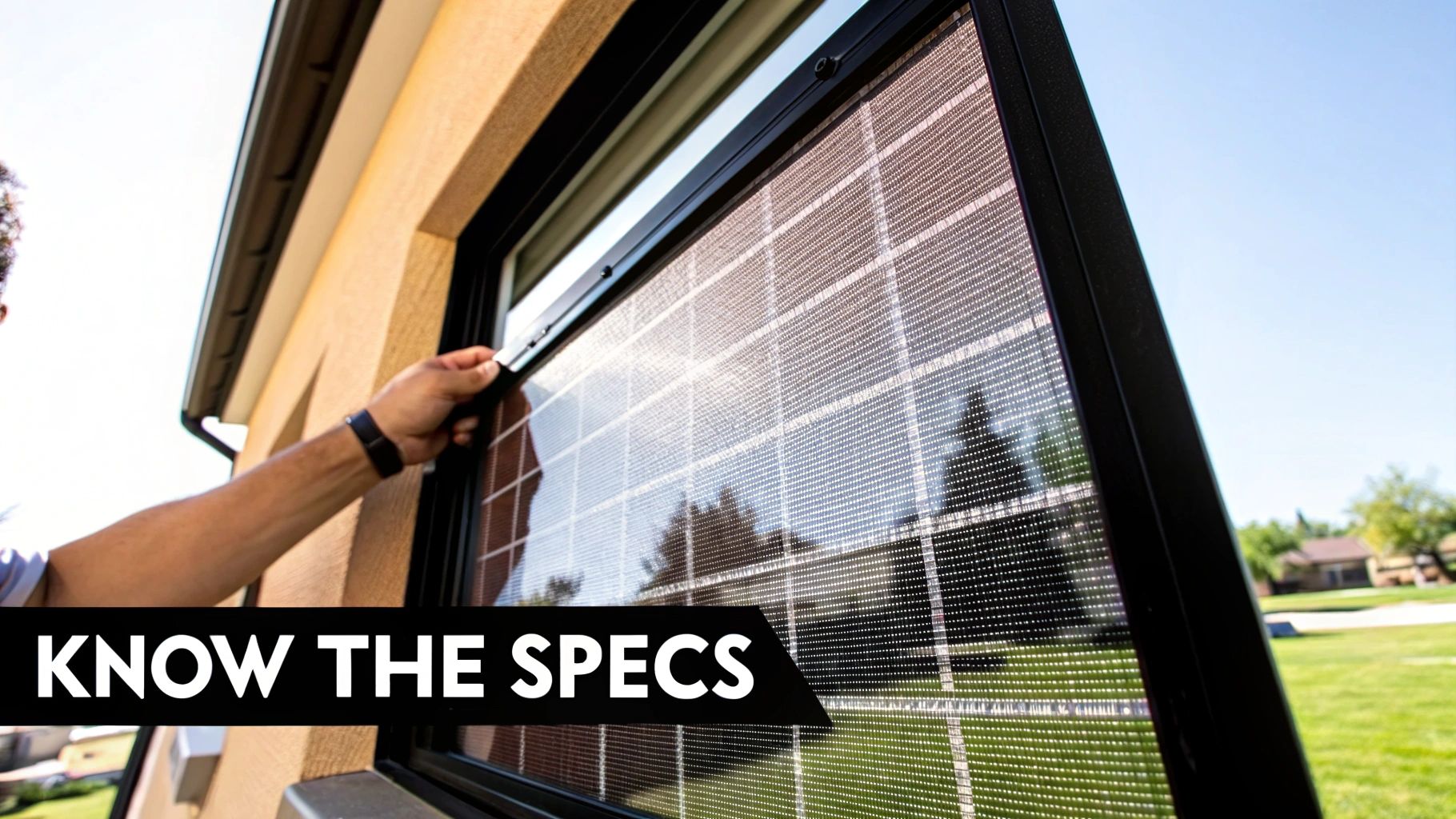
Once you've picked a material, you'll see a few key numbers on the spec sheet. Don't let them intimidate you. These specs are the key to understanding exactly how your new solar screens will perform in the real world—they tell the whole story. It's just like buying a new TV; you wouldn't just look at the screen size. You'd check the resolution and refresh rate to know what you're really getting.
The most important number you’ll see is the UV blockage percentage, which is usually either 80% or 90%. The meaning is refreshingly simple: an 80% screen blocks about 80% of the sun’s direct heat and UV rays, while a 90% screen stops about 90%. Here in Phoenix, that 10% difference is something you can really feel.
The Trade-Off Between Shading and Visibility
So, should you go with an 80% or a 90% screen? It really comes down to a simple trade-off between cooling power and natural light.
A 90% screen is the heavyweight champion of heat blockage. It delivers the maximum cooling effect and the biggest potential energy savings, making it an absolute must for those west-facing windows that get hammered by the brutal afternoon sun. The only downside is that it will make the room noticeably darker.
On the other hand, an 80% screen is a fantastic all-around performer. It offers a huge reduction in heat while still letting in plenty of natural light and giving you a clearer view of the outside. The right choice really just depends on your priorities for that specific window.
Expert Tip: For rooms where you love the natural light—like a living room with a great view of the pool—an 80% screen is almost always the best bet. But for bedrooms or any south/west-facing windows where comfort is king, stepping up to a 90% screen makes a world of difference.
This kind of precise shading is a big deal in home efficiency right now. In fact, the market for high-tech smart solar tracking window shades jumped from USD 1.44 billion to USD 1.65 billion in just one year. It shows a growing demand for smarter ways to control sunlight, and you can see more about these AI-driven shading systems to get a sense of where the industry is heading.
Why Screen Color Matters More Than You Think
You’d think that lighter colors would be better at reflecting heat, but with solar screens, it's not that straightforward. The color you choose actually has less to do with heat blockage and more to do with visibility and curb appeal.
Here’s how it breaks down:
- Dark Colors (Black, Charcoal, Dark Bronze): These colors actually absorb a bit more heat into the screen material itself (keeping it away from your glass). Their real advantage is that they are far easier to see through. They cut down on glare and give you a crisp, clean view to the outside, just like a good pair of sunglasses.
- Light Colors (Grey, Beige, Stucco): These tones are better at reflecting direct heat away from the window. The trade-off is that they can create more glare, making the view outward seem a little hazy or washed out.
Ultimately, the real heat-blocking power comes from the screen's percentage (80% vs. 90%), not its color. Your color choice should really be about what looks best on your home and whether you want the absolute clearest view possible.
How to Choose the Right Material for Your Home
Now that we’ve covered the materials and the nitty-gritty specs, it’s time to move from learning to planning. The truth is, choosing the right solar screen material isn’t about finding one single "best" option. It's about finding the best fit for your home and your priorities.
Think of it this way: every home here in the Phoenix area has its own unique personality and challenges. A west-facing bedroom that turns into a sauna every afternoon requires a totally different game plan than a north-facing picture window with a beautiful garden view. Let's walk through a few common scenarios to help you figure out what you need.
Prioritizing Your Needs: A Scenario-Based Guide
Go through the list below and see which situation sounds most like yours. This will point you toward the right material and specs for your home.
Scenario 1: My Main Goal Is Maximum Energy Savings and Heat Reduction
If your number one priority is to slash those summer cooling bills, you need to block as much heat as possible.
- Your Windows: You’re dealing with south and west-facing windows that get blasted by intense, direct sun for hours on end.
- Your Best Bet: A 90% solar screen. This is the heavy hitter and will give you the most significant drop in heat gain.
- Material Choice: PVC-coated fiberglass is a fantastic, budget-friendly option. If those same windows are in a busy area, stepping up to a tougher polyester screen is a smart move.
Scenario 2: I Don't Want to Sacrifice My View
You paid for that gorgeous mountain vista or sparkling pool view, and the last thing you want to do is hide it behind a dark screen.
- Your Windows: This applies to large picture windows, the window over your kitchen sink, or the big patio sliders looking out into the backyard.
- Your Best Bet: An 80% solar screen. It offers a great balance, cutting down a ton of heat and glare while keeping your view crisp and clear.
- Color Choice: This is critical—always go with a dark color like black or charcoal. Dark colors absorb light and reduce glare, which actually makes them easier to see through.
Scenario 3: I Need Something Tough Enough for Pets and Kids
Your back patio door screen has seen better days. It's constantly getting clawed, scratched, or run into by pets and energetic kids.
- Your Windows: Sliding glass doors, windows with low sills, or any screen on the ground floor that sees a lot of action.
- Your Best Bet: A pet-resistant polyester screen. This stuff is specifically made to stand up to punctures and tears far better than standard fiberglass.
- Consideration: This material is thicker and tougher. To balance its strength with good visibility, stick with an 80% weave.
Making the Final Decision
Now, you can start mixing and matching. Maybe that west-facing sliding door needs a 90% pet-resistant screen, but the front of the house is perfect for a standard 80% fiberglass screen. There's no rule saying every window has to be identical.
The goal is to create a custom plan. There's no rule saying every window must have the same screen. By analyzing each window's sun exposure, view, and function, you create a truly effective system for your home.
Getting the specs right is about more than just looks; it's what determines performance. Digging a little deeper into the balance of durability, UV protection, and airflow, like in guides for finding the best window screens for your Florida home, can help you see the bigger picture. It’s about choosing a complete performance package, not just a material.
And if you're wondering how this all fits into your budget, our guide on how much solar screens cost in the Phoenix area can give you a clear idea. Taking this thoughtful approach ensures your investment pays off in comfort and savings for years to come.
Keeping Your Solar Screens Performing Like New
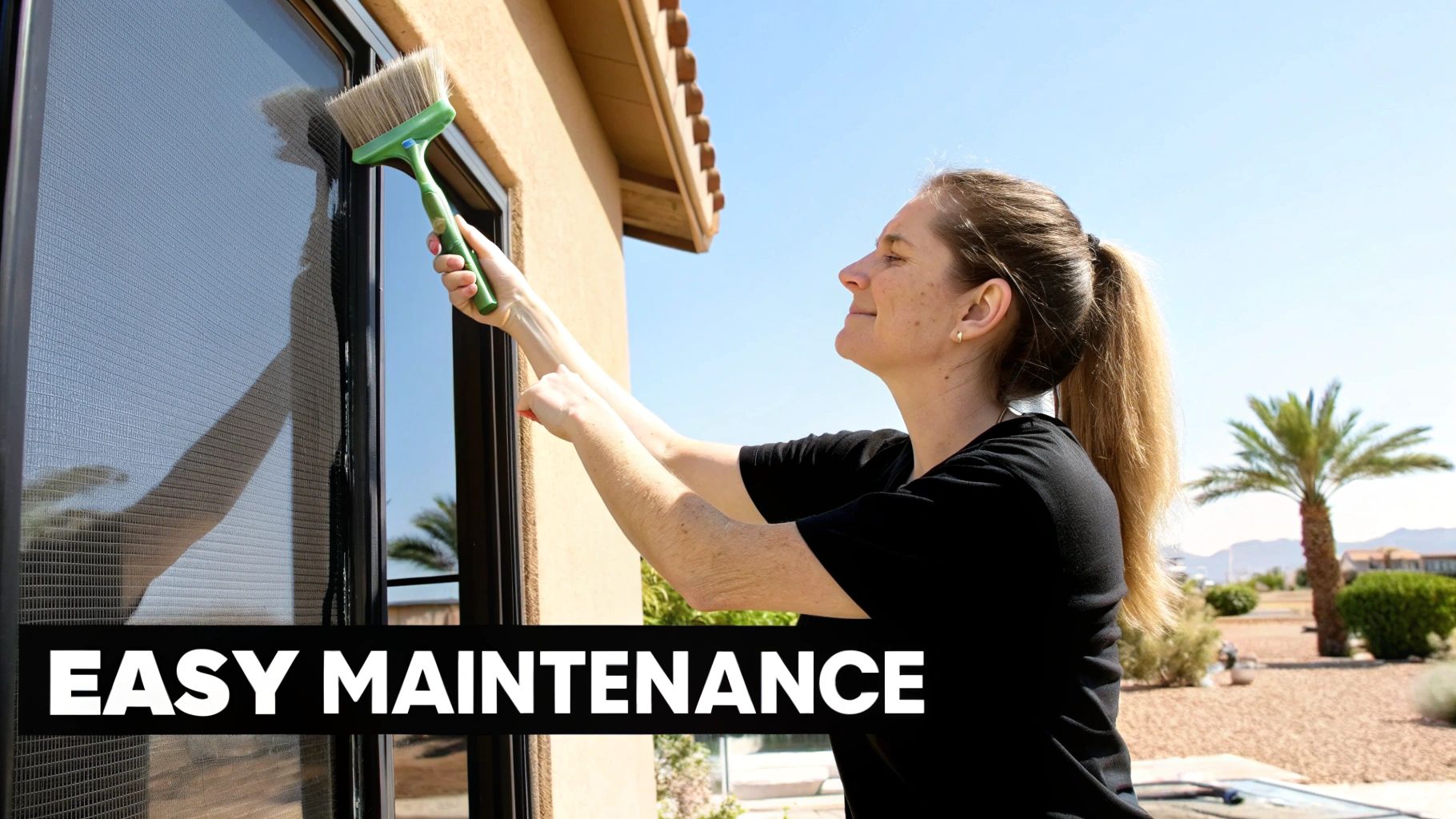
Think of your new solar screens as a smart investment in your home's comfort and energy savings. And just like any good investment, a little bit of care goes a long way in protecting it. Keeping up with simple maintenance ensures your chosen solar window screen material can stand up to the intense Phoenix sun and the layers of desert dust that come with it.
The good news is, keeping your screens in great shape is surprisingly easy. You don't need a complicated routine—just a gentle cleaning once or twice a year is enough to preserve their look and function. This quick task prevents that fine desert grime from baking into the fabric, which can cause the material to break down over time.
A Simple Cleaning Routine
Forget about harsh chemicals or special tools. All you really need are a few things you probably already have sitting in your garage or under the sink.
- Step 1: Gentle Rinse. Start by giving the screens a light spray with your garden hose. This knocks off the loose dust and bigger debris. Just be sure to avoid a high-pressure jet, which can easily damage the delicate mesh.
- Step 2: Soapy Wash. In a bucket, mix a little mild soap (dish soap works perfectly) with some warm water. Dip a soft-bristled brush or a simple cloth into the soapy water and gently scrub the screen from top to bottom.
- Step 3: Final Rinse. Once you've scrubbed away the grime, rinse the screen thoroughly with clean water. You want to make sure you get all the soap residue off.
- Step 4: Air Dry. Let the screens air dry completely before popping them back into the window frames.
For a more in-depth look, we’ve put together some professional tips and tricks in our complete guide on how to clean window screens.
Lifespan and Spotting Wear and Tear
When you choose a high-quality solar window screen material and take care of it, you can expect it to last for 10 to 15 years, and sometimes even longer. But let's be realistic—the Arizona sun is relentless and will eventually wear anything down. It's smart to know what to look for.
Over the years, you might start noticing small changes. The screen material could feel a bit more brittle, the color might look a little faded, or you could spot tiny tears and fraying around the edges. These are the first signs that the screen is beginning to lose its strength.
Catching these little problems early means you can get your windows rescreened before a small rip turns into a major hole. A quick look-over during your annual cleaning is all it takes to stay ahead of the game. This proactive mindset is the key to getting the most out of your investment, keeping your home protected, and ensuring those screens keep doing their job of blocking the heat.
Frequently Asked Questions About Solar Screen Materials
Even after digging into the details, you probably have a few practical questions bouncing around. Let's walk through some of the most common things Phoenix homeowners ask us when they're trying to pick the right solar screen material.
Shading Percentages and Lifespan
What percentage of sun should a solar screen block?
For homes here in the Valley, a screen that blocks 80% to 90% of the sun's heat is the sweet spot. This range strikes the perfect balance between seriously cutting down the heat and still letting you enjoy a clear view outside. We often recommend a 90% screen for those brutal west-facing windows that get blasted by the afternoon sun, while an 80% screen is fantastic for the rest of the house.
How long do solar screen materials typically last?
You can expect professionally installed, high-quality screens to last a good 10 to 15 years, even with our intense desert sun trying to bake them. Premium materials like PVC-coated polyester often go even longer with a little bit of care, which makes them a smart investment for your home.
Color Choices and Visibility
Do darker or lighter colored solar screens work better?
This really comes down to what you care about most. Darker screens, like charcoal or black, are champs at cutting glare and give you a much sharper, more transparent view of your backyard. They do absorb a bit more heat, but their clarity is unmatched.
Lighter screens, like grey or beige, are a little better at reflecting heat away from the window. The trade-off is that they can create more glare, which can make the view outside seem a bit hazy or washed out.
Expert Tip: The real power to block heat comes from the screen's 80% or 90% rating, not the color itself. Go with dark colors for the best view and light colors if you want to match your home’s exterior trim.
Can you still see through solar screens at night?
You can, but the privacy effect flips. During the day, it's tough for anyone outside to see into your home. At night, once you turn the lights on inside, it becomes much easier for people to see in, while your own view looking out can be a little less clear.
Ready to cut the heat and shrink your energy bills? The team at Sparkle Tech Screen Service can help you choose the perfect solar screen material and get it installed professionally, often in the same week. Get your quick quote today!


