


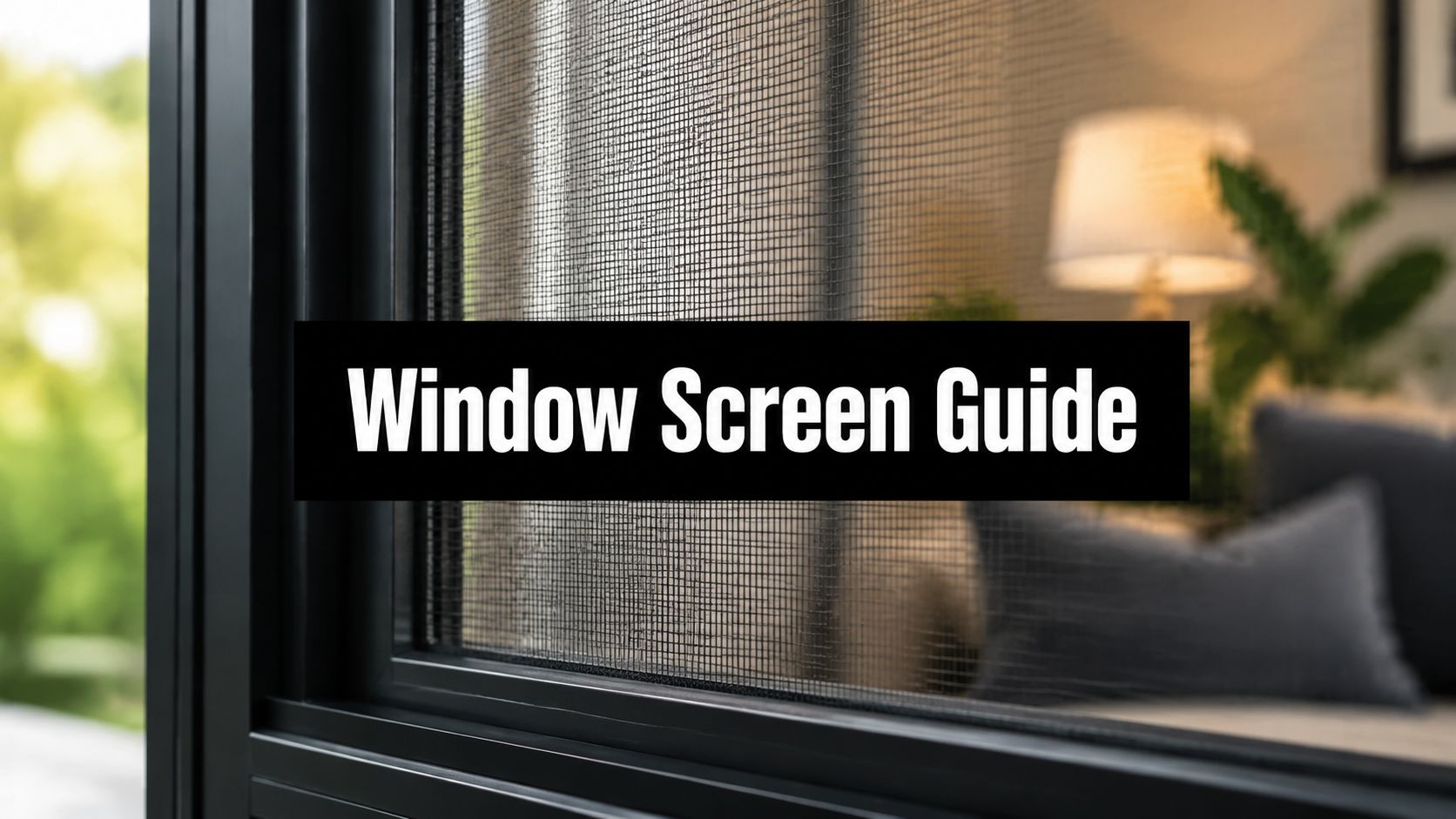

A lot of Phoenix homeowners start thinking about screens for a window only when something goes wrong. One screen tears and suddenly the room fills with gnats at dusk. A west-facing window turns a comfortable bedroom into a hot box by late afternoon. Or the old mesh gets so faded and loose that the whole house starts looking more worn than it really is.
That's usually when the main questions arise. Should you patch it, rescreen it, or replace the whole frame? Should you stay with basic bug mesh, or switch to sun screens because Arizona heat is the bigger problem? And if you do replace it, what material holds up?
Those are the questions worth answering before you spend money. Homeowners in dry, sunny climates need a different decision process than someone in a mild coastal market. If you want a broader climate comparison, this guide to window screens for Florida homes is useful because it highlights how humidity, insects, and regional conditions change screen choices. Here in the Phoenix area, the balance is usually sun, airflow, durability, and fit.
Your Guide to a Better View and a Cooler Home
A window screen does more than keep bugs out. In Arizona, it often does three jobs at once. It controls insects, affects ventilation, and changes how much sun and heat your room takes on during the day.
That's why a bad screen choice shows up fast. I've seen homeowners replace a damaged screen with the finest-looking mesh they could find, only to realize the room felt stuffier afterward. I've also seen people keep old torn bug screens on sun-heavy windows where a solar mesh would've made the room more comfortable every afternoon.
A screen should match the job of the window, not just the size of the opening.
Some windows need the most breeze possible. Others need glare reduction. Some need tougher mesh because a dog pushes against the frame every morning. If you treat every opening the same, you usually end up replacing screens twice.
The practical way to choose is simple. Start with the problem you're trying to solve. Then choose the screen type, then the material, then decide whether your current frame is worth keeping. That order saves money and avoids the common mistake of buying a “nice” screen that doesn't solve the actual issue.
Choosing the Right Screen for Your Window's Job
The best screen isn't a universal product. It's the one that solves the problem at that specific window.
In Phoenix, I usually tell homeowners to stand inside the room and ask one question first. What bothers you most when this window is open or exposed? Bugs? Heat? Glare? Pet damage? A patio slider that sticks and pops off track? Your answer points to the screen type.

Standard bug screens
If your main goal is keeping insects out while keeping airflow open, standard mesh is usually the right starting point. This is what most homeowners think of first, and for many shaded or low-exposure windows, it's still the right answer.
These work well in bedrooms, bathrooms, and kitchen windows where ventilation matters more than sun control. They also tend to keep the outside view more natural than darker, denser sun-control products.
But standard mesh has limits. It won't do much for strong afternoon heat, and it won't hold up long if kids or pets keep pushing against it.
Solar screens
On west-facing and south-facing windows, many homeowners aren't really fighting insects. They're fighting heat load and glare. That's where solar screens make sense.
A solar screen cuts sun exposure before it reaches the glass. In practice, that often makes a room feel easier to live in during the hottest part of the day. The trade-off is straightforward. You usually give up some airflow and some brightness for better sun control.
That trade-off matters. The undercovered question isn't whether “sun screens work.” It's whether they work for that room. In a living room with harsh afternoon sun, they often do. In a breakfast nook where you want every bit of morning breeze, maybe not.
Pet-resistant screens
If a dog jumps at the window or a cat climbs the mesh, standard fiberglass won't last. Pet-resistant screen is built for a different problem. It's less about elegance and more about surviving clawing, leaning, and repeated pressure.
This is the right pick for lower window openings, back doors, and patio areas where animals make regular contact. It won't feel as light or open as a basic bug screen, but replacing one durable screen is usually cheaper than replacing standard mesh over and over.
No-see-um mesh and finer weave screens
Some homeowners need a finer barrier because tiny flying insects keep getting through. A tighter weave can help, but it always comes with a trade-off in ventilation and visibility.
That trade-off isn't guesswork. Technical research found that smaller pore sizes improve particle-blocking efficiency but also increase pressure drop, so better filtering comes with reduced airflow. In the same study, the tested screen with 0.8 mm pore size and 0.5 mm thickness reached about 54.16% particle filtering efficiency, while a 2 mm pore size and 1 mm thickness screen had about 23.85% efficiency (peer-reviewed screen study).
In plain terms, tighter screens can do more than block bugs. They can also change how air moves through the window.
That matters in dusty areas and during windy seasons. It also explains why the densest mesh isn't automatically the best choice for every room.
Sliding screens and specialty openings
Patio sliders and older window units need their own category of attention. The issue there is often less about mesh type and more about frame movement, track fit, and daily use.
If the screen has to slide several times a day, it needs a stronger frame, smooth rollers or proper guides, and mesh that won't loosen quickly. Many failed slider screens aren't bad products. They're unsuitable for the hardware or opening.
A quick way to decide
Use this order when you're narrowing down options:
- If bugs are the issue: Start with standard bug mesh.
- If heat and glare are the issue: Look at solar screen options first.
- If pets damage the screen: Move straight to pet-resistant material.
- If tiny insects or dust are the issue: Consider tighter mesh, but expect less airflow.
- If the opening slides or gets heavy use: Prioritize frame fit and hardware over mesh marketing.
Decoding Screen Mesh Materials
Once you know the job of the screen, the next question is what the mesh should be made of. Many homeowners become confused regarding this choice, because they choose by appearance alone.
Material changes how the screen feels, how long it lasts, and how much abuse it can take. In common residential window screens, mesh count is typically 18×16 strands per inch, and material choice matters just as much. Fiberglass is low-cost and offers good airflow, while polyester is stronger and more tear-resistant (screen mesh guide from Metro Screenworks).
What most homeowners notice first
Fiberglass usually wins on familiarity. It's common for a reason. It's affordable, easy to work with, and looks normal in most homes.
Polyester tends to come up when durability becomes the priority. If the screen sits in a high-contact area, or if you're tired of remeshing the same opening, polyester is often the practical upgrade.
Aluminum and stainless steel enter the conversation when you want more rigidity, corrosion resistance, or a tougher finish. Those options make sense in specific situations, but they aren't automatic upgrades for every home.
Screen mesh material comparison
| Material | Pros | Cons | Best For |
|---|---|---|---|
| Fiberglass | Good airflow, good visibility, low cost, easy to rescreen | Less resistant to tearing and pushing | Standard bug screens in typical residential use |
| Polyester | Stronger, more tear-resistant, better for repeated contact | Can feel heavier than basic fiberglass | Homes with pets, active sliders, high-traffic openings |
| Aluminum | Durable, crisp appearance, rust-resistant | Can dent and may be less forgiving during handling | Homeowners who want a firm, traditional metal mesh |
| Stainless steel | Strong, corrosion-resistant, useful in demanding environments | Usually more than many homeowners need for basic window use | Durability-critical areas and specialty applications |
What works in Arizona homes
For many Phoenix-area homes, fiberglass still makes sense on standard bedroom and bathroom windows where you want breeze and a clean view. It does the basic job well.
For patio areas, lower windows, and homes with dogs, polyester is often the smarter long-term choice. It handles stress better, and that matters more than saving a little on the initial install if you're replacing damaged mesh every season.
If you're comparing screen material options and want a plain-English breakdown, this Sparkle Tech window screen service article is useful alongside our more detailed guide to window screen material types.
Practical rule: Choose the lightest material that will still survive the way that window gets used.
Don't confuse visibility with overall performance
A mesh that looks cleaner or more “invisible” on day one isn't always the better choice. In everyday use, durability, airflow, and how often the screen gets touched matter more.
That's especially true if the window opens often or sits in direct sun. A material that looks slightly heavier but lasts longer is often the better value.
When to Repair and When to Replace Your Screens
Most damaged screens don't need the same fix. Some need only new mesh. Others need a new frame because the old one will keep causing problems no matter what fabric you install.
The fastest way to waste money is to rescreen a frame that's already bent, loose at the corners, or wrong for the opening. The second fastest way is to replace a whole screen assembly when the frame is fine and only the mesh is worn out.

Repair usually makes sense when
If the frame is square, the corners are tight, and the hardware still works, a rescreen is often the practical move.
That includes situations like these:
- Small isolated damage: One puncture, one rip, or a loose section of spline in an otherwise sound frame.
- Aged mesh with a good frame: Sun-faded material, minor fraying, or sagging mesh where the aluminum frame still seats properly.
- Functional but ugly screens: The screen works, but it looks worn and drags down curb appeal.
If you like handling small repairs yourself, a basic DIY window screen guide can help you understand the parts and process before you buy material.
Replace when the frame is the problem
A new mesh won't fix a warped frame. It also won't fix corners that keep separating or a screen that rattles because it never fit the channel correctly.
Replace the full screen when you see:
- Bent or racked frames: The screen looks twisted, rocks in the opening, or has one corner that never seats.
- Broken corners or missing hardware: Tabs, plungers, or retention points are damaged and no longer hold.
- Repeated fit issues: The screen pops out, scrapes badly, or leaves bypass gaps that let insects through.
- Mismatched old screens: Several windows look similar, but each opening is slightly different and the house has a mix of improvised replacements.
Be careful with high-visibility mesh upgrades
A lot of homeowners want the cleanest outside view possible. That's understandable. But this is one of those areas where the attractive option can disappoint if you don't think through daily use.
Existing product guidance around nearly invisible mesh notes a real trade-off. Finer high-visibility meshes can offer a better view, but they can be less durable and reduce airflow more than standard fiberglass (UltraVue product reference).
If the old screen failed because it was fragile, replacing it with a more delicate mesh usually moves you backward, not forward.
The decision I'd make in most homes
If the frame is good, rescreen it. If the frame is bent, sloppy, or constantly troublesome, replace it and stop revisiting the same problem.
That's the cleanest line between a smart repair and a temporary fix.
How to Measure for a Perfect Fit
Measurement is where most DIY screen jobs go off track. The mesh can be right, the frame can be built well, and the whole thing still fails because the dimensions were taken from the wrong points.
For side-channel windows, manufacturer guidance is clear. Measure from inside one channel to the outside edge of the opposing channel, then subtract 1/8 inch so the screen fits without binding or bowing during installation (screen measurement guidance).

The basic process
Start with a tape measure, not a rough estimate from the old screen. Old frames bend, and old mesh stretches. If you copy a bad screen, you get a new bad screen.
Use this sequence:
- Measure the width carefully from the proper channel points.
- Measure the height the same way and write it down immediately.
- Subtract the fitting tolerance where the frame style calls for it.
- Check the hardware before ordering. Tabs, springs, clips, and slider hardware all affect fit.
- Measure again before you commit.
If you want a more detailed visual walkthrough, our step-by-step guide on how to measure window screen size lays out the common frame types and what to look for.
When the old screen is missing or warped
Sizing replacement screens often presents a challenge for homeowners. If the original screen is gone, don't guess based on another nearby window unless you've confirmed the openings match. In older homes, two windows that look identical from inside may still vary enough to cause rattling or installation failure.
If the old frame is warped, don't use it as your template. Measure the actual opening. Then inspect the channel for buildup, bent track edges, or replacement hardware that may have changed the fit.
Slightly undersized with proper retention is usually better than forcing an oversized frame into the opening.
A quick visual can help before you start ordering parts:
Common measurement mistakes
- Measuring the old frame instead of the opening: That only works if the old frame was correct.
- Ignoring the hardware type: A plunger frame and a clip-retained frame don't install the same way.
- Forgetting the tolerance: A too-tight screen can bow, scrape, or tear during install.
- Assuming matching windows are identical: In practice, they often aren't.
Understanding Costs and Why a Local Pro Saves You More
Homeowners usually compare screen projects the wrong way. They compare only the price of material against the price of hiring someone. That leaves out the expensive part, which is doing the job twice.
The broader market tells you why professional screen work stays busy. The global window screen market was valued at $2.8 billion in 2024, and the residential segment accounted for 58% of total demand, which points to a large ongoing need for home screen repair and replacement (window screen market report).
What you're really paying for
A repair and a replacement aren't the same purchase. Rescreening keeps a usable frame and swaps the mesh. Full replacement adds the work of fitting or building a new frame, confirming hardware, and solving any issues with the opening itself.
DIY can make sense if the job is straightforward and you already know the material you want. It gets expensive when you buy the wrong mesh, cut the spline channel badly, order the wrong size, or build a frame that doesn't seat correctly.
The hidden costs usually look like this:
- Lost time: Measuring, shopping, trimming, test-fitting, and troubleshooting.
- Wrong material: Buying a mesh that solves the wrong problem, such as using standard bug mesh on a harsh sun window.
- Repeat purchases: New spline, extra corners, a second roll of mesh, or a replacement frame after the first one doesn't fit.
- Frustration cost: Pulling a screen in and out repeatedly because the fit is off by a small amount.
Why local service often costs less in real life
A local pro shortens the decision chain. The opening gets measured correctly. The hardware gets matched. The right mesh gets used the first time. That reduces remakes and avoids the “almost right” screen that never quite sits properly.
In the Phoenix metro, that matters because many homes have a mix of bug screens, sun screens, patio sliders, and older replacements from different years. One-size ordering usually doesn't work well across that mix.
If you're trying to budget the project before deciding, this guide to the cost of new window screens helps frame the difference between replacing mesh and replacing the whole unit.
Where service makes the most sense
Professional help usually makes the most sense for:
- Multiple mismatched windows
- Patio slider screens
- Sun screen conversions
- Missing original screens
- Bent frames and hardware problems
One practical option homeowners use in the area is Sparkle Tech Screen Service, which handles new screens, rescreening, bug screens, sun screens, and slider screen work with pickup and service scheduling based on the opening and hardware involved.
Your Next Step to a Bug-Free, Comfortable Home
The right choice usually comes down to four decisions. First, identify the actual problem at the window. Second, choose the screen type that solves that problem. Third, pick a material that fits how the window is used. Fourth, measure the opening correctly so the finished screen works the way it should.
A little maintenance helps any new screen last longer. Keep dust and debris from building up in tracks, wash screens gently instead of scrubbing them aggressively, and don't force tight-fitting frames in and out of the opening. If a screen starts sagging, rattling, or separating at the corners, deal with it early before a simple rescreen turns into a full replacement.
For Phoenix-area homes, the biggest mistake is treating every window the same. A shaded bathroom window, a west-facing family room, and a patio slider each need different thinking. Once you match the screen to the job, the whole house feels better. Fewer bugs, less glare, smoother airflow, and fewer repeat repairs.
If you're in Phoenix, Scottsdale, Peoria, Mesa, Surprise, Tempe, Chandler, Queen Creek, or nearby areas, Sparkle Tech Screen Service can help you sort out whether you need repair, rescreening, or a full replacement. Text or call 623-233-0404 or 800-370-3998 for a quick quote and same-week service options.


