


French doors are a showstopper, offering a grand, sweeping entrance that can completely transform a room. But let's be honest, finding the right screen for them can feel like a puzzle. The best solutions I've seen in my years of experience are usually one of three types: modern retractable screens that vanish when you don't need them, classic swinging screens that mimic the motion of your doors, or sturdy sliding screens built for high-traffic homes. Each one strikes a different balance between looks, usability, and keeping the bugs out.
Enjoying Fresh Air Without Unwanted Guests
There’s just something about French doors. They’re not just a way to get in and out; they're an architectural feature that connects your indoor and outdoor spaces beautifully. They flood a room with natural light and create an open, airy feeling that a single door just can’t replicate. Throwing them open on a nice day for a cross-breeze is one of life's simple pleasures.
Of course, that wide-open invitation isn't just for the breeze—it’s also for every fly, mosquito, and curious critter in the neighborhood. This leaves homeowners with a classic problem: how do you get the fresh air without the pests? The answer is a screen door designed specifically for that double-door setup, one that doesn't ruin the elegant look. Before getting into the specific screen types, it's always helpful to review the general considerations when choosing windows and doors for any home project.
This isn't just a niche problem; it's a huge market. The global French doors market was valued at an impressive USD 27.9 billion in 2024, and residential homes account for a whopping 72% of that. That tells you just how many of us are investing in that gorgeous indoor-outdoor connection and are now looking for the perfect screen to complete the picture.
The perfect screen door for your French doors should feel like it was always part of the design—functional when you need it, and practically invisible when you don’t.
To help you figure out what's best for your home, let's take a closer look at the three main options you'll come across.
Quick Comparison of French Door Screen Options
To get a quick lay of the land, here’s a simple table comparing the main types of screen doors for French doors. It's a great starting point to see which style might fit your lifestyle and home aesthetic.
| Screen Type | How It Works | Best For | Key Benefit |
|---|---|---|---|
| Retractable | Rolls into a hidden cassette on the side of the doorframe. | Homes where preserving the view is the top priority. | Completely disappears when not in use, offering an unobstructed view. |
| Swinging | Opens outward on hinges, just like the French doors themselves. | Homeowners who want a classic, traditional look and feel. | Simple, familiar operation and a cohesive aesthetic. |
| Sliding | Slides open and closed on a track, similar to a patio door. | High-traffic areas, especially for families with kids and pets. | Durability and ease of use in busy households. |
Each of these has its own set of pros and cons, which we'll dive into next. Think about how you use your doors day-to-day—that's the key to making the right choice.
2. Retractable Screens: The Invisible Solution
Picture this: a screen door that’s there when you need it and simply disappears when you don’t. That’s the magic of a retractable screen door, and it's why they've become the go-to choice for homeowners who refuse to compromise the grand, elegant look of their French doors.
These aren't your grandpa's clunky screen doors. Modern retractable screens don't permanently block your view or clutter up the beautiful lines of your entryway.
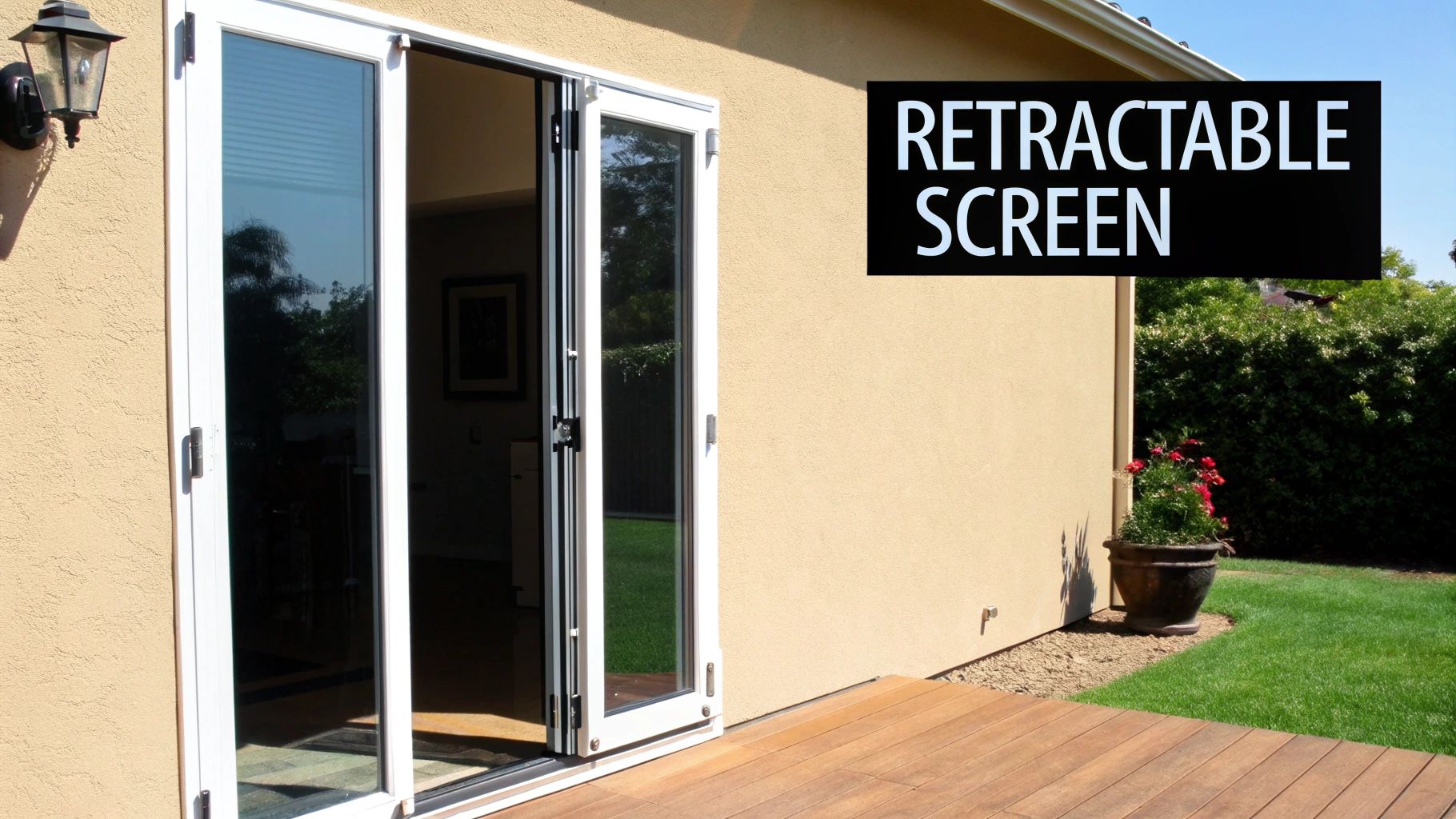
Think of it like a high-tech window shade for your doorway. When you want to let a breeze in without the bugs, you just glide the screen across the opening. Once you're done, it slides smoothly back into a slim, vertical housing mounted discreetly on the side of your door frame. Just like that, your doorway is completely open and unobstructed again.
How They Work With French Doors
Retractable screens are practically tailor-made for the double-door setup of French doors. The standard installation involves a pair of screens—one cassette mounted on each side of the door frame. When you want to close them, the two screens pull out to meet in the middle, latching together to form a perfect, seamless barrier.
This dual-screen system is incredibly versatile:
- Quick Entry: Just want to pop outside for a second? You can open just one screen while leaving the other one closed.
- Wide-Open Access: When you're hosting a party or moving furniture, both screens can be fully retracted, leaving the entire doorway open.
- A Secure Seal: A strong magnetic latch keeps the two screens securely fastened in the center, so you don't have to worry about gaps for pests to sneak through.
This smart design is what makes them one of the most functional screen door options for French doors, giving you the best of both worlds—protection and an uncompromised view.
The real beauty of a retractable screen is its ability to offer total protection from insects without ever interfering with the architectural integrity and expansive view that made you fall in love with your French doors in the first place.
And homeowners have definitely taken notice. The global market for retractable screen doors hit an impressive USD 371.5 million in 2024, and it's still growing. This trend is directly linked to the enduring popularity of French doors and the demand for solutions that are as stylish as they are practical. You can dig into the numbers and trends in this detailed market report.
Installation and Custom Touches
Getting a retractable screen installed correctly is the key to making sure it operates smoothly for years. Most of the time, you have two main options for how to mount the housing.
- Surface-Mount: This is the most common approach. The housing is simply attached to the face of your door frame or the surrounding trim (the brick mold). It's straightforward and works on almost any door.
- Recessed-Mount: If you want a truly seamless, "built-in" look, the housing can be installed inside the door jamb. This makes it sit flush with the frame, rendering it nearly invisible when retracted. This is a fantastic option if you're planning a new build or a major renovation.
But the customization doesn't stop there. You can also choose the right type of mesh for your lifestyle. Standard fiberglass mesh is perfect for keeping bugs out, but if you have pets, you might want to upgrade. Pet-resistant mesh is much tougher and designed to stand up to claws and scratches.
Working with a professional ensures you get the right advice and a flawless fit. To get a better idea of what's involved, check out our guide on retractable screen door installation. It’s the best way to make sure your new screen looks fantastic and works perfectly from day one.
Sliding Screen Doors: A Classic and Sturdy Choice
When you need a screen door that can take a beating, sliding screens are the classic, sturdy choice. Think of them as the reliable workhorse of the screen door world. They glide back and forth on a track system, just like a patio door, so the motion is familiar and easy for everyone to handle.
This simple, robust design is exactly what you want for high-traffic doorways. If you've got kids and pets constantly running in and out, a sliding screen door can handle that constant use far better than more delicate screen types.
Built for Durability and a Seamless Look
The real strength of a sliding screen door is its frame. They’re built with materials specifically chosen for resilience and low maintenance, so they can stand up to whatever the weather—or your family—throws at them.
- Aluminum Frames: This is a go-to choice for a reason. Aluminum is incredibly strong for its weight, it never rusts, and you can get it powder-coated to perfectly match your French door trim.
- Vinyl Frames: Another fantastic option, vinyl is easy on the wallet and tough as nails. It shrugs off moisture, so it won’t peel or rot, and all it needs is a quick wipe-down now and then.
Because you can color-match the frame, the screen door looks like it was always meant to be there, not some clunky addition. It becomes a natural extension of your beautiful doors. The only thing to keep in mind is that the tracks are permanent, and the screen will always cover one half of the opening, even when it's slid open.
What about extra-wide French doors? You're not out of luck. Multi-panel sliding systems are a fantastic solution, using several screens that stack or slide past each other to cover even the biggest entryways.
A Practical Investment for Active Homes
Putting a durable screen on your doors is one of the smartest home improvements you can make. Good screens can cut down on insect visitors by up to 90%, and in sunny climates, they can even lower your cooling costs by a surprising 25%.
With French doors becoming more popular—the market is projected to grow by 4.6%—the demand for tough screening solutions is right there with it. A durable fiberglass screen, for example, can easily last 10-15 years. This mix of day-to-day practicality and long-term value makes sliding screens a truly wise investment. You can find more information on the growth of related door technologies here.
Swinging Screen Doors: A Traditional and Functional Approach
Sometimes, the best solution is the one you already know. Swinging screen doors are the classic, straightforward choice for French doors, operating on hinges just like the doors they’re protecting. It’s an intuitive system that feels familiar from the moment you install it.
These doors are almost always installed to swing outwards, which makes perfect sense when you think about it. Your main French doors swing in, and the screen doors swing out. This opposite-swing setup means neither set of doors ever gets in the other's way, creating a smooth, seamless flow.
Embracing Classic Style and Simplicity
A huge part of the appeal of swinging screen doors is their timeless look. They just feel right on traditional, farmhouse, or colonial-style homes, complementing the architecture instead of clashing with it. For homeowners who value that classic aesthetic, this is a much bigger deal than having the latest, most discreet design.
But it’s not just about looks. Their simple, no-fuss design comes with some serious practical perks:
- Cost-Effective: Swinging screen doors are generally one of the most budget-friendly screen door options for French doors, which is great news for any home improvement project.
- Durable: With fewer moving parts, there’s simply less to break. This simple construction often translates to a long, reliable lifespan.
- Easy to Use: There’s no learning curve here. They open and close just like any other door in your house.
The Key Consideration: Clearance is King
Swinging screen doors are fantastic, but they have one non-negotiable requirement: space. Because they swing outward, you absolutely must have enough clear room on your porch, patio, or deck for them to open all the way without hitting anything. This is the single most important factor to think about before you buy.
If you’ve got the outdoor real estate for its swing, a swinging screen door is a perfect fit. But without that clearance, it quickly goes from a convenience to a full-blown obstacle, blocking walkways or banging into your patio furniture.
So before you make a decision, grab a tape measure. Stand outside, open your French doors, and picture another set swinging out into the space. If you have plenty of room to spare, a swinging screen door is a reliable, stylish, and economical way to let the breeze in and keep the bugs out. It’s a classic for a reason.
How to Choose the Right Mesh and Materials
Picking the right frame for your screen door is a solid first step, but let's be honest—the screen mesh is the real workhorse. If the frame is the skeleton, the mesh is the skin. It’s the part that actually keeps the bugs out, filters the light, and stands up to daily life. The materials you choose for both will determine everything from how clear your view is to how long the door will last.
Making a smart choice here is all about balancing your priorities. If you live in a scorching hot climate, your needs are going to be worlds apart from someone whose biggest worry is a dog that loves to scratch at the door. Taking a moment to understand the options ensures you get a screen door that you'll be happy with for years to come.
Finding Your Perfect Screen Mesh
The mesh isn't just a simple barrier; it's a filter that shapes your home's environment. Each type brings something different to the table, and the right one for you really depends on your lifestyle and local climate.
- Standard Fiberglass: This is the go-to for a reason. It's affordable, doesn't crease or dent easily, and offers a great, clear view. For basic insect protection, it's the perfect all-around player.
- Aluminum Mesh: If you're looking for a crisper, more rigid screen, aluminum is a fantastic upgrade. It's stronger and won't sag over time, which gives you an exceptionally clear line of sight. Just be aware that it can dent on impact.
- Pet-Resistant Mesh: A total non-negotiable for homes with furry friends. This vinyl-coated polyester mesh is an incredible seven times stronger than standard fiberglass and is designed to resist tears from claws and paws.
- Solar Screen Mesh: Live somewhere sunny? Solar screens are a game-changer. This specialty mesh is engineered to block anywhere from 65% to 90% of the sun's heat and UV rays before they even hit your glass. That can make a real difference in your cooling costs.
To get an even better handle on the nitty-gritty of each option, it’s worth exploring the different types of window screen mesh in more detail.
To make comparing these options a bit easier, here’s a quick breakdown:
| Mesh Type | Key Feature | Durability | Best For |
|---|---|---|---|
| Standard Fiberglass | Affordability and flexibility | Good | General-purpose insect screening and everyday use. |
| Aluminum | Crisp, clear view and rigidity | Very Good | Areas where clarity is a top priority; less prone to sagging. |
| Pet-Resistant | Tear and puncture resistance | Excellent | Homes with active pets that might scratch or push on screens. |
| Solar Screen | Blocks solar heat and UV rays | Excellent | Hot, sunny climates to reduce energy costs and prevent fading. |
Choosing the right mesh comes down to identifying your biggest need—be it durability, visibility, or energy savings—and picking the material designed to meet it.
Matching the Frame to Your Home
The mesh is only as good as the frame holding it. The frame material is a big deal, affecting not just the door's sturdiness and maintenance needs, but also its looks. A good frame should blend right in with your existing French doors.
The decision tree below illustrates how a single factor—the clearance needed for the door to swing open—can point you toward the best type of screen door for your space.
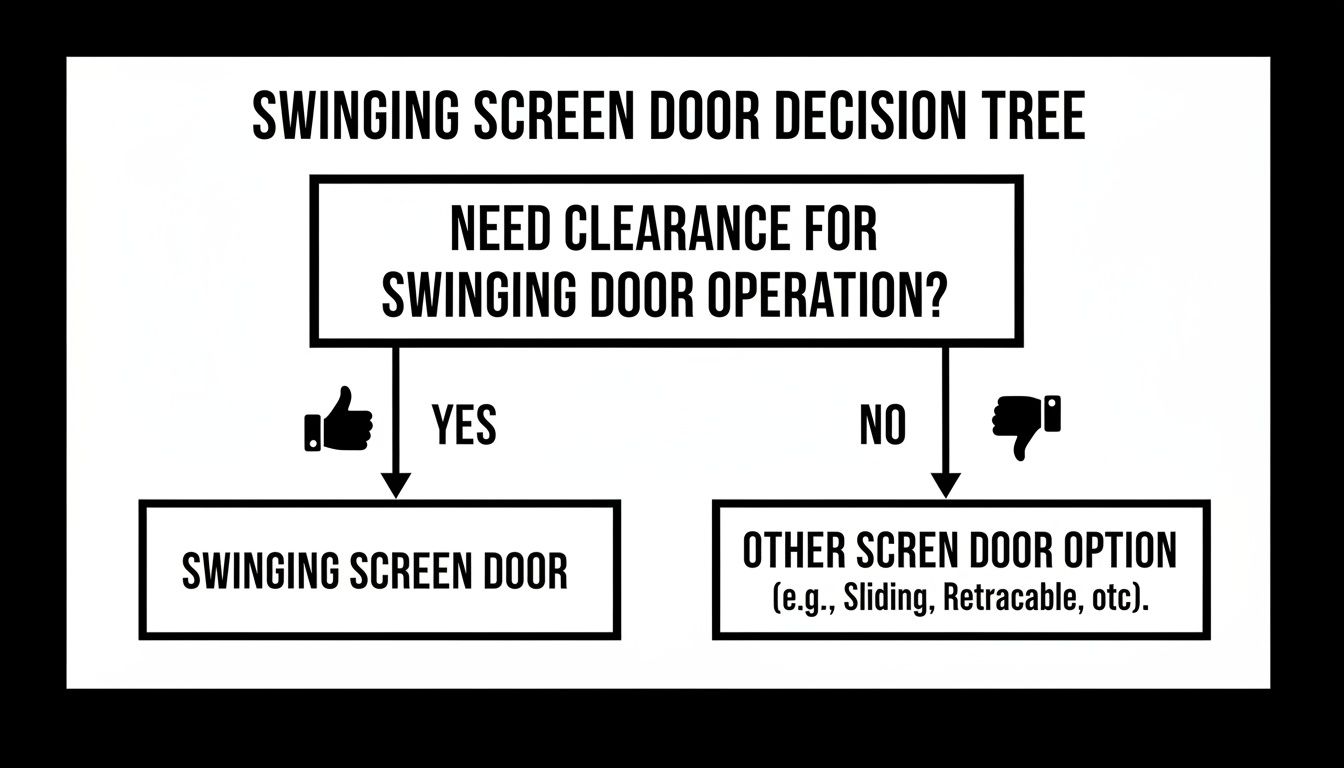
As you can see, practical things like physical space have a big impact on your choices. Each of the popular frame materials comes with its own set of pros and cons.
Aluminum: This material is a triple threat: it's lightweight, strong, and rust-proof. It's a fantastic low-maintenance choice that can be powder-coated in just about any color to match your home's exterior.
Vinyl: If you want a cost-effective solution that’s built to last, vinyl is a great option. It’s highly durable, stands up to moisture, and won’t rot or peel over time. It’s the definition of a set-it-and-forget-it solution.
Wood: Nothing beats the classic, traditional beauty of wood. It can be painted or stained for a perfect match with your French doors. The trade-off is that it requires more maintenance to keep it protected from the weather.
Getting it Installed and Keeping it Working
You've picked out the perfect screen door for your French doors—great! But the job's only half done. The real magic happens during installation. A professional setup is the difference between a screen that glides like a dream and one that’s a constant source of frustration, sticking, jamming, or leaving tiny gaps for unwelcome guests.
The installation itself really depends on which style you went with. A traditional swinging screen might look like a simple weekend project, but getting it to hang just right—with no dragging or crooked gaps—is an art form. When you get into retractable or sliding screens, with their precise tracks and tension mechanisms, the need for an expert hand becomes even clearer. Honestly, for these more complex systems, calling a professional is almost always the right move. Our guide on screen doors installation walks you through what a pro service handles.
An improperly installed screen door isn't just a hassle; it's a weak link in your home's comfort. A bad fit can wear out parts quickly, damage your doorframe, and lose the battle against bugs that sneak through the cracks.
Keeping Your Screen Door in Top Shape
Once your screen is in and working beautifully, a little bit of care goes a long way. Think of it less as a chore and more as simple seasonal upkeep that prevents headaches later on. It’s not complicated, but it’s absolutely key to making your investment last.
Just a few habits will keep everything running smoothly:
- Clean the Tracks Regularly: This is a big one for retractable and sliding screens. Dirt, leaves, and all sorts of gunk build up in the tracks. A quick pass with a vacuum's brush attachment is all it takes to keep the door from jamming or jumping off its track.
- Wipe Down the Mesh: You’d be surprised how much dust and pollen a screen can trap over a few months. For the best airflow and a clear view, you'll want to clean the mesh itself. There are some proven best ways to clean window screens that work great without causing any damage.
- Check for Tension: Retractable screens need good spring tension to snap back into their housing cleanly. If your screen starts to retract sluggishly or unevenly, it's a sign the tension needs a professional tune-up.
Stick with these simple steps, and your French door screens will stay a functional, beautiful part of your home for many years.
Got Questions About French Door Screens? We've Got Answers.
Choosing the right screen for your French doors usually boils down to a few key questions. Once you have the answers, you can feel confident you're picking a solution that looks great and works for your family's lifestyle.
We'll walk through the most common questions homeowners have right before they make a decision. Consider this your final Q&A before you can finally open those doors and let the fresh air in—without the bugs.
Can I Get A Screen Door For Outward-Swinging French Doors?
You sure can. If your French doors swing out onto a patio or deck, your best bet is an internally mounted retractable screen door. These install on the inside of your door frame, pulling across the opening only when you need them.
This clever design means the screen is completely out of the way of the doors' path. It keeps your home's exterior looking clean and uncluttered while still giving you total insect protection.
What’s The Toughest Option For Pets And Kids?
For a busy household with pets and children, nothing beats a sliding screen door fitted with pet-resistant mesh. The solid frame of a slider is built to withstand far more daily abuse than the lighter components of a retractable screen.
Pet-resistant mesh isn't just a marketing term—it’s a game-changer. It's engineered to be much thicker and more flexible than standard fiberglass, making it incredibly resilient against claws, scratches, and the occasional enthusiastic push from a furry friend or a toddler.
How Much Do French Door Screens Typically Cost?
The price tag can swing quite a bit depending on the style, materials, size of your doors, and whether you hire a pro for the installation.
Here’s a general breakdown:
- Swinging Screen Doors: These are usually the most wallet-friendly choice.
- Sliding Screens: Expect these to be in the mid-range price-wise.
- Custom Retractable Screens: As the premium option, their sophisticated, disappearing design and complex mechanics come with a higher cost.
The only way to know for sure is to get a quote. A professional service can give you a precise estimate based on your specific doors and preferences, often with no obligation.
Ready to find the perfect screen solution for your French doors? Sparkle Tech Screen Service offers quick quotes and expert installation for all types of screen doors. Visit us online to get started!


