


When your screen door starts looking a little grimy, you don't always need to block out an entire afternoon for a deep clean. For a quick and effective refresh, simply dry brush any loose dust and cobwebs off the mesh first.
Follow that up with a gentle wash using a mix of mild soap and warm water, give it a good rinse with plain water, and then just let it air dry. It's a fast, simple way to get a clean finish.
Your Quick Guide to Spotless Screen Doors
Let's be realistic—a full-blown deep clean isn't always on the cards when you're busy. This straightforward method is my go-to for regular maintenance or when guests are coming over and I need a quick spruce-up. You can get the job done in under 30 minutes with things you probably already have at home. It’s perfect for tackling that light layer of dust, pollen, and general outdoor grime that seems to appear out of nowhere.
This infographic lays out the simple three-step process for a quick, effective clean.
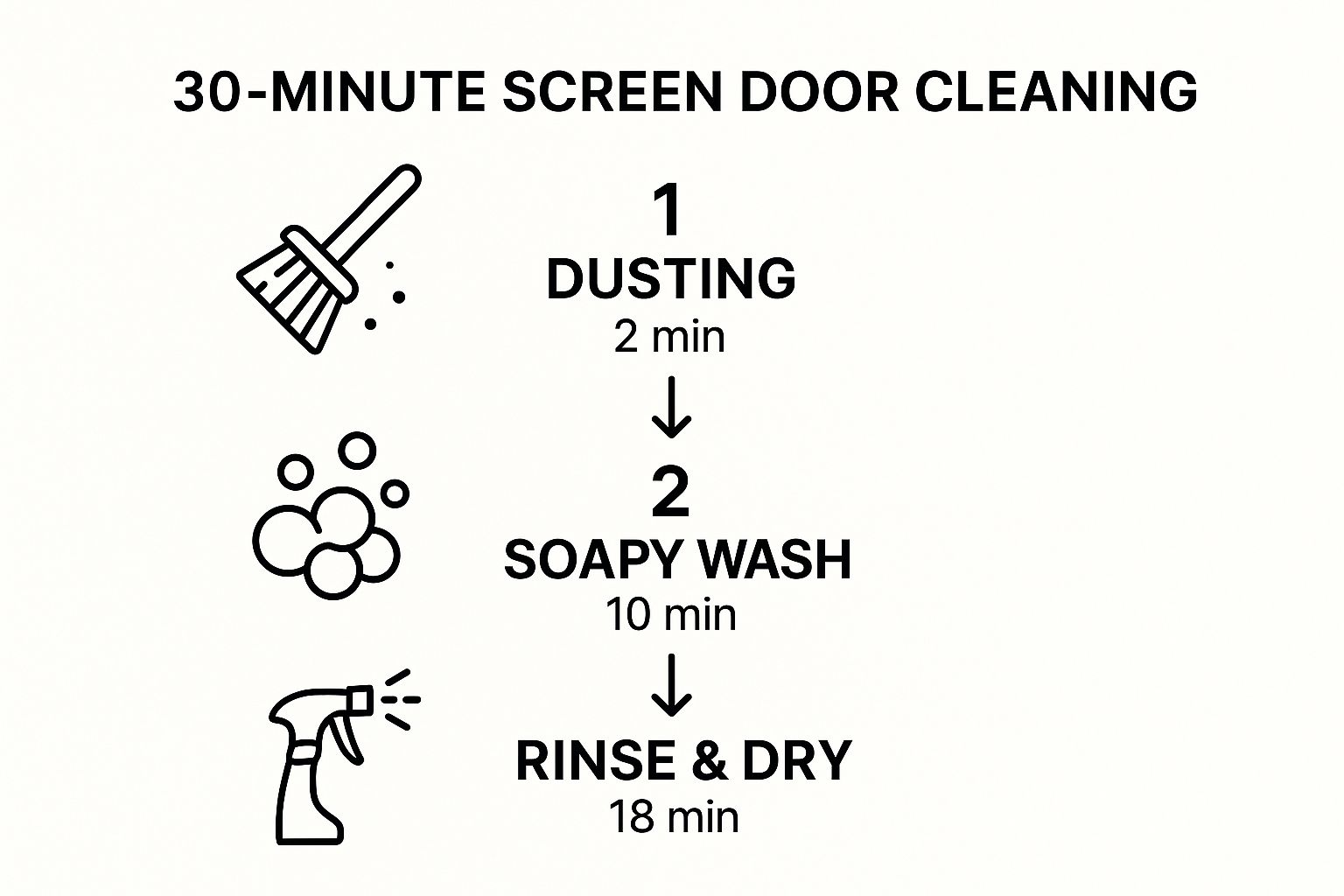
As you can see, most of your time is spent on the final rinse and drying. It might seem like a small detail, but this step is key to preventing those annoying water spots and getting a truly streak-free look.
Choosing Your Screen Door Cleaning Method
Every screen door is different. One that faces a busy, dusty road is going to collect a lot more dirt than one on a sheltered back porch. The trick is figuring out the right approach based on how dirty the screen is and how much time you can spare.
Interestingly, many of the same techniques apply to window screens. If you want to expand your cleaning know-how, you can learn more about how to clean window screens and apply the same principles.
The real goal here is to match your cleaning effort to the screen's actual condition. A quick dusting might be all you need for weekly upkeep, but a soapy wash is definitely the way to go for clearing away built-up gunk after a big storm.
Not sure which method to use? This table breaks down the options to help you decide what's right for your situation.
Choosing Your Screen Door Cleaning Method
| Cleaning Level | Best For | Required Tools | Estimated Time |
|---|---|---|---|
| Light Dusting | Routine weekly maintenance or removing seasonal pollen. | Microfiber cloth, soft-bristle brush, or a lint roller. | 5-10 minutes |
| Standard Wash | Moderate dirt, insect marks, and post-rain grime. | Soft brush, mild soap, bucket of water, and a hose. | 20-30 minutes |
| Deep Clean | Caked-on dirt, heavy pollen buildup, or annual spring cleaning. | Screen removal tools, tarp, brush, soap, and hose. | 45-60 minutes |
Picking the right level of cleaning not only saves you time but also helps keep your screens in great shape for longer. A quick dusting is often enough to keep them looking fresh week to week.
Getting Your Screen Cleaning Gear Together
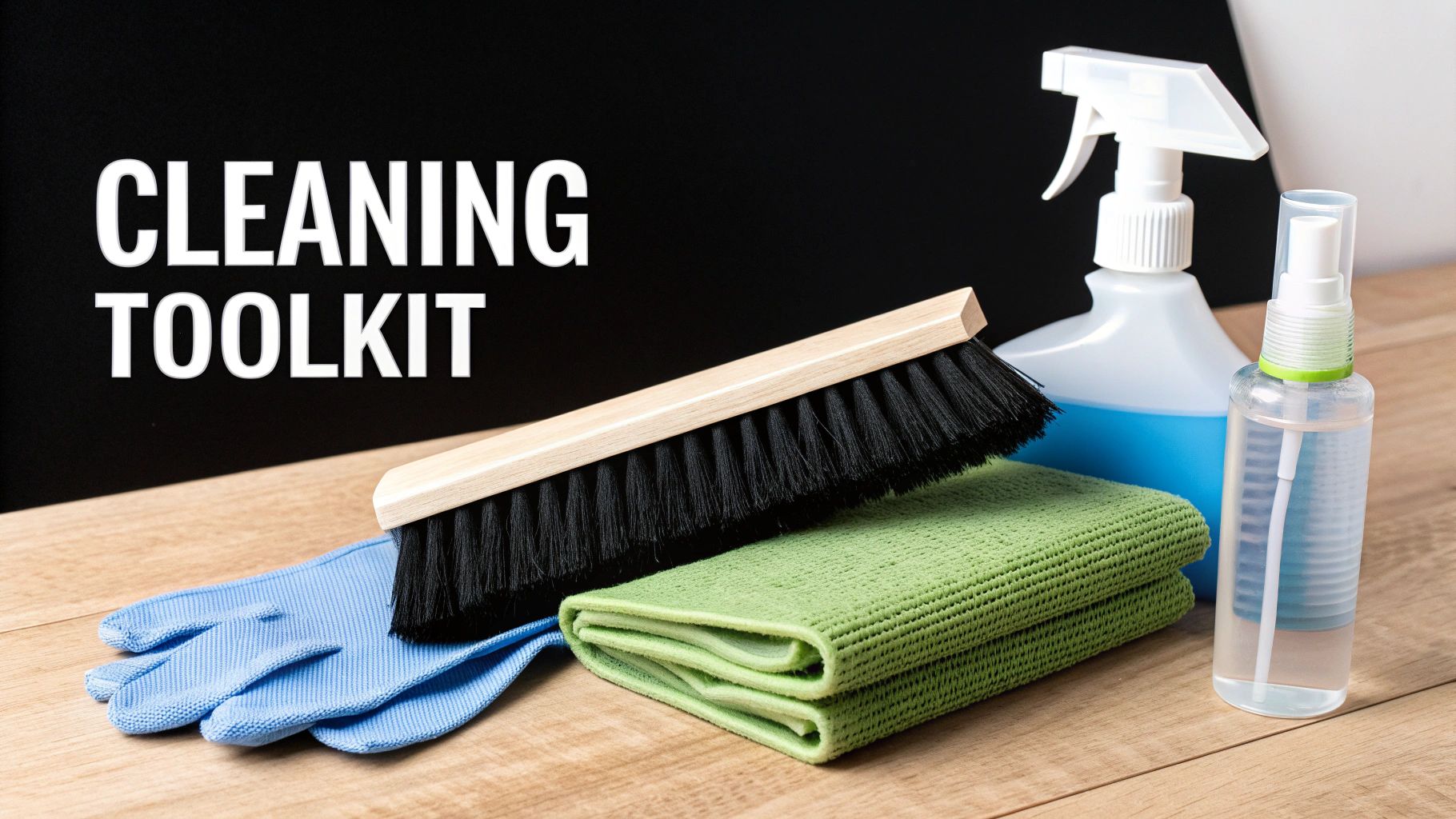
Before you even think about scrubbing, let's talk about tools. Having the right gear ready to go is the secret to turning a frustrating chore into a quick, satisfying win. What you'll need really depends on whether you're just knocking off some dust or tackling a year's worth of grime.
For a light touch-up, you probably already have what you need. A quick once-over with a lint roller or a dry microfiber cloth is often enough to grab surface dust, pet hair, and pollen. It's a great habit to get into, especially during allergy season.
The Must-Haves for a Deeper Clean
When it's time for a proper wash, you'll want to build out that toolkit. A soft-bristle brush is non-negotiable. It has to be gentle enough not to snag the delicate mesh but firm enough to actually clean. Stay far away from stiff-bristle brushes; they’re notorious for stretching or even tearing fiberglass and aluminum screens.
Here’s a quick list of what I always have on hand:
- A soft-bristle brush: Your key to scrubbing away dirt without damaging the mesh.
- Microfiber cloths: Perfect for wiping down the frame and handling the soapy water.
- Two buckets: This is a pro-tip. One bucket holds your soapy mix, and the other holds clean water for rinsing. This keeps you from wiping dirty water back onto your clean screen.
- Mild dish soap: Simple, effective, and safe for just about any screen material you'll encounter.
If your screens are looking particularly rough, you might need some more specialized equipment. We actually cover what the pros use in our guide to window screen repair tools, and many of those insights apply to cleaning, too.
Picking the Right Cleaning Solution
Now, for the cleaner itself. You can absolutely buy a commercial product, but honestly, a homemade solution works just as well and costs next to nothing.
My go-to recipe couldn't be simpler: one part white vinegar to one part warm water. Vinegar is a natural degreaser that cuts right through that sticky film of grime. It’s safe for nearly all screen types, including fiberglass and aluminum.
The power of basic household items is often underestimated. You'll find a lot of great information about cleaning with vinegar, as it's a fantastic, gentle option for so many surfaces. The only catch? Just make sure you rinse the screen thoroughly afterward to get rid of any lingering vinegar smell.
Cleaning Screens Without Removing Them

Let's be honest—wrestling a screen door off its tracks can be a real pain. Sometimes you just need a quick, effective clean without the full-blown project. This is the perfect approach for those times.
Think about it: you're getting ready for a last-minute get-together, and you suddenly notice a layer of pollen and dust dulling your view. This is the method you’ll want in your back pocket. It’s especially great for those big sliding glass door screens or any other fixed screen that’s a hassle to pop out. The trick is simply to control your water so you don't end up with a puddle inside.
The Two-Bucket Washing Method
One of my go-to techniques for cleaning an upright screen door is the two-bucket method. It might sound overly simple, but it’s a professional trick that stops you from spreading grime right back onto the surface you’re trying to clean.
Here’s how it works:
- Bucket 1: Fill it with your cleaning solution. A squirt of mild dish soap in warm water is all you need.
- Bucket 2: Fill this one with plain, clean rinse water.
You'll dip your brush into the soapy water, scrub a section, and then rinse the dirty brush in the clean water bucket before going back for more soap. This keeps your cleaning solution from turning into a muddy mess.
This method is a total game-changer. It guarantees you’re always using a clean tool, which drastically cuts down on streaks and leaves a much better finish. It’s a tiny extra step that makes a huge difference.
Always start cleaning at the top of the screen and work your way down. Take a soft-bristle brush, dip it in the soapy mix, and gently scrub the screen mesh. Using downward strokes is best, as it helps push the dirt out and prevents you from accidentally stretching or damaging the screen.
Rinsing and Finishing Touches
After you’ve scrubbed the whole screen, it's time to rinse away the soap. You want a gentle rinse here, not a power wash that soaks your entryway. If you’re using a garden hose, make sure to use a low-pressure setting, like a "mist" or "shower" spray.
Aim the water at a downward angle. This helps the water sheet down the outside of the screen instead of blasting through the mesh into your home. No hose? No problem. A spray bottle filled with clean water or a damp microfiber cloth works just as well for a controlled rinse.
Finally, don't neglect the frame and tracks. Grab a cloth and give them a good wipe-down to get rid of any stray dirt or soap residue. I like to do one last pass over the whole screen with a dry microfiber cloth to absorb any lingering water and prevent spots. The result is a spotless screen door that looks fantastic.
A Deep Clean for a Total Screen Refresh
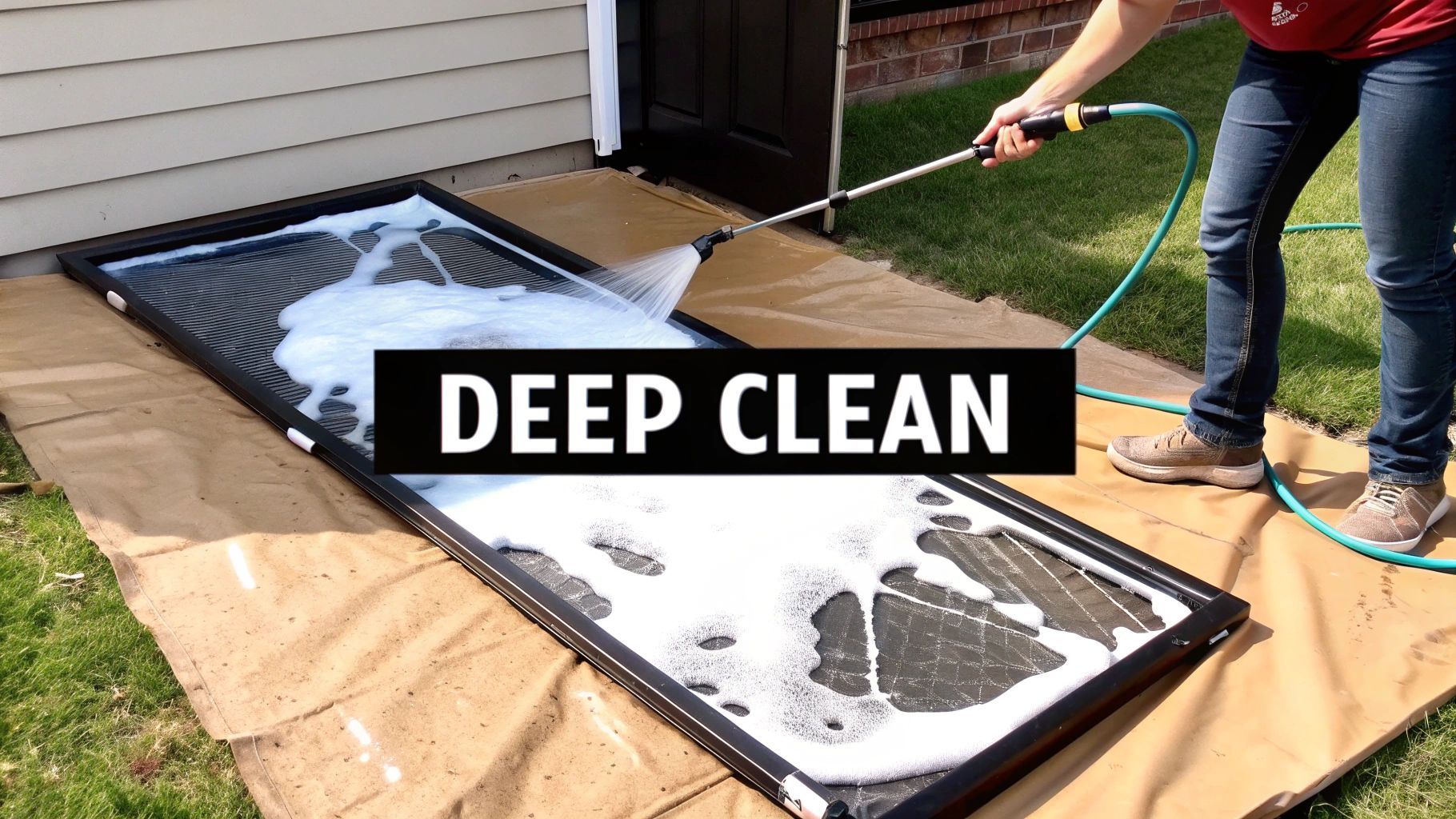
Let's be honest, sometimes a quick wipe-down just doesn't do the trick. When your screen door is caked with a season's worth of pollen, dust, and stubborn grime, it’s time to bring out the big guns. An annual deep clean is the best way to get it looking like new again.
This approach requires taking the screen door off its frame, which sounds like more work, but it’s the only way to get a truly thorough wash. It allows you to tackle that embedded dirt that simple scrubbing just can't reach, and honestly, it helps the screen material last longer.
Safely Removing Your Screen Door
First things first, you need to get the door off its hinges or track without damaging anything. How you do this depends on the type of door you have.
- For Sliding Screen Doors: Look for the adjustable wheels at the top and bottom. Grab a screwdriver and loosen the screws on the bottom wheels. This should give you just enough wiggle room to lift the door up and pull the bottom out of its track.
- For Hinged Screen Doors: These are usually a bit easier. Just like a regular door inside your house, they’re held on by hinge pins. A gentle tap on the bottom of the pins with a hammer and a nail set should pop them right out, allowing you to lift the door free.
Once the door is off, find a good spot to work. Lay it flat on a large tarp or even a clean patch of grass. The goal is to have a stable surface that won't scratch up the frame while you work.
Pro Tip: This is the perfect opportunity to give your screen a thorough inspection. When it’s lying flat, you can easily spot any small rips, holes, or sections where the spline might be coming loose. If you find any major issues, it might be a good time to learn how to rescreen a door and make it brand new.
The Deep Scrub and Rinse
With the door laid out, you're ready to start cleaning. Mix up a simple solution of warm water with a few drops of mild dish soap and generously spray the entire screen. Let that solution sit and work its magic for a few minutes to really break down the grime.
Next, grab a soft-bristle brush and gently scrub the mesh. I like to work in a consistent pattern, moving from top to bottom, to make sure I don't miss any spots. Don't press too hard—let the soap and the bristles do the work.
After a good scrub, it's time to rinse. A garden hose with a gentle spray nozzle is your best friend here. You need enough water pressure to wash away the suds and dirt, but not so much that you stretch or damage the delicate screen material. Make sure you rinse both sides completely until the water runs clear.
It's no surprise that people are taking screen maintenance more seriously. The global market for screen cleaners hit around USD 3.5 billion in 2023, and it's only expected to grow as more homeowners work to protect their investments from the damage that dust and pollen can cause.
Finally—and don't skip this part—let the screen air dry completely before you put it back. Stand it up against a sunny wall or a fence where it can get plenty of airflow. Reinstalling a damp screen is a recipe for mold and mildew. A little patience at this stage ensures your screen is not just clean, but healthy, too.
Keeping Your Screen Doors Maintained Year-Round
A deep clean feels great, but the real secret to a screen door that lasts is consistent, year-round care. Honestly, spending five minutes a week is way more effective than a massive, back-breaking scrub once a year. This kind of regular upkeep stops grime from getting caked on and lets you spot small problems before they become big, expensive headaches.
Think of it as preventative medicine for your doors. A quick pass with a lint roller or a soft brush takes no time at all but grabs fresh dust, pet hair, and pollen before it gets embedded in the mesh. It’s a tiny habit that makes a huge difference, not just for your door but for your indoor air quality, too.
Building a Simple Maintenance Habit
You don’t need to overthink this. The easiest way to stay on top of it is to just roll screen door care into a simple, effective home cleaning schedule. That way, it becomes part of your routine instead of another chore you have to remember.
Here’s a practical rhythm that works for most people:
- Weekly: Give the screen a quick once-over with a microfiber cloth or a lint roller. This is your first line of defense and nabs all the loose stuff.
- Monthly: Take a closer look at the screen itself. Do you see any small tears or holes? Check the door’s movement, too—does it slide or swing smoothly?
- Seasonally: This is the perfect time to wipe down the tracks and frame. I also recommend giving the moving parts a quick shot of silicone-based lubricant to keep everything gliding nicely.
Don't underestimate how much of a difference a simple routine makes. You're not just keeping your home looking sharp; you're extending the life of your investment. Catching a small hole early and patching it in minutes can save you from a pest invasion or a full screen replacement down the road.
It's clear that homeowners are paying more attention to this kind of upkeep. The professional door and window cleaning service market was valued at USD 1.2 billion and is projected to climb to USD 2.1 billion by 2033. This growth is really driven by people recognizing how valuable regular maintenance truly is. You can learn more about this growing market and its trends if you're interested.
Still Have Questions About Screen Door Cleaning?
It's one thing to read a guide, but it's another to tackle the job yourself. You're bound to run into a few specific questions. Let's go over a couple of the most common ones I hear from people.
Is It Okay to Use a Pressure Washer on My Screens?
I get this question all the time, and it's a tempting shortcut, but my answer is always a firm no. A pressure washer is just far too powerful for the job.
That high-pressure jet of water can easily damage the delicate mesh, causing it to stretch, tear, or even pop right out of the frame. It's much safer to stick with a standard garden hose equipped with a gentle spray nozzle. You'll get them just as clean without risking a costly repair.
How Often Should I Be Cleaning These Things?
This really depends on where you live and the season. For general maintenance, a quick wipe-down or dusting every one to two weeks works wonders, especially when pollen is coating everything in sight.
A full-on, deep clean with soap and water? You probably only need to do that once or twice a year.
The real secret is just staying on top of it. A few minutes of light cleaning here and there will prevent that grimy, sticky buildup that turns the annual wash into a major project.
It's also worth noting that more and more people are opting for gentle, eco-friendly cleaners. This isn't just a fad; the U.S. market has seen a big shift towards non-toxic products that are safe for your screens, your family, and your pets. You can dig into the latest consumer trends in screen cleaning products to see why so many are making the switch.
And hey, if you notice a tear or a bent frame while you're cleaning, don't sweat it. For a professional fix, Sparkle Tech Screen Service can handle any repairs or replacements you need. Get a quick quote today!


