


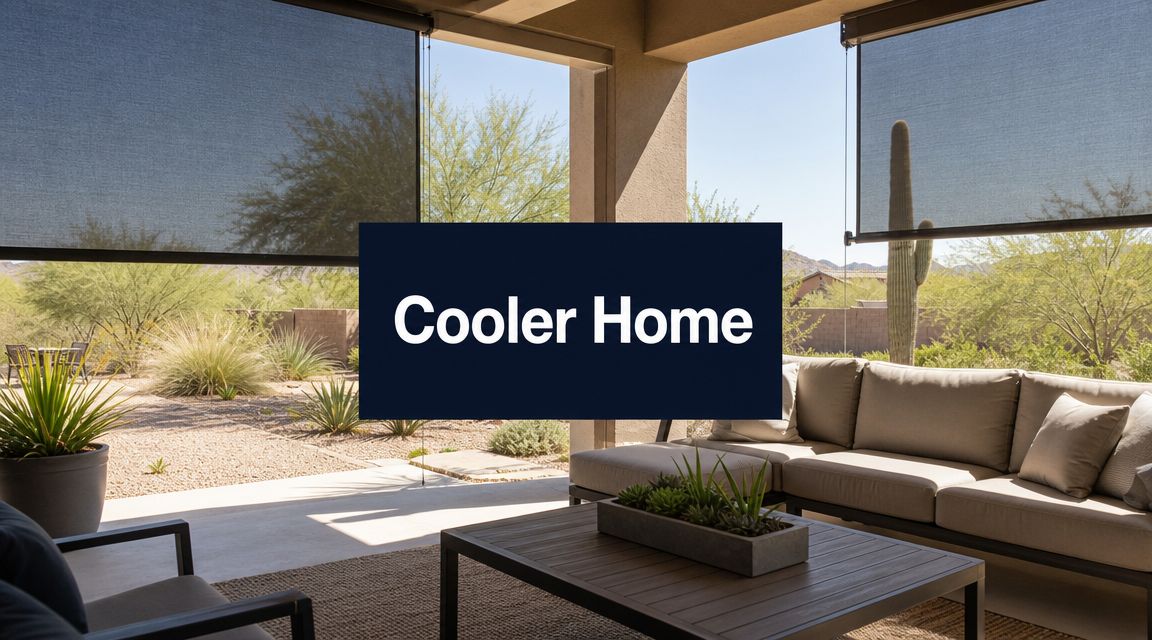

By late afternoon in Phoenix, a west-facing room can feel like a second oven. The couch gets hot where the sun hits it. The TV picks up glare. The floor by the slider looks brighter every week, and the AC keeps running while the room still feels uncomfortable.
That's usually when homeowners start looking for a fix that is effective in desert conditions, not just a decorative window treatment. In this climate, outdoor sun shade screens solve a specific problem. They cut the sun before it pounds the glass, which matters a lot more here than it does in milder places.
Your Battle Against the Arizona Sun
If you live in Phoenix, you already know the pattern. Morning light is easy to live with. Afternoon sun is the one that causes trouble, especially on west and southwest exposures. That's where people notice the same complaints again and again: hot living rooms, washed-out screens, fading furniture, and patios that look usable but don't feel usable.

Phoenix adds a few local problems that generic guides usually skip. UV exposure is relentless, so screen fabric and spline don't age the same way they would in a softer climate. Dust builds up faster. Monsoon gusts test weak frames, loose corners, and poorly tensioned mesh in a hurry.
What homeowners usually notice first
Individuals typically don't begin by saying they need solar control fabric. They say things like:
- The room feels hotter than the thermostat says
- The glare makes part of the house unusable in the afternoon
- The patio looks shaded but still feels blasted
- The windows seem to radiate heat by dinner time
Those are all clues that sunlight is getting too deep into the envelope of the home.
In Phoenix, the question usually isn't whether the sun is a problem. It's which openings are taking the hardest hit, and how much view you're willing to trade for comfort.
Outdoor sun shade screens are one of the most practical retrofits for that problem because they work on the outside, where the heat starts. That makes them useful on windows, patio openings, sliders, and other areas where interior blinds alone don't do enough.
How Sun Screens Keep Your Home Cool
Think of exterior screens as sunglasses for your house. That analogy works because the fabric filters the sunlight before the glass heats up. Once the glass gets hot, the room is already losing the battle.
Outdoor sun shade screens work by reducing solar heat gain before sunlight reaches the glazing, which is more effective than trying to stop heat after it has entered the room. Darker fabrics improve outward visibility and glare reduction, while lighter colors generally reflect more solar energy, according to Insolroll's explanation of how solar screen shades work.
Why exterior placement matters
Interior blinds help with brightness and glare, but they don't stop the glass from becoming a heat collector. Exterior mesh changes the order of events. Sun hits the screen first. Some energy is reflected away. Some is absorbed at the screen. The small air gap between screen and window helps that heat dissipate outside instead of building right against the glass.
That's the advantage. It's not just “shade.” It's interception before the heat reaches the window.
What changes the result
Not every screen behaves the same. A few choices make a big difference:
- Openness of the weave affects how much sun gets through.
- Fabric color affects reflectivity, glare, and view-through.
- Placement on the hardest-hit elevations matters more than treating every opening the same.
For a Phoenix home, west-facing and southwest-facing windows usually deserve the most attention because that late-day sun is brutal. On those exposures, the wrong fabric can still leave you with too much heat. On the other hand, going too dense on a mild exposure can darken the room more than necessary.
Practical rule: Match the screen to the exposure, not just the window size. A north-facing bedroom window and a west-facing family room slider usually shouldn't get the same fabric choice.
Darker mesh is often the better pick when homeowners want a cleaner outward view during the day. Lighter mesh can make more sense when solar reflection is the top priority. The right answer depends on what bothers you most: heat, glare, brightness, or lost view.
Choosing the Right Screen Material and Type
The biggest mistake I see is treating all sun screens like they're interchangeable. They aren't. In Phoenix, your fabric choice has to survive intense sun, airborne dust, and seasonal wind while still giving you the level of view and protection you want.
A key shift in this industry was moving from basic bug-screen thinking to engineered solar-control fabrics. Modern solar screens are typically made from materials like PVC-coated polyester or knitted HDPE and fiberglass-type mesh rather than simple insect screen, as outlined in this overview of common solar screen questions.
Start with openness and blockage
Solar screen fabrics are commonly made in openness levels from about 1% to 15%, and products are commonly marketed at roughly 80% and 90% heat/UV blockage, with some exterior fabrics described as blocking up to 99% of UV rays, according to Blinds.com style guidance from Blindsgalore on outdoor solar shades.
That tells you two important things:
- Lower openness usually means stronger solar control
- Higher openness usually preserves more visibility
Those two goals pull against each other. There's no getting around that.
Sun Screen Material Comparison
| Material Type | Typical UV Blockage | Visibility (View-Through) | Best For |
|---|---|---|---|
| PVC-coated polyester solar fabric | Commonly sold in 80% or 90% blockage ranges | Good to moderate, depending on openness and color | Windows and patio openings where you want durable solar control |
| Fiberglass-type solar mesh | Varies by fabric specification, with some exterior fabrics described as blocking up to 99% UV | Can preserve a cleaner feel depending on weave and color choice | Homeowners balancing heat control with a more open look |
| Knitted HDPE-style shade mesh | Qualitative, depends on product spec | Often chosen for airflow and exterior living spaces | Patios, decks, and outdoor areas that need sun relief rather than just window coverage |
What works on different parts of the house
A simple way to think about selection:
- West-facing glass: Go stronger on solar control. Lower openness typically proves most beneficial.
- Front windows with a view: You may want more openness so the room doesn't feel closed in.
- Covered patios: Prioritize comfort, glare reduction, and durability over a crystal-clear view.
- Decorative side windows: Don't overbuild these if they don't take heavy sun.
If you want to compare fabric options in a more product-specific way, Sparkle Tech provides a page on sun shade material choices that helps narrow down mesh types for residential use.
Material is only part of the decision
Fabric gets most of the attention, but the application matters too. A patio opening may call for a different approach than a removable window screen. If you're planning shade for a larger outdoor living setup, it also helps to look beyond screens and compare adjacent ideas like Outdoor shade sail pergola ideas, especially if you're deciding between vertical screening and overhead shade structures.
The best screen is the one that solves the actual problem on that side of the house. More blockage isn't automatically better if it makes a room too dark for how you use it.
The Pros and Cons for Phoenix Homeowners
Outdoor sun shade screens make a lot of sense in the Valley, but they aren't magic and they aren't perfect for every opening. Phoenix homeowners do best when they understand both the upside and the trade-offs before ordering anything.

Where they shine in this climate
The main benefit is comfort. Rooms with hard afternoon exposure usually feel more usable once the sun is being filtered outside instead of blasting through bare glass. That also helps with glare on TVs, monitors, and phones.
They also help protect interiors from harsh sunlight. In Phoenix, that matters for flooring, furniture, and any spot in the house that gets regular direct exposure.
Another advantage is daytime privacy. During the day, darker solar mesh often gives a cleaner look from the inside while making it harder for people outside to see in clearly.
The trade-offs that are easy to overlook
The U.S. Department of Energy notes that exterior shading is highly effective, but design details matter. Some products can block desirable daylight, and fixed shades may reduce beneficial winter solar gain, as summarized in this exterior solar screens overview.
That warning matters in Phoenix more than people think. Homeowners often install the densest screen they can find on every opening, then wonder why certain rooms feel dim all year.
A few other local drawbacks deserve honest attention:
- Dust shows up fast: A dirty screen still works, but it won't look sharp and can start to hold grime.
- Monsoon winds expose weak installs: Loose corners, poor hardware, and under-tensioned mesh can fail early.
- Views can soften: On scenic lots, stronger solar control may visibly mute the outside look.
A short video can help you see the day-to-day effect on real homes:
Good fit and poor fit
Outdoor sun shade screens are usually a strong fit when the home has persistent glare, overheated west exposures, or patios that need daytime relief.
They're a weaker fit when a homeowner wants zero visual impact, doesn't want any daylight reduction, or has an elevation where winter sun is welcome and the summer exposure isn't severe.
DIY Installation versus Professional Service
A lot of homeowners assume sun screens are just mesh in a frame, so DIY should be straightforward. Sometimes it is. A small, ground-level window with a simple frame can be manageable if the measurements are exact and the material is handled properly.
The trouble starts when people underestimate how much fit, tension, and attachment method affect performance in Arizona. A screen that looks acceptable on day one can start showing problems once it sees dust, heat cycling, and a few monsoon events.

Where DIY can go wrong
The common failures aren't dramatic at first. They're small issues that add up:
- Bad measurements leave light gaps or create a frame that binds.
- Weak tensioning leads to a screen that ripples, sags, or flaps.
- Wrong hardware creates loose mounting on stucco, wood, or metal conditions.
- Poor corner strength shows up later when wind loads the frame.
Those aren't cosmetic details. In Phoenix, they're durability issues.
What professional service changes
A professional install usually means the fabric is selected for the specific opening, the frame is built to fit the existing conditions, and the screen is tensioned for long-term use instead of just immediate appearance.
For homeowners comparing options, a service page like professional sun screen installation gives a practical sense of what's included when the work is measured, built, and installed rather than pieced together from store parts.
If the opening gets serious afternoon sun and monsoon exposure, the install quality matters almost as much as the fabric itself.
There's also the issue of ladder work, second-story access, and avoiding damage to existing frames. DIY makes the most sense when the opening is simple and the homeowner is comfortable with precision work. Professional service makes more sense when the opening is exposed, oversized, awkward to reach, or expected to hold up for years without constant adjustment.
How to Maintain and Repair Your Sun Screens
Phoenix is hard on anything that lives outdoors. Sun screen fabric deals with UV, wind, dust, pollen, and abrasive grime. Even a good installation needs inspection over time.
Real-world longevity depends on UV exposure, wind loading, and installation quality. Consumers also need practical guidance on when fraying or tension loss becomes a real performance issue that calls for repair or re-meshing, based on NFRC-related durability discussion summarized here.
A simple maintenance routine
You don't need a complicated schedule. You do need consistency.
- Brush off loose dust first: Dry debris can grind into the mesh if you go straight to scrubbing.
- Use gentle washing methods: A soft brush, mild soap, and low-pressure rinse are safer than aggressive cleaning.
- Check the frame while cleaning: Look at corners, spline hold, and attachment points.
- Inspect after wind events: Monsoon season is when hidden weaknesses show up.
If you already maintain exterior finishes around patios and walkways, it's useful to follow similarly gentle cleaning habits. The guide on steps for beautiful outdoor tiles is about tile rather than mesh, but it's a good reminder that outdoor materials last longer when you avoid harsh, abrasive cleaning methods.
Signs you need repair instead of just cleaning
Cleaning won't fix structural wear. Watch for these signs:
- Fraying edges where the mesh is starting to break down
- Loss of tension that leaves the panel loose or uneven
- Brittle feel from long UV exposure
- Corner or spline problems where the fabric no longer sits securely
- Warped or bent frames after wind stress
Repair, remesh, or replace
If the frame is still solid and the issue is mostly fabric wear, re-meshing usually makes more sense than replacing the whole assembly. If the frame is bent, hardware is failing, or the opening was poorly built to begin with, replacement may be the cleaner long-term answer.
A screen doesn't have to be torn open to be failing. If it has lost tension or the fabric has gone brittle, performance is already slipping.
The best time to inspect is before peak heat and again after monsoon season. That catches both UV wear and wind damage before they turn into a larger repair.
Understanding Costs and Getting Your Quote
Homeowners usually want one flat answer on cost, but outdoor sun shade screens aren't priced that way for a good reason. The final quote depends on what's being built, how it's being mounted, and what level of performance you're asking the material to deliver.
Quality benchmarks affect both cost and results. For example, Phifer SunTex 80/90 is designed to block 80% to 90% of the sun's heat and glare and is intended for exterior blinds, patio shades, window screens, and canopy applications, according to Phifer's SunTex 80/90 product information.
What changes the price
A quote usually moves based on a handful of factors:
- Fabric choice: Stronger solar-control mesh and brand-name materials can change the project cost.
- Opening size: Larger windows, sliders, and patio spans use more material and need stronger support.
- Installation complexity: Second-story work, unusual frames, and difficult access add labor.
- Condition of existing frames: Reusing a good frame is different from building new.
- Type of project: A simple remesh is different from a full custom installation.
If you want a more detailed breakdown before scheduling service, this guide on how much solar screens cost helps explain what usually drives the final number.
What a good quote should tell you
A useful quote shouldn't just list a total. It should make clear:
| Quote item | Why it matters |
|---|---|
| Material specified | So you know what level of solar control you're paying for |
| New frame or remesh | These are different scopes of work |
| Mounting method | Important for durability on different surfaces |
| Problem areas noted | Shows whether the installer noticed exposure, access, or wind issues |
If you've used fast online pricing tools in other home service categories, such as obtain your immediate Sapper HVAC pricing, you already know how useful a quick estimate can be for budgeting. Screens still need on-site measuring for accuracy, but having a structured quote process saves time and avoids surprises.
For Phoenix homeowners, the smartest move is to get the hot-side openings measured first. That gives you a clear view of what will make the biggest comfort difference without over-screening the whole house.
Frequently Asked Questions About Sun Screens
Do outdoor sun shade screens make a room too dark
They can if you choose a fabric that's too dense for the exposure and the way you use the room. The trick is matching the mesh to the side of the house. Stronger solar control makes the most sense where the sun is severe. On lighter exposures, homeowners often prefer more view and more daylight.
Are darker screens hotter than lighter screens
Darker fabrics generally improve outward visibility and glare reduction, while lighter fabrics generally reflect more solar energy. Neither color is automatically right for every opening. The better choice depends on whether you care more about view, glare control, or heat rejection.
Do these screens help on patios too
Yes. Outdoor sun shade screens are commonly used beyond windows, especially on patios, decks, and other exterior living areas where direct sun makes the space uncomfortable.
Can monsoon winds damage them
Yes, especially if the frame is weak, the screen is poorly tensioned, or the mounting method isn't suited to the opening. Wind is one of the biggest reasons Phoenix installations need to be built correctly instead of treated like a simple decorative add-on.
Is repair worth it, or should I replace everything
If the frame is in good shape and the fabric is the main issue, re-meshing is often the practical route. If the frame is bent, loose, or poorly built, replacement may save you trouble later.
Are outdoor screens better than indoor shades for cooling
For reducing heat at the glass, yes. Exterior placement changes where the solar energy is stopped, which is why outdoor screening is typically the better cooling strategy.
If you're comparing options for your home, Sparkle Tech Screen Service handles new sun screens, rescreening, repairs, patio screen work, and sliding screen service for Phoenix-area homeowners. A measured quote is the best next step because the right fabric and frame setup depend on your sun exposure, your openings, and how much view you want to keep.


