


Picking the right sun shade material isn't just about blocking the sun; it's about finding the perfect balance for your specific needs. Whether you're looking at tough solar screens or reflective Aluminet, each fabric brings its own mix of UV blockage, heat reduction, and visibility to the table.
Choosing the Right Sun Shade Material for Your Home
It's easy to get lost in all the options for sun shade fabrics, but the choice gets a lot simpler when you nail down your main goal. Are you looking to dramatically cut your cooling bills by stopping heat before it hits your windows? Or maybe you just want to make your patio usable in the middle of a July afternoon. Knowing your priority is the first step.
The market for high-performance sunshade material is booming, growing from a USD 1.2 billion industry to a projected USD 2.5 billion by 2033. This isn't just about simple shade anymore. Homeowners want advanced fabrics that offer serious UV protection, long-term durability, and breathability, with some materials blocking up to 98% of harmful rays while staying surprisingly lightweight.
What to Look for in a Sun Shade Fabric
Before getting into the specific materials, let's break down the key features that really matter. Thinking through these factors will point you toward the best fit. It's a lot like choosing the right fabrics that keep you cool all summer; the material's properties make all the difference.
Here’s what you should be evaluating:
- UV and Heat Rejection: How much sun and heat is it actually stopping? This is the most important factor for cooling down your home, patio, or outdoor spaces.
- Visibility and Openness Factor: Do you want to keep your view of the backyard? The "openness factor" tells you how tight the weave is, which directly impacts how much you can see through it and how much air gets through.
- Durability and Lifespan: You need something that can stand up to the brutal Arizona sun without tearing, fading, or growing mildew. It’s worth exploring the different types of window screen materials to get a better sense of what lasts.
- Primary Use Case: The best material for a window screen isn't necessarily the right one for a large patio cover or a horse stall. The application dictates the choice.
| Material Type | Primary Strength | Best For |
|---|---|---|
| Solar Screen Mesh | Balanced Performance | Windows, Patios, Enclosures |
| Aluminet | Heat Reflection | Greenhouses, Horse Stalls |
| Canvas | Full Shade (Opaque) | Awnings, Pergolas |
| PVC-Coated Polyester | Extreme Durability | High-Traffic Commercial Use |
Comparing the Best Sun Shade Fabric Options for Your Home
When you're trying to choose the right sun shade material, you’re essentially balancing a few key trade-offs. Every fabric brings its own mix of heat rejection, visibility, and durability to the table, and knowing the differences is what turns a decent purchase into a smart investment. Let's dig into how the most popular options really stack up.
This isn't just a homeowner's dilemma; it's a big deal in the market. The demand for better ways to stay cool and protected outdoors is fueling some serious growth in the sun shade industry.
This chart really puts that growth into perspective, showing just how much more homeowners are valuing high-performance fabrics.
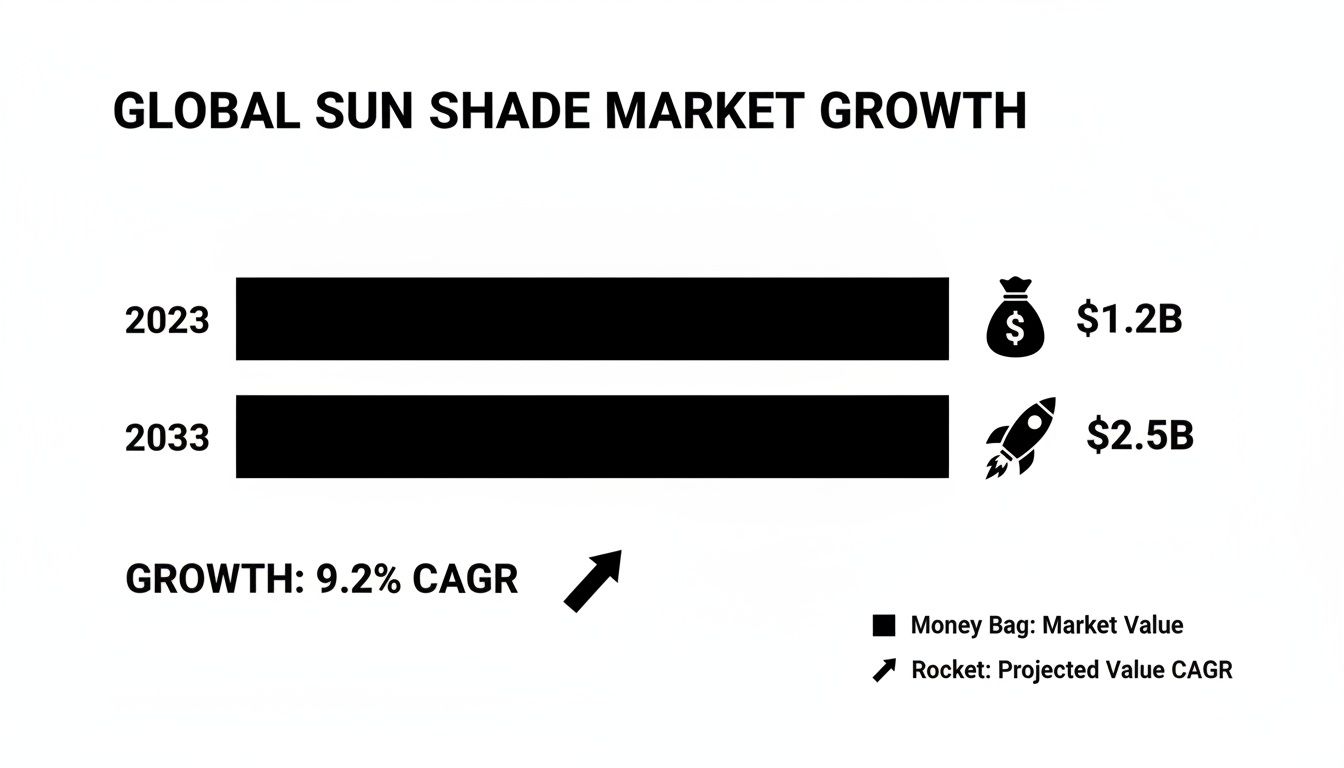
It’s pretty clear from the data that the market is on track to more than double in the next ten years. This boom is being driven by constant improvements in fabric technology and a growing awareness of just how important UV protection is.
Solar Screen Mesh: The All-Around Performer
For most homes, solar screen mesh is the go-to material, and for good reason. It's usually made from PVC-coated polyester or fiberglass, and its biggest strength is its "openness factor," which lets you dial in the perfect balance between blocking the sun and keeping your view.
Think of it this way: a lower openness factor (like 5%) gives you maximum shade and heat blockage but makes the view a bit hazy. A higher factor (say, 14%) keeps your view sharp but lets more heat and light through. This customizability makes it a fantastic choice for window screens and patio enclosures where you don’t want to feel boxed in.
HDPE and PVC-Coated Fabrics: Built to Last
If sheer toughness is what you need, High-Density Polyethylene (HDPE) and PVC-coated fabrics are the heavy hitters. HDPE is a dominant force in the wider shade sails market, which was valued at a massive USD 1.84 billion globally. The plastic segment, largely driven by HDPE, made up USD 1.06 billion of that figure thanks to its great ventilation, affordability, and the increasing use of recycled materials. You can find more market data on this at SphericalInsights.com.
PVC-coated polyester takes that durability up another notch. The PVC coating acts like a weatherproof shield, fighting off tears, mildew, and abrasion. This makes it the champion for permanent installations like big commercial awnings or patio covers that have to endure the elements day in and day out.
Key Insight: While both are incredibly durable, HDPE breathes better, letting air and moisture pass through. PVC-coated fabrics are the opposite—they create a solid, waterproof barrier, which can be a huge plus or a major drawback, depending on your climate and needs.
Aluminet: The Heat Reflector
Aluminet is in a class of its own. It's a special knitted screen made from HDPE fibers that have been metalized. Instead of just absorbing the sun’s heat, Aluminet is designed to actively reflect it away. This makes it incredibly effective at lowering temperatures underneath without plunging the area into total darkness.
Because it's so reflective, it's a terrible choice for window screens—you wouldn't be able to see through it clearly. But for things like greenhouse covers, horse stall shades, or carport canopies, it's a game-changer. The main goal there is to keep the space cool, and Aluminet excels at that.
Classic Canvas: Timeless Look, Total Shade
There’s a reason canvas is still around. It offers a classic, opaque look that provides 100% shade and complete privacy. Whether it's made from cotton or a modern synthetic blend, it gives awnings and pergolas a traditional feel that mesh materials just can't match.
The downside is that its dense weave traps heat and moisture. To avoid mildew, especially in damp climates, you need good ventilation and have to commit to regular upkeep. Modern treatments have made it more weather-resistant, but it typically won't last as long as its synthetic cousins when left out in the sun and rain.
Sun Shade Material Performance Comparison
To help you see the differences at a glance, here’s a straightforward breakdown of how these materials perform across the most important categories for any homeowner.
| Material Type | Avg. UV Blockage | Heat Rejection | Visibility | Durability/Lifespan | Typical Cost |
|---|---|---|---|---|---|
| Solar Screen Mesh | 80% – 95% | Good to Excellent | Good to Fair | 10-15 Years | Moderate |
| PVC-Coated Polyester | 90% – 100% | Excellent | Low to None | 15+ Years | High |
| Aluminet | 40% – 90% | Excellent (Reflective) | Low (Diffused Light) | 10+ Years | High |
| Canvas | 100% | Fair (Absorptive) | None | 5-10 Years | Moderate to High |
Ultimately, the best choice depends entirely on your specific project—balancing your budget, aesthetic preferences, and performance needs is key to finding the perfect fit.
How Openness Factor Affects Your View and Privacy
When you start looking at sun shade materials, you’ll hear the term “openness factor” thrown around a lot. It sounds technical, but it’s just a percentage that tells you how tight the fabric’s weave is. This single number is the key to balancing how much you can see out, how much privacy you get, and how much sun you block.
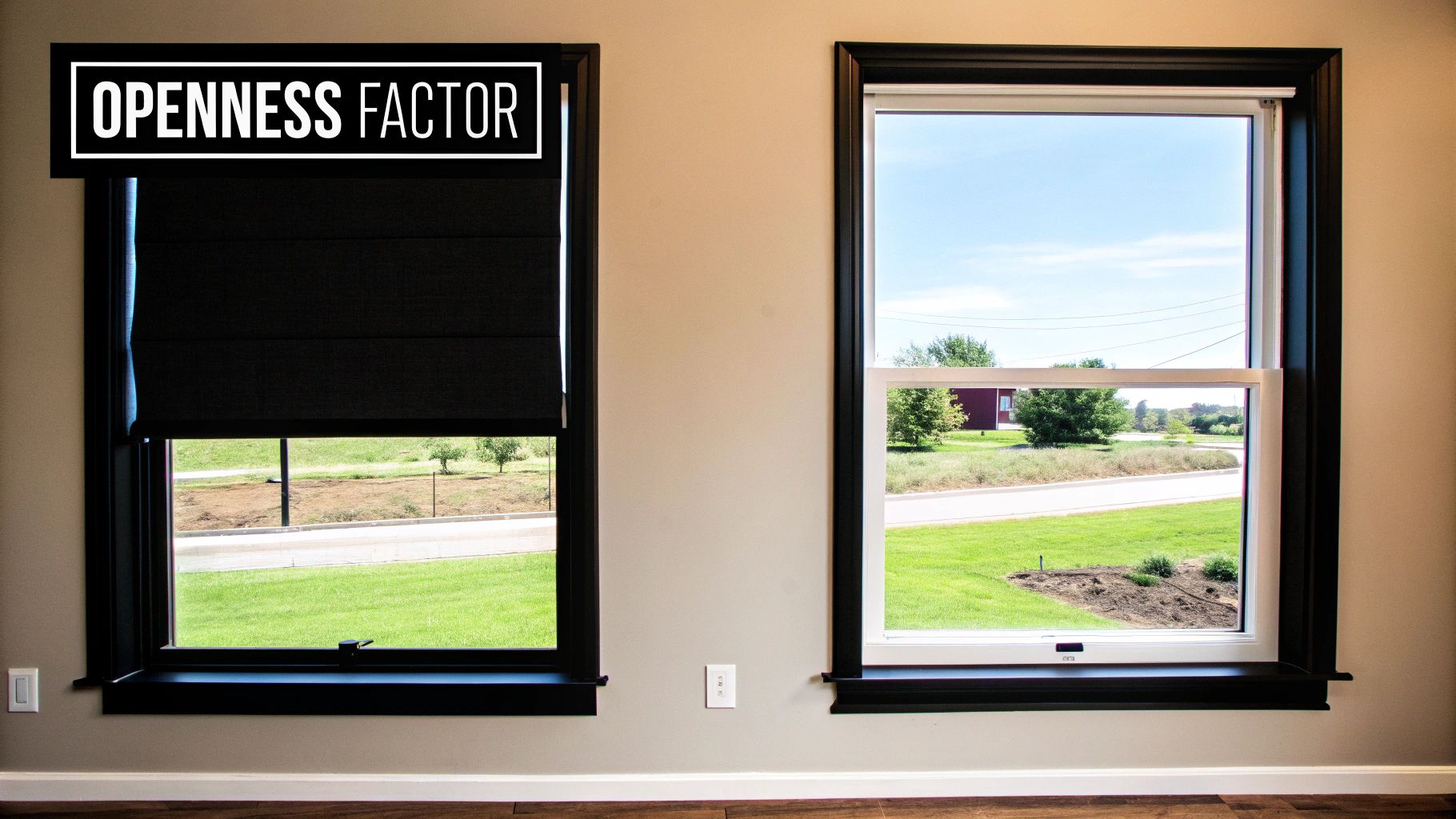
Think of it this way: a lower percentage, like 5%, means the material has a very dense, tight weave. This is your go-to for maximum UV protection and daytime privacy because it's tough for people to see inside. The trade-off? Your view looking out is more filtered, and less natural light gets through.
On the other hand, a higher number like 14% means the weave is much looser and more open. This is fantastic for preserving a great view and letting in soft, ambient light, so you don’t feel closed off from your yard. Of course, this means you get a bit less privacy and heat control in return.
Finding the Right Balance for Your Space
There's no single "best" openness factor—it really comes down to the room and what you need from it. The decision is all about what you prioritize for that specific window or patio.
Here’s how I think about it:
- For bedrooms or a home office facing the street: I almost always recommend a low openness factor, somewhere in the 5% to 8% range. You want privacy and need to cut down on that harsh sun that creates glare on your computer or fades your furniture.
- For a living room with a great view: This is where a higher openness factor, like 10% to 14%, really shines. It keeps that beautiful mountain or backyard view clear while still making a huge difference in cutting down heat and glare.
A Quick Word on Privacy: During the day, any dark-colored screen provides great privacy. The bright sunlight outside makes it almost impossible to see into a dimmer home. But remember, at night, the tables turn. When your lights are on inside, people can see in, no matter the openness factor.
For a deeper dive into how different materials manage light, this guide on understanding light filtering versus blackout shades has some great insights.
Putting It All Together for Your Home
Let's look at a couple of real-world Phoenix examples. If you live in a tightly packed neighborhood, you might choose an 8% screen for your front windows. It’s dense enough to stop nosy neighbors from seeing in but still lets you enjoy some daylight. But if your patio overlooks a beautiful golf course, a 12% screen is probably the better call to keep that view crisp while taking the edge off the afternoon sun.
Getting a feel for these subtle differences is what it’s all about. As you consider your project, it’s worth getting familiar with the different types of window screen mesh available. Making the right choice means you get the sun and heat protection you need without giving up the parts of your home you love most.
Matching Materials to Your Specific Needs
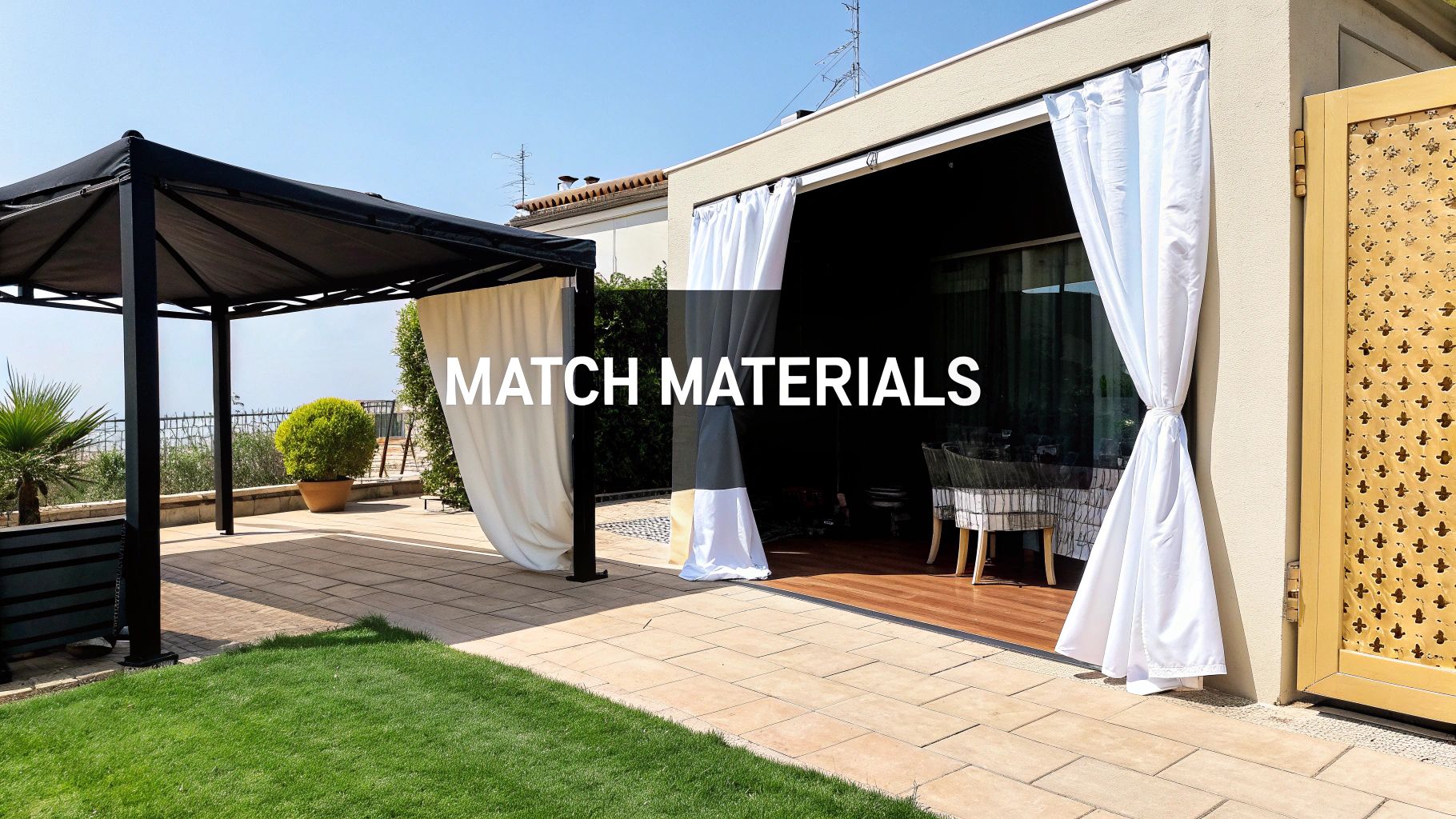
When it comes to sun shade material, there's no magic bullet. The best fabric for a sprawling patio cover would be a disaster on your living room windows. It all comes down to picking the right tool for the job.
This push for specialized solutions is exactly why the global market for sun shade sails is booming. Valued at around $850 million, it’s expected to nearly double to $1,600 million by 2033 as more homeowners look for smart, effective ways to beat the heat. You can dig into the numbers yourself in the full research on sun shade sails growth.
To make a good call, you have to think beyond the label and focus on how a material actually performs in your specific space.
Best Material for Patios and Pergolas
For big outdoor spaces like patios and pergolas, especially here in Phoenix, two things matter most: serious heat rejection and durability. You’re trying to create a cool, comfortable retreat that can withstand years of that relentless sun.
This is where a high-density solar screen mesh really shines, specifically one with an 80% to 90% blockage rating. These fabrics are engineered from the ground up to stop heat in its tracks before it ever bakes your patio furniture. Plus, their woven design lets hot air rise and escape, so you don't get that stifling "heat trap" feeling you find under solid covers.
Optimal Choices for Window Sun Screens
Picking a material for your windows is a different game entirely. You need to walk a fine line between blocking heat and glare while keeping your view and letting in natural light. After all, what’s the point of a window you can't see out of?
For windows, solar screens with a moderate openness factor—usually around 10% to 14%—are the way to go. This weave is tight enough to block a ton of heat but still open enough to give you a clear view outside. Darker colors like black or charcoal are almost always the best choice here, as they cut the most glare and tend to "disappear" to the eye, making the view even sharper.
Pro Tip: For those brutal west-facing windows that get hammered by the afternoon sun, I often recommend dropping down to an 8% to 10% openness factor. You give up a tiny bit of clarity, but the payoff in heat reduction is massive right where you need it most.
Unique Needs for Horse Stalls and Agriculture
Then you have specialty jobs, like shading horse stalls or greenhouses. The priorities shift completely. Here, it’s all about reflecting heat away and maximizing airflow to keep animals or plants safe. A standard shade fabric that absorbs heat just won't cut it.
This is the perfect application for Aluminet. It’s a completely different kind of material—a knitted fabric that reflects a huge percentage of solar radiation instead of just blocking it. This actively lowers the temperature underneath. Its open-knit structure also guarantees constant air movement, making it the hands-down winner for any agricultural or equestrian use where an animal’s well-being is on the line.
Thinking Through Installation and Maintenance
You've done the hard work of picking the perfect sun shade material, but don't close the book just yet. How that fabric gets installed and taken care of is just as crucial as its UV rating for getting the performance and lifespan you expect. The very nature of the material—its weight, how stiff it is, and the way it's woven—dictates the entire process from start to finish.
For instance, heavier and more rigid fabrics like a thick canvas or PVC-coated polyester need a really sturdy frame and professional-grade tensioning to keep them from drooping. Lighter materials, like your typical solar screen mesh or Aluminet, are a bit more forgiving. Still, they need to be installed with care to keep them from getting thrashed by our monsoon winds. One of the most common points of failure I see is improper tensioning, which almost always leads to the fabric wearing out way too soon.
Professional Installation Versus DIY
Sure, you can probably handle a small, pre-made shade sail from a hardware store as a weekend DIY project. But custom window screens or a full patio enclosure? That's a whole different ballgame.
Getting the fabric stretched just right inside a frame is a skill. It's what makes the difference between a clean, tight finish that lasts and a wavy, loose mess that fails in a year. A pro has the specialized tools, like screen splining equipment, to pull the fabric perfectly taut without damaging it.
If you're hiring someone, here are a few things you should definitely ask:
- How do you tension the screen? You want to know their method for keeping the fabric tight over the long haul without putting too much stress on the frame.
- What kind of fasteners do you use? This is especially important for our stucco and brick homes in Arizona. The right hardware matters.
- Will my current window frames handle this? If you're upgrading to a heavier sun screen, you need to be sure your existing frames can support it.
Knowing a bit about professional sun screen fabric installation helps you vet your installer and make sure you're getting a quality job.
A properly installed sun screen should look like it's a seamless part of your window—no ripples, no waves. That perfect fit doesn't just look a heck of a lot better; it maximizes heat blockage and makes the screen far more resistant to wind damage.
Long-Term Care and Maintenance
The good news is that most modern sun shade materials are built to be low-maintenance. PVC-coated fabrics and fiberglass screens are incredibly tough. A simple wash-down with mild soap and water a couple of times a year is usually all it takes to get the dust and grime off.
Canvas is the one exception that needs a little more attention. You'll want to clean it regularly to keep mildew from setting in, especially if it gets soaked and can't dry out quickly.
Regardless of the material, a quick inspection every now and then for small tears or loose screws can help you catch a small issue before it becomes a big, expensive problem. A little proactive care can easily add years to the life of your shades.
Answering Your Top Questions About Sun Shade Materials
Even with all the specs laid out, it's normal to have a few lingering questions. When you're making an investment in your home's comfort, getting the details right is what really counts. Let's tackle some of the most common questions I hear from homeowners trying to choose the perfect sun shade material.
Most people get hung up on the same things: how a material really performs in brutal summer heat, or how to strike that perfect balance between privacy and not losing your view. The right answer usually comes down to what you're trying to achieve for a specific window or patio. Getting this part right is the key to being happy with your new screens for years to come.
What’s the Best Sun Shade Material for Extreme Heat?
When you’re up against intense heat like we get in Phoenix, you have to bring out the big guns. The most effective option for blocking heat on your windows is a dark-colored solar screen with a low openness factor—think 5% to 10%. These materials are specifically engineered to absorb a massive amount of solar heat and get rid of it before it can bake your windows and sneak into your house.
PVC-coated polyester fabrics are fantastic for this job, giving you that top-tier heat control plus incredible durability. For non-window spots like pergolas, greenhouses, or even over horse stalls, a specialized reflective fabric like Aluminet is a real game-changer. It’s designed to literally bounce infrared heat away from the structure, making it a top contender when direct heat reflection is the main goal.
Can You Actually See Through Solar Screens?
Absolutely! But how well you can see depends entirely on two things: the screen's openness factor and its color. It's a simple trade-off. A higher openness factor (10-14%) is going to give you a much clearer, more natural view. A lower openness factor (down to 5%) puts heat blocking and privacy first, which means you'll sacrifice a bit of that perfect clarity.
Here's a Pro Tip: This one surprises a lot of people. Dark-colored screens, like charcoal or black, actually give you the sharpest daytime view from the inside looking out. They cut glare so effectively that your eyes perceive the view as clearer and more defined. At the same time, they provide fantastic privacy from anyone trying to look in during the day.
How Long Does This Stuff Actually Last?
The lifespan of your sun shade material really comes down to the quality of the fabric and how much direct sun it gets. High-quality, PVC-coated polyester or fiberglass solar screens are built to last and will typically give you a solid 10-15 years of performance with minimal fuss. Aluminet is another powerhouse known for its exceptional durability in harsh outdoor conditions.
On the other hand, something like traditional canvas might last 5-10 years, but it often needs more upkeep to fight off mold, mildew, and fading from the constant sun. Ultimately, the two things that impact longevity the most are the material's built-in UV resistance and a professional installation that gets the tension just right to prevent wind damage over the years.
Should I Go With a Light or a Dark Colored Fabric?
This is probably the most important decision, and the answer depends completely on your priority.
- Dark Colors (Black, Charcoal): These are the champs for absorbing heat and killing glare. By soaking up that solar energy, they stop it from passing through your windows. The glare reduction is a huge bonus, giving you the best possible visibility. If you want to preserve the view from your windows, dark colors are the only way to go.
- Light Colors (White, Beige): These are better at reflecting heat away. While this can make the area right underneath feel a bit cooler, they create a ton of glare and wash out your view, making them a poor choice for windows. They're much better suited for things like awnings or shade sails where you aren't trying to look through the fabric.
Ready to find the perfect sun shade material for your home and get it installed by people who know what they're doing? The team at Sparkle Tech Screen Service has the expertise to help you choose the best fabric for your needs and ensure a flawless, long-lasting installation. Visit us online at https://sparkletechscreenservice.com or call us to get a quick quote today.


