


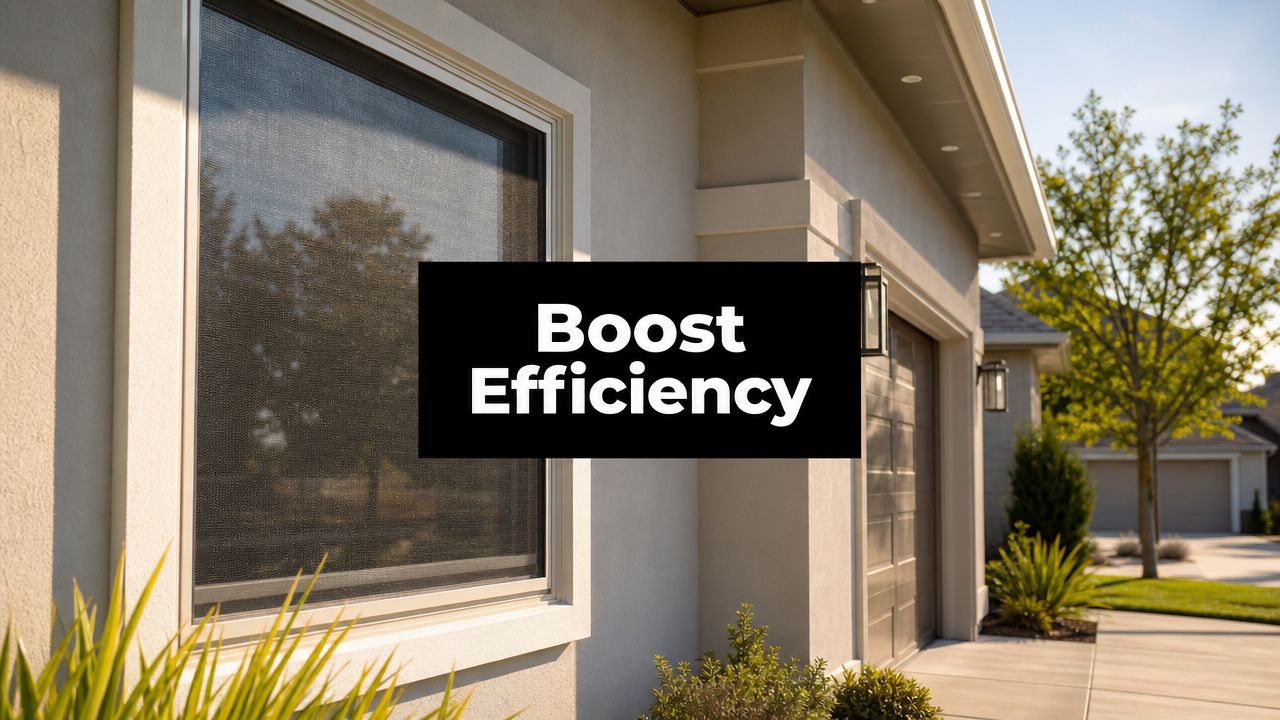

The room gets hottest around the same time every day. By midafternoon, the west-facing windows feel warm, the couch is bright enough to squint at, and the air conditioner sounds like it's been arguing with the sun for hours. You pull the blinds, but then the room turns gloomy. You leave them open, and glare washes out the TV while sunlight keeps beating on the glass.
That's the moment many homeowners start looking into window solar screens. Not because they want another accessory on the house, but because they're tired of treating the symptom after the heat is already inside. Solar screens are one of the few upgrades that address the problem where it starts, outside the window.
They can make a room more comfortable, cut glare, add daytime privacy, and help protect interiors from harsh sun. But the specs can get confusing fast. Openness factor. Mesh color. Heat-blocking ranges. Exterior versus interior. If you've read a few product pages and still feel unsure what matters for your home, you're not alone.
Beat the Heat Before It Enters Your Home
A lot of homeowners first notice the problem in one room, not the whole house.
It might be the upstairs bedroom that stays hot long after sunset. It might be the living room with beautiful windows and miserable glare. Or it might be the dining area where one side of the table fades faster than the other because the afternoon sun hits it every day.
The usual first reaction is to deal with the light once it's already inside. People close curtains, lower blinds, or rearrange furniture. Those steps help a little, but they don't stop the sun from heating the glass first. That's the key difference.
Window solar screens are built to intercept sunlight before it turns the window into a heat source. That changes the whole strategy. Instead of asking, “How do I darken this room enough to tolerate it?” you start asking, “How do I keep that heat outside in the first place?”
Why this matters in real life
When a room gets direct sun for hours, comfort problems stack up:
- The AC runs harder because the home keeps gaining heat through the most exposed glass.
- Glare gets annoying on TVs, laptops, and phones.
- Furniture and flooring take the hit from repeated sun exposure.
- Window coverings become a compromise between view and comfort.
A good solar screen doesn't just dim a room. It changes how that window behaves in the sun.
That's why these screens are common in hot, bright regions where exposed glass can make certain rooms frustrating to use. If you've got a west-facing wall of windows, you already know the issue isn't subtle. It shows up every afternoon.
What Exactly Are Window Solar Screens
A standard bug screen and a solar screen may look similar from the curb, but they do very different jobs.
A bug screen is mostly there to keep insects out while letting air pass through. A window solar screen is built to manage sunlight, heat, glare, and daytime visibility. It still functions as screening, but that's not the main reason homeowners buy it.

Think of them like sunglasses for the house
That comparison helps because it gets to the basic idea fast. Sunglasses work best when they intercept light before it reaches your eyes. Solar screens work the same way. They sit on the outside of the window so they can stop solar energy before it reaches the glass.
The reason this matters is straightforward. The U.S. Department of Energy says about 76% of sunlight that falls on standard double-pane windows enters the home as heat, and exterior solar screens are designed to stop that process before the glass absorbs it, using mesh with an openness factor of 3% to 15% to control how much sun gets through, as explained in Blindsgalore's overview of exterior solar screens.
What they're made of
Quality solar screens usually use durable mesh materials such as vinyl-coated polyester or PVC-coated fiberglass. That mesh isn't random. It's engineered to reflect part of the sun's energy, absorb part of it, and let some air move through.
A small air gap between the screen and the glass also helps. That space lets heat dissipate outside instead of transferring straight through the window.
The spec that confuses most people
Openness factor sounds technical, but the idea is simple. It tells you how open or dense the mesh is.
- Lower openness means a tighter weave. You get more sun blocking and more daytime privacy.
- Higher openness means a more open weave. You keep more natural view and light.
If that feels like a tradeoff, it is. The best screen for one window may be the wrong one for another.
If you remember one thing, remember this. Solar screens are an exterior heat-management product first, and a screen second.
That's why they're different from the standard screen already sitting in most windows.
The Triple-Play Benefits of Solar Screens
A sunny window can create three different problems at the same time. The room gets hotter, bright light makes screens harder to see, and the people outside may have a clearer view in than you want. Solar screens help address all three with one exterior product.

Lower cooling strain
The biggest benefit is usually heat control. Exterior placement matters because the screen intercepts sunlight before the glass stores that heat. The Efficient Window Coverings guidance on exterior solar screen performance explains that exterior solar screens can reach shading coefficients of 0.14 to 0.33, compared with 0.50 to 0.70 for interior installations.
If those numbers feel abstract, use this simple reading. Lower numbers mean less solar heat gets through. For a homeowner, that often shows up as fewer hot spots near west-facing or south-facing windows and less strain on rooms that bake in late afternoon sun.
Better protection for interiors
Heat is only part of the story. Sunlight also carries ultraviolet radiation and intense visible light, both of which can wear on what sits near the window over time. The U.S. Department of Energy notes that solar screens can block and diffuse light, reduce glare, and provide UV protection for furnishings and finishes, especially on windows with strong sun exposure, in its overview of energy-efficient window attachments.
That matters in real rooms, not just on spec sheets. Wood floors near the glass, upholstered furniture arms, rugs, and framed art often show the sun first. A screen helps by reducing the amount of harsh light hitting those surfaces day after day.
Daytime privacy without giving up the view
This is the benefit that often clears up the confusion around openness and color. A solar screen is not just "more blocking is better." The right screen depends on what you want that window to do.
During the day, the mesh can make it harder for people outside to see in while still allowing you to see out. Darker fabrics often improve outward visibility and cut glare, which is why many homeowners are surprised that a darker screen can preserve a view better than a lighter one. A denser mesh can also add more daytime privacy, though it usually trades away some openness.
For many households, the value comes down to three practical wins:
- Rooms feel more comfortable near sun-exposed windows.
- Glare drops on TVs, phones, and computer screens.
- Daytime privacy improves without covering the window with heavy interior treatments.
That combination is why solar screens appeal to homeowners who want one upgrade to solve several window problems at once. The key is matching the screen to the job. One window may need better view-through, another may need stronger privacy, and a third may need the highest heat reduction.
How to Choose the Right Screen Performance
Most buying mistakes happen here. A homeowner gets offered a screen, sees a few percentages, and assumes higher blocking is always better. It isn't always that simple.
The right choice depends on what you want that specific window to do. Preserve a lake view. Cut brutal west sun. Add daytime privacy. Keep a room from feeling closed in. Those goals don't all point to the same mesh.

Start with your actual goal
A screen on a west-facing family room usually has a different job than a screen on a shaded front window.
Use this simple decision lens:
| Priority | What usually helps |
|---|---|
| Keep the clearest outward view | Higher openness and often a darker fabric |
| Reduce the most heat | Lower openness and a fabric chosen for stronger heat management |
| Improve daytime privacy | Lower openness with a denser look from outside |
| Cut glare on screens | Darker fabric often helps |
Color matters more than many people expect
Screen performance depends on both fabric density and color. Dark fabrics generally improve view-through and glare reduction, while light fabrics offer better heat management. Available products can span 65% to 97% heat-blocking performance, which is why color and density should be chosen around the room's goal, as described in Insolroll's guide to how solar screen shades work.
That leads to a common surprise. The fabric that gives the nicest view may not be the one that gives the strongest heat-control result.
A practical way to think about openness
If the phrase still feels abstract, think of openness like tinted eyewear.
- Lower openness is like a stronger tint. You block more sun, get more privacy, and reduce more glare.
- Higher openness is like a lighter tint. You keep more natural visibility and brightness.
Practical rule: Match the screen to the worst problem at that window, not to a generic whole-house preference.
Common homeowner scenarios
- West-facing bedroom: Many people favor stronger sun control here because late-day heat can linger into the evening.
- Front living room with a nice view: A more view-friendly mesh may make more sense, especially if overheating isn't severe.
- Street-facing office: Privacy and glare reduction often matter more than preserving every bit of brightness.
The best installer should be able to translate those room-by-room goals into a screen recommendation you can understand without decoding jargon.
Exploring Materials and Screen Types
Once you've narrowed down performance, the next question is what the screen is made from and how it will be installed on the home.
Two material families come up often in residential solar screens: vinyl-coated polyester and PVC-coated fiberglass. Both are used because they can handle outdoor exposure better than a basic insect screen mesh. The right fit often depends on the product line, the frame system, and the window location.
Why material quality matters
Phifer's SunScreen is a well-known example of a solar screen fabric made from woven vinyl-coated fiberglass, and the manufacturer says it can absorb and dissipate up to 70% of the sun's heat and glare before it reaches the glass, while still functioning as insect screening, according to Phifer's SunScreen product page.
That tells you something important about solar screen materials. They aren't just “darker bug screens.” The mesh itself is part of the performance system.
Fixed, removable, and specialty options
Homeowners usually run into a few broad screen styles:
- Fixed frame screens work well when you want a clean, stable exterior screen that stays in place.
- Easy-remove screens make sense when access, cleaning, or seasonal changes matter.
- Sliding and specialty-fit screens are useful on windows and doors that need movement or nonstandard sizing.
- Retractable exterior options can suit spaces where homeowners want more flexibility in how exposed the window or opening feels.
If you want to compare mesh options in more detail, this guide to solar window screen material gives a helpful overview of common fabric choices and use cases.
How to match type to the house
A simple way to decide:
- Choose fixed screens for the hottest windows you want protected every day.
- Choose removable styles if maintenance access matters or you prefer seasonal flexibility.
- Choose specialty or custom-fit screens when the window shape, slider setup, or opening size isn't standard.
Material and screen type should support the same goal. If the objective is reliable heat control on problem windows, durability and fit matter as much as the mesh spec.
Installation Repair and Proper Maintenance
Solar screens are simple in concept, but the details matter. A screen that's measured poorly, installed loosely, or fitted with the wrong frame won't perform the way the fabric is supposed to.
Some homeowners do install screens themselves, especially on straightforward windows. If you're comfortable measuring carefully, handling frames, and working safely around exterior openings, it can be a manageable project.
DIY versus professional installation
DIY works best when the windows are easy to reach and fairly standard. Professional installation becomes more attractive when the home has multiple window sizes, second-story openings, sliders, or older frames that need adjustment.
A pro usually helps with:
- Accurate measuring so the frame fits cleanly without gaps
- Proper screen tension so the mesh sits flat and doesn't look wavy
- Consistent appearance across the whole house
- Repair assessment when old frames or corners can still be reused
If you're weighing the process, this overview of how to install screens can help you understand what's involved before you decide.
Repair is often a smart option
Not every damaged solar screen needs full replacement. In many cases, the frame is still usable and the mesh is the main problem. That's where rescreening or remeshing makes sense.
Typical repair situations include:
- Torn mesh from pets, weather, or age
- Bent frames that can still be adjusted or rebuilt
- Loose spline or corners that make the screen sit poorly
- Older screens that no longer match the performance you want
A good repair shop should tell you when rescreening is enough and when a new frame is the smarter long-term move.
Keeping screens in good shape
Maintenance is usually straightforward. Mild soap, water, and a soft brush or sponge are enough for routine cleaning. Harsh cleaning methods can damage the mesh or frame finish.
A few habits help:
- Rinse off dust and pollen gently
- Avoid pressure washing
- Check corners and spline periodically
- Handle removable screens carefully during storage
Most homeowners like solar screens because they don't ask for much once they're properly fitted.
Hiring a Local Solar Screen Professional
Choosing the mesh is only half the job. The installer determines whether those screens fit tightly, sit straight, and solve the window problem you're trying to fix.

A local screen company should be able to look at your windows and ask useful questions, not just quote a generic product. Which side of the house gets the hardest sun? Are you trying to preserve a view? Do you want stronger daytime privacy? Is the current frame reusable? Those details matter more than a one-size-fits-all pitch.
What to look for before you hire
Use a short checklist when comparing companies:
- Local climate experience so they understand sun-heavy exposures and common problem windows
- Clear quoting with screen type, material, and scope explained in plain language
- Repair capability in case rescreening is a better fit than full replacement
- Custom-fit experience for sliders, patios, or nonstandard openings
- Recent customer feedback that mentions communication, fit, and follow-through
If you want a price framework before calling anyone, Sparkle Tech's guide to solar screen expenses is a useful planning resource because it helps homeowners understand what can affect the final quote.
Ask these questions on the first call
The best conversations are specific. Ask things like:
- Which mesh options do you recommend for west-facing windows?
- Will this setup favor view, privacy, or maximum heat control?
- Can you rescreen existing frames if they're still solid?
- How do you handle sliders or patio screen openings?
- How quickly can you measure and install?
For homeowners who want a local option for quoting and installation, Sparkle Tech Screen Service handles solar screen installation near you along with new screens, rescreening, repairs, sliders, and patio-related screen work.
A quick visual can help you see what professional fitting looks like in practice.
When local service matters most
Homes with intense afternoon exposure, mixed window sizes, or older screens usually benefit from someone who can measure on-site and spot issues early. Fast communication matters too. If one room is unbearable every day, most homeowners don't want a long, vague process. They want a clear quote and a workable schedule.
If you're in the Phoenix metro area or nearby communities, you can text or call 623-233-0404 or 800-370-3998 to ask about measuring, repairs, or new solar screens.
Frequently Asked Questions About Solar Screens
A lot of homeowners reach this section with one simple question: will solar screens solve the problem they feel every afternoon when one room heats up faster than the rest of the house? In many cases, yes. The better answer is that the result depends on matching the screen to the job. A screen chosen for view will behave differently from one chosen for privacy or stronger heat blocking.
How much do solar screens cost
Price varies by window size, frame condition, screen fabric, and whether you are replacing old screens or starting from scratch. Small, standard windows usually cost less than large picture windows or custom openings. Homes with several windows often get better per-screen pricing because measuring and installation are grouped into one job.
That is why quotes can look different even when two neighbors both ask for “solar screens.” One may be paying for a straightforward fit on newer frames. The other may need repairs, rescreening, or custom fabrication.
Do they really save enough to be worth it
They can, especially on windows that get direct sun for hours at a time. West-facing glass is usually the clearest example. If that room feels like a toaster oven by late afternoon, a properly selected solar screen can cut a meaningful amount of heat before it reaches the glass.
A simple way to think about it is this: blinds and curtains deal with sunlight after it has already entered the window area. Solar screens stop part of that heat outside, which is usually the better place to block it.
Results still vary. Climate, window orientation, tree cover, glass type, and thermostat habits all affect what you notice. Some homeowners feel the difference first in comfort and glare reduction. Others notice it on cooling costs over time.
Can solar screens damage Low-E windows or siding
This question comes up because reflected sunlight can create very hot spots near certain windows. According to A to Z Screens' discussion of Low-E glass and sunscreens, reflected heat from Low-E glass can become intense enough to affect nearby materials such as vinyl siding.
Solar screens are generally not the cause of that problem. In some cases, they can help reduce the heat load by limiting how much solar energy reaches the glass and surrounding area in the first place. If you have closely spaced homes, reflective windows, or siding that already gets hammered by afternoon sun, ask the installer to evaluate that specific setup instead of guessing.
Will my house feel too dark inside
Usually, the room feels softer, not gloomy. The key factors are openness factor and fabric color.
Openness factor is the amount of tiny open space in the mesh. A higher openness factor usually preserves more view and daylight. A lower openness factor usually blocks more sun and increases daytime privacy. Fabric color also changes the experience. Darker fabrics often preserve outward visibility better from inside, while lighter fabrics can create a different balance of brightness and appearance from the street.
That is where homeowners often get stuck on technical wording. The practical question is simpler. Do you care most about keeping your view, getting more privacy, or pushing heat control as far as possible? Your answer points to the right screen faster than the spec sheet alone.
Should I install them myself or hire a pro
DIY can work for a few accessible windows if you measure carefully and the frames are simple. The challenge is that solar screens need a precise fit. Even small measuring mistakes can lead to gaps, bowing, or screens that are hard to remove and reinstall.
A professional is often the better choice when you have mixed window sizes, older frames, upstairs openings, patio screen needs, or existing screens that may be worth rescreening instead of replacing. Good installers also help translate technical choices into real outcomes, such as whether a tighter mesh is worth the tradeoff in daylight for a west-facing bedroom.
If your home has hot, glare-heavy windows and you want clear advice on the right mesh, fit, and repair options, Sparkle Tech Screen Service offers help with new solar screens, rescreening, repairs, sliders, and screened patio work. You can text or call 623-233-0404 or 800-370-3998 for a quick quote and see whether a custom screen setup makes sense for your windows.


