


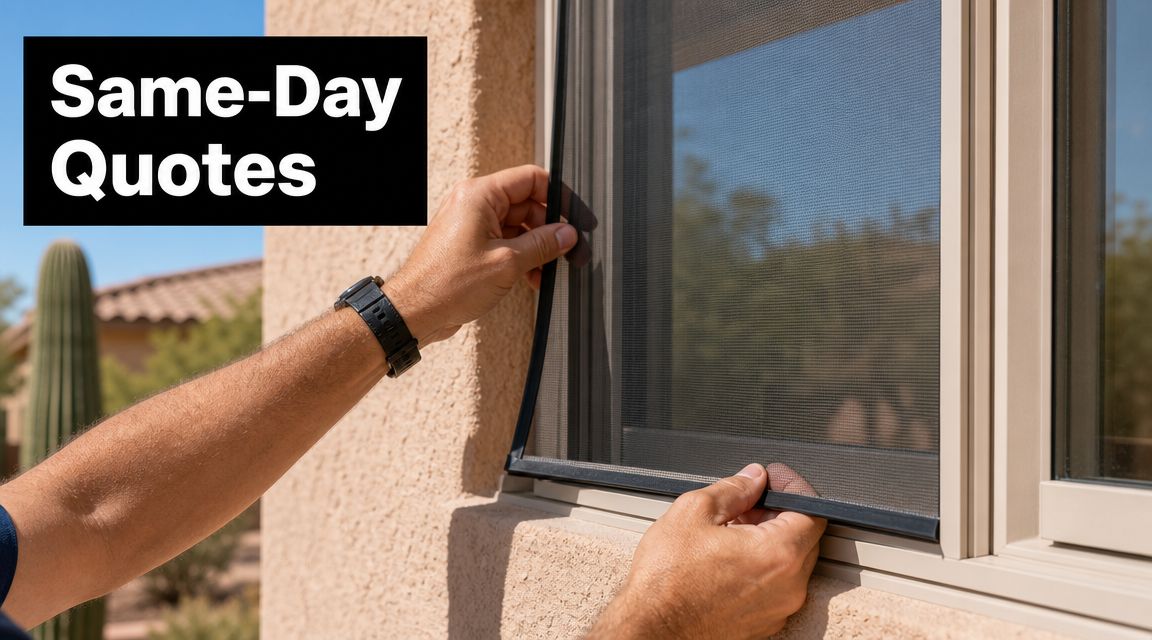

You notice the problem when you open the window for evening air. The screen has a tear in one corner, the frame sits crooked, or the patio screen drags and leaves a gap. At that point, most homeowners in Phoenix want the same three answers right away. Can it be fixed, how soon can someone handle it, and do you need to haul it anywhere.
We handle same-week window screen repair across the Phoenix metro, and the fastest way to get a quote is usually by text or phone. A few clear photos and basic measurements often tell us whether the job looks like a straightforward rescreen, a frame repair, or a full replacement.
Speed matters here for practical reasons. A damaged screen lets insects in, cuts down usable airflow, and can turn a good window or slider into one you stop using. In Phoenix, that gets old fast.
Most articles stay general. Homeowners usually need the local logistics. How estimates work, what slows down a repair, what can be done on-site, and when same-week service is realistic. That is what this guide covers.
Fast Relief for Torn and Damaged Window Screens in Phoenix
A torn screen usually turns into a service call the first night you want fresh air and end up swatting bugs instead. We see the same problems every week in Phoenix. Mesh split at the corner, a pet-clawed opening near the bottom rail, or a sliding screen that no longer sits square in the track.

The main concern is usually practical, not cosmetic. Homeowners want the window or door working again without waiting two weeks, guessing at measurements, or making a trip across town just to find out the frame is beyond repair.
Fast local service in Phoenix means quick triage first. A clear photo often tells us whether the screen likely needs new mesh, a corner repair, track adjustment, or a full rebuild. That matters because the turnaround depends less on the tear itself and more on what shape the frame, corners, rollers, and spline channel are in.
What fast local service actually means
Quick repair work usually comes down to four decisions:
- Whether the screen can be repaired or should be replaced
- Whether the work can be done on-site or needs shop fabrication
- Whether the frame is still straight enough to reuse
- How soon the opening can be closed up and used normally
Those are real trade-offs. A simple rescreen is usually fast. A twisted slider frame or missing hardware takes more time because the mesh is not the only problem. Putting new material into a bad frame rarely holds up, and it usually costs the homeowner more once it has to be redone.
The urgency also changes by location. A small tear on a spare bedroom window may wait a few days. A patio screen that drags, falls out, or leaves a side gap usually needs attention sooner because it affects how the home is used every day.
What we see most often
In Phoenix, the repair requests are usually familiar:
- Standard bug screens with tears, holes, or loose spline
- Solar screens with worn material, pulled corners, or sun-damaged edges
- Sliding screen doors that drag, pop off, or stop rolling smoothly
- Larger patio panels with bent frames or multiple failure points
What homeowners need at this stage is a clear answer and a realistic timeline. Local screen repair should feel straightforward. Send photos, confirm the damage, get a quote, and book the repair while the issue is still manageable.
Identifying Your Screen Damage and Repair Options
Before anyone can quote the work properly, the first job is diagnosis. A lot of screens look like simple mesh damage until you remove them and see a bent rail, cracked corner, loose spline, or a frame that no longer sits square.

Start with the mesh type
Phoenix homes commonly use more than one screen style. The repair approach changes depending on what you're looking at.
- Bug screen mesh lets air move freely and handles standard insect control.
- Solar screen mesh is heavier and more specialized. It changes visibility, shade, and heat control, so matching the material matters.
- Slider and patio screen mesh often takes more abuse because people touch, push, and roll those assemblies more often.
If you're texting for a quote, it helps to mention whether it's a standard window screen, a solar screen, a sliding screen door, or a larger patio panel.
Then check the actual damage pattern
Small punctures and minor edge damage don't always require a full rebuild. Larger tears usually do. What changes the recommendation is whether the frame is still sound.
Look for these signs:
- Small hole or short tear usually means the damage is isolated
- Large rip across the field of the mesh usually points toward full rescreening
- Ripples or slack mesh can mean old spline has loosened or the panel was installed poorly
- A bowed frame often shows the screen was tensioned wrong at some point
- Bent corners or twisted rails usually affect fit more than homeowners expect
- A slider that scrapes or jumps track often has both mesh and frame issues
Practical rule: If the screen doesn't sit flat, don't assume the mesh is the only problem.
When the real issue isn't the screen
Many homeowners search for screen repair and need a broader fix. A screen can fail again if the frame is warped, bent, or if the surrounding window condition is part of the problem. That's why a complete diagnosis matters, especially when older openings are involved (broader screen and frame repair needs).
That matters most when you notice any of these:
- The frame won't seat evenly
- The screen keeps popping loose
- The corners separate when handled
- The opening itself looks worn or out of square
A proper repair solves the functional issue. A patch-only approach on a bad frame usually doesn't last.
Our Simple Process for Same-Week Screen Repair
A torn screen on Monday should not turn into a two-week project. In Phoenix, the fastest jobs are the ones with clear photos, accurate measurements, and a technician who knows which screens can be repaired on-site and which ones need shop work.

Step one is the quote
The quickest way to get a useful quote is to text photos of the screen and opening. A phone call also works if you are dealing with several windows, a slider, or an older frame that does not sit right.
Send these images if possible:
- Front view of the full screen
- Close-up of the damaged area
- Corners and frame edges
- Track or bottom rollers if it's a sliding screen
That gives enough information to tell whether the job is likely a basic rescreen, a frame correction, or a screen that needs to be rebuilt. It also cuts down on repeat trips, which is one of the main reasons local screen jobs get delayed.
Step two is choosing the right service method
Same-week service depends on handling the screen the right way from the start. Standard removable window screens are often easy to pick up, rescreen, and return. Large panels, solar screens, and sliding screen doors usually need to be checked at the opening because small fit errors show up immediately.
In practice, on-site service solves a lot of scheduling problems. If a frame is slightly sprung, a corner is loose, or a slider is rubbing the track, those issues can be corrected where the screen must fit. For homeowners who want that option, mobile screen repair service works well for screens that are bulky, awkward to transport, or need exact in-place measurement.
Step three is the repair itself
This part sounds simple, but it is where bad work usually starts. The old spline comes out, the worn mesh is removed, the frame groove gets inspected, and the new screen is installed with the right tension for that frame and material.
Too much tension can bow a light aluminum frame. Too little leaves waves, loose corners, and gaps that show up as soon as the screen goes back in the window. Fast service only works when the technician keeps the workflow tight and still does the small checks that prevent callbacks.
Good screen repair is quick because the process is organized and the fit is checked at each stage.
Step four is installation and final fit
Installation is the point where the repair either proves out or fails. A proper final check looks at:
- Corner alignment
- Mesh tension across the panel
- Track movement on sliders
- Full contact at the opening
- No visible gaps around the frame
Homeowners in Phoenix usually care about two things here. They want the screen back quickly, and they want it to fit right the first time. A clear arrival window, correct field measurements, and a final fit check are what make same-week repair practical instead of rushed.
Phoenix Window Screen Repair Pricing Guide
Phoenix screen repair pricing comes down to three practical questions. Are we replacing mesh only, is the frame still usable, and does the screen need standard fiberglass, solar mesh, or door hardware work too? A torn bathroom screen and a bent sliding screen door are not the same job, and the quote should reflect that.
Estimated screen repair costs in Phoenix
| Service Type | Estimated Starting Price |
|---|---|
| Standard window rescreening | Varies by screen size, mesh type, and frame condition |
| Solar screen rescreening or replacement | Varies by material choice and exact fit requirements |
| Sliding screen door repair | Varies depending on mesh, frame damage, and track condition |
| Patio rescreening | Varies by panel size, quantity, and access |
Good pricing starts with the condition of the existing parts. If the frame is straight and the corners are solid, the work usually stays in the rescreen category. If the frame is bowed, the corners are loose, or the sliding door rollers are worn out, labor and parts go up because the repair has to solve the fit problem, not just cover the hole.
What usually changes the quote
A quick quote is possible, but the details matter. These are the factors that change pricing most often in Phoenix:
- Mesh type. Standard insect mesh, pet-resistant mesh, and solar screen fabric all price differently and install a little differently.
- Screen size. Large panels use more material and take more care to keep flat without twisting the frame.
- Frame condition. Bent frames, cracked corners, and worn spline channels can turn a simple rescreen into a rebuild or replacement.
- Door hardware. Sliding screen doors may need rollers, handles, or track adjustment in addition to new mesh.
- Number of screens. Multi-screen jobs can be grouped efficiently, which affects scheduling and the final total.
For a closer look at the factors behind local screen costs, see our guide on cost to rescreen windows.
The fastest way to get accurate pricing is to send three photos. One of the full screen, one of the damaged area, and one of a corner or edge profile. That usually tells us whether you need a basic rescreen, a new frame, or a door repair with extra parts.
Phoenix homeowners usually want two answers right away. What will this likely cost, and how soon can it be done? Clear photos and basic measurements help us answer both without wasting a trip or giving you a vague range that changes later.
DIY Screen Repair versus a Professional Fix
You pull the screen out to fix one tear, and the job gets bigger fast. The old spline crumbles, the frame flexes on the patio, and a ten-minute repair turns into a trip for parts, tools, and the right mesh.

DIY does have a place. For a small puncture on a standard window screen with a straight frame, a patch kit can hold for a while. That works best as a short-term fix, especially if you just need to keep bugs out until a full rescreen is scheduled.
Full rescreening is where homeowners usually run into trouble. The hard part is getting even tension across the mesh, choosing the correct spline diameter, and keeping the frame from bowing while you roll everything in. Old spline often looks usable until it cracks during install. Aluminum frames can also twist more easily than people expect, especially on larger panels and slider screens.
Where DIY usually goes wrong
The mistakes are usually mechanical, not cosmetic. A screen can look decent on the ground and still fit poorly once it goes back into the window or door opening.
Common problems include:
- Wrong spline size, which leaves the mesh loose or impossible to seat cleanly
- Uneven tension, which creates ripples or bows the frame
- Reusing dry or brittle spline, which leads to corners pulling loose
- Trying to straighten a bent sliding screen door frame by hand, which often makes tracking worse
- Picking the wrong mesh for the job, such as using standard insect screen where pet-resistant or solar mesh is the better fit
When DIY makes sense
DIY is reasonable when the repair is simple, the frame is still square, and you already have the basic tools on hand. It also helps if the screen is easy to remove and reinstall without climbing a ladder or forcing spring clips.
Homeowners who want to compare the tool list, repair steps, and common failure points can start with this guide to DIY window screen repair.
Why many Phoenix homeowners hire a pro
Professional repair makes more sense when the screen has to fit precisely and work right the first time. That includes sliding screen doors, oversized window screens, solar screens, and any frame with bent corners or worn channels. In those cases, the trade-off is simple. DIY may save money on paper, but one wrong cut or one warped frame usually adds delay, extra material cost, and another round of removal and reinstall.
That matters in Phoenix because speed is part of the job. Homeowners searching for local help usually want the repair quoted quickly and installed the same week, not after a trial-and-error weekend. Sparkle Tech Screen Service handles standard rescreens, new bug screens, solar screen replacement, slider repairs, and screened patio rescreening, so the fix stays on schedule even when the problem turns out to be more than torn mesh.
A good local company also has to be easy to find when homeowners need fast service. If you're curious how service businesses rank higher on Google Maps, that visibility work is part of why nearby repair options show up when timing matters.
If the screen needs to sit flat, seal cleanly, and slide or latch without binding, professional repair usually saves time and avoids repeat work.
Your Trusted Screen Service for the Entire Valley
Local screen work is won in the details. A screen that looks fine from six feet away can still rattle in the opening, bind in the track, or leave a small gap at the corner. That is why exact measurement and proper handling matter, especially on custom screens and sliding doors where fit is everything.
For local service companies, showing up accurately in neighborhood searches matters too. If you're curious how local businesses improve visibility in map results, this guide on how to rank higher on Google Maps gives useful context for why nearby providers work so hard to be easy to find.
Where service coverage matters
For Phoenix-area homeowners, "near me" should include the full Valley, not a small pocket of town. Screen repair demand is hyper-local by nature, so broad practical coverage matters when you need quick scheduling.
Typical service areas include:
- Phoenix and Scottsdale
- Tempe and Mesa
- Chandler and Ahwatukee
- Peoria, Sun City, and Surprise
- Queen Creek and San Tan Valley
- Avondale, Litchfield Park, and Buckeye
- Cave Creek, Carefree, and Anthem
What a reliable local screen company should handle
A capable service should be ready for more than one type of repair request:
- Single torn window screens
- Sun and solar screen rescreening
- New bug screens
- Slider screen repair and rescreening
- Screened patio rescreening
- Specialty applications such as horse stall sun screens
When the technician can measure, repair, and fit the screen correctly without treating every job like the same basic mesh swap, the result lasts longer and works better.
Need help with a torn bug screen, worn solar screen, slider repair, or screened patio rescreening in Phoenix or the surrounding Valley? Contact Sparkle Tech Screen Service for same-week service and quick quotes by text or phone at 623-233-0404 or 800-370-3998.


