


When you're picking out new window screens, the frame might seem like a minor detail, but it's really the backbone of the whole setup. Think of it like the skeleton—it provides the structure, strength, and durability that holds everything together. The most common materials you'll run into are aluminum, vinyl, wood, and fiberglass.
Why Your Window Screen Frame Choice Matters
Choosing the right frame material is a bigger deal than most people think. It's a decision that affects your home's curb appeal, sure, but it also has a real impact on long-term maintenance and even energy efficiency. Each option comes with its own set of pros and cons, so the trick is to match the material to your home's specific needs.
When you're weighing your options, it's smart to think about your home's overall window considerations to make sure everything works together seamlessly.
A few key factors should guide your decision:
- Your Local Climate: A frame that works beautifully in a dry, mild climate might warp or corrode in a humid, coastal area.
- Your Budget: The costs can range quite a bit, from budget-friendly vinyl to premium, long-lasting fiberglass.
- Maintenance Commitment: Be honest with yourself about how much time you're willing to put into upkeep.
A Look at the Market
The global market for window and door frames really puts this choice into perspective. Window frames themselves make up a huge 67.9% chunk of the market simply because they're a fundamental part of any building.
When it comes to materials, uPVC (a type of vinyl) is the current leader, holding a 32.1% market share. Homeowners often gravitate toward it because it’s durable, stands up to moisture, and is easy on the wallet. This trend shows that while vinyl is a popular, practical choice, there are still very good reasons to consider other materials for different situations.
The frame you choose is the foundation for your screen's performance. It dictates how well the screen stands up to weather, how often it needs attention, and how it complements your home's style.
Of course, understanding the frame is just one piece of the puzzle. The mesh material it holds is just as important. Once you have a handle on frames, you can dive into our guide on the different types of window screen materials to see how the two work hand-in-hand. This will help you make a well-rounded decision and pick the perfect screens for your home.
Aluminum Frames: The Durable Standard
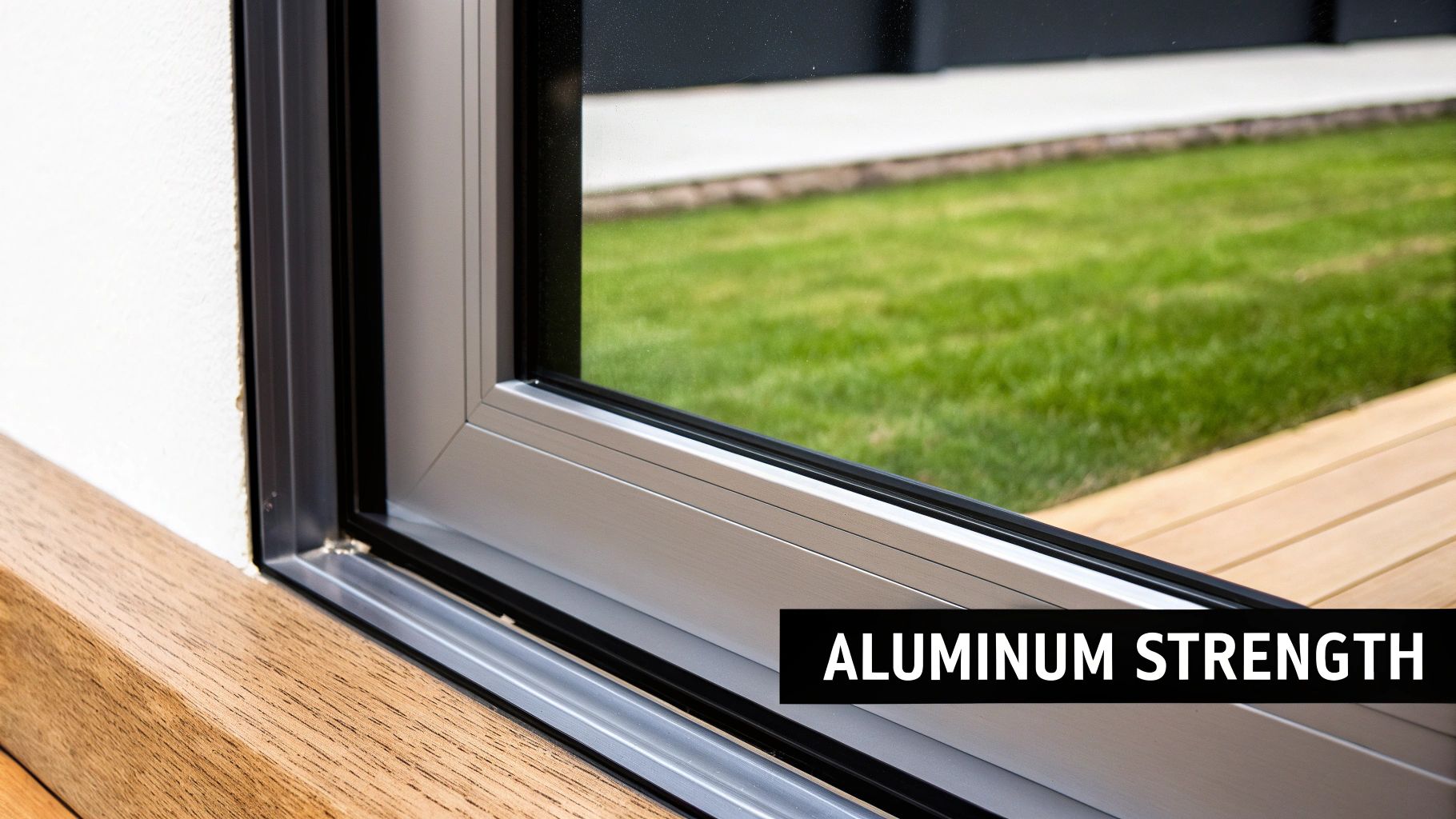
When you imagine a classic window screen, you're probably picturing an aluminum frame. For decades, aluminum has been the trusty workhorse of the industry, and for good reason. It all comes down to an incredible strength-to-weight ratio.
Think about a modern bicycle frame—it's light enough to carry but strong enough to take a beating. Aluminum screen frames have that same quality. They can be thin and lightweight yet remain remarkably rigid, making them a go-to solution for large window openings where you need stability without a bulky, view-blocking frame.
That slender profile is a huge part of the appeal, especially for modern and minimalist homes. Slim frames mean more glass, which translates to more natural light and a clearer, more open view of the outside world.
Built to Withstand the Elements
One of the biggest reasons aluminum has stayed so popular is its natural resistance to rust and corrosion. Unlike steel, aluminum creates its own protective oxide layer when it hits the air, which acts as a shield against the elements.
This built-in resilience gets a major upgrade when the frame is powder-coated. This isn't just a layer of paint; it's a dry powder that's applied with an electrostatic charge and then baked on. The result is a tough, durable finish that's far superior to conventional paint, making it a fantastic choice for homes in tough climates.
Here's where that added protection really shines:
- Coastal Homes: The powder coating creates a solid barrier against the corrosive salt spray that can eat away at other materials.
- Humid Climates: It stands up to constant moisture, preventing the peeling and bubbling that you might see on lesser frames.
- High-UV Areas: The finish is incredibly resistant to fading or getting chalky from intense sun, so your frames keep looking sharp for years.
An aluminum frame acts like a reliable shield for your window screen. It’s tough, holds its shape under pressure, and with a good finish, it can fend off the harshest weather conditions year after year.
Understanding the Trade-Offs
Of course, no material is perfect. It's important to know about the potential downsides of aluminum, and its main one is thermal conductivity. Simply put, aluminum transfers heat and cold more easily than materials like vinyl or wood. In extreme climates, this could have a tiny impact on your window's overall energy efficiency, but for just the screen frame, the effect is pretty minimal.
Also, while aluminum is strong, it’s not indestructible. A sharp impact from something like a stray baseball or a corner of furniture during a move can leave a dent. These dings are usually just cosmetic and won't affect the frame's integrity, but they are permanent.
Even with these minor trade-offs, aluminum’s sheer durability and longevity keep it at the top of the list for homeowners who want a reliable, long-lasting solution.
Vinyl Frames: The Low-Maintenance Choice
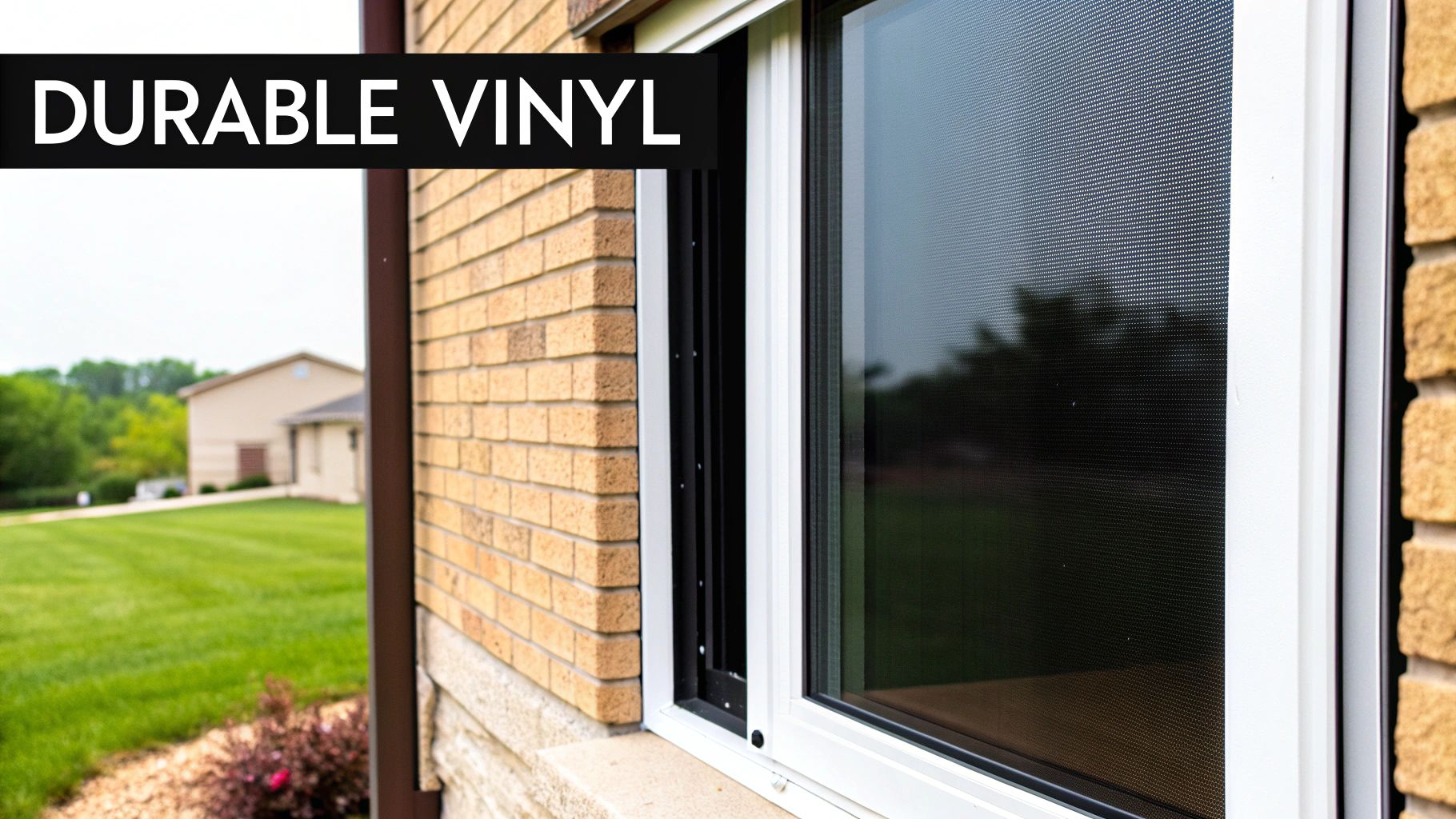
If aluminum frames are the classic, sturdy workhorse, then vinyl frames are the modern, easy-care alternative. Vinyl has become incredibly popular with homeowners for one simple reason: it’s convenient. This is the ultimate "set it and forget it" option for anyone who’d rather spend their weekend relaxing than doing home maintenance.
The magic is in the material itself. Vinyl, specifically uPVC (unplasticized polyvinyl chloride), is naturally tough against the elements. It doesn’t rust like metal or rot like wood, making it a fantastic choice for homes in damp, humid, or coastal areas where moisture is a constant enemy.
Why Homeowners Love Vinyl
The appeal of vinyl goes way beyond just being easy to clean. It hits that sweet spot of performance and value that works for so many different homes and budgets. In fact, the U.S. window market recently hit about USD 12.32 billion, and a big chunk of that growth is because so many people are choosing vinyl for its cost-effective durability and great insulation.
Here’s a quick rundown of what makes vinyl a go-to choice:
- Moisture Resistance: Vinyl is non-porous, so it doesn't soak up water. That means no warping, peeling, or swelling—problems that can be a real headache with other materials, especially wood.
- Pest Proof: Termites and carpenter ants have zero interest in vinyl. This makes it a worry-free option, especially in areas prone to wood-destroying insects.
- Excellent Insulation: Vinyl doesn't transfer heat or cold very well. This natural thermal resistance helps keep your home's temperature stable and can contribute to better energy efficiency.
And it’s not just for window screens. The same low-maintenance benefits apply to other parts of your home, and you can find great insights on vinyl patio doors that echo these advantages.
Understanding Vinyl’s Limitations
Now, while vinyl has a lot going for it, it’s not the perfect fit for every single situation. It’s important to know its trade-offs, particularly when you’re comparing it to a stiffer material like aluminum.
The biggest difference is structural strength. Vinyl is more flexible than aluminum. For a standard-sized window, that’s no problem at all. But for massive, oversized window openings, a plain vinyl frame might not have the rigidity needed without some kind of internal reinforcement to prevent sagging over time.
Another thing to keep in mind is extreme weather. In places with severe temperature swings, vinyl can become brittle in the dead of winter, making it a bit more likely to crack from a sharp impact.
The bottom line: Vinyl frames are a practical, budget-friendly choice that shines in providing a weather-resistant, maintenance-free barrier. Their flexibility just means they’re better suited for standard-sized windows where extreme structural rigidity isn't the number one priority.
Aluminum vs. Vinyl Screen Frames at a Glance
Choosing between aluminum and vinyl often comes down to your home's specific needs, your climate, and your budget. This table breaks down the key differences to help you see which one might be the right fit for you.
| Feature | Aluminum Frames | Vinyl (uPVC) Frames |
|---|---|---|
| Durability | Extremely strong and rigid; resistant to warping and sagging, making it ideal for large window spans. | More flexible than aluminum; can become brittle in extreme cold. Best for standard-sized windows. |
| Maintenance | Low maintenance, but the painted finish can chip or fade over time and may require touch-ups. | Virtually maintenance-free. The color is integral to the material, so it won't chip, peel, or need repainting. |
| Weather Resistance | Naturally rust-proof. However, the finish can corrode over many years, especially in salty coastal air. | Excellent resistance to moisture, humidity, and salt. It will not rust, rot, or corrode. |
| Cost | Generally more affordable than fiberglass or wood, but often slightly more expensive than vinyl. | Typically the most budget-friendly option, offering great value for its performance. |
| Energy Efficiency | Conducts heat and cold. Less insulating unless it has a "thermal break" built into the frame. | A natural insulator. It helps reduce heat transfer, contributing to better overall energy efficiency for your home. |
Ultimately, both materials are excellent choices. Aluminum offers superior strength for larger applications, while vinyl provides unbeatable low-maintenance convenience and thermal performance at a great price point.
Digging into Wood and Fiberglass Frame Options
While aluminum and vinyl are the workhorses of the window screen world, they aren't the only players. Two other materials, wood and fiberglass, fill important niches at opposite ends of the spectrum—one offering classic charm and the other cutting-edge performance.
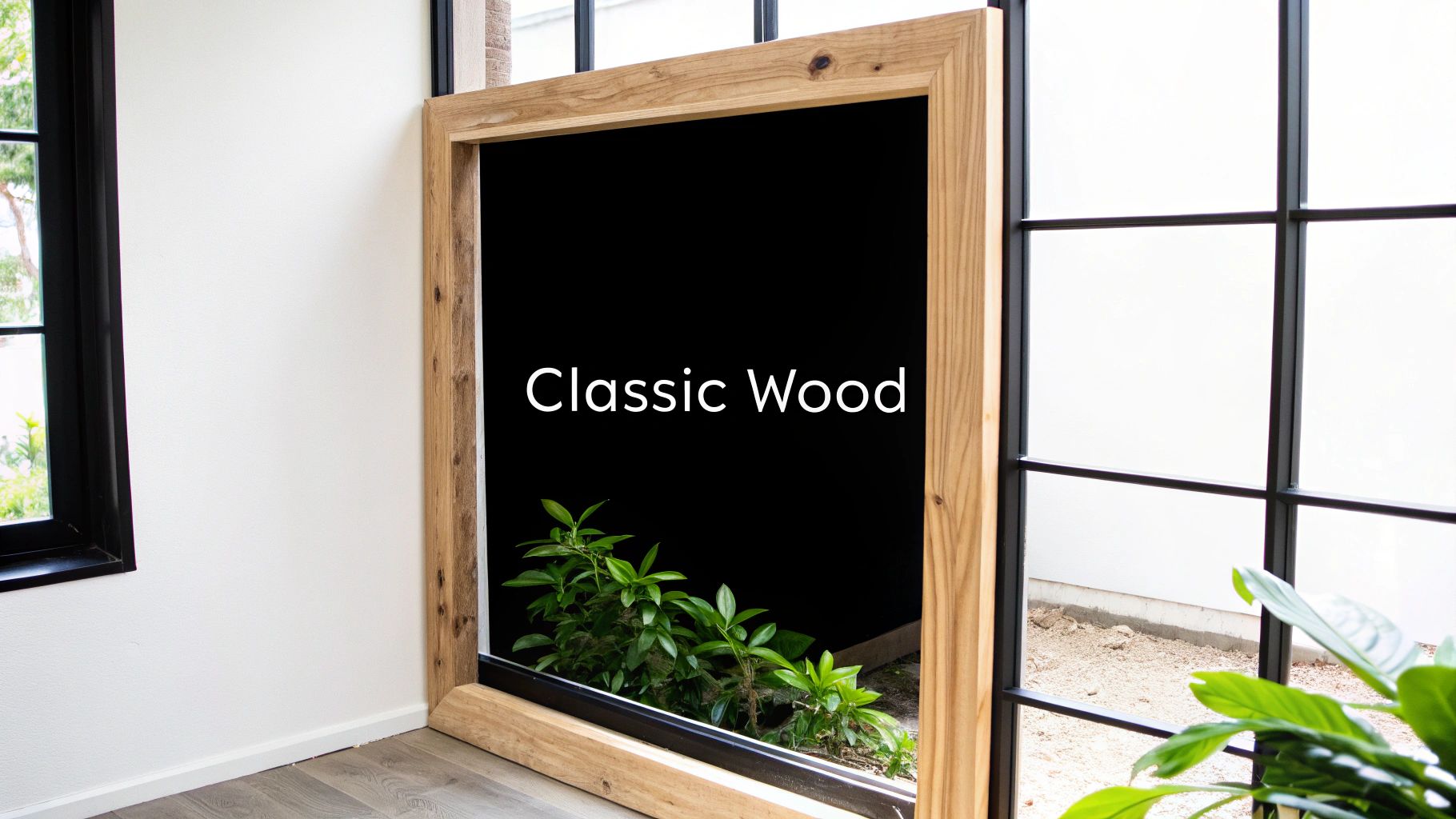
Let's start with wood. Nothing quite matches the timeless, natural beauty of a wooden frame. They are the obvious choice for historic homes, heritage buildings, or any house where you're trying to cultivate a warm, traditional feel. Think of them as the fine furniture of window screens; they add a layer of character that manufactured materials just can't replicate.
Beyond their good looks, wood frames are fantastic natural insulators. Wood simply doesn't conduct heat and cold the way metal does, which helps keep your indoor temperature a little more stable. It's a subtle perk, but a welcome one.
The Timeless Appeal of Wood Frames
The main reason anyone chooses wood is for that unmatched aesthetic. You can stain or paint it to perfectly match your home's existing trim, giving you a level of design control that’s hard to find elsewhere. If you're restoring an older home and authenticity matters, a real wood frame is non-negotiable.
But all that classic beauty comes with a catch, and it's a big one: high maintenance.
- Water is the Enemy: Wood is a natural material, and it reacts to moisture. Without a perfect seal, it will rot, warp, and swell, especially in rainy or humid climates.
- Pest Problems: Unfortunately, termites and other insects love wood as much as we do. This means you have to stay vigilant with inspections and treatments.
- Constant Upkeep: To keep them protected from the elements and looking sharp, you’ll need to repaint or reseal your wooden frames every few years. It's a real commitment.
Choosing a wood frame is an investment in aesthetics. It delivers a beautiful, high-end look but demands consistent care to keep it from succumbing to mother nature.
Fiberglass: The High-Performance Hybrid
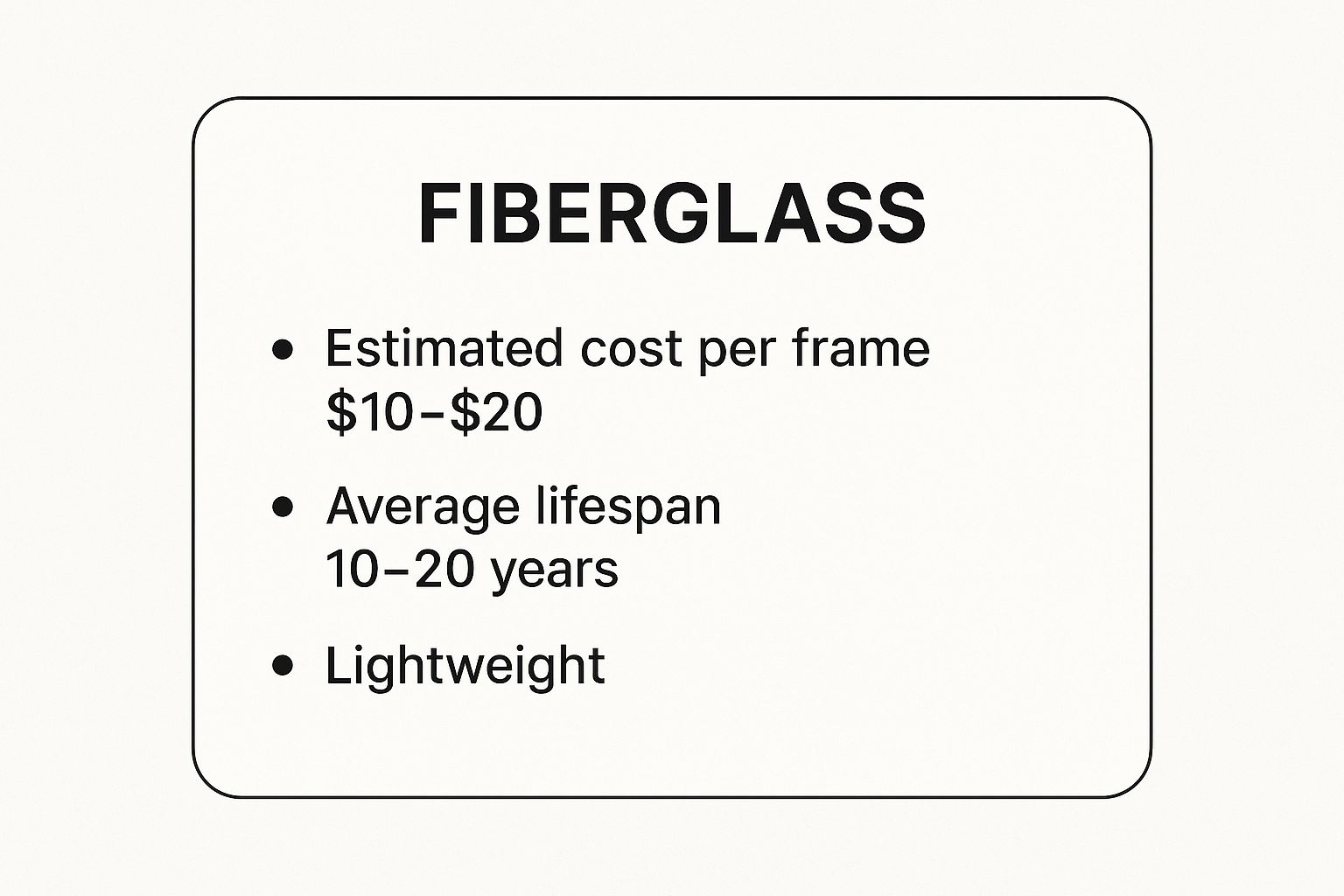
On the other end of the material spectrum, you'll find fiberglass—a modern engineering marvel. I like to think of it as the ultimate hybrid, borrowing the best features from other materials. It has the raw strength of aluminum combined with the low-maintenance and excellent insulating properties of vinyl.
Fiberglass frames are tough. They resist denting, warping, and corrosion, and they barely expand or contract as temperatures swing from hot to cold. This dimensional stability means your screens maintain a tight, secure seal all year round, making them an incredible choice for any climate.
One of its best features is that, unlike vinyl, fiberglass can be painted. This gives you the color flexibility of wood without all the demanding upkeep. If you have a very specific color scheme, fiberglass is the perfect durable canvas.
The only real downside is the price tag; it's a premium product with a higher upfront cost. That said, its incredible longevity often makes it a smart long-term investment.
Of course, the frame is only half the equation. You also need to pair it with the right screen material, so understanding the different types of window screen mesh is just as important.
Matching Your Frame to Your Home and Climate
Choosing a window screen frame isn’t just about picking a material off a shelf. It's about finding the right fit for your home. Get it right, and the frame becomes a seamless, hardworking part of your house for years. Get it wrong, and you’ve just signed up for constant maintenance headaches or a look that just feels… off.
To make a smart decision, you have to juggle four key factors: your local climate, your budget, how much maintenance you’re willing to do, and the architectural style of your home. Think of it like balancing a four-legged stool—if one leg is too short, the whole thing gets wobbly.
Consider Your Local Climate
Your environment is the ultimate test. A frame that performs beautifully in a dry desert climate could fail spectacularly in a humid, coastal town. Mother Nature will relentlessly test the limits of any material, and your screen frames are sitting right on the front lines.
Here’s a breakdown of how your local weather should guide your choice:
- High Humidity and Coastal Areas: Salt and moisture are the natural enemies of many materials. Your best defense is vinyl or powder-coated aluminum, both of which stand up to rust, corrosion, and rot. Wood is a terrible choice here unless you’re a purist who’s prepared for meticulous, constant sealing.
- Intense Sun and Heat: If you live somewhere like Phoenix or Las Vegas, you know the sun can be brutal. Fiberglass and aluminum are champs in this arena, as they resist warping and fading under relentless UV rays. Vinyl is also a solid option, though some lower-quality versions can get brittle after years of extreme sun exposure.
- Freezing Winters and Temperature Swings: When the temperature plummets, some materials can become brittle. Fiberglass really shines in these conditions because it barely expands or contracts, which means it keeps a tight seal. Wood and aluminum also hold up well, but vinyl can become more likely to crack on impact during a deep freeze.
Matching Frames to Home Aesthetics
Your screen frames should feel like a natural extension of your home’s design, not a clumsy addition. The material and finish you choose play a huge role in your home's curb appeal. Think of them as the picture frames for your windows—they’re there to enhance the view, not distract from it.
Your home’s style provides a roadmap. A modern home demands the clean lines of aluminum, while a historic home’s character is preserved with the authenticity of wood.
To get a cohesive look, try these classic pairings:
- Modern or Contemporary Homes: Sleek, slim aluminum frames, especially in black or bronze finishes, are a perfect match.
- Traditional or Colonial Homes: Nothing beats the classic authenticity of wood frames. However, high-end fiberglass that can be painted is an excellent alternative, giving you the look of wood without all the upkeep.
- Ranch or Suburban Homes: Vinyl is the go-to for a reason. It's incredibly versatile, fitting in with a wide range of common home styles while offering a clean, simple look.
The global market for window and door frames is projected to hit USD 158.74 billion by 2028, which tells you something important. This growth is being driven by homeowners who demand materials that are not only durable but also fit their specific climate and aesthetic needs. It just reinforces how crucial it is to make an informed choice. You can dig deeper into these market trends by reading the full research about window and door frames.
DIY Kits vs. Professional Installation: What's Right for You?
So, you've picked out the perfect frame material. Now for the next big question: Are you going to build and install these screens yourself, or is it time to call in a pro? This really comes down to a classic trade-off between your budget, your schedule, and how comfortable you are with a hands-on project.
Going the DIY route is often the most budget-friendly option, and it can be a really satisfying weekend project. You can find all-in-one screen frame kits at most big-box home improvement stores. These usually come with everything you need—the frame sticks, corner pieces, spline, and maybe even a basic spline roller to get you started.
The DIY Approach: What to Expect
If you decide to build your own screens, you're looking at a multi-step process. You'll need to measure your window openings with precision, cut the frame pieces to the exact length (usually with a hacksaw), and then assemble the rectangle. After that comes the tricky part: stretching the screen mesh taut and rolling the spline into the groove to lock it all in place.
It sounds simple enough, but the devil is in the details. A slightly off measurement or an unevenly stretched screen can result in a frame that won't pop into place or a screen that looks wavy and sad after a few weeks.
Before you even unwrap the plastic, it's a good idea to watch a few videos or read through a guide. If you're ready to give it a shot, our detailed instructions on how to install screens can be a huge help, walking you through the process and pointing out common mistakes before you make them.
When to Call a Professional
Hiring an expert brings a different, but equally important, kind of value: peace of mind. A professional installer lives and breathes this stuff. They guarantee the measurements are spot-on, which is absolutely critical for older homes with quirky, non-standard window sizes.
They also have access to a much wider variety of high-quality frames and specialty mesh types that you just won't find on a retail shelf.
The biggest advantage of hiring a pro is the flawless, guaranteed result. If there’s any issue with the fit, finish, or workmanship, it’s on them to make it right—taking all the risk and frustration off your plate.
Yes, the upfront cost is higher. But think of it as an investment in a durable, long-lasting solution. A professionally installed screen is built to withstand the elements and function perfectly for years, saving you a ton of time and potential headaches down the road.
Got Questions About Window Screen Frames? We've Got Answers.
Alright, so we've walked through the different types of window screen frames. But I know from experience that this is where the real-world questions start popping up. Let's tackle some of the most common ones I hear from homeowners, so you can feel confident about your choices and how to care for them.
Can I Just Paint My Window Screen Frames?
This is a big one. You've got a new house color, or the old frames just look tired, and a can of paint seems like an easy fix. The short answer is: it completely depends on what the frame is made of.
- Aluminum and Fiberglass: Go for it. You can absolutely paint these. The trick is all in the prep work. If you don't clean and prime the surface properly, the paint won't stick, and you'll have a peeling mess on your hands in no time.
- Wood: Not only can you paint wood, but you have to. Painting or sealing wood frames is just part of the deal—it's essential maintenance to keep moisture and rot at bay.
- Vinyl (uPVC): I’d strongly advise against it. Paint just doesn't like to bond to that slick vinyl surface. It almost always ends up chipping and flaking off, looking worse than when you started.
What's the Best Frame for a House Near the Ocean?
If you live anywhere near the coast or in a super humid area, this is probably the most important question you can ask. Salt in the air is relentless and will chew through the wrong material faster than you can imagine.
When you're up against coastal conditions, your best bet is a material that simply won't corrode. For that, you’re looking at vinyl or a good powder-coated aluminum.
Vinyl is a fantastic choice because it’s basically immune to rust and rot—salt and moisture just can't touch it. Powder-coated aluminum is another top-tier option. That baked-on finish acts like a suit of armor against the corrosive salt air. Wood, on the other hand, is the worst possible choice for this kind of environment; it's just asking for trouble with rot.
Whether you're choosing a new frame or need a flawless screen repair, the team at Sparkle Tech Screen Service has you covered. Get a quick, no-hassle quote today at https://sparkletechscreenservice.com


