


When you're picking out new window screens, especially in a place like Phoenix where the sun and pests are relentless, the frame material is a bigger deal than you might think. Your decision comes down to a balance of durability, cost, and maintenance. The main players you'll be looking at are aluminum, vinyl, and fiberglass.
Choosing Your Window Screen Frame Material
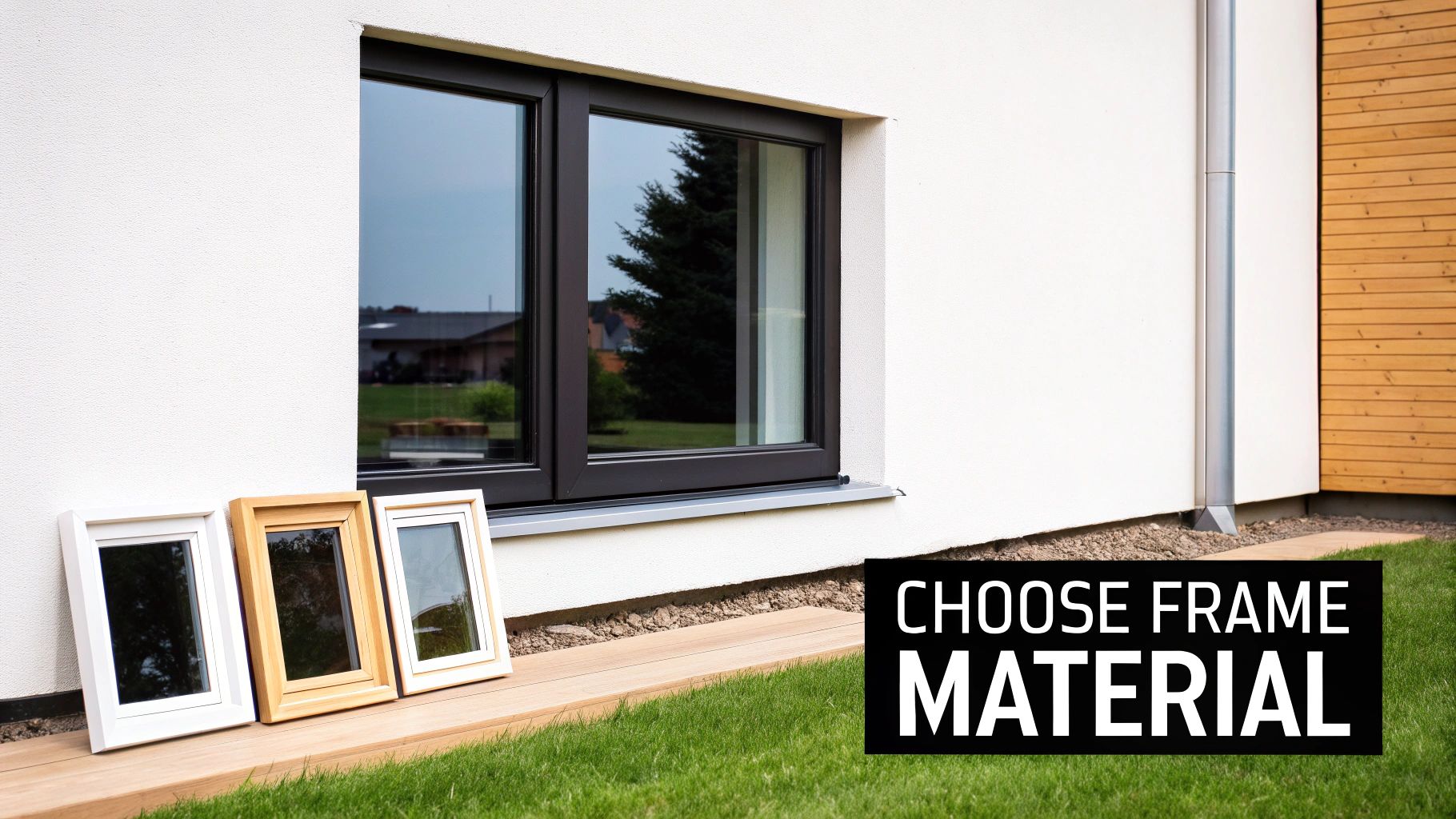
We all focus on the screen mesh itself, but the frame is the unsung hero holding everything together. A flimsy frame that warps, rusts, or cracks under pressure makes the entire screen useless. It’s what provides the structure and tension needed to keep bugs out and stand up to the elements.
This guide will walk you through the real-world performance of each material. We’ll get past the basic sales pitch and look at how these frames actually hold up on a house, from a standard bedroom window to a big, sliding patio door.
It's no surprise that homeowners are paying more attention to these details. The global market for window and door frames is expected to climb from around USD 105 billion to a staggering USD 148.8 billion by 2034, largely because people want building materials that are both tough and energy-efficient. As you get started, it's a good idea to research different types of screen products like insect screens and fly screens to get a feel for all the options out there.
Key Frame Materials at a Glance
Before we get into the nitty-gritty, here’s a quick rundown of the three materials you'll most often see. Think of this as the starting point for figuring out what works best for your home.
| Material | Key Characteristics | Best For |
|---|---|---|
| Aluminum | Strong, rigid, and durable with a classic look. Resists warping and bowing, making it ideal for larger openings. | Large patio sliders, sun screens requiring high tension, and areas where strength is paramount. |
| Vinyl | Excellent insulator, low maintenance, and available in various colors. Resists dents and corrosion effectively. | Homeowners prioritizing energy efficiency and minimal upkeep in standard-sized window applications. |
| Fiberglass | Flexible, cost-effective, and easy to handle for DIY projects. It will not corrode, dent, or unravel. | Budget-conscious projects, smaller windows, and situations where flexibility is an advantage. |
With this foundation, we can now dive into a more practical comparison to help you find the perfect match for your specific needs.
A Look at the Three Main Window Screen Frame Materials
When it's time to choose a window screen frame, you’ll typically be looking at three main players: aluminum, vinyl, and fiberglass. Each one has a completely different personality, and getting to know them is the key to making a smart choice for your home. These aren't just interchangeable parts—they're the backbone of your screen, defining its strength, how long it will last, and what it will look like.
The best material for you really boils down to your specific situation. Think about the size of the window, your budget, and the look you're going for. Let's dig into what makes each one unique before we compare them side-by-side.
Aluminum: The Old Guard of Strength
For as long as most of us can remember, aluminum has been the standard for window screen frames, and for good reason. Its biggest selling point is sheer strength and rigidity. This makes it the hands-down winner for large openings like patio sliders or huge picture windows, where lesser materials would start to bow or sag under tension.
Aluminum frames come in two flavors: roll-formed and extruded. Extruded is the heavy-hitter, much stronger and more durable than its roll-formed cousin. You can also get them in several finishes—mill (raw), anodized, or powder-coated in colors like white, bronze, and black. That kind of versatility means aluminum can look right at home on almost any style of house.
Vinyl: The Modern, No-Fuss Option
Vinyl has really taken off as a screen frame material, largely because it looks clean and modern and requires almost no upkeep. A big advantage it has over aluminum is that vinyl is a natural insulator, so it helps slow down heat transfer. In a hot climate like Phoenix, that thermal efficiency can actually help trim down your energy bills.
In fact, vinyl has become a market leader for its all-around performance. It's the top frame material for windows across the United States, thanks to its energy efficiency and low-maintenance nature. The market for it is expected to grow by a CAGR of 4.0% through 2030 because its ability to cut down on drafts helps lower energy use.
Key Insight: Vinyl's best features are its thermal performance and built-in color. The color is part of the material itself, not just a coating, so scratches and dings are much less obvious than they would be on a painted aluminum frame.
This makes vinyl a fantastic "set it and forget it" choice for anyone who doesn't want to worry about future painting or refinishing. For a more detailed breakdown, check out our guide on the different types of window screen frames.
Fiberglass: The Flexible, Budget-Friendly Pick
Fiberglass is another common choice, known mostly for its flexibility and affordability. It’s super lightweight and a breeze to handle, which has made it a favorite for DIY screen repairs. That flexibility is a real plus during installation, since it can bend without breaking.
One of fiberglass's standout qualities is that it’s completely corrosion-proof. It won’t rust, rot, or fall apart when it gets wet, making it a solid pick for humid climates or coastal homes. While it doesn't have the brute strength of heavy-duty aluminum, its resilience and wallet-friendly price make it a practical, reliable option for standard windows that don't need a ton of tension.
A Detailed Comparison of Frame Materials
When you're choosing a material for your window screen frames, you're really balancing a few key things: strength, upkeep, cost, and looks. It's not just about picking one; it’s about figuring out which one makes the most sense for your home and where you live.
Let's break down the big three—aluminum, vinyl, and fiberglass—and see how they actually perform in the real world, especially in a place like Phoenix.
Durability and Strength
When it comes to pure, unadulterated strength, aluminum is the undisputed champ. Its rigidity is why it's the only real option for big openings like sliding patio doors or massive picture windows. Anything else would sag or bow under the tension needed to keep the screen taut. If you're installing a heavy-duty sun screen to fight that intense Arizona sun, extruded aluminum is what you need for its structural integrity.
Vinyl offers a different kind of toughness. It’s not as stiff as aluminum, but it's fantastic at shrugging off dents and dings from everyday life. Plus, it’s completely immune to moisture and corrosion, which is a huge win. The trade-off is its flexibility, making it a better fit for standard-sized windows that don't need to be stretched super-tight.
Fiberglass sits right in the middle. It’s impressively flexible and resilient, meaning it won't dent like aluminum can, and it doesn't get brittle like old vinyl sometimes does. It doesn't have the muscle for huge spans, but its ability to bend without breaking makes it incredibly forgiving, especially during installation.
This simple flowchart can help point you in the right direction based on what matters most to you.
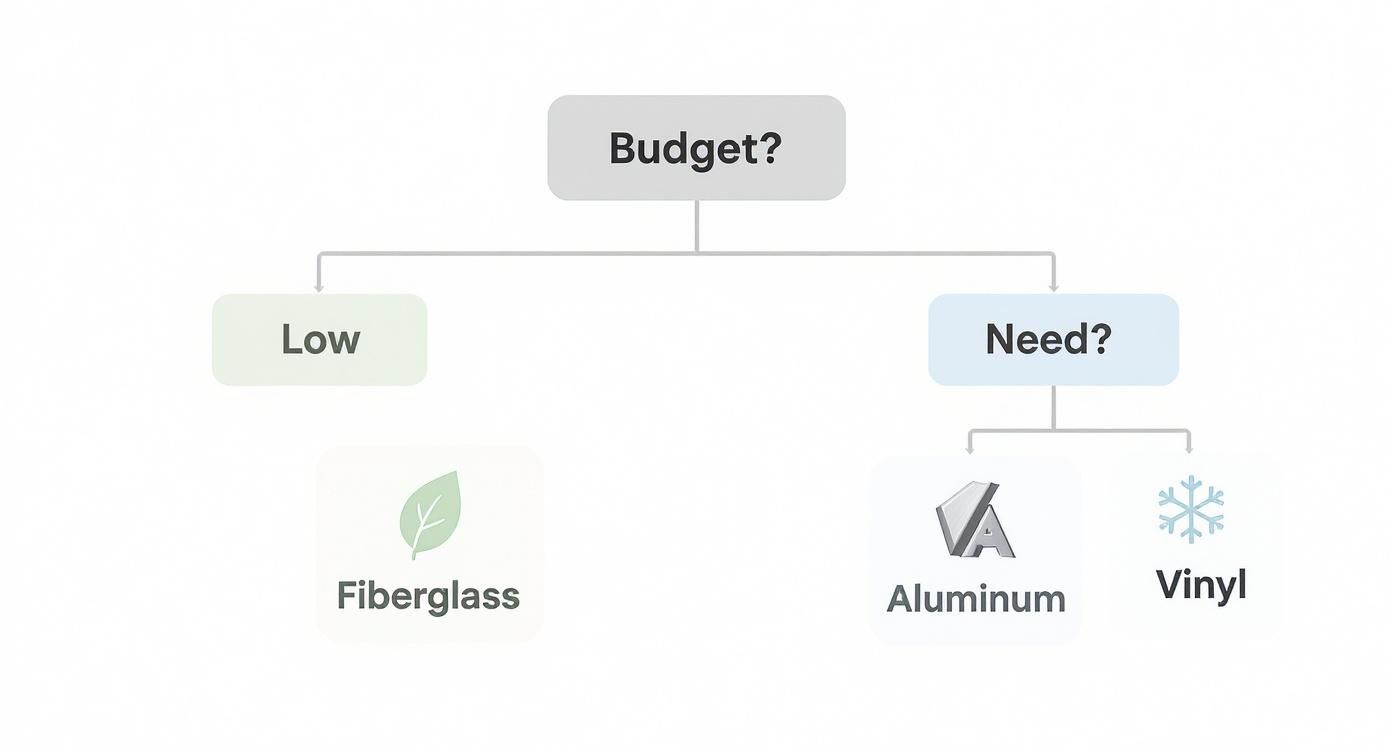
It’s a quick way to see how budget and specific needs—like strength versus energy efficiency—guide your choice from the get-go.
Maintenance Needs and Longevity
This is where the materials really show their differences. Vinyl is the "set it and forget it" champion of the group. The color runs all the way through the material, so scratches barely show. It never needs a coat of paint and cleans up perfectly with just a bit of soap and water.
Aluminum is a bit more demanding, especially the painted or powder-coated kinds. If it gets scratched, you’ll see the bare metal underneath, which might need a little touch-up paint to prevent oxidation and keep it looking sharp. Anodized aluminum finishes are tougher against scratches, but you'll usually pay more for them upfront.
Fiberglass is also extremely low-maintenance. Just like vinyl, it can't rust or corrode, and the color is part of its DNA. It holds up great in most situations, though it won't have the same structural lifespan as a heavy-duty extruded aluminum frame in a high-stress spot.
Key Differentiator: For large patio screens where rigidity is non-negotiable, heavy-duty aluminum remains the undisputed choice. Its ability to maintain tension across wide spans without bowing is a structural advantage that vinyl and fiberglass cannot match.
Overall Cost and Value
Let’s be honest, budget is often the bottom line. This is where fiberglass really shines as the most cost-effective window screen frame material. Its low price point has made it a global leader; in fact, fiberglass accounts for over 42% of total market revenue worldwide because it hits that sweet spot of low cost, corrosion resistance, and easy installation. You can discover more insights about the window screen market to see just how dominant it is.
Aluminum's price tag can swing wildly. The standard roll-formed aluminum is quite affordable, putting it in competition with fiberglass. But the heavy-duty extruded aluminum used for large doors and sun screens is a premium product. You’re paying for superior strength and a much longer lifespan, making it a true long-term investment.
Vinyl usually lands somewhere between fiberglass and high-end aluminum. It’s an attractive price considering its low-maintenance perks and good thermal insulation, which can even help with energy savings over time. With vinyl, you’re paying for a great balance of performance, looks, and minimal upkeep.
Aesthetic Options and Style
How the frames look on your house matters. Aluminum delivers a classic, crisp appearance with clean lines that fit right in with both modern and traditional homes. It’s available in several finishes, like anodized silver, white, and bronze, giving you plenty of design flexibility.
Vinyl frames tend to have a softer, more rounded profile. They come in a few colors, but white and beige are by far the most common. Since the color is solid all the way through, you get a consistent look that won't chip or peel off, keeping things looking fresh for years.
Fiberglass has a straightforward, functional look. It doesn’t have the sharp architectural lines of aluminum or the polished finish of vinyl, but its simplicity helps it blend in quietly with most window casings and home exteriors.
Window Screen Frame Material Comparison
To pull all this together, here’s a quick at-a-glance comparison. This table puts the key differences side-by-side to help you zero in on the best choice for your project.
| Feature | Aluminum | Vinyl | Fiberglass |
|---|---|---|---|
| Durability | Excellent strength, especially extruded. Can dent. | Good. Resists dents and corrosion. Can become brittle. | Good. Flexible and impact-resistant. Will not corrode. |
| Best For | Large spans, patio doors, high-tension sun screens. | Standard windows, energy efficiency focus. | DIY projects, budget-conscious applications, smaller windows. |
| Maintenance | Low. Painted finishes may need touch-ups if scratched. | Very Low. No painting needed; easy to clean. | Very Low. No painting, corrosion-proof. |
| Cost | Mid to High. Extruded is most expensive. | Mid-Range. Good value for its features. | Low. The most budget-friendly option. |
| Aesthetics | Clean, sharp lines. Multiple finish options. | Softer look. Consistent, integrated color. | Functional and simple appearance. |
Ultimately, each material has its place. Your decision will depend on whether you prioritize the brute strength of aluminum, the easy-living nature of vinyl, or the unbeatable value of fiberglass.
Matching Your Frame to the Phoenix Climate and Your Home's Needs
Picking the right window screen frame isn't just a theoretical exercise. It's about what works in the real world—your world. A frame that’s perfectly fine in a mild, cloudy climate can give up the ghost in a hurry under the relentless Arizona sun.
This is where we get practical. Let's look at how each material really performs when the heat is on and match those strengths to specific jobs around your house, from a simple bedroom window to a high-traffic patio door.
Surviving the Sun: The Battle Against UV Rays
Here in Phoenix, the sun isn't just bright—it's a destructive force. Constant, high-intensity UV radiation breaks down materials over time, so you need a frame that can take the heat.
Aluminum frames, especially those with a quality powder-coated or anodized finish, are champs at resisting UV. Think of that finish as a permanent, baked-on sunscreen. It stops the color from fading and protects the metal itself. The frame might get hot to the touch, but its structural integrity isn't going anywhere.
Vinyl has a more complicated relationship with the sun. Modern vinyl is made with UV inhibitors, but years of extreme exposure can still make it brittle. Cheaper, lower-quality vinyl is especially prone to yellowing or cracking, which is something you have to watch out for in a desert climate.
Fiberglass holds up to UV rays remarkably well. The material itself is inert, meaning it won't degrade, turn brittle, or lose its color from sun exposure. This makes it a super reliable, long-lasting option that stays flexible and looks good even after years of baking in the sun.
Phoenix Pro-Tip: For south- or west-facing windows that get absolutely hammered by the sun all day, a high-quality aluminum frame with a durable finish is usually the smartest long-term investment against UV damage.
Choosing the Right Frame for the Job
Not all screens do the same thing. The frame that's perfect for a small bathroom window is totally wrong for a massive sliding glass door. It’s all about matching the material to the application.
Best for Heavy-Duty Sun Screens
Solar screens, which are designed to block a huge amount of the sun's heat, use a much heavier and denser mesh. To keep that mesh flat and effective, it has to be pulled incredibly tight.
- Top Recommendation: Extruded Aluminum
Honestly, this is your only real choice. Its rigidity and sheer strength are the only things that can stop the frame from bowing or twisting under the immense tension of a tightened solar screen. If you tried to use roll-formed aluminum, vinyl, or fiberglass, you'd end up with a saggy, useless screen.
Best for Standard Bug Screens
For regular windows where you just want to keep the critters out, the demands are much lower. The mesh is light, and you don't need a lot of tension.
- Flexible Options: Fiberglass or Vinyl
Both of these are great here. Fiberglass is easy on the wallet, won't corrode, and is a dream for DIY projects because it's so flexible. Vinyl offers a clean, modern look that's easy to maintain, and it even provides a tiny bit of extra thermal insulation, which is always a bonus. The decision usually comes down to your budget and which look you prefer.
Best for Sliding Patio Doors
Sliding patio screen doors get a ton of action. They’re big, they get opened and closed constantly, and they need to handle daily abuse without falling apart.
- Durability Champion: Heavy-Duty Aluminum
Once again, aluminum is the clear winner. You need a robust, extruded aluminum frame to prevent bending and ensure the door glides smoothly for years. Lighter materials just don't have the structural muscle needed for such a big, active opening.
Here's a quick breakdown to make it simple.
| Application | Primary Need | Recommended Material | Why It Excels |
|---|---|---|---|
| Solar Screens | High Tension & Rigidity | Extruded Aluminum | Prevents bowing under the heavy, tight mesh of sun screens. |
| Bug Screens | Cost-Effectiveness & Ease | Fiberglass or Vinyl | Offers a great balance of performance and value for low-stress applications. |
| Sliding Doors | Strength & Durability | Extruded Aluminum | Withstands frequent use and maintains its shape across a large span. |
| Horse Stalls/Barns | Airflow & Durability | Heavy-Duty Aluminum | Provides maximum strength to endure a demanding agricultural environment. |
At the end of the day, matching the frame to its specific job is the most important step. When you consider both the Phoenix climate and what you need the screen to do, you're making an investment that will perform reliably for years to come.
Installation and Repair Considerations
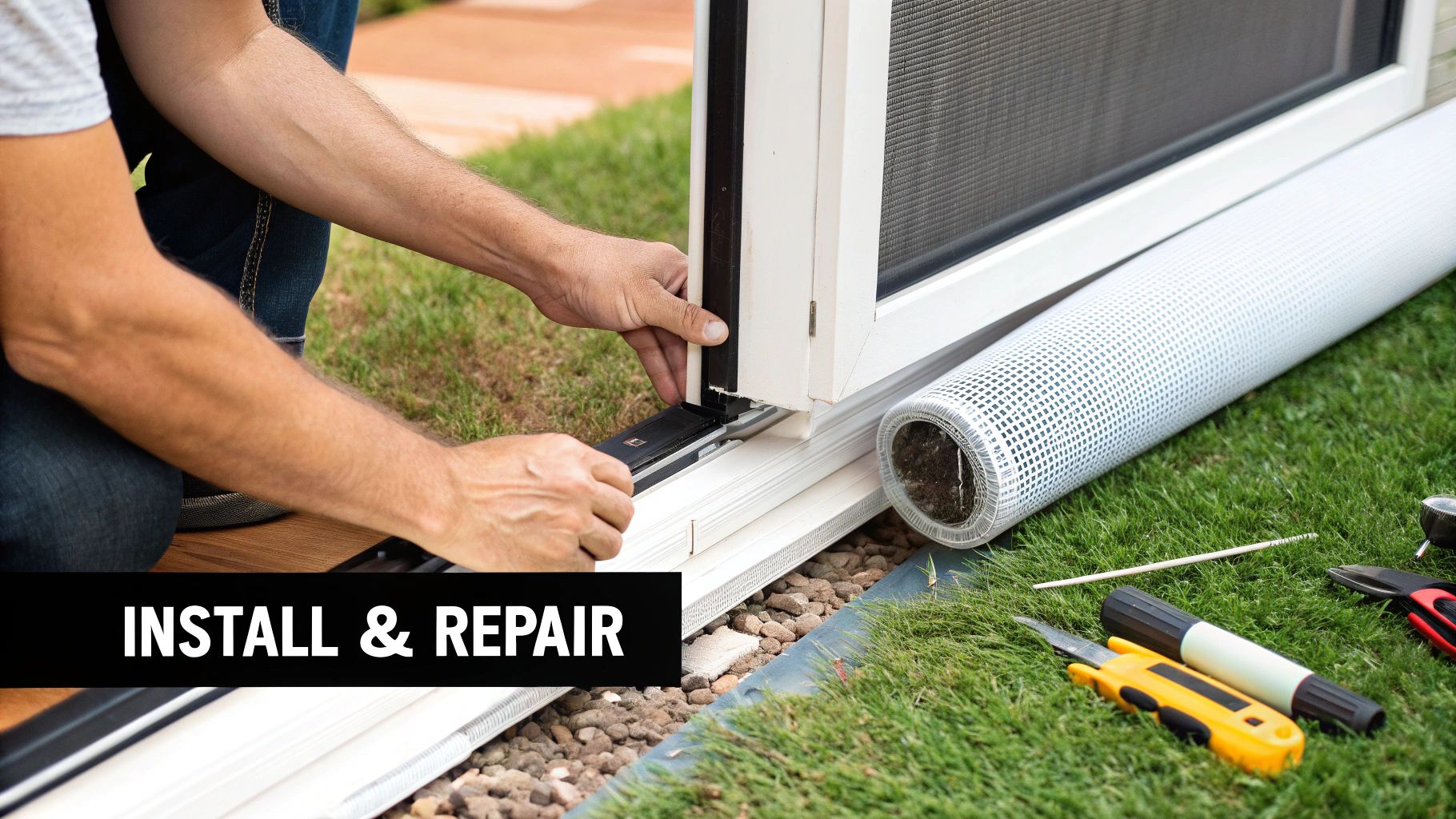
Choosing the right screen frame isn't just about how it holds up to the sun; it's also about what it takes to install and maintain it over the years. Some materials are a dream to work with, while others can be a real headache. Knowing what you're getting into helps you decide whether to roll up your sleeves for a DIY project or call in a pro for a perfect finish.
DIY Friendliness: A Material Breakdown
If you're the kind of person who enjoys a weekend project, some materials are definitely more forgiving than others. The tools you need and how easy the frame is to handle can make all the difference.
- Most Forgiving: You can't go wrong with fiberglass or the standard, light-duty roll-formed aluminum frames. They're flexible, lightweight, and easy to manage without any fancy equipment. A simple spline roller, a utility knife, and a flat workspace are pretty much all it takes.
- Most Challenging: Heavy-duty extruded aluminum is a whole different ballgame. Its incredible rigidity is great for durability but makes it tough to handle. You'll need a hacksaw for precise cuts, and getting the screen mesh tight without wrecking the frame takes some serious muscle. This is one job often best left to experienced installers.
Key Insight: The big difference for a DIY job comes down to rigidity. Flexible frames like fiberglass work with you, but strong ones like extruded aluminum demand precision and the right tools to avoid a costly mistake.
The Rescreening Process: What to Expect
No matter how good your screen mesh is, it will eventually need to be replaced. The frame material you have determines just how simple—or complicated—that process will be.
Fiberglass and Aluminum Frames
Rescreening a fiberglass or aluminum frame is usually pretty straightforward. You just pry out the old spline holding the mesh in place, pull out the damaged screen, lay a new piece over the top, and use a spline roller to press in a new spline. The steps are the same for both, though aluminum gives you a sturdier base to work with.
Vinyl Frame Challenges
Vinyl frames can be tricky, especially after they’ve been baking in the Arizona sun for years. The material can get brittle with age. When you try to roll in a new spline, that pressure can cause the frame's groove to crack or chip, ruining the whole frame. It’s often smarter to have a professional handle older vinyl screens to prevent accidental damage.
When to Call a Professional
Knowing your limits can save you a ton of time, money, and frustration. While rescreening a standard window is a great DIY task for many, some situations really do need a professional's touch.
It’s probably time to call in an expert if:
- You're dealing with heavy-duty extruded aluminum frames.
- Your project involves large openings, like patio doors or oversized windows.
- The frames you have are old, brittle, or already showing signs of damage.
- You need that perfectly taut, drum-tight finish for a high-tension solar screen.
A professional gets the job done right the first time, preventing common problems like saggy screens or busted frames. If you're looking at a difficult fix, professional window screen frame repair services are your best bet for a solution that lasts. And once your screens are perfect, don't forget the glass; exploring different window cleaning methods can help keep your whole view crystal clear.
Making Your Final Decision with Confidence
Choosing the right window screen frame isn't just about picking a material; it’s about balancing what you need with what each material does best. It can feel like a lot to juggle, but asking yourself a few straightforward questions will cut right through the noise and get you to the right answer for your home.
A Quick Decision Checklist
Let's walk through the key questions. Your answers here will point you straight to the best frame for the job.
-
What's my main goal? If you're looking to block that intense Phoenix sun with a heavy-duty solar screen, the unbending strength of extruded aluminum is the only way to go. But if you just need to keep the bugs out, the flexibility and value of fiberglass or vinyl are perfect.
-
What’s my budget? If keeping costs low is priority number one, fiberglass delivers solid performance without breaking the bank. For top-tier strength and longevity that pays off over time, premium extruded aluminum is a worthwhile investment.
-
Where is this screen going? A big, high-traffic sliding patio door absolutely needs the rugged durability of aluminum. On the other hand, a small, stationary window in a bathroom will be perfectly fine with a vinyl or fiberglass frame.
For anyone living in the Phoenix area, the biggest factor is almost always the sun. A frame that won't warp or weaken under constant UV exposure and can hold a tight solar screen is your best defense against the heat and high energy bills. That’s where you’ll find the best long-term value.
While this guide gives you a great starting point, nothing beats a professional set of eyes on your actual windows. An experienced installer can spot things you might miss, recommend the best material for your specific situation, and guarantee a perfect, long-lasting fit.
Getting that expert opinion can save you a lot of headaches and money down the road. To get a clearer picture of the investment, you can learn more about our window screen installation cost and see how we can help you get the job done right.
Your Top Screen Frame Questions Answered
Even after comparing materials, you probably have a few practical questions. Let's dig into some of the most common things homeowners ask about choosing and taking care of their window screen frames.
Can I Paint My Window Screen Frames?
It’s a common thought—a quick coat of paint to freshen up your home's exterior. Whether or not it's a good idea really comes down to the frame material.
- Aluminum Frames: Absolutely. Aluminum is your best bet for a paint job. The trick is in the prep work. You need to clean it well, give it a light sanding to rough up the surface, then use a quality metal primer before finishing with an exterior-grade spray paint. Do it right, and it will last.
- Vinyl Frames: I'd steer clear of painting vinyl. The paint just doesn't like to stick to that slick surface, and it’s notorious for peeling and flaking off, especially under our intense Phoenix sun. Vinyl is also flexible, so as the frame expands and contracts with the heat, the paint just cracks and fails.
How Long Do Different Screen Frames Last in the Sun?
Here in Arizona, the sun is the biggest enemy of any exterior material. UV exposure is what will ultimately determine how long your screen frames hold up.
In a place like Phoenix with its relentless, year-round sun, a heavy-duty extruded aluminum frame can easily last 20 years or more. On the flip side, a standard vinyl frame might start getting brittle and weak in as little as 7 to 10 years. Fiberglass tends to land in a similar 7 to 10-year range before it loses its integrity.
This is a huge factor when you think about long-term value. Aluminum costs more upfront, but because it stands up to UV rays so well, it often ends up being the smarter financial choice over the life of your home.
What Is the Difference Between Roll Formed and Extruded Aluminum?
This is probably one of the most critical things to understand when you're looking at aluminum frames, because it's all about strength. Knowing the difference ensures you don't pay for something that won't do the job.
- Roll-Formed Aluminum: Think of this as a thin, flat sheet of aluminum that's been bent into a frame shape. It’s light, less expensive, and works just fine for a standard bug screen on a small window. The downside? It bends and dents pretty easily.
- Extruded Aluminum: Now, this is the heavy-hitter. It’s made by forcing a solid block of hot aluminum through a die, creating a single, thick, and incredibly strong piece. This process makes it far more rigid, which is why it's the only suitable choice for big openings like patio doors, sliding screens, or any window where you're installing a high-tension solar screen that would just bow a weaker frame.
For any project, from a single window to the whole house, the right material and a professional installation make all the difference. The team at Sparkle Tech Screen Service can walk you through the options and make sure you get the perfect frame and a flawless fit. You can get a quick quote over at their website.


