



When you're picking out new window screens, it's easy to focus on the mesh itself. But the frame—the skeleton that gives the screen its shape and strength—is just as important. The material you choose will dictate how long it lasts, how it looks, and how much work it is to maintain.
The main players in the screen frame game are aluminum, fiberglass, and wood. Each has its own personality, with unique pros and cons that make it a better fit for certain homes, climates, and budgets.
A Quick Guide to Screen Frame Materials
Think about it this way: while the mesh is the barrier keeping bugs out, the frame is what stands up to wind, rain, and the occasional bump. It’s the unsung hero of your window screen assembly. Getting the frame material right is the crucial first step, setting the foundation for a durable and effective screen.
Of course, the frame and the mesh need to work together perfectly. You can dive deeper into how to pair them up in our guide to the best window screen material. For now, let's zero in on the frames.
What Homeowners are Choosing
So, what are most people installing in their homes? This breakdown shows the clear favorites in the market.
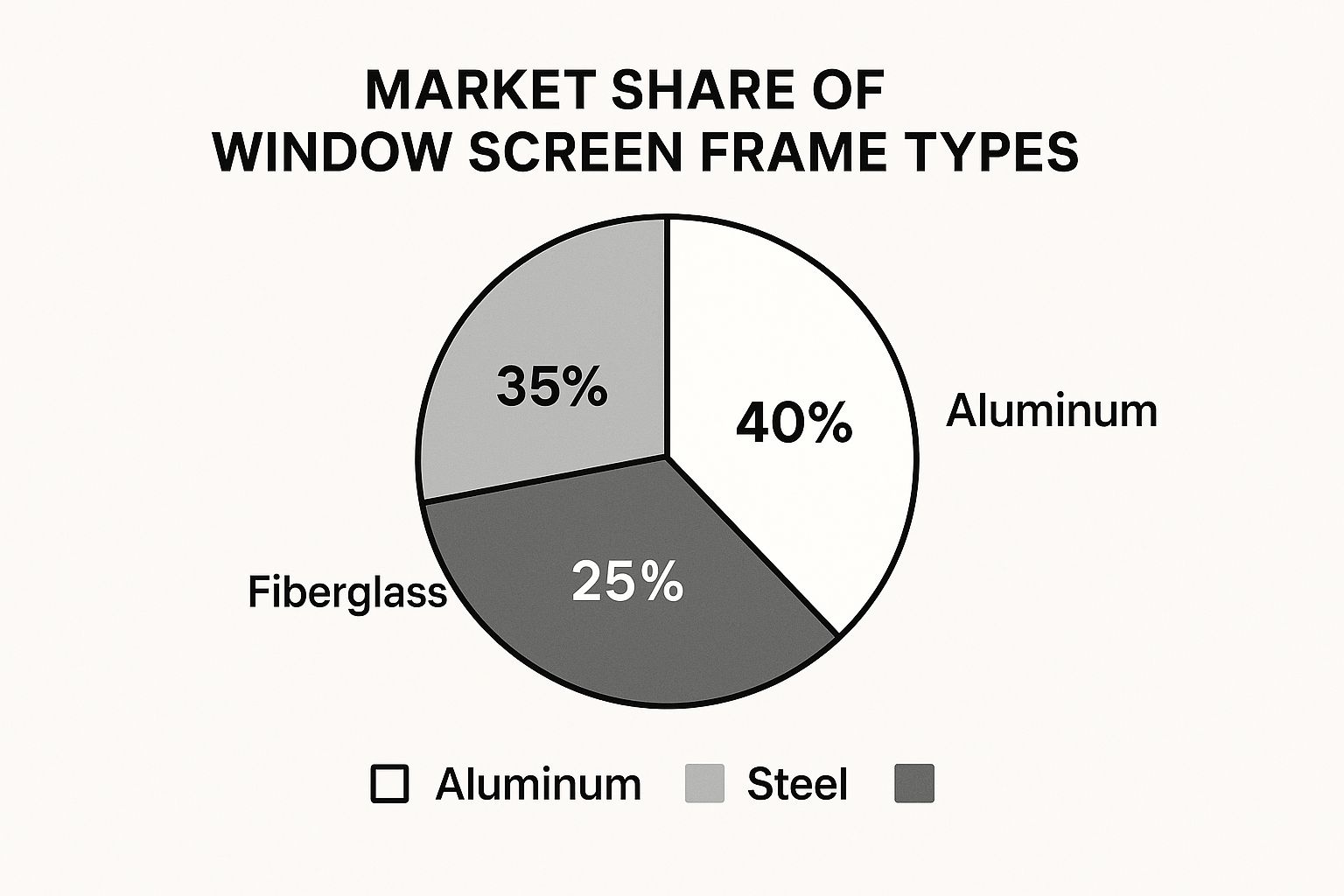
As you can see, aluminum is the runaway winner, and for good reason. It hits that sweet spot of being strong, lightweight, and relatively affordable. Fiberglass isn't far behind, valued for its resistance to dents and corrosion.
Their popularity isn't just a coincidence; it's a testament to their reliability and low-maintenance nature. In North America especially, aluminum frames dominate because they offer a fantastic blend of resilience and value. This trend is backed up by industry analysis, which you can explore further on Market Research Guru.
Window Screen Frame Materials At a Glance
To make things a little easier, here's a quick comparison of the most common materials you'll encounter.
| Material | Key Benefit | Best For | Maintenance Level |
|---|---|---|---|
| Aluminum | Durability & Strength | Most climates, high-traffic areas | Low |
| Fiberglass | Dent & Corrosion Resistant | Coastal or humid environments | Very Low |
| Wood | Classic Aesthetic | Historic homes, dry climates | High |
| Vinyl | Cost-Effective | Budget-conscious projects | Low |
This table should give you a solid starting point for figuring out which material aligns best with your home's needs and your long-term goals.
The Old-School Strength of Aluminum Screen Frames
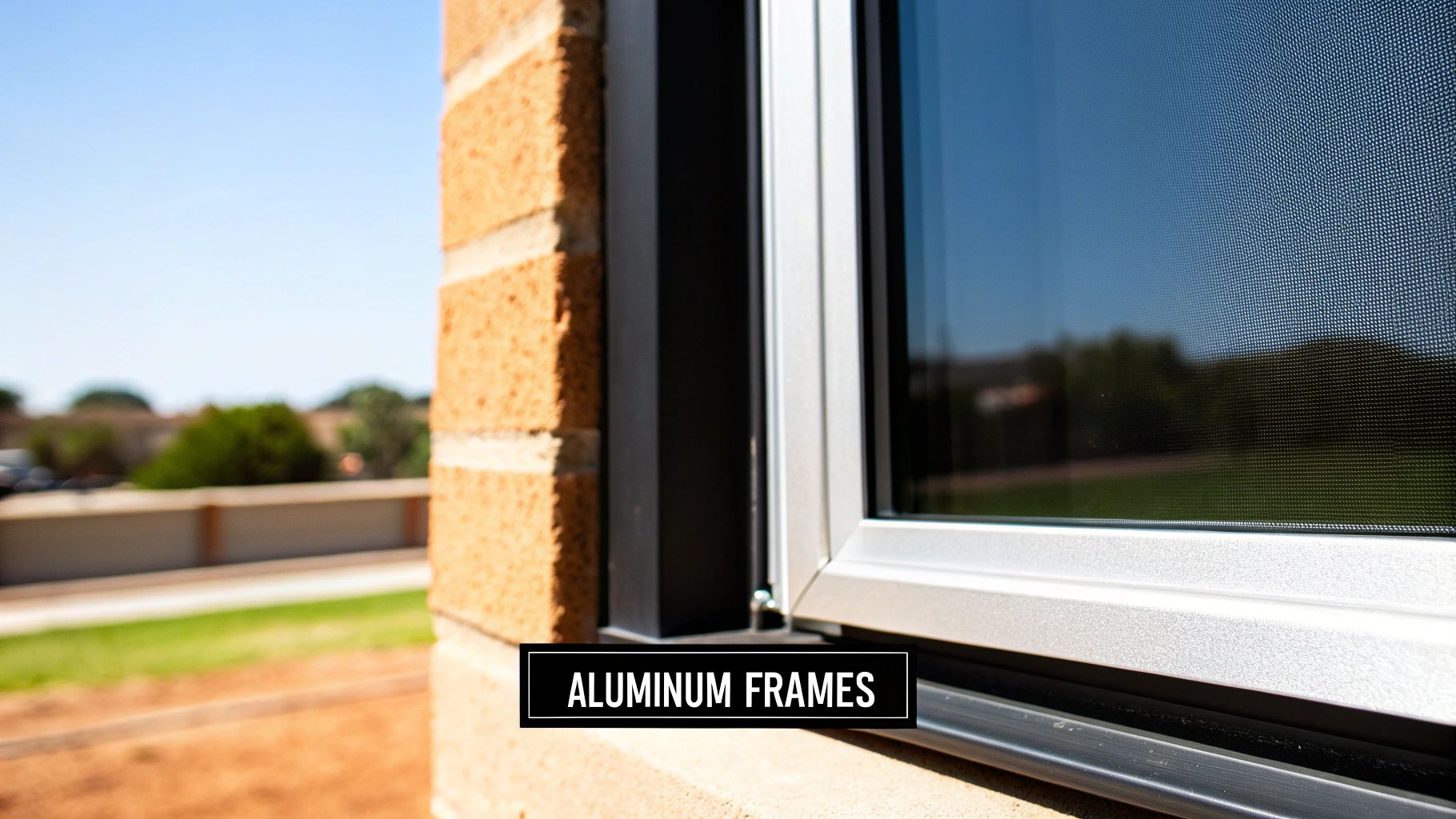
When you picture a classic window screen, chances are you’re thinking of an aluminum frame. For decades, it’s been the go-to choice for builders and homeowners alike, and for good reason. It hits that sweet spot of being strong, long-lasting, and budget-friendly.
The real magic of aluminum is its impressive strength-to-weight ratio. These frames are incredibly rigid, which means they can keep even large screens pulled perfectly taut without bending or sagging over time. But despite that toughness, they're surprisingly lightweight, making them a breeze to pop in and out for cleaning.
This durability makes aluminum a solid performer in just about any climate you can throw at it. It naturally stands up to rust and corrosion, so it won’t fall apart in humid or rainy areas. And unlike some plastics, it won't get brittle and crack after a few harsh winters. Year after year, it just holds up.
Finding the Right Look: Finishes and Colors
One of the best things about aluminum is that you’re not stuck with one generic "metal" look. You can easily find a finish that matches your home’s style perfectly.
- Mill Finish: This is just bare, untreated aluminum. It has a no-frills, industrial vibe and is usually the most affordable option.
- Anodized Finishes: Through an electrochemical process, the aluminum gets a super-durable, corrosion-proof layer. This finish, which often comes in clear, bronze, or black, is part of the metal itself, so it will never chip or peel off.
- Powder-Coated Colors: If you want a specific color, this is the way to go. A dry powder is sprayed onto the frame and then baked on, creating a finish that’s much tougher than regular paint. You’ll commonly find them in white, tan, and black to match typical window trims.
The ability to powder-coat aluminum is a huge deal. It means you can make your screen frames blend in seamlessly with your home's color scheme, actually adding to your curb appeal instead of looking like an afterthought.
What to Watch Out For
As great as aluminum is, it’s not perfect. Its biggest downside is that it can dent. An errant baseball or accidentally leaning a ladder against the frame can leave a permanent mark. It takes a pretty solid impact, but it’s something to be aware of, especially for windows in high-traffic zones.
Also, while aluminum fights off rust well, it can struggle in salty, coastal air. Over many years, the salt spray can cause some pitting on the surface. For most homes, though, this isn't an issue, and aluminum remains a fantastic, reliable choice that delivers great value for years.
The Practicality of Vinyl Screen Frames
For homeowners who prioritize low maintenance and modern performance, vinyl screen frames are a leading contender. Think of vinyl as the "set it and forget it" option in the world of window screens, designed for a hassle-free experience from day one.
At its core, vinyl is a type of plastic, and this composition is its greatest strength. It is completely impervious to moisture, meaning it will never rust, rot, or corrode like metal or wood can. This quality makes it an exceptional choice for homes in humid, rainy, or coastal climates where other materials might degrade over time.
A Look at Energy Efficiency
Beyond its weather resistance, vinyl also offers a subtle benefit for your home’s energy efficiency. Unlike aluminum, which readily conducts heat and cold, vinyl is an excellent insulator. This means it helps reduce thermal transfer through your window openings.
This insulating property helps create a more effective thermal break, preventing outdoor temperatures from seeping into your home. While the impact is modest, it contributes to maintaining a more stable indoor climate and can support your overall energy-saving efforts, especially when paired with high-performance windows.
For homeowners who want a screen frame that requires virtually no upkeep, vinyl is one of the best types of window screen frames available. It’s built to resist the elements without needing painting, sealing, or special care.
Durability and Potential Downsides
When comparing vinyl to aluminum, a key difference is flexibility versus rigidity. Aluminum is stiff and can dent under a sharp impact. In contrast, vinyl is more flexible and resilient, bouncing back from minor bumps without showing damage.
However, this flexibility has its limits. In regions with extreme temperature swings, particularly intense, direct sunlight or deep freezes, vinyl can become brittle over many years. This can eventually lead to cracking, especially in older frames. For most moderate climates, though, modern vinyl formulations offer impressive longevity.
Ultimately, vinyl excels for those seeking a balance of affordability, excellent weather resistance, and minimal maintenance. It provides a clean, modern look that complements many home styles, particularly those with existing vinyl window and door trims, making it a practical and popular selection.
While aluminum and vinyl are the go-to choices for many, there's a whole other world of screen frames out there for homeowners with specific needs. Let's dive into some of the specialty options, like fiberglass and wood, that offer unique looks and performance.
Fiberglass: The High-Performance Option
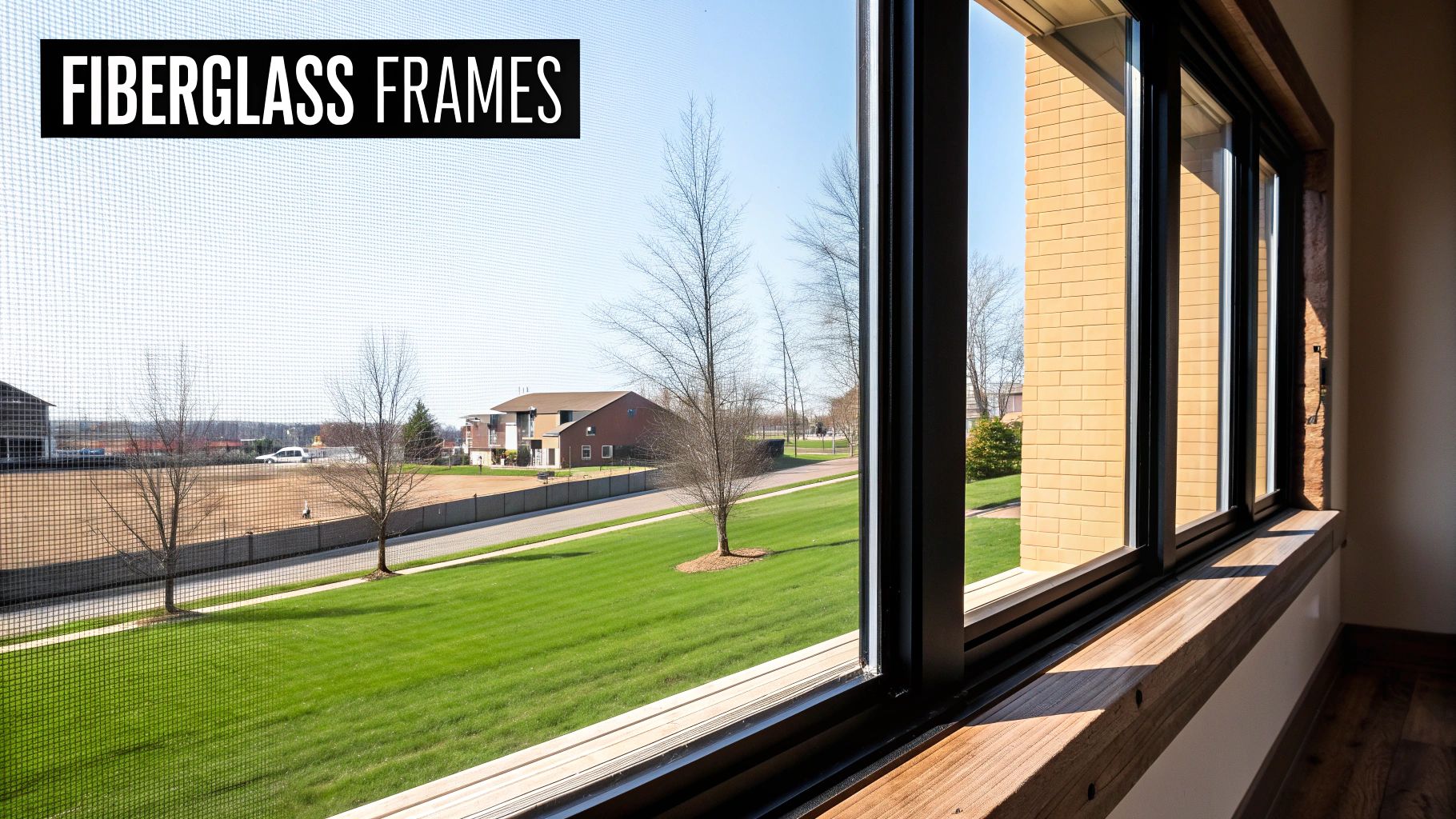
Think of fiberglass frames as the all-weather gear for your windows. They're made from a composite of glass fibers and resin, which creates a material that's incredibly tough but surprisingly light.
Unlike aluminum that can dent or vinyl that can get brittle, fiberglass is built to last. It won't rust or corrode, which makes it a fantastic choice if you live near the coast where salt air is a constant battle. The same goes for anyone in a humid, damp climate.
Unmatched Durability and Stability
The real superpower of fiberglass is its dimensional stability. That’s a technical way of saying it barely expands or contracts when the temperature swings from scorching hot to freezing cold. This stability means no warping or bowing, so your screen stays perfectly taut and functional for years.
Fiberglass offers incredible peace of mind. Its resistance to dents, corrosion, and warping makes it a true "install and enjoy" solution that easily outperforms other materials in long-term resilience.
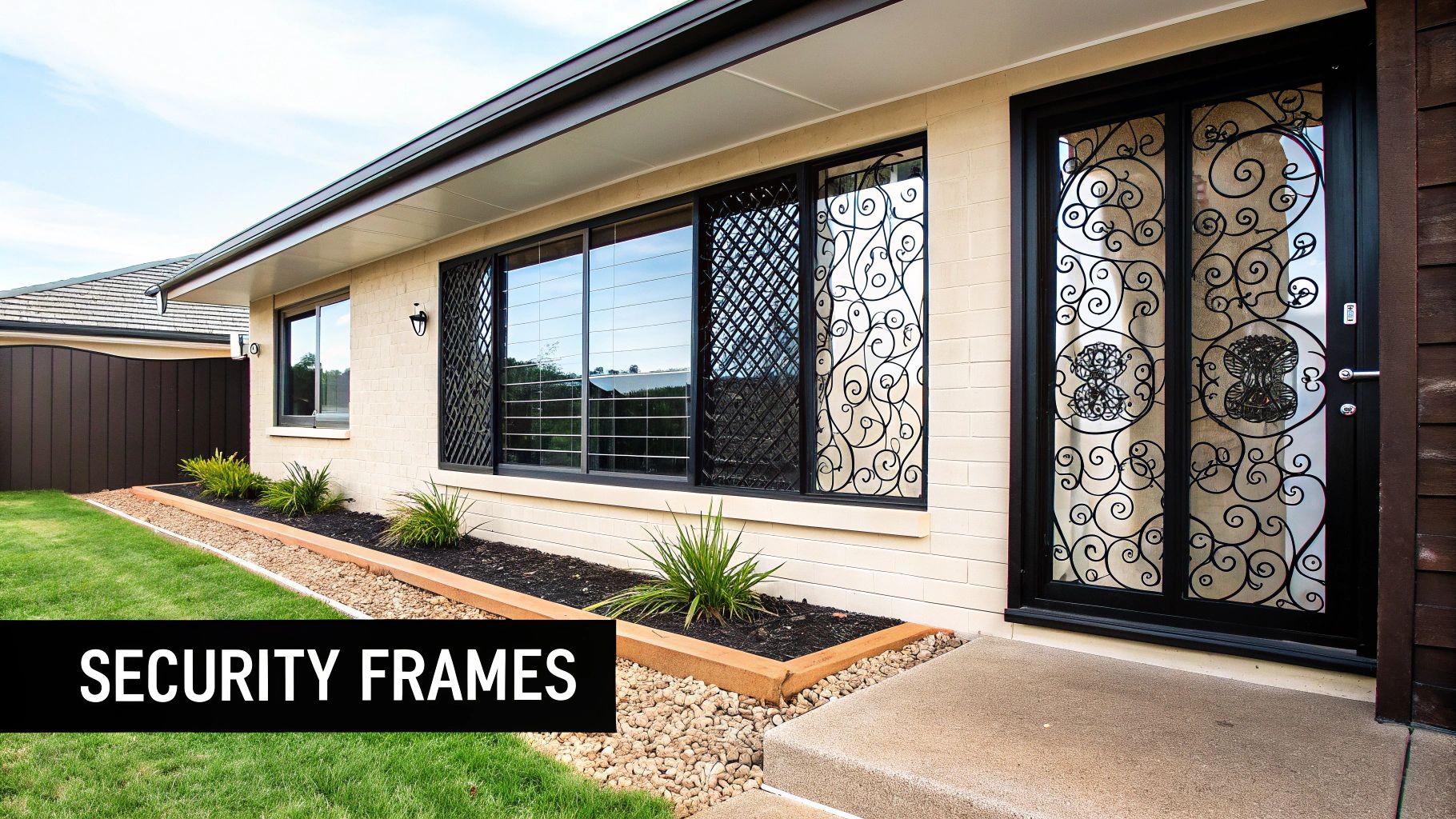
For those who need the ultimate in protection, some heavy-duty frames take this strength to another level. You can see how these robust frames are used in specialized applications like security screens for windows.
Wood Frames: Classic Beauty with a Catch
For a historic home or a house with a classic, rustic charm, nothing quite compares to the look of wood screen frames. They bring a natural warmth that metal and plastic just can't imitate.
The best part? You can paint or stain wood to match your home's trim perfectly, giving you a custom look that’s second to none.
But that timeless beauty comes with a serious commitment to high maintenance. Wood is vulnerable to rot, pests, and warping if it's not sealed and cared for properly. It requires regular painting or staining to keep the elements at bay, making it a labor of love best suited for drier climates and homeowners who don't mind the upkeep.
This shift towards advanced composites is a major trend. The global window and door frames market, valued at over USD 105 billion in 2024, is seeing huge growth in materials like fiberglass precisely because of their superior durability. If you're interested in the market trends, you can find in-depth industry analysis on GMI Insights.
How to Choose the Right Screen Frame for Your Home
Now that you know the different materials out there, how do you actually pick one? Choosing the right window screen frame isn’t about finding the strongest or the cheapest option on the shelf. It’s about finding the perfect fit for your home’s style, your local environment, and your lifestyle.
Think of it like buying a coat. A lightweight windbreaker is great for a breezy fall day, but it’s the wrong choice for a Minnesota winter. The best screen frame for a dry desert climate might completely fail in the salty, humid air of a coastal town.
Key Factors to Consider
Before you pull the trigger, take a moment to run through a few key questions. A little forethought here will help you zero in on the best choice and avoid a purchase you'll regret later.
- What’s your local climate like? If you're near the coast where salt spray is a constant battle, vinyl or fiberglass frames are your best friends because they won’t corrode. In a hot, sunny place like Arizona, a good UV-resistant aluminum frame will stand up to the intense sun without getting brittle.
- How much maintenance are you willing to do? Let's be honest. If you’re a "set it and forget it" type of person, stick with vinyl and fiberglass. They require little more than an occasional cleaning. Wood looks fantastic, but it demands your attention with regular sealing or painting to keep rot and warping at bay.
- What’s your home’s architectural style? For historic homes or rustic, craftsman-style houses, nothing beats the authentic look of wood frames. They just complete the picture. On the other hand, the clean, sharp lines of powder-coated aluminum or vinyl are a perfect match for modern and contemporary homes.
Your budget is obviously a big piece of the puzzle. But try to think beyond the initial price tag. Spending a bit more on a quality fiberglass frame today could easily save you the cost and hassle of replacing a cheaper, warped frame in just a few years.
Making the Final Call
Don't forget to consider the primary job of the screen itself—keeping bugs out. You can dive deeper into the various types of insect screens and fly screens to make sure your frame and mesh are a good team.
In the end, it all comes down to a balance of durability, looks, and price. Getting a clear picture of the window screen installation cost can also help lock in your budget and guide your final decision. By weighing these factors, you can choose frames that not only look fantastic but will also perform beautifully for years to come.
Common Questions About Window Screen Frames
Even with all the options laid out, you might still have a few lingering questions before you're ready to commit. Let's tackle some of the most common ones I hear from homeowners to make sure you feel completely confident in your choice.
Which Type of Window Screen Frame Is the Most Durable?
When it comes to pure, brute strength, heavy-duty aluminum and fiberglass are the clear winners. Fiberglass is fantastic at shrugging off dents, corrosion, and the warping that can come with big temperature swings, making it a real long-term workhorse.
Standard aluminum is also incredibly tough, but it can get dented if it takes a hard hit. Vinyl holds up well against rot and corrosion, but after many years in a freezing climate, it can sometimes become brittle.
How Do I Measure for a New Window Screen Frame?
Getting the measurements right is absolutely critical for a snug, effective fit. You'll want to measure the width of the screen channel in your window frame at the top, middle, and bottom, and then use the smallest of those three numbers.
Do the exact same thing for the height. Always measure to the nearest 1/16th of an inch for the best accuracy. Don't forget to measure the depth of the channel, too—this ensures the frame stock will slide in perfectly without being too loose or too tight.
Can I Reuse My Old Screen Mesh in a New Frame?
I get this question a lot. It seems like an easy way to save a few bucks, but honestly, reusing old mesh is almost always a mistake. The process of pulling it out of an old, damaged frame usually stretches or tears the material, which defeats the whole purpose of getting a new frame.
A new frame deserves new mesh. If you want a tight, clean, professional-looking screen, the only way to get there is by pairing your new frame with fresh screen material.
If your frame is bent, rusted, or just too beat up to fix, your best bet is often a complete DIY window screen frame replacement. This approach guarantees both the frame and the mesh are in perfect shape right from the start.
Ready for a hassle-free screen solution? Sparkle Tech Screen Service offers new installations, rescreening, and repairs with fast, reliable service. Call or text us today at 623-233-0404 for a quick quote and get your home protected.


