


Imagine having a shield for your home that's as strong as steel but as breathable as a normal window screen. That’s exactly what modern security screens for windows deliver. They offer serious protection from intruders without sacrificing fresh air and natural light—a huge step up from bulky bars or flimsy films. Think of them as a seamless part of a secure, comfortable, and even stylish home.
The Modern Approach to Home Protection
When you think about securing your home, what's the first thing that comes to mind? For most people, it’s probably alarm systems or video cameras. Those are great, but they’re reactive. They only alert you after a break-in is already happening.
True security, however, is about preventing someone from getting in in the first place. This is where security screens change the game.
Forget flimsy bug screens. And definitely don't picture those old-school window bars that make a house look like a jail. Today's security screens are a fundamental upgrade to your home's physical defense. They're engineered to be incredibly tough yet surprisingly discreet, blending right in with your home’s design. You get formidable protection without sacrificing your curb appeal.
More Than Just a Barrier
The real value of security window screens goes way beyond just stopping a burglar. They're a multi-purpose upgrade that genuinely makes daily life better. More and more, homeowners are looking for solutions that mix smart, practical design with real security.
Here’s what these screens bring to the table:
- Ventilation Without Worry: Feel like opening your windows for a cool breeze? Go for it. You can enjoy fresh air day or night without ever compromising your home's security.
- Clear Views & Sunlight: The high-quality mesh, usually powder-coated in a non-reflective black, is designed so your eyes look right through it. You keep your views and let all that natural light pour in.
- A Stop to Pests: They create an impenetrable barrier against mosquitos, flies, and any other critters you’d rather keep outside.
- A Boost in Energy Efficiency: On cooler days, you can turn off the A/C and rely on natural ventilation. Over time, that can make a real difference on your energy bills.
This mix of security, comfort, and clever design is why these products are catching on. It's not just a niche market; the closely related security screen door market is expected to hit roughly $4.5 billion by 2033. That growth, detailed in reports like those from Market Report Analytics, shows a clear trend: people want smarter, more effective ways to protect their homes.
To help you see the advantages clearly, here's a quick summary of what you gain by installing security screens.
Key Benefits of Security Window Screens at a Glance
| Benefit | Description |
|---|---|
| Intruder Deterrence | A strong physical barrier that actively prevents forced entry, unlike alarms which are reactive. |
| Enhanced Safety | Allows for secure ventilation, reducing the risk of break-ins through open windows. |
| Preserved Aesthetics | Modern designs are sleek and nearly invisible, maintaining your home's curb appeal and views. |
| UV & Pest Protection | Blocks a portion of harmful UV rays and keeps insects out, improving indoor comfort. |
| Increased Property Value | A valuable security upgrade that can be an attractive selling point for future buyers. |
Ultimately, these screens provide a robust, multi-faceted solution that enhances both security and lifestyle.
The goal isn't to turn your home into a fortress; it's to fortify it without feeling like you're living in one. Security screens strike that perfect balance, adding an invisible layer of defense that works with your lifestyle, not against it.
This guide will cover everything you need to know—from choosing the right materials to installation and upkeep—so you can make your home a true sanctuary of safety and comfort.
What Are the Best Security Screen Materials?
The real strength of a security screen comes down to two things: the mesh and the frame that holds it. It’s a lot like a knight's armor—the type of metal used determines how well it can take a hit. Honestly, choosing the right material is the most critical decision you'll make.
When you start looking, you'll find two materials really stand out for high-quality security mesh: stainless steel and aluminum. Both are a massive step up from your standard fiberglass bug screen, but they offer very different levels of protection and come at different price points. Understanding what makes them tick is the key to matching the right screen to your home's needs and your local climate.
This image gives a great overview of the material choices you'll be considering.
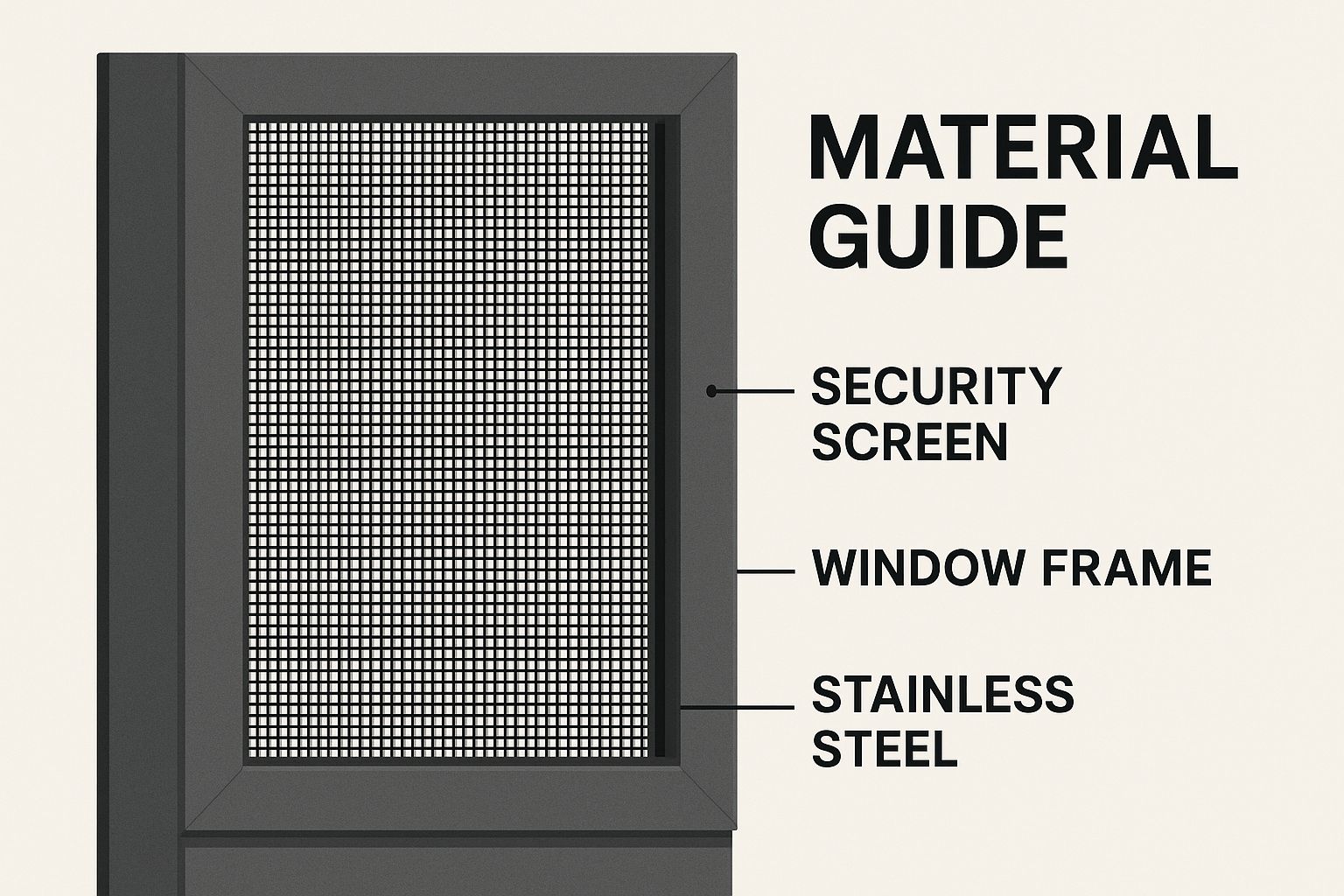
As you can see, the journey to picking the perfect screen starts with the material itself.
Stainless Steel: The Gold Standard
If you’re looking for absolute, no-compromise security, 304 or 316-grade stainless steel is the undisputed champ. This stuff is incredibly tough. It has a high tensile strength that makes it exceptionally resistant to being cut, torn, or smashed. It's the go-to choice for anyone who needs maximum protection.
Beyond just brute force, stainless steel is fantastic at resisting corrosion. This is a game-changer if you live near the coast where salt spray is a constant battle, or in a humid area where rust can eat away at lesser metals. This durability is why the market is booming—the stainless steel security screen market was valued at around USD 450 million in 2024 and is expected to hit USD 750 million by 2033. This material is trusted for a reason.
Key Takeaway: For the highest level of security and longevity, you can't beat stainless steel. It’s a bigger investment upfront, but it pays off in peace of mind and top-tier performance that lasts for years.
A nice bonus is that the fine mesh, usually powder-coated black, provides surprisingly clear views, so you don't feel like you're sacrificing your connection to the outdoors.
Aluminum: A Strong and Practical Contender
While stainless steel is the heavyweight champion, security-grade aluminum offers a fantastic balance of strength, cost, and real-world performance. Now, don't confuse this with the flimsy aluminum in a standard window frame. We're talking about specially tempered alloys designed to withstand significant force.
For many homeowners, aluminum hits that perfect sweet spot. It provides a serious security boost over regular screens but at a more budget-friendly price than stainless steel. It’s also naturally rust-proof, making it a solid, long-lasting option for most climates. You can explore a deeper comparison by reading our guide on the best window screen material.
Material Comparison for Security Screens
To make the choice clearer, it helps to see the two main materials side-by-side. Each has its place, depending on your priorities and budget.
| Material | Key Strength | Corrosion Resistance | Average Cost | Best For |
|---|---|---|---|---|
| Stainless Steel | Highest impact and cut resistance. Extremely strong and durable. | Excellent, especially 316-grade, which is ideal for coastal areas. | Higher | Homeowners who prioritize maximum security and long-term durability in any environment. |
| Aluminum | Good impact resistance and strong for its weight. | Very good, naturally resistant to rust and corrosion. | Moderate | Homeowners seeking a significant security upgrade on a moderate budget in typical climate conditions. |
Ultimately, this table shows there's no single "best" material—only the best material for your specific situation.
The Importance of the Weave and Frame
A security screen's effectiveness isn't just about the metal. How the screen is put together is just as important.
-
Mesh Weave: High-quality screens use a woven mesh, where every single strand of metal goes over and under the next. This creates a tightly interlocked web that's incredibly difficult to break or push apart, unlike a simple welded grid.
-
Frame Construction: All that strong mesh has to be secured in a heavy-duty, extruded aluminum frame. The best systems use a mechanical fastening method—often a powerful adhesive combined with a locking mechanism that clamps the mesh deep inside the frame. This stops the screen from being kicked or pushed out of its housing.
At the end of the day, a security screen is a complete system. The best mesh in the world is useless without a strong frame, and a strong frame won't do you any good if the mesh itself isn't secure.
Finding a Style That Complements Your Home
Let's be honest, the old image of security windows—thick, ugly bars that make a house look like a prison—is the last thing anyone wants. Fortunately, that’s a thing of the past. The best security screens for windows today are designed to blend so seamlessly into your home’s architecture that they actually enhance its look.
Think of them less as a security add-on and more as a high-performance upgrade, like a well-tailored suit. It's built for serious protection but designed to look sharp and feel like it belongs. The goal is to match the screen not just to the window's dimensions, but to your home's unique character, whether it’s a sleek modern build or a classic heritage-style house.
Success comes down to understanding the different operational styles available and picking the one that works best for your windows, your lifestyle, and your home’s aesthetic.
Matching the Screen to the Window Function
Your windows don't all work the same way, so why would your security screens? Forcing a one-size-fits-all solution is a recipe for frustration. The only way to get a truly functional and secure system is to match the screen’s operation to the window’s mechanics.
Here’s a breakdown of the common types:
-
Fixed Screens: These are the workhorses of window security. Bolted directly into the frame, they don’t open or move, offering a constant, unyielding barrier. They are the perfect choice for picture windows or any other fixed glass panels where you want maximum protection without needing ventilation.
-
Hinged Screens: Functioning just like a tiny, super-strong door, these screens swing open from a side hinge. This makes them ideal for casement windows that crank outward. They're also great for any window you want to open fully for easy cleaning. A solid lock, operable only from the inside, keeps them secure when closed.
-
Sliding Screens: If you have sliding windows or double-hung windows, these are your go-to. They glide smoothly on a track, perfectly mirroring the movement of the window pane itself for effortless operation.
By choosing a style that complements your window's mechanics, you ensure your new screens work with your home, not against it. That harmony is what separates a truly professional installation from a clumsy afterthought.
Customization Is Key to Great Aesthetics
Once you've nailed down the right functional type, it’s time for the fun part: dialing in the look. This is where you can truly integrate the screens into your home's design. Forget being stuck with one or two standard colors; modern manufacturers offer a huge palette of options.
The frame color is your most powerful tool. Most quality screens come with powder-coated aluminum frames, which are incredibly durable and can be finished in almost any color you can imagine.
Here are a few strategies people I've worked with have used successfully:
- To Match: The most popular choice is to select a color that perfectly matches your existing window trim. This creates a cohesive, integrated look where the screen practically disappears, becoming part of the window itself.
- To Contrast: For a more modern or industrial look, a bold contrast can be stunning. Think black frames against a white house. This turns the screens into a deliberate architectural feature.
- To Complement: You can also choose a color that sits in the same family as your home's color scheme. For example, a deep charcoal grey on a light blue house adds a sophisticated touch without being too loud.
What about the mesh? It’s almost always a matte black, and for good reason. This isn't just a style choice—the non-reflective black finish dramatically reduces glare. It helps your eyes focus past the mesh to the view outside, preserving your outlook. From the inside, it feels remarkably transparent, while from the outside, it provides a degree of privacy during the day.
Ultimately, you want to choose a combination of style and color that makes your new security screens windows feel like they were part of the original blueprint. With today's options, you never have to compromise between safety and style.
Understanding the Installation Process
A top-of-the-line security screen is only as good as its installation. You can have the strongest materials and the most advanced design, but if it’s not anchored to your home correctly, it won't do its job. Think of it like a vault door—it’s useless if the hinges aren't properly secured to the wall. The installation is what truly activates your screen’s protective power.
This brings you to a critical choice: hire a professional or go the DIY route? The temptation to save a few dollars with a DIY project is understandable, but it's a gamble. When it comes to security, a small mistake during installation can undo the entire investment.
Why Professional Installation Matters Most
Installing a security screen isn't just about drilling a few screws; it's a job that demands precision. A professional installer has the training and experience to make sure your security screens for windows perform exactly as they were designed to, from the first measurement to the final quality check.
Here’s what a professional fitting really involves:
- Precise Measurements: An expert takes meticulous measurements of every window. This is trickier than it sounds, especially in older homes where window frames are rarely perfectly square. They know how to account for these subtle imperfections to guarantee a seamless, airtight fit.
- Secure Frame Mounting: This is where expertise really shines. Professionals use specialized fasteners and proven techniques to anchor the screen's frame directly into your home's structural supports. A poorly mounted frame is the system's weakest link and can often be pried off with minimal effort.
- Proper Sealing and Finishing: A pro ensures there are absolutely no gaps between the screen and the window frame. This not only keeps bugs out but, more importantly, eliminates any potential leverage points for a crowbar. The finished product looks clean, integrated, and completely secure.
Getting the installation right isn't just important—it's everything. A screen that's off by even a quarter of an inch can create a vulnerability. Professional installation closes these gaps, both literally and figuratively, giving you real peace of mind.
The Risks of DIY Installation
While it might look simple on the surface, installing a security screen is nothing like hanging a picture frame. The stakes are much, much higher. A DIY job can go wrong in several ways, and you could accidentally leave your home less secure than when you started.
The biggest risk is improper fitting. One wrong measurement can create gaps that not only look sloppy but also provide an easy entry point for an intruder. A frame that isn't anchored securely can be ripped from the wall with surprising ease, making that high-tensile mesh completely pointless. Worse, you could damage your screen, window frame, or even your home's structure, leading to repairs that cost far more than you saved.
If you’re curious about what a proper installation entails, our guide on how to install screens breaks down the general steps. It’s not a full DIY tutorial, but it does a great job of illustrating the level of precision required.
Ultimately, paying for a professional installation is an investment in the system's total integrity. You’re not just buying labor—you're buying experience, specialized tools, and the confidence that your security screens windows will hold up when it counts. It’s the essential final step to making your home truly secure.
How to Budget for Security Screens
Alright, let's get down to the numbers. Figuring out a budget for security screens might seem daunting, but it’s really just about understanding what goes into the final price. The best way to approach this is to see it as a serious, long-term investment in your family's safety and your home's value.
The upfront cost comes down to a handful of key variables. The biggest price drivers are the screen material you pick, the size and number of windows you need to cover, and any custom work you require. Professional installation, which I always recommend to make sure they perform as intended, will also be part of your total budget.
Key Factors Influencing Your Cost
To plan your budget accurately, you need to look at each component that makes up the final quote. Every decision you make along the way will nudge the price up or down.
Here’s a breakdown of what to keep in mind:
- Material Choice: As we’ve discussed, stainless steel is the top-tier choice for maximum security, and its price reflects that. Security-grade aluminum is a more wallet-friendly alternative that still offers a significant leap in protection.
- Window Size and Quantity: This is pretty straightforward—more windows and bigger windows mean more materials and more labor. A tiny bathroom window is going to cost a lot less than a huge picture window in the living room.
- Customization: Standard rectangular windows are the most economical. If you have custom shapes like arches, circles, or want a non-standard frame color, expect that to add to the bottom line.
- Installation Fees: The job's complexity plays a big role. Ground-floor windows are usually a quicker, easier install than those on the second story. For a deeper dive, our guide on window screen installation cost breaks down what you can expect.
Viewing Security as a Long-Term Investment
It’s easy to get fixated on the initial bill, but that’s only half the story. High-quality security screens deliver ongoing value that pays dividends for years, turning a simple purchase into a smart financial move.
You’re not alone in thinking this way. The global market for anti-theft window screens was valued at around USD 1.5 billion in 2023 and is on track to more than double by 2032. This isn’t just a random trend; it shows a worldwide shift toward being proactive about home security, especially as property crime concerns grow in cities.
The true value of a security screen isn't just what it costs today, but what it saves you tomorrow. The financial and emotional toll of a break-in far outweighs the upfront investment in prevention.
The Hidden Financial Benefits
Beyond the obvious benefit of stopping a burglar, security screens offer some very real financial perks that help balance out their initial cost. These advantages really add up over time, making them an even wiser addition to your home.
Here’s how they can give you a return on your investment:
- Potential Insurance Discounts: Many insurance companies will lower your premiums if you have professionally installed, certified security measures. Security screens often fit the bill, so it’s definitely worth a call to your agent.
- Increased Property Value: Security is a huge selling point. When it comes time to sell, professionally installed screens are a permanent upgrade that can make your home more attractive to buyers and boost its final sale price.
- Energy Savings: This is a subtle but real benefit. By letting you keep windows wide open for a cool breeze without worrying about security, you can cut back on running the A/C, which translates to lower energy bills.
Keeping Your Screens in Top Shape
You've made a smart choice by installing security screens. But thinking of them as a "set-it-and-forget-it" upgrade is a common mistake. Just like a car needs an oil change, your screens need a little bit of attention to keep them working flawlessly and looking sharp for the long haul. The great news? It’s surprisingly simple and doesn’t require any special tools.
A little care goes a long way. It’s not just about keeping the screen itself strong, but also about maintaining that beautiful, clear view you paid for. Regular checks make sure the frames and locks are just as secure as the day they were put in, giving you confidence and protecting your investment.
A Simple Cleaning Routine
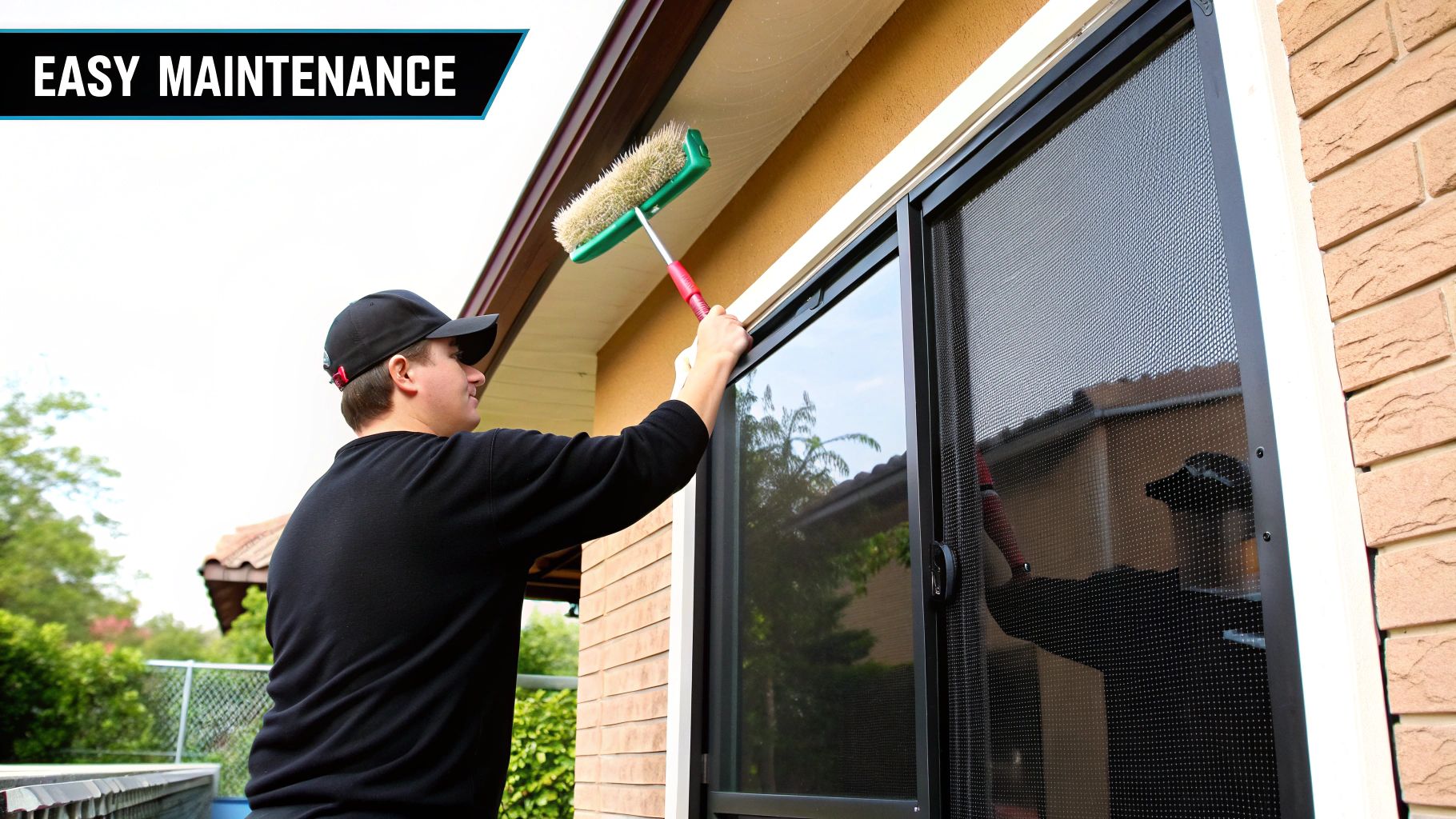
Keeping your security screens windows looking like new is a breeze. A quick, gentle clean every few months is usually all that’s needed to wash away the dust, pollen, and everyday grime that can build up. Forget harsh chemicals—you already have everything you need.
- Grab a soft brush and give the mesh a gentle once-over to knock off any loose dirt or cobwebs.
- Mix a little mild soap into a bucket of warm water.
- Dip a soft sponge or cloth in the soapy water and wipe down the entire screen, including the frame. Steer clear of anything abrasive, like a scouring pad, which could easily scratch the finish.
- Rinse everything thoroughly with clean water. A garden hose on a low-pressure setting works perfectly, or you can just use a fresh bucket and sponge. Getting all the soap off is key.
- Let it air dry, or give it a final wipe with a clean microfiber cloth.
Pro Tip: Live near the coast or in a city with heavy pollution? The salt and grime in the air can be tough on finishes. In that case, it’s a good idea to clean your screens more often, maybe once a month, to prevent any corrosive buildup.
Quick and Easy Inspections
Beyond a simple wash, a quick visual check each season can help you spot any minor issues before they turn into major headaches. This is your five-minute opportunity to make sure every part of your security screen is still doing its job perfectly.
Here's what to look for on your quick inspection tour:
- Check the Fittings: From inside, give the screen a gentle but firm push. It should feel rock-solid, with no rattling or looseness. Make sure all the screws look tight and haven't worked their way loose.
- Test the Hardware: If your screens are on hinges or sliders, open and close them a few times. The motion should feel smooth, not sticky, and the locks should click into place without a fight.
- Look for Corrosion: Take a close look at the corners of the frame and around any screws or fasteners. Watch for any bubbling in the paint or signs of rust, which can be a bigger issue for older screens or those in salty air.
Sticking to this simple maintenance plan ensures your security screens windows remain a reliable, effective, and attractive part of your home’s defense for years to come.
Answering Your Top Questions
It's completely normal to still have a few questions floating around, even after digging into materials and styles. This is a big decision for your home, and doing your homework is just plain smart. Let’s tackle some of the most common questions I hear from homeowners so you can feel confident about your choice.
Are Security Screens Really Intruder-Proof?
This is the big one, isn't it? High-quality security screens, especially the ones made from woven stainless steel, are incredibly tough. They’re built and tested to stand up to a serious, sustained attack—we’re talking high-impact kicks, cutting attempts, you name it.
Now, while no one can promise any system is 100% foolproof, these screens create a barrier that's so difficult and time-consuming to get through that most would-be intruders simply give up. They’ll move on to find a much easier target. The sheer effort just isn't worth it for them.
Will Security Screens Make My House Dark?
This is a persistent myth, but modern screens are designed to avoid that "cave-like" feeling. The best ones use a fine, black powder-coated mesh that's engineered for great visibility looking out.
That non-reflective black finish actually helps your eyes focus past the screen to the view outside, very similar to how a standard flyscreen works. Most people tell me they barely notice any change in natural light, and it’s a tiny trade-off for the peace of mind they get.
Think of it like looking through a good pair of sunglasses. The world doesn't go black; your eyes just adjust, and you see everything clearly. High-quality security mesh has a similar effect, keeping your views crisp and clear.
Can I Get Out Through a Security Screen in an Emergency?
Yes, absolutely. This is a non-negotiable safety feature. Any reputable manufacturer builds emergency escape systems right into their screens, and they're required by building codes for bedrooms.
These systems are designed to be opened quickly and easily from the inside without a key. This guarantees you have a safe way out in case of a fire or other emergency, keeping your family safe and your home compliant.
How Do Screens Compare to Window Bars or Film?
When you stack them up, security screens offer a far more complete solution than older methods like bars or films. They just do more.
- Compared to Window Bars: Screens give you a much cleaner, unobstructed view. Let's be honest, they look a whole lot better, too, so you don't have to sacrifice your home's curb appeal.
- Compared to Security Film: Film is designed to do one thing: make glass harder to break. A security screen protects the entire window opening. The crucial difference? A screen protects you even when your window is wide open for a breeze, which is a time when security film offers zero protection at all.
Ultimately, security screen windows wrap tough security, bug protection, and fresh air into one elegant package that other solutions just can't match.
Ready to upgrade your home’s protection without giving up on style or comfort? Sparkle Tech Screen Service provides expert installation of top-quality security, sun, and bug screens. Get a quick quote and enjoy same-week service. Visit our website or text/call us to secure your home today.


