


If you want that truly professional, streak-free shine on your windows, it's time to ditch the paper towels and the all-purpose spray bottle. The secret isn't elbow grease; it's having the right gear. A proper toolkit, like the ones the pros use, is what stands between you and a flawless finish. It's all about working smarter, not harder, to prevent smudges and scratches from the get-go.
Building Your Window Cleaning Toolkit
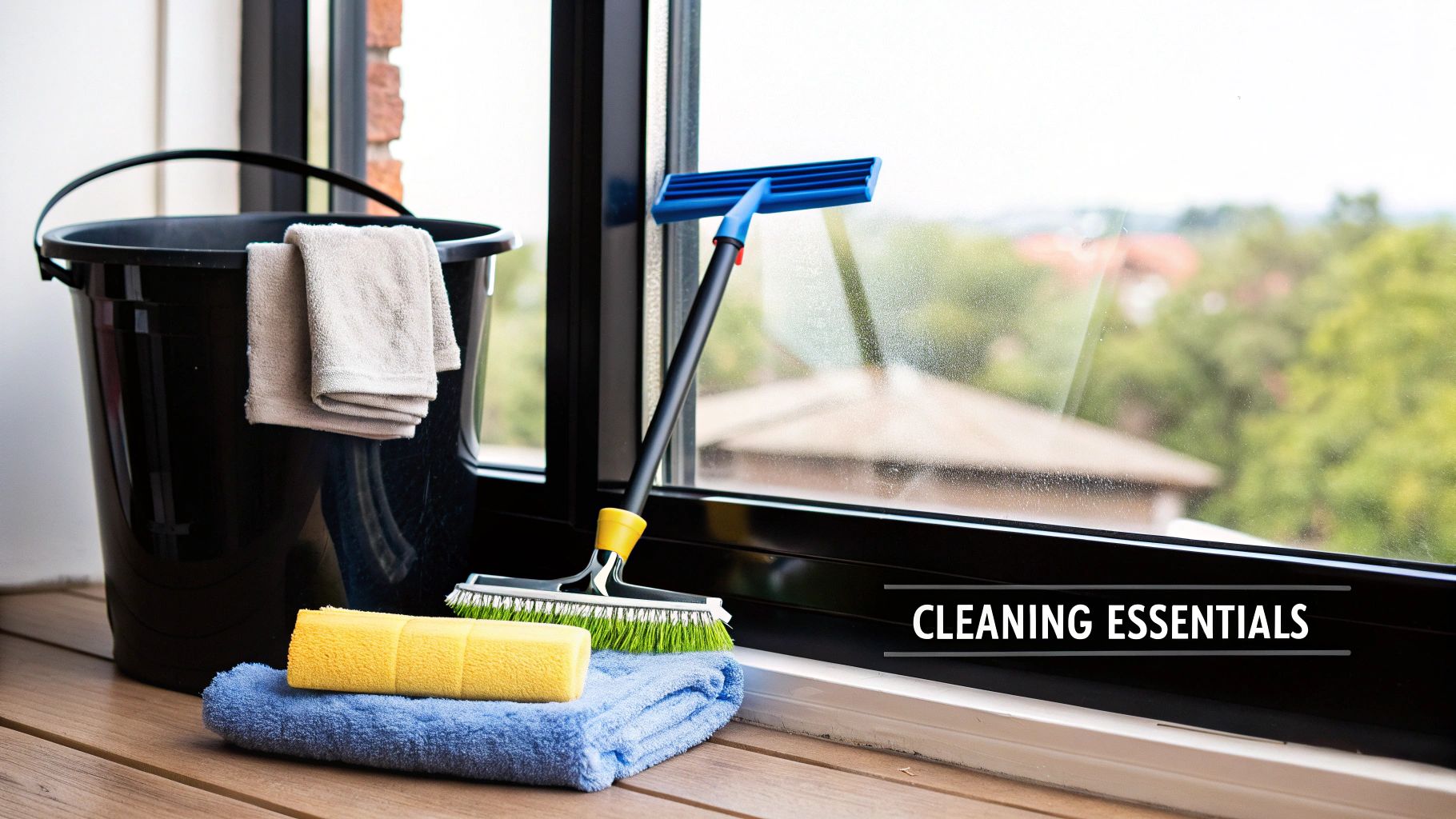
Getting that crystal-clear look is less about aggressive scrubbing and more about having the right equipment ready before you start. Honestly, using the wrong tools just creates more problems. Paper towels leave behind a blizzard of lint, and harsh chemical cleaners can do a number on your window frames and sills. A small investment in a few key items will turn window cleaning from a dreaded chore into a surprisingly satisfying task.
Core Tools for a Flawless Finish
The heart of a great window cleaning kit is actually pretty simple. You don’t need a van full of gadgets—just a few reliable workhorses.
- A High-Quality Squeegee: This is non-negotiable and the most important tool you'll own. Find one with a sharp, replaceable rubber blade. For most homes, a 10- to 12-inch squeegee is the perfect size to handle standard windows efficiently.
- Microfiber Cloths: You'll want at least two. One should be a bit more textured for scrubbing away stubborn spots, and the other a flat-weave, almost surgical-style cloth for detailing the edges and catching any drips.
- A Sturdy Bucket: Go for a rectangular bucket if you can find one. It’s so much easier to dip a wide mop or applicator into than a standard round one.
Here's a tip from experience: a tiny nick in your squeegee's rubber blade is all it takes to leave a frustrating streak down the entire pane of glass. I always run my finger along the blade to check for damage before I even think about putting it on the window.
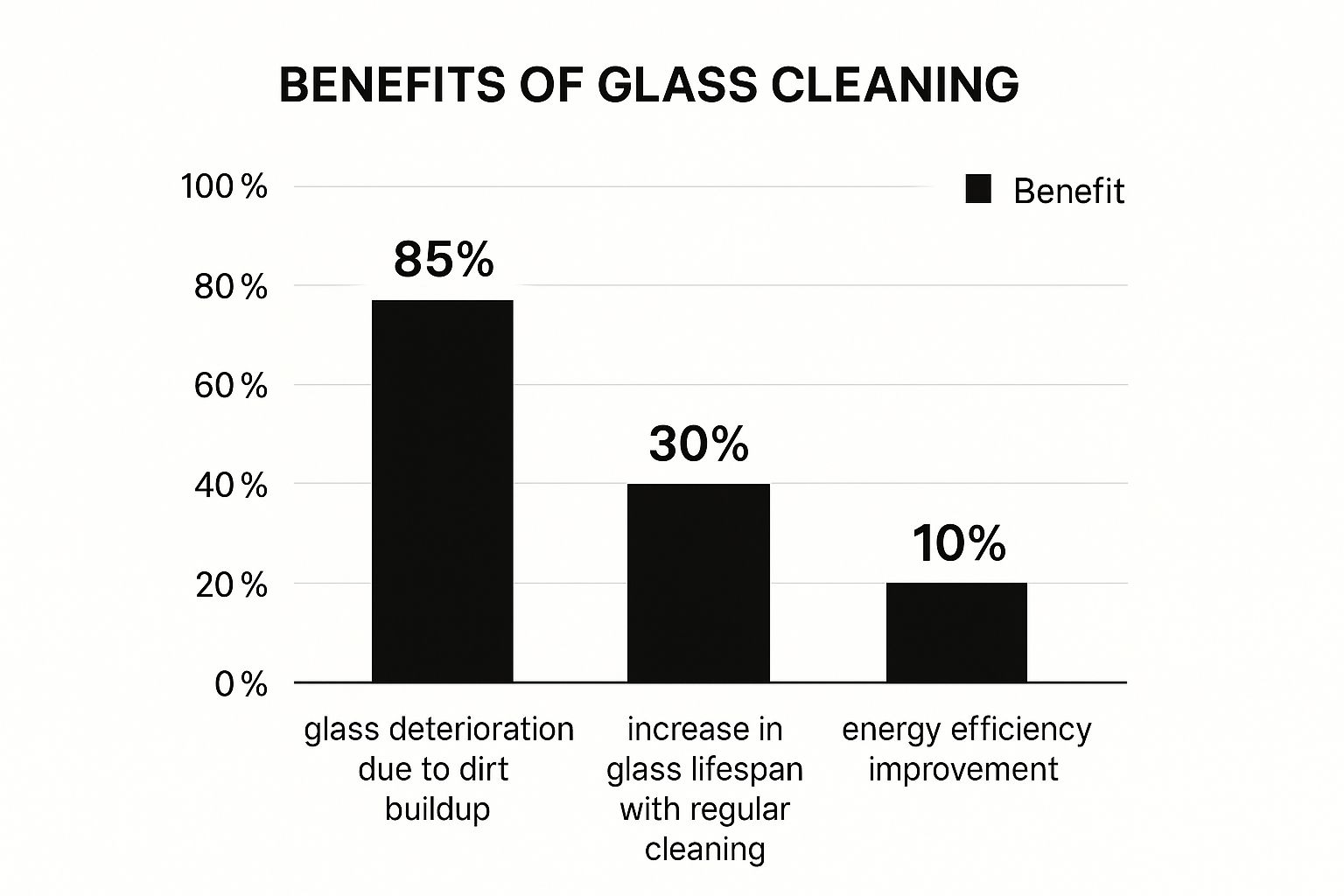
As you can see, keeping your windows clean is more than just about appearances—it's a maintenance task that protects your investment.
Choosing Your Cleaning Solution
You can buy plenty of commercial window washing concentrates, and many work great. But honestly, a simple homemade solution is often just as effective and much cheaper.
My go-to mix? A gallon of warm water with just a few drops of a good quality dish soap (like Dawn). That's it. This creates the perfect amount of "slip" for the squeegee to glide smoothly without leaving behind a sticky film. If you're dealing with extra tough grime or hard water spots, adding about a cup of white vinegar to the mix can really help cut through it.
Essential vs. Professional Window Cleaning Tools
While a basic kit will get the job done, stepping up to professional-grade tools makes the process faster and delivers even better, more consistent results. Here’s a quick breakdown of where you can make some smart upgrades.
| Tool | Basic (Good for Quick Cleans) | Professional (For Best Results) |
|---|---|---|
| Squeegee | All-in-one plastic model. | Stainless steel or brass with a replaceable rubber blade. |
| Applicator | A simple sponge or microfiber cloth. | A "T-bar" applicator with a removable, highly absorbent sleeve. |
| Scraper | A basic plastic scraper for paint spots. | A 6-inch window scraper with a retractable safety cover and sharp blades. |
| Bucket | A standard round household bucket. | A rectangular "bucket-on-a-belt" for easy access and mobility. |
| Solution | DIY soap and water mix. | Professional-grade concentrate for optimal slip and shine. |
Investing in a few of the "Professional" column items, especially a quality squeegee and T-bar, is the fastest way to elevate your window cleaning game.
This focus on simple, effective solutions is a big deal in the cleaning world. The entire global cleaning services market is projected to reach $468.2 billion by 2025, with a huge emphasis on using smarter, more sustainable methods. And while you're getting your glass to sparkle, don't forget about what's framing it. A clean window with a torn screen is an unfinished job. If you think it's time for an upgrade, our guide on the best window screen material can point you in the right direction.
Prepping Your Space for a Mess-Free Clean
The secret to a great window cleaning job isn't just in the squeegee technique—it's in the prep work. What separates a smooth, satisfying clean from a frustrating, messy ordeal is what you do before any water hits the glass. Taking a few minutes to set up your workspace saves you a ton of cleanup time later and makes the whole process more efficient.
Think of it as creating a dedicated work zone. The first, non-negotiable step is to lay down some old towels or a canvas drop cloth at the base of the window. This simple barrier catches all the drips and splashes, protecting your floors, window sills, and furniture. It lets you work without constantly worrying about where the water is going.
Tackle the Dry Debris First
Before you even think about grabbing your cleaning solution, you need to get rid of the loose stuff. Use a soft-bristled brush or a vacuum with a brush attachment to clear away cobwebs, dust, and any loose grit from the window frames, tracks, and sills.
This is a step many people skip, and it's a huge mistake. If you don't, the moment your wet applicator touches the window, all that dry dirt turns into a muddy mess. You end up smearing grime around instead of lifting it off.
A quick pre-clean is the single most effective way to avoid creating more work for yourself. The goal is to remove dirt, not just turn it into mud and move it around the glass.
By getting rid of the loose debris first, your cleaning water stays cleaner for much longer, which is absolutely essential for getting that perfectly clear, streak-free finish.
A Quick but Critical Inspection
One last thing before you start scrubbing. Take a moment to give the window a quick visual inspection. This is a critical safety and maintenance check that can prevent a lot of headaches.
Keep an eye out for:
- Cracked Panes: You never want to apply squeegee pressure to a cracked pane. It can easily make the damage worse.
- Damaged Seals: See any fogging or condensation between the panes of a double-glazed window? That means the seal is broken. Be extra gentle in that area.
- Loose Frames: Give the frame a gentle wiggle to check for any instability that might need attention.
Spotting these issues beforehand lets you clean safely and work around potential problems. This simple prep work ensures your window cleaning project is a success from start to finish.
Mastering the Professional Squeegee Method
If there's one tool that separates the pros from the amateurs, it's the squeegee. This is where the real magic happens. It’s not just about dragging water off the glass; it’s an instrument that, when you get the hang of it, delivers a flawless, streak-free finish every single time. Honestly, the difference between a frustrating, streaky mess and a perfectly clear pane comes down to technique.
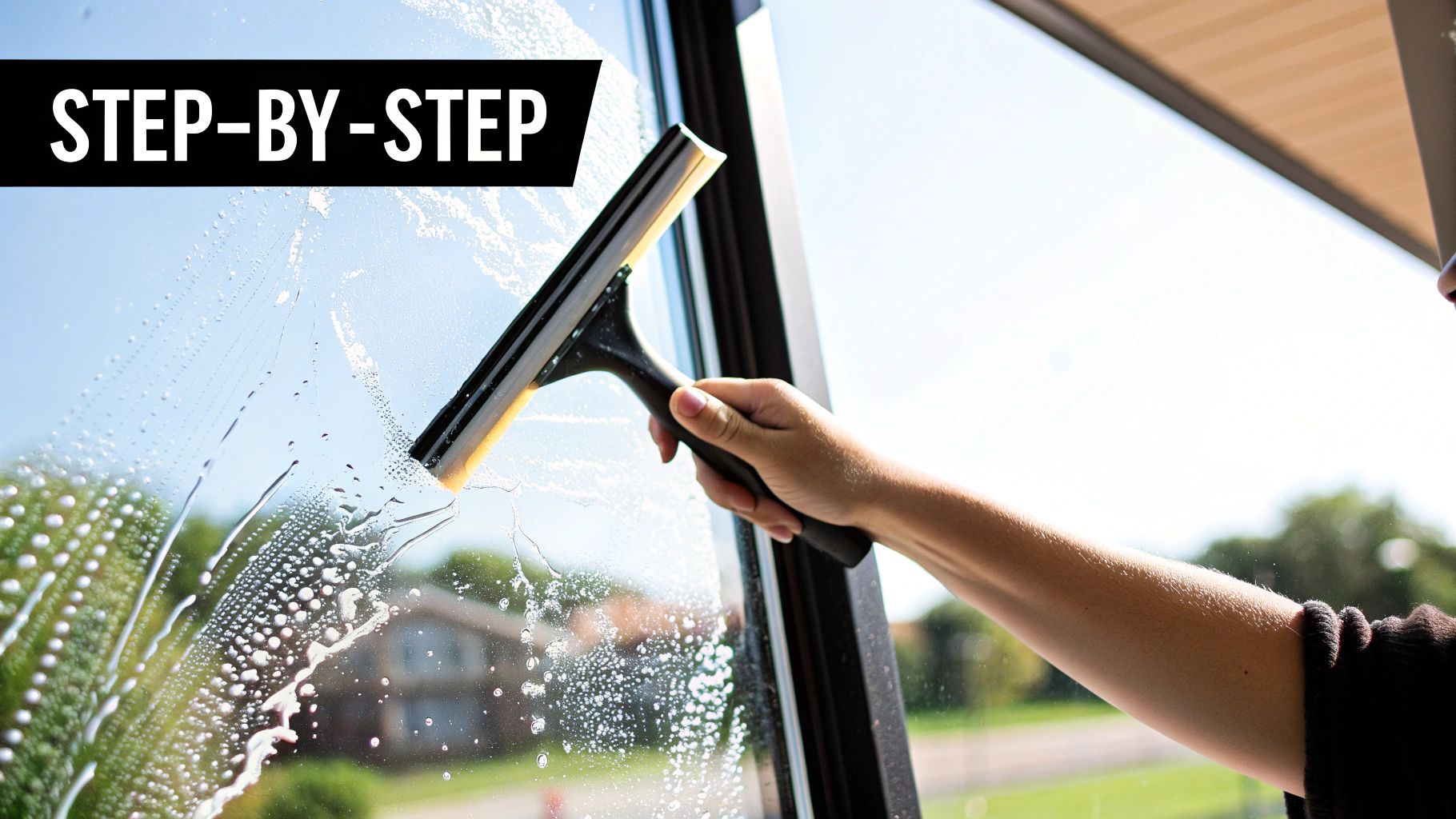
Forget those random, haphazard wipes you see people do. Professionals rely on systematic patterns that control the flow of water and guarantee you don't miss a single spot. This is where you’ll level up your skills, leaving behind the frustration of endlessly re-wiping and chasing streaks.
The Art of the Angle and Pressure
Before you even make that first pull, your setup is everything. You want to hold the squeegee at about a 30-degree angle to the glass. Picture a shallow angle, not a steep one. This lets the edge of the rubber blade slice cleanly through the water, shearing it away instead of just pushing it around.
Applying the right pressure is just as critical. You don’t need a death grip here. All it takes is gentle, even pressure—just enough to keep the entire length of the blade in firm contact with the glass. If you press too lightly, you'll leave water behind. Press too hard, and the blade can skip or chatter, creating those tiny, infuriating streaks.
The goal is for the squeegee to glide, not scrape. A smooth, fluid motion is your sign that the angle and pressure are perfectly balanced, which is the foundation for a great result.
Demystifying the S-Method
For larger panes of glass, the "S-Method" (sometimes called the snake or swivel method) is the gold standard in the industry. It’s a continuous, fluid motion that lets you clean an entire window without ever lifting the squeegee off the glass. Lifting the squeegee is what causes those tell-tale start-and-stop lines.
Here’s how to get started with it:
- Create a Dry Edge: Before you do anything else, take a microfiber cloth and wipe a narrow, one-inch strip down one side of the window. This "dry zone" gives your squeegee a clean place to start without immediately getting snagged on a wet frame.
- Make the First Pass: Place your squeegee in the top corner of that dry zone, angled slightly downward. Pull it straight across the top of the window.
- Start the Swivel: As you get close to the other side, pivot your wrist to turn the squeegee and begin your downward pass. The trick is to overlap your previous stroke by about one to two inches.
- Keep the Pattern Going: Continue this fluid, S-shaped motion all the way down the window. Always make sure each new pass overlaps the last one. This consistent overlap is what prevents lines from forming between your strokes.
This technique definitely takes some practice, so don't get discouraged if it feels awkward at first. A great way to build muscle memory is to practice on a large mirror using just water until the motion feels natural and controlled.
The Pro-Level Finishing Touches
Great technique is crucial, but a few simple habits are what truly separate professional results from merely decent ones. These little details prevent drips and lock in that perfect finish.
- Wipe Your Blade: Make it a non-negotiable habit: after every single pass, wipe the rubber blade clean with a dry microfiber cloth. This removes any gunk and excess water, so you don't drag it back onto the clean glass on your next stroke.
- Detail the Edges: Once the main pane is dry, grab a separate, clean microfiber cloth and carefully wipe the very edges of the glass. This simple step catches any last bits of water that have seeped along the frame and seals, preventing future drips.
By mastering these squeegee techniques, your window cleaning efforts will start yielding consistently impressive results. Your windows will go from a dreaded chore to a source of pride.
Conquering Stubborn Stains and Grime
Let's be honest, sometimes you run into messes that a simple soap-and-squeegee job just can't handle. We're talking about the real-world grime that separates a quick wipe-down from a professional-level clean. From caked-on mineral deposits to mystery sticky stuff, knowing the right approach is what guarantees that perfect, streak-free finish without damaging your glass.
First, a quick reality check. If you notice persistent fogging or condensation between the panes of a double-pane window, stop right there. No amount of cleaning will fix that. It's a clear sign that the window's seal has failed, and you're looking at a professional repair or replacement to get your view and insulation back.
Tackling Hard Water Spots
Ah, hard water stains—the bane of anyone with a sprinkler system nearby. Those chalky, white spots are mineral deposits that have literally bonded to your glass, and they laugh at regular window-cleaning solutions.
- For light staining: A simple 50/50 mix of white vinegar and water can work wonders. Spray it on, let it dwell for a few minutes to give the acid time to dissolve the minerals, then scrub with a non-abrasive pad before squeegeeing it clean.
- For the really tough stuff: It’s time to bring out the secret weapon: #0000 steel wool. That's "four-zero" grade—it's critical you get the right one, as anything coarser will absolutely scratch your glass. Always use it on a wet window. The water acts as a lubricant and helps lift the mineral gunk as you gently rub the area.
Pro Tip: For windows with years of buildup, we often use specialty mineral removers or even mild acidic cleaners. If you go this route, always test it on a tiny, hidden corner first and follow the manufacturer's safety precautions to the letter.
Your Quick-Reference Guide to Window Stains
Every window tells a story, and sometimes that story is written in grime. Here's a handy table to help you diagnose and treat the most common culprits you'll encounter on your glass.
| Stain Type | Cause | Recommended Solution | Caution Level |
|---|---|---|---|
| Hard Water Spots | Sprinklers, rain runoff | Vinegar/water solution; #0000 steel wool (wet) | Medium |
| Paint Specks | Recent painting projects | Plastic razor blade or window scraper (on wet glass) | High |
| Adhesive Residue | Old stickers, tape | Rubbing alcohol or a citrus-based solvent | Low |
| Bird Droppings | Local wildlife | Soak with warm, soapy water before wiping | Low |
| Tree Sap | Overhanging branches | Isopropyl alcohol on a soft cloth | Medium |
This table should help you quickly identify the problem and choose the right tool for the job, saving you time and preventing accidental damage.
Using a Scraper the Right Way
A good window scraper is a lifesaver for removing things like tiny paint specks, bug residue, or the crusty remains of an old decal. But used incorrectly, it's the fastest way to put a permanent, ugly scratch right in your line of sight.
The absolute golden rule is this: only use a scraper on wet glass.
Douse the area with your cleaning solution to create a slippery surface. Hold the scraper at a shallow angle—about 30 degrees is perfect—and push forward in a single, smooth direction. Never, ever drag it backward or use it dry. That's how you trap a piece of grit under the blade and gouge the glass.
It's this kind of detailed, careful work that shows why the professional cleaning industry is booming. Valued at $55.7 billion in 2020, the market is expected to nearly double by 2030. That growth speaks volumes about the demand for expert help with these tricky but common maintenance tasks. You can see more details about the window cleaning industry's expansion on ntpropertycare.com.
Of course, great results depend on having your gear in top shape. Keeping your entire window system maintained is key, which is why we've also put together a guide on essential window screen repair tools.
Crucial Safety Practices for Any Height
Getting those windows to sparkle is the goal, but it should never, ever come at the expense of your safety. It doesn't matter if you're cleaning a ground-floor sliding door or a tricky second-story window—thinking about safety first isn't just a suggestion, it's a requirement. The simple habits you build are what stand between a job well done and an unexpected trip to the ER.
Before you even think about grabbing your squeegee, take a good look around your work area. Is the ground underneath the window level and solid? Are there any stray garden hoses, kids' toys, or wobbly patio stones waiting to trip you up? Clearing your path is the absolute first step to working safely and efficiently.
Working with Ladders Safely
Ladders are fantastic tools, but they demand your full respect. I’ve seen it a hundred times: the biggest mistake people make is using a ladder that’s too short. This almost always leads to dangerous overreaching. Make sure your ladder is tall enough that you can easily reach the window without ever standing on the top two rungs.
When you're setting up a ladder, these aren't just tips; they're rules.
- Solid Footing: Both feet of the ladder must be on firm, level ground. Never, ever set up a ladder on a patch of mud, wet grass, or any other unstable surface.
- The Right Angle: This one is critical. For every four feet of height you're climbing, the base of the ladder should be one foot away from the wall. This 4-to-1 ratio is the key to stability.
- Three Points of Contact: This is the golden rule. When you're climbing up or down, always keep either two hands and one foot, or two feet and one hand, in contact with the ladder.
One of the most common and dangerous temptations is trying to "scoot" the ladder a few inches while you're still on it. Don't do it. It seems like a small shortcut, but it's a leading cause of falls. Climb down, move the ladder properly, and then climb back up.
Smart Alternatives and Essential Gear
Honestly, for a lot of second-story windows, a ladder isn't the best tool for the job. An extension pole is a much smarter and safer alternative. You can find poles that reach 20 feet or more, letting you clean those high windows with both feet planted firmly and safely on the ground.
Don't forget the simple stuff, either. A good pair of slip-resistant shoes can make a world of difference, especially when a little water inevitably splashes on the ground. Protective gloves are also a great idea—they keep your hands clean and give you a better grip on your tools.
This dedication to safety and proper equipment is what separates amateurs from pros. It's no surprise the global window cleaning services market hit $141 billion in 2024 and is expected to climb to $257.27 billion by 2032. Much of that growth comes from the demand for pros who can safely handle multi-story buildings. You can see more data about the growth of window cleaning services on fortunebusinessinsights.com. By thinking like a pro, you can make sure your project is a safe success.
Common Window Cleaning Questions Answered
Even after you've gathered all the right tools, some questions always seem to pop up right when you're in the middle of cleaning your windows. Getting solid answers to these common hang-ups can make the difference between a frustrating chore and a job you can be proud of.
Let's walk through some of the questions I hear all the time from homeowners.
What Is the Best Time of Day to Clean Windows?
It feels like a bright, sunny day would be perfect for spotting dirt, right? Wrong. This is probably the single biggest mistake people make. When direct sunlight hits the glass, it heats up fast and evaporates your cleaning solution almost instantly. That rapid drying is what causes those stubborn, hazy streaks.
The absolute best time to clean windows is on an overcast day. The cooler glass gives you more time to work and squeegee the solution off completely before it has a chance to dry. This is the secret to a flawless, streak-free shine.
No clouds in the forecast? No problem. Just plan to work in the early morning or late afternoon when the sun is low in the sky. The trick is to avoid cleaning panes that are in direct sunlight.
A little pro tip I've picked up over the years: follow the shade around your house. If you're working in the afternoon, start on the east-facing windows. In the morning, tackle the west-facing ones. This keeps the sun at your back instead of baking the glass you're trying to clean.
Why Are My Windows Still Streaky After Cleaning?
Streaks are easily the number one complaint, but they’re usually caused by just a handful of simple, fixable issues. Once you know what to look for, you can eliminate them for good.
Here are the most common culprits:
- Too Much Soap: It’s tempting to think more suds mean more cleaning power, but it's the opposite with windows. Too much soap leaves behind a sticky film that looks streaky. A couple of drops of dish soap in a whole bucket of water is really all you need.
- A Dirty Squeegee Blade: Your squeegee blade picks up grime with every single pass. If you don't wipe it off, you're just dragging that dirt right back across the glass. Keep a clean, dry microfiber cloth in your pocket and give the blade a quick wipe after every pull. It makes a huge difference.
- Working in Direct Sun: We just covered this, but it’s so important it’s worth repeating. Your solution is drying faster than you can squeegee it off, leaving behind soap residue and mineral deposits from the water.
And what about that old trick of using newspaper? While your grandparents might swear by it, modern newspapers are made with different inks and papers that can leave a smudgy mess on your glass and—even worse—on your white vinyl frames. Stick with high-quality microfiber cloths for a clean, lint-free finish every time.
How Often Should I Clean My Windows?
For most homes, cleaning the exterior windows twice a year is a great rule of thumb. The inside glass doesn't face the elements, so you can often get away with doing it once a quarter.
Of course, your situation might be different. If you have pets, small children, or a smoker in the house, you’ll probably want to clean the interior windows more often to keep up with fingerprints, smudges, and film buildup.
Don't forget the screens! There’s nothing more frustrating than cleaning your windows perfectly, only to have the first rain wash a layer of dust from your dirty screens right back onto the sparkling glass. While you have them off, inspect them for any rips or damage. Getting those fixed promptly is key. For more information, you can check out our guide on window screen repair services.
Even with the best advice, some questions always come up. Here are some quick answers to a few more common queries we get.
Quick Answers to Your Window Cleaning Questions
| Question | Quick Answer |
|---|---|
| Can I use vinegar? | Yes, a 50/50 mix of white vinegar and water is a great natural cleaner. Just be careful around window frames, as acid can damage some materials. |
| What's the best way to clean tracks? | Use a vacuum with a crevice tool to get loose debris, then an old toothbrush and your cleaning solution to scrub out the grime. Wipe clean. |
| Do I really need a squeegee? | For the best, streak-free results, absolutely. Paper towels and cloths just can't remove water as evenly or completely as a quality squeegee. |
| How do I remove hard water spots? | For tough mineral deposits, you may need a specialized hard water stain remover or a fine-grade #0000 steel wool (use with caution!). |
Hopefully, these answers clear up any confusion and help you get the best possible results on your next window cleaning day.
For all your screen needs, from minor repairs to full replacements with bug or sun-blocking materials, Sparkle Tech Screen Service offers quick, professional solutions to keep your home looking its best. Visit us at https://sparkletechscreenservice.com for a fast quote.


