



The room usually tells on itself before the homeowner does. The blinds are closed by noon, the couch near the window feels warm to the touch, and someone in the house no longer uses that side of the room in the afternoon. In Arizona, that's not a small annoyance. It changes how the house lives.
A lot of people start by asking for “something to block the sun.” What they really want is the room back. They want to watch TV without glare, stop the AC from chasing heat all day, and keep floors and furniture from taking a beating from constant light. That's where sun screens for windows make sense. Not as a buzzword product, but as a practical exterior fix for a very specific problem.
The End of Sun-Baked Rooms and High Energy Bills
A common Arizona pattern goes like this. The west-facing living room looks great in the morning, then turns into a bright oven by midafternoon. The dog avoids the tile by the slider. The kids move to a different room. The thermostat says one thing, but the room feels hotter than the rest of the house.
That mismatch is what frustrates people most. The AC is running, but comfort still isn't there. The glass keeps taking the hit from direct sun, and the room pays for it with glare, hot surfaces, and a steady heat load that builds every day.
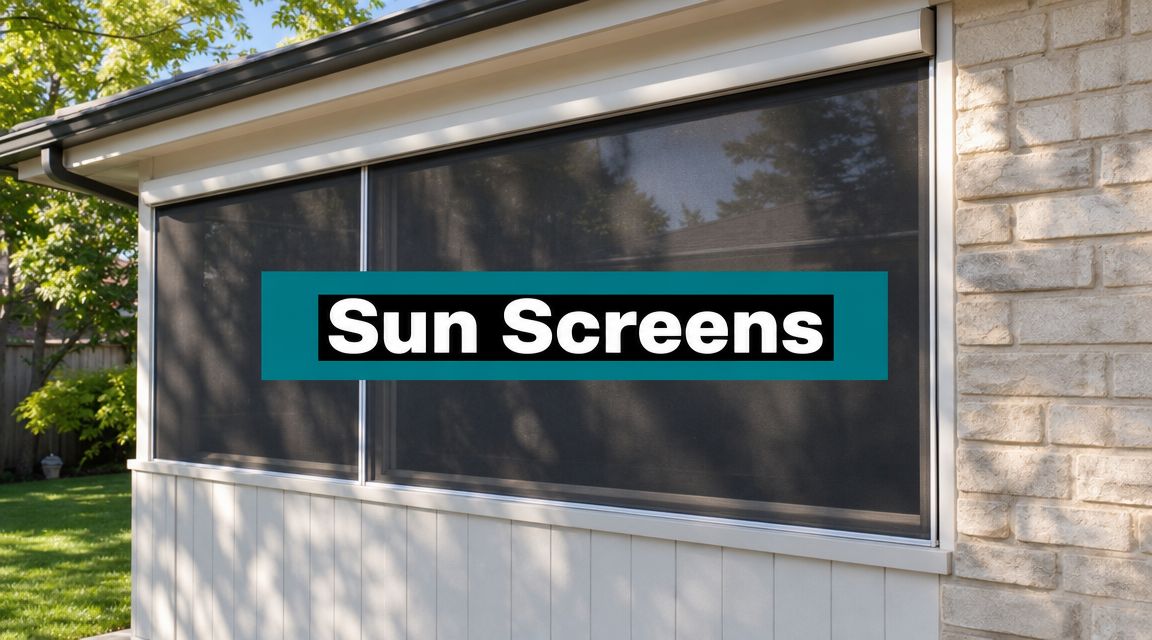
Sun screens fix that problem from the outside. They don't wait for sunlight to come through the glass and then try to manage it indoors. They intercept it before the window becomes a radiant heater. That one difference is why they matter so much in hot, bright climates.
The rooms that benefit first
Some windows are just louder about needing help.
- West-facing family rooms: These usually get the harshest late-day sun and the most complaints.
- South-facing bedrooms: People notice these when the room won't settle down in the evening.
- Sunrooms and sliders: Large glass areas magnify every comfort problem.
- Home offices: Screen glare often becomes the issue before heat does.
If you're dealing with a glass-heavy room, it also helps to look at broader solar shade solutions for a comfortable sunroom. The same comfort logic applies. Control the sunlight before it overwhelms the space.
A room that's too bright and too hot isn't a decorating problem. It's a solar-control problem.
What homeowners usually get wrong
A common belief holds that any screen is better than no screen. That's not quite true. A standard bug screen helps with insects. It isn't built to do the heavy lifting against solar heat and glare. If the goal is comfort, the screen has to be chosen for solar control, not just ventilation.
That's why the details matter. Mesh openness, color, fit, and which windows you target first will decide whether the upgrade feels noticeable or just looks nice from the curb.
How Sun Screens Act Like Sunglasses for Your House
Think of sun screens as sunglasses mounted on the outside of your windows. Good sunglasses don't cool your face by magic. They reduce how much harsh light and energy gets through to your eyes. A sun screen does the same job for glass. It cuts the load before the window starts heating up the room.
That “outside” part is the whole game. Interior blinds and shades can still help with glare and privacy, but they're dealing with sunlight after it has already reached the glass. By then, the window has already absorbed energy and started passing heat inward.

Why exterior placement matters
Independent guidance from the Efficient Window Coverings group reports shading-coefficient values of about 0.14–0.33 for exterior solar screens versus 0.50–0.70 for interior installations, and the lower number means less solar heat gets transmitted indoors, which is why exterior-mounted screens do more for cooling performance (Efficient Window Coverings exterior solar screen guidance).
If that term sounds technical, here's the plain-English version. A lower shading coefficient means less of the sun's heat makes it into the room. For homeowners, that translates into a window that feels less aggressive in the afternoon and a room that stays more usable.
What the screen is really doing
A proper exterior sun screen works in a few simple steps:
- It intercepts direct sun before it hits the glass.
- It reduces glare before the room gets blasted with brightness.
- It lets absorbed heat dissipate outdoors instead of trapping it inside.
That's why I often describe it as putting the shade where it counts most. Hanging a curtain inside is like putting a hat on after you already got sunburned. Better than nothing, but late to the fight.
Practical rule: If your main complaint is heat coming off the window, start outside the glass, not inside the room.
Why Arizona homes notice the difference quickly
In hot climates, sun intensity exposes weak spots fast. The biggest gains usually show up on windows that take direct afternoon or high-angle sun, especially where people spend time close to the glass. You notice it at the couch, the breakfast table, and the tile floor first.
That's why sun screens windows aren't just about appearance. They're a way to change how the room behaves under real sun, not just how the window looks on paper.
Decoding Sun Screen Materials and Mesh Types
When homeowners compare quotes, they usually hear terms like mesh, openness, color, and vinyl-coated fiberglass. Those aren't sales words. They're the parts that decide whether you'll be happy with the screen after the first hot week.
The most useful term to understand is openness factor. That tells you how open or tight the weave is. A tighter weave blocks more sun, heat, and glare, but it also changes the view more. A more open weave keeps the view lighter and brighter, but gives up some solar control.
What openness means in real life
Solar screen openness typically ranges from 1% to 14%, and 5% fabric is often said to block about 95% of UV rays and radiant heat, which is why many homeowners land there as a practical middle ground for view, privacy, and solar control (solar screen openness guide).
That range helps explain the trade-off:
- Lower openness: Better at blocking harsh sun and improving daytime privacy.
- Mid-range openness: Usually the easiest compromise for everyday living.
- Higher openness: Better if preserving natural light and the outdoor view matters more than maximum heat control.
For a lot of Arizona homes, the sweet spot is not “darkest possible.” It's “dense enough where the heat is bad, open enough where you still want to enjoy the view.”
Material and color decisions
Many solar screens use woven, vinyl-coated fiberglass mesh because it's built for outdoor exposure and holds shape well. Material matters, but homeowners usually feel the result through two things first: visibility and heat rejection.
Darker fabrics usually give a clearer outward view. Lighter or more reflective fabrics can push more heat away. Neither is universally right. If you're screening a golf-course view, you might lean darker. If a west window cooks the room every day, stronger solar control may matter more than a crystal-clear view.
Here's a simple comparison homeowners can use when discussing options.
| Openness Factor | Heat & UV Blockage | Outward Visibility | Daytime Privacy | Best For |
|---|---|---|---|---|
| 1% | Maximum protection | Most reduced | Strongest | Harsh exposures where heat control matters most |
| 3% to 5% | Strong protection | Balanced | Strong | Living areas, west-facing rooms, common Arizona installs |
| Higher openness within the typical range | Lighter solar control | Better preserved | More limited | Windows where view and brightness matter more |
If you want a broader primer on mesh choices before you talk to an installer, this guide to types of window screen mesh is a useful reference.
A few trade-offs worth respecting
Choosing mesh is less about “best” and more about matching the window.
- For glare-heavy rooms: Denser mesh usually feels better day to day.
- For view windows: Darker mesh can preserve visibility better than people expect.
- For curb consistency: Some homeowners want every front elevation window to match. That can affect what's practical.
- For budget control: You don't always need every window done the same way.
The right screen should make the room easier to live in. If it solves heat but makes the room feel closed off, the spec missed the mark.
Sun Screens vs Bug Screens and Window Film
These products all sit around the same part of the house, so homeowners often lump them together. They shouldn't. They do different jobs.
A bug screen is built to keep insects out while allowing airflow. A sun screen is built to reduce solar heat and glare. Window film changes the glass itself. That sounds similar from the curb, but the performance and trade-offs are different.
Where bug screens fall short
A standard bug screen is like a T-shirt. It covers the opening, but it isn't built as sun armor. It may soften light a little, but it's not specified around solar control the way a true sun screen is.
If your only issue is mosquitoes, a bug screen is the right tool. If the room gets blasted with sun every afternoon, it isn't.
How film compares
Window film can help with glare and solar control because it works directly on the glass. The trade-off is that it's still a glass-based solution. The heat-management strategy is different from an exterior screen that stops and dissipates solar energy outside.
Film also changes the window permanently until removed. Some homeowners like that clean look. Others prefer a removable, serviceable screen that can be repaired or rescreened later without replacing the whole system.
The practical comparison
Here's a simple way to understand it:
- Bug screen: Best for insects and ventilation.
- Window film: Best when exterior changes aren't practical or desired.
- Sun screen: Best when the main problem is heat and glare hitting the window from outside.
For homes in hot climates, I usually tell people to choose based on the problem they feel. If the room is bright but not hot, one answer may work. If the glass and room are both heating up hard, exterior solar screening is usually the more direct fix.
Installation Repair and Rescreening Your Screens
A good sun screen can underperform if it's installed poorly. That surprises homeowners, but it makes sense. If the frame fit is sloppy, the corners sit wrong, or the screen leaves obvious bypass around the edges, sunlight finds the weakness.
That's why installation isn't just a final step. It's part of the product.

DIY versus professional fitting
Plenty of homeowners can handle simple screen work. If the opening is straightforward and the measurements are clean, DIY may be reasonable. But sun screens are less forgiving than basic bug screens because fit affects performance more directly.
The U.S. Department of Energy explains that effective window coverings can significantly lower energy bills, and some installations can reduce indoor temperatures by as much as 15 degrees by blocking the sun's energy before it heats the window (DOE window covering guidance). That kind of result depends on the screen doing its job at the window, not just existing near it.
What goes wrong most often
The usual issues aren't dramatic. They're small errors that add up.
- Bad measurements: A frame that's slightly off can rattle, bow, or leave light leaks.
- Weak tension: Loose mesh never looks good and won't perform as intended.
- Poor edge coverage: If direct sun sneaks around the screen, the room still takes heat.
- Wrong mesh choice: Even a clean install disappoints if the fabric isn't matched to the exposure.
For homeowners dealing with older frames, a full replacement isn't always necessary. In many cases, rescreening a window screen is enough if the frame is still sound and the mesh is what failed.
Old frames don't automatically mean a full redo. Sometimes the smart move is keeping the frame and replacing the mesh with a better solar fabric.
Cleaning and upkeep
Sun screens don't ask for much, but they do collect dust, pollen, and desert grime. Letting that build up can dull the view and make the screen look older than it is. Gentle cleaning helps preserve appearance and airflow.
If you want a simple homeowner-friendly routine, this walkthrough on how to clean home screens covers the basics well.
A quick visual inspection once in a while goes a long way. Check the spline, look for loose corners, and make sure the mesh hasn't pulled away from stress points.
A short demo helps if you've never watched frame repair or install work up close.
How to Choose the Right Sun Screen for Each Window
Not every window deserves the same screen. Treating the whole house with one mesh choice is easy for quoting, but it isn't always smart for comfort. The better approach is to evaluate each elevation like its own job.
Independent guidance notes that exterior shading is highly situational and depends on window direction, with the strongest impact on high-sun exposures such as south- or west-facing windows in hot climates (window direction and exterior shading guidance).

Start with the problem windows
Walk the house in the late morning and again in the afternoon. The problem windows usually identify themselves fast.
- West-facing windows: These are often the first place to spend money because afternoon sun is brutal.
- South-facing windows: These can take sustained exposure and often benefit from stronger screening.
- East-facing windows: Morning heat may matter less, but glare can still be a deal-breaker in kitchens and bedrooms.
- North-facing windows: These may need little or no solar help depending on the home and lot.
Balance comfort with livability
The right choice depends on what you care about most in that room.
If the room is too hot to use
Choose a denser screen and accept a little more filtering. This is common for family rooms, upstairs bedrooms, and windows with strong western exposure.
If the view matters most
Use a more view-friendly mesh or a darker color that preserves outward clarity better. Good candidates are dining rooms facing a yard, mountain view windows, or spaces that already stay fairly comfortable.
If privacy matters during the day
A tighter or darker screen can help obscure the interior from outside during daylight. That's useful for street-facing windows and homes with close neighbors.
Match the screen to the room's job. A TV room, home office, and front bedroom don't all need the same answer.
A practical window-by-window checklist
Before you request a quote, note these details for each opening:
- Direction of the window
- Time of day the room gets uncomfortable
- Whether glare or heat is the bigger complaint
- How important the outward view is
- Whether daytime privacy matters
That list helps an installer recommend a screen that fits how the room is used, not just what looks uniform on an invoice. It also helps you avoid overspending on windows that don't contribute much to the comfort problem.
Finding a Local Pro and Getting Your Quick Quote
Once you know which windows are causing trouble, the next step is finding someone who understands local sun, local home styles, and the difference between a screen that fits and a screen that performs.
Phifer states that its woven vinyl-coated fiberglass SunScreen can absorb and dissipate up to 70% of the sun's heat and glare before it reaches the window, but it also notes that performance depends on proper installation because air gaps or poor frame coverage can allow sun bypass (Phifer SunScreen product information). That's an installer issue as much as a material issue.
What to look for in a quote
A useful quote should do more than list a price. It should show that the installer is thinking about the actual window conditions.
Look for someone who asks about:
- Window orientation: South and west exposures usually need the closest attention.
- Mesh preference: View, privacy, and heat control should all be part of the conversation.
- Frame condition: Older frames may be candidates for repair or rescreening instead of replacement.
- Access and fit: Deep-set windows, sliders, and odd openings can change the approach.
Local service matters
In Arizona, a local screen pro usually knows the problem before they arrive. They've seen the west-facing bonus room, the sun-baked slider, the front bedroom that glows all afternoon. That shortens the guessing.
One practical option for homeowners comparing services is local solar screen installation near me. Sparkle Tech Screen Service handles new sun screens, bug screens, repairs, rescreening, sliders, and screened patio work, along with same week service and quick quotes in many Arizona service areas.
A good installer shouldn't oversell every opening in the house. They should help you prioritize the windows that drive the discomfort first.
Frequently Asked Questions About Sun Screens
Do sun screens block the view completely
No. They filter the view, not erase it. The exact look depends on mesh openness and color, but many homeowners find that once they're inside the room, their eyes adjust quickly and the comfort improvement matters more than the slight dimming.
Can I still open my windows
Usually, yes. Sun screens are still screens. They're designed around window openings, so normal ventilation use is still part of the point. The details depend on the frame style and window type, especially with sliders or specialty openings.
Are sun screens only worth it in very hot climates
They make the biggest difference where solar exposure and cooling demand are strong. That said, people also choose them for glare reduction, daytime privacy, and protecting interiors from hard sunlight. In Arizona, they're often solving several problems at once.
Do darker screens make the room too dark
Not necessarily. Darker fabrics often preserve outward visibility well, even while reducing glare. The room usually feels calmer rather than cave-like when the mesh is chosen correctly. Problems happen when a screen is specified too aggressively for a window that didn't need that much filtering.
Can old screens be repaired instead of replaced
Often, yes. If the frame is still in good shape, rescreening can be the sensible fix. Bent, weak, or poorly fitting frames may need replacement, but torn or aged mesh alone doesn't always mean starting over.
Are sun screens the same as privacy screens
They can improve daytime privacy, but they aren't a blackout product and they aren't a guaranteed privacy solution at night. Interior lighting changes the effect. If night privacy matters, homeowners often pair solar screening with interior treatments.
Which windows should I do first if I'm on a budget
Start with the rooms you avoid or complain about most. In many Arizona homes, that means west-facing living spaces first, then south-facing bedrooms or big sliders. The goal is to put your money where the sunlight causes the most discomfort.
How do I know if the quote is based on the right screen
Ask direct questions. What mesh openness is being proposed. Why that mesh for that exposure. Will the same material go on every window or only the hot sides of the house. A solid installer should answer those clearly, without hiding behind vague “premium” language.
If you want help figuring out which windows need attention first, Sparkle Tech Screen Service offers quick quotes for new sun screens, repairs, rescreening, sliders, and patio screen work across many Arizona service areas. A short conversation about the hot rooms, window direction, and your priorities on view versus heat control is usually enough to map out the next step.


