


Staring down another triple-digit energy bill? It's a familiar story here in Arizona. The relentless sun is in a constant battle with your air conditioner, but sun blocker window screens are your home's secret weapon.
Think of them as a pair of high-performance sunglasses for your house. They're designed to stop the overwhelming majority of solar heat before it even has a chance to touch your window glass, taking a huge load off your AC unit.
Win the Battle Against Arizona Heat
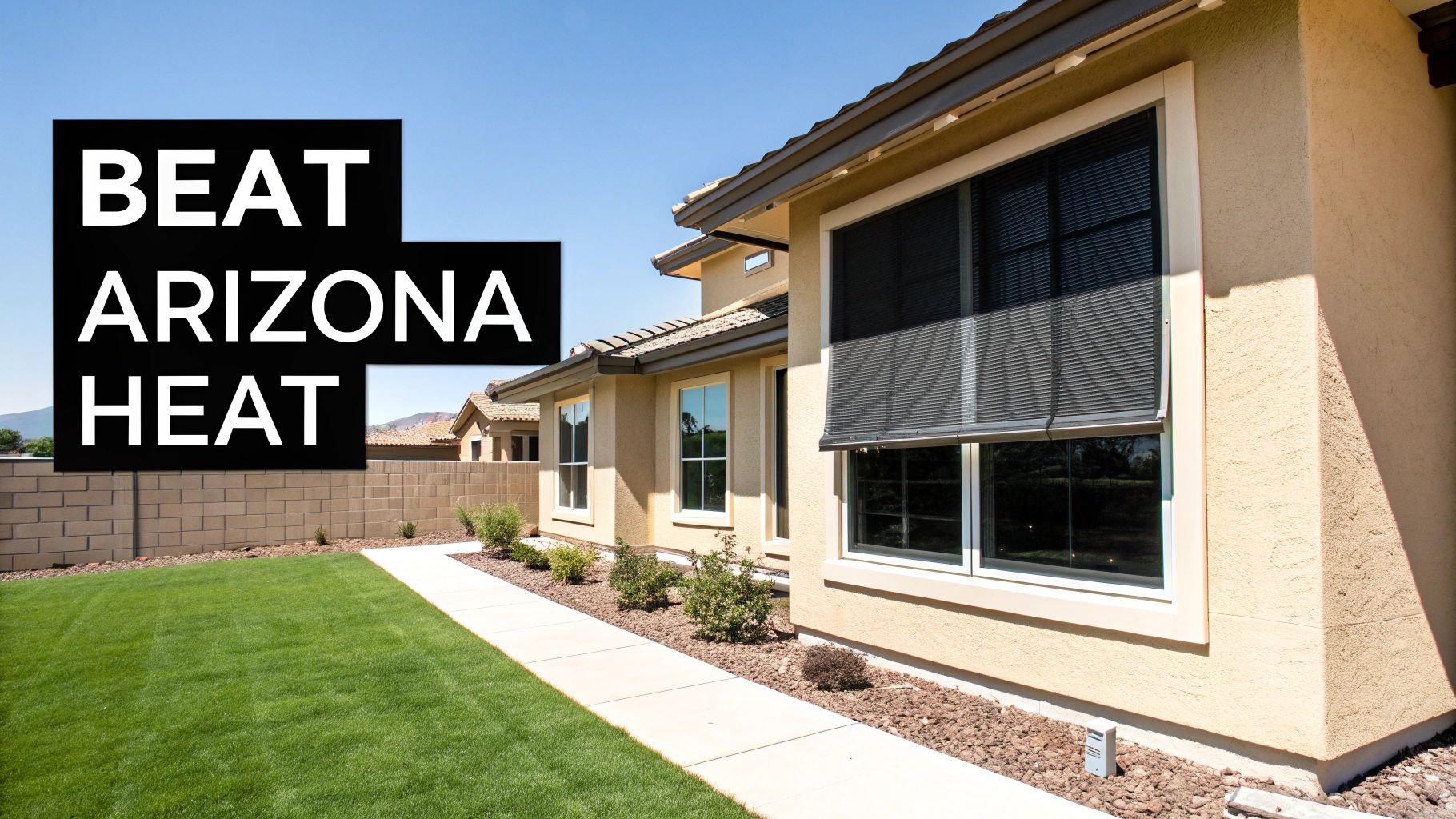
Living in Arizona feels like a constant war with the sun, especially from May through September. Your air conditioner runs non-stop just to keep things bearable, and that fight shows up in a big way on your monthly utility statement.
Many folks think their only options are to tint the windows or live in a cave with the blinds drawn all day, sacrificing natural light for a bit of relief.
But there’s a much smarter, more proactive solution. Sun blocker window screens are installed on the outside of your windows to intercept solar radiation right at the source. This is a key difference from window tint, which is applied inside and still allows heat to warm up the glass. These external screens can absorb and deflect up to 90% of solar heat.
The whole idea is beautifully simple yet incredibly effective: stop the heat before it can warm up your window panes. This single step is the key to reducing solar heat gain, which is the main reason your house gets so hot to begin with.
This approach kicks off a chain reaction of benefits you'll feel right away—both in your home's comfort and in your bank account.
Immediate Benefits You Can Expect
Installing sun blocker window screens is one of the shrewdest moves an Arizona homeowner can make. The payoff isn't just about money; it's about taking back your living space from the oppressive summer heat.
To give you a clearer picture, here's a quick rundown of the immediate advantages.
Quick Look: Key Benefits of Sun Blocker Screens
| Benefit | Impact on Your Home | Typical Result |
|---|---|---|
| Energy Savings | Your AC unit runs less often and for shorter periods. | Lower monthly cooling costs, with the screens often paying for themselves in a few seasons. |
| Indoor Comfort | Eliminates "hot spots" near windows, especially on the west side. | A more stable and pleasant temperature throughout your entire home, all day long. |
| Interior Protection | Blocks the harmful UV rays that cause fading. | Your furniture, floors, and artwork are shielded from sun damage, preserving their color and life. |
| Glare Reduction | Softens harsh sunlight without blocking your view. | You can enjoy natural light without squinting or dealing with blinding glare on screens. |
These benefits work together to create a more comfortable, protected, and cost-effective home environment.
By adding sun blocker screens, you're not just making an upgrade; you're making a strategic investment in your home's efficiency and comfort.
While these screens are a fantastic first step, you can also look into additional strategies to reduce cooling costs to make your home even more efficient. When you combine our screens with other smart energy habits, you can create a cool and affordable oasis from the desert heat.
How These Screens Actually Stop Solar Heat
Ever wondered how a simple screen can dramatically cool down your house? It's not magic, just some really clever science. To get why sun blocker window screens are so effective, you have to understand what they're up against.
Think about a window on a scorching Arizona afternoon. Sunlight streams through the glass, carrying a ton of heat energy with it. Once inside, that energy warms up everything it touches—your floors, your sofa, the air itself. This is what's known as solar heat gain, and it's the number one reason your AC runs nonstop all summer.
Sun blocker screens are your home's first line of defense. They mount on the outside of your windows, intercepting that intense solar energy before it even has a chance to hit the glass.
It's All in the Materials
The real secret is the specialized mesh. This isn't your average flimsy bug screen; it's a dense, heavy-duty material engineered specifically to manage heat.
Most high-quality sun blocker screens are made from either PVC-coated polyester or a sophisticated fiberglass weave. These materials are chosen for their brute strength and their ability to stand up to relentless UV rays without breaking down, fading, or cracking.
Here’s the simple breakdown of how they work to shield your home:
- Absorption: The dark, tightly woven fibers soak up a huge amount of the sun's heat, trapping it within the screen material itself.
- Reflection: The high-tech coating on those fibers acts like a mirror, reflecting a ton of solar radiation right back where it came from.
- Dissipation: That absorbed heat doesn't just sit there. The natural breeze flowing around your home whisks it away from the screen, preventing it from ever reaching your window.
This three-part strategy—absorb, reflect, and dissipate—is the powerhouse combination that keeps your home remarkably cooler.
Think of it like this: a regular window is like standing in direct sunlight, feeling the full intensity of the heat. A sun blocker screen is like stepping under the deep shade of a large tree. The light still comes through, but the overwhelming heat is gone.
Density and Coatings: The Keys to Performance
Not all sun blockers are created equal. Their power comes down to two things: the density of the mesh and the quality of the coating.
Mesh density is usually measured by how much sun it blocks. For example, an 80% screen stops about 80% of the sun’s heat from getting through, while a 90% screen offers even more powerful protection. A tighter weave means less heat passes through. You might think that would make your rooms dark, but modern screens are designed to cut the harsh glare while still giving you a great view outside.
The coating is just as crucial. A premium, UV-stable coating ensures the screen can take a beating from the sun for years without getting brittle or losing its color. That means your investment keeps paying you back in energy savings for a decade or more. And those savings are real—these screens can reject up to 80% of heat gain, a massive help when you consider global cooling costs. The whole market for solutions like solar control films is exploding, especially in hot climates like ours. You can dig into the research on the growth of the solar control film market to see just how big this trend is.
A lot of people ask how these screens stack up against other options. We put together a detailed guide comparing solar screens vs. window tint to help you weigh the pros and cons. By stopping heat at the source, these screens deliver results you can feel—both in your home and on your monthly power bill.
Choosing the Right Screen for Your Needs
Picking the right window screen might seem like a small detail, but it’s one of those decisions that really affects your home's comfort, energy bills, and even how long your furniture lasts. Not all screens are made the same. Choosing one without knowing the differences is like picking car tires based on their looks—you might get something that seems okay but completely fails at its real job.
To make a smart choice, you need to get a handle on what separates the common screen types. Each one is built for a different purpose, striking a unique balance between airflow, visibility, and protection.
This flowchart is a great starting point. It helps you think through your main goal, whether that’s blocking intense heat or just keeping pests out.
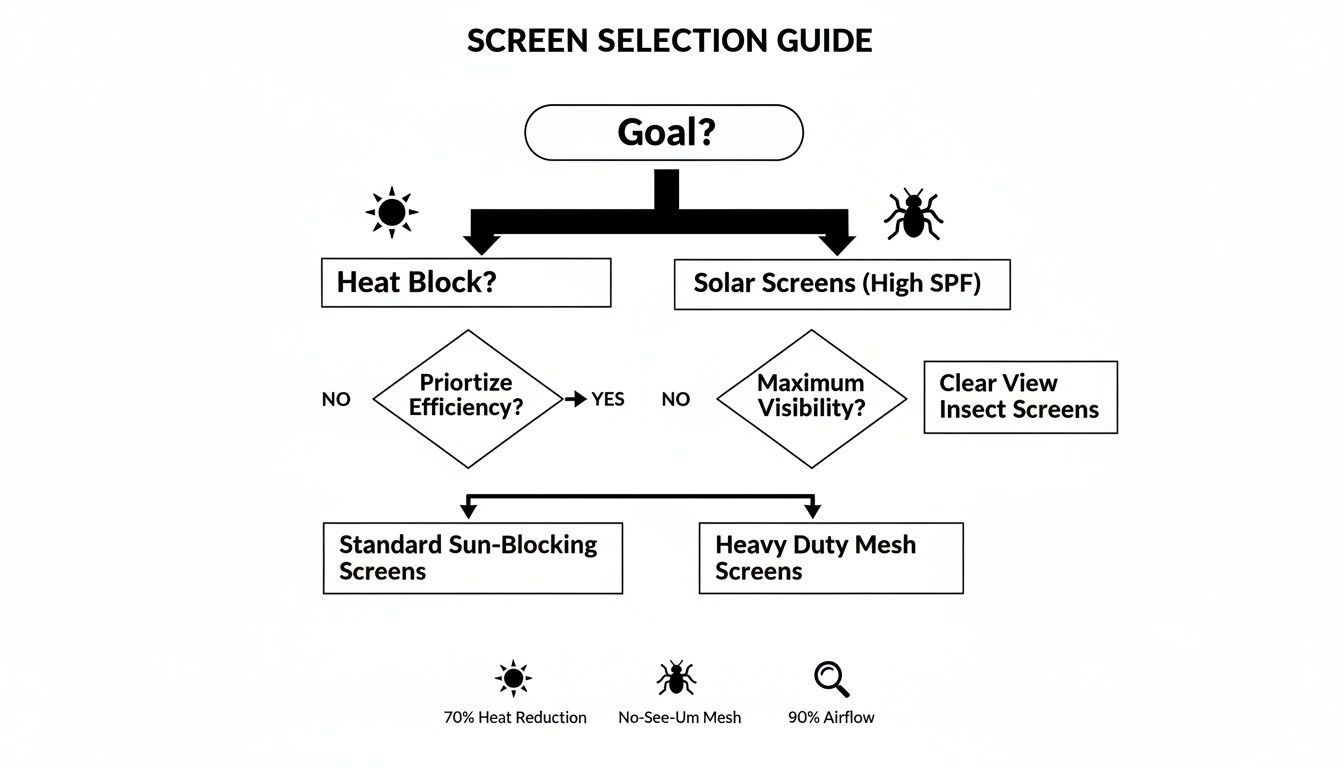
As you can see, the first question is always about your primary need: are you fighting the heat, or are you just trying to stop insects? That one answer points you in the right direction.
Bug Screens: The Basic Barrier
Let's start with the screen most of us are familiar with: the standard bug screen. These are typically made from a lightweight fiberglass mesh, and their one and only job is to keep pests like flies and mosquitoes from getting inside.
Bug screens have a very open weave. That's fantastic for letting the breeze through and giving you a crystal-clear view outside. The major downside? They provide zero protection from the sun's heat. All that thermal energy comes right through the mesh, leaving your windows to get baked by the Arizona sun.
Solar Screens: A Good Middle Ground
Taking a step up from basic bug screens, we have standard solar screens. These are a serious upgrade, designed to block both bugs and a good amount of solar heat. They typically stop between 65% to 80% of the sun's thermal energy from entering your home.
This makes them a solid choice for windows that get morning sun or don't face the harshest afternoon heat. You’ll definitely feel a difference in comfort and see less glare. However, they don't quite offer the knockout punch needed for those west-facing windows that take a beating every single afternoon.
If this sounds like the right level of protection for you, our guide on the best solar screens for windows can help you dig deeper into your options.
Sun Blocker Screens: Maximum Heat Defense
When you need the absolute best performance, especially in a climate like Arizona's, sun blocker window screens are the top-tier solution. These screens are engineered with a much denser, tighter weave designed to stop an incredible 80% to 95% of solar heat before it even touches your glass.
This isn't just a small bump in performance; it’s a total game-changer for your home's comfort and your power bill. By blocking that much heat, your air conditioner gets a much-needed break. It runs less, which can dramatically lower your cooling costs and finally get rid of those sweltering hot spots next to your windows.
The trade-off for this powerful heat rejection is slightly less outward visibility than a wide-open bug screen, but today's high-tech materials do a great job of preserving your view while delivering maximum protection.
To help you see the differences side-by-side, here’s a quick comparison. This table breaks down the key features of each screen type so you can easily see how they stack up against each other.
Screen Comparison: Sun Blocker vs. Solar vs. Standard Bug Screen
| Feature | Sun Blocker Screen (80-95% Blockage) | Standard Solar Screen (65-80% Blockage) | Standard Bug Screen |
|---|---|---|---|
| Primary Goal | Maximum heat & glare reduction | Balanced heat reduction & visibility | Insect protection |
| Heat Blockage | 80% – 95% | 65% – 80% | ~0% |
| UV Protection | Excellent | Very Good | Minimal |
| Daytime Privacy | Excellent | Good | None |
| Outward Visibility | Good | Very Good | Excellent |
| Airflow | Good | Very Good | Excellent |
| Best For | West/south-facing windows, high-heat areas | East/north-facing windows, moderate heat | All windows where heat is not a concern |
As you can see, the right choice really comes down to what you're trying to solve. If your main problem is the blistering afternoon sun, a sun blocker screen is your best bet. If you want a balance of benefits, a standard solar screen might be perfect. And if bugs are your only enemy, a simple bug screen will do.
Thinking Beyond Your Windows: Smart Uses for Sun Screens
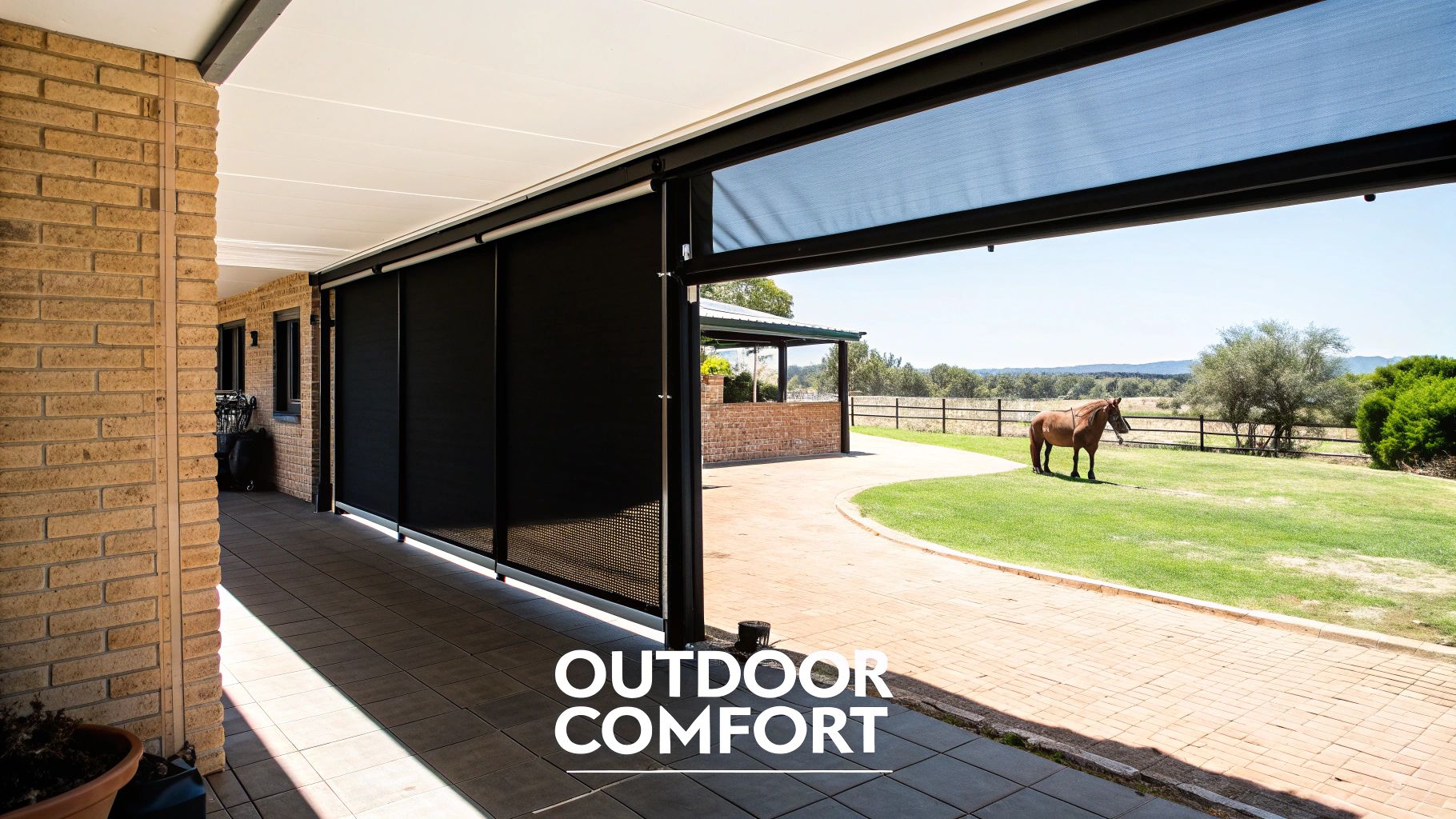
When you hear sun blocker window screens, you naturally think of, well, windows. And you're not wrong! But limiting them to just windows is like buying a top-of-the-line pickup truck and only using it to get groceries. Their real value shines when you start thinking creatively about how they can protect other parts of your property.
Let's look past the living room and see how these screens can be put to work in some seriously practical ways, making your Arizona lifestyle a whole lot more comfortable.
Reclaim Your Patio from the Sun
Here in Arizona, a patio can quickly become a no-go zone for half the year—a sun-scorched slab of concrete where the furniture is too hot to touch. It's a common problem, but one that sun blocker screens solve beautifully.
By enclosing your patio or porch with custom-fit screens, you can create a genuine outdoor room that stays cool and shaded. Suddenly, that forgotten space becomes the perfect spot for:
- Enjoying dinner outside, even when the afternoon sun is still beating down.
- A safe, shaded play area for kids and pets, shielded from harsh UV rays.
- Relaxing or entertaining guests without everyone baking in the heat.
The dense mesh cuts the glare and noticeably drops the temperature, turning a useless area back into a valuable part of your home. You still get the breeze, just without the punishment.
A Must-Have for Horse Stalls and Stables
For those of us in communities like Cave Creek, Waddell, and Queen Creek, keeping animals safe from the heat is non-negotiable. Horses are especially vulnerable to heat stress, which can lead to major health problems. This is where sun blocker screens become a vital tool.
By installing heavy-duty sun blocker screens on stall openings and barn windows, you provide crucial shade and boost airflow, which dramatically lowers the temperature inside. It’s a simple step that goes a long way in preventing heat stress and keeping your animals comfortable and healthy through our brutal summers.
This isn't just about comfort—it's about responsible animal care in a climate that demands it. Plus, the material is tough enough to handle the wear and tear of a stable. As energy costs and temperatures rise, it's no surprise the demand for these screens is exploding. The global market is expected to jump from USD 1.2 billion in 2024 to USD 2.30 billion by 2033, proving their value everywhere from suburban homes to rural stables. You can read more about the growing solar screen market trends.
Don't Forget Your Doors and Entryways
Think about the biggest "windows" in your house: your sliding glass doors. That standard bug screen isn't doing a thing to stop the flood of heat pouring through that huge sheet of glass all day long.
Swapping it out for a sun blocker screen on your slider creates a seamless barrier against heat gain without getting in your way. The same logic applies to security doors. Adding a custom-fit sun screen gives you powerful heat and glare protection without affecting the door's function, keeping your entryway significantly cooler.
Professional Installation and Simple Maintenance Tips
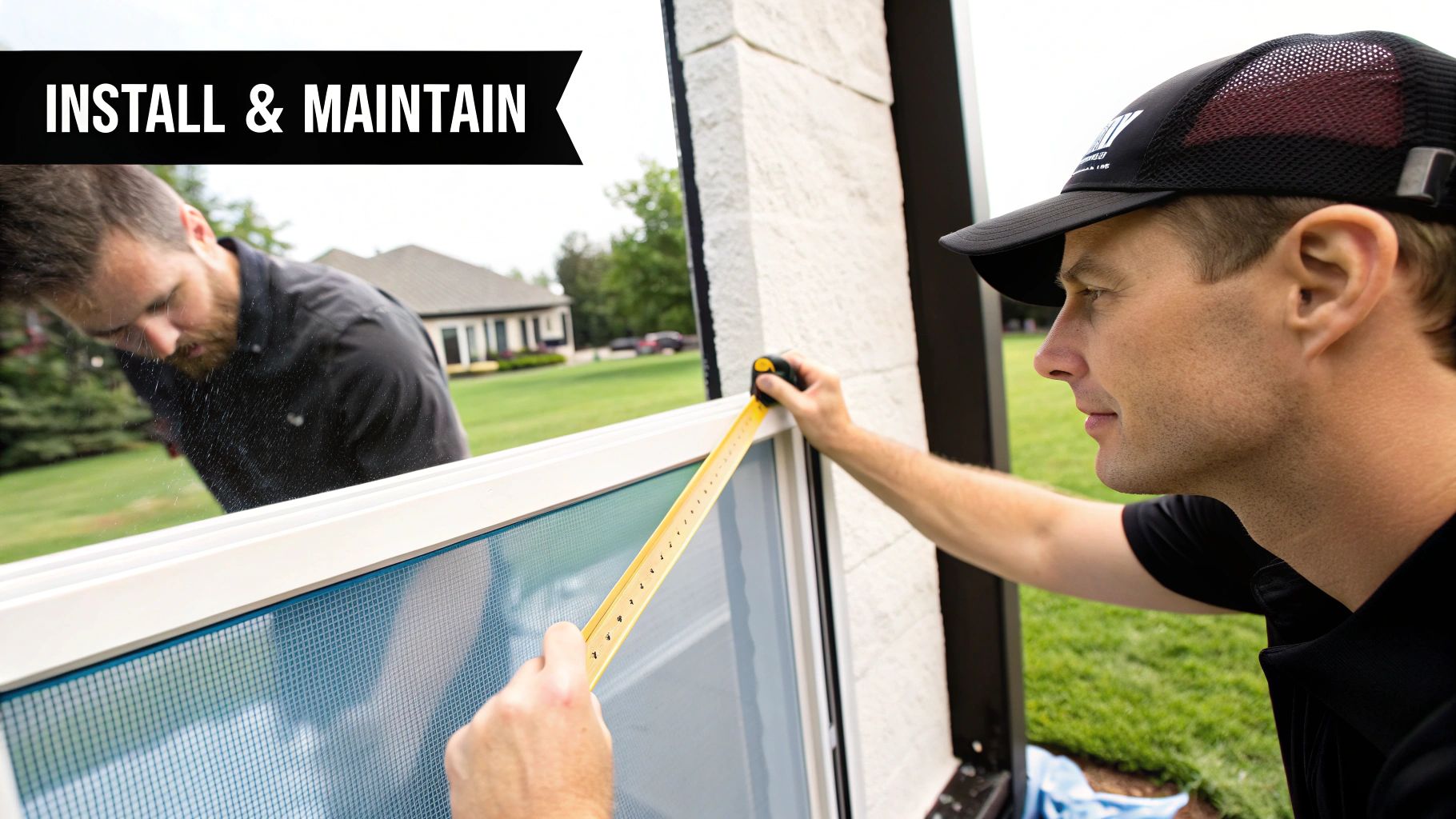
Getting the most out of your new sun blocker window screens really comes down to two things: a perfect installation and some basic upkeep. While it might be tempting to go the DIY route, professional installation is the best way to guarantee you get the performance and durability you’re investing in.
Think of it this way: you could buy a generic, one-size-fits-all suit, but it’s never going to look or feel as good as one that's been custom-tailored. Your screens are no different. A professional ensures every screen is measured with absolute precision and fitted snugly, leaving zero gaps for that intense Arizona heat to creep in.
A perfect fit isn't just for show. It also ensures the screen material is pulled to the right tension, which stops it from sagging and helps it stand strong against our famous monsoon storms and high winds.
The Importance of a Professional Fit
When you have a team like Sparkle Tech Screen Service handle the installation, you're getting experts who focus on the small details that make a huge difference.
Here’s what a professional installation truly delivers:
- Precise Measurements: We measure down to the fraction of an inch. That kind of accuracy is essential for creating a complete thermal barrier.
- Secure Mounting: We use the right hardware to attach your screens firmly, so they won't rattle, flap, or get damaged when the wind picks up.
- Optimal Air Gap: This is a crucial step. A small but critical gap is left between the screen and your window glass, allowing the absorbed heat to dissipate away from your home.
This careful, professional process guarantees your screens start blocking maximum heat from the moment they're installed. It's about getting the job done right the first time.
Keeping Your Screens in Top Shape
The good news is, once your sun blocker window screens are up, taking care of them is a breeze. The materials are designed to resist fading and mildew, so they don’t need much fuss to stay in great shape.
A quick cleaning once or twice a year is usually all it takes. Just use a soft brush or cloth with some mild soap and water to gently wipe away any dust and grime. A light rinse with a garden hose is all you need to finish the job.
Pro Tip: Stay away from power washers and harsh chemical cleaners! They can strip the protective coating right off the mesh, which will reduce the screen's effectiveness and shorten its life. A gentle touch is all that's required.
With a proper installation, high-quality screens can easily last 10 to 15 years, even in our tough climate. That long-term durability makes them a fantastic investment in your home's comfort and energy efficiency. To get a better idea of the numbers, check out our guide on how much solar screens cost.
While cleaning is simple enough for any homeowner, things like re-screening a torn section or fixing a bent frame are jobs best left to the pros. Trying to tackle a complex repair without the right equipment can often make things worse. If you notice any significant damage, give a service a call. A quick professional repair will protect your investment and keep those energy savings coming.
Your Questions About Sun Blocker Screens Answered
When you're thinking about making an investment in your home, it's only natural to have a few questions. For sun blocker window screens, we find most homeowners wonder about the same things: cost, how they look, and how long they'll last. Getting straightforward answers is key to feeling good about your decision.
So, let's dive into the most common questions we get from Arizona homeowners.
How Much Do Sun Blocker Window Screens Typically Cost?
This is always the big question, and the most truthful answer is: it depends. The final price tag is shaped by a few things, like the size of your windows, the specific mesh you go with (an 80% block versus a 90% block, for instance), and the type of frame needed to get that perfect, custom fit.
But it's better to think of this as a long-term savings plan rather than just an upfront cost. The drop you'll see in your monthly cooling bills is so significant that the screens essentially pay for themselves, often in just a few years. For an exact number, a local pro can give you a precise, no-pressure quote based on your home's unique needs.
Will Sun Blocker Screens Make My House Too Dark?
This is probably the biggest myth we have to bust, but the reality is a pleasant surprise. Today's sun blocker screens are designed with a specific goal in mind: cut the harsh, blinding glare while letting plenty of soft, natural light stream into your rooms.
It’s a lot like putting on a great pair of sunglasses. Everything doesn’t go black; it just gets easier on the eyes. The world looks clearer and more comfortable because that painful intensity is gone.
You’ll find your home actually feels more inviting without the heat and squinting that comes with direct sun. These screens nail that perfect balance—you keep your views and bright interior while getting top-notch protection from heat and UV rays. It's all the comfort, with none of the cave-like feeling.
How Long Do Sun Blocker Window Screens Last in the Arizona Climate?
Good-quality sun blocker screens are built for a fight, especially against the intense Arizona sun. They're nothing like those flimsy bug screens that get brittle and crack after just a season or two. These are made to endure.
With a solid professional installation and a little bit of simple care, you can easily expect your screens to last for 10 to 15 years, sometimes even longer. The materials—usually a tough, PVC-coated fabric—are made to resist fading, fraying, and cracking under constant UV bombardment.
And if one gets damaged by an errant baseball or a landscaping mishap? The great news is you don’t have to start from scratch. Rescreening is a quick and affordable fix. We can simply replace the mesh in the existing frame, getting it back to full strength without the cost of a whole new unit. It's a smart way to ensure your investment keeps working for you for years.
Ready to feel the difference and start saving on your energy bills? At Sparkle Tech Screen Service, we provide quick quotes and same-week service for new installations, rescreening, and repairs. Get the expert help you need to cool your home by visiting us at https://sparkletechscreenservice.com today.


