


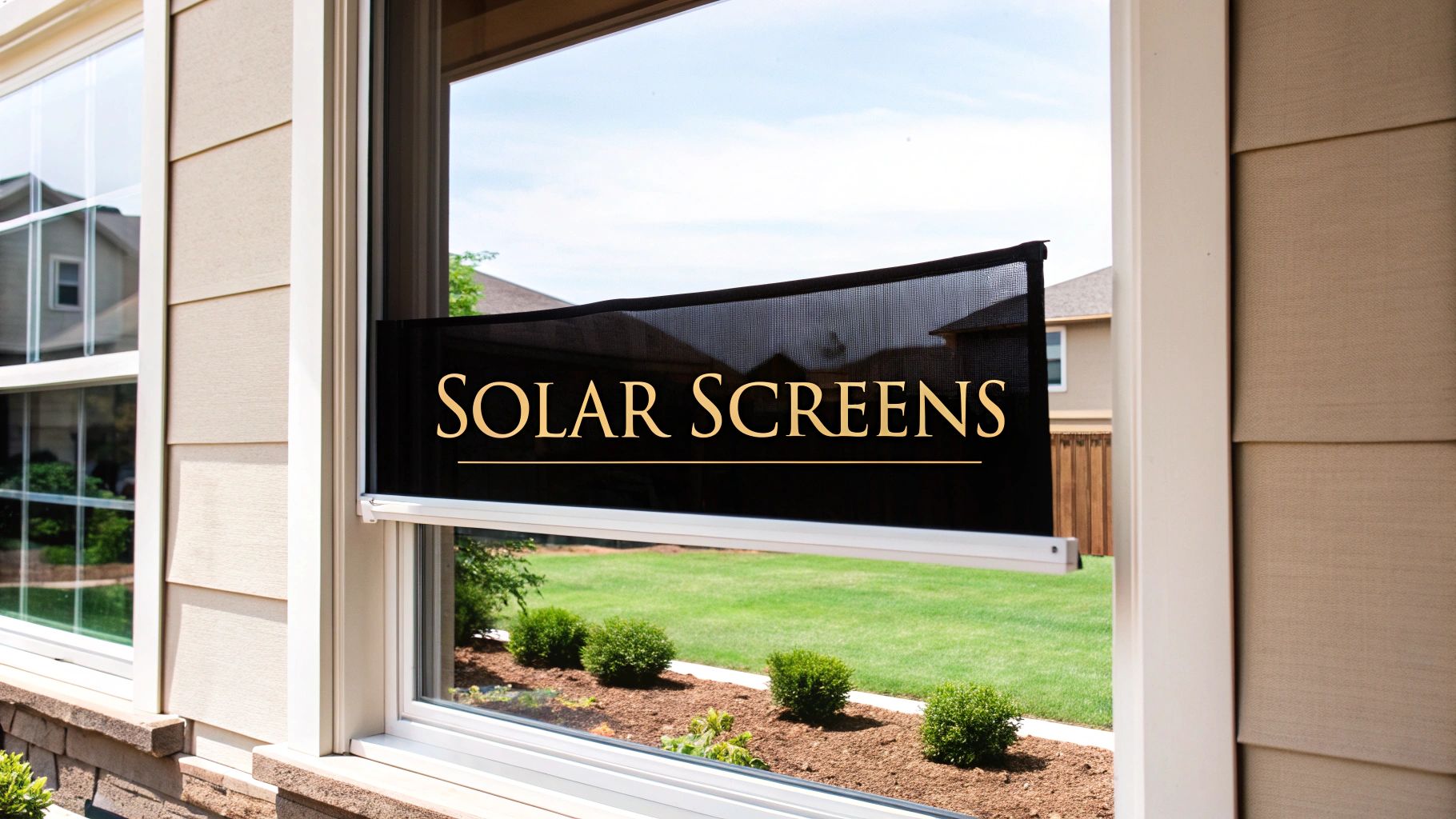

Picture this: it’s the middle of a scorching summer afternoon, but your home feels like a cool, comfortable retreat. And the best part? Your air conditioner isn't screaming for mercy. This isn't just a daydream; it's the reality for homes equipped with solar screens for windows. Think of them as a protective shield against the sun's most intense heat and glare. It's a surprisingly simple upgrade and one of the most effective things you can do for your home's comfort and energy bills.
Your Guide to a Cooler, More Comfortable Home
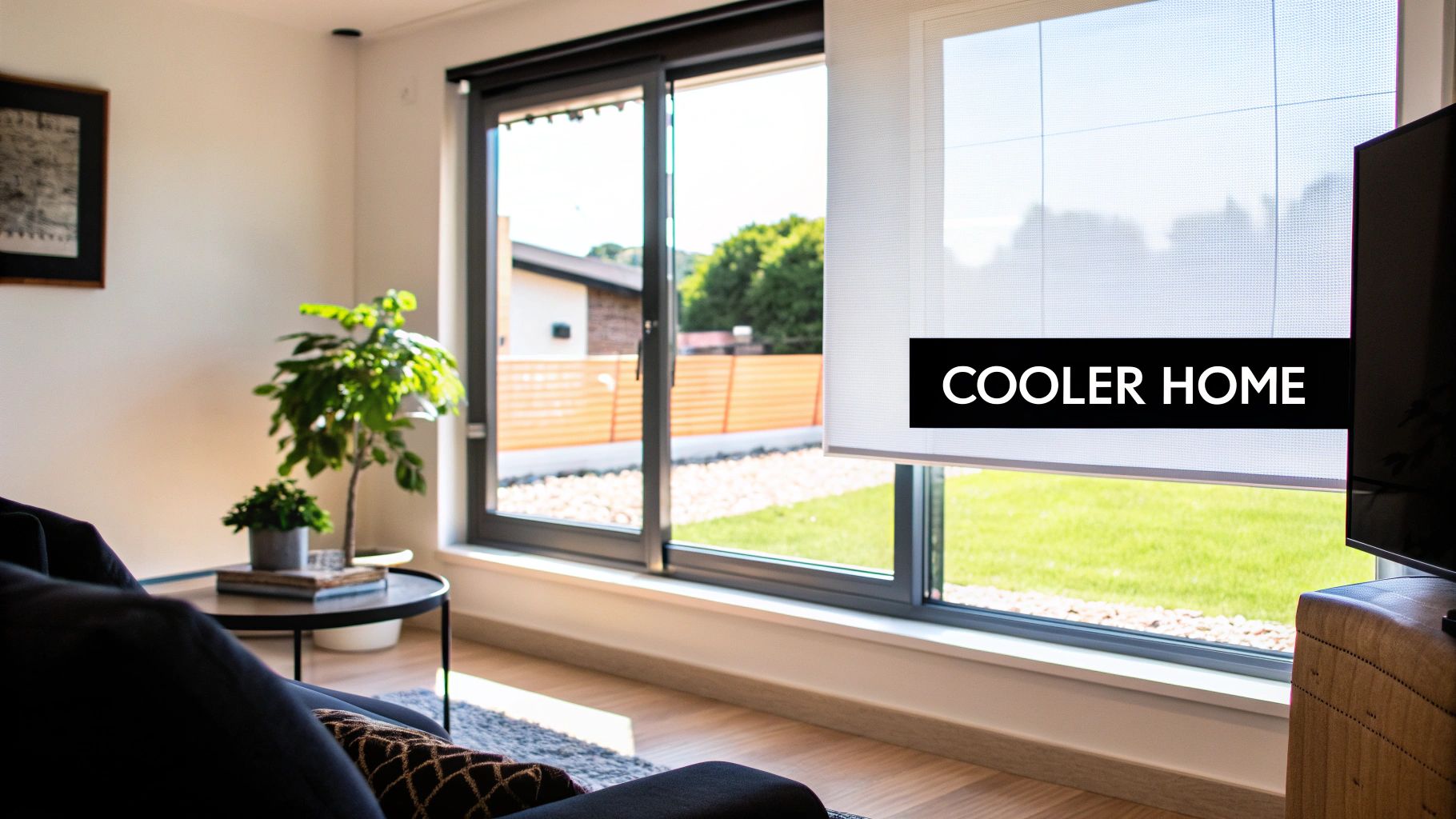
When the sun relentlessly beats down, your windows can act like giant magnifying glasses, pouring heat into your living spaces. This forces your AC unit to work overtime just to keep up. Solar screens offer a brilliant and straightforward solution. I like to call them high-performance sunglasses for your house.
Unlike the flimsy bug screen you’re used to, a solar screen is built differently. It's engineered from a specialized, tightly woven mesh designed with one primary job: to stop the sun’s intense heat before it can even hit the glass.
Key Benefits of Installing Solar Screens
The perks of adding solar screens go well beyond just keeping things cool. By intercepting all that solar radiation, they deliver a whole host of improvements that you'll notice right away.
Here’s what homeowners almost always tell us they love about their new screens:
- Significant Energy Savings: Because you’re blocking a massive chunk of solar heat gain, your HVAC system finally gets a break. That translates directly into lower monthly cooling bills.
- Reduced Glare: That frustrating glare on your TV or computer screen? It's practically gone. You can finally enjoy every room in your house, all day long.
- UV Ray Protection: These screens block up to 95% of harmful UV rays. This is huge for protecting your furniture, rugs, and artwork from fading and sun damage over time.
- Enhanced Daytime Privacy: From the inside, your view is clear. But from the outside, the dark mesh makes it tough for nosy neighbors to see in during the day.
The secret is out, and this technology is catching on fast. The global market for solar control solutions was recently valued at around USD 1.54 billion and is expected to keep climbing, which shows just how much homeowners are prioritizing this kind of upgrade.
The real magic of solar screens is how they provide an immediate, tangible improvement to your home's comfort. They tackle the root cause of the problem—direct sunlight—and turn those uncomfortably bright, hot rooms into cool, inviting spaces.
This focus on efficiency is exactly why they've become so popular. Solar screens are a fantastic starting point for making your home more comfortable. For those looking to go even further, it's worth checking out other Top Energy Efficient Home Upgrades for Savings.
At the end of the day, installing solar screens is a smart investment that pays you back in both comfort and lower energy costs.
How Solar Screens Block Heat Before It Ever Touches Your Window
Think of a solar screen as a shield for your house. Your regular window glass is like an open door for the sun's heat, letting it stream right in and warm up your rooms. This is what we call solar heat gain, and it's the main reason your AC has to work so hard on a hot day.
A solar screen completely changes the game. It stops that intense solar energy before it can even get to the glass. It's not about trapping cool air inside; it’s about preventing the heat from getting in from the outside in the first place.
The One-Two Punch: Absorption and Reflection
So, how does it actually work? The secret is in the specially designed, tightly woven mesh. This isn't just any screen fabric; it's a high-tech material, usually a tough PVC-coated polyester, that does two things at once.
- It Absorbs and Sheds Heat: The dark mesh material soaks up a huge amount of the sun's energy—top-tier screens can absorb up to 95%. But instead of passing that heat into your home, it dissipates it into the surrounding air, where even a slight breeze can carry it away.
- It Reflects Sunlight Away: At the same time, the screen acts a bit like a pair of sunglasses for your house, bouncing a portion of the sunlight away before it has a chance to turn into heat.
It’s a simple but brilliant concept. Imagine standing in the sun and holding a piece of dark cloth a few inches from your skin. The cloth itself gets warm, but your arm stays much cooler. That's exactly what a solar screen is doing for your window glass.
A bare window can let in over 75% of the sun’s heat. Solar screens turn that statistic on its head, blocking the vast majority of that heat right at the source. The difference in how hard your air conditioner has to work is night and day.
Why the Mesh Weave Is So Important
The real magic is in the details of the weave. How tightly the mesh is woven—often called its density or openness factor—is what determines how well the screen performs. This single design choice affects everything from heat blockage to how clearly you can see out.
- Heat Blockage: A tighter weave simply means there's more fabric doing the work of absorbing and reflecting sunlight. The result? Better heat reduction.
- UV Ray Protection: That same dense fabric is fantastic at stopping harmful ultraviolet (UV) rays, which are the culprits behind faded furniture, floors, and artwork.
- Airflow: Even with a tight weave, the mesh is still breathable. You can open your windows and let a breeze come through without sacrificing that crucial solar protection.
There’s also a great side benefit that most people don't think about. The tight mesh acts as an excellent filter for dust, pollen, and other allergens floating in the air. If you've ever had to wipe down your windowsills during pollen season, you'll immediately appreciate how much cleaner things stay. For anyone with allergies, this can make a world of difference.
Choosing the Right Solar Screen Material and Density
When you're looking into solar screens, it's easy to think it's just about picking a color. But the real magic is in the details—specifically, the screen material and its mesh density. These are the two factors that will ultimately determine how well your screens perform, how long they last, and even what your view to the outside looks like. Getting this right is all about finding that perfect sweet spot between performance and aesthetics.
First things first, let's talk about the fabric itself. There are two main players in the solar screen game, and each brings something different to the table.
This diagram shows you exactly how these specialized fabrics get the job done.
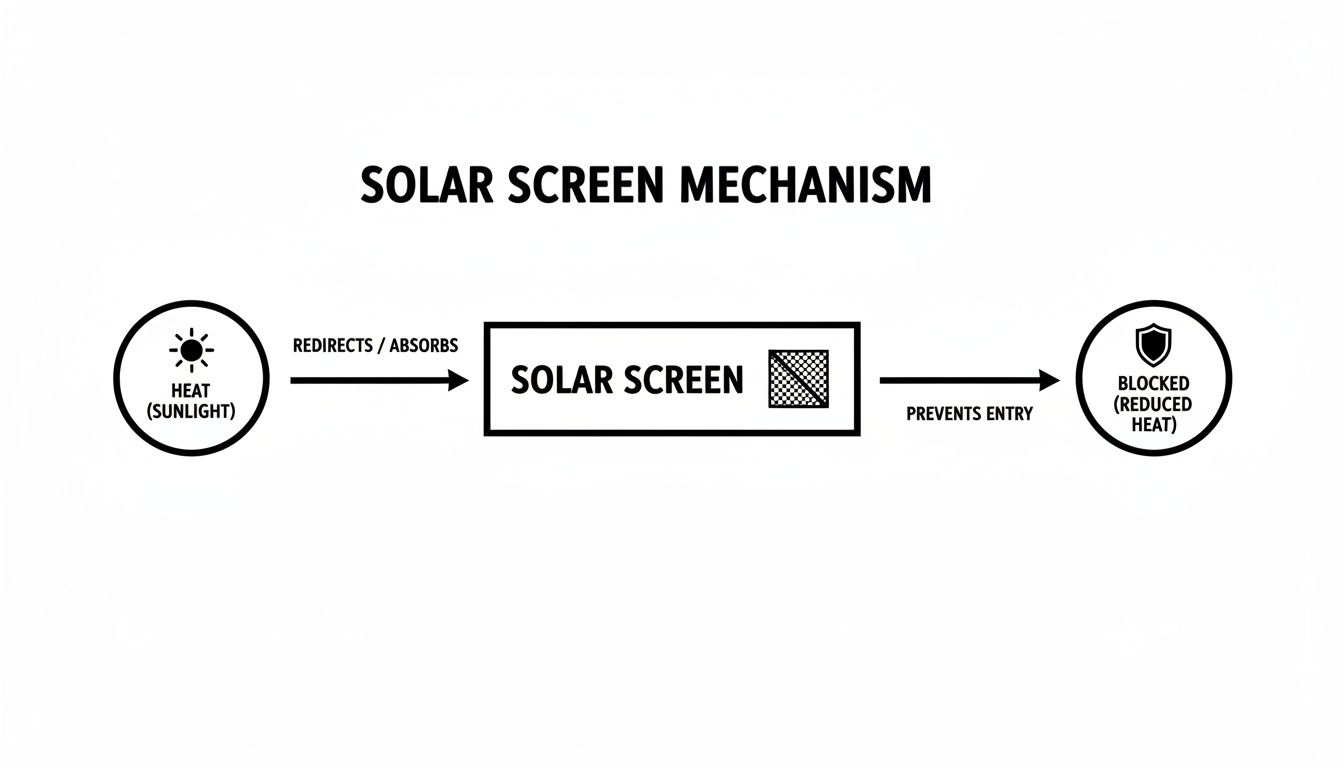
As you can see, the screen creates a defensive barrier, stopping the sun's heat before it ever hits your window glass. That's the secret to keeping your home so much cooler.
Comparing Core Screen Materials
The two workhorses of the industry are PVC-coated polyester and fiberglass. They both work well, but they're built for slightly different priorities.
-
PVC-Coated Polyester: This is the top-of-the-line option for pure strength and durability. It’s incredibly tough and tear-resistant, making it a no-brainer for homes with kids, pets, or windows that face the full force of the weather. It holds its shape and color beautifully for years.
-
Fiberglass: This is a fantastic, budget-friendly alternative that still delivers serious solar protection. While it’s not quite as tough as its polyester counterpart, it offers tremendous value and is a go-to choice for homeowners who want effective heat and glare control without the premium price tag.
If you want to get into the nitty-gritty, our guide on the best window screen material breaks down the pros and cons even further. It's a choice homeowners are making more and more, driving a massive trend. The global market for window films is expected to hit USD 13.45 billion by 2033, and sun control products like these account for almost half of that. It's clear people want solutions that work.
Understanding Mesh Density And Percentage
Okay, so you've picked a material. Now for the most important decision: the mesh density. This is usually shown as a percentage, like 80% or 90%.
Think of this number like SPF for your house. An 80% screen blocks 80% of the sun's heat and UV rays, while a 90% screen blocks 90%. A higher number equals more protection.
Choosing the right density is all about balancing maximum heat blockage with how much of your view you want to keep. There isn’t a single “best” option—it truly comes down to what you need for a specific window in your home.
A lot of people worry that a darker screen will make their rooms feel like a cave. In reality, it's more like putting on a pair of high-quality sunglasses. The screen cuts the harsh glare, which can actually make the view outside seem sharper and more pleasant.
Matching Density To Your Room
Here’s a simple way to figure out what your home needs, room by room.
-
80% Density: This is the crowd-pleaser and a great all-around choice. It blocks 80% of solar heat but keeps the view looking crisp and clear while letting in plenty of soft, natural light. It’s perfect for common areas like living rooms and kitchens where you want an open, airy feel.
-
90% Density: If you’ve got a room that gets absolutely blasted by the afternoon sun, this is your hero. A 90% screen stops a massive amount of heat and glare, making it the top pick for west-facing windows. It's also ideal for bedrooms and home offices where keeping things cool and comfortable is a must.
-
95% Density and Above: For those extreme problem areas—windows with zero shade that get sun all day long—a 95% or even 97% screen is the ultimate solution. This is also the go-to for home theaters or media rooms where you need to kill every last bit of glare on a screen.
Comparing Solar Screen Mesh Options
A side-by-side look at different solar screen densities to help you find the perfect balance between protection and visibility for your home.
| Mesh Density | Heat Blockage | Outward Visibility | Best For |
|---|---|---|---|
| 80% | High | Excellent | Living rooms, kitchens, and areas where maintaining a clear view is key. |
| 90% | Maximum | Good | Bedrooms, home offices, and west-facing windows with intense afternoon sun. |
| 95%+ | Extreme | Fair | Media rooms or windows with severe, all-day sun exposure. |
Ultimately, the best choice depends on what you're trying to achieve for each unique space in your house.
The Solar Screen Installation Process Explained
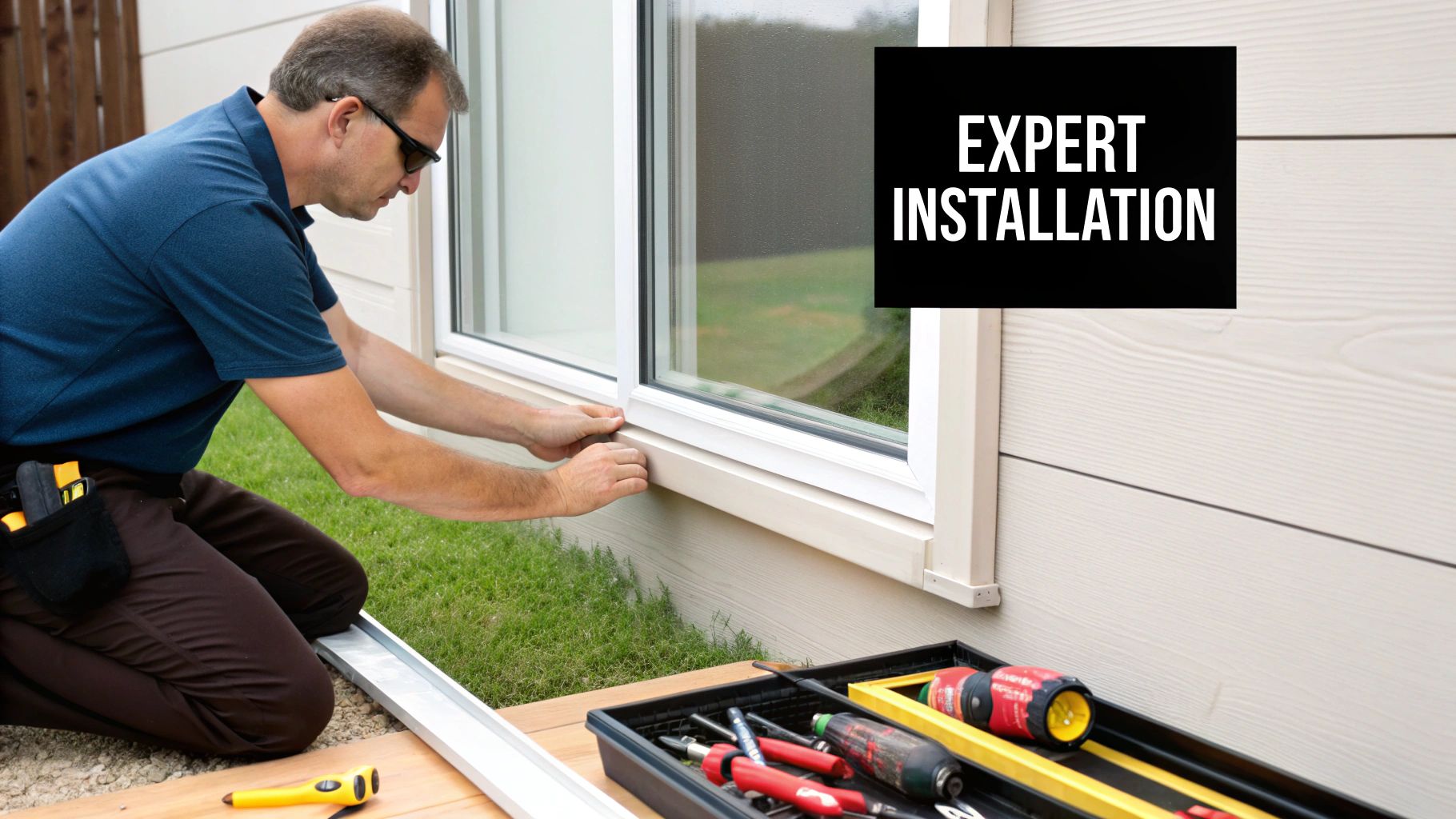
Picking out the perfect solar screens is a great first step, but the real magic happens during the installation. A flawless, custom fit is absolutely essential to get the maximum performance and all the benefits you’re paying for. This is where a skilled technician’s experience really shines, transforming a good product into a fantastic upgrade for your home.
It’s about more than just screwing a frame to your window. A professional installation is a meticulous process that guarantees your screens work perfectly, last for years, and look like they were always meant to be there. Let’s walk through how it's done so you know exactly what to expect.
Step 1: The Consultation And Measurement
It all starts with a conversation. A technician will come to your home, talk through your goals, and take a look at your windows. They'll help you decide on the right mesh and frame colors for different parts of your house—maybe you want more privacy in the front and clearer views in the back. This is the perfect time to get all your questions answered.
Right after that comes the most critical part: getting precise measurements. This isn't a quick job with a tape measure from the hardware store. Pros use specialized tools to capture the exact dimensions of every window, often down to 1/16th of an inch.
This obsession with accuracy is what guarantees a perfect, airtight fit. No gaps, no drafts, no entry points for pesky insects. The final result is a screen that looks like a natural, integrated part of your window, not a clunky add-on.
Step 2: Custom Fabrication
With the measurements in hand, the building process begins. Each screen frame is custom-cut from high-grade aluminum that’s built to last. The corners are mitered for a clean look and locked together with heavy-duty connectors, creating a super-rigid frame that won’t twist or warp over time.
Next, the solar screen mesh is stretched across the frame. This is a real art form. The fabric is pulled perfectly taut, and a flexible vinyl spline is pressed into a groove around the frame's edge.
This splining process is what creates that drum-tight, wrinkle-free finish you see on a professional job. It’s a skill that takes practice and prevents the sagging and looseness that often ruin DIY projects, hurting both looks and performance.
The finished screen is a solid, durable unit, ready to stand up to the weather and deliver years of protection.
Have Good Frames Already? Consider Rescreening
If your existing window screen frames are still in good shape, rescreening is a brilliant and budget-friendly option. Instead of replacing everything, we just upgrade the mesh.
A technician will remove the old, torn, or faded screen material and spline. Then, they’ll install brand-new, high-performance solar mesh using the same expert splining technique. You get all the modern benefits—less heat, no glare, and UV protection—for a fraction of the cost of new frames. It's the perfect way to upgrade from old bug screens to powerful solar screens.
From the first measurement to the final fitting, every step is geared toward a perfect outcome. To see more about what's involved, you can learn about our professional solar screen installation and how our experts ensure a flawless result. After all, a great installation is what makes sure your investment pays off for years to come.
Simple Care for Long-Lasting Solar Screens
Your new solar screens are built tough. They're a fantastic, low-maintenance investment designed to give you years of comfort and lower energy bills. With just a little bit of simple, routine care, you can keep them looking great and working perfectly.
A quick cleaning now and then is all it takes to prevent grime, dust, pollen, and bird droppings from building up. This not only keeps them looking sharp but ensures you're getting the maximum performance and lifespan out of your investment.
Your Simple Cleaning Routine
The best way to clean your solar screens is also the easiest. You don't need any fancy equipment—just a bucket of lukewarm water with a bit of mild soap, like your everyday dish soap. Grab a soft-bristled brush or a sponge and gently scrub the screen mesh.
Always start at the top and work your way down to wash away all the built-up dirt. After a gentle scrub, give them a good rinse with a garden hose on a low-pressure setting. Let them air dry completely, and you're good to go. For a more detailed guide, check out our post on how to clean window screens.
One word of caution: never use a power washer on your solar screens. The high-pressure blast can easily stretch or tear the mesh, permanently damaging the material and likely voiding your warranty. Stick to gentle methods.
What to Avoid During Maintenance
Knowing what not to do is just as important as knowing what to do. Using the wrong tools or cleaners can cause irreversible damage to the specialized fabric.
Here are a few things to steer clear of:
- Harsh Chemicals: Avoid abrasive cleaners, solvents, or anything with bleach. These aggressive chemicals can strip the screen's protective UV coating and weaken the fibers.
- Stiff Brushes: Hard bristles can snag, fray, or tear the delicate weave of the mesh. A soft brush or sponge is always the right tool for the job.
- Seasonal Checks: It's a great habit to give your screens a quick once-over a couple of times a year. Look for any small tears, check if the spline is still firmly in place, and make sure the frames aren't bent. Catching small issues early prevents them from turning into bigger headaches later.
Frequently Asked Questions About Solar Screens
Even after seeing all the benefits, it's totally normal to have a few lingering questions. Deciding to add solar screens to your home is an investment, so you want to be sure. To help you feel confident about your choice, we’ve put together answers to the questions we hear most often from homeowners.
Will Solar Screens Make My House Too Dark?
This is probably the number one question we get, and the answer is almost always a pleasant surprise for our customers. The goal of a solar screen isn't to black out your room; it's to cut the harsh, blinding glare. Think of it like putting on a good pair of sunglasses—everything outside actually looks clearer and is much easier on your eyes.
A denser 90% or 95% screen will definitely create a more shaded, cozy feeling inside. But if you're worried about losing too much light, an 80% screen is the perfect middle ground. It blocks a huge amount of heat while still letting plenty of soft, natural light fill the room. Most people find their rooms are more comfortable and usable than ever before without the intense sun beating in.
How Much Can I Actually Save On Energy Bills?
The savings are real, and they can be significant. While the exact number will depend on things like your local climate, how much direct sun you get, and the current state of your windows, most homeowners see their cooling costs drop by 15-30%. Your windows are one of the biggest sources of heat gain, and they can make your A/C work overtime all summer.
By stopping up to 95% of the sun's heat before it even hits the windowpane, solar screens give your air conditioner a much-needed break. Not only does this translate to lower monthly bills, but it can also help your HVAC system last longer since it isn't running constantly just to keep up.
Are Solar Screens Better Than Window Film?
Both are popular ways to deal with the sun, but they tackle the problem from completely different angles. The real difference is where they stop the heat.
Solar screens mount on the outside of your window. This means they block the sun's energy before it ever has a chance to heat up the glass, which is the most effective way to keep your home cool.
Window film, on the other hand, is applied to the inside of the glass. It does reflect some heat, but it has to let that energy pass through the glass first. This makes it a less efficient insulator. For the best performance in heat reduction, durability, and a nice bit of daytime privacy, solar screens are usually the way to go.
Ready to enjoy a cooler home and lower energy bills? Sparkle Tech Screen Service offers same-week service and quick, no-hassle quotes. Get your custom solar screens fast. Contact us today or text us at 623-233-0404 for a same-day pickup quote.


