


A professional screen installation isn't just about getting a display on the wall. It’s a complete service that makes sure your screen looks incredible, works perfectly, and is mounted so securely you never have to worry about it. It's the difference between slapping together a flat-pack bookshelf and having custom cabinetry built—both hold books, but one is designed for precision, safety, and a perfect fit.
What a Professional Screen Installation Really Involves
Let's look past the simple act of hanging a screen. A true professional installation is a detailed, end-to-end service designed to squeeze every ounce of performance out of your display while ensuring it's safe and looks fantastic. Think of it like getting a custom-tailored suit versus grabbing one off the rack; the fit, the finish, and the final look are in a completely different league.
The whole process is way more involved than most people think. It all starts with a thorough site assessment. A technician will come out to evaluate your wall's structure, check for hidden pipes or wiring, and map out the best routes for power and data cables. Getting this first step right is absolutely crucial for a safe, stable setup.
From Hardware to Harmony
Choosing the right mounting hardware is practically a science. An expert installer knows exactly which mounts and anchors to use for your specific wall type—whether it's drywall, plaster, brick, or concrete—and the exact weight of your screen. Using the wrong hardware is one of the most common DIY mistakes, and it can lead to a very expensive, very sudden crash.
Once the screen is securely mounted, the focus shifts to creating a clean, polished look. This means expert cable management. Technicians are skilled at hiding wires inside the wall or neatly concealing them in low-profile trunking, so your room's aesthetic isn't ruined by a tangle of cables.
But a proper installation isn't finished until the picture and sound are perfectly dialed in for your specific room. This final calibration step is what unlocks your screen's true potential, delivering the rich colors and crisp audio the manufacturer always intended you to have.
Ultimately, a professional screen installation turns a standalone display into a seamless, integrated part of your space. It’s a smart investment that delivers real value, whether you're building:
- A dream home theater: For that immersive, cinematic experience you can share with family and friends.
- A high-impact digital display: To grab customer attention and make a statement in a business or retail setting.
This is how you get true value from your investment, right from day one.
What to Expect From a Professional Screen Installation
So, what actually happens when you hire a professional for a screen installation? It’s not just about a person showing up with a drill. It’s a well-defined process that turns a potentially messy job into a smooth, predictable experience. Think of it as a clear roadmap, not a chaotic construction site.
The journey always kicks off with a detailed consultation and site survey. A technician will come to your home or office to get the lay of the land. They’re not just glancing at the wall; they’re checking its structural integrity, figuring out if it’s drywall, brick, or concrete, and finding the studs for a rock-solid anchor. This is also the time to plan out power and data access so everything is clean and functional. A solid plan is the foundation of a great installation.
From Blueprint to a Flawless Finish
With the site survey done, the focus turns to grabbing the right tools and materials for your specific job. This is where a pro's experience really makes a difference. They’ll select the exact mounting hardware designed for your screen's weight and your wall type, which takes all the guesswork—and risk of a disaster—out of the equation.
The following visual breaks down the critical prep work that professionals handle before they even start drilling.
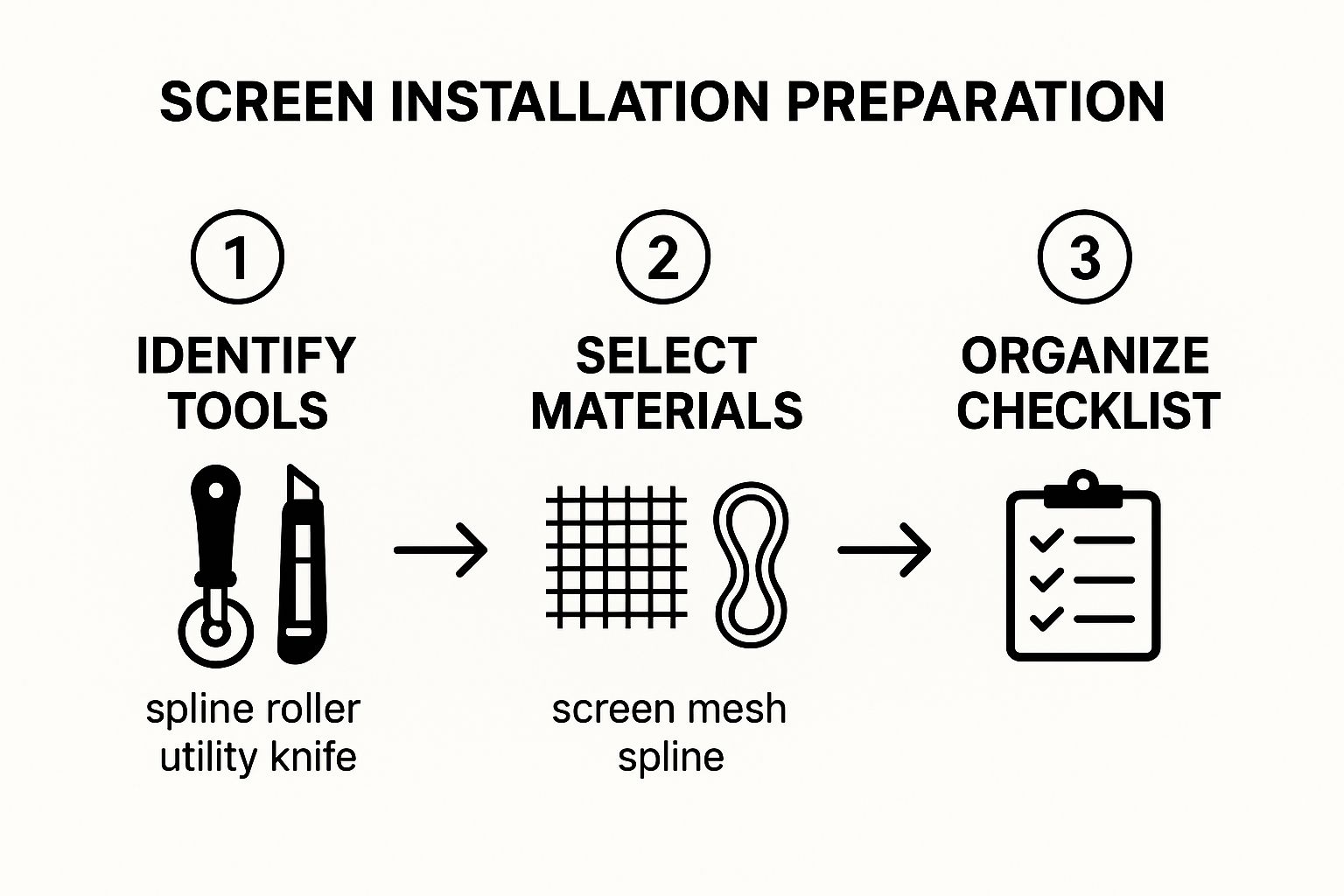
As you can see, a successful outcome is all about preparation, from having the right tools on hand to choosing the best materials for the job.
Next comes the main event: the physical installation. The technician will securely fasten the mount, hang the screen, and then tackle the cable management. Whether the wires are concealed inside the wall or tucked neatly into a conduit, the goal is always a clean, professional look. In fact, a recent study found that 87% of homeowners believe visible cable clutter ruins a room’s look. If you're curious about the nitty-gritty, we cover the technical steps in our guide on how to install screens.
The final step is the handover, and it's a big one. The installer won't just flick the screen on and leave. They'll typically run a basic calibration, double-check all the connections, and give you a quick tour of your new setup. They want to make sure you're completely comfortable and happy with the final result.
This structured approach is what guarantees the safety, performance, and polished aesthetic that a DIY attempt often misses.
Why You Should Leave Screen Installation to the Pros
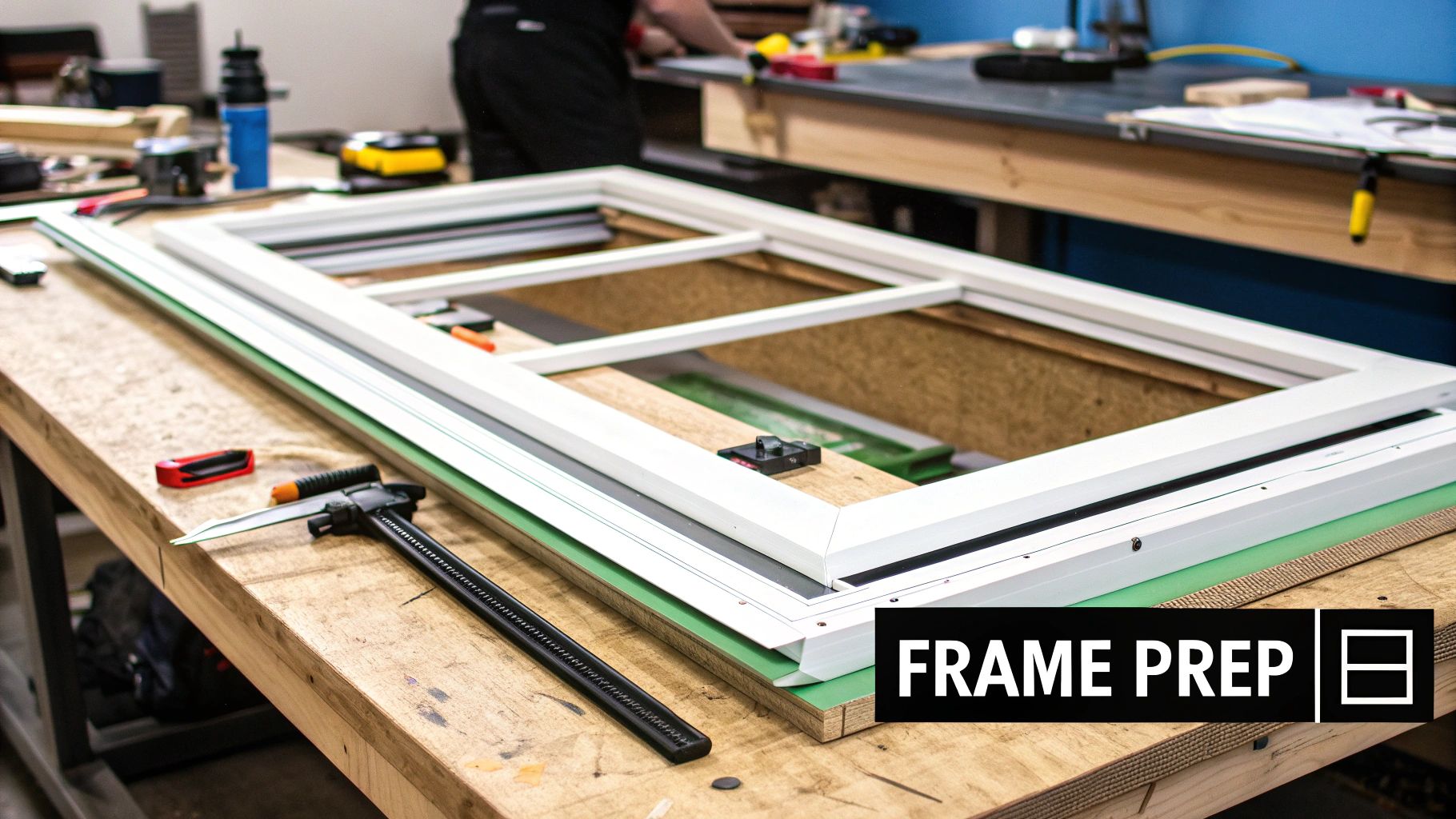
Sure, you could try to mount that new screen yourself. It might seem like a simple way to save a few bucks, but it's often a shortcut that leads to a much bigger headache down the road. Think of it like trying to fix your own plumbing—you might plug the leak, or you could end up with a flooded kitchen.
The truth is, professional installers bring a level of precision and know-how that a weekend DIY project just can't replicate.
It's About More Than Just Hanging It Up
The biggest reason to call in an expert? Safety. Today's screens are bigger, heavier, and more fragile than ever before. A pro knows exactly how to anchor that expensive display securely, ensuring it won't come crashing down. They understand wall types, load-bearing limits, and which hardware is right for the job, giving you genuine peace of mind.
But safety is just the beginning. It's the finer details that really make the difference.
- Peak Performance: A professional calibrates the video and audio settings to match your room's specific acoustics and lighting. This is the secret to unlocking the stunning picture quality and immersive sound you actually paid for.
- A Flawless Look: Nobody likes a tangle of wires ruining the view. Installers are experts at concealing cables, either routing them behind the wall or tucking them away so discreetly you'll forget they're even there. The result is a clean, polished look that elevates the whole space.
A professional screen installation isn't just a service; it's an investment in getting the job done right the first time. It protects your equipment, ensures your safety, and saves you from the frustration of a botched setup.
This has never been more important. With the average person now spending nearly seven hours a day in front of a screen, our displays have become the centerpiece of our homes and offices. This trend, highlighted by recent screen time statistics on messente.com, shows just how critical a proper installation is.
At the end of the day, hiring an expert for your screen installation gives you a warrantied, perfectly executed job that avoids hidden costs and future hassles.
Exploring Different Types of Screen Setups
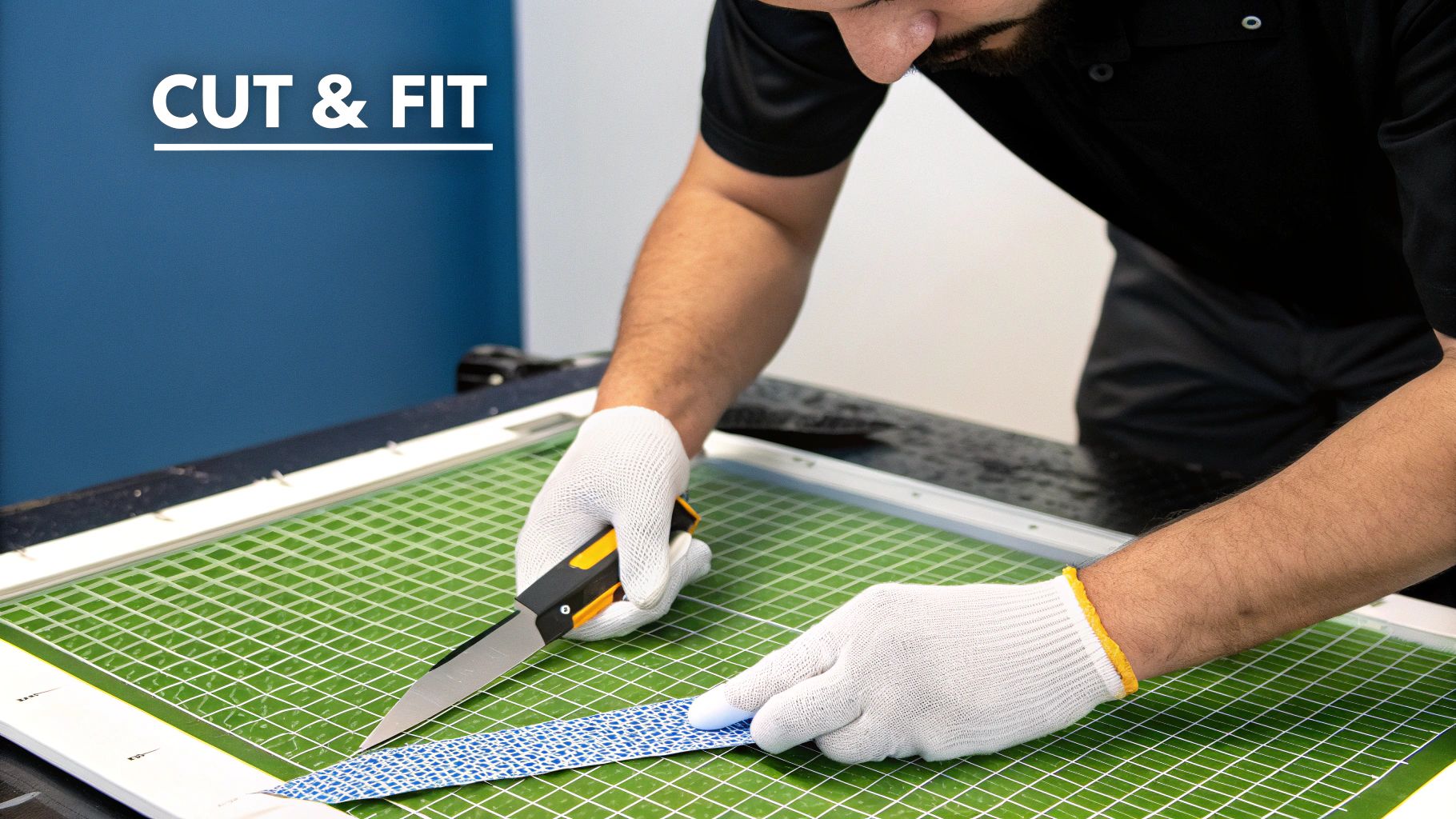
When it comes to professional screen installation, there’s no such thing as a one-size-fits-all solution. Every project is unique. The needs of a cozy home theater are a world away from the demands of a screen in a busy retail store, and understanding those differences is the first step to getting it right.
In a home setting, the goal is usually all about creating a comfortable, immersive experience. That could be a dedicated home theater with a high-end projector, a versatile media room for the whole family, or a tough outdoor screen that can handle whatever the weather throws at it. Each one demands careful thought about lighting, sound, and the right gear.
Commercial and Public Applications
Switch over to the commercial world, and the game changes entirely. For a business, a screen is a tool designed to grab attention, deliver a message, and stand up to constant, heavy use. As you can imagine, the technical requirements are much more intense.
These setups can take many forms:
- Retail Digital Signage: Think of those vivid, eye-catching displays in storefronts and down shopping aisles, all designed to market products and pull customers in.
- Corporate Video Walls: These are the massive, multi-screen displays you see in company lobbies or boardrooms, perfect for making a big impression with brand messaging and presentations.
- Interactive Displays: Touchscreens are everywhere now—in museums, schools, and transit hubs—letting people engage directly with information.
Commercial projects, especially in digital signage, are really pushing the envelope for screen technology. These aren't just displays; they're powerful communication platforms that need expert installation to work seamlessly.
The numbers back this up. The global digital signage market is expected to skyrocket to nearly $45.94 billion by 2030. Video walls alone account for over 25% of that figure, a clear sign of how much businesses rely on these large-scale screens. You can dig into more of these trends in these digital signage statistics on aiscreen.io.
Whether for outdoor entertainment or simple window protection, choosing the right material is key. You can explore the different types of window screen materials to see what's best for any project.
How to Budget for Your Screen Installation
Alright, let's talk about the bottom line. Planning for a professional screen installation means getting a handle on what actually goes into the final price. Think of it like building a custom car—the base model is one price, but every upgrade, from the engine to the sound system, adds to the sticker. Screen installation works the same way.
The biggest ticket item is usually the screen itself. The size and weight are huge factors because they dictate the kind of mounting hardware we need. A simple 55-inch TV is one thing, but an 85-inch beast requires much heavier, more expensive brackets to hang securely.
Where you want the screen mounted also makes a big difference. Putting a screen on standard drywall is usually the most straightforward and budget-friendly option. But if we're dealing with a trickier surface like brick, concrete, or the area over a fireplace, that’s a whole different ballgame. It requires specialized tools and more labor, which naturally bumps up the cost.
Beyond the Basics: What Adds to the Bill
Several other details can influence your total budget. Everyone wants that clean, "floating screen" look with no visible wires, but that takes extra work. Concealing cables inside a wall, especially if we have to fish them around insulation or tricky corners, adds time and complexity to the job.
Other common things that can affect the price include:
- Component Integration: Want to hook up a soundbar, a gaming console, or a whole media center? Each component adds to the setup time.
- Mount Type: A basic fixed mount will always be the most affordable option. If you want a full-motion articulating mount that pulls out and swivels, you're looking at a higher cost for both the hardware and the installation.
- Complex Setups: A multi-screen video wall is a far more involved project than a single TV and is priced accordingly.
Knowing what drives the cost helps you look at a quote and understand exactly what you’re paying for. You'll be able to spot if a price seems way too high or suspiciously low.
For a deeper dive into pricing, take a look at our guide on the average window screen installation cost. While it’s for a different type of screen, it gives you a good sense of how labor and materials are calculated. When you understand the factors, you can budget smarter and avoid any nasty surprises when the final bill arrives.
How to Choose the Right Installation Service
So you’ve got a handle on the installation process and what you can expect to spend. Now comes the big part: finding the right crew for the job. Choosing an installer is a lot like picking a general contractor for a home renovation—you need someone with proven experience, the right credentials, and a history of happy clients.
Cutting corners here is a recipe for disaster. Before you even think about price, start with the absolute must-haves: licensing and insurance. A pro will have this ready to show you without you even asking. This is your safety net, protecting you if something unexpected happens on your property. Don't even consider a company that can't provide this.
With the essentials out of the way, it’s time to dig into their actual work. Scour online reviews and, more importantly, ask to see their portfolio. Are their past projects similar to what you have in mind? Look for clear photos and consistent, positive feedback that speaks to their craftsmanship and professionalism.
Asking the Right Questions
The initial consultation is your chance to interview them, not the other way around. This is where you separate the true experts from the rest. Come armed with a few key questions to really get a feel for how they operate.
Here’s what you should be asking to make sure you’re covered:
- Warranties and Guarantees: Get specific. What exactly does their warranty cover? Is it just the screen itself, or does it include the labor? A good installer stands by their work, and the warranty should reflect that.
- Project Timelines: Ask for a realistic start-to-finish timeline. A clear schedule helps you manage your own time and sets a firm expectation for when the work will be completed.
- Post-Installation Support: What happens if you run into an issue a month down the road? Find out what their follow-up support looks like. You want a team that’s available to help long after they’ve packed up their tools.
Hiring a professional isn't just about hanging a screen. It's an investment in a seamless experience and a result that will last for years to come.
Taking the time to properly vet your options will pay off. You’ll end up with a true professional who respects your home, does the job right the first time, and provides real, lasting value.
Got Questions About Screen Installation? We've Got Answers.
It's smart to have questions before starting any project around the house. Here are a few of the things we get asked all the time about getting a screen professionally installed.
How Long Will the Installation Actually Take?
For a straightforward job—say, a single screen on a standard drywall wall—our team is typically in and out in about 1.5 to 3 hours.
Of course, some projects are a bit more involved. If we're mounting on a tricky surface like brick, meticulously hiding wires inside a wall, or setting up a multi-screen video wall, it could take the better part of a day.
Once we do a quick on-site survey, we'll give you a much more precise timeline. That way, you know exactly what to plan for before we even start.
What Happens if I Want to Move the Screen Later?
Life changes, and your setup might need to as well. We get this request a lot! Most professional installers, including us, can absolutely help you move a screen. We'll carefully take down the screen and its mount, patch up the old holes so you'd never know they were there, and reinstall everything securely in its new spot.
Ready for a flawless finish? Trust the experts at Sparkle Tech Screen Service for your next installation. Get your quick quote today!


