


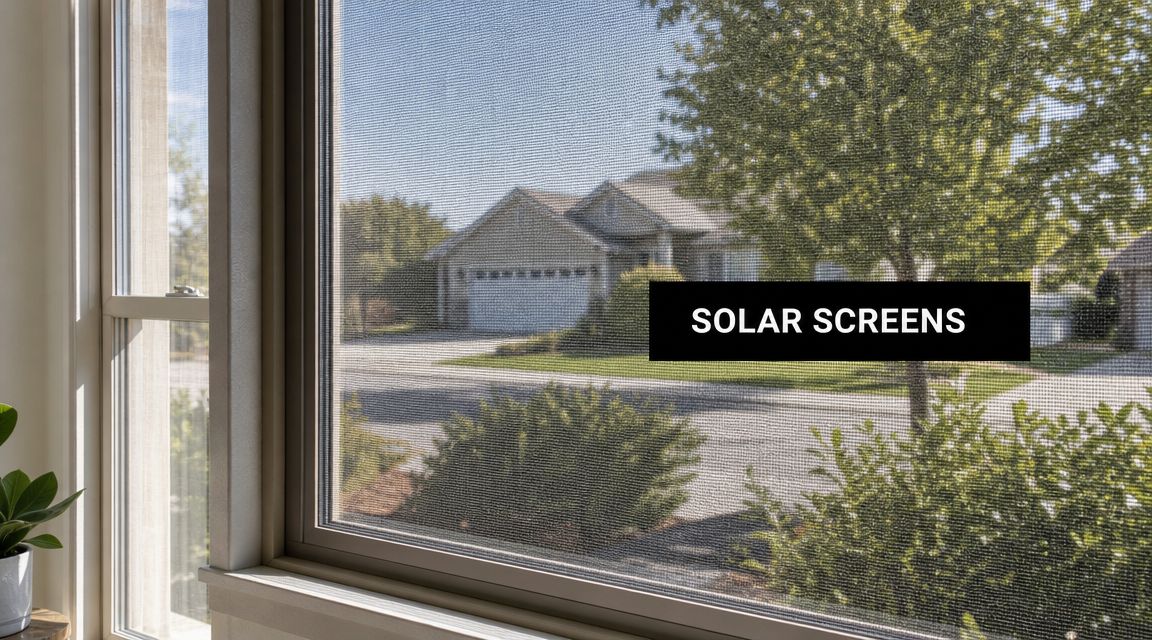

By mid-afternoon in a Phoenix summer, a room with a big west-facing window can turn into the part of the house nobody wants to use. The sofa gets hot, the TV throws glare, and the AC keeps running while that one room still feels behind the rest of the house.
That's usually the point when homeowners start looking at fixes. Some try heavier curtains. Some add interior shades. Some think the only real answer is replacing windows. In a lot of hot-climate homes, solar screens on windows are the more practical move because they deal with the sun before it hits the glass.
They're not magic, and they're not the right fit for every goal. If you want blackout conditions, solar screens won't do that. If you want to cut heat, reduce glare, protect interiors, and make problem windows more livable without replacing the whole window assembly, they're one of the smartest upgrades you can make.
Beat the Heat and High Bills This Summer
If your house gets hammered by afternoon sun, you already know which windows are causing trouble. They're the ones that make a bedroom too bright for a nap, a home office hard to work in, or a living room uncomfortable right when the day is hottest.
In hot markets like Phoenix, Scottsdale, Mesa, Surprise, and Chandler, the pattern is familiar. The glass takes direct sun, the room warms up, and your AC has to chase that heat. At the same time, UV exposure keeps working on flooring, furniture, and anything else that sits near the window.
Solar screens solve that problem from the outside. Instead of waiting until heat is already inside the room, they act as an exterior filter that cuts glare and solar load at the glass.
Practical rule: The hardest-working screen in the house usually goes on the window you avoid using in the late afternoon.
Homeowners usually get the most value when they think about comfort first, not just appearance. Start with the rooms you feel every day. The family room that bakes. The office where the monitor washes out. The bedroom that never quite cools down before sunset.
That's where solar screens tend to earn their keep fastest in real life.
What Are Solar Screens and How Do They Work
A solar screen is a specialized exterior mesh screen designed to reduce solar heat gain, glare, and UV exposure while still allowing usable daylight into the home. It's closer to sunglasses for your windows than it is to a standard bug screen.
A basic insect screen's job is mostly to keep pests out. A solar screen is engineered for sun control. That difference matters because the material, weave, and openness are chosen for light filtering and heat control, not just airflow.

Why exterior mounting matters
The biggest reason solar screens work well in desert climates is where they sit. Exterior solar screens are most effective because they intercept solar radiation before it reaches the glass, and the small air gap between the screen and the window helps absorbed heat move away instead of building up against the glass, as explained in this overview of how exterior solar screens work.
That's the key distinction from interior blinds or shades. Interior products can still help with glare and privacy, but by the time sunlight reaches them, the glass has already absorbed a lot of that heat. With an exterior solar screen, part of the sun's energy is reflected away and part is absorbed by the mesh, then dissipated outdoors.
What they are not
A lot of confusion comes from expecting solar screens to behave like another product.
They're not blackout shades. They're not a replacement for nighttime privacy. They're not the same as tint. And they're not ordinary insect mesh with a darker color.
Here's the simple way to think about them:
- Blackout products are for shutting light out.
- Interior shades are for managing light after it enters the window area.
- Solar screens on windows are for reducing heat and glare before the glass turns that sun into indoor discomfort.
Solar screens are selective filters, not light eliminators.
That's why a room with solar screens still feels bright, but more usable. You keep daylight. You cut the harshness.
Where they make the most difference
Not every window in a house needs the same treatment. In practice, the biggest payoff usually shows up on windows that take hard direct sun, especially the sides of the home that catch strong afternoon exposure.
When a homeowner says, “This one room is always hotter,” there's usually a window-specific reason. Solar screens are one of the few upgrades that directly target that problem without changing the whole house.
The Top 4 Benefits for Your Home and Wallet
A lot of Phoenix homeowners call after they have tried the cheap fixes first. The blinds are closed, the AC is running, and one room still heats up every afternoon. Solar screens earn their keep by solving that daily problem in a way you can feel and measure.

Heat reduction that actually changes how rooms feel
This is usually the main reason people buy them. The payoff is simple. Less solar heat hitting the glass means the room stays more stable through the hottest part of the day, and the AC does not have to fight the same spike as hard.
That matters most on problem windows, not necessarily every window. A west-facing family room, a home office that gets blasted after lunch, or a bedroom that stays warm into the evening usually gives you the fastest return. In real homes, the best result comes from matching the screen material and openness to the exposure instead of choosing the darkest mesh across the whole house. If you want a side-by-side look at options, this guide to window screen material choices helps explain why fiberglass, polyester, and denser solar fabrics do not all perform the same.
UV protection for the things you already paid for
Sun wear is gradual, but the cost is real. Floors fade unevenly. Fabric dries out. Wood finishes lose color on the side of the room that takes direct sun every day.
Homeowners usually notice it too late, after the rug has a bright outline under the coffee table or the chair by the window no longer matches the rest of the set. Solar screens help cut that exposure before it becomes visible damage, which makes them more than a comfort upgrade.
Glare control without shutting the room down
Glare is not just an annoyance. It changes how you use a room.
If you have to angle the TV, close the blinds by noon, or move your laptop away from the window every afternoon, that room is not working as well as it should. A properly selected solar screen softens that hard direct light and keeps the space bright enough to use during the day. You still get daylight. You just lose a lot of the squinting and screen reflection that makes the room frustrating.
A quick visual explanation helps here:
Better day-to-day value from one upgrade
Solar screens also make practical sense because they do more than one job. You are improving comfort, helping protect interior finishes, and keeping the basic function of an exterior screen in one product.
Here is where homeowners usually see the value:
- Hot rooms become usable again: Spaces with strong afternoon sun are easier to sit in, work in, and sleep in.
- Furnishings last longer: Flooring, furniture, and décor take less direct sun over time.
- Blinds can stay open more often: You keep more natural light without fighting glare all day.
- The return is tied to daily use: In a hot climate, the benefit shows up in comfort first and utility savings second, which is why the right windows often pay back faster than people expect.
Homeowners rarely call asking for “solar screens.” They call because one side of the house is miserable every summer afternoon, and they want a fix that makes sense financially.
A Guide to Solar Screen Types Materials and Weaves
The right solar screen choice comes down to one question. What problem are you trying to solve on each side of the house?
A west-facing living room that gets hammered in late afternoon usually needs a tighter solar fabric than a shaded bedroom on the north side. Homeowners often expect one screen type to be perfect everywhere, but that approach can leave one room too dark and another still too hot. Good results usually come from matching the mesh to the exposure, the view, and how the room gets used.
What openness factor means in plain English
Openness factor is the amount of open space in the weave. Lower openness means a tighter mesh. That usually gives you stronger sun control, better daytime privacy, and more glare reduction. It also softens the view outward a bit more.
Higher openness gives you a clearer view and lets in more daylight. The trade-off is less protection from harsh direct sun. In Phoenix-area homes, that difference matters most on west and south exposures, where the wrong weave can leave you wishing you had gone one step tighter.
A simple way to sort it out:
| Priority | Usually points toward |
|---|---|
| Stronger heat and glare control | Lower openness mesh |
| Better outward view | Higher openness mesh |
| More daytime privacy | Lower openness, often darker mesh |
| Consistent appearance across the home | Same fabric choice on similar elevations |
Color and visibility trade-offs
Color changes how the screen feels from both sides of the glass. Darker fabrics usually give a cleaner view from inside during the day and do a better job cutting glare. Lighter colors can look softer from the curb, which matters on some homes and in some HOA neighborhoods.
Neither option is automatically right.
If a homeowner loves a backyard, pool, or mountain view, I usually steer the conversation toward visibility first and then adjust weave tightness from there. If the bigger complaint is afternoon glare on TVs, laptops, or a main seating area, darker mesh often makes more sense. The best choice is the one that fits the house and still feels right six months later, not just the one that sounds strongest on paper.
Material and frame decisions
Mesh gets most of the attention, but the frame matters just as much. A quality solar fabric installed in a frame that is slightly out of square, loosely tensioned, or poorly sized will never look or perform the way it should.
For most homes, the practical questions are straightforward. Is the material made for exterior solar use? Will it hold tension in heat? Is the frame built for that exact opening, including older windows that may be a little off? Those are the details that separate a screen that lasts from one that starts bowing, rattling, or fitting poorly after a season or two.
If you want a broader comparison of common mesh options and how they differ by application, this guide to the best window screen material is a useful reference.
Matching screen choice to the room
Room-by-room planning usually gives the best return. A front office with strong afternoon exposure may justify a tighter weave because comfort affects that room every day. A breakfast nook with softer morning light may benefit more from preserving brightness and view.
That is also where a good installer earns their keep. They should ask about orientation, glare, privacy, curb appeal, and whether you want one consistent look or a more custom setup. In hot climates, the best solar screen plan is rarely random. It is measured, balanced, and built around how the house functions.
Installation Showdown DIY vs Professional Service
A lot of Phoenix homeowners hit the same point in the project. They've picked the shade factor, they know which rooms run hot, and now they need to decide who is going to measure, build, and install the screens.
That decision affects more than labor cost. It affects fit, appearance, how the screens sit in wind, and whether the job feels finished or turns into a string of small fixes.

Where DIY works
DIY can make sense on a small, simple job. Ground-floor windows with easy access, standard openings, and clear frame conditions are the usual candidates. Homeowners who have repaired screens before and know how to measure tightly can often get acceptable results.
The trade-off is consistency. One screen that is slightly off may not seem like a big deal at first, but across several windows the differences become obvious. Corners sit unevenly. Frames fit with more play than they should. Mesh tension varies from room to room.
That matters more with solar screens than with basic insect screens because performance and appearance are tied closely to fit.
Where professional service earns its cost
Professional installation usually makes better financial sense when you are doing multiple windows, dealing with larger openings, or trying to improve comfort across the hottest side of the house. In those cases, the job is less about putting mesh in a frame and more about getting the whole set to look uniform and perform the way you expected.
Good installers also catch problems before production starts. Older Phoenix homes often have openings that are a little off, frames with wear, or spots where the obvious mounting method is not the best one. A pro should measure for the actual opening, explain the attachment method, and set expectations on visibility, exterior appearance, and service timeline.
That service side is part of the ROI. If you want a clearer sense of what labor and project scope do to the budget, this breakdown of window screen installation cost factors is a useful reference.
Here's the practical comparison:
- DIY lowers upfront cost: Best for a few easy windows if you are comfortable measuring, assembling, and correcting fit issues yourself.
- Professional service lowers risk: Better for whole-home projects, hard-to-reach windows, and homeowners who want one clean, consistent result.
- DIY takes more homeowner time: Ordering mistakes, remakes, and adjustment work are part of the total cost.
- Professional service shortens the process: Measuring, frame selection, fabrication, and installation are handled as one job.
A solar screen can look close enough from the curb and still annoy you every afternoon from inside the room.
For homeowners comparing providers, Sparkle Tech Screen Service is one local Phoenix-area option for new and repaired sun screens, bug screens, sliders, screened patio rescreening, same-week service, and quick quotes.
Calculating the Cost and Return on Investment
A Phoenix homeowner usually feels the value of solar screens before they tries to calculate it. The west-facing living room gets bright and hot by 3 p.m., the blinds stay shut, and the AC runs longer than it should. That is the fundamental starting point for ROI.
Solar screens are a cost decision, but they are also a quality-of-life decision. In hot climates, the payoff often shows up in three places at once. Lower heat gain in the rooms you use most, less glare during the worst sun, and a cheaper fix than replacing good windows just because they run hot.

What homeowners typically pay
The final price usually comes down to window size, how many screens are being made at once, frame choice, access, and whether the openings are straightforward or custom. A small group of standard windows costs less per screen than a one-off order with unusual sizing.
If you want a better sense of how project scope affects pricing, this guide to window screen installation cost factors helps frame the budget. For Phoenix-area homes, I usually tell people to compare the job in phases. Start with the hottest elevation or the rooms that cause the most daily frustration, then decide whether to expand from there.
That approach keeps the project grounded in results instead of guessing at a whole-home number too early.
How to judge return without overcomplicating it
The cleanest way to evaluate ROI is to look at problem windows first, not every window in the house. A west-facing family room, an upstairs bedroom, or a home office with afternoon glare will usually show the benefit faster than a shaded north side window.
Ask a few direct questions:
- Does the room stay more comfortable during peak afternoon sun?
- Can you use the space with blinds more open and less glare?
- Does the AC seem to work less hard to hold the same temperature?
- Are you reducing sun exposure on flooring, furniture, or nearby finishes?
- Does this solve the problem well enough to avoid a larger window project for now?
Those answers matter because ROI is not only about the electric bill. It is also about whether the room works better every day.
Where the value usually shows up
In my experience, homeowners are happiest with solar screens when they buy them to solve a specific heat and glare problem, not as a decorative add-on. The improvement is easier to notice, and the spending feels justified much faster.
That is also why solar screens often beat window replacement on short-term value. Window replacement can be the right call in some homes, especially if the windows are failing. But if the glass is still serviceable and the main complaint is sun load, solar screens are often the more practical fix. Lower upfront cost, faster turnaround, and targeted relief make them a smart move for desert homes.
A good installer should help with that decision. If only six windows are causing most of the discomfort, start there. If the whole west and south side of the house takes the hit, price that side as a package and compare the result to your current comfort issues and energy use. That is how homeowners usually get the best return.
Maintaining Your Screens and Troubleshooting Issues
Solar screens don't ask for much, but they do perform better when they're kept clean and checked once in a while. Dust, pollen, and grime can dull the view and make the mesh look older than it is. In Arizona, that buildup happens faster than many homeowners expect.
The good news is that routine care is simple. Most of the time, you're not dealing with major repairs. You're dealing with dirt, minor frame tweaks, or mesh wear that can often be corrected before it becomes a full replacement job.
Simple maintenance that helps
A good maintenance routine is basic and gentle.
- Rinse loose dust first: Start with light water flow or a soft dry brush to remove surface dirt.
- Use mild soap and water: Clean with a soft sponge or soft brush. Harsh scrubbing can stress the mesh.
- Rinse thoroughly: Soap left in the weave attracts more dirt over time.
- Let screens air dry fully: Reinstalling damp screens can trap debris and leave streaking.
Avoid pressure washing. It's one of the easiest ways to shorten the life of a screen by stretching or damaging the mesh.
Clean the screens before they look bad. It's easier to remove light buildup than baked-on dust after a long hot season.
Common issues and what to do
Some problems are cosmetic. Others affect performance.
Here's a practical way to sort them:
| Issue | Likely cause | What usually helps |
|---|---|---|
| Dusty or cloudy look | Surface buildup | Gentle cleaning |
| Screen rattles or feels loose | Fit or hardware issue | Refit or hardware adjustment |
| Small tear in mesh | Impact or age | Patch or rescreen, depending on location |
| Bent frame corner | Handling damage | Frame repair or rebuild |
A small tear near an edge may be repairable. A tear across a visible central area usually makes more sense to rescreen cleanly. Bent frames are similar. Minor bends can sometimes be corrected, but once the frame loses shape, a new build often looks and fits better than trying to force the old one back.
When to call for repair instead of replacing everything
If the frame is solid and the mesh is the problem, rescreening is often the smart move. If the frame is warped, the corners are failing, or the fit was poor from the start, replacement usually gives a better result.
Homeowners save money by catching issues early. A screen that's just dirty or slightly loose is a maintenance item. A neglected screen that tears, bends, and rubs against the frame becomes a bigger repair.
Why Local Service Matters and FAQs
In hot climates, service speed matters more than people think. If a room is overheating in June, nobody wants a vague callback window and a long delay. A local screen company that works these neighborhoods every week usually understands the common exposures, the HOA expectations, and the way desert sun punishes west-facing glass.
That local familiarity also helps with diagnosis. A homeowner may ask for “new screens,” but the underlying issue might be a bad prior fit, the wrong weave for that elevation, or an opportunity to rescreen only the most sun-beaten openings first. If you're comparing companies, it helps to look for a provider with visible local presence and responsiveness. The same reason contractors improve local visibility for trades is the reason homeowners can find qualified help faster when the heat becomes a real issue.
If you want a local starting point for service options, this page for solar screen installation near me is relevant for Phoenix-area homeowners.
Common questions homeowners ask
Do solar screens work with low-E windows?
Yes, and in some cases they can help solve a concern people don't expect. A key issue with low-E glass is reflected heat. Exterior solar screens can mitigate that by stopping sunlight before it hits the reflective glass, which can help protect vinyl siding from potential heat damage, as explained in this article about pairing low-E glass with sunscreens.
Will they make my house too dark?
Usually no, if the screen is chosen correctly for the room. Solar screens are meant to filter light, glare, and heat, not black out the room.
Should I do the whole house or just problem windows first?
If budget matters, start with the worst exposures first. The windows that create the strongest daily discomfort usually give the clearest return.
What a good installer experience should feel like
A professional experience should be straightforward.
- Clear measuring and recommendations: You should know why one weave or color is being suggested over another.
- Realistic timing: In summer, quick response matters.
- Clean fit and finish: The final install should look intentional, not improvised.
- Repair options when appropriate: Not every job needs full replacement.
In the Phoenix area, that kind of local service matters because homeowners often want answers fast and don't want to chase multiple vendors to get a screen problem resolved.
If your home has one room that heats up every afternoon, or several windows that are driving glare and AC frustration, it may be time to price out solar screens instead of living around the problem. Sparkle Tech Screen Service handles new, rescreened, and repaired bug and sun screens, sliders, and screened patio rescreening with same week service and quick quotes. You can text or call 623-233-0404 to ask about your windows and get a practical recommendation.


