



By June in Phoenix, the decision usually gets made for you. The west-facing room starts heating up before dinner, the blinds stay closed half the day, and the AC keeps running while the house still feels uneven. Then the bill arrives, and you start looking at windows as a heat problem, not just a view.
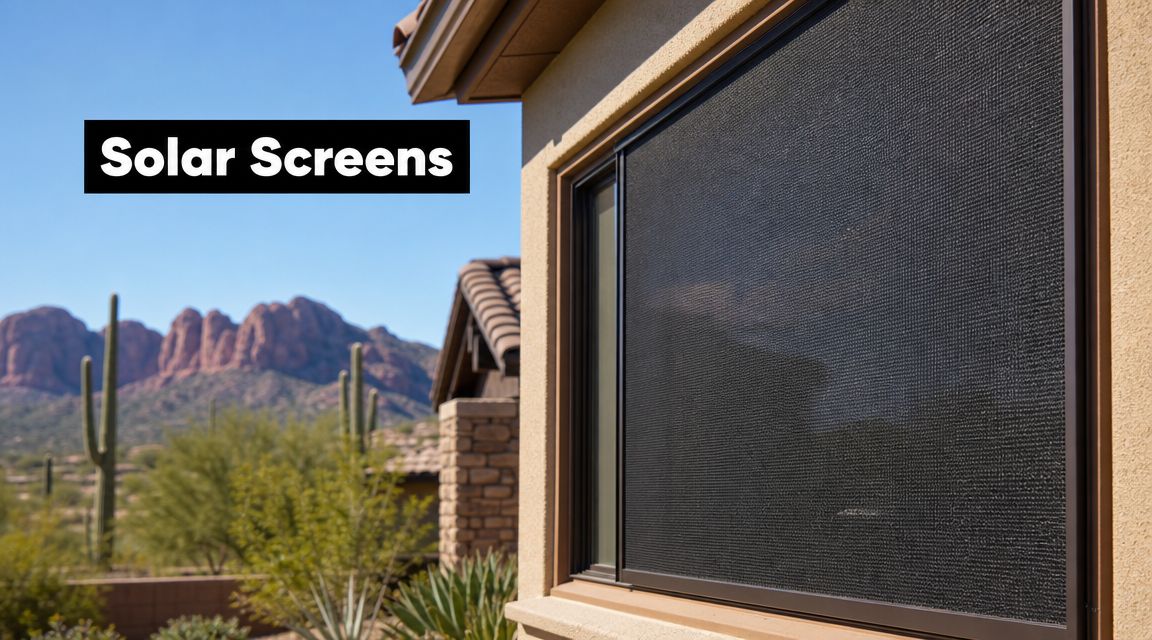
That is the point of solar screens. In Phoenix, solar screens for windows help cut glare, reduce the heat hitting the glass, and make the hard-exposed sides of the house more livable through summer. They also give homeowners a more practical way to control cooling costs than constantly lowering blinds and asking the AC to make up the difference.
The question is not whether they help. It is whether they will pay off on your house, on the windows that get punished most, and on a timeline that makes sense before the worst heat settles in. If you are also trying to improve HVAC efficiency to save electricity, solar screens are one of the few upgrades that address the heat before it gets indoors.
There are trade-offs, and they are easy to explain. A denser, darker screen usually blocks more sun, but it also dims the view more from inside. Exterior screens collect Arizona dust and need occasional cleaning. A single west window can be an easy yes. A full-house install takes a harder look at exposure, budget, and how long you plan to stay in the home.
In practice, Phoenix homeowners get the best return by being selective. Start with the windows that take the worst afternoon sun and make rooms uncomfortable now. That approach keeps the budget under control, shows you the difference fast, and matters even more when same-week service can spare you months of extra heat.
Beat the Heat and Your High Energy Bill
A common Phoenix problem goes like this. The house looks fine from the outside, but inside, the afternoon sun turns the living room bright, hot, and annoying. You lower the blinds, but the room still warms up because the glass itself is heating. The AC runs longer, the temperature drifts by room, and the electric bill becomes part of the stress of summer.
That's where exterior sun control usually makes more sense than another interior fix. If your goal is comfort, lower cooling demand, and less glare on the west or south side, solar screens attack the problem earlier. They stop a large share of that sun before it ever gets to the window.
A lot of homeowners also miss the bigger picture. Solar screens help, but they work best as part of an overall cooling strategy. If you're trying to improve HVAC efficiency to save electricity, duct condition, filter changes, insulation, and air leaks still matter. Screens don't replace those basics. They make the windows less punishing.
Where Phoenix homes feel the difference fastest
The biggest payoff usually shows up in spaces you already avoid during the hottest part of the day:
- West-facing living rooms get hammered in late afternoon, when outdoor heat is already high and the sun angle is brutal.
- South-facing rooms take long hours of exposure, which adds up even when the light feels less harsh than the west side.
- Home offices with big windows often suffer from glare first, then heat second.
- Bedrooms on the sunny side can stay warmer into the evening, even after sunset.
Practical rule: If you keep closing blinds on the same windows every summer, those windows are strong candidates for solar screens.
The local value is simple. In Phoenix, same-week screen service matters because heat problems don't wait for a convenient schedule. When a screen is missing, torn, or undersized, you usually feel it right away.
How Solar Screens Actually Work
On a July afternoon in Phoenix, the difference shows up fast. One west-facing window can turn a comfortable room into the spot nobody wants to sit in by 4 p.m. Solar screens help because they deal with the sun before the glass stores that heat.
They mount on the exterior side of the window frame. That placement matters. Once sunlight hits bare glass, the window itself starts heating up. Interior blinds still help with glare and privacy, but they are dealing with a problem that already reached the window.

What happens at the window
Solar screen fabric filters and absorbs part of the sun's energy before it reaches the glass. The material heats up instead of the window taking the full hit, and some of that heat disperses back into the outdoor air. The small space between the screen and the glass also helps reduce how much heat transfers inward, as explained in this guide on how exterior solar screens work.
Fit affects performance more than homeowners expect.
A tight, square install gives the screen a consistent gap across the window and better coverage over the opening. A loose panel, bent frame, or bad measurement lets more direct sun slip around the edges, which cuts into the benefit. In Phoenix, that difference is noticeable on big west-facing windows and patio sliders.
Why exterior placement matters
The main advantage is timing. Solar screens reduce heat before the glass becomes part of the problem.
Here's how that usually plays out in a real house:
- Sun hits the screen first. The fabric blocks and filters part of the solar load outside.
- Less heat reaches the glass. The window surface does not build up as much heat during peak sun.
- The room gets less glare. Light is softened before it enters the space.
- Cooling demand drops some. That is where the ROI starts to make sense, especially on the hottest exposures.
There is a trade-off. Darker, tighter-weave screens usually block more sun, but they also cut more visible light and soften the view out. Some homeowners love that on the west side. Others want a lighter screen on front windows so the house does not feel closed in. The right choice depends on whether heat control, brightness, or outward view matters most on that side of the home.
What they're made to handle
Quality solar screens use purpose-built exterior mesh, commonly vinyl-coated polyester or PVC-coated fiberglass. That matters in Arizona because the fabric has to sit in intense UV, dust, monsoon weather, and high frame temperatures for years.
In the field, the weak points are usually the corners, spline, and frame quality before the fabric itself fails. Better materials last longer, but they still need occasional cleaning and an install that matches the opening correctly. For homeowners comparing bids, the cheap option often gives back its savings later. Poor fit, flimsy frames, and rushed turnaround can cost more if the screens need to be reworked during the same summer.
Solar Screens Versus Regular Bug Screens
This is one of the most common mix-ups I hear from homeowners. They look at an existing insect screen and assume a solar screen is basically the same thing, just darker. It isn't.
A standard bug screen is built to keep insects out while allowing airflow. A solar screen is a performance product built to manage sun exposure, glare, and daytime privacy while still functioning as a screen. Those goals overlap a little, but they're not the same.

The quick difference
If your only goal is keeping bugs out, a regular screen is fine. If you're trying to reduce the punishment from direct Arizona sun, a bug screen won't do the same job.
Manufacturers and commercial sellers commonly describe solar screen fabrics in terms like 10% openness for 90% blockage, and many woven meshes are described as blocking roughly 80% to 90% of the sun's hot rays, as outlined in this solar screen fabric overview. That's performance language you don't get with a standard insect screen.
Solar Screen vs. Bug Screen At-a-Glance
| Feature | Standard Bug Screen | Solar Screen (80%-90%) |
|---|---|---|
| Primary purpose | Keeps insects out | Reduces sun, glare, and heat while still screening |
| View out | More open | Slightly more filtered, depends on screen density |
| Daytime privacy | Minimal | Better daytime privacy from outside looking in |
| Glare control | Limited | Stronger glare reduction |
| Heat control | Not designed for it | Designed for sun control |
| Airflow | Usually more open | Still allows airflow, but denser mesh changes the feel |
| Appearance | Light utility look | Darker, more intentional exterior shading look |
| Best use | Mild exposure, ventilation, insect control | West and south exposures, hot rooms, energy-focused upgrades |
What homeowners notice in real life
The trade-off is straightforward:
- Bug screens preserve a more open look. If you care most about maximum openness and don't have serious sun exposure, they're simpler.
- Solar screens solve a different problem. They cut the glare that makes TVs hard to watch and rooms uncomfortable in late afternoon.
- They also change the outside view. Adjustment to the darker look is often quick, but some don't like it on every window.
- They can improve daytime privacy. During the day, it's harder to see in from outside.
If a room overheats, replacing a bug screen with another bug screen usually won't fix the reason you're uncomfortable.
That's why many Phoenix homes end up mixed. Solar screens on the hot elevations. Regular bug screens where sun exposure is milder and preserving a more open view matters more.
Choosing Your Screen Type and Material
The right screen for one side of the house may be the wrong screen for another. That's where homeowners can waste money. They order the same mesh for every window, then wonder why one room still feels hot and another feels too dim.
The most important concept is openness factor. That tells you how much of the fabric is open versus blocked. Common solar screen options include 10% openness for 90% blockage, and many woven meshes are described as blocking 80% to 90% of the sun's rays. Manufacturer literature also says the fabric can absorb and dissipate up to 70% of solar heat and glare before it reaches the glass, as noted in this guide to solar screen material for windows and the supporting product data behind it.

Picking by sun exposure
In Phoenix, window direction matters more than commonly thought.
- West-facing windows usually deserve the strongest consideration for denser solar mesh. Afternoon sun is intense, and that's where homeowners often accept a darker screen because the comfort trade is worth it.
- South-facing windows often benefit from solar screening too, especially on rooms with large glass areas.
- North-facing windows may not need the same level of blockage. Some homeowners keep these lighter or leave them with standard screens.
- East-facing windows depend on your routine. Morning sun bothers some people less, especially if those rooms are empty early in the day.
What works and what doesn't
What works is matching the product to the exposure.
A denser solar screen usually works well where heat and glare are the main complaint. It doesn't work as well for homeowners who want the most open, brightest possible view from every room. You can't maximize blockage and preserve a wide-open look at the same time. That's the trade-off.
Material and color choices
Most exterior solar screens use coated fiberglass or polyester-based mesh designed for weather exposure. The better materials hold shape, resist sun damage better, and stay serviceable longer with basic maintenance.
Color matters too:
- Darker colors usually give better glare control and a clearer view out from the inside during the day.
- Lighter colors can look softer from the exterior but often don't manage glare the same way.
- Matched screening by elevation often looks better than forcing one material choice everywhere.
On a Phoenix house, uniformity isn't always the smartest choice. The west side and north side rarely need the same solution.
If you're unsure, start with the rooms you avoid in summer. They'll tell you more than a product sample ever will.
The Real Cost and ROI for Phoenix Homes
This is the part homeowners care about most. Not “Do solar screens help?” but “Do they help enough to justify the price?”
The short answer is often yes, especially in homes with sun-heavy exposures. But the ROI changes depending on how many windows you're doing, which side of the house gets hit hardest, and whether you're solving a real heat problem or just upgrading appearance.
What they typically cost
According to HomeAdvisor's 2025 pricing data on how much solar screens cost, the average cost is $160 per window, with most homeowners paying $80 to $280 per window. Whole-home installs can reduce cost to about $50 to $70 per screen because of scale, and material costs are estimated at $4 to $8 per square foot. Labor is part of why larger or harder-to-fit windows cost more.
That pricing matters because homeowners often compare the wrong things. A one-off replacement on a single large west-facing window is priced differently than a planned install across a full house.
How to think about ROI without guessing
A practical Phoenix-style ROI calculation starts with three questions:
- Which rooms are causing the AC to work harder?
- How many of those windows are good candidates for exterior screening?
- Would targeted screens solve the problem, or do you need broader house upgrades too?
If you know your cooling costs are being pushed by direct sun on a few key windows, the payback logic is stronger. If your biggest issue is poor insulation, leaky ductwork, or an aging AC system, screens still help, but they won't carry the whole load by themselves.
Where the return usually shows up
Homeowners usually get value in more than one way:
- Lower cooling demand on rooms that were taking direct sun.
- Better comfort in spaces that used to heat up before the rest of the house.
- Reduced glare on TVs, laptops, and bright living areas.
- Less frustration with blinds staying shut all summer.
HomeAdvisor also notes that in hot, dry states, solar screens can reduce cooling bills by up to 33% through the exterior sun-control effect described in the verified guidance above. That doesn't mean every Phoenix home will hit the top end. It means the upside is meaningful in the right conditions.
The strongest ROI usually comes from targeted installs on the worst-exposed windows, not from treating every opening the same just because it sounds complete.
If budget is tight, start with the west side. That's often where the money and comfort argument is easiest to justify.
Professional Installation and Long-Term Care
A good solar screen can perform poorly if it fits badly. That's why installation matters more than people expect. If the frame is loose, the corners are off, or the mesh isn't matched to the actual exposure, you end up paying for a product that never really solves the problem.

What a proper install should include
A professional installer should measure the actual opening, not guess from rough estimates. Frame fit, mounting method, corner strength, and screen tension all matter if you want the panel to sit right and last.
For Phoenix homeowners, scheduling matters too. If a screen is torn, missing, or you're moving into the hottest part of the season, waiting weeks isn't practical. Same-week service can make sense in this market because a sun-exposed window becomes a comfort problem fast. One local option for that type of work is solar screen installation near me, along with other screen installers serving the Valley.
Dust, cleaning, and lifespan
Arizona dust is real. Exterior-mounted screens can accumulate it, and that's part of ownership. The upside is that they reduce cooling loads at the source, which is a major reason they hold long-term value in hot-sun markets, as discussed in this article on exterior solar screens for west-facing windows.
Basic care is simple:
- Rinse off dust periodically with gentle water flow.
- Use mild soap when needed for buildup that doesn't come off with rinsing.
- Check frames and corners after monsoon season or heavy wind events.
- Don't ignore sagging or torn mesh because small failures tend to spread.
Here's a quick visual on the install side of it:
What lasts and what fails early
Screens usually last longer when homeowners clean them lightly and leave repairs to someone who handles frames and remeshing regularly. Most premature failures come from bent frames, cheap replacement mesh, poor corner assembly, or trying to force a one-size-fits-all screen into a custom opening.
A solar screen should sit like it belongs to the window. If it looks improvised, it usually performs that way too.
Your Solar Screen Questions Answered
By the time July hits Phoenix, homeowners usually ask the same thing. Should they screen every window, or just fix the rooms that turn into ovens by 4 p.m.?
Can you still see out through solar screens
Yes, usually.
The view depends on the openness of the mesh, the screen color, and how much sun is hitting that side of the house. Darker solar mesh often gives a better outward view during the day than people expect, but tighter weave means more light reduction and a more muted look from inside. That trade-off is real. Better heat control usually means a little less visual openness.
For most Phoenix homes, the smart move is not treating every window the same. Put stronger solar protection on west and southwest exposures, then stay lighter on windows where daylight and view matter more.
Do solar screens provide privacy
They help with daytime privacy, especially when the sun is brighter outside than the light inside. From the street, it is harder to see through a solar screen into the room.
At night, that changes fast once interior lights come on. Solar screens are not a privacy product in the way blinds, shades, or curtains are.
Are they worth it in Arizona
Often, yes, especially on the hottest sides of the house.
The return is usually best where the sun is punishing the glass for hours every afternoon. In Phoenix, that often means west-facing living rooms, front bedrooms, sliding doors, and any room where the blinds stay shut half the summer. If a room runs hot enough that the AC works harder and the space still feels uncomfortable, solar screens can make sense as a comfort upgrade first and an energy decision second.
The ROI question is usually simple. Start with the windows causing the most heat and glare, price those first, and compare that cost against how long you plan to stay in the home, how hard those rooms are to cool, and whether you are already paying to fight the same problem with blackout curtains or constant thermostat changes. Same-week service also matters more here than it would in a mild climate. In Phoenix heat, waiting weeks to cover the worst windows means living with the problem through the hottest stretch of the year.
Should you do the whole house or just the worst windows
If budget is tight, start with the worst windows.
That gives you the clearest read on whether the screen density and look are right for your house. It also avoids spending money on north-side or shaded windows that may not give much back. A phased approach is common in Phoenix because the sun exposure is rarely equal on all four sides.
Will they make the house too dark
They can, if the mesh is too aggressive for the room.
I see this most often when homeowners choose one dense screen type for every opening without thinking about use. A TV room and a kitchen do not need the same balance of glare control and natural light. The better approach is to match the screen to the exposure and the room, not force one spec across the whole house.
What's the next step
Walk the outside of your house between noon and sunset and look at the glass, not the walls. Which windows are taking direct sun for hours? Which rooms feel hotter than the thermostat says they should? Which blinds never open?
That is where your money is most likely to work.
If you're ready to price it out, Sparkle Tech Screen Service handles new, rescreened, and repaired sun and bug screens, along with same-week service and quick quotes by text or phone. For Phoenix-area homeowners, that makes it easier to solve the hottest windows first, then decide whether the rest of the house is worth doing.


