


When you think about solar panel maintenance, you might just imagine a quick hose-down now and then. But proper solar panel cleaning is a bit more involved—it's about using the right tools, like a soft-bristle brush and clean water, to gently lift away the dirt, dust, and stubborn grime that builds up over time.
This isn't just about keeping them looking good. It’s a critical step in making sure your system is actually producing the maximum amount of energy it was designed for. Even a barely-visible layer of dust can seriously hamstring your efficiency and eat into the financial returns you were counting on.
Why Cleaning Your Solar Panels Actually Matters
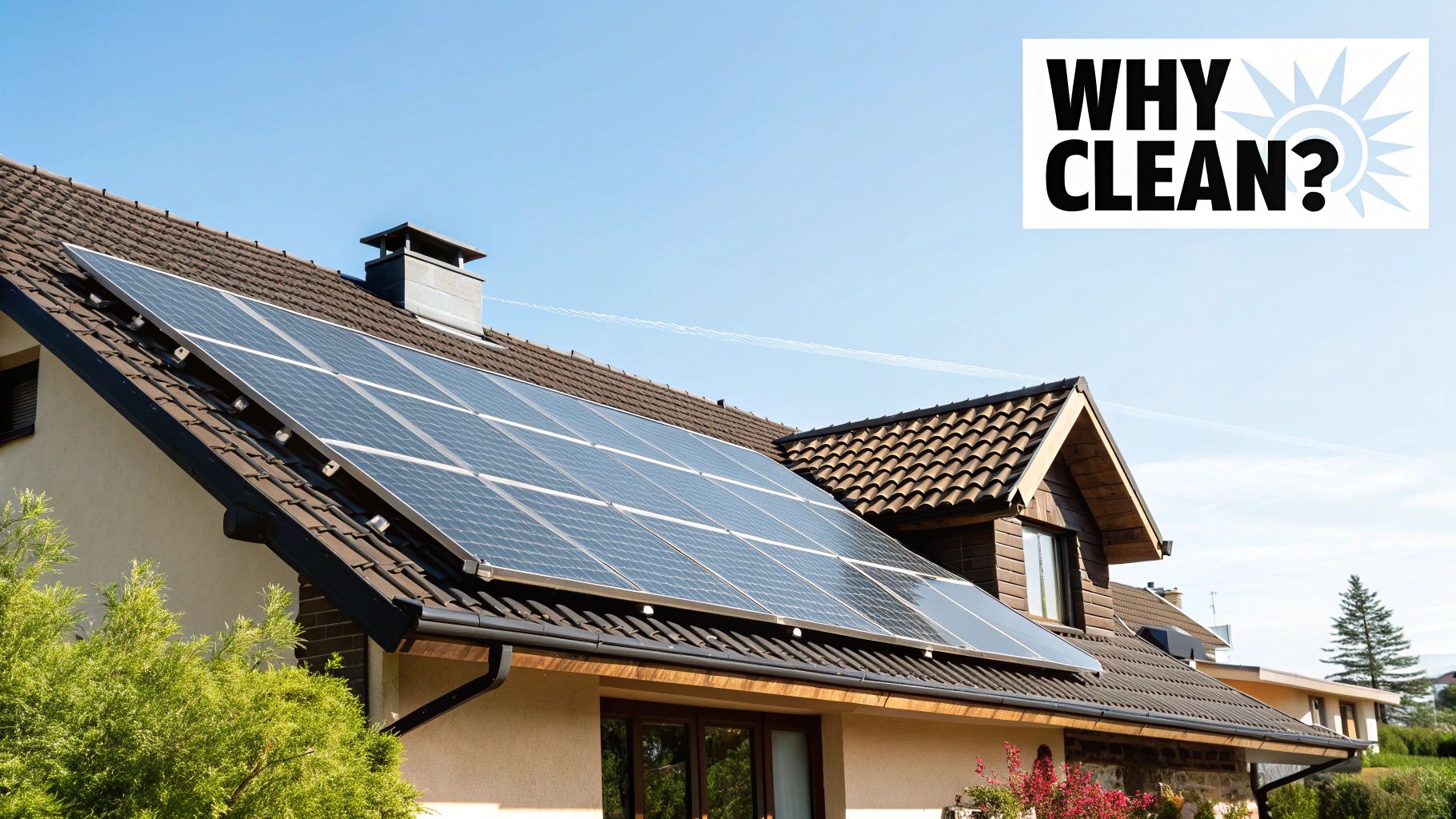
It’s a common misconception that a good downpour is all the cleaning your solar panels need. The truth is, rain often just moves the dirt around or, in areas with hard water, leaves behind mineral deposits.
Over time, your panels become a magnet for all sorts of things that hurt their performance. From seasonal pollen and fine desert dust to urban pollution and the inevitable bird droppings, each new layer adds to a film that blocks sunlight. This buildup, known in the industry as "soiling," directly translates to less energy being produced. And less energy produced means you're pulling more from the grid.
The Financial Cost of Neglect
Think of a dirty solar panel as a dimmer switch on your energy savings. The thicker the layer of grime, the less sunlight reaches the photovoltaic cells, and the less power your system can generate. It’s not just a tiny dip, either. These efficiency losses can quietly chip away at your energy output, turning what should be a fantastic investment into an underperforming one.
The numbers don't lie. Research has shown that dirty solar panels can see their efficiency drop anywhere from 5% to over 30%, depending on where you live and the time of year. This isn't a secret, and it's fueling a booming industry. The solar panel cleaning market in North America was valued at $280 million in 2024 and is expected to skyrocket to $810 million by 2033, all because more homeowners are waking up to the real-world benefits of regular maintenance.
A clean solar panel isn't just about aesthetics; it's about reclaiming lost power. Every cleaning session is a direct investment in maximizing your system's return and ensuring you get the full value from the sun.
More Than Just a Chore
Getting up there to clean your panels offers a perfect opportunity to give your entire system a once-over. It’s not just a chore; it’s one of the best forms of preventative maintenance you can do. When you're cleaning, you can spot small issues before they snowball into expensive headaches.
This hands-on approach helps you catch things like:
- Micro-cracks in the glass that might not be visible from the ground.
- Hot spots developing under caked-on debris, which can permanently damage solar cells.
- Loose wiring or minor damage from a recent hailstorm or high winds.
Finding these problems early is key to ensuring your system runs smoothly for its entire 25- to 30-year lifespan. It’s the same proactive mindset that applies to other home energy solutions, like installing the best solar screens for windows to reduce cooling costs. Ultimately, keeping your panels clean is a fundamental part of protecting your investment and maximizing your home’s energy independence.
Gathering Your Solar Panel Cleaning Toolkit
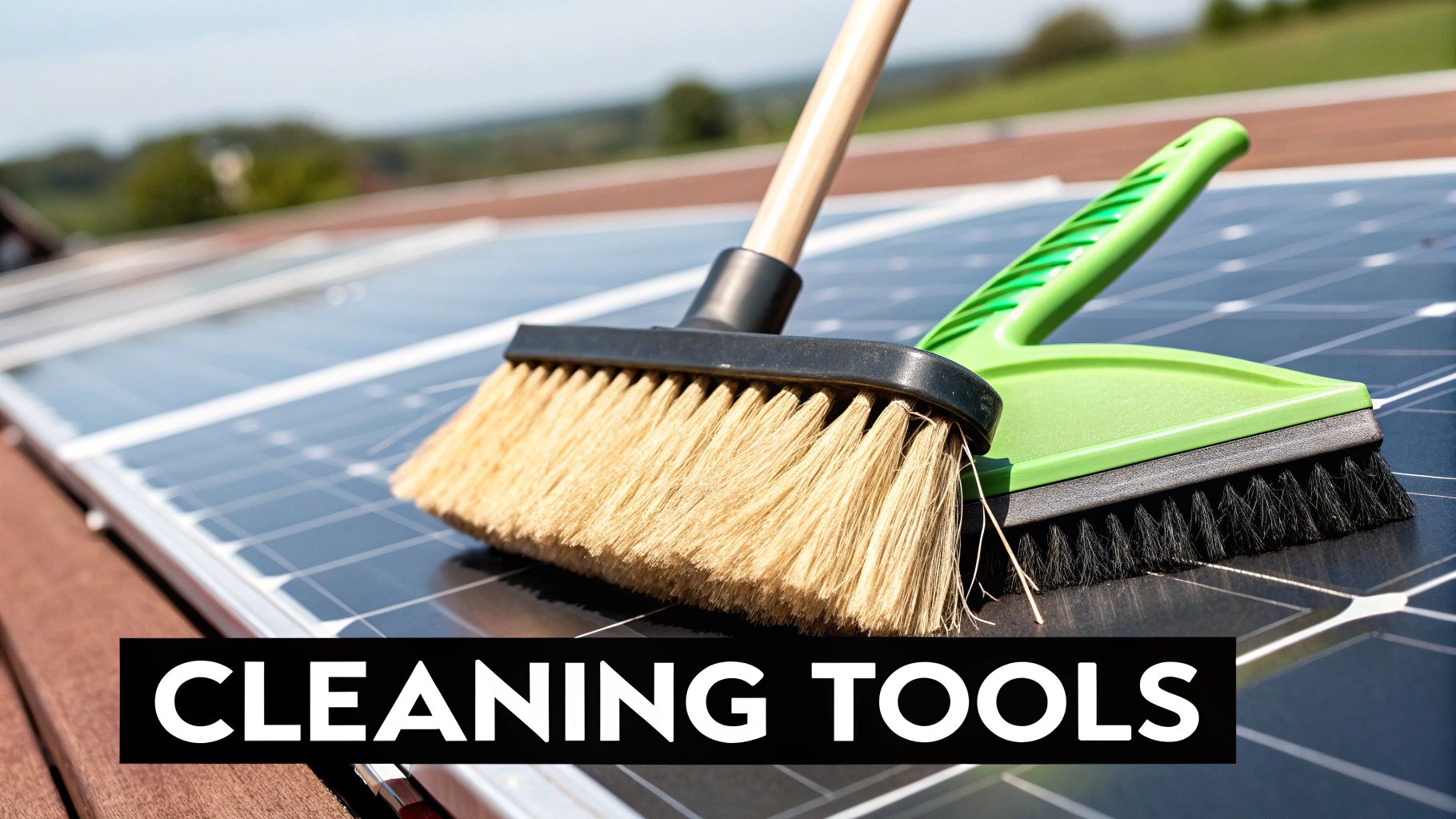
Before you even think about getting on a ladder, let's talk about getting your gear together. Tackling solar panel cleaning with the right equipment is non-negotiable—it's crucial for your safety and the health of your system. Grabbing the wrong tool can easily turn a simple chore into a very expensive headache. Remember, the goal here is a gentle but effective clean, not an aggressive scrub-down.
Your most important piece of equipment is a soft-bristle brush. I always recommend one specifically made for solar panels or even car washing. These are designed to lift away caked-on grime without leaving behind tiny scratches on the panel's anti-reflective coating. That coating is what helps your panels soak up every last bit of sunlight, and even small scuffs will hurt their performance over time.
Of course, that brush needs to reach the panels. That's where a long, sturdy extension pole comes in. This is your key to safely cleaning every corner from a ladder or the edge of the roof, so you don't have to step directly on the panels. Most manufacturers are very clear on this: walking on panels can cause micro-cracks you can't even see, which can kill your system's output.
Water Source and Finishing Touches
When it comes to water, keep it simple. A standard garden hose with a spray nozzle is perfect. You want to create a gentle shower, not a power-washing blast. This first rinse helps knock off all the loose stuff like dust and leaves, which makes the actual brushing part much easier and safer for the panel surface.
Once you've brushed everything clean, a high-quality squeegee will give you that professional, streak-free finish. It’s the same principle as professional window cleaning: a good squeegee whisks away the dirty water before mineral deposits have a chance to dry on the glass. Those hard water spots can create a new film that blocks sunlight, undoing all your hard work.
I see it all the time: people think more pressure means a better clean. With solar panels, it's the exact opposite. Finesse and the right soft-touch tools will always protect your investment better than brute force.
What You Absolutely Should Not Use
Knowing what to leave in the garage is just as critical as knowing what to bring. A few common cleaning tools can cause permanent damage and might even void your warranty.
Steer clear of these items at all costs:
- Pressure Washers: That powerful, focused jet of water can easily compromise the seals around the panel frame, force moisture into the electrical connections, and even crack the glass. It’s just too aggressive.
- Abrasive Sponges or Pads: Anything rough, like a kitchen scouring pad or a stiff-bristled deck brush, will absolutely scratch the anti-reflective coating.
- Harsh Chemical Cleaners: Stay away from anything with ammonia, strong soaps, or any detergents not approved for solar panels. They can leave a sticky residue that actually attracts more dirt or cause a chemical reaction that damages the glass itself.
And finally, don't forget about your own safety. A pair of non-slip shoes is a must for any roof work. If your roof has a steeper pitch, a properly anchored safety harness is non-negotiable. No amount of extra power generation is worth a serious injury.
A Practical Guide to Cleaning Solar Panels
Alright, you've got your tools, so let's get down to the actual job of solar panel cleaning. This isn't about scrubbing with all your might; it's about being smart and methodical to protect your panels and get them working at their best. Think of it as a simple three-act play: the prep, the wash, and the final drying touch.
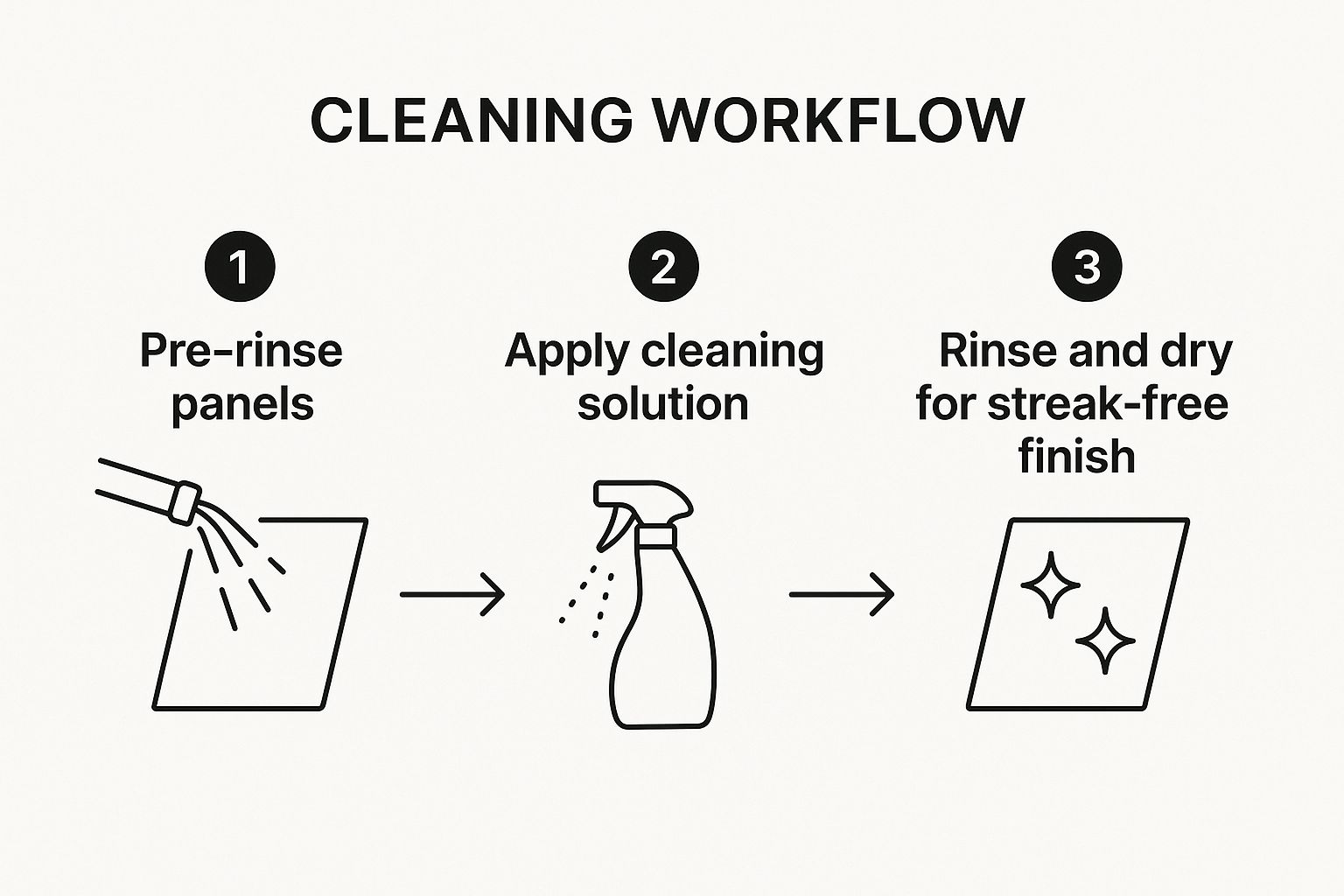
This workflow is your key to a professional-grade finish, making sure you don't miss a beat.
Choosing Your Moment
Timing is everything. Trying to clean your panels under a scorching midday sun is a classic rookie mistake. The heat makes water evaporate in a flash, leaving behind a film of mineral deposits and streaks that can hinder performance just as much as the dirt you were trying to remove.
The best time to tackle this job is on a cloudy day or during the cooler parts of the day—think early morning or late evening. This gives the water time to do its work before the sun bakes it onto the glass.
The Dry Prep Phase
Before a drop of water hits your panels, you need to do a quick dry prep. The first move is to clear away any big, loose debris. It’s like sweeping the floor before you mop; you want to get the larger stuff out of the way first.
Grab your soft-bristle brush on its extension pole and give the panels a gentle sweep. You're just looking to knock off any leaves, twigs, or loose clumps of dust. This one small step is huge because it prevents you from dragging gritty particles across the glass during the wash, which can cause tiny scratches on the anti-reflective coating.
The Gentle Wash Technique
Now for the main event. Start with a pre-rinse using your garden hose on a gentle shower setting—never a high-pressure jet. Start at the top of the array and let gravity help you, allowing the water to carry away the dust you just loosened.
Next, dip your soft brush into a bucket of clean, cool water. If you’re using a cleaning solution, make sure it’s one your panel manufacturer approves of. Again, start at the top and work your way down in smooth, overlapping strokes. Use just enough pressure to lift the grime. Let the bristles do the work, not your muscles.
The goal is to lift the dirt, not fight it. Imagine you're washing a delicate window. A steady hand and systematic approach will always yield better results than a frantic, high-pressure scrub.
The Streak-Free Squeegee Finish
This final step is what really makes the difference. After a complete rinse to wash away all the loosened dirt and soap, it’s time to dry the panels with your squeegee. This is absolutely critical for preventing spots from hard water, which can leave their own performance-killing residue.
Start at a top corner, press the squeegee blade firmly against the glass, and pull down in one smooth, continuous motion. Overlap each stroke by about an inch to avoid leaving lines. After every single pull, wipe the blade clean with a microfiber cloth. This little detail ensures you’re actually removing the water, not just spreading it around.
A clean, dry panel is a happy, efficient panel. This hands-on method is so effective that it still accounts for 45-50% of the global market. With the solar panel cleaning industry projected to grow from USD 1.22 billion in 2025 to nearly USD 2.98 billion by 2035, knowing how to do this right is a skill worth having. You can dig into the full market analysis over at Meticulous Research.
Creating Your Ideal Cleaning Schedule
When it comes to keeping your solar panels clean, there's no magic number. A lot of guides will tell you to "clean them twice a year," but that’s like saying every car needs an oil change every 3,000 miles—it's just not true for everyone. The best schedule is the one that fits your home's unique situation.
The real goal here is to find that sweet spot: a routine that protects your investment without making extra work for yourself.
Start By Looking Around You
Forget the generic advice for a moment and just observe. Your home’s location is, by far, the biggest clue. If you live in a rainy part of the country like the Pacific Northwest, you might get away with a light cleaning once a year. The rain does a lot of the heavy lifting for you.
But if you’re out in a dry, dusty climate like Arizona, that same schedule won’t cut it. Your panels will get caked in dirt much faster, and you’ll likely need to clean them every few months to keep them running at peak efficiency.
This isn't just about a little dust, either. The need for proper cleaning has created a massive global industry. In 2024, the solar panel cleaning market was valued at around $813 million and is expected to more than double by 2033. That growth is happening because people are realizing just how much energy they lose to grime. You can dig deeper into these trends with IMARC Group's detailed analysis.
Factors That Call for More Frequent Cleaning
Your general climate is just the starting point. You need to look closer at what’s happening right in your backyard, as these factors can dramatically accelerate how quickly your panels get dirty.
- Nearby Farms or Fields: Live near agriculture? Tilled fields kick up a ton of dust that will find its way onto your roof.
- Local Construction: If there's a new development or roadwork happening down the street, you can bet that dust and debris are coating your panels.
- Heavy Traffic or Industry: Homes near highways or industrial parks get hit with a fine, oily soot from pollution that rain simply can't wash away on its own.
A Quick Tip from Experience: Don't forget about the tilt of your panels. Panels installed at a steeper angle do a much better job of self-cleaning. Rain and wind just slide debris right off. If your panels have a low tilt, they're going to hold onto dirt and need a more hands-on approach.
Recommended Cleaning Frequency By Environment
So, how often should you clean your panels? It really boils down to your specific environmental conditions. A little observation goes a long way in setting a schedule that makes sense.
Here’s a simple table to help you figure out a good starting point based on your surroundings.
| Environmental Factor | Low Impact (Annual Cleaning) | Medium Impact (Bi-Annual Cleaning) | High Impact (Quarterly or As-Needed) |
|---|---|---|---|
| Rainfall | Frequent, consistent rain | Seasonal rain; dry spells | Little to no rainfall |
| Dust & Pollen | Low pollen, grassy areas | Moderate pollen, some trees | Desert, high pollen, dry dirt |
| Proximity Issues | Quiet suburb, no major sources | Near moderate traffic or trees | Near farms, construction, highways |
| Bird Activity | Minimal bird presence | Occasional droppings | Frequent nesting/roosting nearby |
This table is a guide, not a strict rule. The best way to know for sure is to keep an eye on your panels and your energy production.
Putting It All Together in a Practical Routine
Let’s make this real. Say you live in a new subdivision where they're still building homes. In that case, you're dealing with constant dust. A quarterly cleaning makes perfect sense. On the flip side, if you're in an established neighborhood with lots of trees and regular rain, an annual or semi-annual check-up is probably all you need.
My best advice? Start with a yearly cleaning and adjust from there. A few months after you clean them, just take a look. Can you see a visible layer of dirt? Are there a bunch of bird droppings? If so, it’s time for a cleaning, no matter what the calendar says.
This flexible, observant approach is the key to making sure your panels are always ready to perform at their absolute best.
Knowing When to Call in the Pros
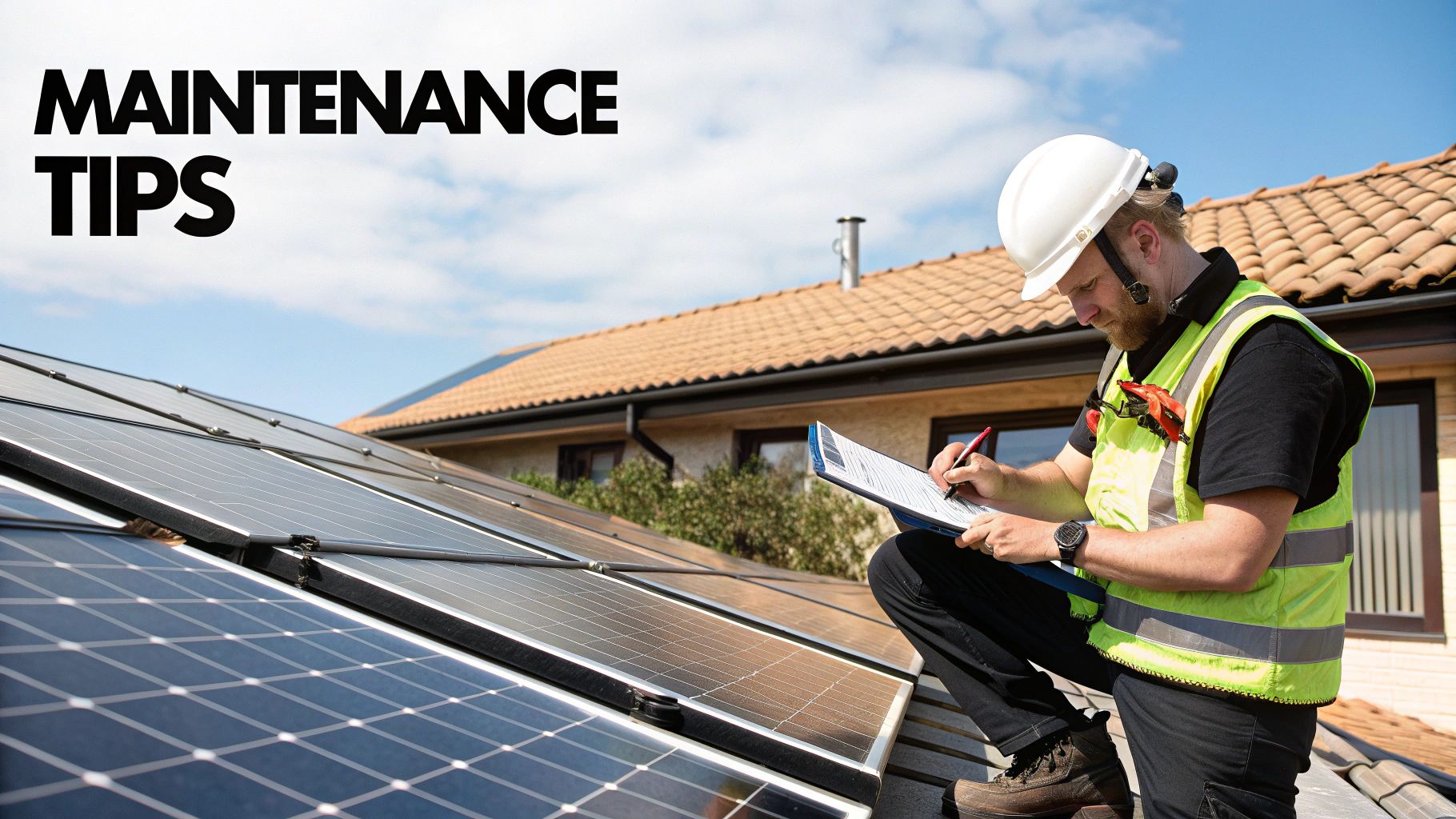
While I'm a big advocate for the DIY approach when it makes sense, there are absolutely times when cleaning your own solar panels is not the right call. The decision to hire a professional isn't about giving up; it's about being smart and prioritizing safety and the long-term health of your system.
Sometimes, the choice is pretty obvious. If you have a steep, slippery roof or a multi-story home, the risk of a serious fall just isn't worth it. Professionals come equipped with the proper safety harnesses, ladders, and the experience to work confidently at heights. That peace of mind alone can be priceless.
Then there's the practical side. Maybe you just don't have the time or physical mobility for the job. A rushed or half-hearted cleaning won't do much good, and you could even end up doing more harm than good.
The Professional Advantage
So what are you really paying for when you hire a pro? It's more than just a person with a ladder. They bring specialized gear that most homeowners simply don't have lying around, like water deionization systems. This is a huge deal—this purified water dries without leaving any mineral spots or residue, which means no lingering film to block precious sunlight.
A professional cleaning is also a check-up for your system. An experienced cleaner is trained to spot things you might miss, like loose wiring, cracked sealant, or even pests making a home under your panels.
This kind of expertise is invaluable. For really stubborn grime, like baked-on pollution or a serious bird dropping problem, a pro has the right tools and cleaning agents to tackle it without scratching the anti-reflective coating on your panels. Plus, any reputable company will be fully insured, protecting you from any liability if an accident were to happen.
Weighing the Cost and Benefits
Hiring a professional is really an investment in your system's performance and lifespan. You can typically expect to pay between $10 and $20 per panel. What does that investment get you?
- Your Safety is Guaranteed: This is the big one. Professionals take on the risk of working at heights so you don't have to.
- A Better Clean: Their specialized tools mean a deeper, streak-free clean, which directly translates to better energy production.
- An Expert Eye: They can often spot small maintenance issues before they mushroom into expensive repairs.
This level of professional care often goes hand-in-hand with other home services. Many companies that specialize in solar panel cleaning also provide expert window cleaning services, helping to keep your whole home looking its best.
Ultimately, calling a professional is the hassle-free way to ensure your solar investment is protected and operating at peak efficiency.
Answering Your Top Solar Panel Cleaning Questions
Even after you've got the basics down, a few questions always pop up. It's totally normal—this is a big investment, and you want to do everything right. Let's walk through some of the most common things people ask so you can feel completely confident taking care of your system.
Can I Just Use Tap Water?
This is probably the number one question I hear. For a quick rinse to get loose dust off, sure, tap water is generally fine. But for a real, deep clean? I'd advise against it, especially if you live somewhere with hard water.
The problem is that tap water is full of minerals like calcium and magnesium. When the water evaporates under the sun, those minerals get left behind as a chalky, white film. That film, known as limescale, essentially creates a new layer of "dirt" that blocks sunlight and hurts your panel's performance.
Doesn't Rain Clean the Panels for Me?
Ah, the old "let mother nature do it" approach. It's a tempting thought, but unfortunately, rain just doesn't cut it. A heavy downpour will definitely wash away some of the loose surface dust, but it's far from a proper cleaning.
Think about what happens to your car's windshield after it rains. It's never spotless, right? Rainwater picks up all sorts of airborne dust and pollutants on its way down. When it dries on your panels, it often leaves a streaky, muddy film behind. To really get them clean and operating at peak efficiency, you need that combination of purified water and a gentle scrub.
Relying on rain is a classic mistake. Over time, that caked-on grime builds up, becomes much harder to remove, and will quietly chip away at your system's energy production.
What’s the Harm in Using a Little Dish Soap?
It seems like a simple, cheap solution, but please, step away from the dish soap. Most household detergents are a terrible idea for your solar panels. While they're great at cutting grease on your plates, they leave behind a thin, sticky residue on the glass.
This invisible film causes a couple of major problems:
- It’s a dirt magnet. That sticky layer grabs onto every bit of dust, pollen, and pollution, meaning your panels get dirty again much faster.
- It can damage the panel. Over time, the chemicals in these soaps can start to break down the special anti-reflective coating on the glass, which is critical for absorbing as much sunlight as possible.
Your best bet is to stick with plain deionized water or a cleaning solution specifically made for solar panels and approved by your manufacturer.
Will I Void My Warranty if I Clean Them Myself?
This is a really important one. The short answer is, it's possible. Most warranties require you to maintain your panels, but they often have very specific rules about how you do it. Using the wrong equipment or technique can easily get you into trouble and void your coverage.
Here are a few common warranty-killers to avoid at all costs:
- Pressure washers: The high-pressure stream can damage seals and even the panel surface.
- Abrasive tools: Never use harsh brushes, scouring pads, or anything that could scratch the glass.
- Harsh chemicals: Stick to approved cleaners only.
- Walking on the panels: This is a huge one. Your weight can create tiny, invisible micro-cracks in the solar cells, which will permanently degrade their performance.
Always, always read your manufacturer’s warranty and maintenance guide before you start. If you have any doubt, calling in a professional cleaner is the safest route to protect your warranty and your panels.
At Sparkle Tech Screen Service, we're passionate about helping homeowners maintain the efficiency and beauty of their property. While our expertise is in making your windows and screens look brand new, we know that clean solar panels are a vital part of a modern, well-kept home. For top-tier screen services that go hand-in-hand with your clean energy lifestyle, learn more at https://sparkle-tech-screens.com.


