


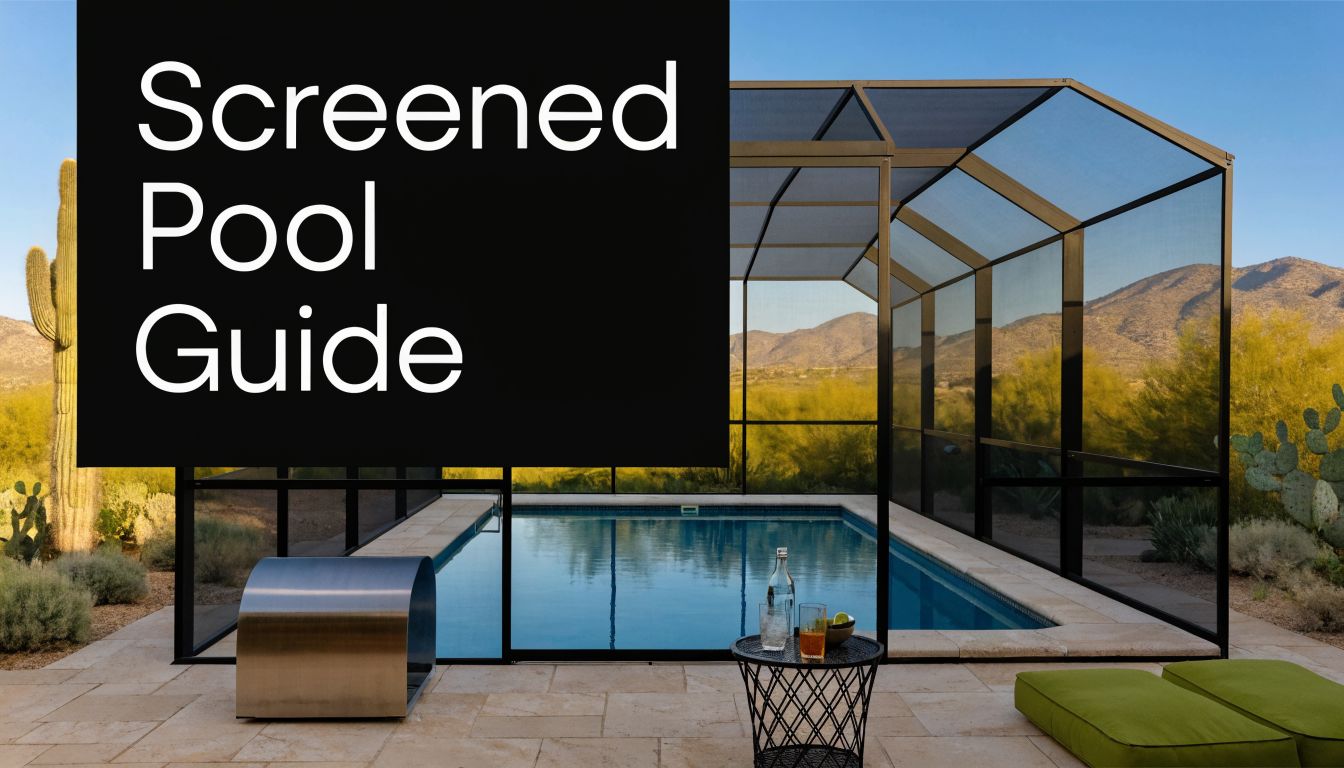

You step outside on a July afternoon, look at the pool, and see the same Arizona routine. A line of dust on the water from last night's wind. A few leaves that came from a tree you barely notice until cleanup day. Bugs hovering near the patio lights once the sun drops. By the time the water looks inviting, you've already done chores.
That's why so many homeowners start looking at a screened swimming pool as more than a nice upgrade. In Arizona, it's often the difference between a pool you maintain constantly and a pool you can use. A good enclosure changes the whole feel of the yard. It cuts down on debris, softens the harshness of the sun, and makes the space around the pool more comfortable for daily life.
It also isn't the same thing as tossing on a pool cover or putting up a fence. A screened enclosure creates a usable outdoor room around the pool. You still get air and light, but with a layer of protection that matters in the desert.
Transform Your Arizona Pool Experience
A lot of Arizona pool owners don't have a pool problem. They have a pool environment problem.
The water may be great, but the surroundings wear you down. Haboob dust settles everywhere. Bees show up when the heat peaks. Mosquitoes and other flying pests find you around dusk. Patio furniture gets coated, the deck gets hot, and the pool ends up catching everything the wind carries.
A screened swimming pool changes that setup. It resembles an open-air room built around your pool. It doesn't seal you indoors, and it isn't a solid roof system that turns the backyard into a dark box. It creates a breathable barrier that helps keep the space cleaner, calmer, and easier to enjoy.
For Arizona homeowners, that matters because our weather is hard on anything left exposed. Intense sun breaks materials down. Monsoon winds test weak installations fast. Fine desert dust finds every gap. If your goal is to spend less time skimming and more time swimming, a properly built enclosure is one of the most practical improvements you can make.
The appeal isn't just protection. It's how the yard starts working better.
You get a more comfortable place to sit. Kids and pets have another layer between them and the water. Evening swims feel less like a battle with bugs. Even simple things like eating outside or reading by the pool become easier when you aren't constantly brushing debris off the table.
A screened pool doesn't make your backyard feel closed off when it's designed well. It makes it feel usable more often.
What Exactly Is a Screened Pool Enclosure
A screened pool enclosure is a permanent framed structure built around a swimming pool and the surrounding deck area. The easiest way to picture it is an open-air sunroom for your pool. It has a rigid frame, screen walls, and a screened roof area, so the pool stays open to light and airflow while gaining protection from pests, debris, and direct exposure.
Most quality enclosures use an aluminum frame with screen mesh stretched into each panel. In Arizona, aluminum makes sense because it handles heat well and doesn't ask for the upkeep that wood does outdoors. The mesh is the working surface. That's what blocks insects, catches blowing debris, and can also provide shade depending on the material you choose.
A screened enclosure also has a very different job than a fence or a cover.
How it differs from a fence or cover
A pool fence is mainly about perimeter control. It can help with safety, but it won't keep out dust, leaves, or flying insects. A pool cover protects the water surface when the pool isn't in use, but you have to remove it to swim and it does nothing for the deck, furniture, or the overall comfort of the space.
A screened enclosure covers the whole pool environment. That includes the water, the walking area, and the places where people spend time.
Here's a simple comparison:
| Option | Helps with access control | Helps with debris | Helps with bugs | Helps with comfort around pool |
|---|---|---|---|---|
| Fence | Yes | No | No | Limited |
| Cover | Limited | Yes, when closed | No | No |
| Screen enclosure | Yes, as part of an overall safety setup | Yes | Yes | Yes |
That broader function is why many homeowners see it as both a practical feature and a lifestyle upgrade. In Arizona neighborhoods where homes are close together, people often pair enclosure planning with other backyard design ideas such as stylish patio privacy options for homeowners to create a more comfortable retreat.
What it's made of
A typical enclosure includes:
- Aluminum framing that forms the posts, beams, and roof lines
- Screen mesh panels for walls and roof sections
- Fasteners and spline that hold mesh tight in the frame
- Doors and access points built into the structure
- Anchoring at slab or deck level to keep the system stable
The details matter. Tight mesh tension, clean panel alignment, and sound anchoring are what separate a screen room that lasts from one that starts rattling, sagging, or tearing after the first rough season.
For homeowners comparing designs, looking through examples of a pool screen enclosure system helps make the structure easier to understand before you commit to a layout.
Practical rule: If it looks like a light add-on, treat that as a warning sign. A pool enclosure should feel like a real exterior structure, not a temporary accessory.
Key Benefits for Arizona Homeowners
A screened pool earns its keep fast in Arizona. After one haboob, one bad wasp stretch, or one week of fishing mesquite leaves out of the water, the value gets pretty easy to see.

Less debris and less cleanup
Wind is a major problem in a lot of Arizona yards. Even homeowners with tidy landscaping deal with dust, seed pods, palm litter, and grit blowing straight into the pool. During monsoon season, that mess shows up overnight.
A proper enclosure cuts down the constant cleanup. Less debris in the water usually means less skimming, fewer clogged baskets, and less strain on the filter system. It also helps keep the deck cleaner, which matters if people are tracking dust in and out of the house all summer.
It will not eliminate pool maintenance. It does reduce the amount of routine mess that turns pool ownership into a chore.
Better comfort during long desert summers
Shade changes how a pool area feels. Standard screen helps with debris and insects, but Arizona homeowners often want more relief from glare and afternoon heat than basic mesh can provide.
That is why mesh selection matters so much here. Some products are built to keep the space brighter and more open. Others block more sun and make the deck noticeably more comfortable during peak heat. If you want to compare the trade-offs, it helps to review the different window and patio screen mesh options before choosing a pool enclosure setup.
I usually tell homeowners the same thing. If the pool gets hammered by west-facing sun, a more shade-oriented mesh often feels worth the slightly more enclosed look.
Fewer bugs and fewer desert nuisances
Mosquitoes get the attention, but they are not the whole story in Arizona. Pool areas also attract wasps, bees looking for water, flying insects around lights, and all the small winged pests that show up at dusk after irrigation.
A screened enclosure adds a real physical barrier around the part of the yard you use. That makes evening swims, outdoor meals, and weekend hangouts much more comfortable.
Common problems a screen enclosure helps reduce:
- Flying insects near lights, especially around patios and evening seating areas
- Windblown leaves and plant matter that stain surfaces and dirty the water
- Blowing dust during storm season that settles on the deck, furniture, and waterline
- Birds and other backyard intrusions that can turn an otherwise clean pool area into a mess
For adjacent features like pergolas, privacy walls, or outdoor kitchens, material choice matters too. Homeowners comparing trim and accent materials sometimes look at guides on premium outdoor wood from TimberSol Ltd while planning the rest of the backyard.
More privacy and a stronger pool barrier
Screen does not create total visual privacy, but it does soften sightlines. In many Arizona subdivisions, that alone makes a backyard feel more relaxed, especially when neighboring second-story windows look straight toward the pool.
It also adds another controlled entry point around the water. Doors can be latched. Access becomes more intentional. That does not replace supervision, fencing requirements, or code-compliant safety measures. It does give families one more layer between the house, the yard, and the pool.
Better day-to-day value
A screened enclosure adds value first by making the pool easier to use. That matters more than sales language. If the area stays cleaner, feels cooler, and gets used more often, homeowners usually see the return in day-to-day living long before they think about resale.
Condition matters, though. A clean enclosure with tight screens and solid framing reads as a useful upgrade. A loose, faded, patched-up structure can make the whole backyard look tired. That is one reason professional installation and timely repairs matter so much in Arizona's sun and storm conditions.
Choosing Your Screen Mesh Bug Blockers vs Sun Shades
Mesh choice decides how the enclosure feels every day. In Arizona, that matters fast. A pool that looks great in March can feel glaring and dusty by June, then take a beating from monsoon wind and haboob grit by late summer.

I usually tell homeowners to start with the main annoyance. Nighttime bugs. Afternoon heat on the deck. Reduced visibility. Windblown dust. The right screen is the one that solves the biggest problem without creating a new one you will notice every weekend.
Standard bug mesh
Standard bug mesh is the most open-looking option. It keeps out larger insects and catches a fair amount of everyday debris while preserving airflow better than tighter or darker screens.
That open feel is its main advantage. If your pool gets decent shade already, or if you care most about keeping the view of the yard and sky as clear as possible, this is often the best fit.
The trade-off is straightforward. It does less to cut glare and radiant heat, and it will not stop every tiny desert pest.
Fine insect mesh
Fine insect mesh helps in yards where smaller flying pests are the primary issue, especially near irrigated landscaping, washes, or neighborhoods with standing water after summer storms. In parts of Arizona, that extra filtering can
You give up a little openness for that tighter weave. Air still moves through, but the enclosure feels slightly more closed in, and visibility is a bit softer than with standard mesh.
Solar mesh for Arizona sun
Solar mesh earns serious consideration on west-facing pool decks and enclosures next to large windows or block walls that store heat. Its job is simple. Reduce sun exposure, glare, and surface temperatures enough to make the space more usable.
The U.S. Department of Energy notes that shade on windows can reduce solar heat gain, which is why exterior shade products are so effective in hot climates like ours: Energy Saver guidance on window coverings and treatments. That same principle applies when a pool enclosure shades nearby glass and hard surfaces.
Solar mesh has trade-offs. The view is darker. The enclosure feels less airy. Some homeowners love that cooler, more sheltered feel. Others try it and decide they miss the brighter, open look of lighter bug screen.
Here is the practical comparison:
| Mesh type | Best for | Main advantage | Main trade-off |
|---|---|---|---|
| Standard bug mesh | General insect control and open views | Better airflow and lighter appearance | Limited sun control |
| Fine insect mesh | Smaller pests and areas near irrigation | Better bug protection | Slightly reduced openness |
| Solar mesh | Strong afternoon sun and glare | More shade and better comfort | Darker view and less airy feel |
What usually works best in Arizona
Pool orientation matters more than brochure language. A north-facing enclosure with some natural shade can do very well with standard mesh. A west-facing pool in the Phoenix or Tucson sun often pushes homeowners toward solar screen, at least on the hardest-hit exposures.
Mixed-screen setups also make sense. I have seen good results using solar mesh on the west and south sides, then a more open bug screen where homeowners want airflow and a cleaner backyard view. That approach costs more than a one-mesh install, but it solves real comfort problems without making the whole structure feel too dark.
A few practical rules help:
- Choose standard bug mesh if your top priority is airflow, visibility, and basic insect control.
- Choose fine insect mesh if tiny pests are more irritating than heat.
- Choose solar mesh if afternoon sun makes the deck, furniture, or waterline area uncomfortable.
- Ask about pet-resistant options for lower panels if dogs press, scratch, or jump against the screen.
For homeowners comparing screen materials beyond the pool enclosure, this guide to types of window screen mesh gives a useful breakdown of bug, solar, and specialty options.
If you are also planning shade structures, privacy features, or outdoor finish materials around the enclosure, a guide on premium outdoor wood from TimberSol Ltd is helpful for comparing how different materials hold up outdoors.
DIY care versus professional help
Basic cleaning is manageable for most homeowners. Rinse off dust, wash gently, and pay attention to corners, door frames, and lower panels where stress shows up first.
Full-panel replacement is a different job. Large pool enclosures need even screen tension, secure spline fit, and careful handling around long spans. In Arizona, a panel that is slightly loose today can turn into a flap in the next storm. Professional installation usually saves money in the long run because the screen sits correctly, wears more evenly, and holds up better when monsoon season hits.
Maintenance and Common Repair Scenarios
A lot of Arizona pool screen problems show up the morning after a storm. You step outside, see one corner panel fluttering, find dust packed into the track, and notice the door is no longer closing quite right. That is a normal service call here. Haboobs, UV exposure, and flying debris do more to an enclosure in one season than milder climates may see in a year.

Most enclosures age gradually, not all at once. The first clues are usually small. A bit of slack in a roof panel, spline creeping out at a corner, a puncture near the lower section where a dog pushed against the screen, or a door that starts dragging after the frame shifts slightly in summer heat.
Catch those early and the repair stays manageable.
What homeowners should do regularly
Routine care is simple, but it needs to happen. In Arizona, fine dust works into mesh openings and frame channels, and that buildup can hold grit where the screen rubs most.
A few habits make a real difference:
- Rinse off dust and pollen with a gentle spray: High pressure can damage mesh or force water into areas that do not need it.
- Inspect corners, fasteners, and door frames: Those spots carry more stress than wide open spans.
- Walk the enclosure after monsoon storms: Wind can loosen spline, stretch a panel, or reveal impact damage from branches and debris.
- Trim plants and branches back from the screen: Repeated rubbing wears through mesh faster than many homeowners expect.
- Look at lower panels for pet damage: In desert neighborhoods, dogs are a common cause of tears near the base.
No special toolkit is required. Consistent checks matter more than complicated maintenance.
Common repair situations
The same repair patterns come up again and again on Arizona jobs.
Small tears and punctures are usually caused by pets, yard tools, storm debris, or brittle aging mesh.
Loose panels often mean the spline has shrunk, the mesh has stretched, or the original tension was not quite right.
Sagging sections tend to show up after years of sun exposure, especially on larger spans.
Door problems usually involve hinge wear, frame movement, latch issues, or rollers and closers that have taken a beating from regular use.
Older mesh usually gives you warning before it fails. It starts to look chalky, thin, wavy, or uneven from panel to panel.
For broader damage, repeated patching usually wastes money. Professional screen enclosure repairs are the better call when the issue involves multiple panels, door alignment, or any section under heavy wind load.
When full rescreening makes more sense
In Arizona, the frame often outlasts the mesh by a wide margin. The aluminum may still be serviceable while the screen itself has become dry, brittle, and harder to tension correctly.
That is when spot repair starts losing value. One new panel next to several sun-cooked panels can leave the enclosure looking uneven, and the older sections are often next in line to fail. I usually tell homeowners to stop thinking panel by panel once they are seeing widespread fading, repeated tears, or multiple loose sections after every storm.
Full rescreening usually makes more sense when:
- Several panels are brittle, faded, or fraying
- Past repairs have left the enclosure with mismatched screen ages
- Sagging shows up in multiple areas
- The door and surrounding panels all show wear at the same time
- You want to change mesh performance during the replacement
There is no single statewide replacement clock, and honest contractors should say that plainly. Service life depends on mesh type, sun exposure, enclosure design, storm history, and how well earlier repairs were done. In Arizona, strong UV and monsoon stress usually shorten that timeline compared with cooler, wetter regions.
This walkthrough gives a useful visual sense of how enclosure work is handled in the field:
What does not work well
Patch kits are fine for a very small, temporary fix. They are a poor long-term answer on a large pool enclosure, especially on visible panels or roof sections that move in the wind. The patch may hold for a while, but it rarely matches the surrounding screen, and it does not solve failing spline, weak tension, or neighboring mesh that has already started to dry out.
Another common mistake is replacing the obvious problem and ignoring the cause. If a panel tore because the frame shifted, a door rack is pulling on the corner, or the spline channel is worn, the same area often fails again. Good repair work addresses the reason the screen let go in the first place.
Understanding Rescreening Costs and Timelines
A lot of Arizona pool owners call after the same kind of week. A dust storm rolls through, the sun keeps baking the cage, and a few small tears suddenly turn into a project that can't wait. The first two questions are always the same. What will it cost, and how long will the pool area be tied up?

What drives the price
There is no honest one-price answer for rescreening in Arizona. Two enclosures with the same footprint can price out very differently if one sits in full west sun, has second-story access issues, or picked up frame wear after monsoon winds.
In the field, these are the factors that usually move the number up or down:
- Total screen area: More panels means more material, more labor, and more time on site.
- Mesh selection: Standard insect screen usually costs less than shade-focused or heavier specialty mesh.
- Roof height and access: High sections, tight side yards, and obstacle-heavy decks slow production.
- Frame condition: Bent members, loose fasteners, worn spline channels, and door alignment problems add repair work.
- Scope of work: A few panel replacements cost less up front than a full rescreen, but patchwork can look uneven and may not last as long if the surrounding mesh is already sun-tired.
That last point matters in Arizona. A cage that has been taking hard UV for years may be a poor candidate for piecemeal repair, even if only a few panels are torn today.
Why DIY often gets expensive
DIY rescreening looks manageable on paper. A roll of mesh and a spline tool do not seem that intimidating until you are stretching large panels in 105 degree heat and trying to keep the lines straight.
The problem is usually not the material. It is installation quality.
Large pool enclosures need even tension, clean spline seating, and attention to frame movement. If the screen goes in too loose, it ripples and slaps in the wind. If it goes in too tight, it can distort the frame or pull loose at the corners. On roof panels, small mistakes show up fast once haboob winds start pushing on the enclosure.
I have seen homeowners save money on materials, then pay again to remove wrinkled mesh and redo visible sections correctly. DIY can make sense for a small patio screen or one low wall panel. Full pool enclosures are less forgiving.
The cheapest invoice is not always the lowest total cost.
A practical budgeting view
A better way to budget is to pin down the scope before comparing quotes.
| Budget question | Why it matters |
|---|---|
| Are you replacing isolated damage or aging mesh across the enclosure? | A targeted repair and a full rescreen solve different problems |
| Which mesh do you want installed? | Shade level, visibility, airflow, and price all change with mesh choice |
| Is access straightforward? | Second-story work, landscaping obstacles, and tight clearances affect labor time |
| Does the frame need correction first? | Screen installed over a shifting or damaged frame is more likely to fail again |
| How important is finish quality? | Straight lines, matching panels, and clean trim work are easier to notice than people expect |
This is also where local context matters. In Arizona, stronger sun exposure and wind events often make higher-grade materials and cleaner workmanship worth the extra spend, especially on south- and west-facing sections.
How long the process usually takes
Most projects have three time buckets. Inspection and quote. Material ordering. On-site installation.
The inspection and quoting step is usually quick if the contractor can see clear photos and take measurements on site. Ordering can take longer if you choose a specialty mesh instead of a common stock screen. The labor itself is often faster than homeowners expect, because rescreening is focused exterior work rather than a full construction project.
Delays usually come from hidden frame issues, weather interruptions, or unclear scope at the start. Monsoon season can slow outdoor scheduling, and dusty conditions after a storm are not ideal for clean installation. Good contractors plan around that instead of promising a date they cannot realistically keep.
If you want the process to move faster, have this ready before you call:
- Basic enclosure dimensions
- Clear photos of damaged and sun-faded areas
- Any known frame or door issues
- Your preferred mesh, if you already have one in mind
- A realistic deadline for guests, rentals, or seasonal use
A good quote should spell out what is being replaced, what mesh is included, whether frame corrections are part of the price, and how long the job is expected to take. That kind of detail matters more than a low number written on the back of a business card.
How to Choose a Reputable Arizona Screen Contractor
Arizona is hard on outdoor materials, so contractor quality matters more here than in milder places. A neat sales pitch doesn't tell you much. The right questions do.
Start with local experience. You want someone who understands what extreme sun does to screen over time, what monsoon winds expose, and how dust and heat affect long-term durability. Pool enclosures in the desert aren't generic projects.
The checklist that matters
Ask direct questions and listen for direct answers.
- Are they licensed, bonded, and insured? If the answer is vague, move on.
- Do they work on pool enclosures regularly? Window screens and pool structures are related, but they aren't the same scale of job.
- Can they explain mesh options clearly? A good contractor should talk through bug screen, solar screen, and durability trade-offs in plain language.
- Do they inspect the frame, not just the mesh? Screen failure and frame issues often show up together.
- Do they provide a clear written quote? You should know what's being replaced, what mesh is being used, and whether repairs are included.
- Do recent reviews mention reliability and cleanup? Those details tell you a lot about day-to-day professionalism.
What good contractors do differently
They don't rush to the lowest number without looking at the enclosure closely. They point out whether a repair is enough or whether the mesh has aged past the point where patching makes sense. They also talk openly about trade-offs.
For example, if you ask for maximum shade, a reputable contractor should tell you that heavier solar screening may change the openness of the enclosure. If you ask for the lightest, clearest mesh, they should tell you that sun control will be more limited. Good advice sounds balanced, not rehearsed.
The best contractor usually isn't the one who promises everything. It's the one who explains what fits your yard, your budget, and your expectations.
Watch for a simple fit test
A strong company tends to have these traits at the same time:
| Sign | Why it matters |
|---|---|
| Fast, detailed quoting | Shows organization |
| Clear material recommendations | Shows product knowledge |
| Local job experience | Shows climate-specific judgment |
| Willingness to discuss repairs and full rescreens honestly | Shows they're solving the real problem |
| Professional communication | Usually reflects how the project will run |
If a contractor checks those boxes, you're usually in good shape.
Get Your Quick Quote from Sparkle Tech Today
A screened swimming pool makes Arizona pool ownership easier. You get a cleaner pool environment, better comfort in hard sun, fewer bug issues around the water, and a backyard that feels more usable day to day. When the mesh is aging or storm damage shows up, good repair work matters just as much as the original installation.
Sparkle Tech Screen Service handles new screens, rescreening, and repairs for bug mesh and sun or solar mesh, along with related screen services for windows and sliders. If you want fast help without a drawn-out process, their same-week service and quick quotes make the next step simple.
Whether you need a full enclosure refresh, a few damaged panels replaced, sun screens for the house, slider rescreening, or other screen work around the property, they cover the practical jobs Arizona homeowners need.
Text or call 623-233-0404 or 800-370-3998 to get pricing and schedule your quote.
If your pool enclosure needs new mesh, repair work, or a full rescreen, contact Sparkle Tech Screen Service for quick quotes, same-week service, and experienced help with bug screens, sun screens, sliders, and screened patio projects across Arizona.


