


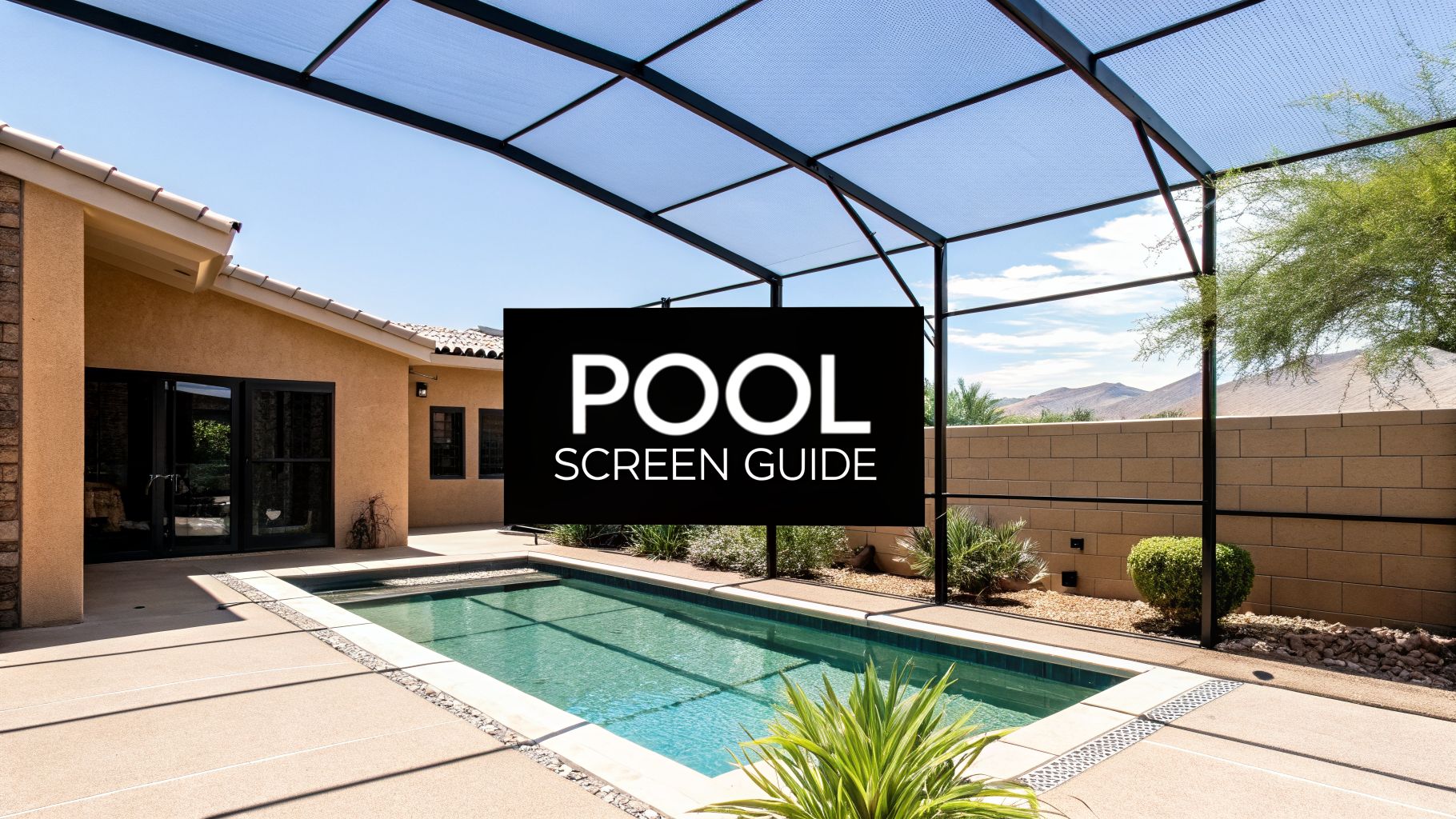

Imagine turning your Phoenix backyard into a bug-free, debris-free oasis you can actually live in, year-round. That's what a quality pool screen enclosure does. It essentially creates a versatile, comfortable outdoor room for relaxing, dining, or entertaining without swatting at mosquitos or fishing leaves out of the water.
Transform Your Backyard into an Outdoor Sanctuary

A pool screen enclosure is so much more than a simple barrier. It's a true lifestyle upgrade, fundamentally changing how you use your outdoor space here in the Valley. In a climate like ours, the benefits go way beyond convenience—they add real value and make your home more enjoyable every single day.
Think of it as adding a whole new room to your house. The walls are breathable, the ceiling filters out the harshest sun, and you get to enjoy the Arizona outdoors in total comfort. It’s an investment that pays you back in pure relaxation, increased usability, and a lot fewer chores.
Redefining Your Outdoor Living Experience
A well-built enclosure completely shifts the dynamic of your backyard. Suddenly, you have a protected, clean environment that just invites you to spend more time outside, whether you're hosting a weekend BBQ or just enjoying a quiet cup of coffee by the pool. The advantages are immediate and obvious.
- Pest and Debris Control: Kiss those mosquitoes and flies goodbye. You can also forget about the daily ritual of skimming leaves, twigs, and dirt from your pool. The fine mesh screen does the work for you.
- Enhanced Safety: A proper enclosure is a critical safety barrier, giving you peace of mind by keeping unsupervised kids and pets safely away from the water.
- UV Protection: Modern solar screens can block a huge percentage of harmful UV rays. This not only makes your patio cooler but also protects your family's skin from overexposure.
To give you an idea of how popular these have become, the global market for swimming pool enclosures hit about USD 1.5 billion in 2023. It's expected to jump to USD 2.5 billion by 2032. That growth is coming from homeowners who get it—an enclosure makes their home safer, more valuable, and a lot more fun.
Let's break down the immediate perks with a quick summary.
Immediate Benefits of a Pool Screen Enclosure
This table gives a quick look at the key advantages a pool screen enclosure brings to your Phoenix home and lifestyle.
| Benefit | Impact on Your Lifestyle |
|---|---|
| Pest-Free Living | Enjoy evenings outdoors without bug spray or citronella candles. |
| Cleaner Pool & Patio | Drastically cuts down on skimming and sweeping, saving you time and effort. |
| Added Safety | Creates a secure barrier, offering invaluable peace of mind for families. |
| Sun Protection | Reduces harsh UV exposure, making your outdoor space cooler and safer. |
| Increased Privacy | Adds a layer of seclusion from close neighbors, making your oasis feel truly your own. |
These benefits come together to create a more functional and relaxing outdoor living space from day one.
A Smart Investment for Your Phoenix Home
At the end of the day, installing a pool screen enclosure is a smart move that boosts your quality of life while protecting your home's value. It lowers pool maintenance costs, makes your backyard usable for more of the year, and adds a touch of functional elegance. For the best result, it helps to see how an enclosure fits into the bigger picture; check out these inspiring backyard pool design ideas to see how it all comes together.
This guide will cover everything you need to know, from materials and costs to Phoenix-area permitting and how to find a reliable installer. And if you're thinking about your patio space, you might also be interested in how an enclosed screen patio can work with your pool area.
The Nuts and Bolts of Your Pool Enclosure: Materials and Costs
Think of building a pool screen enclosure like outfitting a boat. You need a strong, reliable hull (the frame) and the right kind of sail (the screen) to get the performance you want. Get these two components right, and you'll have an outdoor oasis that's perfectly tuned to your needs and the realities of living in the Phoenix area.
The frame is the skeleton of the whole operation. It’s what stands tall during our wild monsoon storms and provides the muscle to hold the screen in place. The screen itself is the skin—the part that does the specific job you hired it for, whether that's keeping bugs out, blocking that intense sun, or standing up to your dog's happy tail.
The Frame: Why Aluminum is King in Arizona
When it comes to framing materials here in the Valley, there's really only one conversation to have: aluminum. It’s the undisputed champion, and for good reason. It's incredibly strong for its weight, which lets us build massive, beautiful enclosures without needing a forest of thick posts blocking your view of the pool.
But the real magic of aluminum is that it’s completely rust-proof. That’s a non-negotiable feature right next to a giant body of chlorinated water. While steel would eventually rust and leave ugly orange stains on your cool deck, and wood would warp and rot in the sun, aluminum just keeps on going. It’s a set-it-and-forget-it material that will look great for decades with virtually no upkeep.
The Screen: More Than Just a Bug Blocker
With the frame sorted, we get to the fun part—choosing the screen mesh. This is where you really get to customize your space. The screen you pick has a huge impact on how comfortable your patio is, how much you might save on energy, and how you use the space day-to-day. It’s definitely not a one-size-fits-all situation.
- Standard Bug Screen (18/14 Mesh): This is the classic, reliable choice. The "18/14" just means it has 18 threads one way and 14 the other in a square inch. It’s the perfect balance for stopping common pests like flies and mosquitoes while still letting a great breeze flow through. It’s your go-to for solid, no-frills pest control.
- No-See-Um Screen (20/20 Mesh): Ever been driven inside by those tiny, infuriating gnats? This is your answer. The tighter 20/20 weave is a finer mesh designed to block even those minuscule critters from crashing your party. It's a lifesaver if you're particularly sensitive to bites.
- Solar or Sun Screen: For life in Arizona, this stuff is a game-changer. Think of it as a giant pair of sunglasses for your entire patio. A quality solar screen can block up to 90% of the sun's heat and damaging UV rays. You'll immediately feel the temperature drop, and your patio furniture will thank you by not fading to a completely different color.
- Pet-Resistant Screen: If you have four-legged family members, this is a must. Made from a super-tough, vinyl-coated polyester, this screen is seven times stronger than the standard stuff. It’s built to handle claws, paws, and general pet shenanigans without tearing, saving you a lot of hassle and repair calls.
To make it a bit easier, here’s a quick breakdown of how these popular options stack up against each other.
Comparing Common Screen Mesh Options
| Feature | Standard Bug Screen | Solar Screen | No-See-Um Screen |
|---|---|---|---|
| Primary Goal | General pest control | Heat & UV ray reduction | Blocking tiny insects |
| Weave Density | 18/14 mesh (balanced) | Varies (often thicker/denser) | 20/20 mesh (very fine) |
| Best For | Keeping out mosquitoes, flies, and other common bugs. | Patios with direct sun exposure, cooling the space, and protecting furniture. | Homes near lakes or grassy areas where gnats and small pests are common. |
| Visibility | Excellent | Good (provides daytime privacy) | Good |
| Airflow | Maximum | Good, but slightly reduced | Very Good |
| Cost | $ | $$$ | $$ |
Ultimately, the best screen for you depends entirely on what problem you’re trying to solve. Don't be afraid to mix and match, either—you might want a solar screen on the west-facing side and a pet screen along the bottom.
A key insight from the industry is the shift toward longevity and performance. Low-maintenance materials like aluminum and vinyl now comprise 80% of sales, lasting 15-20 years with proper care. This is a huge leap from older materials that often failed within five years. Discover more insights about the growing screen enclosure market and its future trends.
Breaking Down the Costs in Phoenix
So, what's this all going to cost? It’s not one simple number, but most homeowners in the Phoenix area can expect to invest somewhere between $8 to $15 per square foot. The final price tag depends on a few key things.
Here’s what really moves the needle on your total project cost:
- Size and Complexity: This is the big one. A straightforward rectangular enclosure is much simpler (and more affordable) to build than a complex, multi-angled structure that has to be carefully tied into your home’s unique roofline. The bigger and more complicated it is, the more it will cost.
- Screen Material Choice: As we saw above, the mesh you choose makes a difference. A standard bug screen is your most budget-friendly option, while premium solar screens or ultra-durable pet screens cost more because you're paying for that advanced technology and durability.
- Frame and Hardware: While we always use aluminum, the thickness of the frame and the quality of the hardware (screws, door handles, etc.) can vary. Thicker-gauge aluminum and stainless steel fasteners cost a bit more upfront but pay for themselves in longevity and storm resistance.
- Custom Features: Want to add a doggy door? Or maybe you’d love a panoramic "clear view" section with no vertical posts to interrupt your mountain view? These custom touches make the space your own but will add to the final invoice.
By thinking through these factors, you can work with a pro like Sparkle Tech Screen Service to design an enclosure that hits that sweet spot between your dream patio and your budget.
Navigating the Installation Process in Phoenix
Wondering how a new pool enclosure actually comes to life? It's not as simple as a crew just showing up with a truck full of aluminum. A professional installation is a well-oiled process, a series of carefully planned steps designed to give you a perfect, long-lasting structure. Knowing what to expect takes the mystery out of it and helps you appreciate the craftsmanship involved.
Think of it as a journey from a simple idea to a fully realized outdoor living space. It all starts with a conversation, not a hammer and nails.
The Initial Consultation and Design
This first meeting is where your vision starts to take shape. An experienced pro will come to your home, not just with a tape measure, but with a keen eye for detail. They'll assess your property’s unique layout—the roofline, the patio’s slope, and any existing landscaping that needs to be worked around.
This is your time to talk about what you really want. Are you trying to block that brutal afternoon sun on the west side of the pool? Do you need a tougher, pet-proof screen along the bottom for your dog? This back-and-forth is what turns a generic plan into a custom solution that fits your lifestyle and your home’s look.
The design phase is so much more than just drawing a box around your pool. It’s about engineering a structure that can stand up to Arizona's monsoon winds and blistering sun. A poorly planned enclosure can cause drainage headaches or develop weak spots over time, so getting this part right is non-negotiable.
Once you’ve signed off on the final design, the project moves into the nitty-gritty phase.
Permitting and Fabrication
Before any construction begins, there’s some crucial paperwork to handle: getting a building permit. Here in Maricopa County, most pool enclosures are considered permanent structures, which means they need the green light from your city's planning department.
A professional installer like Sparkle Tech Screen Service takes this entire burden off your shoulders. Honestly, this is a huge relief. Navigating local building codes can be a nightmare, but a good contractor ensures everything is up to code, giving you total peace of mind.
While the permits are being approved, your enclosure is already being built—just not in your backyard. All the aluminum framing is precisely cut and prepped off-site in a controlled workshop. This approach has some serious advantages:
- Accuracy is King: Cutting materials in a workshop with specialized equipment is far more precise than doing it on a driveway.
- Speedy Installation: With everything pre-cut, the on-site build goes much, much faster.
- Less Mess: It keeps the noise, dust, and general chaos in your backyard to an absolute minimum.
This diagram gives you a great visual of how a typical project flows from one stage to the next.

This streamlined system ensures every step, from the first sketch to the final build, is handled with expert precision.
On-Site Construction and Final Walkthrough
Once the permits are approved and the materials are ready, the real fun begins. The installation crew starts by setting the foundation, anchoring the base tracks securely to your concrete pool deck. From there, the aluminum skeleton goes up as they assemble the posts and roof beams that form the main structure.
After the frame is standing strong, it's time for the screening. Using special tools, the installers stretch the mesh into each panel until it's perfectly taut, almost like a drum. This is also when they'll hang the doors, install the hardware, and add any other custom features you chose.
A typical installation only takes a few days, not weeks. The crew works quickly to get in and out with as little disruption as possible, keeping the job site tidy and you in the loop.
The project wraps up with a final walkthrough. You'll go over every inch of the new enclosure with the project manager to make sure it’s exactly what you wanted and built to the highest standard. This is your chance to ask any lingering questions and confirm you’re 100% satisfied with your new backyard oasis. The process is quite similar for other structures, and you can learn more about how we handle lanai screen enclosures in our detailed guide.
Maintenance And Repair To Keep Your Enclosure Perfect
A fresh pool screen can turn your Phoenix backyard into an everyday oasis. But like any living space, it needs a little TLC to stay in top form. Simple, regular upkeep paired with timely professional fixes will keep your enclosure looking sharp and performing flawlessly against Arizona’s harsh sun and monsoon storms.

Day-to-day care is easier than you might think. A few times a year, grab a soft-bristle brush, a bucket of warm water and a mild soap solution. Gently scrub the mesh and frame to lift off dust, pollen, and grime.
Avoid harsh chemicals or power washers—these can strip the protective coating and weaken the fibers over time. By staying on top of this simple routine, you’ll spot tiny tears or loose fittings before they become big headaches.
Recognizing Common Enclosure Issues
Even with careful cleaning, Arizona’s UV rays and sudden storms can cause wear. Here are the most frequent trouble spots:
Torn or Ripped Screen Panels
Often the result of flying debris, sun-brittled mesh, or accidental snags. A single tear lets pests and debris inside.Faded and Brittle Screens
Years in the sun can rob mesh of its color and flexibility. If it cracks under gentle pressure, replacement is imminent.Damaged Spline
The rubber gasket (spline) holds your screen in place. Over time it can dry out, crack, and pop free—letting the mesh sag.Door and Hardware Problems
Sliding doors see heavy use. Watch for worn wheels, broken handles, or latches that refuse to close securely.
Catching these issues early preserves safety, keeps out bugs, and maintains that crisp, well-kept look.
Repair A Panel Or Rescreen The Entire Enclosure
When damage appears, you’ll generally choose between a quick panel repair or a full rescreen:
- A panel repair replaces only the affected section—perfect for isolated rips from stray golf balls or tree limbs. It’s fast and budget-friendly when the remaining mesh is still solid.
A full rescreening involves replacing all the screen mesh on the entire structure at once. This is the best course of action when multiple panels are damaged, or when the existing screen is old, brittle, and faded. Rescreening restores your enclosure to a like-new condition, ensuring uniform strength and appearance.
Opting for a complete rescreen prevents one-off fixes every few months as different panels weaken. Our team can guide you to the smartest choice—learn more about our pool screen enclosure repair services.
Market Insights And The Value Of Upkeep
Maintaining your screen enclosure isn’t just about looks. Consider these industry figures:
| Metric | Value |
|---|---|
| Swimming Pool Sector Value (2025) | USD 5.90 billion |
| Projected Market Value (2030) | USD 8.24 billion |
| UV Exposure Damage in Sunbelt States | 75% |
| Enclosure Extension of Pool Life | 25% |
| Reduction in Chemical Usage | 35% |
For a deeper dive into global trends, check out the latest report from Mordor Intelligence. Keeping your enclosure in peak condition not only protects your investment—it delivers long-term savings and a more enjoyable poolside experience.
How to Choose a Reputable Arizona Installer
Choosing the right contractor to build your new pool screen enclosure is easily the most critical decision you'll make. It’s the difference between a beautiful, sturdy addition that lasts for decades and a project plagued by expensive headaches. Think of it like hiring a custom home builder—you wouldn't just go with the cheapest guy, you'd want someone with a rock-solid reputation for quality work.
The stakes are even higher here in the Valley. Our relentless sun and powerful monsoon storms put building materials to the ultimate test. A seasoned local installer gets this. They know which materials and construction methods hold up to the desert climate and which ones fail. This isn't about finding the lowest bidder; it's about securing the best long-term value and your own peace of mind.
The Non-Negotiable Checklist
Before you waste time getting quotes, you need to filter out the amateurs from the pros. Any company that can’t check every single one of these boxes should be out of the running immediately. A legitimate contractor will have this information handy and won't hesitate to prove it.
- Proper Licensing: Your contractor must have a valid license with the Arizona Registrar of Contractors (ROC). You can—and absolutely should—look up their license number on the ROC website to confirm it’s active and in good standing.
- Comprehensive Insurance: Ask for proof of both general liability insurance and workers' compensation. This is what protects you, your home, and their crew from any accidents on your property.
- Strong Local Portfolio: They should be able to show you a portfolio of recent projects right here in the Phoenix area. Seeing their actual work is the best way to judge its quality.
These three items aren't optional; they are the bare minimum for any professional operation. Going with someone who lacks them is a gamble you don't want to take.
Analyzing Written Quotes and Spotting Red Flags
Once you have a shortlist of qualified installers, it's time to get detailed written quotes. A real quote is much more than a price tag—it’s the blueprint for your project. It needs to be thorough, spelling out the specific costs for all materials, labor, and permits.
A vague quote is a massive red flag. If a contractor won't specify the exact grade of aluminum, the type of screen mesh, or the hardware they plan on using, it’s often because they're planning to use cheaper, inferior products to pad their profit. Always insist on an itemized breakdown.
As you look over the quotes, keep your eyes peeled for common warning signs. A trustworthy installer is transparent and professional; be suspicious of anyone who isn't.
Watch Out For These Red Flags:
- High-Pressure Sales Tactics: A pro gives you the information you need and lets you make the call. If someone is pushing you to "sign today" for a "special deal," it's time to show them the door.
- Requests for Large Upfront Payments: A modest deposit is normal, but Arizona law actually limits how much a contractor can ask for as a down payment. A demand for a huge chunk of the total cost upfront is a serious cause for concern.
- "Cash Only" Deals: If a price seems too good to be true, it almost always is. Paying in cash might save you a few bucks, but it also means no paper trail, no warranty, and no options if the work is shoddy.
Ultimately, picking an installer is like choosing a partner for a major project. Take your time, do your research, and listen to your gut. By focusing on licensed, insured professionals who know the Phoenix area inside and out, you’re making sure your new pool screen enclosure will be a source of enjoyment for many years to come.
Answering Your Pool Screen Enclosure Questions
Deciding to install a pool screen enclosure is a big move, and it’s only natural to have a few questions before you commit. Here in Arizona, homeowners are rightly curious about how these structures hold up to our intense sun and wild weather. I get it.
This section is all about giving you straight, honest answers to the most common questions we hear every day. Think of it as a quick chat with an expert. We’ll cover the big ones—lifespan, heat, storm durability, and costs—so you can feel completely confident in your decision.
How Long Does a Pool Screen Enclosure Last in Arizona?
This is usually the first question people ask, and it's a great one. The answer really has two parts: the sturdy frame and the screen itself.
First, the aluminum frame. A professionally installed frame is an absolute workhorse. Since aluminum doesn't rust, the structure itself will easily last for 20 years or more. It’s the long-term backbone of your entire enclosure.
The screen mesh, on the other hand, is the part that does the heavy lifting against sun, wind, and dirt every single day. Because of that, its lifespan is different. Depending on the type of screen you go with, you can expect it to last anywhere from 7 to 15 years under the Arizona sun. A standard bug screen might be on the lower end of that range, while a high-performance solar screen or a tough pet-resistant screen is engineered to last much longer.
The easiest way to think about it is this: The aluminum "skeleton" is a one-time, long-term investment. The screen "skin" is a component you should plan on replacing every decade or so to keep everything looking and functioning like new.
Will a Screen Enclosure Make My Patio Hotter?
This is a common myth, but thankfully, the reality is the complete opposite. A well-designed pool enclosure, especially one using solar screens, will actually make your patio area significantly cooler and much more comfortable.
Imagine a solar screen as a giant pair of sunglasses for your pool deck. Here’s how it works to beat the heat:
- Blocks UV Rays: Modern solar screens are incredible, blocking up to 90% of the sun's harsh UV rays. This dramatically cuts down on the heat that bakes your concrete deck and warms up your pool water.
- Creates Shade: The screen casts a consistent, gentle shade over the whole area. No more scorched patio furniture or blistering hot ground.
- Keeps the Air Moving: While blocking the sun, the mesh is still open enough to let the breeze flow through. You get that nice cooling airflow without the punishing sun.
The end result is a breezy, shaded oasis that feels several degrees cooler than an open patio. You’ll be able to walk barefoot on your pool deck in the middle of July—something that’s pretty much impossible without a screen.
Can an Enclosure Withstand Arizona Monsoon Storms?
Our monsoon season is no joke, with its powerful winds and driving rain. So, it's smart to wonder how a big screen structure will handle it. The good news is that modern pool enclosures are engineered to meet specific wind-load standards, making them surprisingly resilient.
The single most important factor here is professional installation. A reputable installer will use the right heavy-gauge aluminum, proper bracing, and high-quality fasteners to build a structure that has the strength to stand up to strong winds.
While nothing is 100% immune to a direct hit from a severe microburst, a well-built enclosure is designed to handle the typical high winds we see during monsoon season without any major problems. Realistically, you might get a small tear from flying debris now and then, but a catastrophic failure of a properly installed frame is extremely rare.
How Much Does Rescreening an Enclosure Cost?
Eventually, your screens will get old, brittle, or torn. When that happens, a full rescreening is like a facelift for your enclosure, making it look brand new again. While the final price can vary, it helps to have a ballpark idea.
The cost for a full rescreening really comes down to two things:
- Total Square Footage: It’s simple—the bigger the enclosure, the more screen material and labor are needed. The cost is typically calculated per square foot.
- Type of Screen Chosen: The material you pick makes a big difference. A standard bug screen will be your most budget-friendly choice. If you opt for premium solar screens or extra-durable pet screens, the project cost will be higher because the materials themselves are more advanced and expensive.
For a typical Phoenix-area pool enclosure, rescreening usually costs just a fraction of what a brand-new build would. It's an incredibly cost-effective way to get many more years of enjoyment out of your space. For more information on making sure your pool area is up to code, this guide on pool safety fence requirements is a great resource.
Ready to get a clear answer for your own project? Sparkle Tech Screen Service offers quick, no-hassle quotes and same-week service to get your enclosure looking its best.
Give us a call or text at 623-233-0404 or 800-370-3998 to discuss your screen repair or installation needs. Find out more at https://sparkletechscreenservice.com.


