


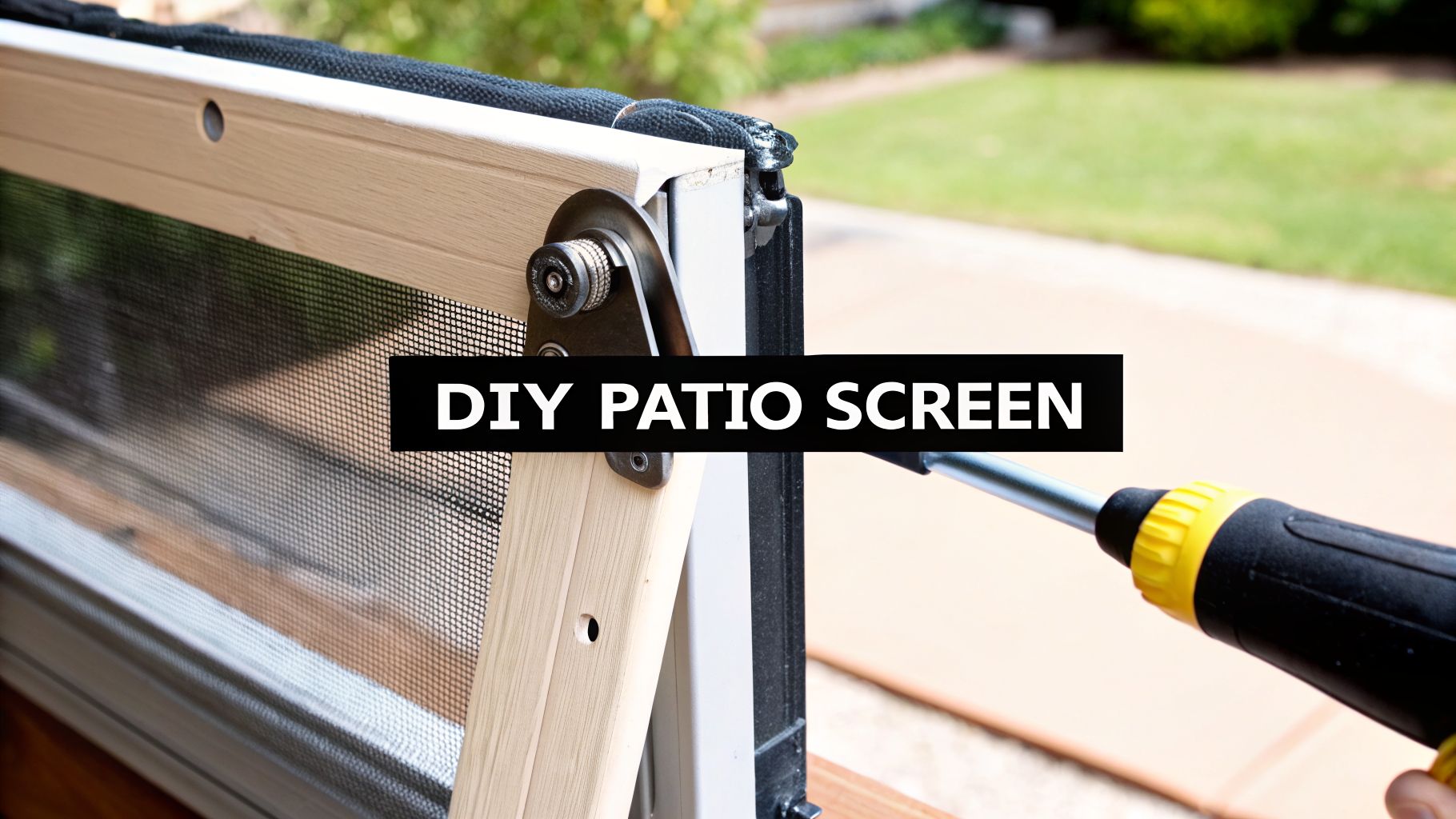

That tiny tear in your patio screen seems harmless enough, right? But before you know it, it becomes an open invitation for every bug in the neighborhood. Deciding to replace a patio screen altogether, rather than just patching it, is often the smartest move when you see signs of serious wear. Let's walk through how to tell when your screen has truly had enough.
Is It Time for a Screen Replacement?

It’s easy to put off replacing a screen, especially if the damage seems minor. But the real decision often comes down to the subtle signs of aging. After years of baking in the sun and getting pelted by rain, the screen mesh just gives out, hurting both its performance and your home's look.
Spotting the Telltale Signs of Damage
Sure, a big rip is obvious, but you need to look closer for the real clues that your screen is on its last legs.
Go ahead and touch it. A healthy screen has some give, but if it feels stiff, brittle, or even crackles under your fingers, it's ready to fail. That brittleness is a sure sign the material has broken down.
Another dead giveaway is discoloration. If your once-black screen now has a faded, chalky, or whitish look, the sun’s UV rays have destroyed its protective coating. It’s not just an eyesore; it means the mesh is weak and a tear is just waiting to happen.
Finally, check for sagging. A properly installed screen should be taut. If yours is drooping or looks wavy, it’s not just a cosmetic issue. Those sags create gaps along the frame, giving insects a clear path to your patio.
When a Patch Just Won't Cut It
Sometimes, a small patch kit is all you need for a tiny, clean puncture. But let's be honest—that's usually a temporary fix. Making that call between a quick patch and a full replacement can be tricky, so here’s a quick guide to help you decide.
Repair vs. Replace: A Quick Assessment Guide
Use this table to quickly determine if your patio screen issue warrants a simple repair or a full replacement.
| Symptom | Recommended Action | Reasoning |
|---|---|---|
| One small hole (<1 inch) | Repair | A simple patch kit is a quick, cost-effective fix for minor, isolated damage. |
| Multiple small holes | Replace | Patching several spots is time-consuming and looks messy. It also signals the screen is failing in multiple areas. |
| Large tear (>3 inches) | Replace | A patch large enough for this will be obvious, sag, and likely won't hold for long. |
| Brittleness or discoloration | Replace | The entire screen mesh has degraded from sun exposure. Patching will just cause new tears to form nearby. |
| Screen pulling from frame | Replace | The screen has lost tension or the spline is failing. Re-screening is the only way to get a tight, secure fit. |
| Bent or damaged frame | Replace Frame & Screen | A damaged frame won't hold a new screen properly. It’s best to replace the entire unit for a lasting solution. |
Ultimately, if the screen is old and showing widespread weakness, patching is just delaying the inevitable.
For larger tears, multiple holes, or widespread brittleness, a full replacement is the more cost-effective and reliable solution. Patching an old, weak screen is like putting a bandage on a bigger problem—it won't last long.
Opting for a full replacement isn't just about fixing a problem; it's a genuine upgrade.
- Real Pest Protection: A new screen seals the deal, keeping everything from mosquitoes to flies on the outside where they belong.
- A Fresh Look: Nothing cleans up the appearance of a patio faster than a crisp, tight, new screen. It’s an instant boost to your curb appeal.
- Better Airflow and Views: You’d be surprised how much an old, faded screen can obstruct your view and block a nice breeze. New mesh brings the outside in, clearly.
If you’re thinking about this project, you’re in good company. Homeowners are increasingly focused on making their outdoor living areas more functional, with the global market for screen doors and services projected to hit USD 4.5 billion by 2033. You can dig into the full details on this growing trend in recent industry reports, but the takeaway is clear: a quality screen is a valuable home investment.
Choosing Your Materials and Gathering the Right Tools
Nothing kills the momentum of a weekend project faster than having to make a second or third trip to the hardware store. Before you even think about pulling that old screen out, let’s get your tools and materials lined up. Getting everything you need in one go is half the battle.
The best part? You don’t need a fancy workshop. Most of what you’ll need is probably already in your garage, and the few specialty items are cheap and easy to find.
Your Essential Tool and Supply Checklist
Here’s a rundown of what to grab. Having these laid out and ready will make the whole process go smoothly.
- Utility Knife: Make sure you have a fresh, sharp blade. A dull knife will snag and tear the mesh, leaving you with a fuzzy, unprofessional-looking edge.
- Spline Roller: This is the one specialty tool you absolutely need. It has two different wheels: one pushes the screen fabric into the frame's channel, and the other shoves the spline in right after it.
- Flathead Screwdriver or Awl: You’ll need something small and sharp to pry out the old, brittle spline. It can be stubborn.
- Tape Measure: The old rule holds true: measure twice, cut once. Accuracy here is everything.
- Clamps (Optional but highly recommended): A few cheap spring clamps make a world of difference. They hold the screen taut for you, acting like an extra set of hands and preventing wrinkles.
Pro Tip: Don't even think about substituting the spline roller. I've seen countless people try to use a screwdriver and end up tearing their brand-new screen or, even worse, bending the aluminum frame. A proper spline roller only costs $5-$10, and it's the best money you'll spend on this project.
Decoding Screen Mesh Materials
The screen mesh is the main event, and you’ve got a few different types to choose from. This isn’t just about looks; it's about matching the material to your lifestyle, your climate, and your budget.
This choice has become more significant as people put more value on their outdoor living areas. We're seeing a huge trend toward higher-quality screen solutions in general. The market for premium retractable screen doors, for example, is expected to jump from USD 2.14 billion in 2024 to USD 3.62 billion by 2033. If you're curious about where the industry is headed, you can see the data in the latest retractable screen door market report.
Let's break down the common options to help you pick the right one.
| Screen Material | Pros | Cons | Best For |
|---|---|---|---|
| Standard Fiberglass | Inexpensive, flexible, easy to install, won't crease or dent. | Less durable, tears more easily, shorter lifespan (5-8 years). | Budget-conscious projects and low-traffic areas. |
| Aluminum | Excellent durability, rigid, provides a crisp, clear view. | Can dent or crease permanently if mishandled during installation. | High-traffic areas where durability is a priority. |
| Pet-Resistant | 7x stronger than fiberglass, resists tears from claws and paws. | Thicker mesh reduces visibility and airflow slightly, more expensive. | Homes with dogs, cats, or small children. |
| Solar Screen | Blocks 80-90% of solar heat and UV rays, reduces energy costs. | Highest cost, reduces some natural light from entering the home. | Hot, sunny climates like Phoenix or areas with intense sun exposure. |
Choosing the Right Spline
Now for the unsung hero of this operation: the screen spline. This is the little rubber cord that locks the mesh into the frame channel. It might seem like a tiny detail, but getting the size wrong will stop your project in its tracks.
Spline comes in different diameters, usually between .125" and .250". The trick is simple: match the new spline to the old one. When you dig out a piece of the old spline, take that exact piece with you to the store. If you buy spline that’s too thin, the screen will pop right out. If it’s too thick, you’ll fight for an hour trying to force it in and could damage the frame.
Most spline is either vinyl or foam. Vinyl is the standard workhorse—durable and reliable. Foam spline is a bit more forgiving and can compress to fit channels that aren't perfectly uniform. For a standard patio screen, vinyl is almost always the right call.
Taking the time to get these materials right sets you up for success. If you're dealing with intense sun and are leaning toward a specialty material, our guide on solar screen installation is a great next step.
Your Hands-On Screen Replacement Walkthrough
Alright, you've got your tools and materials gathered. Now for the satisfying part—turning that torn, faded screen into something you can be proud of. I’ll walk you through the entire process, sharing the same techniques we use in the field to get a professional, drum-tight finish every time.
Before we jump in, here’s a quick visual reminder of the three key things you should have ready to go.

Think of these as your project's foundation: the right mesh for your home, the proper tools for the job, and spline that's the perfect size. Get these three right, and you're already halfway to a perfect installation.
Getting the Old Screen Out
First things first, we need to dismantle the old screen. If it's a sliding door, carefully lift the frame out of its track. Lay it down on a big, flat work surface—a pair of sawhorses, a clean garage floor, or even the driveway will do. The key is to keep the frame from bending or twisting while you work.
Now, hunt for the end of the old spline, which is that rubbery cord holding the screen in place. Use a small flathead screwdriver or an awl to gently dig into the channel and pry up one end.
Once you've got a little bit of it loose, you can usually just pull it out with your fingers or a pair of pliers. Ideally, it comes out in one long, satisfying strip. Don't be surprised if it's brittle from years in the sun; old spline often breaks into little pieces that you'll have to patiently pick out of the groove.
With the spline gone, the old mesh will lift right off. Take a moment to brush out the frame's channel. Get rid of any dirt, dust, or leftover bits of old spline. A clean channel is essential for getting the new spline to seat correctly.
Measuring and Cutting the New Mesh
Here’s a step where you can relax a bit—no need for a tape measure just yet. Simply unroll your new screen mesh over the entire frame, making sure it overhangs on all four sides.
You'll want to give yourself at least two to three inches of extra material on every side. This overhang is your best friend during installation, giving you something to grip for tension and a little wiggle room for error.
One of the biggest mistakes I see people make is cutting the mesh to the exact size of the frame. You simply can't get the screen tight without that extra material to pull on. You'll end up with a saggy, wrinkled screen every time. Always leave plenty of excess.
Once your mesh is laid out with enough overhang, grab your utility knife and slice the piece from the main roll. If you're using clamps, this is the perfect time to lock one side of the mesh to the frame to keep it from shifting around.
Installing the New Screen and Spline
This is where the magic happens. Grab your spline roller—you'll notice it has two different wheels. One is convex (rounded outward), and the other is concave (has a groove).
Start in a corner. Using the convex wheel, gently press the screen mesh into the channel along one entire side. Don't push too hard; you're just creating a path for the spline.
Next, lay your new spline over the groove you just made. Switch to the concave wheel on your roller. This grooved wheel is designed to push the spline perfectly into the channel. Using firm, steady pressure, roll it right over the spline. You’ll feel and hear it pop into place, locking the screen down.
Achieving That Professional, Tight Finish
The secret to a tight screen is tension and the order you work in. After you finish the first side, move directly to the opposite side, not the one next to it. This balances the tension and prevents wrinkles.
As you start installing the spline on the second side, gently pull the screen fabric taut, away from the center of the frame. You don't need a herculean pull—just a firm, steady tension is all it takes to eliminate any slack.
Here's the pattern the pros use:
- Install the spline on one of the shorter sides.
- Move to the opposite short side, pulling the mesh taut as you roll the spline in.
- Finish with the two long sides, again, maintaining gentle tension as you go.
This opposite-side method is the key to preventing sags and waves. When you're done, the screen should be nice and firm. For complex projects like oversized openings or specialty frames, you might find that professional help is the better route. You can see what's possible by exploring a custom screen installation service to get an idea of the options.
Trimming the Excess for a Clean Look
You're on the home stretch! This last step is easy, but it pays to be careful. It’s time to trim away that excess mesh for a clean, finished look.
Take your sharp utility knife and angle the blade away from the spline you just installed. Rest the tip of the blade against the outer edge of the spline channel and run it smoothly along the frame, letting the frame itself guide your cut.
A fresh, sharp blade is crucial here—it will slice cleanly without snagging or pulling your new screen. Once all four sides are trimmed, you're all done. Stand that frame up and admire your work
Troubleshooting Common DIY Replacement Issues

Even the most carefully planned DIY project can throw you a curveball. When you replace a patio screen, a few common frustrations can pop up. But don't worry—most are simple to sort out with a bit of patience and know-how.
The number one complaint I hear is about wrinkles or sags in a brand-new screen. It's a real letdown to step back and see waves instead of a taut, perfect finish. This almost always boils down to uneven tension when you were rolling in the spline.
Fixing Wrinkles and Sagging Screens
If you're seeing waves, the fix is usually pretty quick. You just need to pull the spline out from at least two sides of the frame to reset the tension. I find it's best to start with the last two sides you installed.
With the spline removed, gently pull the screen mesh taut, always working from the center of the frame out toward the corners. The key here is applying even, gentle pressure. You're not trying to rip it; you're just smoothing it out. Use your clamps to hold it securely in this taut position, then carefully roll the spline back into its channel.
Don't be afraid to redo a side. It's much better to spend ten extra minutes pulling out a spline and re-rolling it than to live with a saggy screen for years. A tight screen is what separates an amateur job from a professional one.
For a really bad sag, you might just have to pull out all the spline and start the tensioning process over from scratch. Just remember that pro-level pattern: install one side, then the opposite side, and finish with the last two opposite sides. It’s your best defense against wrinkles from the get-go.
When the Spline Won’t Go In
Another classic headache is a spline that refuses to seat in the channel. You push and roll, but it just won't cooperate. This usually points to one of two things: you've got the wrong spline size, or you're hitting a snag at the corners.
If you're fighting it along the entire length of the frame, chances are the spline you bought is too thick. There's no muscling your way through this one. The only real solution is to head back to the hardware store with a small piece of your original spline to find an exact match.
If the trouble is just at the corners, try one of these tricks I've picked up over the years:
- Warm it up. Vinyl spline gets stiff, especially on a cool day. Letting it sit in the sun for a few minutes or hitting it with a hairdryer on a low setting will make it much more flexible.
- Use a screwdriver. Before bringing out the roller, you can carefully use a flathead screwdriver to gently nudge the spline into the corner. Just be very careful not to slip and puncture your new screen.
Common DIY Screen Replacement Issues and Fixes
Even experienced pros run into the occasional snag. This quick-reference table covers the most common problems you might face during your project and how to get things back on track.
| Problem | Likely Cause | How to Fix It |
|---|---|---|
| Wrinkles or Sags | Uneven tension during installation. | Remove spline from the last two sides, gently pull the screen taut, and re-roll the spline. |
| Spline Pops Out | The spline is too thin for the frame's channel. | Take a piece of the old spline to the store to find an exact diameter match. |
| Fuzzy, Torn Edges | A dull utility knife blade was used for trimming. | Replace the blade with a fresh, sharp one. Make your cut in one smooth, continuous motion. |
| Screen Cut Too Short | The mesh was cut before tensioning, leaving no overhang. | Unfortunately, you'll need to start over with a new piece of screen. Always leave 2-3 inches of excess on all sides. |
Cutting the screen too short is a heartbreaking mistake, but it happens. It’s a painful reminder of why leaving that generous overhang is so critical. There's no real way to salvage a piece of mesh that’s too small to be properly secured. When you replace a patio screen, taking your time from the start will always save you the frustration—and cost—of having to buy materials twice.
When to Call a Professional
There's a special kind of pride that comes from a finished DIY project. I get it. But there are times when it’s smarter to put down the tools and pick up the phone. Being honest about your own limits is just as crucial as knowing how to use a spline roller.
Taking on a project that’s too far out of your comfort zone can easily backfire. You can end up with wasted materials, a frustrating weekend, and a screen that still sags. It’s a tough pill to swallow, but sometimes calling a pro is the best move.
For instance, if you pull the old screen out and discover the aluminum frame itself is bent, warped, or cracked, that's a red flag. A damaged frame simply won't hold a new screen taut. No matter how perfectly you install the mesh, you'll get gaps and sags. Pros can repair or replace frames on the spot, a fix that's beyond most DIY setups.
Times It's Best to Call in the Pros
Beyond a busted frame, a few other common scenarios should make you think twice before tackling the job yourself.
- Second-Story or High-Up Screens: This is all about safety. If your patio or porch is on an upper floor, trying to replace screens while balanced on a ladder is just asking for trouble. Professionals have the right safety equipment and training to handle jobs at height without a second thought.
- Large, Multi-Panel Enclosures: Rescreening one or two panels is a manageable weekend task. An entire patio enclosure with huge, floor-to-ceiling panels? That’s a whole different ballgame. It's a massive job that requires serious consistency to make sure every single panel looks uniform and tight.
- Specialty Screen Materials: If you've opted for something like a tough solar screen, be warned. These materials are much stiffer and harder to work with than standard fiberglass. It takes a ton of strength and a practiced hand to pull them tight without causing permanent creases or wrinkles.
If your project fits any of these descriptions, calling an expert isn't admitting defeat—it's making a smart call.
The real value of a professional isn't just the labor. It's the guaranteed result. You're paying for their efficiency, specialized tools, and the trained eye that delivers a flawless, drum-tight finish built to last.
What You're Really Paying For With an Expert
While saving a few bucks is a huge motivator for any DIY project, you have to weigh it against what a professional brings to the table. That upfront cost often pays for itself in quality and longevity.
The most obvious advantage is time. A job that could eat up your entire weekend might only take a pro a couple of hours. Just like that, you get your Saturday back.
Professionals also have access to wholesale pricing and a much wider selection of high-quality materials than you’ll ever find at the local hardware store. If your project seems even a little complex, exploring a dedicated patio screen repair service can save you a major headache and deliver a far better result.
Ultimately, the choice is yours. For simple, ground-floor screen panels, give it a shot! But for anything more complex, a pro ensures the job is done right, done safely, and done to last.
Common Questions About Patio Screen Replacement
Even with the best instructions, you're bound to have a few questions. That's perfectly normal. Let's run through some of the things homeowners ask us most often when they’re thinking about replacing a patio screen.
How Much Does It Cost to Replace a Patio Screen Myself vs. Hiring a Pro?
This is usually the first question on everyone's mind, and the cost gap between doing it yourself and hiring a professional is pretty wide.
If you go the DIY route, you're probably looking at $25 to $100 per panel. The final price really comes down to the mesh you pick—basic fiberglass is on the low end, while solar or tough pet screens cost more. You’ll also need to factor in the cost of a spline roller if you don't already own one.
Bringing in a professional will typically run between $75 and $200+ per panel. That extra cost covers the labor, of course, but also their expertise and the simple convenience of having it done right the first time.
While going the DIY route definitely saves you money, hiring a pro means you're guaranteed a perfectly taut screen without any of the headaches. This is especially worth considering for huge panels or tricky-to-install solar screens, which can be unforgiving.
What Is the Best Screen Material for Homes in Hot Climates?
If you live somewhere hot and sunny like Phoenix or anywhere in the Southwest, a solar screen is a game-changer. These aren't just for keeping bugs out; they’re specifically engineered to combat the sun.
Solar screens are designed to block a huge amount of the sun's heat and UV rays—usually between 80% and 90%. The benefits are immediate:
- Lower Cooling Bills: Your AC unit gets a much-needed break when your screens are blocking that much heat from pouring through your patio doors and windows.
- Less Glare: It just makes your home and patio more comfortable. No more squinting from the harsh afternoon sun.
- Protects Your Stuff: Those UV rays are what cause your furniture, rugs, and wood floors to fade over time. Solar screens stop that damage cold.
They do have a higher price tag than standard mesh, but the long-term energy savings and improved comfort make them a smart investment for anyone in a sun-drenched region.
How Long Does a New Patio Screen Typically Last?
The lifespan of your screen really depends on two things: the material you choose and how much direct sun it gets.
Your average, everyday fiberglass mesh—the most common and affordable option—will give you about 5 to 8 years before it gets brittle and starts tearing easily. But if you upgrade, you can get much more time. A high-quality pet-resistant screen or a premium solar screen can easily last 10 to 15 years, sometimes even longer with a little care. The key is picking a UV-resistant material if you want to get the most life out of it in a sunny climate.
Can I Replace the Screen in My Sliding Screen Door Myself?
You absolutely can. Replacing the screen in a sliding door is almost the exact same process as doing it in a fixed frame. The only real difference is getting the door off its track first.
Once you have the door down, just lay it flat on a big, stable surface like a driveway or patio. After that, it’s the same routine: dig out the old spline, pull off the damaged screen, lay the new mesh over the frame, and roll in the new spline to secure it. Just be careful when you're taking the door off and putting it back on—those aluminum frames can bend or warp if you handle them too roughly.
If you've read through this and decided the project is more than you want to handle on your own, we get it. For a guaranteed professional result, Sparkle Tech Screen Service is ready to help. We offer same-week service for screen repairs, full rescreening projects, and brand-new installations. Get a quick quote by visiting sparkletechscreenservice.com or just text/call us for immediate help.


