


That grinding, sticking patio door isn't just an annoyance—it's usually a sign of a problem that you can fix yourself. I've seen it a hundred times. In most cases, you’re dealing with one of three things: dirty tracks, worn-out rollers, or a door that’s just a bit out of alignment.
Let's walk through how to figure out what's really going on.
Finding the Source of Your Patio Door Problem
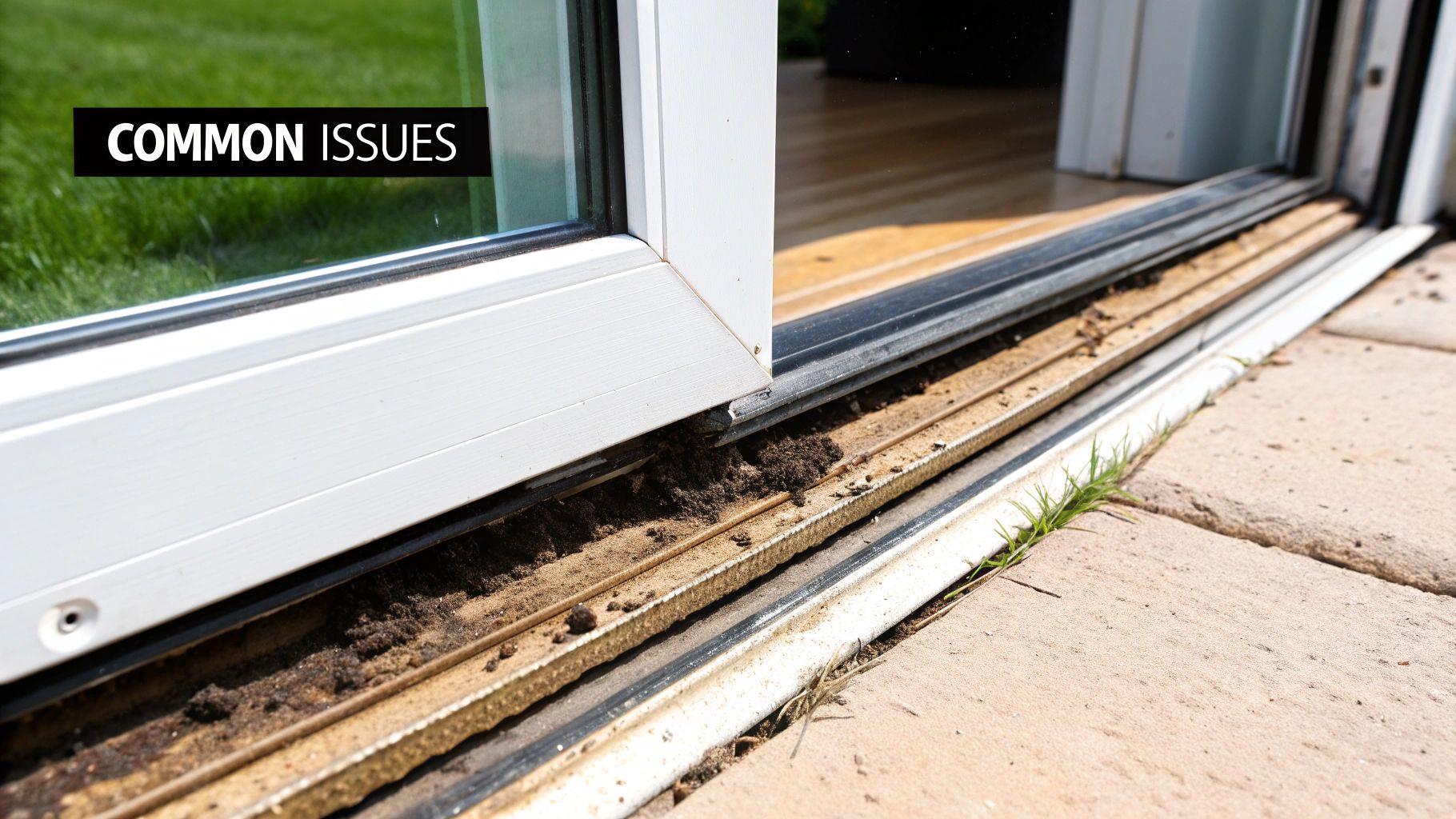
You can absolutely skip the frustration of wrestling with a heavy, stubborn door. Instead of just spraying some lubricant in there and hoping for the best, we're going to find the root cause and fix it for good. You'll get the satisfaction of a job done right and save a good bit of money by not calling in a pro.
This is a far more common household issue than you might think. With the push for better energy efficiency and smart home features, the demand for high-quality sliding doors has skyrocketed. The global market is even projected to hit USD 23.77 billion by 2025. You can read up on these sliding door trends to see just how integral they've become to modern homes. A door that doesn't work right just won't cut it.
What to Look and Listen For
Before you start taking things apart, pay close attention to what the door is telling you. Certain symptoms are dead giveaways for specific problems.
- Grinding or Scraping Sounds: This is the classic sign of junk in the track. It could be dirt, pet hair, or small pebbles. If the track is clean, the sound is likely coming from worn-out rollers that are dragging instead of rolling.
- It's a Workout to Open: If you have to put your back into it just to open the door, the rollers are probably shot. They've likely flattened out or seized up, forcing the door to drag along the track under its full weight.
- The Door Feels Wobbly: A door that wobbles or feels loose in its frame is a clear indicator of a misalignment. The rollers aren't seated correctly on the track, causing that unstable movement.
Pinpointing the Exact Cause of the Problem
Before you even think about grabbing your tools, let’s play detective for a minute. A proper diagnosis is the most important step in any patio door slider repair—it’s what saves you time, money, and a whole lot of frustration down the road. The key is to listen to what the door is trying to tell you.
For instance, that awful gritty, grinding sound almost always points to debris stuck in the track or rollers that are on their last legs. If the door feels wobbly or scrapes against the frame when you move it, you're almost certainly dealing with an alignment issue. These are the clues that will guide your repair.
Your Initial Inspection Checklist
Let's start with a thorough visual check. You’re hunting for the obvious culprits first, which, believe it or not, are often hiding in plain sight. This methodical approach helps make sure you're fixing the right thing the first time.
-
Examine the Track: Get down on your hands and knees with a good flashlight. You’re looking for anything that doesn't belong—small pebbles, compacted dirt, pet hair, or any physical damage like dents or bends in the metal track itself.
-
Check the Rollers: Do your best to peek underneath the door. Worn-out rollers often look flattened, cracked, or rusted. In some cases, you might even spot one that has jumped completely off its axle.
-
Test the Lock and Latch: Sometimes, the sliding mechanism isn't the problem at all. If the door glides smoothly but just won’t lock, check the alignment between the latch on the door and the strike plate on the jamb. It might just be off by a hair.
A common mistake I see is people assuming the main door is broken when it's actually the screen jamming things up. If your sliding screen is damaged, it can easily interfere with the glass door. If you think that might be the real issue, you can learn more about professional screen replacement for your patio door.
Quick Diagnosis: Symptoms and Solutions
To make things even easier, I've put together a quick reference table. Just find the symptom that matches your door's behavior to get a good idea of what's going on and what to do first.
Sliding Door Symptoms and What They Mean
| Symptom | Likely Cause | Your First Action |
|---|---|---|
| Grinding or gritty noise | Debris in the track | Clean the track thoroughly. |
| Door is hard to move | Worn-out or dirty rollers | Inspect and clean the rollers; prepare for replacement. |
| Door wobbles or feels loose | Rollers are off the track or misaligned | Check roller alignment and height adjustments. |
| Scrapes against the frame | Door is out of alignment or plumb | Adjust the roller height screws. |
| Sticks at one specific spot | Dent or damage in the track | Inspect the track for physical damage at that point. |
| Doesn't lock properly | Latch and strike plate are misaligned | Check and adjust the strike plate on the door jamb. |
This table should help you zero in on the problem quickly. Remember, a few minutes of careful observation now can save you hours of work later. By paying close attention to how the door moves and sounds, you've already won half the battle.
Give Those Door Tracks a Deep Clean
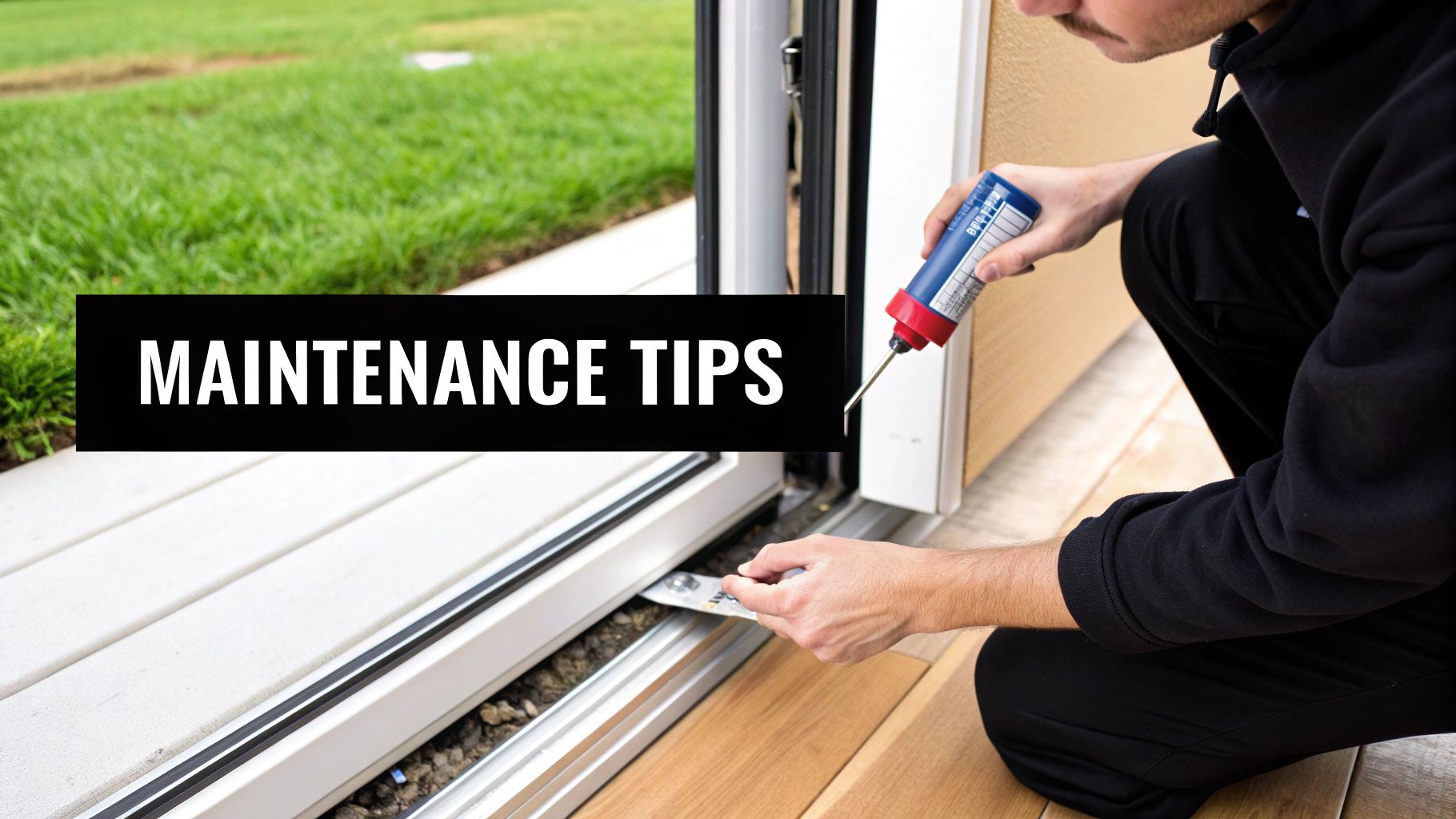
Honestly, nine times out of ten, the single most effective fix for a stubborn patio door is the one people skip: a really good cleaning. It's incredible how much gunk builds up in the track over the years. Dirt, pet hair, and mystery debris all get packed in there, acting like glue and causing that awful grinding and sticking.
Your first line of defense is a vacuum cleaner with a crevice tool. Go over every inch of the inner and outer tracks, getting right into the corners. Take your time with this—the more loose stuff you suck up now, the easier the next part will be.
Getting Rid of the Stubborn Grime
After vacuuming, you'll probably notice some caked-on grime that's been there for years. This is the stuff that really gums up the works. To tackle it, you’ll need a stiff-bristled brush (an old toothbrush is perfect for this) and a bucket of warm, soapy water.
Just dip the brush in and start scrubbing. You really want to work at it to break down all that compacted dirt. Once you've scrubbed the whole track, wipe it out with a damp cloth to get rid of the soapy residue, then follow up with a dry cloth to make sure it's completely moisture-free. The cleaning process is pretty universal for any track system; in fact, there's a detailed guide on cleaning door tracks for garage doors that follows a lot of the same principles.
Pro Tip: Whatever you do, stay away from oil-based lubricants like WD-40. I know it seems like an easy fix, but they are magnets for dust and dirt. Before you know it, you'll have a sticky, black sludge in your track that's even worse than what you started with.
The Right Way to Lubricate
Once the track is bone dry and sparkling clean, it's time to lubricate. This is a crucial step, and using the right product makes all the difference.
You want a silicone-based spray lubricant. This is the key. Unlike oil, silicone spray dries into a slick, clean film that won't attract more gunk. It repels moisture and lets the door glide effortlessly.
Just a light spray along the entire track is all you need. Then, slide the door back and forth a few times to spread the lubricant evenly over the rollers and track surface. The difference will be night and day.
Time for New Rollers and a Quick Alignment Tune-Up
If a good cleaning didn't solve your problem, it's time to look at the rollers. I've seen it a thousand times—worn-out, cracked, or completely seized-up rollers are almost always the culprit behind a door that fights you every time you try to open it. This is definitely the most hands-on part of the repair, but don't let that intimidate you. With a bit of patience and a friend to help, you can absolutely get this done.
First, you've got to get that door off its track. Seriously, this is a two-person job. These doors are deceptively heavy and incredibly awkward to handle alone, so grab a helper before you even start.
You'll find the roller adjustment screw holes on the bottom edge of the vertical door frame. Grab a screwdriver and turn those screws counter-clockwise. This retracts the rollers, lowering the door just enough to give you the wiggle room needed to lift it up and out of the track.
Getting the Old Rollers Out
With the door safely off its track—I recommend leaning it against a wall on a blanket or drop cloth to avoid scuffs—you can get to the roller assemblies at the bottom. Most designs are straightforward, held in place by one or two Phillips head screws. Just back those out, and the roller housing should slide right out of the frame.
Here's a pro tip: take that old roller assembly with you to the hardware store. There are dozens of styles out there, and getting an exact match is critical. Don't eyeball it or try to guess. A side-by-side comparison is the only way to be sure you're buying the right part.
The process is pretty logical, as you can see below. A clean track is the foundation, followed by proper adjustment, which is the key to a door that works like new.
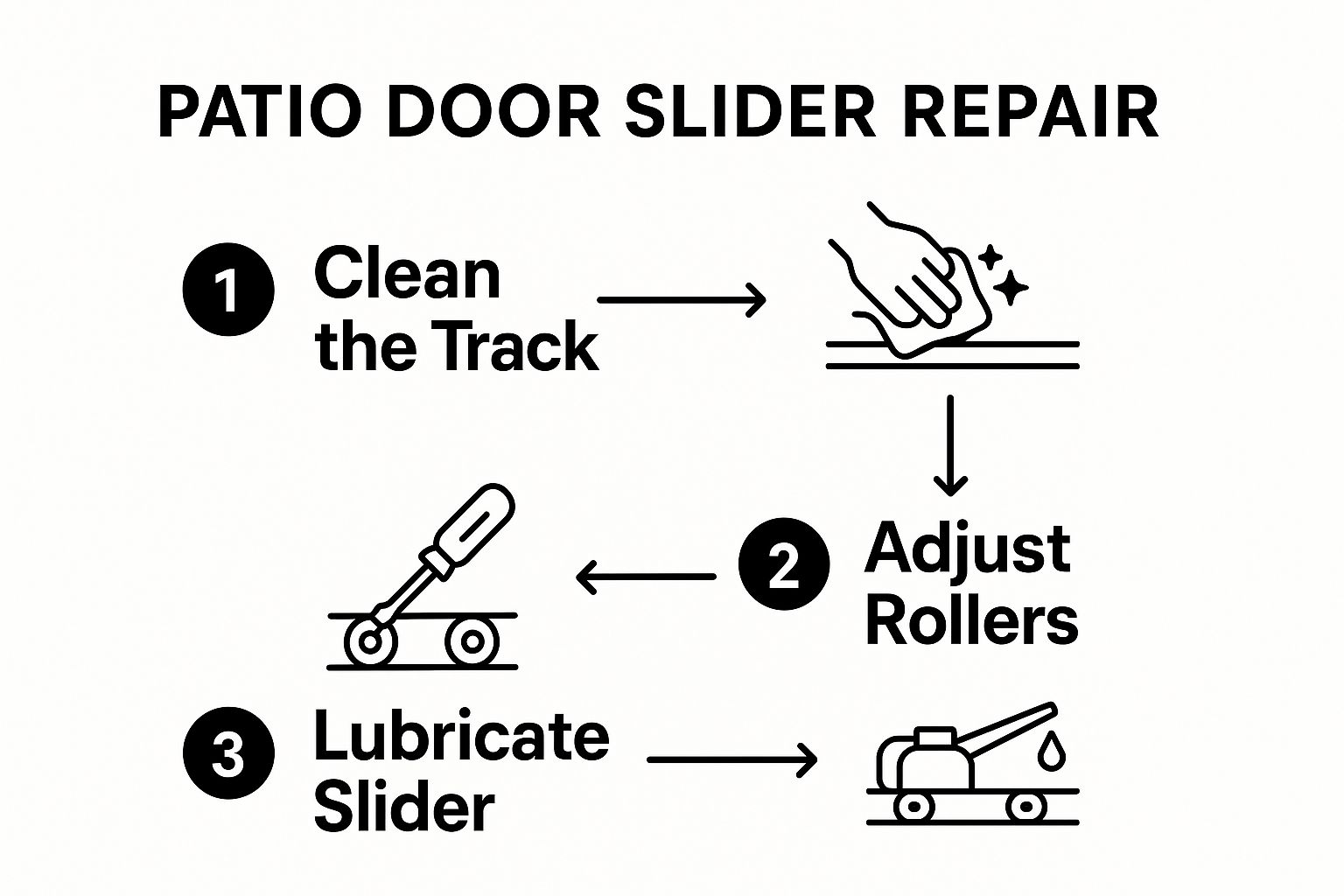
This shows how everything flows together, from cleaning to the final adjustments that make all the difference.
Installing the New Rollers and Nailing the Alignment
Got your new rollers? Great. The installation is just the reverse of removal. Slide the new assemblies into the frame and tighten down the screws.
Now, with your partner's help, carefully set the door back on its track. This is where the real finesse comes in: the alignment. You'll use the same adjustment screws you used to get the door off, but this time you'll turn them clockwise to raise each corner. The goal here is to get the door perfectly plumb (meaning straight up and down) and level.
Get a level out and place it on top of the door. The trick is to make small, quarter-turn adjustments on each side, checking your work as you go. You're looking for a consistent, even gap between the door and the frame from top to bottom. When that gap is uniform, you've nailed it.
This whole process is nearly identical for both glass doors and screen doors. If your screen door is also being stubborn, we have some great tips in our guide to patio sliding screen door repair.
Once it's all dialed in, your door should glide open with just a gentle push. That smooth, silent slide is the payoff for all your hard work.
What About the Lock and Handle?
A door that doesn't glide is annoying, but one that doesn't lock is a real problem. If your handle feels loose in your hand or the lock itself is finicky, now's the perfect time to address it. A wobbly handle just feels cheap, even if the door now rolls like a dream, and a weak lock is an open invitation for trouble.
So, where's the problem? Let's figure it out.
With the door open just a crack, try to engage the lock. Does the bolt throw smoothly? If it does, your issue isn't the lock mechanism itself but probably a simple misalignment with the strike plate on the door jamb. But if that lock feels stiff, crunchy, or just refuses to work at all, the internal parts have likely given up the ghost.
Swapping in a New Handle Set
Good news: replacing the handle set is one of the easier jobs on this list. On most sliding doors, you'll find two screws on the interior handle plate. Just back those out, and the handles on both sides should come right off.
The trick is to find the right replacement. Take the old handle set with you to the hardware store—it's the only way to be certain you get a new one with the exact same screw hole spacing. Trust me, you don't want to be drilling new holes in your door.
When you're installing the new one, go easy on those screws. If you crank them down too tight, you can actually bind up the thumb latch or key mechanism, making it stiff and hard to operate. Just get them snug.
A Quick Security Tip: If you're serious about security, look past the standard surface-mounted latches. Consider upgrading to a mortise lock. These are built into a pocket inside the door stile, which makes them far stronger and much more resistant to being forced open.
This renewed focus on quality hardware isn't just you—it's a massive trend. Homeowners are investing more in both function and security, with the global door and window repair market expected to hit a staggering $36.19 billion by 2029. You can dive deeper into these market trends in home repair if you're curious. Today's market is full of great options, from heavy-duty physical locks to smart locks that offer keyless entry.
Got Questions About Your Patio Door Repair?
Even the best-laid plans can hit a snag, and when you're in the middle of a patio door repair, a few questions are bound to come up. Let's walk through some of the things people often ask to help you get this project done right.
First up, the big one: cost. What's this going to set you back? Well, it really depends on what's broken. A straightforward track and roller cleaning might only cost you time and a can of lubricant. But if you need new parts, a simple track fix usually lands somewhere between $100 and $350. If the glass itself is cracked, you're looking at a bigger job, typically from $200 to $600. It's always smart to get a rough idea of sliding door repair costs before you start.
How Often Should I Be Doing Maintenance?
A little preventative maintenance is your best friend here. I always tell homeowners to give the tracks a good cleaning and lubrication twice a year—think spring and fall. Just a few minutes of work can prevent 90% of common sliding issues and keep those rollers gliding smoothly for years.
What if your new rollers or handle just won't fit? Whatever you do, don't try to force them. The first step is to pull out the old parts and compare them side-by-side with the new ones. Check the part numbers and get out a tape measure. Even a tiny difference in size or screw hole alignment can throw the whole door off.
A classic mistake I see is focusing only on the door and forgetting about what's around it. A bent or torn window screen, for instance, can easily get caught in the track. It feels just like a bad roller, but it's a much simpler fix. It's worth taking a moment to inspect everything, and if you need guidance, check out our page on window screen repair services.
Sometimes, the problem is bigger than a DIY fix. If you're dealing with a warped door frame or a track that's been bent or damaged beyond repair, that's a different ballgame. For major structural issues like that, your best bet is to bring in professional home repair and renovation services to get an expert opinion.
At Sparkle Tech Screen Service, our whole business is built around making your doors and windows work flawlessly. If that stubborn slider is driving you crazy or your screens have seen better days, we're here to help with quick quotes and service within the week. Head over to https://sparkletechscreenservice.com to learn more.


