


Don't let a torn or sagging window screen fool you into thinking it's just a cosmetic issue. That small rip is a welcome mat for insects, leaves, and pollen, turning your comfortable living space into a free-for-all for outdoor pests.
Fortunately, learning how to repair a window screen is one of the most rewarding and budget-friendly DIY projects you can tackle. A quick fix now can save you from bigger headaches later, like battling mosquitoes in your bedroom or constantly sweeping up wind-blown debris.
Why Fixing Your Window Screen Matters
A fully intact screen is your home's first line of defense. It's the unsung hero that lets you enjoy a cool breeze without inviting every bug in the neighborhood to join you. Beyond just pest control, a well-kept screen boosts your home's appearance and overall comfort.
The Real Benefits of a Quick Repair
A pristine, taut screen does more than just look good—it improves airflow and elevates your home's curb appeal. Faded, ripped screens can make a house look run-down, but the good news is you don’t need to hire a pro to fix them.
This guide will walk you through everything you need to know. We'll focus on the tangible benefits you'll get from this simple project:
- Pest Prevention: A sealed screen is an impenetrable barrier for flies, mosquitoes, and other insects.
- Improved Airflow: Let the fresh air in without worrying about what else comes with it.
- Enhanced Curb Appeal: Clean, tight screens give your home a sharp, well-maintained appearance.
- Cost Savings: Doing it yourself costs a fraction of what a professional service charges.
With just a few basic tools and a bit of guidance, you have everything you need to get this done right.
Gathering Your Tools and Materials
Before you even think about pulling that old screen out, a little prep work will make the whole process go a lot smoother. Having everything you need laid out and ready to go is the secret to turning a frustrating chore into a quick, satisfying fix.
It's a common problem—the residential sector is a huge part of the $15 billion global glass and window repair market, and a lot of that comes down to simple screen damage. It's a repair most homeowners will face sooner or later.
Essential Tools for the Job
You don't need a truck full of professional gear, but a few specific tools are absolutely essential for getting a tight, clean finish. Seriously, don't try to use a screwdriver for the spline—you’ll just get frustrated. A proper spline roller is what makes the magic happen.
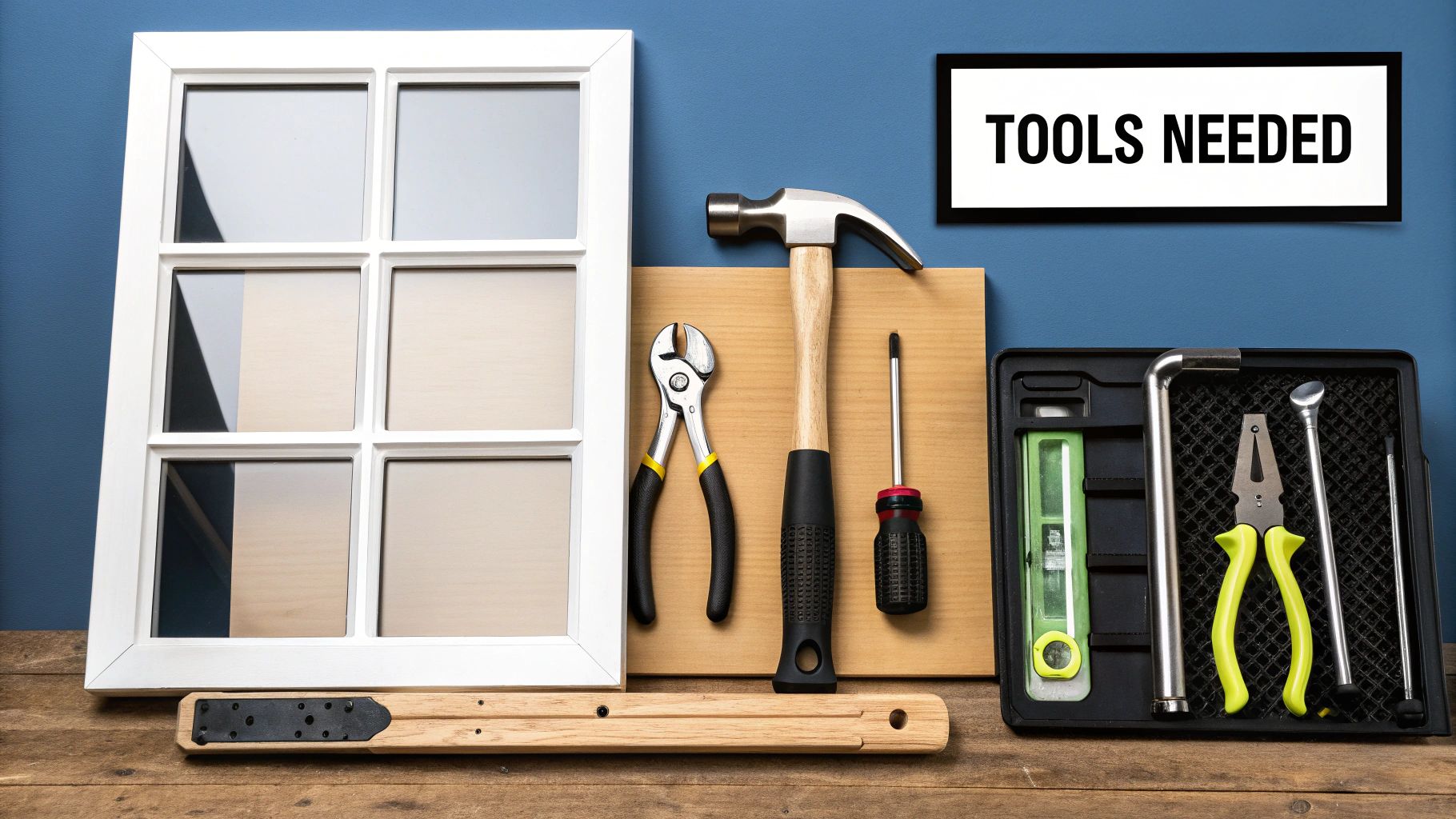
Here’s what you’ll want to have on hand:
- Spline Roller: This little gadget is your best friend. It has a grooved wheel to press the mesh into the frame's channel and a smooth one to push the spline in right after it.
- Utility Knife: Make sure you have a fresh, sharp blade. A dull knife will just snag and fray the new screen, ruining your clean lines.
- Measuring Tape: Obvious, I know, but double-checking your measurements before you cut can save you a second trip to the hardware store.
- Flat-Head Screwdriver or Awl: You'll need something small and sharp to dig out that old, brittle spline that's probably been baked in there for years.
If you want a more detailed look at what each tool does, our complete guide on window screen repair tools breaks it all down.
Pro Tip: Grab a couple of small spring clamps. They're a lifesaver for holding the frame still on your workbench, especially if you’re tackling this project by yourself.
Choosing Your Screen Material
Now for the screen itself. The material you pick makes a real difference in how long your repair lasts and what it looks like. For most DIY projects, fiberglass is the go-to. It's affordable, easy to work with, and won't crease if you mishandle it a bit.
Aluminum is the tougher cousin—it's more durable but unforgiving. If you bend it, that crease is there to stay. For homes with furry friends, a pet-resistant screen is a fantastic investment. It’s much thicker and can handle a lot more abuse from claws. And if you live somewhere with intense sun, solar screens are brilliant for blocking heat and UV rays, which can even help with your cooling bills.
To help you decide, here’s a quick comparison of the most popular options.
Choosing the Right Screen Material
| Material Type | Key Benefit | Best For | Average Cost |
|---|---|---|---|
| Fiberglass | Flexible & Affordable | General-purpose use, first-time DIYers | $0.25 – $0.50 / sq. ft. |
| Aluminum | Durable & Crisp Look | High-traffic areas, longevity | $0.50 – $0.75 / sq. ft. |
| Pet-Resistant | Puncture & Tear Proof | Homes with cats or dogs | $0.80 – $1.25 / sq. ft. |
| Solar Screen | Blocks Heat & UV Rays | Sun-facing windows, hot climates | $1.00 – $1.50 / sq. ft. |
Ultimately, the right material comes down to your specific needs—balancing your budget with things like pets, sun exposure, and how much wear and tear the screen will face.
Removing the Old Screen and Prepping the Frame
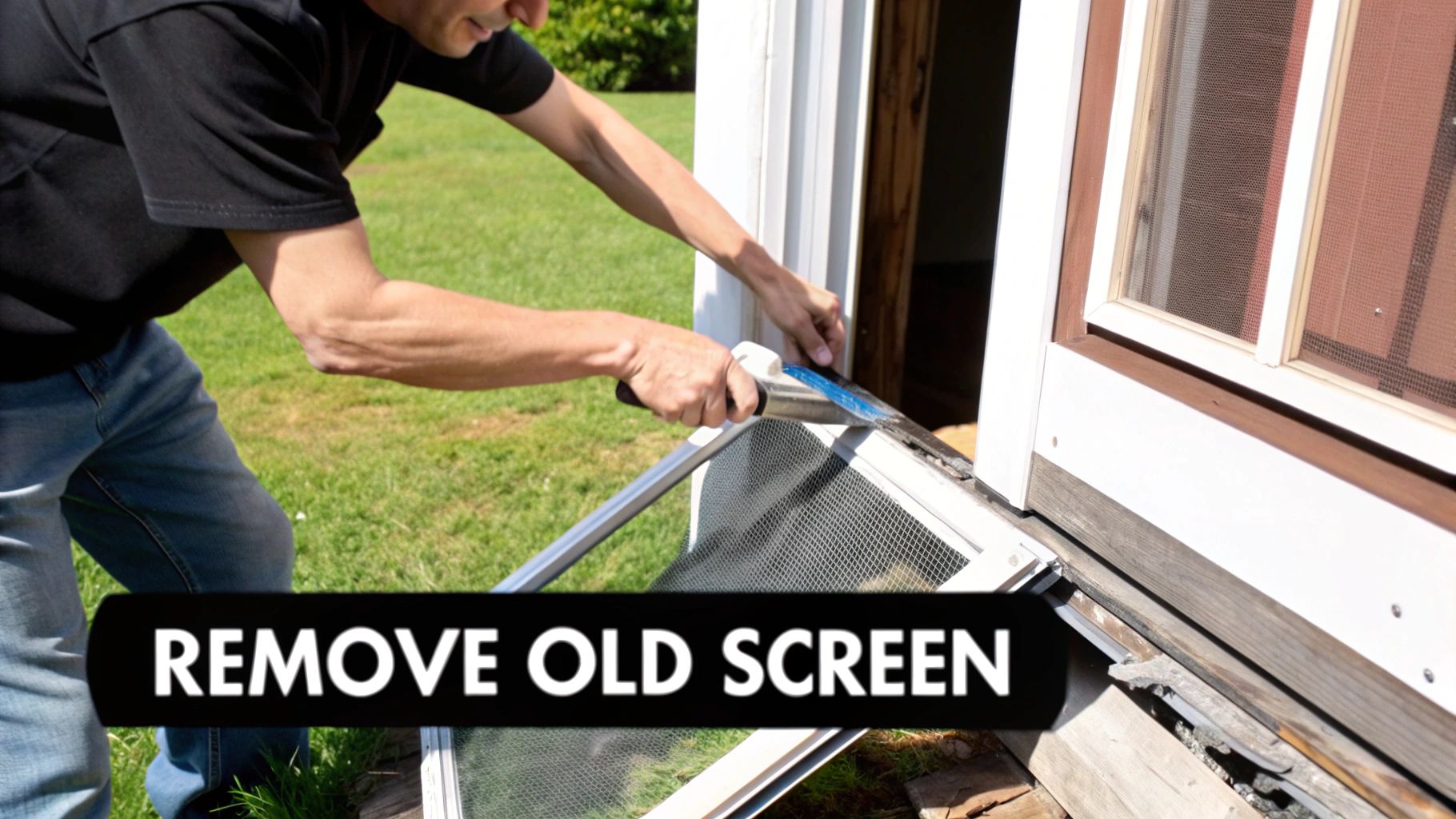
Alright, with your tools and materials laid out, it's time to get down to business. First things first, you need to get the screen frame out of the window. Most modern screens have little pull tabs or spring clips you can use to pop them right out with a bit of gentle wiggling.
Once it's out, lay the frame down on a flat, stable surface. Your first job is to tackle the old spline—that rubbery cord tucked into the channel that holds the screen mesh tight. Find an end and use a small flat-head screwdriver, a pick, or an awl to carefully pry it up and out of its groove.
From Grimy to Ready
Don't be surprised if the old spline is brittle and snaps as you pull it out; that’s completely normal after years of sun exposure. Just work your way around the frame, pulling out every last piece until the old, damaged mesh lifts away freely.
You'll be left with an empty frame, but you're not quite ready for the new screen. Take a look inside that now-empty channel. I can almost guarantee it's packed with years of dirt, dust, and grime. This is the stuff that prevents the new spline from seating correctly, leading to a weak or saggy screen.
A clean channel is non-negotiable for a professional-looking repair. If you skip this, the new spline won't get a good grip, and your screen will likely loosen up over time.
Grab an old toothbrush or a stiff-bristled brush and some soapy water, and give that channel a thorough scrub. Wipe it dry with a clean rag, and you've got a perfectly prepped frame ready for a secure, long-lasting installation.
Taking a few minutes for proper prep now saves you a massive headache later. Before you grab your new mesh, it's worth knowing what your choices are. You can learn more about the best window screen material to figure out which one suits your climate and lifestyle.
Installing the New Screen Mesh Like a Pro
Alright, your frame is clean and prepped, which means it's time for the fun part—making it look like a window screen again. Getting this stage right is all about technique. A little patience here will give you a professional, tight finish that'll hold up for years.
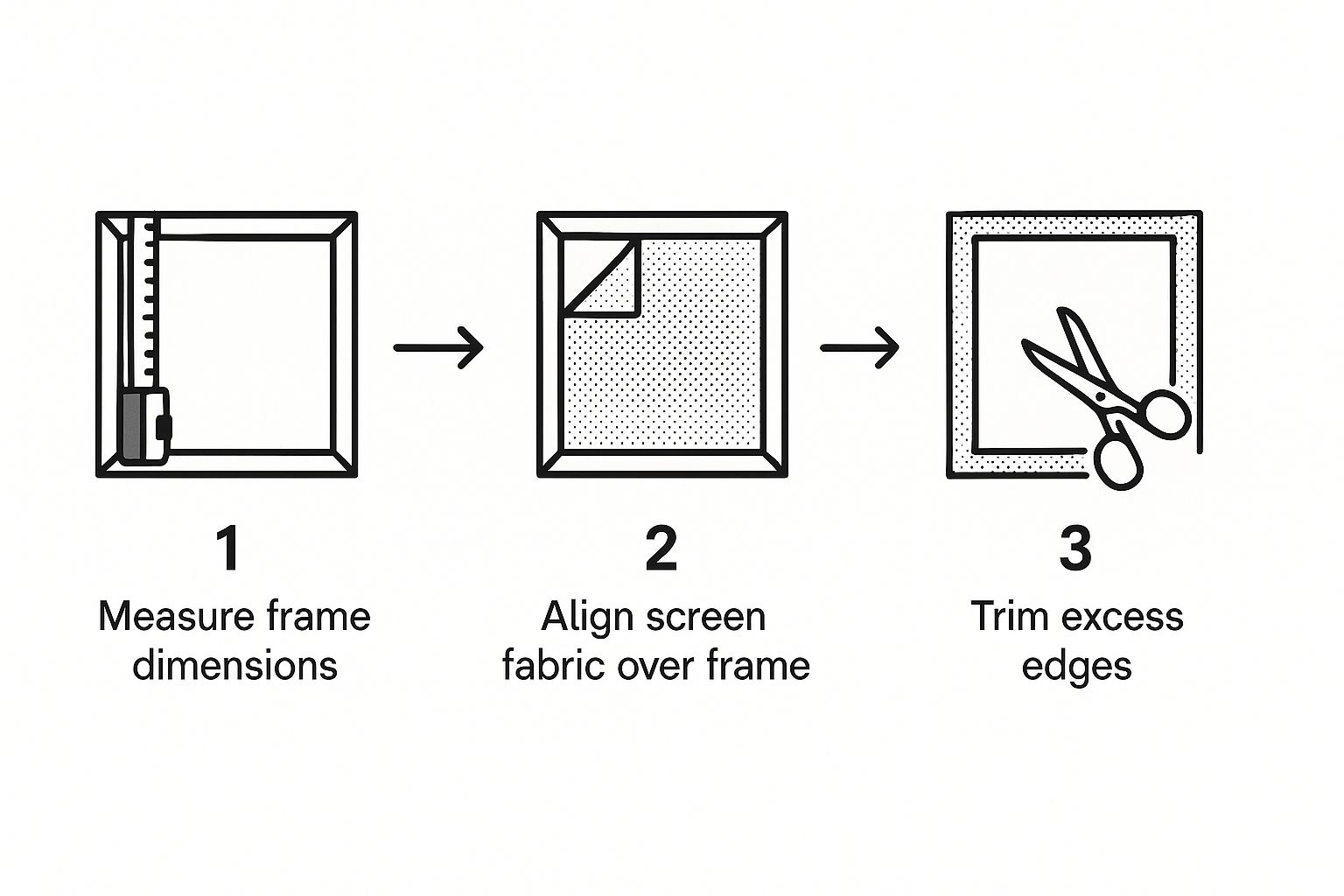
First things first, lay your new screen mesh over the frame. Make sure you have plenty of extra material hanging over the edges. I always aim for at least two inches of overhang on all four sides. This gives you something to grip while you work and prevents you from coming up short if the mesh shifts a bit.
Now, grab your secret weapon: the spline roller. If you look closely, you'll see this little tool has two different wheels, and knowing which one to use when is crucial for a smooth installation.
- The Convex Wheel: This is the rounded, pizza-cutter-like wheel. You'll use this one first to gently press the screen mesh into the frame’s channel. It basically creates a perfect little track for the spline to sit in.
- The Concave Wheel: This wheel has a groove in it. It's designed to fit right over the spline, pushing it deep into the channel to lock the screen mesh securely in place.
The Art of Getting the Tension Just Right
Pick a corner to start with. Use the convex (rounded) wheel to push a few inches of mesh into the channel. Then, lay the end of your new spline over that spot and use the concave (grooved) wheel to roll it firmly into place. This anchors your starting point.
As you roll the spline down that first side, use your other hand to pull the mesh slightly toward the center of the screen. You're looking for gentle, consistent tension. This simple action is what makes the difference between a saggy, homemade-looking job and a crisp, professional one.
The trick is finding that sweet spot. You want the mesh tight enough to be smooth and wrinkle-free, but not so tight that you start to bend or warp the aluminum frame. You'll get a feel for it after finishing the first side.
It's no surprise that learning skills like this is becoming more popular. The global market for door and window services, including screen repairs, was valued at around USD 0.6 billion in 2023 and is projected to hit USD 1 billion by 2032. It just goes to show how many homeowners are investing in maintaining their properties. You can dig into more of this data over at Business Research Insights.
Keep working your way around the frame, maintaining that light tension as you go. When you get to the corners, it can be a bit tricky. I find it helps to use a flathead screwdriver to carefully press the spline snugly into the 90-degree turn before you continue rolling down the next side.
Once you’ve made it all the way around and the spline is fully seated, take a step back. You've officially installed a new screen
Putting the Final Polish on Your Work
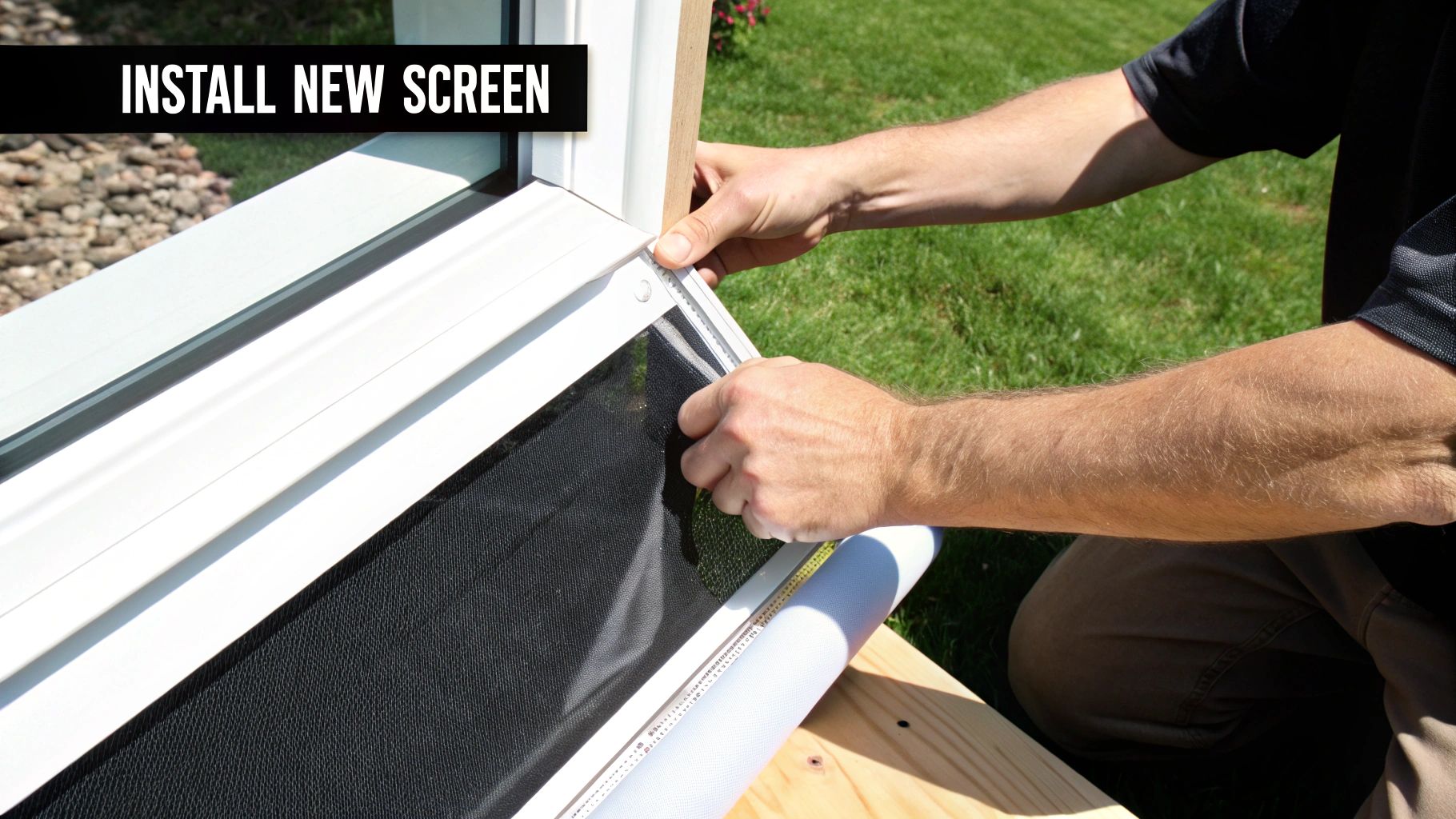
Alright, your new screen is in and the spline is seated. You're in the home stretch now. The last real step is trimming off all that extra mesh to get a crisp, professional-looking finish. For this, you absolutely need a sharp utility knife; a dull blade will just snag and ruin your hard work.
The trick is to run the knife blade right along the outside of the spline channel. Use the spline itself as your guide. Make sure to angle the blade away from the center of the screen. It’s a small detail, but it’s a lifesaver—if your hand slips, you’ll only slice the waste material, not the perfectly taut screen you just installed.
Navigating Those Little "Oops" Moments
Even seasoned pros run into a few hiccups now and then. Don't sweat it if your first attempt isn't flawless. Most common issues are surprisingly easy to fix, and knowing what to look for is half the battle.
- Wrinkles Popping Up: If you see a small pucker or wrinkle after you're done, it just means the tension was a bit uneven in that spot. Just pull out the spline for that section, give the screen a gentle tug to smooth it, and roll the spline back in. Easy.
- The Frame is Bowing: This is a classic sign of pulling the screen way too tight. A tiny bit of inward curve is often unavoidable, but if the frame is noticeably bending, that’s too much stress. It can warp the frame permanently over time.
- Spline That Won’t Stay Put: Is the spline popping out of the channel as you work? You've probably got the wrong size. Spline comes in many different diameters, so double-check that you’ve matched it correctly to your screen frame’s channel.
It's no surprise that learning this skill is so popular. The global market for window repair services was already valued at around USD 9 billion back in 2022 and continues to grow. It just goes to show how much homeowners value keeping their windows in top shape.
Taking a few extra minutes on these final details makes all the difference. It turns a functional repair into one that looks fantastic and is built to last. For a more detailed walkthrough of the entire process, be sure to check out our complete guide on rescreening a window screen.
Common Questions About Window Screen Repair
https://www.youtube.com/embed/fPUiNsVQ8yE
Even with the best guide in hand, you’re bound to have a few questions when you get into the thick of a DIY project. Getting the right answers can mean the difference between a quick, satisfying fix and a whole afternoon of frustration.
Let's tackle some of the most common questions I hear from people learning how to repair a window screen for the first time.
Can I Just Patch a Small Hole?
You absolutely can. For a tiny puncture or a small rip, a simple self-adhesive screen patch is a great, speedy solution. They work perfectly when you just need to fix minimal damage and don't want to take on the whole screen.
But there’s a tipping point. If your screen mesh is old and brittle, has a bunch of small holes, or a tear bigger than an inch or two, it’s time to replace the whole thing. A full replacement just looks better, lasts longer, and saves you from patching it again in a few months.
What Is the Difference Between Fiberglass and Aluminum Screen Mesh?
This is probably the most important decision you'll make. Most people doing this themselves go with fiberglass. It's affordable, flexible, and doesn't crease or dent, which makes it incredibly forgiving when you're wrestling it into the frame.
Aluminum, on the other hand, is the more durable, long-term option. It gives you a much crisper, more rigid look and won't sag over the years. The catch? It can be dented or creased permanently if you're not careful, so it demands a gentler touch during installation. The choice really comes down to easy installation (fiberglass) versus maximum longevity (aluminum).
Choosing the right material from the start prevents having to do the job twice. Think about your local climate, whether you have pets that might claw at it, and how much direct sun the window gets before you buy.
My Window Frame Seems Bent. Can I Still Repair the Screen?
A slightly bent frame isn't necessarily a dealbreaker. You can often correct minor warping by laying the frame on a totally flat surface, like your garage floor, and gently applying steady pressure to straighten it back out.
If the frame is seriously bent, though, it's a different story. A warped frame simply can't hold the new screen taut, and you'll end up with a saggy, unprofessional-looking result no matter how well you do the rest of the job. In that case, the best bet is to pick up a replacement screen frame kit from your local hardware store. It’s an affordable way to guarantee your repair looks great and works properly.
For a professional touch without the DIY hassle, trust Sparkle Tech Screen Service for all your screen repair and replacement needs. Get a quick quote and same-week service by visiting us at https://sparkletechscreenservice.com.


