


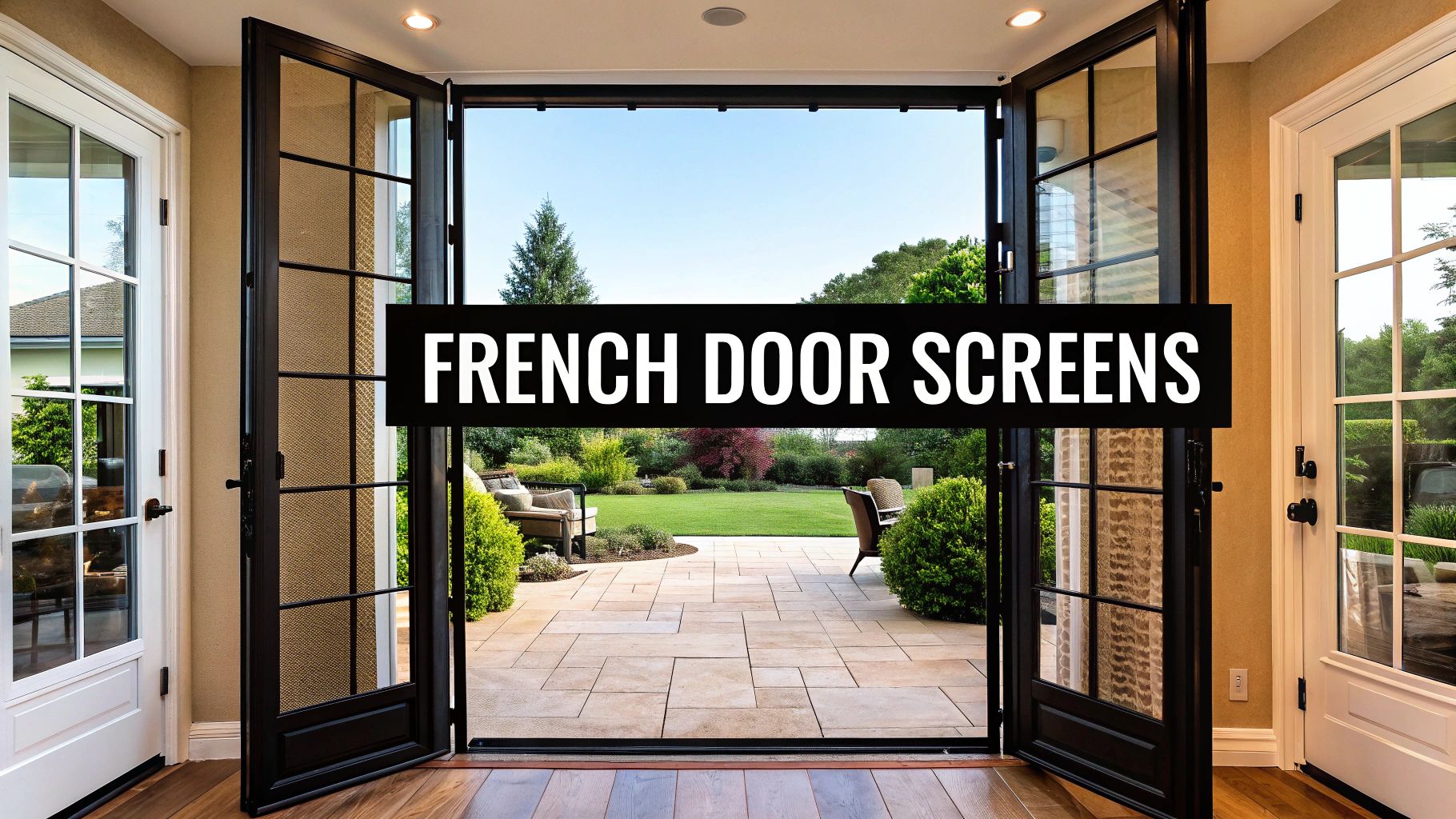

French doors are a beautiful way to open up your home, but leaving them open invites every bug in Arizona right inside. The good news is you don't have to sacrifice that fresh air. The most common solutions are retractable screens, traditional hinged screen doors, and modern sliding screens.
Each one strikes a different balance between visibility, convenience, and style, so let's break down which one is right for you.
Why Your French Doors Need the Right Screen
There's nothing quite like the grand, light-filled entrance French doors create between your living room and the patio. But that wide-open invitation isn't just for you—it's for flies, mosquitoes, dust, and the relentless Arizona sun. This is why a good screen door isn't just a nice-to-have; it's a must for truly enjoying your home.
The trick is finding a screen that works with your doors, not against them. You don't want a clunky, awkward screen to ruin the very aesthetic you love. Today's French door screen options are designed to blend in, whether your top priority is a crystal-clear view, effortless operation, or something tough enough to stand up to pets and kids.
Balancing Aesthetics And Function
This isn't a niche problem. The global market for French doors, prized for their timeless look, recently hit USD 27.9 billion and is still growing. That popularity has fueled the need for equally elegant screen solutions that don't compromise on style. Of course, a pest-free home is a total system; besides your doors, it's also worth looking into effective screens for windows to create a complete barrier.
Finding the perfect screen means you no longer have to choose between a beautiful view and a bug-free home. The right option enhances your lifestyle by blending security, comfort, and design.
What To Consider First
Before you get lost in the details, take a moment to think about your lifestyle. A few simple questions can point you in the right direction right away:
- How often will you use the screen? If it's a high-traffic area, you'll want something that's super easy to open and close, like a retractable or sliding model.
- Is an unobstructed view a priority? For a view that's completely clear when the screen isn't needed, nothing beats a retractable screen.
- Do you have pets or children? Durability and safety features should be at the top of your list.
Knowing what matters most to you is the first step. Now, let's walk through the different types so you can pick the perfect screen for your Phoenix home with confidence.
Retractable Screens: The Ultimate Modern Solution
If you love the elegant look of your French doors and refuse to compromise that open view, retractable screens are likely the answer you've been looking for. Think of them as the screen door equivalent of window shades—they're there when you need them and completely disappear when you don't. This "now you see it, now you don't" quality is exactly why they've become so popular.
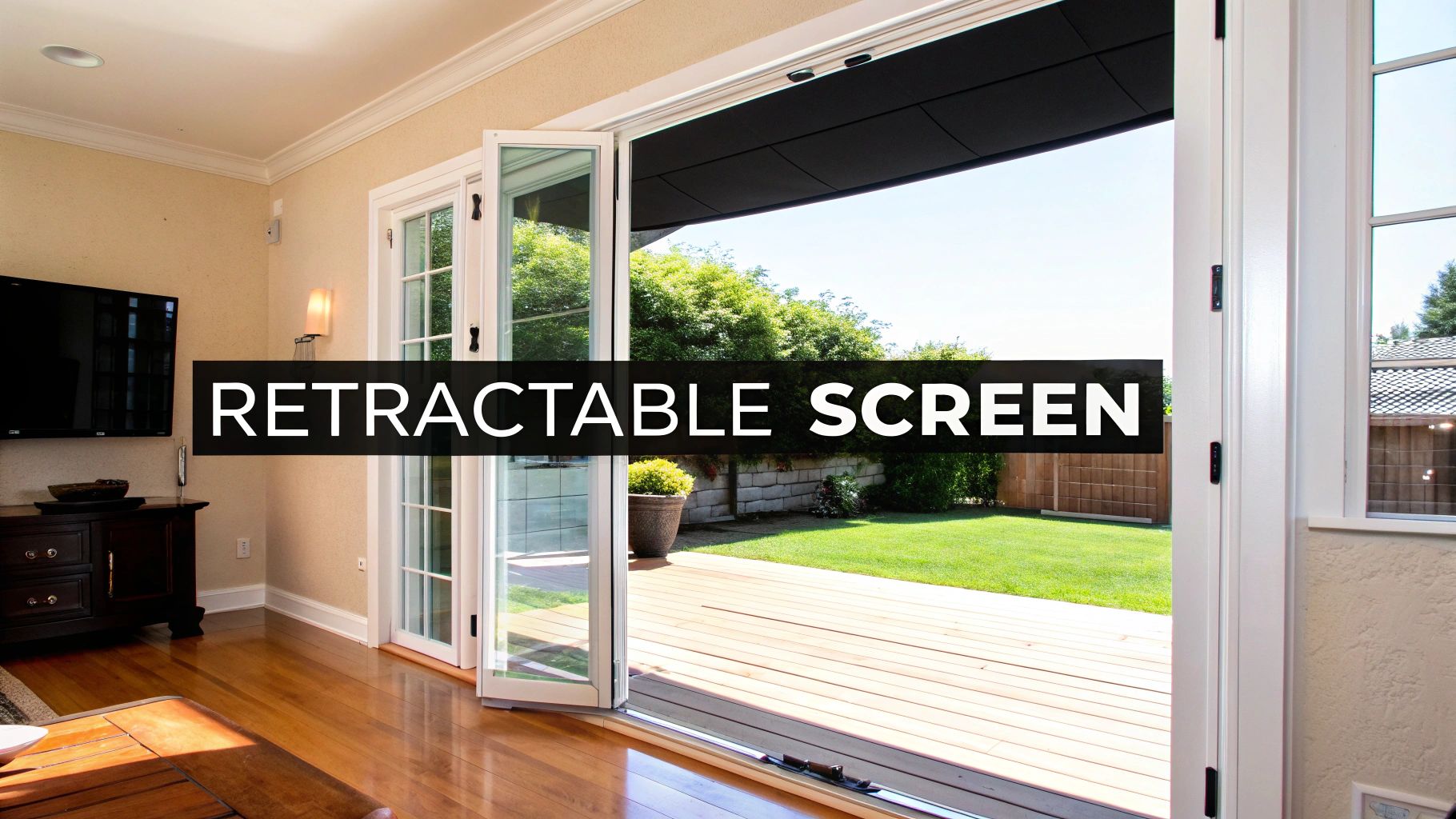
Unlike a traditional screen door that's always part of your entryway, a retractable screen rolls up into a slim, discreet housing mounted right alongside your door frame. This clever design keeps the architectural beauty of your doors front and center, making it a favorite for homeowners who value a clean, minimalist aesthetic. It’s a perfect match for the classic style of French doors.
How Do They Work on French Doors?
The magic is in their adaptability. For a set of French doors, the go-to setup is a double-panel system. This means a slim housing is installed on each side of the door frame.
Ready for some fresh air? Just pull each screen from its housing toward the center. They meet in the middle and click together with a secure magnetic strip, creating a perfect, bug-free barrier across the entire doorway. When you're done, a gentle touch is all it takes for the screens to smoothly glide back into their protective casings. Your wide-open view is instantly restored.
This seamless design has caused a massive spike in demand. In fact, the global market for retractable screen doors recently hit USD 2.1 billion and is expected to more than double to USD 4.3 billion by 2033. That kind of growth shows just how many homeowners are opting for these sleek, "invisible" solutions that offer protection without compromise. You can see more details on the growth of retractable screen door technology in this market report.
Key Advantages and Considerations
While the disappearing act is the main event, there are plenty of other reasons why retractable screens are a top choice. Of course, like any product, they have their own set of unique things to keep in mind.
Pros of Retractable Screens:
- Unobstructed Views: This is the big one. When the screens are open, your view is completely clear, letting you fully enjoy your backyard or patio.
- Enhanced Aesthetics: The minimalist design doesn’t clash with the beauty of your French doors. The housing can even be color-matched to your trim for a nearly invisible finish.
- Protection from the Elements: Since the mesh is stored in a protective cassette, it’s shielded from sun, dirt, and harsh weather, which helps it last much longer.
- Improved Airflow: They're fantastic for cross-ventilation, helping cool your home with a natural breeze while keeping the pests out.
The core appeal of a retractable screen is that it adapts to your life. It’s a full-time barrier when you need fresh air and completely gone when you want an open, elegant doorway.
Potential Downsides to Keep in Mind:
- Higher Initial Cost: These systems are a premium product. Professional installation typically costs more upfront than you'd pay for a standard hinged or sliding screen.
- Track Maintenance: The guide tracks on the top and bottom need to be kept clean. A quick sweep to clear out dirt, leaves, or debris is all it takes to keep them running smoothly.
- Not Ideal for Pet Doors: The design just isn't built to accommodate an integrated pet door. If you want to dive deeper into the process, check out our guide on retractable screen door installation.
At the end of the day, a retractable screen is an investment in both the function and beauty of your home. For homeowners who refuse to sacrifice the grand, open feel of their French doors, it’s often the perfect, elegant solution.
A Look at Traditional Screen Door Styles
While retractable screens are a fantastic modern solution, there's a lot to be said for the classic charm and sheer durability of traditional screen doors. These are the tried-and-true styles that have been a staple in homes for decades. For many homeowners, especially those with busy households, their straightforward design and tough nature are exactly what’s needed.
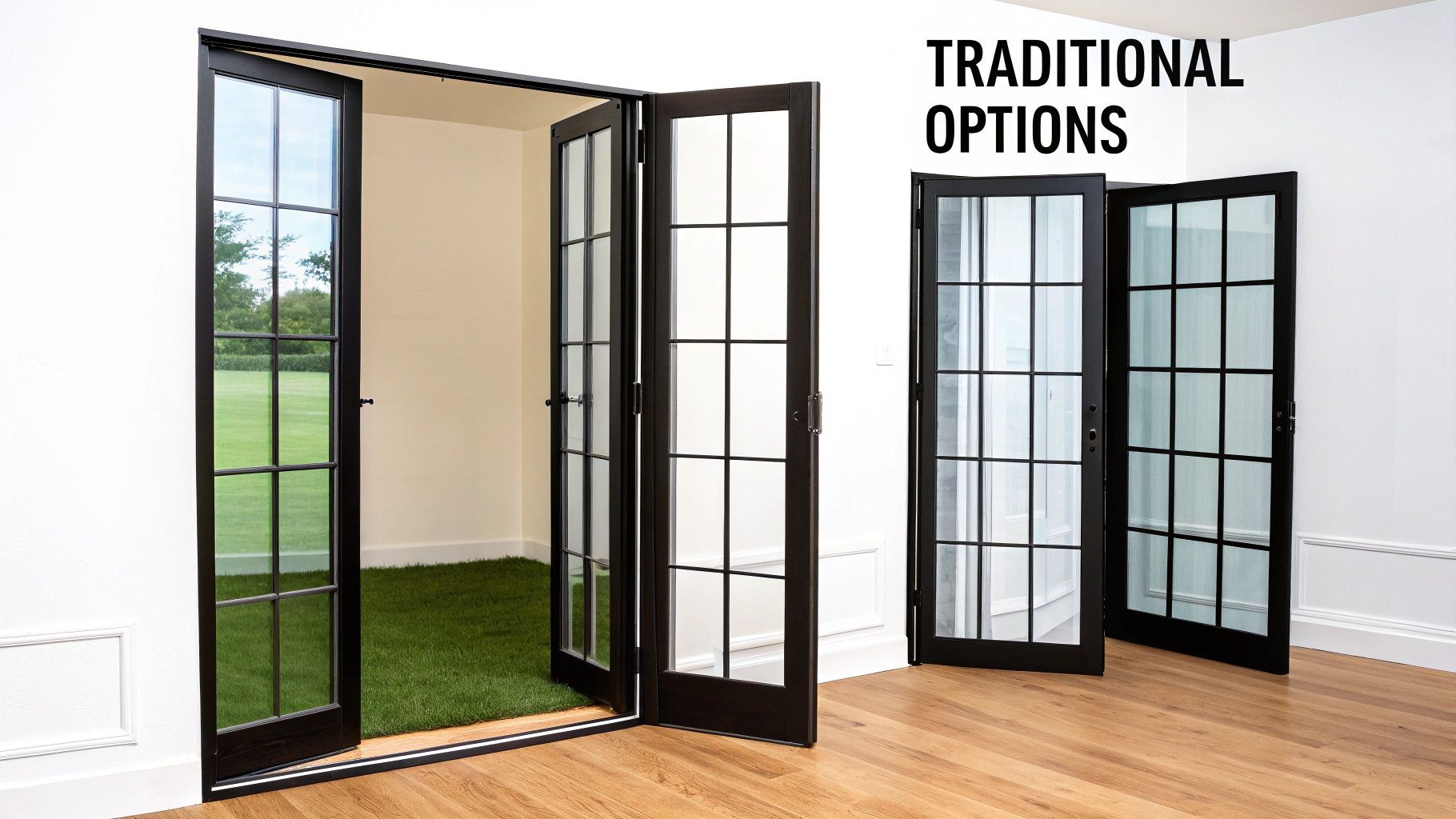
Unlike their disappearing cousins, traditional screens are always there, a permanent fixture. This is a huge plus for high-traffic doorways or homes with active pets and kids, as they're built to take a lot more daily abuse.
The Classic Hinged Screen Door
Imagine a standard interior door, but with screen mesh instead of a solid panel—that's a hinged screen door. It’s the style we all know, swinging open on two or three hinges mounted to the side of the door frame. For a French door setup, you'd install two of these, meeting in the middle to mirror the way your main doors operate.
One critical detail: these doors typically swing outward to save your indoor space. This is where you have to pay attention. If your French doors also swing out, a hinged screen door just won't work. You can't have two doors fighting for the same airspace.
What to Expect from Hinged Screens:
- Simple Operation: It’s a familiar push or pull. Many come with a handle and a hydraulic closer that gives you that satisfying, soft swing-shut.
- Sturdy Construction: The frames are usually made from wood, vinyl, or aluminum, providing a really solid and durable barrier.
- Great for Pets: This is the easiest style to customize with a built-in pet door. It gives your four-legged family members the freedom to go in and out.
A hinged screen door is the workhorse of the screen world. It’s a straightforward, reliable option that prioritizes function and durability over a minimalist aesthetic, making it ideal for busy homes.
The Space-Saving Sliding Screen Door
A sliding screen door works on a track, just like the sliding glass patio doors you see everywhere. Instead of swinging, it glides horizontally out of the way. When used for a double French door, this typically means you have two screen panels that slide apart from the center, often stacking over fixed screen panels on the far sides of the opening.
The main advantage here is clearance. If your patio or deck is on the smaller side, or you’ve got furniture and planters right next to the doorway, a sliding screen is a perfect choice because it doesn’t swing out and get in the way.
Comparing Traditional Styles Head-to-Head
So, hinged or sliding? Your decision will likely come down to your available space, the look you prefer, and how you actually use your doors. Both are solid French door screen door options, but they're built for different situations.
| Feature | Hinged Screen Doors | Sliding Screen Doors |
|---|---|---|
| Space Required | Needs clear swing space, either outward or inward | Minimal; operates entirely within the door frame |
| Ease of Use | Very intuitive, feels just like a regular door | Smooth gliding motion, though can be heavier to move |
| Visual Impact | Always visible, can slightly obstruct the view | Always visible; multiple panels can look a bit busy |
| Best For | Homes with plenty of clearance and pets | Patios or decks where space is tight |
| Durability | Generally very robust and simple to repair | Tracks need to be kept clean to avoid sticking |
In the end, both hinged and sliding screen doors give you a permanent, reliable barrier against bugs. They offer a more traditional look and feel than retractable screens, and for many people, their dependable performance and options like pet doors make them the perfect fit. The trick is to take a good look at your home's layout and pick the one that will feel like it was always meant to be there.
Choosing the Right Screen Mesh and Frame Materials
So, you've picked the style of screen door you want for your French doors. Great! Now comes the part that really determines how well it will perform and how long it will last: choosing the right materials.
Think of it like this: the frame is the skeleton, and the mesh is the skin. Both need to be tough enough to handle the intense Phoenix climate. This decision goes way beyond looks—it’s about getting real performance that stands up to years of brutal sun and keeps your home comfortable.
A Guide to Screen Mesh Options
The mesh is the real workhorse of your screen door. It's the barrier that keeps the bugs out, lets the breeze in, and can even block the sun's harsh rays. But not all mesh is created equal. Each type is engineered for a specific job, so let's break down the most popular choices.
Here’s a look at the most common mesh options you'll find for French door screens:
Standard Fiberglass Mesh: This is the go-to, everyday choice for a reason. It's affordable, flexible, and doesn't hold a crease if it gets bumped. For basic insect protection with good airflow and a clear view, you can't go wrong. It’s a solid all-rounder.
Aluminum Mesh: Want something a little tougher? Aluminum is a great step up. It's more rigid than fiberglass, which means it resists sagging and gives you a super crisp, clean view. The only trade-off is that a hard impact could leave a permanent dent.
Solar Screen Mesh: For anyone living in Phoenix, this should be at the top of your list. Solar screens are specifically designed to block the sun’s heat and damaging UV rays—often stopping anywhere from 65% to 90% of them. This makes a huge difference in keeping your home cooler, lowering your energy bills, and preventing your floors and furniture from fading.
Pet-Resistant Mesh: If you have four-legged family members, you know the struggle. This stuff is a game-changer. Made from vinyl-coated polyester, it's about seven times stronger than standard fiberglass. It’s built to withstand claws and paws, saving you the headache and cost of constant screen repairs.
When it comes to mesh, it's all about your priorities. Are you after an unobstructed view, maximum solar protection, or something that can handle a rambunctious golden retriever? Figure that out, and your best choice will become clear.
Choosing the right screen mesh is critical for Phoenix homes, where the sun and pests are relentless. The material you pick will directly affect your home's comfort, your energy bills, and how often you'll need to think about repairs.
Screen Mesh Material Comparison for Phoenix Homes
| Mesh Material | Durability | UV Protection | Visibility | Ideal Use Case |
|---|---|---|---|---|
| Fiberglass | Good | Minimal | Excellent | General insect protection in low-traffic areas. |
| Aluminum | Very Good | Minimal | Excellent | Areas where a crisp, clear view is a priority. |
| Solar Screen | Excellent | High (65-90%) | Good to Fair | West/South-facing doors; homes needing energy savings. |
| Pet-Resistant | Superior | Moderate | Good | Homes with active pets or small children. |
Ultimately, the best mesh is the one that solves your biggest problem, whether that's the glaring sun, a screen-shredding cat, or just the everyday Arizona critters.
Selecting the Right Frame Material
The frame is what gives your screen door its structure and ensures it opens and closes smoothly day after day. Just like the mesh, the frame material needs to be up to the task of surviving in the desert.
Aluminum Frames: This is hands-down the most popular and practical choice for our climate. Aluminum is strong but light, and it simply won't rust or fall apart. Most importantly, it won't warp or crack under the constant assault of the Arizona sun, making it a "set it and forget it" option.
Vinyl Frames: Vinyl is another solid, low-maintenance choice that's often a bit easier on the wallet. It stands up well to moisture and won't peel or corrode. The catch? Cheaper, lower-quality vinyl can get brittle and crack after a few years of extreme heat and UV exposure. Quality really matters here.
Wood Frames: Nothing beats the classic, beautiful look of a real wood frame. You can stain or paint it to match your home's aesthetic perfectly. The downside is that beauty requires work. Wood needs to be sealed regularly to protect it from sun and moisture, which can cause it to warp, rot, or crack over time.
For a deeper dive into the specifics of screen materials, you can learn more about the different types of window screen mesh that are available. Making an informed choice now ensures your new French door screen will perform beautifully for years to come.
Installation Costs and Maintenance Tips
You've picked out the perfect style of screen for your French doors. Now what? The next step is getting it installed and learning how to keep it looking great for years to come. Your approach here—going DIY or calling in a pro—will have a big impact on your budget and the final quality of the job.
It's tempting to grab one of those DIY kits for traditional hinged screens from the local home improvement store. And if you're handy and have the right tools, it can definitely save you some money. But be warned: it's not a simple click-and-go project. French doors demand that two separate screens meet perfectly in the middle to form a solid seal. Even a tiny miscalculation can leave you with annoying gaps, a screen that fights you every time you open it, and a look that just feels… off.
Breaking Down Installation Costs
The final bill for your French door screen project really comes down to two things: the type of screen you choose and whether you install it yourself. Bringing in a professional installer is the best way to guarantee a perfect fit and smooth operation, which is especially critical for custom systems like retractable screens.
Here's a ballpark of what you can expect to invest:
- DIY Hinged Screen Kits: This is your most budget-friendly option, with kits typically running between $150 and $400 for a pair of doors. Just remember, that price tag doesn't account for your own time and the potential headache of a do-over.
- Professionally Installed Hinged or Sliding Screens: If you want a sturdier, traditional screen installed correctly from the get-go, you're likely looking at $500 to $900. The final cost will depend on the materials you pick and the size of your doors.
- Professionally Installed Retractable Screens: As the premium choice, these custom-fitted systems generally range from $1,000 to $2,000+. The higher price reflects the custom manufacturing, top-tier components, and the expert installation needed to make them look and feel seamless.
Think of professional installation as an investment in performance. For something as tricky as a French door setup, an expert ensures your screen works flawlessly and looks like it was always meant to be there.
This decision tree helps visualize which screen mesh best fits your primary need, whether it's battling the Phoenix sun, standing up to pets, or preserving your view.
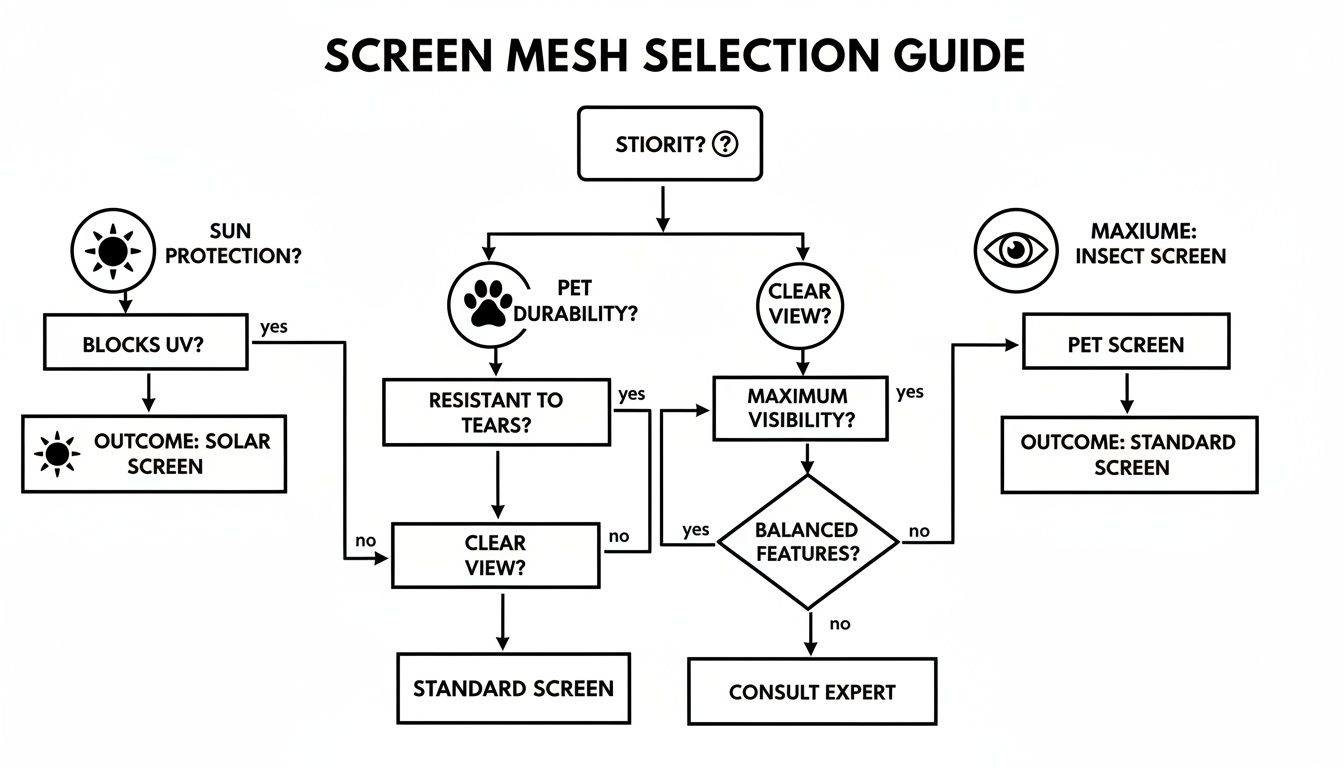
As you can see, once you decide what matters most—blocking the sun, holding up to a rambunctious dog, or keeping your view crystal clear—the right material choice becomes obvious.
Essential Maintenance for Longevity
Taking good care of your screens is the secret to making them last, especially here in dusty Arizona. A few simple habits will keep your French door screens working just like they did on day one.
Cleaning and Care Checklist:
- Clean the Mesh Regularly: Once a month or so, grab a soft brush or the brush attachment on your vacuum to gently clear away dust and cobwebs. For a deeper clean, a little mild soap and water will do the trick. Just be sure to rinse it well and let it air dry completely.
- Keep Tracks Clear: If you have sliding or retractable screens, their tracks are their lifeline. Routinely check the top and bottom channels for any dirt, leaves, or tiny pebbles that could jam the screen or knock it off its track.
- Lubricate Moving Parts: Twice a year, give the tracks and other moving parts a quick spray with a silicone-based lubricant. (Steer clear of oil-based products like WD-40, as they attract even more dust and grime). This keeps everything gliding smoothly.
- Inspect for Damage: Every so often, give your screens a quick once-over. Look for small rips in the mesh or loose screws in the frame. Catching these little problems early can save you from a much bigger, more expensive repair down the road.
Finding Your Local Phoenix Screen Expert
Choosing the right screen for your French doors in Phoenix means finding that perfect sweet spot between looks, function, and sheer toughness against our relentless sun. You've got options, from retractable screens that vanish when you don't need them to classic hinged screens built for durability. The best choice really comes down to your home, your family, and your lifestyle, ensuring you can let the breeze in without the bugs.
Trying to sort through all these french door screen door options can make your head spin. But you don't have to figure it all out by yourself. For homeowners across the Valley, from Scottsdale to Mesa, having a local pro to guide you makes all the difference. That's where Sparkle Tech Screen Service comes in—we take the guesswork out of it and deliver a perfect solution.
Why Go With a Local Pro?
A local expert just gets it. We understand the unique challenges of the Arizona climate because we live here, too. We know which materials can actually stand up to the intense UV rays and how to install a screen with a perfect, gap-free seal that keeps scorpions and gnats where they belong—outside. A professional installation means your investment works exactly as it should from the moment we leave.
Sparkle Tech Screen Service is all about finding the right fit for Phoenix-area homes. Whether you're putting in a brand-new screen or just upgrading what you already have, our team has the hands-on experience to get it done right.
The right screen door is more than just a barrier. It’s an upgrade to your home, and it needs an expert installation to deliver on its promise. A local professional ensures your new screen is a perfect fit for your doors and our demanding climate.
Here at Sparkle Tech, we make the whole process easy. We know you want a solution fast, not in a few weeks. That’s why we’re proud to offer Same Week Service. You can get a quick quote and have your project started without the frustrating delays you often find with other home improvement companies.
Our services cover everything you could need:
- New Screen Installations: We'll help you pick and install the perfect retractable, hinged, or sliding screen for your French doors.
- Professional Rescreening: Time for an upgrade? We can swap out your old mesh for high-performance solar screens or tough-as-nails pet-resistant options.
- Expert Repairs: From small tears in the mesh to a frame that isn't closing right, we can get your screens back in perfect working order.
For an experience that’s hassle-free and results that are built to last, working with a dedicated local team is simply the smartest way to go. If you’re curious about other screening solutions for your home, you can learn more about our comprehensive Phoenix window screen services.
Don't let the sun or the pests decide when you can open your doors. Contact Sparkle Tech Screen Service today for a professional quote, and let's find the perfect screen solution for your home.
Your French Door Screen Questions, Answered
Even after exploring all the options, you probably have a few final questions floating around. That’s completely normal. Getting those last details ironed out is what helps you make a choice you’ll be happy with for years to come. Let's tackle some of the most common things we get asked.
How Much Should I Budget for French Door Screens?
The cost can really swing depending on what you're looking for. The final price is a mix of the door's size, the materials you pick, and whether you have a pro handle the installation—which, for a seamless fit, is always the way to go.
Here’s a realistic look at the numbers:
- Basic Hinged Screen Kits (DIY): If you're handy, you might find a basic kit for $150 to $400 for a pair.
- Professionally Installed Hinged or Sliding Screens: For a sturdier, traditional setup installed by an expert, you're typically looking at $500 to $900.
- Custom Retractable Screens: These are the top-tier solution, and a professional installation will generally run between $1,000 and $2,000+.
Can I Get a Pet Door in My Screen Door?
Absolutely, but it depends on the type of screen door you choose. Pet doors need a solid, rigid frame to work properly, which makes traditional hinged and sliding screen doors the perfect fit. Their structure is strong enough to support a pet flap without any issues.
For pet owners, the winning combination is a hinged screen door fitted with tough, pet-resistant mesh. It gives your four-legged family members the freedom they want while standing up to their claws and paws.
Unfortunately, retractable screens and pet doors just don't mix. The whole point of a retractable screen is that the flexible mesh rolls away into a casing, which makes it impossible to add a fixed pet flap.
How Long Will Screen Mesh Actually Last in the Arizona Sun?
This is a big one for us here in Phoenix. The lifespan of your mesh really comes down to the material and how much direct sun it gets. Your standard fiberglass mesh might only give you a few good years before it gets brittle. However, materials made for our climate can easily last 10 years or more if you take care of them.
Solar screens are the undisputed champ here. They’re built with UV-resistant coatings that stop the sun from breaking down the material and causing cracks. A little maintenance goes a long way, too—just hosing off the dust and grime keeps it from baking on and weakening the screen over time.
Ready to find a screen solution for your French doors that looks great and is built to last? The team at Sparkle Tech Screen Service knows exactly what works in the Valley. We can walk you through all the French door screen door options and give you a flawless, professional installation.
Get your quick quote today by visiting https://sparkletechscreenservice.com or giving us a call.


