


Before you can even think about fixing your screen door, you’ve got to play detective. What exactly is going wrong? Most of the time, that annoying sticking, wobbling, or that brand-new tear can be traced back to a handful of common culprits. A quick but thorough look-over will tell you what’s really broken, so you only have to make one trip to the hardware store.
Diagnosing Your Screen Door Problems
Jumping into a repair without knowing the root cause is a surefire way to waste an afternoon. Trust me, there’s nothing more frustrating than spending an hour replacing the screen mesh, only to realize the door is still sticking because of a busted roller. A few minutes of investigation now saves hours of headache later.
Most screen door troubles boil down to one of four things: the screen mesh itself, the rollers and track, the door's frame, or the hardware like latches and handles. Let’s walk through how to check each one so you can figure out what you’re up against.
Your Quick Diagnostic Checklist
Start by just using the door. Open and close it a few times and really pay attention to what you see, hear, and feel.
- Listen for odd noises. Is it making a grinding, scraping, or squeaking sound? Grinding is a classic sign of gunk in the track or rollers that have seen better days.
- Feel for resistance. Does the door glide like it's on ice, or does it stick, catch, or feel wobbly? A sticky door often points to dirty tracks, rollers that are out of alignment, or even a warped frame.
- Inspect the mesh. Get up close and look for any holes, rips, or frayed edges. I always tell people to check the corners carefully—that’s where the screen often starts pulling away from the frame.
- Check the frame. Eyeball the vertical edges of the door. Are they perfectly straight, or can you see a slight bow or bend? A bent frame is a dead giveaway for why your door isn’t sealing right.
This initial once-over usually reveals the most obvious problems. For example, if the door is a beast to slide and you can see a thick layer of dirt caked in the bottom track, a good cleaning is your first and easiest fix.
Pro Tip: Grab your phone and turn on the flashlight. It’s perfect for getting a good, hard look at the rollers and deep inside the track. Cracks, grime, and tiny pebbles love to hide in the shadows, and a bright light will expose them every time.
To help you get started, here's a quick reference table. Find the symptom that matches your door's issue to see what's likely causing it and where to find the step-by-step repair guide.
Common Screen Door Issues and Solutions
| Symptom | Likely Cause | DIY Difficulty | Find the Fix In |
|---|---|---|---|
| Door is hard to slide or sticks | Dirty track, worn-out or misaligned rollers | Easy to Medium | Fixing Screen Door Rollers and Alignment |
| Small holes, rips, or tears | Pet claws, accidental impact, general wear | Easy | How to Patch a Screen Door |
| Screen is sagging or pulled out | Worn or broken spline, screen shrinkage | Medium | Replacing the Screen and Spline |
| Door pops off the track | Broken rollers, incorrect roller height | Medium | Fixing Screen Door Rollers and Alignment |
| Door doesn't close or latch | Misaligned latch, warped frame, roller issues | Easy to Hard | Repairing the Door Latch and Hardware |
| Frame is bent or cracked | Physical damage, age-related stress | Hard | Repairing the Screen Door Frame |
This table should get you pointed in the right direction. Once you've identified the likely culprit, you can jump straight to the relevant section for a detailed walkthrough.
Common Issues and First Steps
After your initial inspection, you can start connecting the dots. A door that constantly pops out of its track is almost always a roller problem. Either the wheels are cracked and broken, or the adjustment screws have worked themselves loose over time, causing the door to sit too low in the frame.
On the other hand, if the door closes but you can still see daylight around the edges, the frame is the likely suspect. You can sometimes gently bend minor warps back into shape, but a severely twisted frame is a clear sign you might be looking at a full replacement. By figuring this out now, you can confidently move on to the specific fix a screen door guide in the sections below.
Dealing with Torn or Damaged Screen Mesh
A rip in your screen door is like a "welcome" sign for every bug in the neighborhood. But don't worry, you don't have to put up with it. The right fix really depends on the extent of the damage. A small snag from your dog's nail is a quick job, but a huge tear or brittle, sun-bleached mesh is a different story.
Before you grab any tools, take a good look at the screen itself. Is the tear clean, or is the surrounding mesh stiff and cracking? If the material feels brittle when you press on it, a simple patch is just a temporary fix. You're better off replacing the whole thing for a repair that will actually last.
Patching Small Holes and Rips
For those little annoyances—holes smaller than a quarter—an adhesive screen patch is the perfect solution. Seriously, these things are fantastic. They're basically heavy-duty stickers designed for screen mesh, and you can find them in rolls or pre-cut squares at any hardware store.
Before you stick one on, give the area a quick wipe with a cloth and a bit of rubbing alcohol to get rid of any dust. A clean surface helps the adhesive get a really solid grip. Then, just peel the backing, center the patch over the hole, and press it firmly from both sides. It’s a five-minute job that gets your door back to being a bug-free barrier.
My Two Cents: For a much stronger repair, especially on a door that gets a lot of use, stick a patch on both the inside and outside of the screen. This "sandwiches" the tear, making it way less likely to peel off over time.
When It's Time to Replace the Whole Screen
If the damage is too big for a patch, or if the entire screen has seen better days, it's time for a full replacement. I know it sounds like a big project, but it's totally doable with the right tools and a bit of patience. All you need is your new screen material, a rubber cord called a spline, and a handy little tool called a spline roller.
This flowchart breaks down the basic workflow, taking you from a quick inspection to a successful fix.

It boils the process down to three simple actions: inspect the problem, figure out the cause, and then choose the right repair.
First up, you need to pick your new screen material. The type you choose makes a huge difference in how long your repair will last.
- Fiberglass Screen: This is the go-to standard for a reason. It's affordable, flexible, and won't crease, making it a solid choice for most homes.
- Aluminum Screen: A bit more rigid than fiberglass, aluminum offers fantastic visibility and doesn't sag. The trade-off? It can dent if something hits it.
- Pet-Resistant Screen: If you have four-legged family members, this stuff is a lifesaver. Made from a tough, vinyl-coated polyester, it's seven times stronger than standard mesh and can stand up to claws and paws.
- Solar Screen: Living in a hot, sunny climate? This mesh is designed to block UV rays, which can help keep your house cooler and stop your furniture from fading. It also adds a bit of daytime privacy.
Once you have your new screen, lay the door down on a flat work surface. Use a small screwdriver or pliers to carefully pull out the old spline holding the mesh in place. Drape your new screen over the frame, making sure you have a few inches of overhang on all sides.
Now, grab your spline roller. Use the tool to press the new spline firmly into the channel, working your way around the frame. The trick is to keep gentle, even tension on the screen fabric as you go to prevent wrinkles. After the spline is fully seated, run a sharp utility knife along the edge of the channel to trim off the excess screen. You'll be left with a clean, professional-looking finish.
Fixing a Stuck or Off-Track Sliding Screen Door
We’ve all heard it—that awful grinding, scraping sound when you try to open a sliding screen door. It's more than just annoying; it's a clear sign your door is struggling. When you have to practically body-slam your door to get it open or shut, the problem almost always comes down to two things: the rollers and the track they run on.
Over the years, that little track becomes a magnet for dirt, pet hair, leaves, and all sorts of gunk. This build-up creates a gritty obstacle course for the rollers, making it impossible for them to do their job. The good news? You can often fix this yourself. In fact, you might be surprised to learn that over 90% of sticking issues can be fixed, or at least dramatically improved, with a simple, thorough cleaning.
Start With a Deep Clean
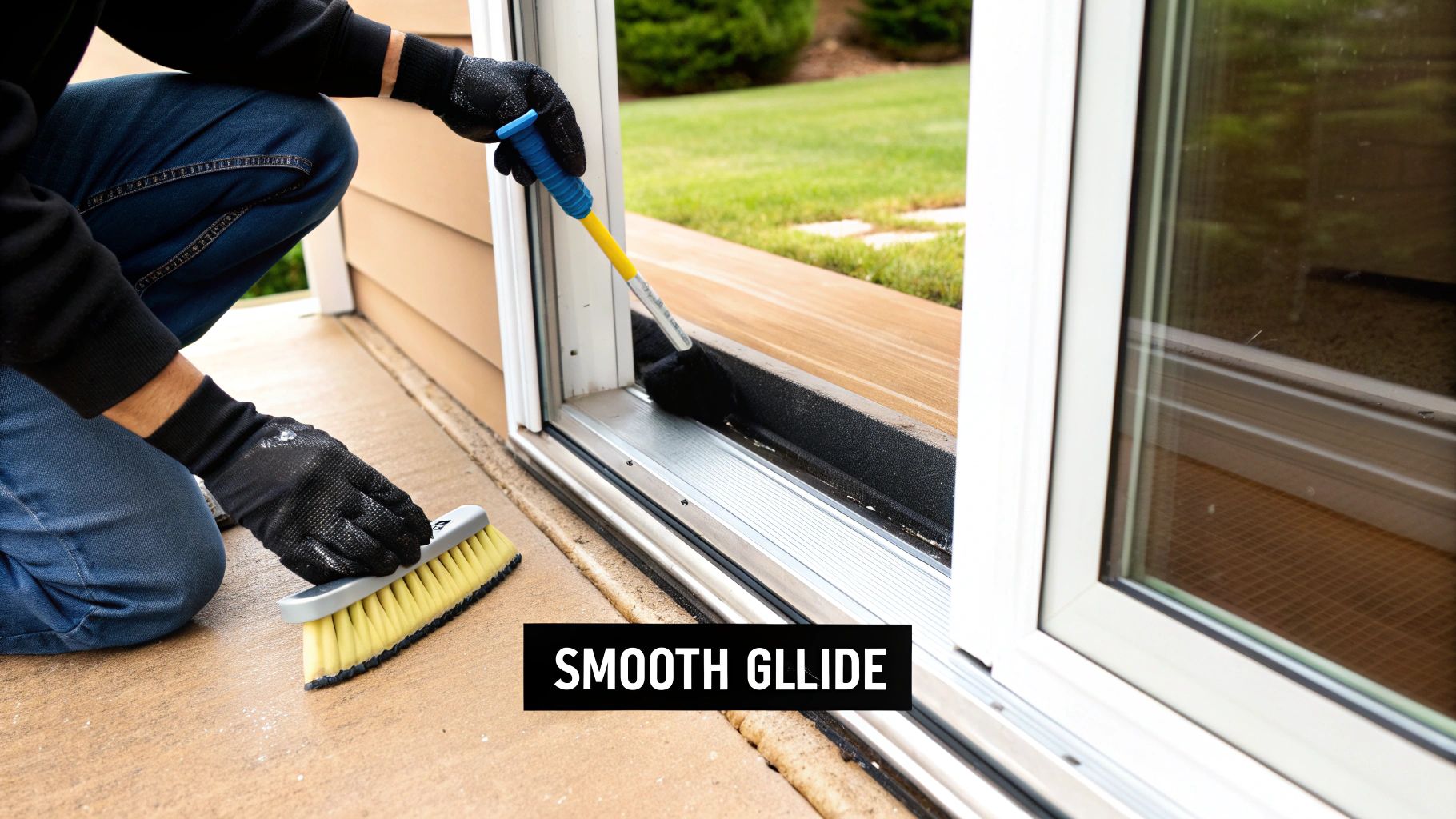
Before you even think about taking the door off, let’s get that track clean. Grab a stiff brush and a vacuum cleaner with a crevice attachment. First, use the brush to break up and sweep out all the loose debris from the bottom track. Then, go back over it with the vacuum to suck up every last bit of that loosened grime. It's amazing what kind of stuff you'll find hiding in there.
Once the dry mess is gone, mix a bit of mild soap and water. Use a rag or sponge to wipe down the inside of the track. For the really stubborn, caked-on gunk in the corners, an old toothbrush works wonders. After it's sparkling clean, make sure you wipe it completely dry.
Expert Tip: Whatever you do, resist the urge to spray an oily lubricant like WD-40 in the track. It seems like a quick fix, but oil-based products are dirt magnets. They create a sticky sludge that will only make the problem worse down the road. A clean, dry track is the goal.
Adjusting the Rollers for a Smoother Glide
If a good cleaning didn't quite do the trick, the next step is to check the roller alignment. Most sliding screen doors have adjustment screws on the bottom edge of the vertical frame. Sometimes they’re visible, and other times they’re hiding under little plastic caps you can pop off. These screws are what raise and lower the wheels, which is key to getting the door to sit level.
For this job, you'll just need a Phillips head screwdriver.
- First, try to lift the door slightly while it's on the track to see if you can feel which side is dragging.
- To raise a corner, turn the adjustment screw on that side clockwise.
- To lower it, turn the screw counter-clockwise.
The key here is to make small, quarter-turn adjustments at a time. After each little turn, slide the door back and forth to see how it feels. You're aiming to get the door perfectly level so it glides smoothly without scraping the top or bottom of the frame. You can find a more in-depth walkthrough in our guide on proper sliding screen door adjustment.
When to Replace Worn-Out Rollers
Still fighting with the door? If adjusting the screws doesn't help or the door constantly pops off the track, the rollers themselves are probably shot. The plastic wheels crack with age, and the internal bearings can seize up from rust and debris.
To replace them, you’ll need to take the door completely off its frame. Lift the door straight up into the top track until the bottom rollers can clear the bottom track. Then, carefully swing the bottom of the door out toward you and lower it down.
Lay the door on a flat, protected surface so you can get a good look at the rollers. They’re usually just held in with a screw or two. Unscrew the old roller assembly and—this is important—take it with you to the hardware store. This ensures you buy an exact match, as there are dozens of different types.
Installing the new ones is as simple as screwing them in. Just be sure to set the height on the new rollers to roughly match the old ones before you put the door back on the track. This one simple repair can truly make a 20-year-old door feel brand new again.
Fixing Bent Frames and Broken Latches
Sometimes, the real culprit isn't the screen mesh or the rollers—it's the door's skeleton. A bent frame can ruin the seal, leaving a welcome mat out for insects, while a broken latch means your home isn't properly secured. Addressing these hardware issues is key to getting your door back in working order.
If you're staring at a noticeable warp or bend in the frame, don't assume you need a whole new door just yet. I've seen countless minor bends in aluminum frames that can be coaxed back into shape. This kind of damage happens more than you'd think, usually from an accidental bump or just from the stress of years of use.
Gently Reshaping a Bent Frame
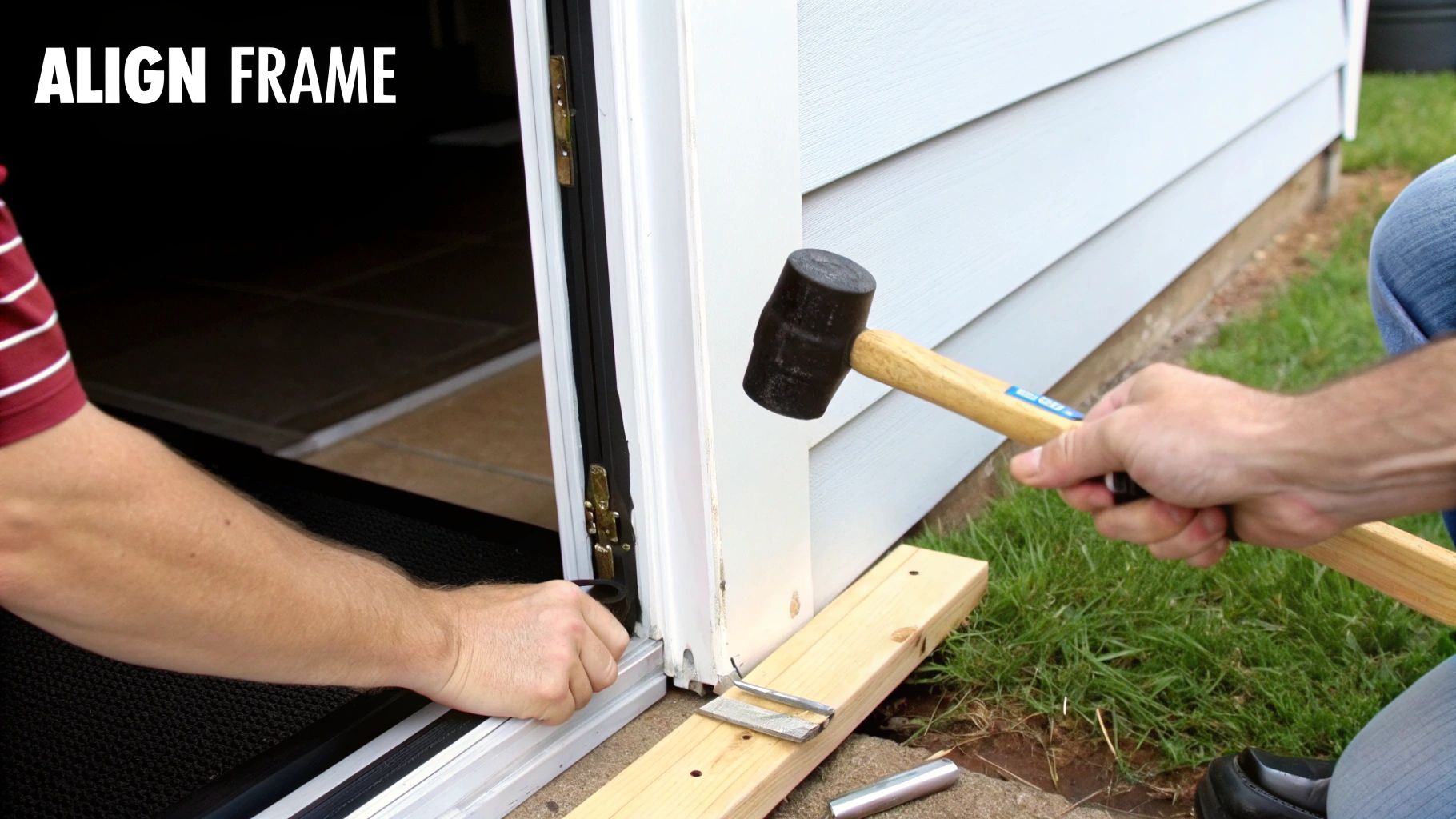
To straighten a slight bend, take the door off its track first. Lay it down on a flat, solid surface—your garage floor or driveway is perfect. Sandwich the bent part by placing a wood block directly underneath it and another one right on top. This little trick is crucial; it spreads out the impact and keeps you from accidentally denting the metal.
Now, grab a rubber mallet and start giving the top wood block some firm, controlled taps. This is all about patience. Work your way along the bend, stopping often to check your progress with a straightedge. If you get too aggressive and try to force it, the frame could easily crack. The same basic idea applies to other frames, and you can see similar techniques used to fix a window screen frame.
Pro Tip: If you straighten the frame and it just springs back into its bent shape, you're likely dealing with metal fatigue. When the metal has lost its integrity, the warp will keep returning. At that point, it’s probably time to think about a replacement.
Swapping Out a Broken Door Latch
A latch that doesn't work is more than just annoying; it’s a security risk. Thankfully, replacing one is a pretty straightforward job that brings back your peace of mind. The single most important part of this repair is buying the right replacement hardware from the get-go.
To make sure you get the right part, you’ll need to grab a tape measure and check a few things on your old latch:
- Hole Spacing: Measure the exact distance from the center of the top screw hole to the center of the bottom one.
- Backset: This is the measurement from the door's edge to the very center of the handle or keyhole.
- Mortise Plate: If your latch is set into the frame, measure the height and width of that plate.
Once you have the new hardware, it's really just a matter of unscrewing the old unit and screwing the new one in its place. Most kits you buy will come with everything you need.
The last step is to check your work. Open and shut the door a few times to make sure the latch bolt clicks smoothly into the strike plate on the door jamb. If it catches or doesn't connect, you might need to loosen the screws on the strike plate and nudge it up or down until you get that satisfying, secure click every single time.
Knowing When a DIY Fix Is Not Enough
There's a great sense of accomplishment in fixing a screen door yourself, but sometimes, persistence can turn a small problem into a big one. Knowing when to step back and call in a pro is one of the smartest skills a homeowner can have. It can save you from a world of frustration and, frankly, some costly mistakes.
A severely warped or cracked frame is one of those immediate red flags. You might be able to gently coax a minor bend back into shape, but a frame with a serious twist or a deep crack has lost its structural integrity. Trying to muscle it back into place is a recipe for snapped metal and a door that’s completely shot.
Signs You've Met Your Match
Some repairs just demand a level of know-how or specific tools that aren't in the average toolbox. Spotting these issues early can save you a ton of time, money, and sanity.
Here are a few clear signs it’s time to pick up the phone:
- Custom or Odd-Sized Doors: If your door is an unusual size or belongs to an older, custom patio setup, you could spend weeks hunting for the right rollers or latches at a big-box store with no luck.
- Heavy-Duty Security Screens: These aren't your average screen doors. They have reinforced frames and complex locking systems where a botched repair could easily compromise your home's security.
- Stubborn Alignment Problems: You’ve cleaned the tracks, you've adjusted the rollers, but the door still scrapes, sticks, or jumps its track. This often points to a deeper issue, like a bent frame or even the house settling over time.
Sometimes, the best tool in your kit is your phone. Getting a professional quote can stop you from buying the wrong parts or accidentally turning a simple fix into a full replacement.
The Value of Professional Expertise
Calling a professional isn’t throwing in the towel; it's making a smart call. An expert can diagnose those tricky issues in minutes, has access to a wide range of parts, and gets the job done right the first time. This logic applies to more than just doors, as our guide to professional window screen repair services explains how that experience really counts.
There’s a reason the screen door repair market is booming—it's projected to hit $2.3 billion by 2026 as more people choose professional repairs over expensive replacements. In fact, some surveys show that nearly 70% of homeowners end up calling for help after a DIY attempt goes sideways. You can find more details about this growing market on Datainsightsmarket.com.
At Sparkle Tech, we understand that you just want it fixed. That’s why we offer same-week service to get your door gliding smoothly again without the headache.
Common Questions About Screen Door Repair
When you start a screen door project, a few questions always seem to pop up. After helping countless homeowners, we've heard them all. Here are some straightforward answers based on our hands-on experience to help you make the right call for your repair.
One of the biggest questions is whether it's cheaper to just buy a whole new door. Nine times out of ten, a repair is the smarter financial move. A full replacement can easily run you $300 or more, but the materials for most DIY fixes—like a fresh roll of screen mesh—usually only cost between $20 and $50. Even calling in a pro for a repair typically averages around $65, making it a much more budget-friendly option.
Choosing the Right Materials
Picking the right screen material is one of the first hurdles, and it’s a critical one, especially if you live somewhere with demanding weather. What holds up just fine in a mild climate might not survive a single season of intense sun or humidity.
For instance, in hot, sunny areas, standard fiberglass mesh can get brittle and start cracking from all that UV exposure. For these spots, we always recommend solar screens. They're specifically designed to block a ton of the sun's heat and damaging rays. This not only makes the screen last longer but can even help trim your cooling costs.
Another fantastic, durable choice is a pet-resistant screen.
Made from a tough, vinyl-coated polyester, this stuff is built to handle claws, paws, and whatever the weather throws at it. It’s a great all-around upgrade for longevity, even if you don't have pets.
Troubleshooting Common Sticking Points
There’s nothing more annoying than a sliding door that constantly jumps its track, but the fix is usually simpler than you’d think. This problem almost always comes down to the rollers—they either wear out or get knocked out of alignment.
Always start with the easiest fix first. Give both the top and bottom tracks a good cleaning to get rid of any gunk or debris that could be causing a jam. If that doesn't solve it, it's time to take a closer look at the rollers themselves.
You should find small adjustment screws on the side of the door frame, usually near the bottom corners.
- Turning the screws clockwise raises the door, which helps it sit more securely in the track.
- Turning them counter-clockwise lowers it.
Make small adjustments, a quarter-turn at a time, and test the door after each one. If you can see visible cracks on the wheels or they just don't spin freely anymore, they’re shot. Replacing them is the only way to get your door gliding like new again.
When a DIY project starts feeling like a headache, or you just want it done right without the hassle, Sparkle Tech Screen Service is ready to step in. You can get a quick quote and book same-week service by visiting us at https://sparkletechscreenservice.com.


