


Getting your screen door installation right starts way before you even think about tools. The most important first step? Picking the perfect screen door for your home and how you actually live in it. This one decision shapes everything that comes after, from how your house looks to how easily you can let that fresh breeze in.
Choosing the Right Screen Door for Your Home
Don't just pick a screen door that looks nice in a picture. Think about your daily life. Is your back door a revolving door for kids and pets? If so, you'll probably want a traditional hinged screen door. These things are built like tanks and can take a beating from constant use.
On the other hand, maybe you're all about that clean, unobstructed view of your backyard. In that case, a retractable screen door is likely your best bet. They roll away neatly into a housing when you don't need them, giving you fresh air on demand without compromising your view. It's no surprise they're becoming so popular—the global market for them hit around USD 371.5 million in 2024 for a reason.
Sliding Screen Doors
If you have a patio or balcony, a sliding screen door is often the most practical choice. They run on a simple track system, so they don't take up any extra space when you open them. The trick to keeping them working well is just making sure the track stays clean and the rollers are in good shape.
To make this a bit easier, here’s a quick rundown to help you decide which screen door is the right fit for your entryway, patio, or even French doors.
Comparing Common Screen Door Types
| Door Type | Best For | Pros | Cons |
|---|---|---|---|
| Hinged | High-traffic front or back doors. | Very durable, classic look, secure. | Swings outward, requires clear space to open. |
| Retractable | Entryways where views are a priority. | Disappears when not in use, modern aesthetic. | More delicate, can be more expensive. |
| Sliding | Patios and balconies. | Space-saving, easy to operate. | Tracks can collect debris, requires a sliding door. |
Ultimately, the best choice really depends on what you need it to do.
Key Takeaway: The perfect screen door is a personal choice. It's a balance between durability for busy areas, looks for your main entrance, and pure function for specific spots like a patio.
Taking the time to make the right choice now will save you a lot of headaches later. While we'll get into the hands-on steps soon, you can also get a head start by reading our guide on DIY screen door installation.
Here at Sparkle Tech, we understand how crucial this first step is. That’s why we offer quick quotes to help you weigh your options and find the perfect match for your home.
Getting the Prep Work Right for a Flawless Fit
A great door screen installation all comes down to the prep work. Honestly, the most common mistake we see is people rushing the measurements. It seems simple enough, but getting it wrong almost guarantees you’ll end up with frustrating gaps or a door that just won’t close.
Think of it this way: your door frame might look square, but I can almost promise you it isn't. Houses settle, frames shift—it’s just a fact of life. That’s why you have to measure the width in three spots: top, middle, and bottom. Do the same for the height, measuring along the left, center, and right sides.
Here's the crucial tip: always use the smallest of the three width measurements and the smallest of the three height measurements. This little trick ensures your new door won't get jammed in the frame's tightest spot.
Your Go-To Tool Checklist
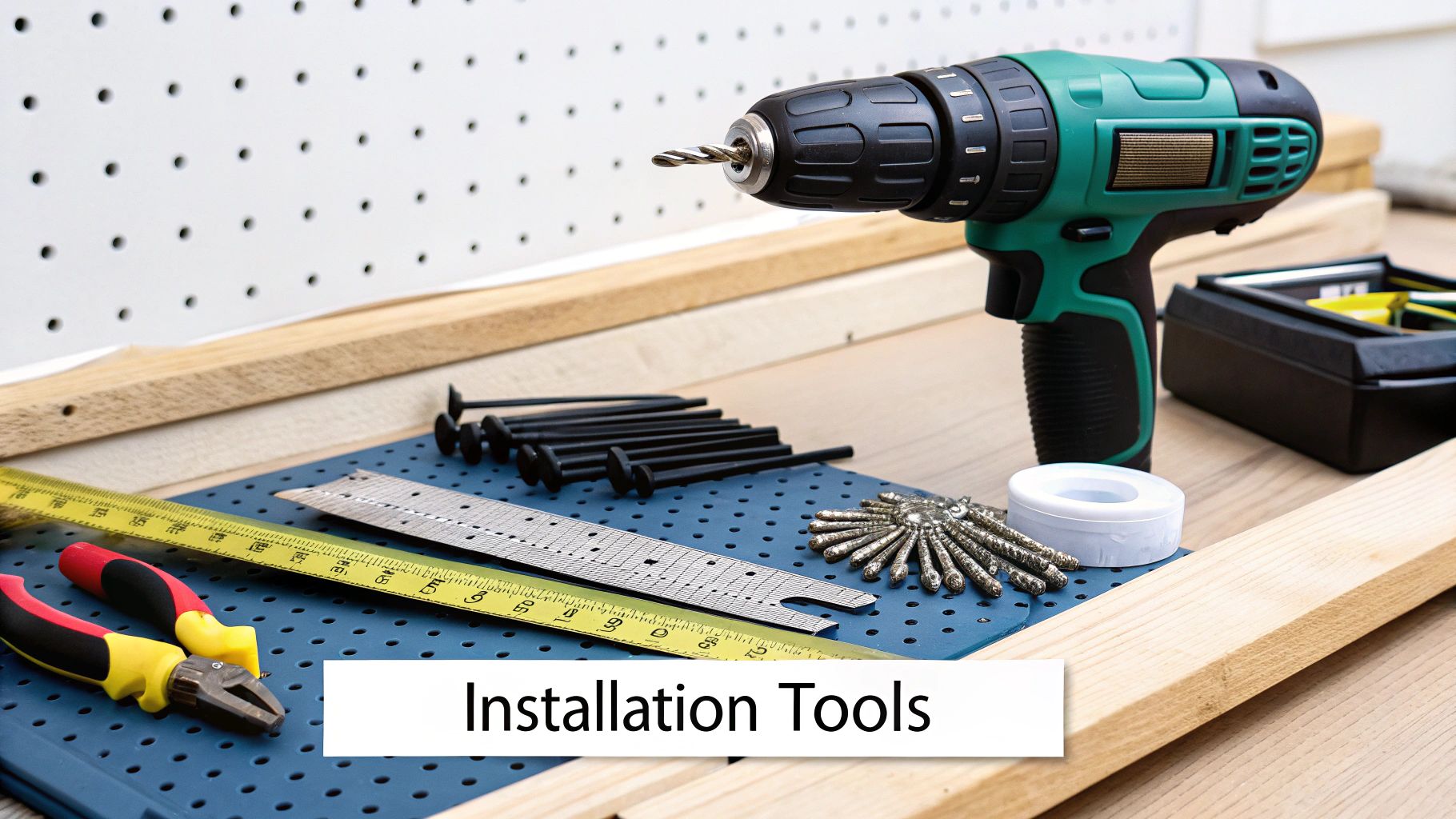
Nothing kills a project's momentum like having to stop for a mid-job hardware store run. Before you start, get everything you need laid out and ready to go. For most screen door jobs, this is what you’ll want on hand:
- A good tape measure: Don’t grab a flimsy one; you need accuracy.
- Power drill with bits: This is a must for securely attaching hinges, handles, and the frame itself.
- Level: Absolutely essential for making sure the door hangs straight and swings smoothly.
- Pencil or marker: For clear, accurate marks.
- Utility knife: You'll need this for trimming any excess screen material.
- Spline roller: If you're putting new mesh into a frame, this tool is non-negotiable.
A spline roller is a small, cheap tool that makes a world of difference. It's designed to press the rubber spline into the frame’s channel, giving you that tight, professional finish that keeps the screen taut.
Once you’ve double-checked your measurements and have your tools organized, you're officially ready to start the actual door screen installation. Of course, if this feels like a bit much, you can always skip the hassle. At Sparkle Tech, we handle everything and even offer same-week service.
A Practical Walkthrough of the Installation Process
Alright, you've got your frame prepped and your tools laid out. Now for the part that really matters: getting that screen door installed. The process itself isn't rocket science, but it's one of those jobs where patience and a keen eye for detail really pay off. Let’s walk through the key moves for a standard installation, whether you’re working with a classic hinged door or a sliding patio screen.
First things first, you need to get the frame or tracks securely in place. If it's a hinged door, you'll be attaching the hinge-side of the screen door frame to your home’s door jamb. Keep your level handy for this—I can't stress this enough. A frame that's even a little bit crooked will lead to a door that swings open or slams shut when you don't want it to.
For a sliding screen, the top and bottom tracks are your entire focus. You have to make sure they're perfectly parallel and completely clean before you even think about screwing them down. I've seen it a hundred times: a misaligned track is almost always the culprit behind a sticky, frustrating sliding screen door.
Getting the Screen Tension Just Right
With the frame solid, it's time to tackle the screen material. This is where a lot of DIY projects hit a snag. You're aiming for a perfectly taut, flat surface with zero ripples, but if you pull it too tight, you risk bending the frame itself. It's a delicate balance.
Pro Tip: When you're putting the mesh in, start at one corner and work your way diagonally to the opposite one. Apply gentle, consistent pressure as you go. Think of it like tightening the lug nuts on a tire—this method distributes the tension evenly and is the best way to prevent the frame from bowing.
To help map out your project, this visual guide shows how your initial decisions will shape the installation.
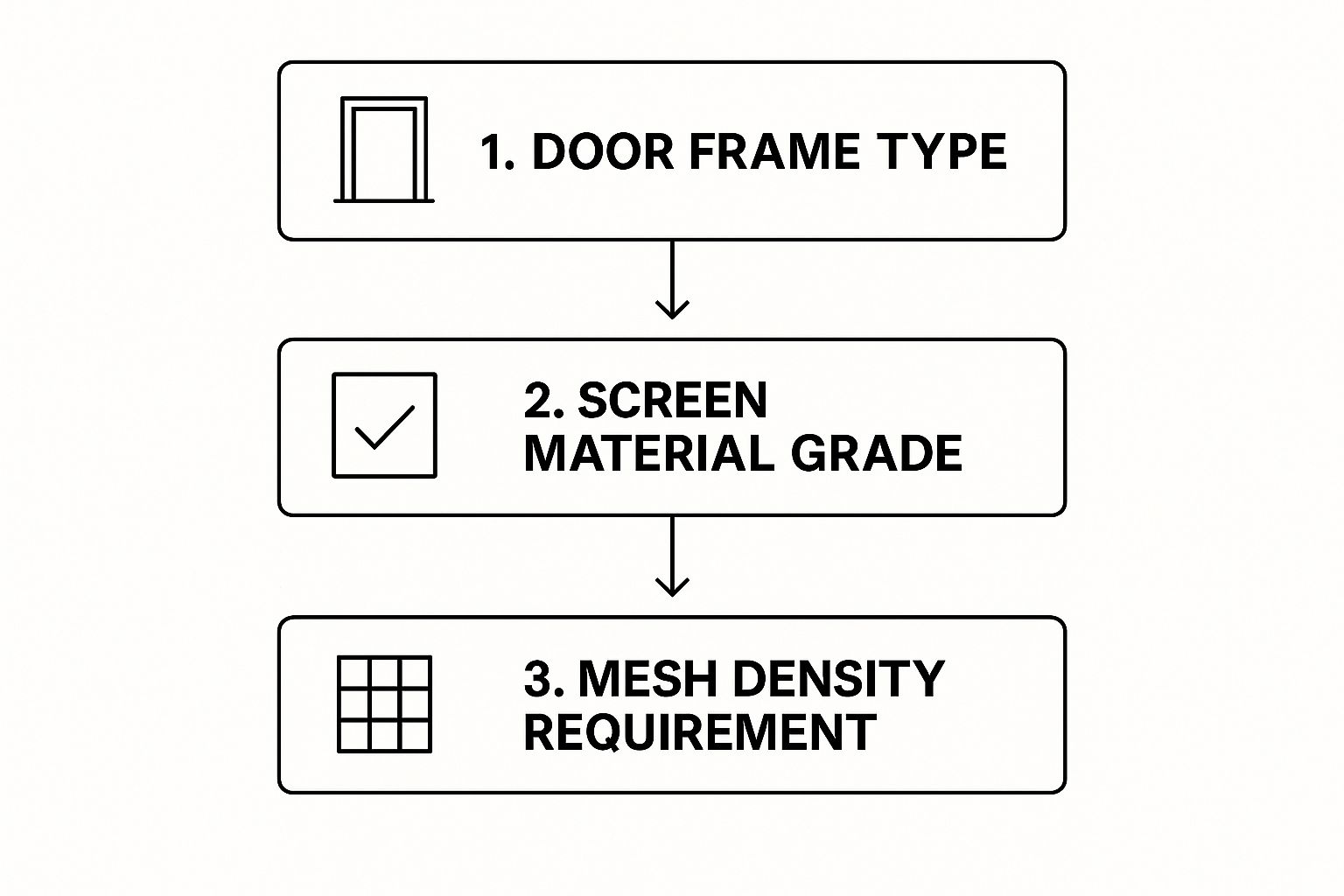
As you can see, the type of door frame you're working with directly influences which material and mesh density will work best for you.
Finally, you'll lock the screen mesh into the frame's channel using a spline and a spline roller. Go slowly, working in small sections and pressing the spline firmly into its groove. Don't rush this part. A well-seated spline is what keeps the whole thing together. For a deeper dive into specific techniques, feel free to check out our complete guide on how to install screens.
If getting that perfect, drum-tight tension sounds like more trouble than it's worth, we get it. The pros at Sparkle Tech have this down to a science. With our same-week service, you can skip the frustration and get a flawless result. Just give us a text or call for a quick quote.
Finishing Touches That Make a Real Difference
Getting the screen door hung correctly is a huge milestone, but the job isn't quite done. From my experience, it’s the little details that separate a decent DIY job from a truly professional installation. These final steps are what ensure your door not only looks fantastic but also works perfectly for years.
A super easy trick for a clean, polished look? Hide those screw heads. You can find small, color-matched caps that just press right into place, making the hardware nearly disappear. It’s a tiny detail that makes a surprisingly big difference.
Another crucial step is creating a solid, bug-proof seal. Run some self-adhesive foam or rubber weather-stripping along the door frame. This closes off those tiny gaps that pesky insects always seem to find, making your home that much more comfortable.
Dialing in the Details and Long-Term Care
If you've installed a retractable screen, getting the tension just right is key to that smooth, satisfying glide. Most models have an adjustment screw inside the housing. If the screen feels sluggish or snaps back too aggressively, a few turns will fine-tune the retraction speed.
There’s a reason these retractable screens are everywhere now—they blend convenience with great aesthetics. The market is exploding, projected to double from USD 150 million in 2024 to USD 300 million by 2033. It’s a clear sign of just how popular these designs have become. You can dig into more of the data in this Verified Market Reports analysis.
A bit of simple maintenance goes a long way. I recommend cleaning the mesh once a season with mild soapy water and a soft brush. After rinsing, hit the tracks and hinges with a silicone-based spray to keep everything moving smoothly.
These are the kinds of finishing touches we obsess over at Sparkle Tech. If you'd rather skip the hassle and get a flawless result, just text us for a quick quote. We offer same-week service to get the job done right, and right away.
Troubleshooting Common Installation Problems
Even the most carefully planned installation can hit a bump in the road. You might find your new screen door scrapes the frame, refuses to latch, or has a frustrating gap letting bugs waltz right in. Don't sweat it—most of these issues are common and have pretty simple fixes.
A door that drags or won’t close properly is almost always a sign that the frame isn't perfectly square. This is super common, especially in older homes that have settled over the years. The good news is you can usually correct it by adjusting the hinges. Try loosening the screws just enough to shift the door's position, then tighten them back up. A little tweak is often all it takes.
Gaps and Screen Tension Headaches
What about that annoying gap between the screen door and its frame? Not only does it look sloppy, but it completely defeats the purpose of having a screen in the first place. This usually boils down to a measurement being slightly off or the frame not being installed perfectly plumb. An easy and effective fix is to apply some weather-stripping along the frame to seal it up.
A saggy, loose screen is another classic problem. It almost always means the screen wasn't pulled taut enough when the spline was pushed in.
To fix this, you'll need to carefully pull the spline out. Once it's out, gently pull the screen mesh tight—you want it firm, but not so tight that it starts to warp the frame. Then, work on re-seating the spline, starting in one corner and working your way to the opposite side to keep the tension even.
Getting the installation right is crucial for any door, not just the one on your patio. Think about the precision required for platform screen doors in a busy train station—it’s a matter of public safety. In fact, that market is projected to be worth USD 2.53 billion by 2034, which shows just how much goes into high-stakes door systems.
If you're still stuck on a tricky problem, our guide to professional screen door installation dives even deeper into these solutions. Or, you can skip the headache altogether. Just text Sparkle Tech for a quick quote and let us handle it with our same-week service for a perfect, stress-free fit.
Your Door Screen Installation Questions Answered
We've been doing this for a long time, and a few questions always pop up. Here are our straight-to-the-point answers to what homeowners ask us most, helping you get ahead of common snags before you even start.
What Is the Best Material for a Screen Door?
The "best" material really comes down to your home and lifestyle. Fiberglass is the go-to for most people. It's easy on the wallet, flexible, and won't hold a crease if it gets bumped.
But if you've got pets that love to scratch or kids who aren't exactly gentle, you'll want to look at a pet-resistant screen. It’s a much tougher weave and a smart upgrade for busy households.
For pure strength, aluminum is the top contender, but be aware it can dent permanently. On the other hand, if you want to preserve your view, newer high-transparency screens are amazing—just know they're a bit more delicate.
Choosing the right material is a balancing act between lifestyle, durability, and aesthetics. A family with a large dog has very different needs than a couple with a quiet balcony.
Can I Install a Retractable Screen on Any Door?
Pretty much! Retractable screens are fantastic because they fit most door types, including single doors, double French doors, and sliding glass doors. They’re designed to be mounted either on the surface of the door frame or tucked right inside the jamb.
The key to success is all in the measurements. You have to be precise when you measure the opening and check it against the screen manufacturer's specs. While they're built for standard doors, some custom or older, non-standard frames might need a professionally fitted solution to get that seamless look.
How Do I Fix a Small Hole in My Screen?
A little tear doesn’t mean you need a whole new screen. For small rips and holes, you can grab a screen repair kit from any hardware store. They usually come with a simple adhesive patch you just press into place.
Got a tiny pinhole? A drop of clear super glue or even clear nail polish will seal it right up. If you're dealing with a larger gash, though, your best bet for a clean, lasting fix is to replace the mesh entirely.
Feeling like this is more than you bargained for? If you'd rather skip the hassle and get a perfect, professional result, the team at Sparkle Tech Screen Service is ready to help. We offer quick quotes and same-week service. Find out more at https://sparkletechscreenservice.com.


