


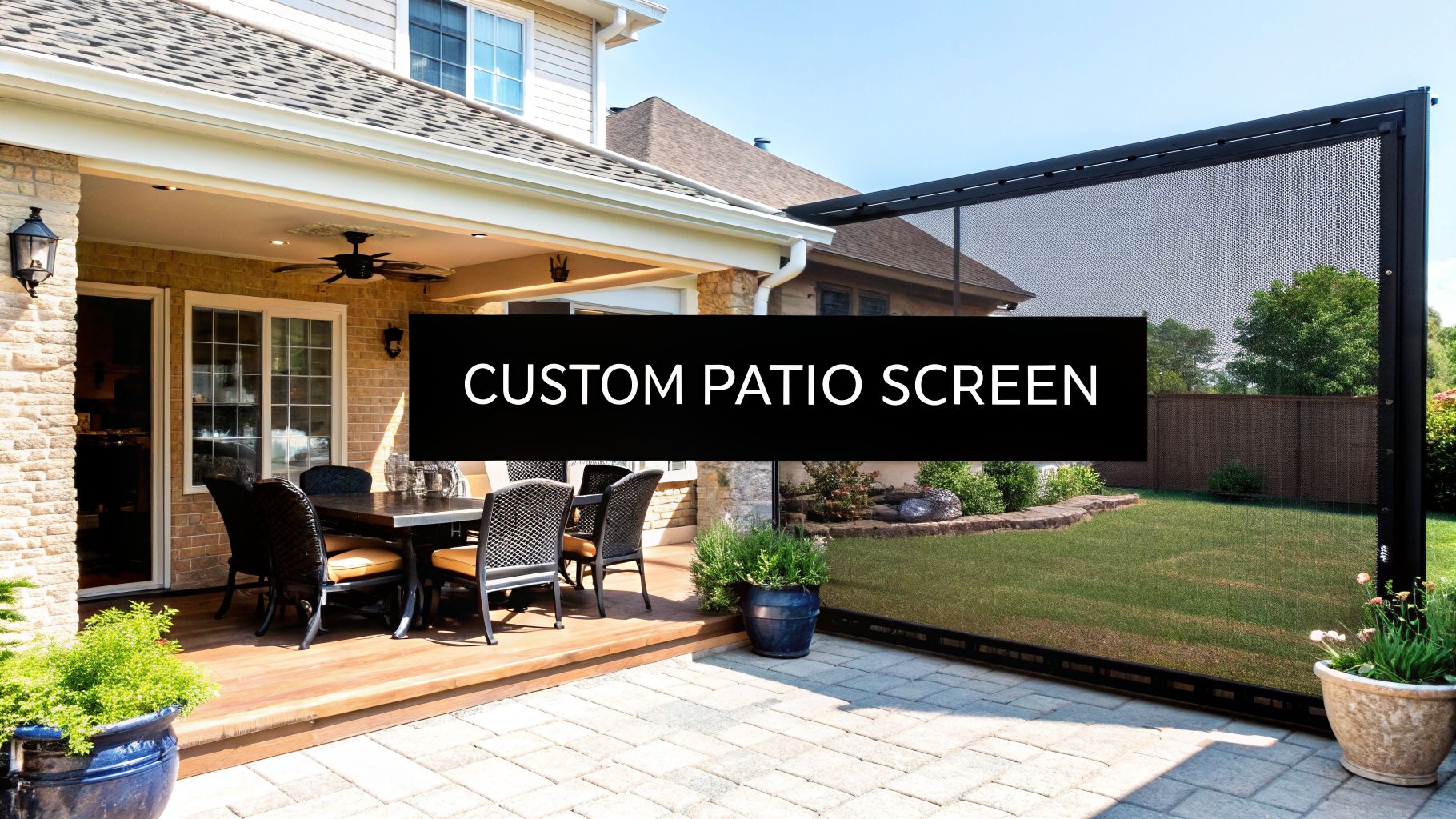

A custom patio screen is so much more than just a roll of mesh. It’s a solution designed and built specifically for your home's unique outdoor space. Forget one-size-fits-all kits from a big-box store; think of this as a permanent upgrade that transforms your patio, deck, or porch into a space you can actually live in.
This custom approach is what really unlocks the benefits, from finally getting rid of pesky insects to blocking that intense Arizona sun.
Redefine Your Outdoor Living Space
Buying a generic screen is like getting a suit off the rack without trying it on. Sure, it might cover you, but the fit will almost certainly be awkward, leaving frustrating gaps and looking unprofessional. A custom patio screen, on the other hand, is measured and constructed to blend perfectly with your home's architecture. That precision fit is what makes it a genuine home improvement, not just an accessory.
For anyone living in a sun-drenched climate, the difference is night and day. A proper enclosure immediately reclaims your patio from mosquitoes and flies, giving you a peaceful spot to relax or host friends. It also adds a surprising amount of privacy from neighbors, turning what was once an exposed deck into your own little retreat.
The Power of a Perfect Fit
That "custom" element is where the magic really happens. When a screen is professionally measured and installed, you get a perfect seal with no saggy spots or unsightly gaps. This tight fit is absolutely critical for a few reasons:
- Total Pest Protection: Even the tiniest opening is a welcome mat for bugs. A custom installation closes those gaps for good.
- Better Durability: A screen pulled to the right tension and secured in a solid, well-fitted frame stands up much better to wind and daily wear.
- A Clean, Finished Look: A taut, perfectly aligned screen just looks right. It adds to your home's curb appeal instead of taking away from it.
A custom patio screen isn't just about blocking bugs; it's about creating a seamless transition between your indoor comfort and outdoor enjoyment. It’s an investment in your lifestyle, letting you use your outdoor space more often and more comfortably.
More Than Just a Bug Blocker
Beyond keeping pests out, a custom patio screen is a multi-tasking workhorse. By choosing the right materials, you can solve other common outdoor problems. For example, opting for a high-quality solar mesh can dramatically cool down your patio by blocking up to 90% of the sun's harsh UV rays. This not only makes the space more comfortable but can even help lower your AC bills by shading windows and glass doors.
Before you make any decisions, it’s helpful to see the advantages laid out simply. Here’s a quick look at the immediate impact a custom screen can have.
Instant Benefits of a Custom-Fit Patio Screen
| Benefit | Impact on Your Home and Lifestyle |
|---|---|
| Bug-Free Living | Enjoy meals, relax, and entertain without swatting away mosquitoes, flies, and other pests. |
| Sun & Heat Reduction | Solar screen options block UV rays, making your patio cooler and more comfortable year-round. |
| Added Privacy | Creates a secluded oasis, shielding your outdoor space from the view of close neighbors. |
| Increased Home Value | A well-built, professional screen enclosure is an attractive feature that adds to curb appeal. |
| Enhanced Safety | Provides a contained area for pets and young children to play outdoors safely. |
Ultimately, a custom screen is a practical and valuable addition that enhances your home’s comfort, energy efficiency, and usability. It’s the key to getting the most out of your Arizona lifestyle.
Choosing the Right Screen Material and Type
Picking the right materials for your custom patio screen is a lot like choosing tires for your car. What you need really depends on the road ahead and what you want to get out of the drive. This is where we get down to the details that make a screen perfect for your home, your climate, and how you live.
The first big question to ask yourself is: what's the screen's main job? Are you just trying to keep the mosquitos and flies at bay, or is your real mission to block that intense Arizona sun? That one answer will point you down one of two very different paths—either toward a standard bug screen or a high-performance solar screen. Each one is built for a different purpose, and knowing that difference is the key to getting this project right.
This little decision tree can help you see which path makes the most sense for your patio.

As you can see, figuring out your biggest problem—bugs or sun—is the first and most important step in designing the perfect custom patio screen.
Bug Screens Versus Solar Screens
A standard bug screen is the classic choice for keeping pests out. It’s typically made from a lightweight fiberglass or aluminum mesh, and its whole job is to be a physical wall that stops insects while letting in as much air and light as possible. It’s like having an open window that bugs just can't get through.
A solar screen, on the other hand, is a serious upgrade. It absolutely blocks bugs, too, but its main purpose is to absorb and deflect a huge chunk of the sun’s heat and UV rays before they ever get into your patio space or touch your windows. For anyone in the Phoenix area, this is a total game-changer, capable of blocking anywhere from 80% to 95% of solar heat.
The choice between a bug and solar screen isn’t just about comfort—it's about function. One gives you basic protection, while the other is an active tool for managing your home’s climate and energy costs.
That difference is what makes your patio genuinely usable on those scorching sunny days. We dive a lot deeper into how these specialized screens do their job in our guide on solar screen installation. The cooling effect not only makes your patio feel better but also helps lower those summer energy bills.
Picking the Perfect Mesh Material
Once you know if you need bug or solar protection, the next decision is the mesh material itself. What you pick here will directly affect how long your screen lasts, how clear your view is, and what you’ll pay.
- Fiberglass Mesh: This is the go-to standard for most residential bug screens. It's affordable, flexible, and doesn't dent. The downside? After years of intense sun exposure, it can get brittle and tear.
- Aluminum Mesh: A solid step up in strength, aluminum gives you better durability and a sharp, clean appearance. It won't sag over time like fiberglass can, but it is more likely to get dented if something hits it.
- Pet-Resistant Mesh: If you have dogs or cats who see screens as a personal climbing wall, this is non-negotiable. Made from a tough, vinyl-coated polyester, this mesh is about seven times stronger than standard fiberglass and can handle claws and paws without shredding.
- "Invisible" or High-Visibility Mesh: For homeowners who refuse to sacrifice their view, this is the answer. This type of screen uses super-fine threads to maximize airflow and light, making the mesh practically disappear when you look through it.
Frame and System Type Considerations
The last pieces of the puzzle are the frame that holds it all together and the system that makes it work. The frame gives your screen its strength and structure, while the system is all about how you open, close, and use it.
Frame Materials:
- Aluminum: This is, by far, the most popular choice. It’s strong, lightweight, and won’t rust or corrode. Plus, it can be powder-coated in a ton of different colors to perfectly match your home's trim.
- Vinyl: A budget-friendly option that's also quite durable and requires little maintenance. For extremely large openings, however, it might not provide the same rigidity as aluminum.
System Types:
- Fixed Panels: These are permanent screens installed directly into your existing patio cover. It's the most durable and cost-effective way to fully enclose a porch.
- Sliding Screen Doors: A classic for a reason. These panels slide smoothly on a track, giving you an easy way to get in and out. They are perfect for high-traffic doorways.
Seeing how these components work together shows that custom patio screens do more than just add comfort—they’re a smart way to help manage your home’s temperature. For even more ways to save, check out these actionable home energy efficiency tips for Phoenix residents. When you combine the right mesh, frame, and system, you’re not just building a screen; you’re creating a beautiful and functional new part of your home.
Understanding Project Costs and Timelines
So, what does a custom patio screen project actually cost? That's usually the first question on everyone's mind, and the honest answer is: it depends. Think of it less like buying something off the shelf and more like commissioning a custom piece of furniture—the final price comes down to the size, materials, and details you choose.
The biggest factor, no surprise, is the size of your patio. A larger space simply needs more materials and time to screen in. But what really fine-tunes the budget are the choices you make beyond the basic dimensions.
What Goes Into the Final Price?
When we build a quote, we're looking at a handful of key elements that determine the final investment. Getting familiar with these will help you understand where your money is going and make choices that fit your priorities.
The most impactful choice after size is the screen mesh itself. A standard fiberglass bug screen does a great job of keeping pests out and is the most budget-friendly route. On the other hand, upgrading to a solar screen will cost more upfront, but it's an investment that pays you back by blocking a ton of heat and UV rays, making your patio more comfortable and potentially lowering your A/C bills.
Here’s a quick rundown of the main cost factors:
- Overall Project Size: The total square footage to be screened is always the starting point. More area means more framework, more mesh, and more installation time.
- Mesh Type: Your choice between a standard bug screen, a heavy-duty pet-resistant screen, a nearly invisible high-visibility screen, or a heat-blocking solar screen will significantly influence the cost.
- Frame Material: We use aluminum for its durability and rust resistance. The thickness of the aluminum and the type of finish (like a tough powder coating) can also affect the price.
- Installation Complexity: A simple, ground-level rectangular patio is pretty straightforward. If we're working on a second-story balcony, an oddly shaped area, or a patio that needs a lot of prep work, the added labor will be factored into the cost.
The investment in a custom patio screen is directly tied to the value it delivers. While a basic bug screen provides essential protection, a solar screen adds tangible benefits like lower cooling costs and a more usable outdoor space, justifying its higher upfront cost.
Budgeting with Realistic Cost Ranges
To help you get a ballpark idea, we can break down projects into general sizes. Of course, every job has its own unique quirks, but these ranges are a solid starting point for planning.
- Small Projects (like a single large patio door or small porch): You can typically expect to see costs from $300 to $900. This often covers rescreening an existing frame or installing a simple new screen door.
- Medium Projects (like a standard 10×20 foot patio): An average project of this size usually falls between $1,500 and $4,000. This range can comfortably include new framing and an upgrade to a quality solar screen.
- Large or Complex Projects (a multi-level deck or a large, intricate lanai): These projects can start around $5,000 and go up to $15,000+, especially when you factor in premium materials and complex structural work.
How Long Does It All Take?
One of the best parts about a professional screen installation is how quickly it all comes together. From your first call to us to relaxing on your finished patio, the whole process is surprisingly fast. At Sparkle Tech Screen Service, we’re all about getting your project done right and done quickly.
Here’s what you can generally expect:
- Quote & Consultation: We can often get you a quote the same day you reach out, sometimes just by looking at a few pictures you text us (1 day).
- On-Site Measurement: A technician stops by to get precise, final measurements (1-2 days after you approve the quote).
- Fabrication: We build your custom frames and prepare the screens at our shop.
- Installation: This is the fast part. The actual on-site installation is typically finished in just one day.
Our goal for most standard jobs is to provide Same Week Service. That means you could be enjoying a bug-free, cooler patio just a few days from now. It’s a clean process with minimal disruption to your life.
DIY Installation Versus Hiring a Professional
So, you’re ready for a custom patio screen. Now comes the big question every homeowner faces: should you try to install it yourself or just call in a professional? The DIY path looks appealing at first glance—you save some money and get the satisfaction of completing the project yourself. But I've seen this go wrong more times than I can count, turning what should be a simple upgrade into a major headache.
The reality is, installing a screen perfectly is a lot harder than it looks. One tiny miscalculation in your measurements, and you're left with a screen that sags, looks sloppy, and—most importantly—leaves gaps for bugs to wander right through. Getting that perfect, drum-tight tension is an art form that requires specialized tools and a practiced hand. One slip and you could damage your home's stucco, the fascia board, or the new screen itself.

Weighing the Pros and Cons of DIY
Going the DIY route isn’t just about saving a few bucks; it’s a serious commitment of your time, skill, and patience. Before you even think about ordering materials, you need to be brutally honest with yourself about what the job entails.
A successful DIY custom patio screen installation demands more than a basic toolbox. You'll need specific screen splining tools, a large, stable work surface, fresh utility knife blades, and possibly jigs to keep the frame perfectly square.
Beyond the equipment, you need real precision. Ask yourself, can you confidently:
- Measure your patio opening accurately, down to an eighth of an inch?
- Cut aluminum framing with perfectly square angles for tight, clean corners?
- Stretch the screen mesh with consistent tension across the entire surface so it doesn't droop later?
- Mount the finished frame securely without cracking your stucco or splintering wood?
If you paused on any of those, hiring a professional is probably the smarter, safer bet.
The Professional Advantage: Peace of Mind and a Perfect Finish
Hiring a service like Sparkle Tech is an investment in getting the job done right the first time. Sure, it costs more upfront, but what you’re really paying for is expertise and a guaranteed result. A pro brings years of hands-on experience, making sure every measurement is exact and every corner is sealed tight against pests.
They work with high-grade materials and use professional equipment to get a taut, durable finish that’s nearly impossible to replicate on your own. This is especially true for large openings or with tougher materials like heavy-duty solar screens, where getting the tension just right is crucial for both looks and longevity.
The biggest reason to hire a pro? The warranty. If there's any issue with the installation or the materials, it's their problem to fix, not yours. That protects your investment and saves you from future costs and frustration.
This a-job-done-right approach is why so many homeowners are opting for professional services. In fact, the global market for retractable screens—a close relative of custom enclosures—is expected to hit $550 million by 2033. This surge is driven by homeowners in places like Peoria and Chandler who demand a flawless, bug-free outdoor space without the risks that come with a DIY attempt.
Making the Final Decision
Ultimately, the choice boils down to a trade-off: saving money now versus ensuring long-term quality and value. A DIY project might feel like a win for your wallet today, but one mistake could easily cost you more in replacement parts or repair work down the line.
Here’s a simple breakdown:
| Aspect | DIY Installation | Professional Installation |
|---|---|---|
| Cost | Lower upfront material cost | Higher cost includes labor and expertise |
| Quality | Variable; depends entirely on your skill | Consistent, high-quality, and professional finish |
| Time | Can take multiple weekends | Usually completed in a single day |
| Tools | Requires purchasing or renting specialized tools | All necessary tools and equipment are provided |
| Warranty | None; you are responsible for any errors | Work and materials are typically guaranteed |
If you're leaning toward hiring a pro, it helps to know what to look for in a company. For those curious about what separates the pros from the amateurs, this guide on starting a handyman business offers great insight into the standards and professionalism you should expect.
For most people, the speed, precision, and guaranteed results of a professional install make it the clear winner for a beautiful and long-lasting custom patio screen.
Keeping Your Custom Patio Screen in Great Shape
Your custom patio screen is a huge upgrade to your home, but just like anything else, it needs a bit of care to go the distance. Think of it like your car—a little routine maintenance goes a long way in preventing bigger, more expensive headaches down the road.
The good news? It doesn’t take a lot of work. A simple seasonal routine will keep your screen enclosure looking fantastic and functioning perfectly, preserving that bug-free outdoor space you love. Just a few minutes of attention a couple of times a year makes all the difference.

A Simple Seasonal Maintenance Checklist
Getting into the habit of a quick seasonal check-up is the best way to keep your custom patio screen in prime condition. This lets you spot and handle small issues before they turn into major problems.
1. Gentle Cleaning for Mesh and Frames
Especially here in the Phoenix area, dust, pollen, and dirt are bound to accumulate on your screens. Over time, that buildup can clog the mesh, hurting your airflow and view.
- To clean it, just mix a little mild dish soap into a bucket of warm water.
- Using a soft-bristle brush or a microfiber cloth, gently scrub both the screen mesh and the frame. Stay away from harsh chemicals or a pressure washer, as they can easily damage the screen.
- Rinse everything off with a gentle spray from your garden hose to remove all the soap and grime. Then, just let it air dry.
2. Regular Inspections for Damage
At least twice a year, take a slow walk around your patio enclosure and give every panel a good look. You’re on the hunt for any minor signs of wear and tear.
- Scan for small holes, rips, or tears in the mesh. A little snag from a pet's claw or a falling twig can get much bigger if you let it go.
- Check where the screen meets the frame, particularly at the corners. If you see the screen pulling away, that's a sign the spline is failing, creating an open door for pests.
- Look over the frames for any dents, dings, or deep scratches that might need a little attention.
"A five-minute inspection every few months is the single best thing you can do for your screen enclosure. Catching a one-inch tear when it's small saves you from having to replace an entire panel later on."
This simple habit is what separates a screen that lasts five years from one that lasts for fifteen.
Knowing When to DIY Repair or Call a Pro
When you find a little damage, the next question is whether to fix it yourself or call in an expert. The answer really depends on the size and type of the problem.
For tiny punctures or tears—anything smaller than a quarter—a DIY patch kit from the hardware store can be a decent, quick fix. These kits are cheap and easy to use, but they're really just a temporary band-aid and often stick out visually.
So, when should you pick up the phone?
- Large Tears: Any rip longer than three inches is too big for a simple patch. A DIY attempt on a large tear usually looks messy and won't hold up for long.
- Sagging or Loose Screens: If a whole screen panel is drooping or looks wavy, it means the mesh has lost its tension. Fixing this requires professional tools to properly re-stretch and re-spline the screen.
- Damaged Frames: A bent, broken, or dented aluminum frame affects the entire structure's stability and is definitely a job for a professional.
Trying to tackle a major repair yourself can easily result in wrinkles, uneven tension, or even more damage to the frame. For anything beyond a tiny hole, calling a pro is usually the more cost-effective choice in the long run. To get a better sense of your options, take a look at our guide on patio screen repair services, which explains when a full rescreening is your best bet.
Your Phoenix Patio Screen Experts are Right Here
If you live anywhere in the Phoenix metro area—from Scottsdale to Peoria—you know the deal. A great patio screen isn't just a nice-to-have; it's your frontline defense against scorching sun and stubborn pests. You've seen what's possible, and when you're ready to make it happen, Sparkle Tech Screen Service is the local team that gets it done right and right away.
We've built our business around one simple idea: getting your project handled quickly and without any headaches.
Fast Service You Can Count On, All Over The Valley
We know you don't want to wait weeks just for a quote or get stuck in a long, drawn-out project. Our entire process is streamlined to get you from that first phone call to relaxing on your newly screened patio as fast as possible.
Here’s how we make it easy:
- 'Quick Quotes' are our specialty. Just text or call us with a few pictures of your space, and we can usually get an accurate estimate back to you the very same day.
- 'Same Week Service' is what we aim for on most jobs. We work hard to get your custom patio screen measured, built, and installed in just a few days.
When you hire a local pro, you’re not just buying a screen. You’re getting a partner who actually understands the Arizona climate—which materials will survive the intense sun and how to build a frame that keeps every last bug out.
More Than Just Patios: Your Go-To for All Screen Work
Whether you need a complete, brand-new installation or just a few timely repairs, we've got you covered. Our team handles every kind of window and patio screen job with the skill that only comes from experience, guaranteeing a perfect fit that's built to last.
We can handle it all, including:
- Brand new solar screen installations to beat the heat.
- Simple rescreening projects to make old frames look new again.
- Sliding screen door repairs and full replacements.
Our crews serve the entire Phoenix valley, including Chandler, Surprise, Mesa, and all the communities in between. Check out our full list of local service areas to see that we’ve got your neighborhood covered.
Give Sparkle Tech Screen Service a call today for your no-obligation estimate. Let's start the conversation about turning your patio into that comfortable, bug-free space you've been wanting.
Frequently Asked Questions About Custom Patio Screens
Even after you've decided on the basics, a few more questions usually pop up. It’s completely normal. We get a lot of the same ones from homeowners across Phoenix, so we’ve put together some answers to the most common things people ask right before they get started.
How Much Can Solar Screens Reduce My Cooling Costs?
Here in Arizona, this is the big one. Solar screens are an absolute game-changer for taking the load off your AC unit because they stop the sun's heat before it ever touches the glass on your windows and doors.
A good quality solar screen can block anywhere from 80% to 95% of that incoming solar heat, depending on the material and color you choose. In our experience, that translates to a real-world drop in cooling costs of up to 30% during those brutal summer months. It’s an investment that truly starts paying you back right away.
How Long Does a Custom Patio Screen Typically Last?
The lifespan of your screen enclosure really boils down to the quality of the materials and how much direct sun it gets. When you go with a durable, powder-coated aluminum frame and a high-quality mesh, you can expect impressive longevity.
With just a little bit of care, a professionally installed custom patio screen using strong solar or pet-resistant mesh should easily last 10-15 years, and often even longer. Standard fiberglass mesh might give you closer to 7-10 years, simply because our intense desert sun can make it brittle over time.
Can You Install a Pet Door in a Custom Screen?
Absolutely! Adding a pet door is one of the smartest and most popular upgrades for a patio enclosure. It gives your dogs or cats the freedom to go in and out on their own, meaning you don't have to play doorman all day long.
The best time to plan for a pet door is during the initial design. That way, we can build it right into the screen door frame for a perfect, secure fit that looks like it was always meant to be there.
What Is the Difference Between Rescreening and a New Installation?
It’s helpful to know if you're looking for a simple refresh or a total replacement. The distinction is pretty straightforward:
- Rescreening: This is what we do when your existing screen frames are still in great shape. We'll just remove the old, torn, or faded mesh and stretch brand-new material in its place.
- New Installation: This is a from-scratch project. We build and install entirely new frames and screens. You'd go this route for a brand-new enclosure or if your current frames are bent, broken, or just looking worn out.
Knowing which one you need helps set the right expectations for the job and the budget from the very beginning.
Ready to transform your outdoor space? Sparkle Tech Screen Service provides fast, reliable, and professional solutions for every need, from new solar screens to expert repairs. Call or text us today for your Quick Quote and ask about our Same Week Service.


