


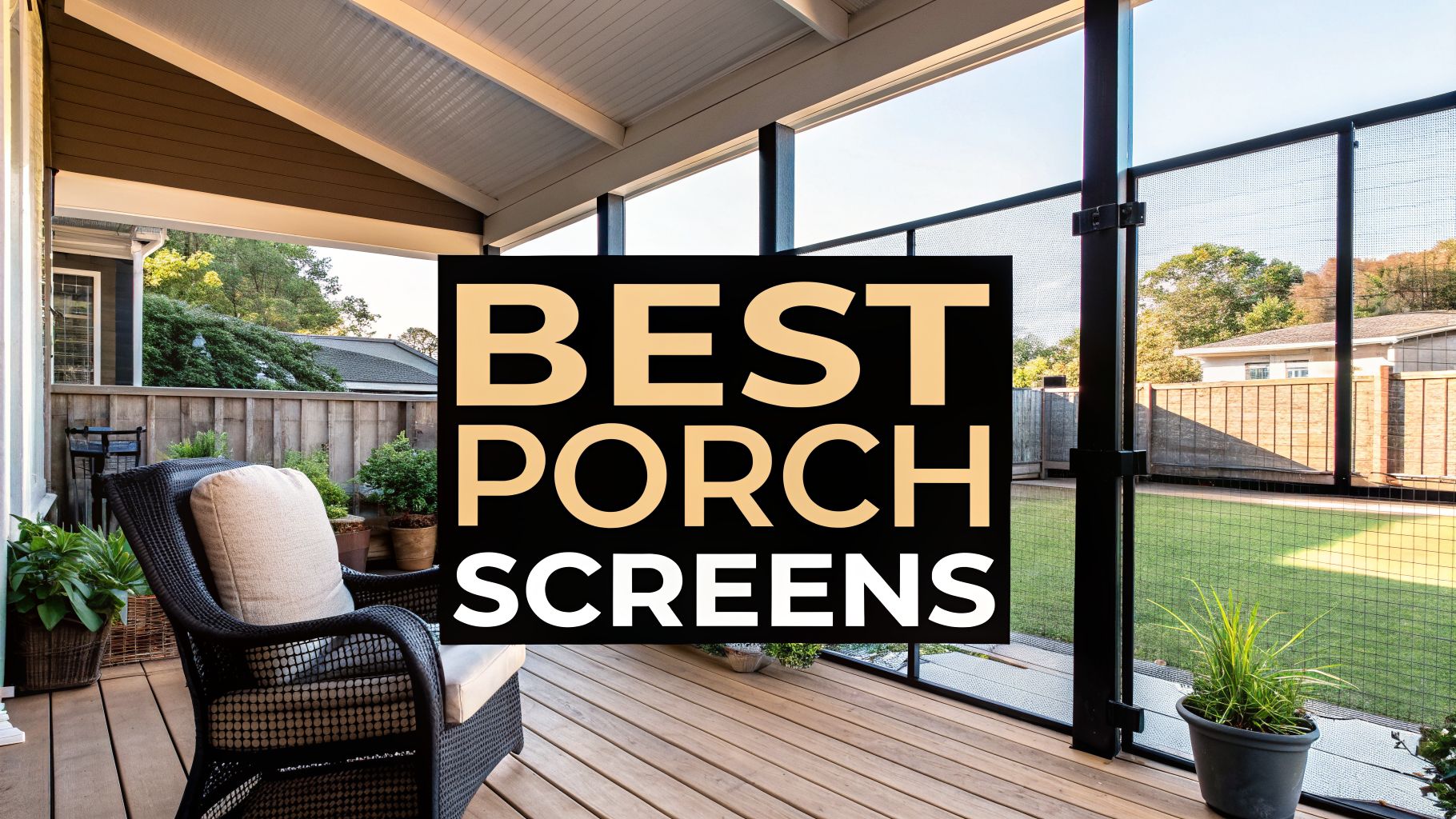

When you're trying to pick the best screens for a screened in porch, it's easy to get lost in the options. But here's the secret: there's no single "best" material. The right choice is all about what fits your home, your climate, and how you plan to use your space.
For many people, standard fiberglass is the perfect starting point—it's a great all-rounder. But if you have a dog that loves to scratch at the door or a patio that gets blasted by the afternoon sun, you'll want to look at more specialized options like pet-resistant or solar screens.
Finding the Perfect Screen for Your Porch
Think of it like buying a new set of tires. You wouldn't put slick racing tires on a truck you're taking off-road, right? The same logic applies here. The ideal screen for a sun-drenched Arizona patio is a world away from what you’d need for a shaded porch in a mild climate. This guide will walk you through the pros and cons of each type, so you can make a choice you feel great about.

We’ll break down everything from the most budget-friendly options to high-performance screens designed for durability and sun protection, giving you the inside scoop on what will truly elevate your outdoor living experience.
Key Factors in Your Decision
Before we get into the different materials, let's take a step back and think about what you really need. Getting this right means balancing a few key priorities. Each screen type is a trade-off, so knowing what matters most to you from the get-go is the key to a perfect fit.
Your decision will really boil down to four main things:
- Durability and Lifespan: How tough does it need to be? Think about kids, pets, and local weather. Are you dealing with high winds, or just calm, sunny days?
- Visibility and Airflow: Is a crystal-clear view your top priority? Some heavy-duty screens can slightly obscure the view or reduce the breeze, so it's something to consider.
- Sun and UV Protection: If your porch gets a lot of direct sunlight, a screen that blocks heat and UV rays can be a game-changer. It makes the space more comfortable and even protects your patio furniture from fading.
- Cost and Overall Value: What's your budget upfront? It's also smart to think about the long-term value—a more expensive screen might save you money on replacements or even energy bills down the road.
By thinking through these points first, you can stop asking "what's the best screen?" and start asking, "what's the best screen for me?" That's how you end up with a choice you'll be happy with for years to come.
A Closer Look at the Most Common Screen Materials
Choosing the best screens for your porch starts with understanding what they're made of. The material itself is the foundation for everything else—durability, cost, and even how clearly you can see your backyard. Each option has its own personality and purpose.
Think of it like picking out fabric. Some materials are light and airy, while others are built tough. The trick is to match the material to your porch's specific needs and how your family lives. Let's break down the most popular choices, starting with the one you see almost everywhere.
Fiberglass: The Versatile Standard
Standard fiberglass mesh is easily the most common choice, and for good reason. It’s the reliable family sedan of the screen world—affordable, gets the job done, and works perfectly for most people. A huge advantage is that it won’t crease or dent the way metal screens can, and its natural flexibility makes installation a much simpler affair.
For a typical porch that isn't dealing with rambunctious pets, extreme weather, or relentless direct sun, fiberglass hits the sweet spot. It offers a great balance of insect protection, airflow, and visibility, making it a practical and budget-friendly solution.
The screen industry really leans on fiberglass. Its adaptability, low cost, and light weight make it the top material in the insect screen market. Homeowners love it because it’s easy to install, doesn't corrode, and keeps the view and breeze coming through. You can see just how much this material dominates the market by checking out trend reports from places like Fortune Business Insights.
Aluminum: The Rigid Alternative
If fiberglass is the family sedan, aluminum screen is the classic pickup truck. It’s noticeably tougher and more rigid, which gives you an exceptionally crisp and clear view. But that rigidity is also its weakness. While aluminum won't sag over time, it can be permanently dented or creased if it gets hit by a stray toy or pushed on too hard.
Still, aluminum is a fantastic choice for its sharp, clean appearance and sheer longevity. It stands up to the elements without rusting, making it a durable investment for homeowners who want that crisp, well-defined look for their porch and don't have to worry about frequent impacts.
Key Takeaway: The main difference is flexibility vs. rigidity. Fiberglass is forgiving and bounces back, while aluminum holds a firm shape but can be permanently creased.
Pet-Resistant Screens: The Heavy-Duty Champion
If you have four-legged family members, you know a standard screen might not survive their first case of the zoomies. That's exactly why pet-resistant screens exist. Made from a tough, vinyl-coated polyester, this stuff is seven times stronger than traditional fiberglass. It’s engineered from the ground up to handle claws, paws, and excited snouts.
Now, all that extra durability comes from a thicker mesh, which can slightly reduce visibility and airflow. But for pet owners, that's a tiny price to pay for the peace of mind—and the money saved on constant screen repairs. It’s the best screen for a screened-in porch, hands down, if your dog or cat thinks the screen is a toy.
- Material: Vinyl-coated polyester
- Key Feature: Exceptionally resistant to tears and punctures
- Best For: Homes with active dogs, cats, or even curious toddlers
Solar Screens: The Energy-Saving Option
Think of solar screens (or sun screens) as a pair of high-quality sunglasses for your porch. Their main job is to stop the sun's intense heat and damaging UV rays in their tracks. This specially woven mesh is much denser than standard screens and can block anywhere from 70% to 90% of the sun's heat.
This doesn't just make your porch a more comfortable place to relax; it can actually help lower your energy bills by reducing the heat that seeps into your home through nearby windows and doors. You do trade a bit of visibility for all that protection, but it’s a worthy exchange for reclaiming your porch on those scorching sunny days. Our guide on the best window screen materials dives even deeper into these powerful options.
Matching Your Screen Choice to Your Lifestyle
Technical specs are one thing, but let's be real—the best screen for your porch is the one that actually works for your life. It’s time to move past the material data sheets and think about real-world use. Your screen isn’t just a passive barrier; it’s an active part of your home that has to stand up to everything from a playful puppy to the relentless Arizona sun.
Thinking about how you use your space is everything. A screen that's perfect for a quiet, shaded patio could be shredded in a week by a family with an energetic Lab. By picturing your daily routine, you can zero in on the features that will deliver real value and save you headaches down the road.
To get started, this visual gives you a quick snapshot of the two most common choices, fiberglass and aluminum, and where they shine.

As you can see, there's a trade-off. Fiberglass gives you flexibility and affordability, while aluminum offers a sharper view and greater rigidity.
Solving the Pet Owner's Dilemma
If you have a dog or a cat, the "is it pet-proof?" question is probably at the top of your list. Standard fiberglass screens just aren't designed to handle claws, paws, and the enthusiastic lean of a furry friend who just saw a squirrel. This almost always leads to a frustrating cycle of rips, tears, and expensive repairs.
This is exactly why pet-resistant screens were invented. They are engineered to be up to seven times stronger than their standard fiberglass counterparts. Made from a tough, vinyl-coated polyester, this material is designed to flex under impact instead of tearing.
Choosing a pet screen isn't just about preventing damage. It's about creating a safe, secure boundary for your animals so you don't have to constantly worry. Think of it as an investment in both your porch's durability and your own peace of mind.
Yes, this heavy-duty material might slightly reduce airflow or soften the view's clarity, but it's a tiny compromise for most pet owners. The benefit of never having to patch another screen—or worry about a potential escape—far outweighs the minor trade-offs.
Tackling the Sun-Soaked Patio Problem
Here in Arizona, the afternoon sun can turn a gorgeous porch into an oven. That intense heat doesn't just make the space uncomfortable; it blasts your outdoor furniture with damaging UV rays, causing vibrant colors to fade and materials to break down way too soon.
Solar screens are the definitive answer to this classic desert problem. They essentially act like a pair of high-performance sunglasses for your porch, stopping a huge chunk of the sun's heat before it ever gets inside.
Here’s how they make a difference:
- Heat Reduction: By blocking up to 90% of solar heat, these screens can dramatically lower the temperature on your porch, making it a comfortable spot even on the hottest days.
- UV Protection: They filter out the harsh UV radiation that bleaches patio furniture, rugs, and decor, preserving your investment.
- Energy Savings: A cooler porch means less heat radiating into your house, which can help lighten the load on your air conditioner and trim your energy bills.
The tighter weave needed to achieve this level of protection does mean the view is a bit more filtered than with a standard screen. On the flip side, this also adds a fantastic element of daytime privacy. For anyone battling the Arizona sun, solar screens are one of the smartest upgrades you can make.
Creating a Secluded Backyard Retreat
Sometimes, the main reason for screening in a porch is to carve out a private oasis—a place to unwind without feeling like you're on display for the whole neighborhood. The problem is, standard screens that offer great visibility work both ways.
This is where privacy screens come in. These screens are typically darker with a much tighter weave, specifically designed to limit what people can see from the outside looking in, especially during the day. It creates a sort of one-way mirror effect: you can still see out pretty well, but anyone glancing over just sees a dark, uniform surface.
This is the perfect choice for porches that are close to a neighbor's yard or face a busy street. The trade-off is a noticeable reduction in natural light and airflow, so it’s a balancing act. You're consciously prioritizing seclusion over maximum brightness and breeze—a decision that makes perfect sense for homeowners looking for a truly personal outdoor sanctuary.
Why Arizona Porches Require Special Screens
Screening in a porch in Arizona isn't like doing it anywhere else. Our environment is an active force, constantly hammering away at your home's exterior. Choosing the right screen material goes way beyond just keeping bugs out—it’s a critical defense against the unique pressures of the desert climate.
Think of a standard, big-box-store fiberglass screen as a plain cotton t-shirt. It might be fine for a mild day, but it offers almost no protection during a scorching Arizona heatwave. What you really need is something engineered for our extreme conditions, like high-performance gear you'd wear for a desert hike.
The relentless sun is enemy number one. The UV radiation here is so intense that it actively deteriorates materials. A basic screen that might last a decade in a milder state can become brittle, faded, and tear-prone in just a few short years under the Arizona sun.
Beating the Intense Desert Heat
The biggest battle any Arizona porch faces is against the sun's oppressive heat. A standard screen does next to nothing to block the thermal energy that can turn your porch into an oven for most of the year. This is where specialized screens stop being a simple feature and become a smart investment.
Solar screens are the go-to solution for this. Their dense, specially coated mesh is designed from the ground up to block and absorb a huge percentage of solar heat before it ever gets a chance to bake your porch. This creates a powerful one-two punch:
- Cooler Outdoor Living: By blocking up to 90% of the sun's heat, solar screens can genuinely lower the temperature on your porch. This reclaims the space, making it comfortable enough to enjoy even during the hottest parts of the day.
- Reduced Energy Bills: When your porch isn't a heat trap, less of that heat radiates through your home's doors and windows. This eases the strain on your air conditioner, which translates directly to noticeable savings on your monthly cooling costs.
Investing in solar screens transforms your porch from a seasonal spot into a year-round living area. It's one of the most effective ways to maximize your home's usable space in our climate. Learn more about how you can improve your home's comfort with our guide on sun blocker window screens.
Tackling Dust Storms and Local Pests
Beyond the sun, Arizona throws a few more curveballs. That fine, powdery dust from monsoon storms can easily clog standard screen mesh, choking off airflow and leaving you with a constant cleaning headache.
The best screens for our region have a smoother, slicker surface that naturally resists dust buildup and is simple to wipe or hose clean. On top of that, our local insect population—from tiny no-see-ums to pesky gnats—demands a tighter mesh to keep your outdoor retreat bug-free without blocking the breeze.
It's no surprise that the demand for these kinds of outdoor living solutions is booming. The Sun Belt, and Arizona in particular, is leading the market for screen enclosures because our weather makes outdoor living a year-round possibility. Adding a high-quality screened porch is also a fantastic financial move. Industry data shows homeowners can often recover 70-80% of the project's cost when they sell their property. By choosing a screen built to handle our climate, you're not just improving your lifestyle—you're adding real, tangible value to your home.
DIY or Hire a Pro? The Final Step
You've picked the perfect screen material for your porch—now for the final, crucial decision. How are you going to get it installed? This is that classic fork in the road every homeowner faces: do you roll up your sleeves and tackle it yourself, or bring in a professional for a guaranteed perfect finish?

There's no single right answer here. It really comes down to an honest look at your skills, your schedule, and the tools in your garage. Both paths can get you to a beautiful screened-in porch, but the journey—and the final result—can be worlds apart.
The Do-It-Yourself Approach
If you're a confident DIY-er, installing your own screens can be a satisfying project that saves you some cash. At its core, the job seems simple enough: you pull out the old screen and spline (that rubber gasket holding it in), cut the new material, and use a little tool to roll the new spline into the frame's groove.
But don't let that simplicity fool you. The real art is in getting the tension just right, and this is where most DIY projects go sideways.
- Too Loose: Even a little bit of slack will leave you with saggy, wavy screens that flap in the breeze and just look cheap.
- Too Tight: On the other hand, pulling the screen too tight can actually bend or bow the aluminum frames, causing permanent damage to your porch structure.
- Wrinkles & Creases: It takes a practiced hand to get a perfectly smooth surface. It's incredibly easy to end up with stubborn wrinkles that are impossible to fix once the spline is locked in.
The appeal of saving on labor is understandable, but be sure to factor in the cost of buying the right tools and, more importantly, the value of your own time. What looks like a simple Saturday project can quickly turn into a frustrating saga that drags on for weeks.
The Professional Installation Advantage
Calling in a pro like Sparkle Tech isn't just about saving yourself the work; it's an investment in a flawless, long-lasting result. A professional crew shows up with specialized equipment and, crucially, the experience that comes from doing this day in and day out. They’ve mastered the technique for getting that perfectly taut, drum-tight finish that looks amazing and holds up for years.
A professional installation guarantees your porch's structural integrity and a clean, seamless look from day one. This level of quality is why fixed screen installations are the top choice in the market, projected to make up over 54.30% of market revenue by 2025 thanks to their stability and performance.
When you hire a professional, you're really buying peace of mind. The job gets done fast, it gets done right, and you don't have to deal with the headache of a DIY attempt gone wrong. No wasted material from a mis-cut, and no hours spent on YouTube tutorials only to end up with a droopy screen.
If you're thinking about going the professional route, finding the right outdoor installation contractor is the first step to a successful project.
So, what's the verdict? It all comes down to a realistic assessment of your skills and priorities. If you have the tools, patience, and a knack for this kind of work, you can definitely get a great result. But for a stress-free experience that delivers a truly professional, long-lasting finish, bringing in an expert is almost always the smart move. To see how we handle it, take a look at our professional screen installation services.
Got Questions About Porch Screens? We've Got Answers.
Choosing the right screen for your porch comes down to a lot of little details, from the material itself to how you actually use your outdoor space. To clear up any confusion and help you feel confident in your decision, we've pulled together answers to the questions we hear most often from Arizona homeowners just like you.
Think of this as the final checklist before you create the perfect screened-in porch.
How Often Should I Replace My Porch Screens in Arizona?
This is a big one. Here in Arizona, the sun doesn't mess around, and it puts our porch screens to the ultimate test. How long your screen lasts really boils down to two things: what it's made of and how much direct sun hits it day after day.
For a standard fiberglass screen, you're probably looking at a 5 to 8-year lifespan. It's a budget-friendly choice, but that intense UV exposure eventually makes it brittle and prone to tearing. On the flip side, a high-quality solar screen is engineered for our exact climate and can easily last 10 years or more. It’s a smart investment that pays off in the long run.
So, when is it time to pull the trigger on a replacement? Your screens will tell you. Look for these signs:
- It Feels Brittle: The screen feels stiff to the touch and cracks or tears with even light pressure.
- The Color is Faded: A washed-out, faded look is a dead giveaway of serious UV damage.
- There's a Chalky Film: If you wipe your hand across the screen and it comes away with a powdery residue, the protective coating has completely broken down.
- It Rips All the Time: You're constantly finding new little holes and tears, especially after a good monsoon storm.
Once you start seeing these issues, your screen isn't doing its job anymore. A replacement will bring back that like-new look and, more importantly, restore its function.
What’s the Real Difference Between a Bug Screen and a Solar Screen?
Great question. It really gets to the core of what you want your screen to accomplish. The easiest way to think about it is like this: a standard bug screen is like a perfectly clear window. Its only job is to let in the breeze and the view while keeping the bugs out. It’s a simple, effective barrier.
A solar screen, however, is like putting a high-performance pair of sunglasses on your porch. Yes, it stops bugs, but its main purpose is to manage the sun.
A solar screen uses a much denser weave and a special coating to block anywhere from 70% to 90% of the sun's heat and damaging UV rays. It's built from the ground up to cool down your outdoor space and protect everything from your patio furniture to your home's interior from fading.
So, it all depends on your goal. If you have a shady porch and just want to keep the pests at bay, a standard bug screen is a great fit. But if you're trying to make a sun-baked Arizona patio usable in the afternoon and maybe even lower your energy bills, a solar screen is the only way to go.
Can I Upgrade My Porch to a Pet-Resistant Screen?
Absolutely! This is one of the most popular and practical upgrades we do. The best part is that pet-resistant screen material is designed to fit into most existing porch frames, making it a surprisingly simple fix for a very common problem.
This stuff is seriously tough. It's a vinyl-coated polyester that's about seven times stronger than the standard fiberglass screen. It’s made to handle claws, paws, and the full-body lean of a dog who just spotted the neighborhood cat. Instead of tearing on impact, it flexes, which saves you from the headache of constant patching.
There is one small trade-off, though. Because the material is thicker and more robust, your view looking out will be slightly less clear than with a standard screen. For most pet owners, that tiny compromise is a price well worth paying for the peace of mind that comes with knowing their screen—and their pets—are safe and secure.
How Do I Get a Quick Quote for My Porch Project?
We know that when you're ready to start a project, you don't want to wait around. We’ve designed our process to be as fast and straightforward as possible, so you can get a clear idea of the cost and timeline right away.
Getting a fast, no-pressure quote is easy. You’ve got two simple options:
- Text or Call Us: Just reach out to our team at 623-233-0404 or 800-370-3998.
- We’ll Get Back to You Fast: We make it a priority to respond to every inquiry quickly.
Our goal is to give you an accurate estimate and, in many cases, get your project scheduled for the very same week. The entire process, from your first call to enjoying your beautiful new porch, should feel effortless.
Ready to transform your porch into the comfortable, bug-free oasis you deserve? The team at Sparkle Tech Screen Service offers same-week service and quick, no-hassle quotes to get your project started. Visit us at https://sparkletechscreenservice.com or call us today to find the perfect screen solution for your home.


