


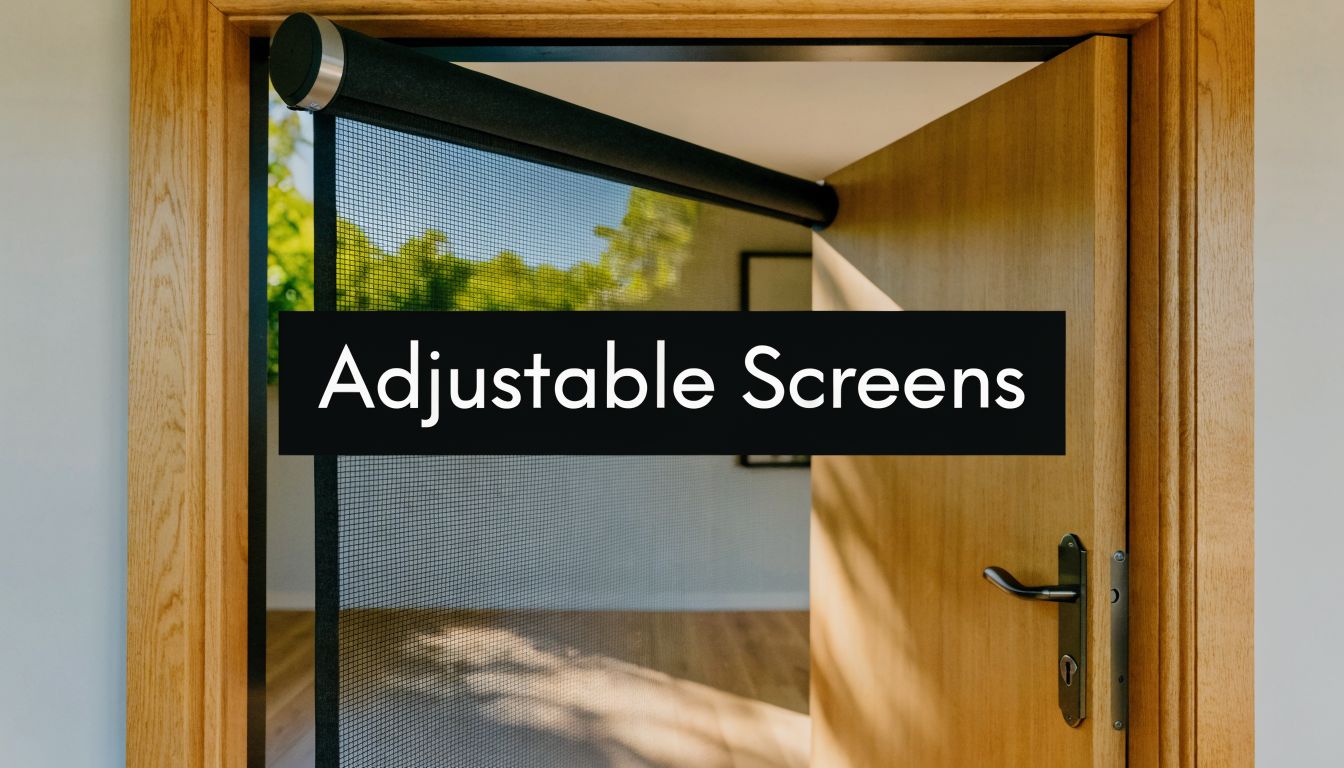

You want the back door open at sunrise, the kitchen cooled off, and the house filled with fresh air. But then problems arise. Bugs find the gap in the old slider, the dog noses at a loose corner, and that bulky screen door rattles every time someone walks through it.
That’s why adjustable door screens get so much attention. They solve a real homeowner problem. You get ventilation when you want it, a cleaner look when you don’t, and a better chance of fitting an opening that isn’t perfectly standard anymore.
In Phoenix and the surrounding areas, the decision goes beyond style. Sun exposure, dust, thermal movement, and monsoon weather punish weak screen systems fast. A screen that seems fine in a showroom can become a maintenance headache once it lives on a west-facing patio door through summer and storm season. The right adjustable screen can work well. The wrong one can turn into a sticking, sagging, dirt-packed annoyance.
Let Fresh Air In Without the Hassle
A lot of homeowners start in the same place. They’re tired of choosing between airflow and comfort. Keep the door open and insects come in. Keep it closed and the house feels stuffy. Add kids, pets, or a patio that gets used every day, and a clumsy old screen door starts feeling like the worst part of the doorway.

Adjustable door screens are popular because they address several problems at once. They can fit common door sizes without the same amount of cutting and guesswork older systems often require. Some disappear into a side housing when not in use. Others adjust within the frame so a patio slider can fit more cleanly in an opening that has shifted over time.
For homeowners, the appeal is simple.
- Better everyday use: You can open the house up without living with a permanent barrier across the doorway.
- Cleaner appearance: Retractable styles stay out of sight when retracted, so they don’t block the view all day.
- More flexibility: Adjustable systems can work on single doors, some wide openings, and many sliding patio doors.
- Less frustration during replacement: If your existing screen was never a perfect fit, an adjustable model may solve the root problem instead of repeating it.
Arizona homeowners usually care about one more thing. They want airflow without giving up control over sun, dust, and pests. That’s where choosing the right type matters. Not every adjustable screen handles desert conditions the same way, and the buying decision gets easier once you understand how these systems work.
Understanding the Core Concept of Adjustable Screens
An adjustable screen is built to solve a fit problem without forcing a full custom fabrication job. In practice, that usually means one of two mechanisms. A retractable unit adjusts by storing the mesh in a side housing and pulling it across the opening when needed. An adjustable patio screen stays visible as a sliding panel, but the frame or roller system gives you room to compensate for track variation, minor settling, and worn hardware.

Retractable screens
Retractable screens are common on front doors, back doors, and French door openings where homeowners do not want a fixed panel in sight all day. The mesh rides in a track, crosses the opening, and returns into a cassette when the door is not in use.
That sounds simple, but the mechanism matters more in Arizona than many buyers expect. Heat dries out cheap plastic parts. Fine dust gets into tracks and slows the glide. Monsoon gusts put sudden side pressure on mesh and handles. A retractable screen that feels fine in a showroom can turn into a service call if the housing flexes, the track is too shallow, or the latch does not hold cleanly.
This is also why measurements and install quality affect long-term cost. A slightly out-of-square opening can cause constant rubbing, premature mesh wear, and repeated adjustments. Homeowners comparing products often focus on the initial price, but the smarter question is how often the screen will need tune-ups, mesh replacement, or track cleaning. A properly fitted retractable screen door installation usually costs less over time than a bargain unit that never glides right.
Expandable-frame screens
Expandable-frame screens are a different category. These are usually replacement screens for sliding patio doors, where the goal is not to hide the screen, but to make the panel fit and roll correctly in a real-world opening.
Patio slider openings are rarely perfect. I see bent corners, worn rollers, uneven tracks, and door frames that have shifted just enough to make a rigid replacement screen bind or jump the track. An adjustable frame gives the installer room to correct for those conditions without forcing a complete door replacement.
For Arizona homes, that distinction matters because patio doors take more abuse than many owners realize. Constant sun can bake the exposed side of the frame. Dust builds up in the bottom track and wears rollers faster. If the patio faces west, the screen may also work alongside glare control and privacy solutions for sliding patio doors, so appearance is only one part of the buying decision. The screen still has to survive daily use and stay in the track.
Why homeowners should separate these two categories
Shopping gets easier once you stop grouping every adjustable screen into one bucket. The term covers two different jobs.
| Type | What adjusts | Best fit |
|---|---|---|
| Retractable screen | The screen extends across the opening and retracts into a housing | Hinged doors, entry doors, French doors |
| Adjustable patio screen | The panel frame, rollers, or fit tolerance adapt to the opening | Sliding patio door replacements |
That difference affects maintenance, repair frequency, and total ownership cost. Retractable systems have more moving parts and need cleaner tracks. Adjustable patio screens are simpler, but they depend heavily on roller quality, frame stiffness, and track condition.
A homeowner who picks the right category from the start avoids the two most common mistakes I see. Buying a retractable unit for an opening that really needs a sliding replacement panel, or buying a low-cost patio screen that technically fits but never rolls well in desert conditions.
Manual, Motorized, and Sliding Adjustable Screen Options
A homeowner in Phoenix usually notices the wrong screen choice in the first month, not the first day. The door sticks after a dust storm, the screen bangs in monsoon gusts, or the family stops using it because it takes too much effort to operate. Price matters, but day-to-day use and long-term upkeep matter more.

Manual retractable screens
Manual retractable screens are usually the best fit for standard single doors. They stay out of sight when not in use, and a good unit opens with controlled spring tension instead of snapping across the opening or jerking back into the cassette.
That operating feel matters more in Arizona than many homeowners expect. A screen that closes too aggressively tends to loosen hardware faster, and a flimsy frame shows its weaknesses once the door gets daily use through a hot summer. Better manual systems feel steady by hand, latch cleanly, and tolerate minor settling in the opening without turning finicky.
I usually recommend manual retractables for homeowners who want a cleaner look than a hinged screen door and who will use the opening several times a day. They also make sense when the priority is lower ownership complexity. No motor, no remote, fewer service calls tied to powered components.
Manual retractables are a practical choice for:
- Front and back single doors
- Side garage entry doors
- Homes that want airflow without a full-time visible screen door
- Owners who prefer simpler hardware and easier repairs
Motorized retractable screens
Motorized retractable screens fit a different job. They are more common on wider patio openings, outdoor living spaces, and higher-end remodels where convenience is part of the design brief.
They can work very well. Press a button, the screen lowers or closes, and the opening becomes usable without dragging a panel by hand. That convenience has real value on larger spans.
The trade-off is ownership cost over time. In Phoenix, heat stresses electronics, dust works its way into tracks and housings, and storm season exposes any weakness in alignment or tension. A motorized unit may still be the right choice, but it needs to be purchased with service access in mind, not just appearance. Homeowners should ask who handles motor replacement, control issues, and seasonal adjustments before signing off on the install.
Motorized systems make the most sense when:
- The opening is large enough that manual operation feels awkward
- The patio is part of a premium outdoor living setup
- Convenience will increase actual use of the screen
- There is a clear local service path if the powered components need work
If the patio door area also needs indoor privacy or glare control, it helps to compare the screen plan with broader privacy solutions for sliding patio doors. The screen handles airflow and insects. Interior treatments handle visibility, light, and nighttime privacy.
Adjustable-fit sliding patio screens
Adjustable-fit sliding screens are the practical replacement option for existing patio sliders. They are not retractable units. They are replacement panels designed to roll in the current track while allowing some flexibility in fit.
This is the category I see homeowners need most often after years of sun, dust, worn rollers, and bent old frames. If the patio door opening is slightly out of square, or the original screen never rolled well to begin with, an adjustable sliding panel can solve the problem without forcing a full door replacement.
The main buying question is not whether it can be made to fit. Many can. The better question is whether it will keep rolling well after a year of grit in the track and repeated slamming from wind. For Arizona homes, roller quality, corner strength, and frame stiffness matter more than a marketing promise about easy adjustment.
Adjustable sliding screens are usually the right call for:
- Replacing a damaged patio screen panel
- Older sliding doors with minor fit variation
- Budget-conscious repairs where the glass door is still serviceable
- Homeowners who want the simplest path to restoring airflow at the patio
Comparing the three
| Screen Type | Best For | Operation | Typical Cost Pattern | What matters most in Arizona |
|---|---|---|---|---|
| Manual retractable | Single doorways and frequent everyday use | Hand-pulled across opening | Mid-range, depending on frame and mesh | Spring control, frame quality, track cleanliness |
| Motorized retractable | Large openings and convenience-focused patios | Powered open and close | Highest upfront and higher service risk | Motor access, weather exposure, local repair support |
| Sliding adjustable-fit | Patio slider replacement | Panel slides on existing track | Often the most practical repair budget | Rollers, frame rigidity, track condition |
Cost should be judged over the life of the screen, not just at purchase. A cheaper screen that binds, tears, or needs frequent adjustment can cost more than a better-built unit within a couple of Arizona summers.
For homeowners comparing labor and fit quality, a dedicated retractable screen door installation service is worth reviewing before choosing a system. Installation quality affects how smooth the screen feels, how well it seals, and how often it needs adjustment after the first dust season.
The Benefits and Drawbacks for Arizona Homeowners
At 5 p.m. in a Phoenix summer, the patio door is exactly where bad screen choices show up. The west sun is still hitting the opening, dust is sitting in the track, and a monsoon gust can roll through before dinner. An adjustable screen that feels fine in a showroom can start sticking, rattling, or wearing out fast in that setting.
The upside is real. Adjustable screens can preserve the view, keep the doorway from feeling boxed in, and give homeowners fresh air without committing to a full-time swinging screen door. On homes with sliders opening to a pool, patio, or courtyard, that cleaner look matters.
They also solve fit problems that show up often in Arizona houses. Older patio doors are rarely perfectly square forever. Minor movement in the frame, worn rollers, and track wear can make a fixed screen frustrating. An adjustable screen usually gives you more forgiveness, which can mean fewer callbacks, fewer homemade shims, and less day-to-day irritation.
That said, Arizona is hard on moving parts.
Fine dust gets into lower tracks, side channels, roller housings, and latch points. Heat dries out plastics and stresses cheaper springs. Strong sun fades mesh and can make dark frames run hot enough to expand slightly during peak afternoon exposure. Then monsoon season adds sudden wind pressure, blowing debris, and hard rain from angles many homeowners do not expect.
Where adjustable screens earn their keep
For a lot of Phoenix-area homes, the best benefit is not appearance. It is controlled ventilation. A good screen lets you use early morning and evening air during the months when outdoor conditions are pleasant, without leaving the opening exposed the rest of the time.
Retractable units also have one advantage in storm season. You can pull them out of service when wind picks up. That does not make them storm-proof, but it does reduce exposure compared with a screen that stays in place all year. Sliding adjustable panels can also be practical on patio doors that need a straightforward replacement instead of a full system upgrade.
Material choice matters here more than the brochure usually suggests. Mesh, frame finish, corner strength, roller quality, and how easy the track is to clean will affect service life more than a long feature list. If the opening gets hard afternoon sun or regular dust, buy for that condition first.
Where Arizona homeowners get burned
The common mistake is buying for the first week instead of the fifth summer.
Motorized options look good on paper and can be worth it on large openings, but they add parts, wiring, and future service considerations. In our climate, that means homeowners should ask who services the unit locally, how exposed the motor housing is, and what happens if sand or heat starts affecting operation. Manual systems usually ask less from you over time.
Cheap adjustable sliders have their own problems. If the frame flexes, the rollers are mediocre, or the track is already worn, the panel may never feel right. Homeowners often blame the screen when the actual issue is the existing door track. That is why accurate measuring and opening inspection matter before purchase. A proper screen door measuring guide for Arizona openings helps prevent a lot of expensive trial and error.
Another trade-off is airflow versus sun control. A tighter solar mesh can make the opening more comfortable on bright exposures, but it can also reduce the breezy feel some homeowners want. There is no perfect mesh for every door. There is only the better match for that side of the house, that exposure, and that level of use.
The cost that matters most
Purchase price is only one part of the decision. In Arizona, total cost of ownership usually comes down to four things. How often the screen needs adjustment, how quickly the mesh or rollers wear in sun and dust, whether replacement parts are available locally, and whether the unit can be cleaned without taking half the door apart.
A less expensive screen can still be the smart buy if the opening is shaded, the track is in good shape, and the door gets light use. A premium unit can also be the wrong buy if it adds complexity the household will not maintain. I tell homeowners to match the screen to the exposure first, then the budget, then the wish list.
If the same patio door is also getting interior treatments, the screen should work with that plan instead of fighting it. This guide to the size of curtains for sliding glass doors is a useful reference for spacing and clearance decisions around wider openings.
For Arizona homes, the best adjustable screen is usually the one that keeps working after two summers, a dust season, and a few monsoon storms. That usually means a simpler design, better materials, and a cleaner install, not just a nicer sales pitch.
A Practical Guide to Selecting and Sizing Your Door Screen
Late July in Phoenix is when sizing mistakes show up fast. A screen that looked fine in the box starts dragging in a dusty track, rattling in the afternoon wind, or leaving a gap wide enough for insects because the opening was measured too casually. Good sizing starts with actual conditions at the door, not the product photo.

Start with the opening you actually have
Door type decides the shortlist. A hinged back door, a pair of French doors, and a sliding patio door each need a different screen layout and a different mounting approach. A lot of bad purchases happen because someone buys for width alone and ignores how the screen has to travel, latch, and clear the threshold.
Then sort out the job the screen needs to do. A kitchen door that gets opened ten times a day has different demands than a guest-room patio slider that stays shut most of the week. In Arizona, sun exposure matters just as much as traffic. West-facing openings usually punish mesh, plastic handles, and cheap rollers much faster than shaded north-facing doors.
Three buying questions usually clear up the decision:
- What kind of opening is it? Sliding, single hinged, or double door.
- What is the main goal? Airflow, bug control, sun reduction, pet resistance, or a cleaner look.
- How much upkeep will the household do? Simpler screens usually hold up better when maintenance is occasional.
If that same opening also has drapes or panels planned, check the clearances before you order. A good guide to the size of curtains for sliding glass doors helps prevent conflicts between curtain stack-back, door travel, and screen access.
Measure a sliding patio screen like a repair tech would
Adjustable patio screens give you some forgiveness, but only within reason. They can accommodate minor variation in the opening. They do not fix a bent frame, a packed track, or a roller set that is already failing.
Use a simple routine:
- Measure the existing screen first, if you still have it. Take the full tip-to-tip size, not just the visible frame panel.
- Measure the opening height in multiple spots. Top, center, and bottom checks show whether the frame is out of square or the house has settled.
- Measure width with the same care. Do not assume both ends match.
- Inspect the track before blaming the size. Dirt buildup, worn guide rails, and bent track lips often cause the same symptoms as a bad measurement.
- Check how much roller adjustment room you have. An adjustable screen still needs enough clearance to seat properly and roll without binding.
One quick field rule helps here. If a patio screen almost fits but drags badly, the problem is often split between sizing and condition. I see homeowners order a second screen when the solution was a track cleaning and new rollers.
For homeowners who want a step-by-step reference, this local guide on how to measure for a screen door covers the basics in a way that matches what installers look for on site.
Retractable openings need different measurements
Retractable screens are less about the old screen size and more about the doorway structure. Measure the width and height, then pay close attention to the mounting surfaces, jamb depth, threshold shape, handle clearance, and any trim that could interfere with the housing or latch.
Many orders are complicated by conditions at the installation site. The opening may look square enough from a few feet back, but the sill may slope, the brickmould may not sit flat, or the lockset may project farther than expected. Any of those can affect how well the screen closes and how long it stays aligned.
Common measuring mistakes include:
- Taking one width and one height only
- Ignoring sill shape and threshold transitions
- Forgetting about door handle and trim clearance
- Assuming both sides of the opening offer the same mounting surface
A quick visual can help before you order:
The best size is the one that matches how the screen mounts, rolls, and seals in real conditions. In Arizona, that usually saves more money than chasing the cheapest screen that appears close enough on paper.
Installation, Adjustments, and Keeping Your Screen Working Like New
A screen can look fine on install day and still turn into a headache by August. In Phoenix, that usually happens after a few dust storms, a stretch of extreme heat, and one hard monsoon gust that racks the frame just enough to change how it rides or latches.
Installation decides a lot of that.
Adjustable sliding screens usually give you more forgiveness. They can handle small inconsistencies better, and a careful homeowner can often install one successfully if the track is clean, the rollers are set correctly, and the opening is exactly within the product’s adjustment range. Retractable screens ask for tighter alignment. If the housing, guide, and latch are even slightly off, the screen starts dragging, retracting unevenly, or refusing to close cleanly.
What a proper install actually looks like
Good installation is about alignment, not just attachment. The frame needs to sit square to the opening, the screen has to travel straight, and the latch has to meet without forcing the mesh sideways.
On Arizona homes, the opening itself often causes the trouble. I regularly see sloped thresholds, worn patio tracks, sun-baked trim that has shifted a little over time, and stucco returns that are not as flat as they look from a few feet away. Any one of those can turn a simple install into an adjustment job.
For sliding adjustable screens, the basics are straightforward:
- Seat the frame fully in the track
- Adjust rollers so the panel rides level
- Check for even clearance from top to bottom
- Confirm the latch side is not being twisted to make contact
- Test the screen through repeated open-close cycles before calling it done
Retractable units need more care. The cassette has to mount plumb, the top and bottom guides have to stay in line, and the pull bar has to meet the latch without skewing the mesh. If a retractable feels rough on day one, it usually does not get better by itself.
Arizona wear starts early
Product pages often gloss over maintenance. Real ownership is different, especially here.
Fine desert dust settles into tracks and rollers. Summer heat dries out small moving parts and exposes weak plastic faster. Monsoon winds drive grit into every channel, then add sudden impact loads when a screen gets pulled or slammed by pressure changes across the doorway. That combination affects total cost of ownership more than many buyers expect.
A cheaper screen can still be a reasonable buy if the opening is protected and the usage is light. On a west-facing patio door that gets daily traffic, direct sun, and storm exposure, low-grade rollers, thin frame members, and weak corners usually cost more over time through repeated adjustments, repairs, or full replacement.
Conservatory Craftsmen makes a fair point on its invisible screen doors page. Homeowners need honest guidance on cleaning, lifespan, and failure points, not just a vague promise that maintenance is easy.
The maintenance routine that actually helps
Most adjustable screens do well with basic upkeep if you stay ahead of the dirt.
- Vacuum or brush out the track first. Do not wipe gritty debris back and forth and grind it deeper into the channel.
- Wipe the track and frame corners after dusty weeks. This matters most after monsoon activity and haboobs.
- Inspect mesh edges and spline lines. Small frays near the border often turn into larger tears under tension.
- Check rollers, guides, and latches at the first sign of drag. Forcing a rough screen usually creates a second repair.
- Watch the mounting screws and frame corners. Heat cycling and repeated use can loosen hardware over time.
Dust is the quiet problem. A screen rarely fails all at once. It starts running rough, someone pulls harder, and then the rollers, mesh edge, or latch take the punishment.
Common adjustments and warning signs
A little adjustment is normal. Repeated adjustment is a clue that something else is wrong.
| Symptom | Likely issue |
|---|---|
| Screen drags or sticks | Dust in the track, worn rollers, bent frame, or alignment drift |
| Screen will not latch cleanly | Mounting alignment issue, twisted frame, or latch contact point out of position |
| Mesh looks loose or stressed | Tension problem, sun-related material fatigue, or impact damage |
| Retractable does not return smoothly | Dirty guides, alignment error, or spring tension that needs service |
| Motorized screen acts inconsistently | Heat, dust, power issue, sensor problem, or component wear |
Motorized units deserve extra caution in Arizona. They can work well, but they add powered components, controls, and service complexity to an opening that already deals with heat and dust. That raises long-term ownership cost, especially on exposed patios.
DIY or hire a pro
A basic adjustable slider is often a fair DIY project. A retractable screen is less forgiving, especially on older homes where the opening is slightly out of square or the sill detail is awkward.
Hire a pro if any of these apply:
- The opening has uneven stucco, trim, or threshold transitions
- The old screen kept failing for reasons that never got diagnosed
- The new unit is retractable or motorized
- You already see latch, handle, or clearance conflicts
- The patio door gets heavy daily use and needs to work reliably
If you want a second opinion before ordering parts or replacing the whole unit, a local Phoenix window screen service for repair and fit issues can usually tell you whether the problem is the screen itself, the track, or the doorway.
That distinction saves money. Sometimes the right fix is a new screen. Sometimes it is a track correction, roller adjustment, or better-matched product that will hold up to Arizona conditions for more than one season.
Your Local Screen Experts in Arizona
Arizona homeowners need advice that matches Arizona conditions. That means understanding dust, heat, and hard sun, not just repeating generic product talking points. Adjustable door screens can work very well here, but the right recommendation depends on the opening, the mesh, the exposure, and how the screen will be used.
That’s where local screen service matters. A company working in Phoenix, Scottsdale, Peoria, Mesa, Chandler, Surprise, Cave Creek, and nearby communities sees the same recurring issues over and over. Sliders that no longer fit the track correctly. Sun screens that need remeshing. Bug screens torn by pets. Patio enclosures and horse stall screens that take a beating from wind, dust, and UV.
For homeowners who need local help with screen replacement and repair, Phoenix window screen service is the kind of resource worth having on hand. Local service is especially useful when the problem isn’t just “buy a new screen,” but “figure out why this opening keeps eating screens.”
The most useful screen company isn’t the one that pushes one product on every house. It’s the one that can look at a single back door, a patio slider, a screened-in patio, or a horse stall opening and tell you what’s realistic, what’s worth fixing, and what should be replaced instead.
In Arizona, that practical judgment saves more money than any brochure claim.
Frequently Asked Questions About Adjustable Door Screens
Are adjustable door screens good for homes with pets
They can be, but mesh choice matters more than the word “adjustable.” A retractable or sliding screen with stronger pet-oriented mesh will usually hold up better than standard fiberglass if dogs or cats push, scratch, or lean into it. For some retractable applications, Metro Screenworks notes that SuperScreen™ offers 9x tear strength and is 3x stronger than standard fiberglass on its stock-size retractable screen product page, which is why pet households should ask about mesh options before buying.
Do adjustable screens work on older patio doors
Often, yes. Older patio sliders are one of the best use cases for adjustable-fit replacement screens because those openings may have track variation or settling that makes rigid replacements frustrating. The key is measuring correctly and checking the track condition. If the track is bent, packed with debris, or the rollers are worn out, the new screen may still perform poorly until those issues are addressed.
Should I choose manual or motorized in Phoenix
For many homes, manual is the safer practical choice because it keeps the system simpler. Motorized screens can be a great fit on larger openings or premium patios, but Arizona homeowners should ask harder questions about heat, dust exposure, and future service. Local service experience is more useful than broad marketing promises when you’re making that call.
Do adjustable door screens reduce maintenance compared with regular screens
Sometimes, but not automatically. A retractable screen can stay protected when it’s rolled away, which can help in certain situations. On the other hand, moving tracks, housings, rollers, and powered parts add their own maintenance demands. The better question isn’t “Which one is maintenance-free?” It’s “Which one fits my opening and use pattern with the least hassle?”
Can I install one myself
That depends on the type. Adjustable sliding patio screen replacements are often realistic DIY projects if the opening is straightforward and you measure carefully. Retractable systems demand better alignment and cleaner mounting surfaces, so they’re less forgiving. If your existing screen has failed more than once, or the doorway has trim and sill complications, professional installation is usually the cheaper path in the long run.
If your door screens need repair, replacement, remeshing, or a better-fit solution for Arizona conditions, Sparkle Tech Screen Service handles bug screens, sun screens, sliders, screened patios, and more with Same Week Service, Quick Quotes, and same-day pickup. Text or call 623-233-0404 or call 800-370-3998 to get started.


