


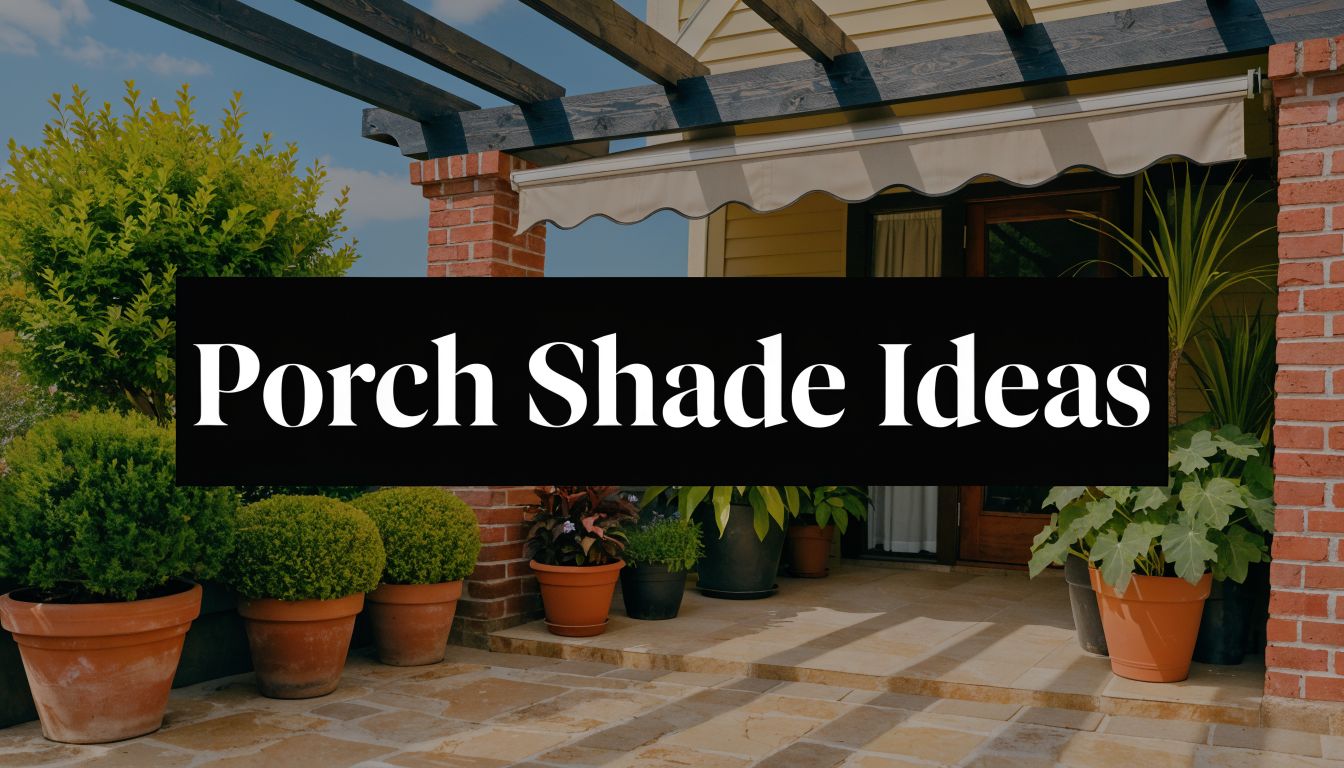

By early afternoon, a porch in Arizona can stop functioning like living space and start acting like a heat trap. Seats hold heat, slab surfaces radiate it back up, and low-angle sun creates the kind of glare that makes a simple lunch or phone call outside feel like work.
Shade fixes that, but only if the setup matches the exposure. West-facing porches need a different answer than a lightly exposed front entry. Some homes need a simple screen upgrade. Others need a retractable system, a pergola add-on, or a full mesh enclosure that can stand up to wind, dust, and constant UV.
This guide focuses on porch shade ideas that hold up in hot, dry climates, especially in places like Phoenix, Scottsdale, and Chandler where late-day sun is hard on both materials and people. It also looks at upgrade paths that make sense in the field. If your frames, sliders, or patio structure are still sound, you can often improve comfort without tearing everything out.
I’ve seen homeowners spend money twice because they picked shade by appearance first and sun control second. Sparkle Tech Screen Service regularly works with that reality in Arizona, where fabric openness, screen placement, and frame condition matter as much as the product category.
If your porch project is part of a larger backyard plan, transform your backyard with a porch shed and account for sun control early, before layout and orientation lock in bad afternoon exposure. For targeted mesh upgrades, solar screen material built for Arizona sun exposure is one of the practical starting points to consider.
1. Solar Screen Shade Systems
By 4 p.m. on a west-facing porch in Arizona, the problem usually is not lack of shade overhead. It is the low sun cutting straight across the opening, heating the floor, hitting your eyes, and making the porch harder to use than it should be. Solar screen systems address that side-angle exposure without shutting down airflow.
What separates a good result from a disappointing one is fabric openness. Solar shade fabrics come in a range of openness factors, and this solar shade openness comparison shows the trade-off clearly. Lower openness gives you more sun control and privacy. Higher openness keeps a lighter feel and a better outward view.
Picking the right openness
For many porches, 5% openness lands in the practical middle. It cuts harsh light and UV well enough for daily use while still letting the space feel like a porch instead of a screened room. I usually steer hotter west and south exposures toward tighter mesh first, especially when homeowners care more about comfort than preserving a crystal-clear view.
That trade-off matters. A tighter fabric helps with glare and heat, but it also darkens the view from inside the porch. A more open fabric looks better when you are facing a yard, pool, or mountain line, but it gives up some protection during peak sun.
Sparkle Tech Screen Service often sees Arizona homeowners get the best value by remeshing sound existing frames with solar screen material built for Arizona sun exposure, rather than replacing the full porch edge. That approach makes sense when the structure is still square, the frame finish is holding up, and the primary problem is outdated mesh.
- Best fit: Porches with strong late-day sun and existing frames that are still worth keeping
- Trade-off: More protection usually means a dimmer view
- Smart approach: Match openness to the porch exposure, not just the look you want from the yard
- Poor fit: Decorative mesh where glare and solar heat are the actual problem
2. Retractable Shade Screens
Some porches need flexibility more than full-time coverage. Morning may be pleasant, but late afternoon can be punishing. That’s where retractable shade screens earn their keep. You drop them when the sun swings low and retract them when you want an open patio feel.
This is a strong option for modern homes in Chandler, Scottsdale, and Carefree where the porch has clean lines and homeowners want control without permanent visual bulk. Manual systems can work on small spans, but larger porch openings usually benefit from motorized operation because people use them more when adjustment is easy.
A good retractable setup also needs to be realistic about local conditions. Wind, dust, and repeated exposure are what separate a nice showroom product from one that holds up in Arizona. Tracks, housings, and edge retention matter more than color choices.
Where retractables make sense
Use retractables when sun angles shift through the day or when the porch serves different jobs. Dining area at dinner. Open entertaining space at night. Privacy screen during the hottest hours. They shine in that kind of mixed-use setup.

A practical note from the field. If a homeowner has to wrestle the screen every time, they stop using it. Smooth operation is not a luxury feature. It’s the difference between a system that helps daily and one that stays rolled up.
- Best fit: Porches with changing sun and homeowners who want on-demand control
- Trade-off: More moving parts means more maintenance than fixed screens
- What works: Professional mounting, clean tracks, and wind-aware installation
- What doesn’t: Oversized bargain systems installed on weak attachment points
3. Bug Screen and Sun Screen Combination Systems
Some porches don’t just need shade. They need relief from insects too. Combination systems are one of the most useful porch shade ideas when the goal is simple: sit outside without getting baked or eaten alive.
This setup is especially practical on screened patios in Phoenix, Mesa, Tempe, and Sun City where people want airflow and visibility, but they also need more sun control than a standard bug screen can offer. It’s also a smart choice for porches near landscaping, wash areas, or horse property where insects are part of daily life.
What works well is matching the screen type to the side of the porch. The harshest sun-facing walls usually need more solar control. Other sides may only need bug protection and airflow. That targeted approach performs better than treating every opening the same way.
Why combo systems solve a common porch problem
A lot of homeowners ask whether they can improve sun blockage without replacing the whole enclosure. In many cases, yes. Existing porch frames can often be rescreened with more appropriate mesh rather than torn out and rebuilt.
The smartest porch upgrade is often a screen change, not a structural change.
That’s where a local screen specialist can help. Sparkle Tech Screen Service handles new screens, rescreening, and slider work for homeowners who want a porch that feels cooler and more usable without starting from scratch. On screened-in porches, this kind of hybrid approach is often cleaner and faster than adding separate layers of shade fabric later.
4. Pergola Shade Integration with Screens
At 5 p.m. in an Arizona summer, a pergola-only porch often still feels exposed. The top has some relief, but the west side stays bright, hot, and hard to use. That is why pergolas work better when the overhead structure and the screens are planned as one system.
A pergola handles overhead light and gives the porch shape. Screens handle the low-angle sun that drives a lot of late-day heat. On real projects in Phoenix-area backyards, that side exposure is usually the part homeowners underestimate.
For new builds and retrofits, layout matters as much as materials. Screen placement should follow the sun path, the yard orientation, and how the porch is used during the hottest hours. Sparkle Tech Screen Service sees this on local jobs all the time. A pergola can look finished on day one and still need side screening later because the afternoon glare was stronger than expected.
What a pergola does well, and what it doesn’t
Pergolas are useful for partial shade, visual definition, and mounting other shade components. They are not full sun blockers by default. Slatted roofs filter light. They do not stop harsh side sun, reflected heat off paving, or glare coming in under the beam line.

The best results come from matching the screen type to the opening. Fixed panels can make sense where the sun problem is constant. Drop-down screens fit patios that need flexibility for views or seasonal changes. On smaller porches, every inch counts, so screen tracks, post spacing, and furniture clearance need to be resolved before installation, not after. These pergola tips for small Manitoba yards show the same principle well. Scale and placement decide whether a compact yard feels useful or crowded.
- Best fit: Homeowners who want a porch with structure, filtered top shade, and targeted side protection
- Trade-off: A pergola adds comfort, but hot-climate performance usually depends on adding screens
- What works: Orientation, roof slat spacing, and screen locations planned together
- What doesn’t: Treating the pergola alone like a solid patio cover in desert sun
5. Window Slider Shade Screens
Late afternoon is when porch sliders show their weak points. The glass picks up heat, the screen binds in the track, and people quit using the opening because it feels like a hassle. In hot Arizona yards, that one opening can decide whether the porch stays usable or turns into a heat pocket.
A well-built slider shade screen has to do three jobs at once. It needs to cut glare and solar exposure, keep air moving, and hold up to constant traffic from kids, pets, and daily in-and-out use. If it drags, racks out of square, or pops off the track, the shade benefit stops mattering because nobody wants to fight it.
I see this a lot on homes in Phoenix, Mesa, and Peoria. The patio slider sits right where indoor comfort and porch comfort meet, so weak performance at that opening affects both spaces.
Where slider shade screens fail
The usual problems are mechanical first, shade second. Worn rollers, bent frames, dirty tracks, and loose mesh all make a slider feel cheap and unreliable. Swapping in new mesh can help, but only when the frame is still straight and the track is in good enough shape to support smooth movement.
For homeowners dealing with sticky tracks, torn mesh, or worn patio sliders, it helps to look at window slider screen options and repair solutions through the lens of both function and shade performance. Sparkle Tech Screen Service works with these hot-climate issues locally, and that matters because desert sun exposes weak materials and poor fit fast.
Mesh choice also changes the result. A tighter solar-control fabric can improve comfort, but it may reduce airflow and darken the view more than a standard insect screen. That trade-off is usually worth it on west-facing sliders that take hard afternoon sun. On a shaded north exposure, it can feel like overbuilding the problem.
A large patio slider is part of the porch cooling plan, not just a door opening.
6. Shade Cloth Porch Coverings
Shade cloth is the practical, no-nonsense option when you need coverage fast and you’re less concerned about a polished architectural look. It works well on utility porches, side yards, service areas, and spaces that need seasonal or adaptable sun control.
This material makes sense for homeowners who need temporary relief, renters who can’t commit to heavier construction, or property owners who want to test shade placement before investing in a permanent solution. It’s also widely useful on agricultural structures, dog runs, and stable-adjacent spaces where airflow matters.
The key is installation tension. Loose cloth flaps, sags, and wears out early. Properly stretched cloth lasts better, looks better, and handles wind more predictably. Edge reinforcement and attachment hardware matter as much as the fabric itself.
When shade cloth is the right call
Choose shade cloth when you need broad coverage over a modest structure and can accept a more functional appearance. It’s not the first choice for a front porch where you want a finished design statement. It is a strong choice for back porches and utility zones where comfort matters more than formality.
A lot of people use shade cloth as a stopgap and end up keeping it longer than expected because it works. The catch is that cheap installs age badly. Frayed corners, loose grommets, and poor anchoring show up fast in heat and wind.
- Best fit: Temporary, seasonal, utility, and agricultural porch applications
- Trade-off: Functional performance over polished appearance
- What works: Tight installation, reinforced edges, and periodic inspection
- What doesn’t: Treating lightweight cloth like a permanent engineered screen system
7. Security and Bug Screen Door Shading
Front and side entry porches have a different job than lounging areas. You need ventilation and shade, but you may also want a stronger barrier at the door itself. That’s where security screen doors with solar-minded mesh choices become useful.
These setups are especially practical on exposed entry porches in Phoenix and Scottsdale where direct sun hits the threshold for hours. The right screen door can soften glare, improve airflow, and add a more secure feel than a lightweight standard screen.
The trade-off is weight and cost. Heavier frames and reinforced components usually perform better, but they need proper installation to avoid sagging hinges, misaligned latches, or doors that never shut quite right. A bad security door install is frustrating every single day.
Make the door do two jobs
When homeowners think only about shade, they often miss the fact that the entry door itself is part of the heat problem. If the porch gets sun-baked and the doorway traps hot air, the house feels it too. A sturdier screen door with appropriate mesh can help that transition space work better.
This option is also a good fit for patio side doors, garage side entries, and porch doors that get frequent use. Just don’t treat all screen doors the same. Entry traffic exposes weak hardware quickly, especially in a dusty climate.
8. Screened-In Patio Complete Mesh Solutions
Late afternoon is when a lot of porches fail in Arizona. The slab is still throwing heat, the sun is cutting in from one side, and bugs start showing up right when people want to sit outside. A full mesh enclosure solves a different problem than a single shade panel. It turns the whole patio into a controlled outdoor room.
That matters for families who use the space. Dinner, homework, dog traffic, and weekend lounging all work better when the patio is planned as one system instead of a collection of fixes added over time.
The best enclosures are not built with the same screen on every side. West and south exposures usually need tighter solar protection. Shadier sides can stay more open to preserve airflow and daylight. In hot climates, that side-by-side tuning makes a noticeable difference in comfort. It also keeps the porch from feeling dim and boxed in.
A full patio rework often fixes more than shade
Older screened patios usually have more than one issue. Loose spline, brittle mesh, bowed framing, patched corners, and doors that no longer close square tend to show up together. At that point, replacing one panel rarely gives a clean result. Homeowners comparing options can look at enclosed screen patio solutions for Arizona homes to see how new mesh, rescreening, and panel updates fit together.

Sparkle Tech Screen Service often sees the same pattern on Phoenix-area patios. Homeowners ask for more shade, but the proper fix is a better enclosure layout with the right mesh by exposure, a door that seals properly, and framing that can hold tension over time. If you may want automation later on one side of the patio, it also helps to review motorized solar shades for outdoor patio openings before finalizing the enclosure plan.
Climate and use should drive the choice. A screened-in patio is a strong fit when the goal is everyday usability, not just occasional shade.
- Best fit: Families who want a porch that works like an outdoor room for most of the year
- Trade-off: More labor, more material, and more planning than a single-opening screen
- What works: Different mesh by sun exposure, tighter door and panel fit, and a clear airflow plan
- What doesn’t: One mesh spec on every wall, especially on west-facing patios in full sun
For homeowners comparing automation brands in other regions, Lutron smart shades in Wisconsin show how enclosed and controlled outdoor spaces are being approached outside the Southwest too.
9. Motorized Retractable Shade Screens with Smart Controls
By 3 p.m. on a July afternoon, a porch can go from usable to empty fast. On wide Arizona openings, the difference often comes down to whether the screen drops in seconds or whether someone has to walk outside, wrestle with a manual shade, and decide it is not worth the trouble.
Motorized retractable screens earn their keep on tall openings, second-story porches, deep patio spans, and pergola sides that are awkward to reach by hand. In hot climates, convenience affects actual use. If the screen is easy to lower before the heat builds, homeowners use it more often and get better comfort out of the porch they already paid for.
The hardware matters more than the app.
Sparkle Tech Screen Service sees that firsthand on Phoenix-area installs. A smart control package is useful, but the long-term result depends on the basics: straight tracks, correct motor sizing, clean limit settings, stable power, and enough service access to work on the unit later. If those parts are wrong, the screen can drift, bind, or stop short in windy conditions.
Here’s a look at the style of system many homeowners are considering:
Smart control is only useful if the screen is sized and set up for the opening
A good motorized screen should do more than move up and down. It should stop consistently, stay aligned, and handle regular use without constant limit resets. On west-facing porches, I also look closely at fabric openness and side retention, because glare control, airflow, and wind behavior all change with screen selection.
Homeowners comparing systems can review motorized outdoor solar shade options to see how these setups are configured for large outdoor openings. If you are also planning broader home automation, Lutron smart shades in Wisconsin show how connected shading can fit into a wider control system outside the Southwest.
Motorization makes the most sense when it removes daily friction. On a big, high, or heavily used porch, that practical gain usually matters more than the novelty of phone control.
10. Horse Stable and Equestrian Facility Sun Screens
This one sits outside the typical residential list, but in Arizona it’s a real category. Horse stalls, tack-adjacent porches, barn overhangs, and equestrian waiting areas all need shade that cuts sun while preserving airflow. Standard decorative porch products often don’t hold up well in that environment.
The material and framing need to respect how these spaces are used. Dust is constant. Contact is rougher. Openings are bigger. The screen has to manage heat without turning the stable edge into a dead-air pocket.
For owners of horse properties in Scottsdale, Cave Creek, and rural Arizona areas, solar-style screening often works best on the most exposed sides of the structure. It gives animals and people relief while keeping ventilation moving through the space.
Heavy-duty use changes the buying decision
In a home porch, appearance may drive the decision. In a stable, durability and serviceability come first. Can the screen be repaired? Can sections be remeshed? Can the frame take repeated use and occasional impact? Those questions matter more than finish details.
This is also where working with a local shop that already handles residential and specialty screen work can help. The best stable screens borrow the same solar-control logic as porch screens, but they’re selected and installed with a tougher use case in mind.
10-Option Porch Shade Comparison
A porch in Phoenix can feel usable at 8 a.m. and punishing by late afternoon. The right shade product depends less on style names and more on exposure, wind, maintenance tolerance, and how often you want to adjust the opening.
Use this comparison as a buying filter, not a promise sheet. Performance varies by mesh openness, color, orientation, frame quality, and installation details. In Arizona, shops such as Sparkle Tech Screen Service usually size and recommend screen systems based on the porch’s hottest exposures, especially west and southwest sides.
| Product | Implementation Complexity 🔄 | Resources & Maintenance ⚡ | Expected Outcomes & Ideal Use Cases 📊 | Key Advantages ⭐ | Quick Tip 💡 |
|---|---|---|---|---|---|
| Solar Screen Shade Systems | Medium, professional install recommended | Moderate cost; durable mesh; periodic cleaning | Can cut glare and heat gain noticeably. Often a strong fit for covered patios and sunrooms in hot climates | Helps protect furnishings; keeps outward visibility better than solid shade panels; reduces harsh sun | In Arizona, many homeowners start with the south and west exposures and choose the openness factor based on view vs. heat control |
| Retractable Shade Screens | Medium to High, moving parts, pro install common | Higher cost; bearings or motors need service; wind limits matter | Adjustable sun control for porches that need shade only part of the day | Flexible use; retracts when shade is not needed | If the screen will be used daily, motorized operation usually holds up better than a manual system that gets forced or neglected |
| Bug + Sun Combination Systems | Medium, custom frames, pro installation | Moderate to High; interchangeable meshes; easier cleaning than some full enclosures | Combines insect control with sun reduction. Works well for screened patios and slider-heavy openings | One system handles two problems; often less expensive than building separate solutions | Match the mesh to the main problem first. If afternoon heat is the complaint, do not under-spec the solar control just to gain a lighter look |
| Pergola + Integrated Screens | High, structural work and integration | High materials cost; upkeep for slats, finish, and any attached planting | Improves overhead shade and can reduce side glare when paired with screens. Best for outdoor living areas that need a finished architectural look | Defines the space; adds function and visual structure | A pergola alone rarely solves low-angle west sun. Plan side screening at the same time if late-day heat is the real issue |
| Window Slider Shade Screens | Medium, requires precise track alignment | Moderate cost; track cleaning and light lubrication needed | Smooth glide with sliding doors; space-efficient shading at porch access points | Smooth operation; good fit when custom measured; works with existing door layouts | Ask for tight tolerances and clean track lines. Poor alignment is what makes slider screens feel cheap |
| Shade Cloth Porch Coverings | Low, simple install, DIY-friendly | Low cost; shorter service life; wind wear is common | Fast shade with good airflow. Useful for budget projects, temporary coverage, gardens, and utility spaces | Affordable; quick to install; breathable | Shade cloth works best as a practical fix, not a long-term premium solution. Check attachment points before monsoon season |
| Security + Sun Screen Doors | High, reinforced frames and precise fitting | High cost; repairs are more involved; professional install required | Adds shade and security at entry points and patio doors | Two functions in one opening; stronger construction than standard screen doors | Confirm lock quality, frame reinforcement, and mesh type together. A heavy frame with the wrong screen still underperforms in direct sun |
| Screened‑In Patio Complete Mesh | High, full enclosure, pro installation | Significant upfront cost; regular cleaning and occasional repairs | Creates an insect-controlled outdoor room and can make the space more comfortable for longer daily use | Full enclosure; better protection for furniture and finishes; expands usable living space | On hot exposures, selective solar mesh often matters more than enclosing every side with the same standard screen |
| Motorized Retractable + Smart Controls | Very High, electrical and integration work | Highest cost; technical upkeep; power and backup planning needed | Automated shade management for homeowners who use the porch often and want scheduled control | Convenience; timed operation; can respond to routine use patterns | Keep the controls simple. The more automation layers you add, the more setup and troubleshooting the system needs later |
| Horse Stable & Equestrian Screens | High, large-scale, reinforced installations | High material cost; heavy-duty maintenance; remeshing may be needed | Provides sun and insect relief while maintaining airflow in stables, barns, and waiting areas | Better comfort for animals and people; built for rougher use; scalable to larger openings | Use reinforced framing and choose screen material based on airflow first, then shade level |
One practical rule helps narrow the list. If the problem is fixed, intense sun on one or two sides, solar screens usually give the best value. If the porch use changes hour by hour, retractable systems earn their higher cost. If the goal is full enclosure, bug control, and longer seasonal use, a screened patio system makes more sense than patching together smaller products.
Your Perfect Porch Awaits
A porch doesn’t have to be a bright, overheated space you avoid for half the year. With the right shade strategy, it becomes usable again. That might mean a simple solar screen upgrade on the hot side of the house. It might mean a retractable setup for flexible control. It might mean fully rescreening an aging patio enclosure so the space finally works the way it should.
The biggest decision isn’t style first. It’s function first. Start with how the sun hits your porch, when you use the space, and whether the problem is overhead light, low-angle glare, insects, privacy, or a combination of all of them. Once you know that, the right porch shade ideas get easier to narrow down.
In hot climates, especially around Phoenix, the best results usually come from combining solutions instead of chasing a single magic product. A pergola may need side screens. A slider may need solar mesh. A screened patio may only need selective rescreening on its hottest exposures rather than a total rebuild. That kind of practical planning prevents wasted money and disappointment.
This is also where local experience matters. Arizona sun is unforgiving, and weak materials show their limits fast. A contractor or screen specialist who understands west exposure, dust load, and how different mesh types behave in real homes can save you from choosing something that looks good for a month and annoys you after that.
If you’re in the Phoenix area and want a straightforward assessment, Sparkle Tech Screen Service is one relevant option for new screens, rescreening, slider repairs, and patio screen work. A quick quote can tell you whether your best next step is replacement, remeshing, or a more complete porch shade upgrade.
Don’t wait for another long summer stretch to make the porch usable. Contact Sparkle Tech Screen Service today for a quick quote on new screens, rescreening, or repairs. Text or call 623-233-0404 or 800-370-3998 for same-week service and start enjoying your porch again.
If your porch, patio, slider, or screened enclosure needs better sun control, Sparkle Tech Screen Service provides new bug and sun screens, rescreening, slider repair, screened-in patio work, and same-week service in Phoenix-area communities. Text or call 623-233-0404 or 800-370-3998 to request a quick quote.


