


Think of it like having a pair of smart sunglasses for your patio—ones you can adjust with the simple press of a button. That's really the big idea behind motorized solar shades outdoor. These aren't just a fancy accessory; they're a smart investment in your home's comfort, privacy, and even its energy bills.
Understanding Your Smart Outdoor Oasis
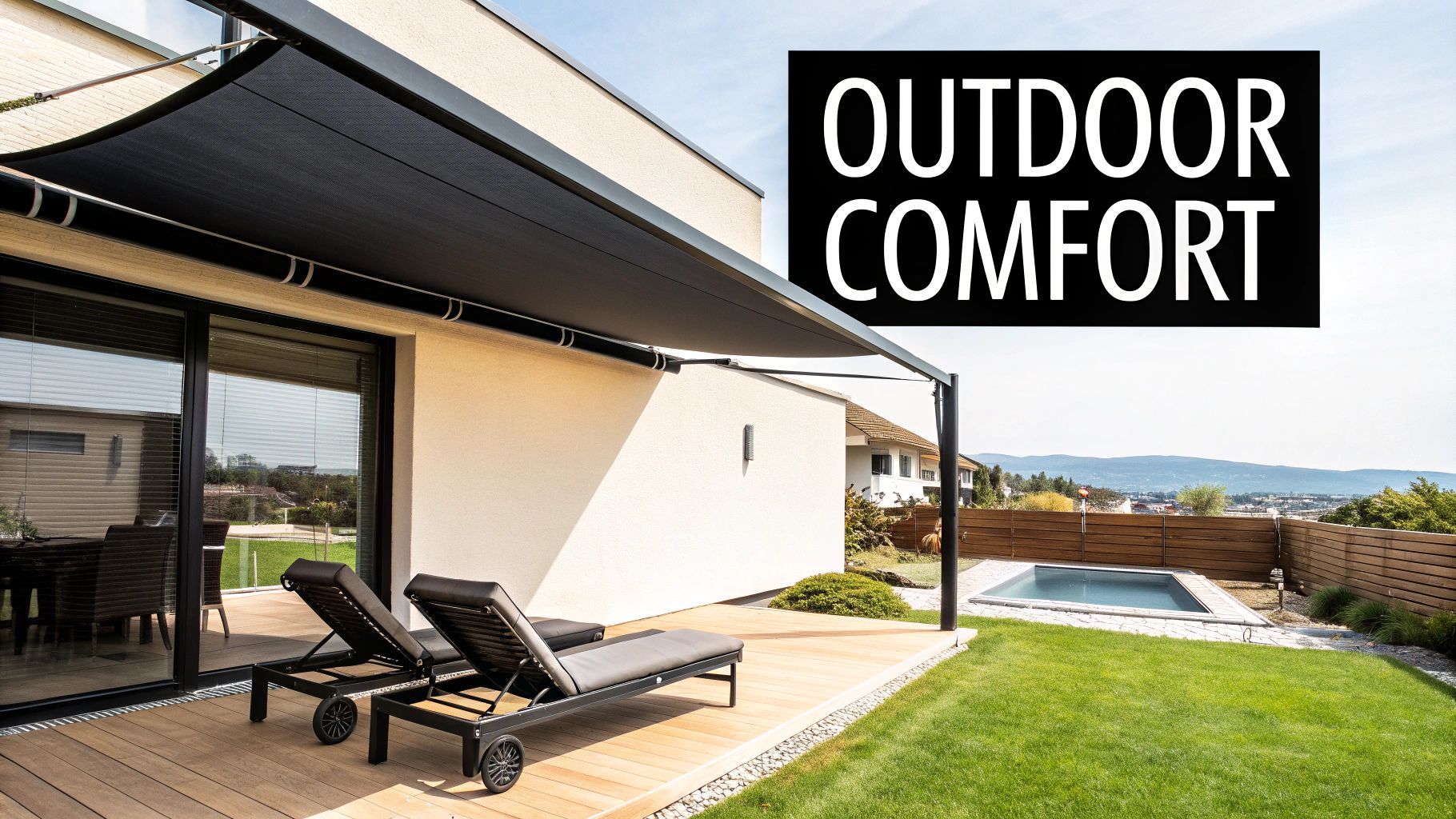
Motorized outdoor solar shades are essentially advanced systems engineered to manage the sun and heat beating down on your patio, deck, or pergola. I like to think of them as a dynamic shield—one you can control effortlessly to create the perfect outdoor vibe, no matter the time of day. They're a world away from static awnings or flimsy indoor blinds, as these are built from the ground up for exterior use, mixing tough construction with some pretty slick technology.
At their core, these systems are a team of three main parts working together.
The Core Components
First, you have the specialized solar screen fabric. This isn't your everyday cloth. It’s a seriously durable, weather-resistant material, usually a PVC-coated fiberglass, that’s designed to block a huge percentage of the sun's UV rays and heat. It has to stand up to sun, wind, and rain without fading or getting mildewed.
Next up is the quiet but surprisingly powerful electric motor. It’s cleverly hidden inside the shade’s roller tube, acting as the engine that powers the whole operation. This little workhorse is what smoothly and reliably moves the shade up and down, completely replacing old-school manual cranks or pull cords.
Finally, you have the control system. This is your command center. It can be as simple as a handheld remote, or you can get more advanced with a smartphone app or even voice commands through your smart home assistant. This is what gives you instant control over your shade and privacy.
More Than Just a Shade
It’s so important to see these shades as more than just a barrier. They're a tool that can completely transform a space. I've seen them turn a sun-blasted, unusable patio into a cool, comfortable retreat for family dinners. They also provide an immediate sense of privacy from nosy neighbors without making you feel totally closed off.
The real value is in their adaptability. You can drop them down to block that intense afternoon glare and then, just as easily, raise them back up to enjoy the sunset—all without leaving your chair. This level of control makes your outdoor areas feel like a true extension of your indoor living space.
This versatility is exactly why they're popping up on so many modern homes. While the idea is similar to interior window treatments, these outdoor solutions are built to a much higher standard of durability. For anyone wanting a complete home solution, you can learn more about the best solar screens for windows to create a cohesive look. At the end of the day, it's all about maximizing your comfort and getting the most use out of your property by creating a private, protected, and enjoyable outdoor space on demand.
How Outdoor Shades Can Transform Your Living Space
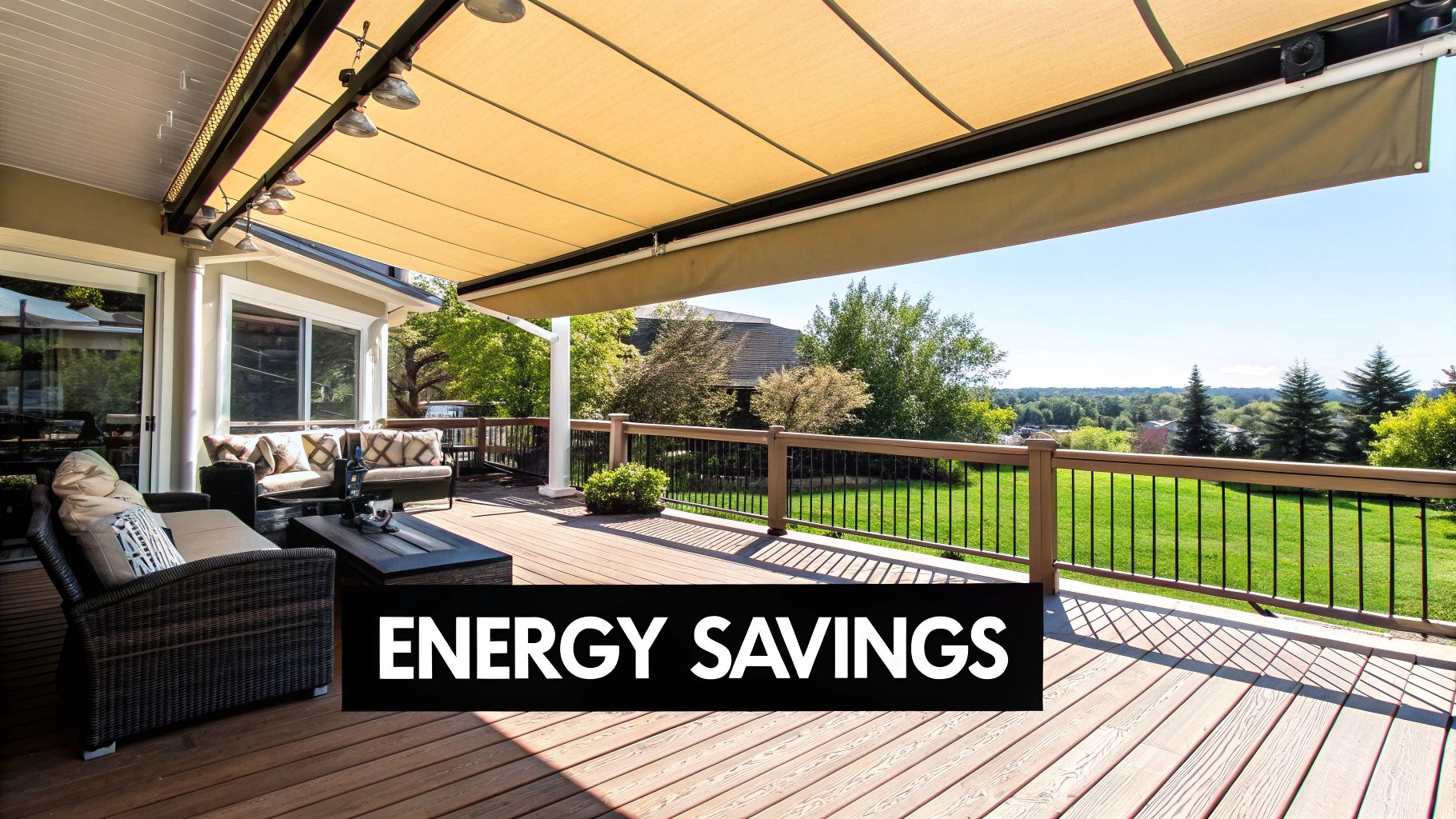
It’s easy to look at motorized outdoor solar shades and just see a sleek, modern accessory. But their real value goes much deeper. They aren’t just static coverings; they are dynamic tools that fundamentally change how you use and enjoy your home's outdoor areas. Think of them as an adjustable barrier you control, capable of turning a sun-blasted deck or an exposed patio into a comfortable, livable extension of your home.
This transformation touches everything from your energy bills to the simple joy of creating an instant private retreat. Once you understand their real-world impact, you'll see why they've become such an essential part of modern, comfortable living.
Create a Powerful Energy-Saving Shield
One of the biggest wins with outdoor solar shades is their ability to act as a thermal shield for your home. On hot summer days, the sun beating down on your windows and glass doors is a major source of unwanted heat, forcing your air conditioning to work overtime just to keep up.
Outdoor shades tackle this problem at the source. They intercept the sun’s intense rays before they ever have a chance to hit the glass. It’s a simple concept with a huge impact, keeping your home cooler and taking a significant load off your HVAC system. It's like putting a good pair of sunglasses on your house—the heat and glare are stopped before they can even get inside.
By blocking the sun on the exterior, these shades can lower indoor temperatures by as much as 15 degrees. This is far more effective than interior blinds, which only start working after the heat has already passed through the window and is trapped inside the room.
Protect Your Belongings from UV Damage
That beautiful sunlight we all love also brings along harsh ultraviolet (UV) rays that can cause a lot of damage over time. Your outdoor furniture, deck, and even your indoor flooring and artwork are all at risk of fading, cracking, and deteriorating from constant sun exposure.
Motorized solar shades are your best defense against this slow, silent destruction. The specialized fabrics are designed to block up to 99% of harmful UV rays, preserving the color, texture, and life of your valuable belongings.
- Outdoor Furniture: Keeps the fabric on cushions and sofas from fading and turning brittle.
- Wooden Decks and Features: Prevents the sun from bleaching and drying out natural wood.
- Interior Furnishings: Shields carpets, hardwood floors, and furniture near windows from sun damage.
Reclaim Your Privacy in an Instant
Let's be honest, many patios and decks can feel a bit like you're on stage for the whole neighborhood to see. This is where motorized shades offer an elegant and immediate fix. With just the touch of a button, you can lower your shades and create a secluded, private oasis.
The best part? Unlike a permanent fence or wall, this privacy is on-demand. You can keep things open and airy when you want the view, then instantly enclose the space for a family dinner or a quiet morning coffee. The shades provide a solid visual barrier without making you feel completely boxed in, as you can still sense the light and movement from outside. It’s the perfect blend of seclusion and connection.
Experience Unmatched Convenience and Control
This is where the "motorized" part really changes the game. Forget about wrestling with clumsy cranks or untangling messy pull cords. Motorization gets rid of all that hassle and replaces it with effortless control.
This convenience is a huge reason the global automated shades market is projected to grow from USD 4.02 billion to USD 5.72 billion by 2030. People are choosing motorized solutions because they fit so perfectly into a modern lifestyle, often connecting right into smart home systems and voice assistants. You can dig into the numbers yourself in this in-depth report on automated shades.
Imagine scheduling your patio shades to lower automatically during the hottest part of the afternoon. Or using a simple voice command to adjust them without leaving your lounge chair. That's the new standard for outdoor comfort—a system that works for you, not the other way around.
Choosing the Right Motorized Shade System
Picking the perfect motorized shade system can feel overwhelming, but it really boils down to three key things: the fabric, the motor, and the hardware. I've been doing this for years, and I can tell you that getting these three elements right is the secret to a system you'll love for a long time. It’s not about memorizing specs; it’s about matching the right gear to your home and how you live.
Let's start with the most important part—the fabric. This is the real workhorse of your shade system. It’s what stands between you and the sun, blocking UV rays, cutting glare, and keeping your view.
Decoding Fabric Openness and Material
The single most important spec for a solar shade fabric is its openness factor. It’s a simple percentage, usually from 1% to 14%, that tells you how tight the weave is.
Think of it like choosing sunglasses. A low number is like a dark, polarized lens—it offers maximum protection but you see a little less. A high number is like a lightly tinted lens, letting more light and scenery through.
- 1%-3% Openness: This is what you want for maximum sun blockage and privacy. It knocks out up to 99% of UV rays and is a lifesaver for patios that get blasted by the afternoon sun. Your view will be softer, but not gone.
- 5% Openness: This is the crowd-pleaser and my usual recommendation. It strikes a fantastic balance by blocking 95% of UV rays while keeping your view pretty clear. It's a solid, all-around choice for most patios and decks.
- 10%-14% Openness: If you bought your house for the view, this is your fabric. It lets in the most natural light and gives you the clearest picture of your backyard, but it offers less in the way of privacy and heat reduction.
Beyond the openness factor, the material itself is crucial. The best outdoor fabrics are made from PVC-coated fiberglass or polyester. This combo is tough as nails—it resists moisture, won't grow mildew, and can handle years of direct sun without getting brittle or fading. For a deeper dive, our guide on choosing types of window screen mesh has some great information.
Selecting the Right Motor and Controls
Once you’ve got your fabric picked out, it's time to think about the "motorized" part of your shades. The motor is the engine, and the controls are your steering wheel.
It's no surprise that these systems are getting more popular. The market for exterior shades was already worth around USD 12.5 billion in 2023 and is on track to nearly double by 2030. People want energy savings and convenience, and motorized shades deliver both.
Here’s a look at your main options for bringing your shades to life:
- Standard Remote Control: The tried-and-true classic. You get a simple handheld remote to move the shades up, down, or stop them anywhere in between. It's reliable and dead simple to use.
- Smart Home Integrated: If you're into tech, this is for you. These motors hook up to your Wi-Fi, so you can control your shades with a phone app or even just your voice using systems like Alexa or Google Home. You can also set them on a schedule—imagine your shades automatically lowering as the sun hits your patio.
- Solar-Powered Motors: This is the ultimate "set it and forget it" solution. A small, sleek solar panel soaks up sunlight to charge a hidden battery that powers the motor. No electrician needed, no wiring to run, and it costs nothing to operate.
Pro Tip: Don't skip the sensors. A sun sensor can automatically lower your shades when the sun gets intense, saving you money on A/C without you lifting a finger. A wind sensor is your insurance policy—it automatically retracts the shades in high winds to prevent them from getting damaged.
To make the decision a bit easier, here’s a quick comparison of the different motorization and control systems.
Comparing Motorization and Control Options
This table breaks down the different motor and control types for outdoor solar shades to help you choose the best fit for your needs.
| Feature | Standard Remote Control | Smart Home Integrated | Solar-Powered Motor |
|---|---|---|---|
| Convenience | High (push-button) | Very High (app, voice, schedule) | Very High (automatic) |
| Installation | Requires wiring | Requires wiring & Wi-Fi setup | No wiring needed |
| Upfront Cost | Lowest | Higher | Highest |
| Operating Cost | Minimal electricity | Minimal electricity | Zero |
| Best For | Simplicity and reliability | Tech-savvy homeowners | Eco-conscious & off-grid use |
Ultimately, the best choice depends on your budget and how you want to interact with your shades every day.
Choosing Your Hardware and Housing
The last piece of the puzzle is the hardware—the housing that protects the shade when it's rolled up. This affects how the system looks and how long it lasts.
An open-roll system is the most basic, leaving the fabric roll visible. It's a clean, minimalist look, but the fabric is exposed to the elements 24/7.
A fascia is a step up. It's a handsome aluminum cover for the front and top of the roll, giving the system a more polished appearance and a bit of protection.
A cassette offers the best protection, hands down. It’s a fully enclosed box that the shade disappears into, shielding both the fabric and the motor from rain, dust, and insects. If you want to get the absolute most life out of your investment, a cassette is the way to go.
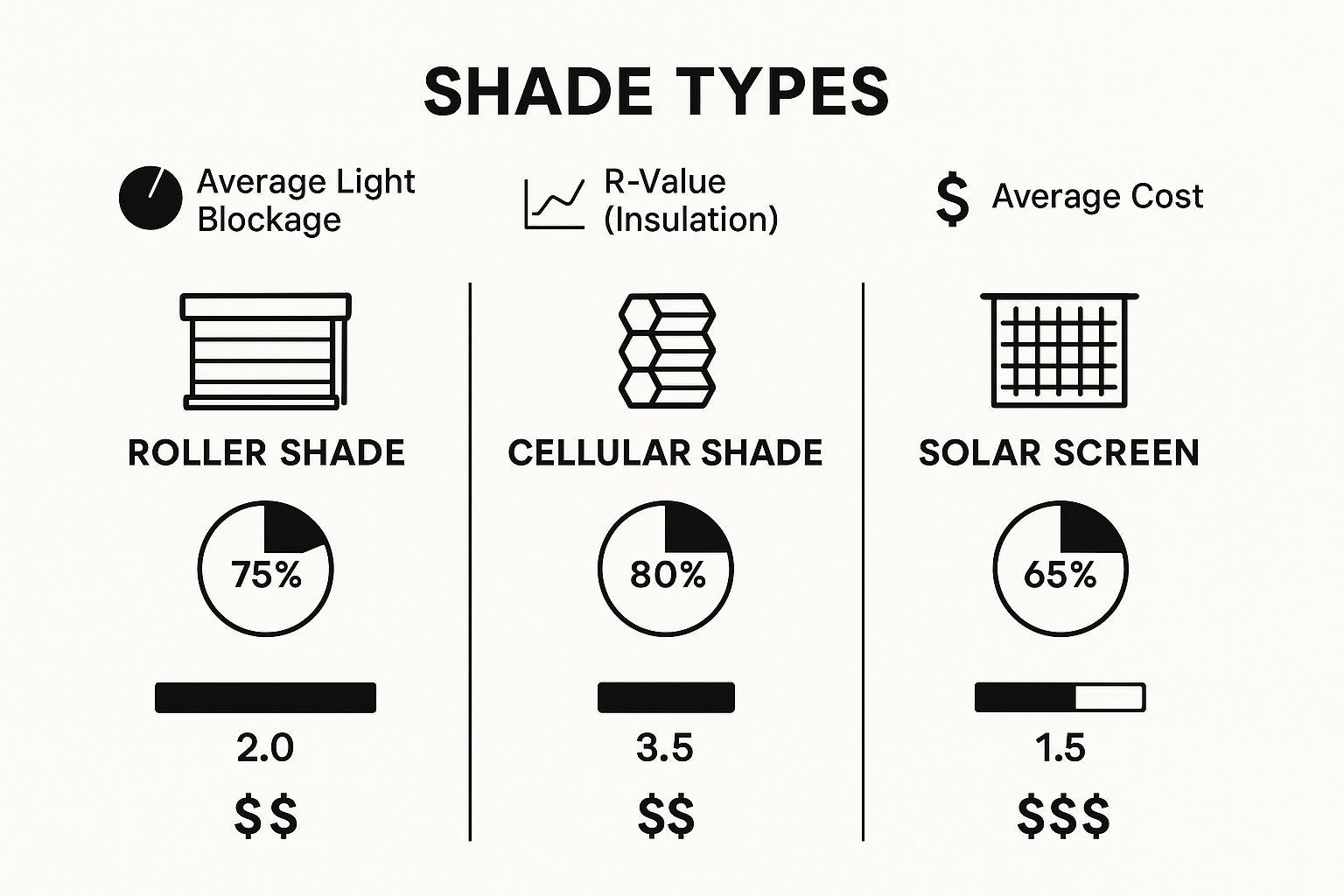
This chart gives you a good visual on how different shade types stack up. As you can see, solar screens are the champs for controlling light while staying affordable, whereas something like a cellular shade would be better if pure insulation was your goal.
Installing Your Motorized Outdoor Shades

Alright, you’ve picked out the perfect fabric, motor, and housing for your new motorized solar shades outdoor. Now for the fun part—making it all happen. Installation is where your vision truly comes to life, and you really have two ways to go about it: roll up your sleeves for a DIY project or bring in an experienced professional.
Whichever route you take, getting familiar with the steps involved will give you the confidence to oversee the project. It’s the best way to ensure your shades are installed safely, work flawlessly, and give you years of trouble-free performance.
The Professional Installation Route
For a lot of homeowners, hiring a qualified installer is the simplest, most stress-free option. A pro brings hands-on experience, the right tools for the job, and an efficiency you only get from doing this kind of work every day. This is especially true if you're dealing with tricky electrical wiring or installations high off the ground.
When you hire a professional, the experience is usually pretty seamless. They'll handle everything from double-checking your measurements to programming the remote and connecting it to your smart home system.
Before you sign on the dotted line, it's smart to ask a few key questions to make sure you've found the right person:
- Are you licensed, bonded, and insured for this kind of installation?
- Can I see a portfolio of other motorized solar shades outdoor projects you've completed?
- What kind of warranty do you offer on your labor and the product itself?
- What’s the estimated timeframe to get the installation finished?
Going with a reputable installer doesn't just guarantee a perfect fit; it gives you peace of mind that all the electrical work is done safely and to code.
Your Step-By-Step DIY Installation Guide
Feeling adventurous? A DIY installation can be a really satisfying project that saves you some cash and gives you a much better feel for how your new shades work. While the exact instructions will differ depending on the brand you bought, the fundamental process follows these same key steps.
The Golden Rule of DIY: Measure three times, order once. Getting the measurements wrong is the most common—and most expensive—mistake you can make. Always check the width and height at several different points to account for any variations.
Here's a general roadmap to guide you:
-
Precise Measurements Are Key: Before you even think about opening the box, grab your tape measure. You need to get the exact width and height of the opening where the shade will hang. Be meticulous here; even a quarter of an inch can throw everything off.
-
Mount the Brackets: Your shade system will come with all the necessary mounting brackets. Use a level to get them perfectly aligned before securing them to the wall, ceiling, or inside the frame. The shade's smooth operation depends entirely on getting these brackets right.
-
Install the Shade Cassette: With your brackets firmly in place, it's time to lift the shade's housing (the cassette) and snap it into the brackets. You should feel and hear a solid "click" when it locks in. This part is much easier with an extra pair of hands.
-
Connect the Power Source: If you chose a hardwired motor, this is where you need to be extra careful. Always shut off the power at the circuit breaker before touching any electrical wires. Follow the manufacturer's wiring diagram to the letter to connect the motor. For plug-in or solar models, this step is a breeze—just plug it in or position the solar panel.
-
Pair the Controls: The last step is syncing your remote control or smartphone app to the motor. This usually involves a simple sequence of button presses on the motor and the remote. Once they're paired, you can program the upper and lower stopping points, telling the shade exactly how far to roll up or down.
By taking your time and following the instructions closely, you can get a professional-quality result and enjoy the satisfaction of a job well done.
Keeping Your Shades in Top Shape for Years to Come
You’ve made a great investment in your home’s comfort and style with motorized outdoor solar shades. To make sure they look and run beautifully for years, a little bit of care goes a very long way. It's just like owning a nice car; a few simple check-ups can prevent much bigger headaches down the road.
This isn't about complicated, time-consuming chores. It's really just about gentle cleaning and paying a little attention to the different parts of your system, from the high-tech fabric right down to the quiet motor.
Simple Cleaning for Fabric and Hardware
It’s no surprise that your outdoor shades will pick up dust, pollen, and general grime. A quick clean-up a few times a year—especially after a heavy pollen season or a dusty storm—is the best way to keep them looking and working like they're brand new.
- Fabric Care: The golden rule here is to be gentle. Start by using a soft brush or the brush attachment on your vacuum to get rid of any loose debris. For tougher spots, a simple mix of mild soap and lukewarm water is all you need. Wipe the fabric gently with a soft cloth, then rinse it well with clean water to get all the soap off. Never use harsh chemicals, bleach, or abrasive scrubbers. These can easily strip the fabric's protective UV coating right off.
- Housing and Guide Wires: Don't forget the cassette or fascia and any guide wires. A quick wipe with a damp cloth is enough to clear away dirt and bugs. This simple step prevents gunk from building up and interfering with the shade's smooth movement.
Keeping the shades clean isn't just about looks. It stops abrasive dirt and grit from grinding into the fabric's weave or the rolling mechanism, which is one of the biggest culprits of premature wear and tear.
If you're curious about other ways to protect your home from the sun, it's worth learning how different types of screens work. Take a look at our guide on sun blocking window screens to see how other materials can bolster your home's defenses.
A Quick Troubleshooting Guide
Even the most reliable systems can have a little hiccup now and then. Before you pick up the phone to call a pro, here are a few simple things you can check yourself when your motorized solar shades act up.
- Unresponsive Remote: Start with the easiest fix first: check the batteries. If new batteries don't do the trick, try re-pairing the remote to the motor. Just follow the instructions that came with your system.
- Motor Not Working: If the motor isn't making a sound, look at its power source. For shades that plug in, make sure the cord is firmly in the outlet. If your system is hardwired, head to your home’s circuit breaker and see if it has been tripped.
- Smart Home Connection Issues: Can't get the shades to respond to your app or voice commands? It's almost always a network problem. Try restarting your Wi-Fi router and double-check that the shade’s smart hub is properly connected and online.
Your Seasonal Maintenance Checklist
To keep things simple, here’s a straightforward checklist to run through each spring and fall. It’ll ensure your shades are always ready for whatever the season throws at them.
- Inspect All Components: Give everything a good look-over. Check the fabric for any small tears or fraying. Make sure all the mounting brackets and screws are still tight and secure.
- Perform a Deep Clean: Follow the cleaning steps outlined above to wash away all the buildup from the past season.
- Test Full Operation: Roll the shades all the way up and down a couple of times. Listen for any weird noises and watch to make sure they move smoothly.
- Check Your Sensors: If your system has wind or sun sensors, test them to make sure they’re responding correctly. These sensors are your system's best line of defense against sudden weather changes.
Taking Your Shades to the Next Level with Smart Home Integration
This is where the real magic happens. Moving beyond a simple remote control is what turns your motorized solar shades outdoor from a neat feature into a truly intelligent part of your home. When you plug them into your smart home system, you unlock a whole new world of convenience and efficiency that just makes sense for modern life.
Think of it like this: a basic remote lets you tell the shades what to do. Smart integration gives your shades a brain. They can start thinking for themselves, acting on schedules you set, reacting to the weather, and fitting right into your daily routines. It's this proactive, intelligent control that has so many homeowners excited about these systems.
Set It and Forget It: Schedules and Scenes
The real powerhouse of smart integration is creating schedules and scenes. This is you, the homeowner, becoming the director of your home's comfort. You tell your shades what to do and when, so you don't have to give it a second thought.
For instance, you could program your shades to automatically roll down at 1 p.m. every afternoon, right when the sun is at its most brutal. It's a simple command that keeps your patio cool and protects your furniture, all without you lifting a finger.
But you can get even more creative by bundling commands into "scenes."
- "Movie Night" Scene: With one tap in an app or a quick voice command, your patio shades lower, the indoor lights dim to a cozy level, and your sound system fires up. Everything happens at once.
- "Good Morning" Scene: Imagine waking up and saying, "Good morning." Your shades can be programmed to slowly rise, letting in the gentle morning light, just as your smart coffee maker starts its first brew of the day.
The Ultimate Convenience: Voice Control
For that final touch of effortless living, connect your shades to a voice assistant like Amazon Alexa or Google Assistant. This is perfect for those moments when your hands are full with grill tools or you're just too comfortable in your lounge chair to move.
Instead of fumbling for a remote or your phone, you can just call out, "Hey Google, lower the patio shades to 50 percent." It feels a bit like living in the future, and it makes managing your outdoor space completely seamless.
This kind of intuitive control is a huge reason why the market for smart home devices is booming. Homeowners, especially in North America, are actively looking for connected products that also deliver on energy efficiency.
Let Your Shades Think for Themselves with Sensors
To make your system truly hands-off, you can add environmental sensors. These little gadgets are the eyes and ears of your shading system, giving them the ability to react to the weather in real time, all on their own.
- Sun Sensors: These measure the brightness of the sun. When things get too intense, the sensor tells the shades to lower, giving you instant shade and cooling without you doing a thing.
- Wind Sensors: This is a must-have for protecting your investment. If a sudden gust of wind kicks up to a dangerous speed, the sensor will immediately retract your shades, tucking them away safely from potential damage.
The push for smarter, energy-saving home solutions is driving some serious growth. Even government incentives, like federal tax credits of up to $1,200 for energy-efficient window treatments, are nudging more homeowners toward automated systems. You can dive deeper into these market trends and projections for motorized shades to see where things are headed.
When you bring schedules, voice commands, and sensor data together, your shades stop being just a product and become a responsive, invaluable part of your smart home.
Have Questions? We Have Answers.
It's natural to have a few questions before you commit to upgrading your outdoor space. After all, it's an important investment in your home. Let's walk through some of the most common things people ask about motorized outdoor solar shades.
How Do Motorized Shades Hold Up in Bad Weather?
This is a big one, and for good reason. High-quality outdoor shades are built tough—they're weather-resistant, but it's important to know they aren't completely weatherproof. The fabrics are specially made, often from PVC-coated materials, to shrug off moisture, prevent mildew, and handle years of sun without breaking down. The metal parts, like the housing and guide wires, are typically made from rust-proof aluminum or stainless steel.
Think of them like a high-end patio umbrella. They’re fantastic for sun and light rain, but you wouldn't leave them open in a hurricane. This is why a wind sensor is such a popular add-on. It acts like a guardian for your shades, automatically pulling them back to safety when strong winds kick up.
How Much Power Do These Motors Actually Use?
You’ll be pleasantly surprised here. Motorized shades are incredibly efficient. Whether you choose a hardwired or plug-in model, the motor only draws a meaningful amount of power when it's actively moving.
When it's sitting still, the power draw is tiny—about the same as your TV on standby. We’re talking just a few dollars a year in electricity costs, which is nothing compared to the money you'll save on air conditioning. If you want to go completely off-grid, a solar-powered motor is the perfect solution. A small, subtle panel keeps the battery charged, bringing your operating cost down to zero.
What’s the Typical Lifespan for Outdoor Solar Shades?
With a little bit of care, your shades will be a part of your home for many years to come.
- The Fabric: You can expect the high-performance fabric to last 10-15 years. This can vary a bit depending on your climate and how much intense, direct sunlight it gets.
- The Motor: The motor is a workhorse. Most top-tier manufacturers back their motors with a warranty of 5 years or more, but they often last much longer.
A simple maintenance routine is your best friend here. A gentle cleaning now and then and remembering to retract them during nasty weather will go a long way in maximizing the life of both the fabric and the motor.
Ready to turn your patio into the comfortable, private retreat you've always wanted? Sparkle Tech Screen Service specializes in expert installation and repair for premium sun and bug screens, including motorized systems.


