


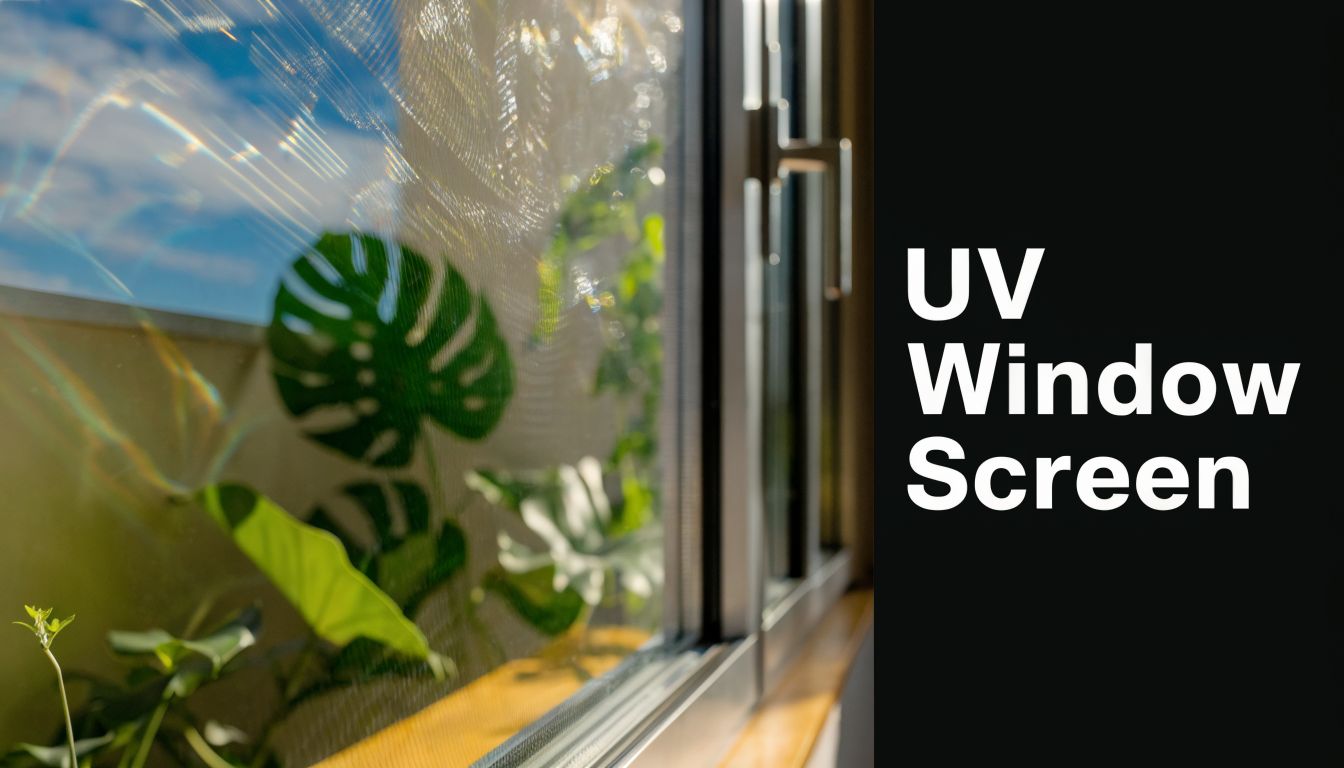

The sun usually makes itself known in the same spots first. A couch arm near the west window starts looking lighter than the rest. The hardwood by the slider loses its original color. Around midafternoon, one room gets bright enough to feel harsh, and the AC has to keep chasing heat that keeps coming through the glass.
That’s the point where most Arizona homeowners start asking whether blinds, curtains, or darker tint will fix it. Sometimes those help a little. But if the goal is to cut glare, reduce heat before it gets inside, and protect what sits near the window, a uv window screen is a much more practical upgrade.
In dry, high-UV climates, I look at sun screens as exterior protection first and appearance second. They’re doing a hard job every day. They take the hit before your glass, flooring, furniture, and skin do. If you already think about UV protection in other parts of life, the same logic applies to the house. The way detailers talk about how to maintain your car's mirror finish is a good parallel. Constant sun exposure breaks things down over time unless you block it early.
Your Home's Ultimate Defense Against the Sun
A lot of homes in Phoenix, Scottsdale, Mesa, and the surrounding areas have one trouble side. It’s usually west-facing, sometimes south-facing, and it’s the side that gets punished every afternoon. Homeowners feel it without needing a meter. That room runs hotter. The glare gets annoying. Fabrics fade unevenly. People stop opening the blinds because the sunlight feels like a spotlight.
That’s where a uv window screen earns its keep. It’s not just another screen that happens to be darker. It’s built to intercept solar exposure before it crosses the glass. That changes the comfort of the room, but it also changes how fast your interiors age.
What homeowners usually notice first
Calls frequently concern one of these problems:
- Hot rooms by late afternoon that never seem to match the thermostat setting.
- Furniture or flooring fading near the brightest windows.
- Glare on TVs and monitors that makes the room harder to use.
- Screens that already look worn out from years of direct desert sun.
A standard bug screen won’t solve all of that. It keeps insects out and allows ventilation, which is useful, but it doesn’t do much for heat and UV control.
A good sun screen should make a room easier to live in before it ever shows up as a lower summer utility bill.
Why this upgrade matters more in Arizona
In cooler or cloudier places, homeowners can get by with lighter-duty solutions. In Arizona, the sun exposure is more punishing. West windows, patio sliders, and large glass openings take a daily beating. That means comfort problems show up faster, and material damage shows up sooner than people expect.
A well-chosen uv window screen helps on three fronts at once. It reduces incoming heat, cuts the UV exposure that fades interiors, and makes bright rooms more usable during the part of the day when they usually become uncomfortable.
How Screens Block Invisible Damage and Heat
A uv window screen works a lot like sunglasses for your house, but the key difference is location. Sunglasses protect your eyes before light reaches them. Exterior solar screens do the same thing for your windows. They intercept sunlight before it heats the glass and before damaging rays move deeper into the room.

High-quality uv window screens can block up to 99% of harmful UV rays, and that matters because UV-A rays, which account for 90% of skin aging, pass through standard window glass. The Skin Cancer Foundation also recognizes this level of protection as part of a broader sun protection approach, as noted by the International Window Film Association UV protection guide.
What the screen is actually stopping
Sunlight brings in more than brightness. For homeowners, two parts matter most.
- UV exposure damages skin and contributes to fading on fabric, flooring, wood finishes, and other interior surfaces.
- Solar heat builds up when energy passes through the window system and raises room temperature.
The reason exterior screening works so well is simple. It blocks a significant part of that load before the glass becomes part of the problem.
Why outside beats inside
Interior blinds and curtains help with glare and privacy, but they don’t stop the sun early enough. The sunlight has already passed through the glass by then. Some of that energy is already trapped in the room, which is why you can stand near a closed blind and still feel the heat.
Exterior uv screens change the sequence.
- Sun hits the screen first.
- The mesh absorbs and reflects a portion of that solar energy.
- Less heat reaches the glass.
- The room stays more stable and easier to cool.
That’s why solar screens often feel more effective than indoor treatments, especially on west-facing windows.
Practical rule: If the glass itself gets hot every afternoon, interior coverings are arriving too late to do the hardest part of the job.
Health and interior protection both matter
Homeowners often think of solar screens as a comfort upgrade, but there’s also a protection angle that gets overlooked. Standard glass doesn’t fully stop UV-A, so sun exposure near windows is still exposure. That’s one reason these products matter in reading nooks, breakfast areas, home offices, and any room where people spend time near direct daylight.
The same issue affects the house itself. Fading doesn’t happen all at once. It shows up slowly in a rug edge, chair arm, wood floor strip, or a patch of wall art that no longer matches the rest.
A uv window screen is doing quiet work every day. It softens the glare you notice right away and limits the damage you usually notice too late.
Exploring UV Window Screen Materials and Types
Not all solar mesh is the same. Homeowners usually compare by darkness, but installers look at material, weave, and how the screen will be used on that specific opening. A west-facing living room picture window has different demands than a shaded bathroom window or a patio slider that gets opened all day.

Material choices that make sense in the desert
The most common solar screen materials for residential work are vinyl-coated fiberglass and similar heavy-duty mesh products designed for sun control. These hold up better than lightweight bug mesh when they’re facing constant exposure.
What matters in practice is whether the material keeps its shape, resists premature breakdown, and stays tight in the frame. For Arizona homes, lightweight insect mesh often looks fine on day one and disappointing much sooner than people expect.
If you want a deeper comparison of common options, this guide to best window screen material is useful because it breaks down what different meshes are meant to do.
Openness is the real decision point
Homeowners often hear terms like 80, 90, or tighter solar mesh and assume darker always means better. It’s not that simple. Tighter screens give more sun control, but they also affect view and airflow.
A product like SunTex 90 blocks 90% of UV and heat, and in direct sunlight it can reduce interior temperatures by up to 15 to 20°F compared with an unscreened window, according to Affordable Window Screens on window screen types. That’s why this kind of screen makes sense on hard-hit windows in hot climates.
Here’s the practical trade-off:
| Screen style | What it does well | What you give up |
|---|---|---|
| Standard bug screen | Airflow and a clearer view | Very limited sun protection |
| Moderate solar screen | Better glare control and decent visibility | Less open feel than bug mesh |
| Tighter solar screen like SunTex 90 | Strong heat and UV reduction on intense exposures | Darker appearance and some reduction in outward clarity |
Where each type works best
- West-facing glass: On these, tighter solar mesh usually pays off fastest. It handles the brutal afternoon load better.
- South-facing rooms: A strong solar screen works well if the room gets long daily exposure.
- Patio sliders: Good candidates when glare and room heating are the bigger complaints than maximum view.
- Front windows: Some homeowners prefer a balance here, especially if they care about curb appearance and visibility from inside.
For large openings or spaces where homeowners want shade control without a fixed panel look, some also consider premium retractable screens as part of the mix.
The right screen is the one that matches the direction of the sun, how often the opening is used, and how much view you’re willing to trade for comfort.
UV Screens Versus Standard Bug Screens
A lot of homeowners assume every screen does roughly the same job. From the curb, that’s understandable. In actual use, a uv window screen and a standard bug screen behave very differently.

The side-by-side reality
A bug screen is designed mainly to keep insects out while letting air move through. A solar or UV screen is designed to do that basic job plus manage glare, reduce heat gain, and protect interiors from sun exposure.
That difference shows up quickly on hot windows. If a room is overheating every afternoon, replacing a bug screen with another bug screen won’t solve the actual problem.
| Feature | UV screen | Standard bug screen |
|---|---|---|
| Insect barrier | Yes | Yes |
| Glare control | Stronger | Minimal |
| Heat reduction | Meaningful improvement on sun-exposed windows | Minimal |
| Interior fading protection | Yes | Minimal |
| Daytime privacy | More privacy from outside | Less privacy |
| View clarity | Slightly reduced, depends on weave | More open |
| Airflow feel | Reduced compared with bug mesh | Better airflow |
| Screen thickness | Typically heavier-duty | Typically lighter |
Where bug screens still make sense
There are still places where a standard screen is fine.
- Shaded sides of the home where heat and glare aren’t a big issue.
- Windows used mainly for airflow during mild weather.
- Areas where view matters more than solar control.
That said, many Arizona homes have at least a few openings where bug mesh is the wrong tool for the job. West-facing bedrooms, living room windows with electronics, and bright patio doors are common examples.
If you want to compare products built specifically for sun exposure, this page on sun blocking window screens shows the category more clearly than a general insect screen listing.
Return on value looks different
A bug screen is a basic utility item. It does one thing. A UV screen is closer to a protective home upgrade. It helps comfort, reduces glare, protects finishes, and can ease the strain on rooms that are expensive to cool.
That doesn’t mean every opening needs solar mesh. It means homeowners should stop treating all screens like interchangeable parts. They’re not.
Understanding Key Performance Ratings
Product sheets can make simple decisions look more technical than they are. A few ratings matter, and once you know what they mean, the marketing gets easier to sort through.
UV rejection
This one is straightforward. It tells you how much ultraviolet radiation the product blocks. For homeowners, higher UV rejection matters most when you’re trying to protect interiors and reduce the exposure that comes through ordinary glass.
Advanced solar screen and film systems from manufacturers like Phifer can reduce solar heat gain by 42% to 74%, transmit less than 1% of UV rays, and still allow 50% to 70% of visible light through, according to Window Film Depot’s overview of UV protection screens for windows. That’s why better products don’t automatically create the old dark, closed-in look many people worry about.
SHGC and why lower matters
Solar Heat Gain Coefficient, usually shortened to SHGC, is a measure of how much solar heat gets through a window system. For a homeowner, the useful takeaway is simple: lower SHGC means less heat entering the room.
You don’t need to memorize the math. You just need to know what problem you’re trying to fix. If the room bakes in the afternoon, you want products that push that number in the right direction.
VLT and openness
Visible Light Transmittance, or VLT, tells you how much daylight still comes through, an important factor as homeowners often want protection without turning the room into a cave.
Openness factor is the practical screen version of that trade-off. A tighter weave generally means more sun control and more privacy, but also a darker look from inside. A more open weave keeps a lighter feel but won’t shield the room as aggressively.
If a spec sheet only talks about darkness or color and says nothing about UV rejection, heat reduction, or visible light, it’s probably not giving you enough information to make a smart choice.
What to focus on when comparing products
Use these questions when you’re looking at options:
- How much UV does it block
- How much solar heat does it reduce
- Will the room still get usable daylight
- Is the weave appropriate for that window’s sun exposure
- Will the material hold up in your climate
That short list gets you farther than most brand slogans.
Your Guide to Buying and Installing UV Screens
By the time an Arizona homeowner starts shopping for a uv window screen, the problem is usually already obvious. One bedroom runs hotter than the rest of the house. The west-facing living room fades furniture faster. The patio slider turns into a heat source by late afternoon. Buying the right screen fixes those comfort problems. Buying the wrong one often leaves you with a darker room and not much relief.

Buying decisions that matter more than color
Start with the windows that create the biggest daily headache. In Arizona, that usually means west-facing glass, large sliders, and rooms used in the afternoon. Screening every opening at once is not always necessary. Targeting the worst exposures first often gives homeowners the fastest payoff in comfort and cooling load.
A few details matter more than the sample swatch:
- Sun exposure on that side of the house. West and south exposures usually need tighter solar control than shaded windows.
- How the window is used. Patio sliders, bedroom egress windows, and small bath windows have different fit and handling demands.
- How much view you want to keep. Tighter mesh cuts glare and heat better, but it also darkens the view more.
- Condition of the existing frame. Bent corners, weak spline channels, and corroded frames can turn a simple rescreen into a frame repair job.
Cost depends on more than screen size. Frame condition, screen type, access, and the number of openings all affect labor and material. Homeowners comparing options can get a clearer sense of those variables from this guide to window screen installation cost.
DIY versus professional fitting
DIY installation can work on a clean, standard opening if you already know how to cut mesh square and roll spline without over-tensioning the screen. That skill matters more with solar mesh than with light insect screen. Pull it too loose and it will sag. Pull it too tight and the frame can bow, especially on larger windows.
Professional fitting makes more sense when the house has several sun-beaten openings, older frames, or sliders that need a consistent fit. That is common in Arizona neighborhoods where sun exposure is hard on both mesh and aluminum over time. A local professional can measure each opening, check corner strength, and build around small size differences that are easy to miss with a tape measure.
If you are replacing screens and cleaning surrounding metal at the same time, Auckland Window and Door Services Limited has a useful frame-care reference.
Smart screens are starting to matter
Some homeowners are also looking at motorized exterior screens for large openings, covered patios, and walls of glass. According to KE Outdoor’s exterior solar screens information, automated screens paired with sensors or smart thermostats can reduce cooling energy use by an additional 12% to 18% by deploying during peak sun hours.
That option is not necessary for every house. For a standard bedroom or kitchen window, a fixed UV screen is usually the simpler and more cost-effective choice. For broad west-facing glass that gets hammered every afternoon, automation can make sense.
Maintenance Tips and Professional Repair Cues
A solar screen isn’t a one-and-done part of the house, especially in Arizona. Dust, wind, direct sun, and everyday wear all take a toll. The good news is that routine maintenance is simple. The bigger issue is knowing when cleaning is enough and when the screen has started losing function.
How to clean them without shortening their life
Keep it gentle. Most homeowners do best with light rinsing, mild soap, and a soft brush or cloth. You’re trying to remove dust and buildup, not blast the mesh.
Use a simple approach:
- Brush loose dirt off first so you’re not grinding grit into the mesh.
- Wash with mild soap and water instead of harsh chemical cleaners.
- Rinse thoroughly and let the screen dry fully.
- Avoid pressure washers because they can stretch mesh or damage corners and spline.
If you’re also cleaning surrounding aluminum frames, this guide from Auckland Window and Door Services Limited is a practical reference for frame care.
What normal aging looks like
In high-UV environments like Arizona, solar screens typically last 5 to 10 years with proper care, but without maintenance that lifespan can drop to 3 to 5 years, according to Shop Modern Shades on exterior window screens to block sun.
That range makes sense in the field. Some screens age evenly and stay serviceable for years. Others get hammered by a harsh western exposure and show wear much sooner.
Signs it’s time for repair or rescreening
Watch for these cues:
- Loose or wavy mesh that no longer sits tight in the frame
- Small tears or holes from debris, pets, or repeated handling
- Spline failure where the material starts pulling out of the groove
- Visible fading or brittleness that suggests the mesh is nearing the end of its useful life
- Frames that are still solid even though the mesh is worn out
A sturdy frame with tired mesh is often a rescreening job, not a full replacement job.
If the frame is still square and the corners are sound, remeshing is usually the practical move. If the frame is bent, damaged, or won’t hold tension anymore, replacement makes more sense.
Reclaim Your Comfort and Protect Your Home
At 3 p.m. in an Arizona summer, the weak spots in a house show up fast. The west-facing bedroom gets harsh and bright, the living room heats up before the AC can catch up, and the floor near the glass takes the brunt of the sun day after day. A properly fitted uv window screen helps cut that load where it starts, at the window.
For homeowners in Phoenix and nearby communities, that matters for more than comfort. Good solar mesh helps keep rooms more usable in the afternoon, reduces strain on cooling equipment, and slows the sun wear that shows up on flooring, furniture, and blinds. Standard insect screen does not do that job well in high-UV climates.
If your screens are loose, torn, faded, or not blocking enough heat on the hardest exposures, it makes sense to fix the problem before the next stretch of extreme heat.
If you need new sun screens, rescreening, slider screen work, or screen repairs in the Phoenix metro and nearby areas, contact Sparkle Tech Screen Service for a quick quote and same-week service options.


