


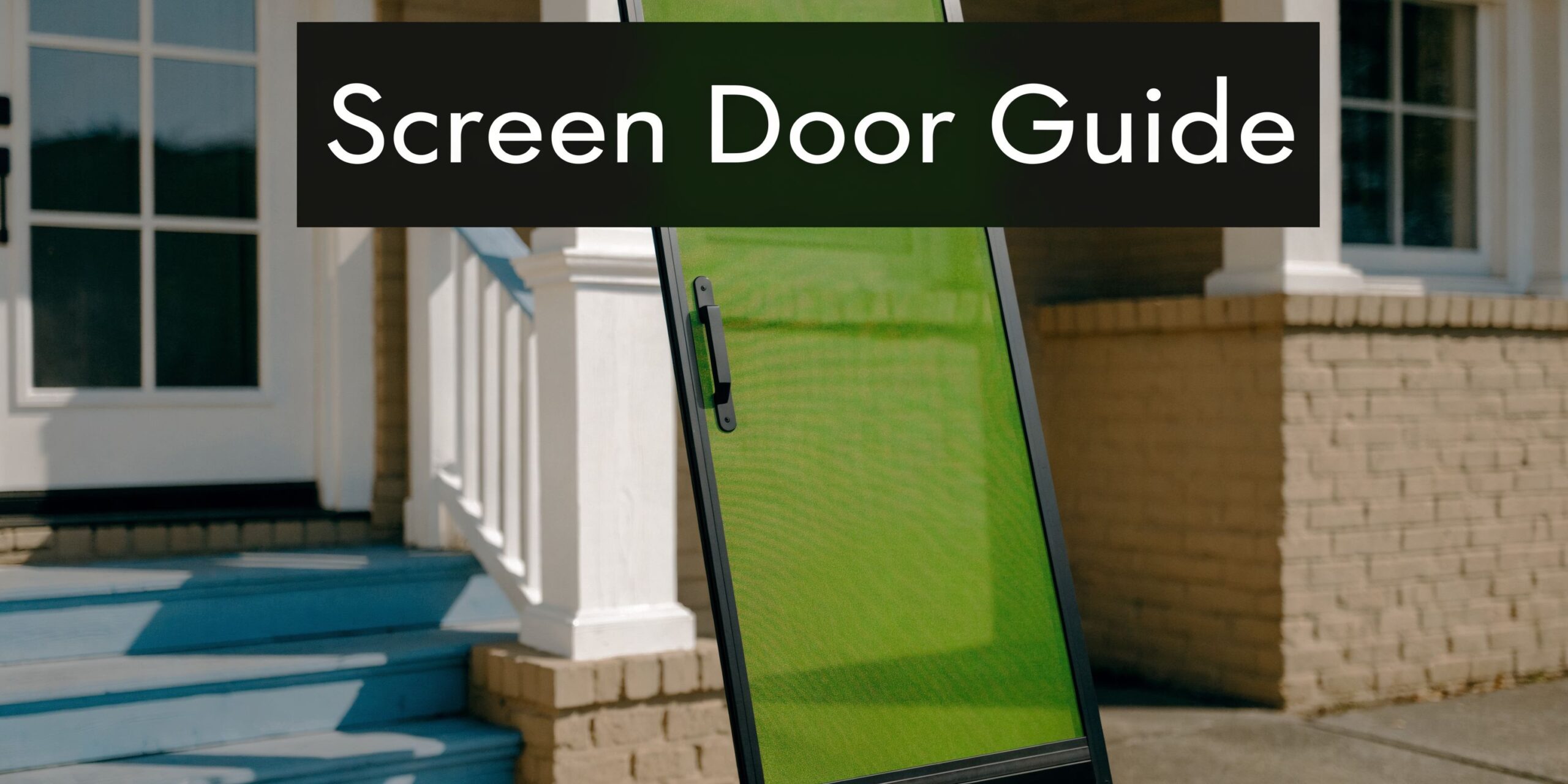

You’re probably dealing with one of three versions of the same problem.
The door drags so hard you have to use your hip to close it. The screen is ripped just enough for bugs to find it. Or the frame keeps jumping the track, which turns a simple trip to the patio into a small daily fight.
That’s usually when people start searching for the best sliding screen door replacement. The problem is that most guides rush straight to product picks. They treat every bad screen door like it needs a full replacement, even when the smarter move is a roller repair or a fresh mesh job.
In hot, dusty places like Arizona, that shortcut costs people money. Sun exposure beats up mesh. Tracks collect grit. Rollers wear out. Sometimes the frame is still perfectly usable. Sometimes it isn’t. The right call depends on what failed, how often the door gets used, and whether you want the cheapest fix today or the better long-term outcome.
This guide looks at the primary decision first. Repair, rescreen, or replace. Then it gets into door materials, mesh options, installation issues, and how to tell if you’re buying something that’ll glide smoothly or become another headache in a few months.
Is Your Sliding Screen Door More Trouble Than It's Worth?
A worn sliding screen door rarely fails all at once. It starts small.
The latch feels loose. Then the bottom edge scrapes. Then one corner of the mesh pulls out of the spline. After that, the whole door starts leaning just enough that it no longer rolls cleanly. Homeowners put up with this longer than they should because the door still “works,” technically.

In practice, a bad slider changes how you use the house. People stop opening the patio door for airflow because the screen is annoying. Kids slam it because it won’t glide. Pets push through weak mesh. Dust and insects get in through tears or gaps that didn’t used to be there.
What homeowners usually notice first
Some problems point to mesh failure. Others point to hardware or frame problems.
- Torn or sun-damaged screen: The frame may still be solid, but the mesh has become brittle, loose, or punctured.
- Grinding or dragging movement: Rollers may be worn, packed with debris, or sitting out of adjustment.
- Door popping off track: This often signals alignment trouble, worn wheels, or a bent frame.
- Loose handle or sloppy latch: Hardware may be fixable without replacing the full door.
- Visible bowing or twist in the frame: That’s where repair starts making less sense.
The hidden cost of living with it
A rough-sliding screen door doesn’t just feel cheap. It usually gets worse faster once it starts binding.
Practical rule: If you need to lift the door to make it move, don’t ignore it. That kind of drag usually means the rollers, frame, or track relationship is already off.
In Arizona homes, I’ve seen sun damage fool people into replacing the whole door when only the mesh was bad. I’ve also seen the opposite. Someone rescreens a frame that’s already bent, and the new mesh looks great for a week while the door still runs terribly.
That’s why the first question isn’t “Which replacement door should I buy?” It’s simpler.
What failed?
If you assess that, the best sliding screen door replacement might be a new door. Or it might be a much cheaper fix.
The Three Paths to a Perfect Screen Door Solution
A homeowner calls because the screen door looks rough and sticks every time someone heads to the patio. They assume they need a full replacement. After a quick inspection, the actual problem is often narrower. Bad rollers. Sun-cooked mesh. A frame that is still usable, or a frame that is too far gone to justify another repair.
That is the decision point that saves or wastes money.
Sliding screen door problems usually fall into three lanes: repair, rescreen, or full replacement. The right choice depends on which part failed first and how much wear the rest of the door has taken. In Arizona, that matters even more because UV exposure can destroy mesh long before the frame or hardware is finished.
| Path | What it fixes | Best choice when | Main downside |
|---|---|---|---|
| Repair | Rollers, latch, handle, adjustment, minor corner or track issues | The frame is straight, the mesh is still serviceable, and the door is worth keeping | Repair money is wasted if the frame is bent or the mesh is already brittle |
| Rescreen | Torn, faded, loose, or sun-damaged mesh | The door still rolls correctly and the frame has good structure | Fresh mesh does not correct dragging, derailment, or a twisted frame |
| Replace | Frame, rollers, corners, handle, and mesh | The door has multiple failures, poor fit, or recurring problems | Highest upfront cost |
Repair is the right call when the door still has a good backbone
A lot of slider complaints come from hardware wear, not total door failure.
If the frame sits square in the opening and the mesh is still in decent shape, a roller swap, latch repair, or track adjustment can buy several more years of use. I recommend repair when the door used to run properly and the trouble built up gradually. That pattern usually points to wear parts, not a dead door.
Rescreening is often the best value
This is the option homeowners overlook most often, especially in hot, sunny climates.
If the frame is solid and the door glides the way it should, replacing only the mesh is usually the smarter spend. It fixes the part that failed without paying for new hardware and frame parts you do not need. It also gives you a chance to upgrade performance. Many Arizona homeowners switch from standard insect screen to solar mesh for better glare control, daytime privacy, and reduced heat gain at the patio opening. If you want a clearer breakdown of types of window screen mesh, it helps to compare visibility, airflow, pet resistance, and sun protection before choosing.
A simple rule works well here. If the complaint is about what you see through the door or how the mesh looks, rescreening stays in play. If the complaint is about how the door moves, look harder at hardware and frame condition first.
Replacement makes sense when several parts are failing at once
Some doors are past the point where another repair is a good investment.
A full replacement usually wins when you have a bent frame, sloppy corners, worn rollers, torn mesh, and chronic track problems all showing up together. That combination is common on older light-duty doors that have seen years of heat, dust, and heavy use. At that stage, fixing one issue often leaves two more behind.
Material choice matters too, which is why it helps to review common window screen material types before ordering a new door or mesh upgrade.
A practical way to choose
Use this quick field test:
Does the door roll smoothly after basic cleaning and adjustment?
If yes, rescreening or a minor repair may be enough.Is the frame straight, tight at the corners, and sitting properly in the track?
If yes, the door is still a candidate for repair or rescreening.Are movement, fit, and mesh condition all bad at the same time?
Replacement is usually the better long-term decision.
That is how professionals sort the job. It keeps a homeowner from buying a full door because the mesh looks bad, and it also keeps them from putting new screen into a frame that is already on borrowed time.
Replacement Door Showdown Materials and Mesh Types
A homeowner replaces a torn patio screen with the cheapest slider on the shelf. Three months into an Arizona summer, the frame starts flexing, the wheels drag, and the new mesh still lets in full afternoon glare. The problem was not just age. It was buying the wrong combination of frame and screen for the opening.
Once replacement is on the table, material choice decides how long the fix lasts. Frame strength affects tracking, corner stability, and how the door handles daily use. Mesh choice affects airflow, visibility, privacy, pet resistance, and sun control.

Frame materials that hold up and frame materials that don’t
The frame is the part homeowners underestimate most.
Aluminum
Aluminum is still the practical standard for sliding screen doors. It resists rust, stays fairly light, and gives installers more consistent fit and adjustment than cheaper flexible materials.
The key distinction is not aluminum versus everything else. It is light-duty aluminum versus heavier aluminum with better corner construction and better rollers. In the field, that difference shows up fast. A thin frame may look fine during installation, then start racking out of square after repeated use, kids pushing through it, or a dog hitting the lower panel.
Vinyl
Vinyl can work on low-use openings, but it is usually a budget play. The issue is stiffness. On hot, sun-exposed patio doors, weaker vinyl frames are more likely to twist, bow, or feel sloppy over time.
That does not mean every vinyl door fails. It means the margin for error is smaller, especially in desert heat.
Wood
Wood fits a specific look. It does not fit the needs of many patio sliders that get constant weather exposure and regular traffic.
For a homeowner who wants low maintenance and dependable rolling, wood is rarely the first recommendation. It asks for more upkeep and usually gives less everyday practicality than a quality aluminum door.
Heavy-duty versus economy doors
This choice matters more than frame color or finish.
A buying guide from Metro Screenworks points out that economy sliding doors use a shallower frame profile, while premium heavy-duty models use a deeper one. That extra depth helps the door resist flexing and stay more stable in the track.
In plain terms:
- Economy door: Lower upfront cost, lighter construction, better for lighter use
- Heavy-duty door: Better fit for frequent traffic, pets, children, and high-heat exposure
I usually tell homeowners to match the door to the opening, not the price tag alone. A back patio slider that gets opened twenty times a day needs a sturdier frame than a guest room balcony door used once a week.
If you want to compare broader window screen material types before choosing mesh for a slider, that resource is useful because it separates visibility-focused mesh from durability-focused and sun-control options.
Mesh choices that change how the door performs
Mesh is where many replacement decisions either get smarter or get more expensive later.
A standard insect screen may solve the torn-screen problem, but it may not solve the heat, glare, pet damage, or privacy complaints that pushed the homeowner to consider replacement in the first place. For a closer look at common options, this guide to types of window screen mesh helps clarify how different mesh styles perform in actual homes.
Standard fiberglass mesh
Fiberglass is the baseline option for a reason. It is affordable, flexible, and good at basic insect control.
It is also the mesh I see replaced most often on busy patio doors. Heavy traffic, claws, and harsh sun wear it down faster than homeowners expect. If the opening gets light use and the priority is keeping cost down, fiberglass can still make sense.
Pet-resistant mesh
Pet mesh trades some openness for strength. That trade is usually worth it in homes where dogs push on the screen or cats scratch at lower corners.
It does not fix a bad frame. It does keep the screen panel from becoming the weak link when the rest of the door is still in good shape.
Solar screen mesh
Solar mesh deserves more attention on sliding doors in Arizona.
For sun-beaten patio openings, solar mesh can cut glare, reduce heat gain, and add daytime privacy. That changes the value equation. A homeowner may be deciding between standard replacement and a more useful upgrade, not just between one black screen and another.
There is a trade-off. The view is dimmer, and the screen feels less open from inside than standard bug mesh. On many west-facing doors, that trade is a good one. Comfort matters more than perfect visibility when the glass and screen are taking direct afternoon sun.
Clear-view style mesh
Clear-view mesh keeps the patio view sharper and lets in more natural light. Homeowners who care most about openness usually notice the difference.
The trade-off is durability and solar performance. It is a better fit for lower-stress openings than for a hard-used family patio door with strong sun exposure.
What works best in hot climates
For many Arizona homes, the smartest replacement is a heavy-duty aluminum frame paired with mesh that matches the exposure.
That usually means:
- Standard bug mesh for shaded or lightly used openings
- Pet-resistant mesh for homes with animals and high screen contact
- Solar mesh for west-facing patios, strong glare, and heat control
The best sliding screen door replacement is not always a full-featured upgrade. Sometimes it is a straightforward heavy-duty door with standard mesh because the opening is protected and lightly used. Other times, spending more on solar mesh saves more frustration than spending more on frame finish or style.
A good replacement solves the actual complaint. If the old door failed because of sun, traffic, pets, and weak construction, the new one needs to address those same conditions.
Repair vs Rescreen vs Replace A Cost and Effort Analysis
You open the patio door for a little evening air, and the screen drags, pops off the track, or leaves a gap big enough for bugs to walk through. At that point, the question usually is not which replacement door looks best. It is whether the door you already have is worth saving.
That decision comes down to four practical factors. Current condition, total cost, expected life after the work, and how much hassle you want to deal with again in a year.
Quick comparison table
| Solution | Typical Professional Cost | Typical Lifespan | Best For |
|---|---|---|---|
| Repair | Varies by parts and labor | Depends on the failed part and the condition of the rest of the door | Good frame, isolated hardware problem |
| Rescreen | Usually the lowest-cost full refresh short of minor repair | Depends on mesh choice, sun exposure, and frame condition | Intact frame with torn, loose, faded, or heat-damaged mesh |
| Replace | Highest upfront cost | Depends heavily on door quality, traffic, and installation quality | Bent, loose, weak, or repeatedly failing door |
A lot of homeowners compare only the first invoice. That misses the true cost.
If a door has a solid frame and good corners, repair or rescreening often gives better value than replacement. If the frame is already warped, loose at the corners, or chewing through rollers, putting more money into it usually turns into repeat service calls.
Repair makes sense when the problem is narrow
Repair is the right call when one part failed and the rest of the door is still in good shape.
Common examples are worn rollers, a latch that no longer catches, or a door that needs adjustment after years of use. I recommend repair only when the frame is still square and the door has a history of running properly. Fixing one bad component on a healthy door is smart. Fixing one bad component on a tired door is usually temporary.
That distinction matters in Arizona, where heat and sun age parts unevenly. Sometimes the wheel failed, but the frame is still fine. Sometimes the wheel failed because the whole door is already twisting under stress.
Rescreening is often the best value
Rescreening gets overlooked, even though it solves the exact problem many homeowners have.
If the door glides well and the frame is still structurally sound, replacing only the mesh is usually the most cost-effective move. You keep the usable door, avoid the higher cost of a full replacement, and can upgrade the mesh to match the exposure. That is where solar mesh earns its keep on hot west-facing patios. If the complaint is glare, heat, faded mesh, or brittle screen material, a rescreen can fix the issue without buying a whole new assembly.
Rescreening is usually the strongest choice when:
- The frame is square and not bent
- The corners are tight
- The rollers still operate properly
- The mesh is the main problem
- You want better sun control without paying for a full new door
For many Arizona homes, this is the sweet spot between cost and performance.
Replacement is the right answer when the door itself is failing
Replacement earns its higher price only when the old door has become a bad platform.
That includes bent frames, loose corners, chronic track issues, poor fit, or a door that has already had multiple repairs and still runs badly. In those cases, rescreening freshens the appearance but leaves the underlying problem in place. Repair can also become a patch cycle. New rollers, then another adjustment, then another latch, and the door still feels flimsy every time it moves.
A heavier replacement door usually costs more upfront, but it can save money over time because it starts with a straighter frame, tighter construction, and better hardware.
Effort matters too
Repair is usually the least disruptive. Rescreening is next. Full replacement takes the most labor and the most precision.
DIY work changes the math. A homeowner can handle some basic fixes, but sliding screen doors are less forgiving than they look. Uneven mesh tension, poorly seated spline, wrong rollers, or slight sizing errors can turn a simple project into a door that rattles, binds, or jumps the track.
A door that merely fits the opening is not the same as a door that works well every day.
If you want a local pricing breakdown before deciding, this guide to sliding door screen replacement cost helps explain what changes the final number.
Use these decision scenarios
Choose repair if
- The frame is solid
- The mesh damage is minor or nonexistent
- The issue is isolated to rollers, latch, or adjustment
- The door worked well until one obvious part failed
Choose rescreen if
- The frame is still square
- The door already rolls properly
- The mesh is torn, sagging, faded, or sun-damaged
- You want to switch to solar mesh or pet-resistant mesh without replacing the whole door
Choose replacement if
- The frame is bent, weak, or loose at the corners
- The door fits poorly even after adjustment
- The rollers, mesh, and frame are all showing age together
- You are tired of repeated small fixes on the same worn-out door
The money question to ask
Ask one thing before spending anything. What part of this door is still worth keeping?
If the frame is still a good asset, preserve it. Repair it or rescreen it. If the frame is the reason the door keeps failing, replacement is the lower-stress and often lower-cost decision over the long run.
That is how to make the smart call without overspending on a door that did not need full replacement, or underbuying when the old one is already done.
Why Professional Installation Matters for Sliding Doors
Sliding screen doors are unforgiving about fit.
A hinged screen door can tolerate a little slop and still function. A slider can’t. If the sizing is off, the wheel adjustment is wrong, or the track relationship isn’t right, you’ll feel it every single time the door moves.

The measurement problem most DIY installs run into
The critical dimension homeowners often overlook is thickness.
A track and thickness guide from Blind and Screen states that the standard thickness for most sliding screen doors is 0.5 inches, and that deviations beyond 1/16th of an inch are responsible for 90% of track misalignment and operational issues. It also notes that custom orders to fix measurement errors can be 20-30% more expensive (Blind and Screen).
That’s why “close enough” doesn’t work well on sliders.
A homeowner might measure width and height correctly, then miss a track detail, frame depth issue, or wheel compatibility point. The result is a door that technically fits the opening but never runs right.
The installation details that affect daily performance
Professional installation isn’t just carrying the door to the house and dropping it into the track.
It includes:
- Checking the opening and track condition: A new door won’t fix a damaged or debris-packed track by itself.
- Matching the right door profile: Economy and heavy-duty doors don’t always behave the same in the same opening.
- Adjusting rollers correctly: Too high and the door binds. Too low and it can wobble or drag.
- Verifying latch alignment: A slider that doesn’t meet the strike properly always feels cheap, even if the frame is good.
- Setting mesh and frame for the local environment: Sun exposure, dust, and traffic all matter.
Why local experience helps in hot climates
Arizona conditions expose weak installation work fast.
Fine dust gets into tracks. Heat stresses lighter components. Strong sun punishes low-grade mesh. If the door already starts with a bad fit or poor roller setup, those conditions magnify the weakness.
That’s one reason local installers often push homeowners away from the cheapest replacement on the shelf. In a mild-use opening, an economy door might be fine. On a sun-beaten patio with constant traffic, it often isn’t.
A sliding screen door should move with two fingers, not a shoulder shove.
Professional service also helps when the right answer isn’t full replacement. Companies that handle repairs, remeshing, and new doors can evaluate the frame first instead of selling replacement by default. One example is Sparkle Tech Screen Service, which handles sliding screen door installation as well as other screen-related service work.
What professional installation prevents
A proper install helps prevent several common outcomes:
| DIY mistake | What it leads to |
|---|---|
| Slightly wrong measurements | Gaps, rubbing, or a door that won’t stay aligned |
| Poor roller adjustment | Dragging, scraping, fast wheel wear |
| Weak fit assessment | Buying a replacement when rescreening would’ve been enough, or vice versa |
| Wrong mesh choice for exposure | Shorter useful life and lower satisfaction |
The best sliding screen door replacement isn’t just about the door you buy. It’s also about whether the finished system rolls cleanly, seals properly, and holds up after months of real use.
That’s where skilled installation earns its keep.
Your Decision Checklist and Questions for Installers
Before you spend money, inspect the current door with a simple checklist. Don’t overcomplicate it. You’re trying to separate mesh problems, hardware problems, and frame problems.
Homeowner checklist
Walk through these points with the door fully installed.
- Check the frame shape: Look along the top and sides. If the frame looks bowed, twisted, or visibly out of square, replacement is more likely.
- Test the glide: Open and close the door slowly. If it grinds, sticks, or needs lifting, the issue probably goes beyond mesh alone.
- Inspect the corners: Loose corners usually tell you more than a torn screen does. A weak frame won’t become a good door just because it gets new mesh.
- Look at the mesh condition: Small tears, loose spline, brittleness, pet damage, and sun damage all point toward rescreening if the frame is still sound.
- Watch how it sits in the track: If the door rides unevenly or pops out, don’t assume new mesh will fix it.
- Check handle and latch operation: Sloppy or misaligned hardware may be repairable without replacing the full door.
Signs your door is still worth saving
If most of these are true, repair or rescreening is probably worth considering:
- The frame feels rigid
- The door stays on track
- Movement is mostly smooth
- The main complaint is the screen itself
- The damage is isolated, not system-wide
Questions to ask any installer
Don’t just ask for a price. Ask how they diagnosed the problem.
Do you think this door should be repaired, rescreened, or replaced, and why?
A good answer should mention frame condition, rollers, and mesh separately.What mesh options fit this opening best?
This tells you whether they’re matching the material to the use case.Is the current track in good enough condition for a new door?
A quality replacement still depends on the track system working properly.Would a heavy-duty door make sense here, or is a lighter model enough?
The right answer depends on traffic, pets, and exposure.If we rescreen instead of replace, what are we keeping and what are we improving?
This helps you understand the trade-off clearly.Will you adjust rollers and verify fit after installation?
That’s a basic quality-control question.
The right installer should be willing to talk you out of a full replacement when your existing frame is still a good candidate for repair or rescreening.
A simple final filter
If the estimate sounds like a one-size-fits-all sales pitch, slow down.
The best screen door decisions usually come from someone who looked closely at the frame, the track, the wheels, and the mesh. Not someone who decided the answer before they saw the door.
Frequently Asked Questions about Sliding Screen Doors
How do I know if I need a new sliding screen door or just new mesh?
Start with the frame and movement.
If the frame is square, corners are tight, and the door rolls properly, you may only need new mesh. If the frame is bent, the door repeatedly derails, or the rollers and corners are all worn out together, replacement usually makes more sense.
Can I upgrade to solar mesh without replacing the entire door?
Yes, often you can.
If the existing frame is in good condition, rescreening with solar mesh is a practical way to upgrade performance without buying a full new slider. That’s one of the most cost-effective changes homeowners can make in sunny exposures.
What’s better for a busy patio, light-duty or heavy-duty?
For a high-traffic opening, heavy-duty is usually the safer choice.
A stronger frame and better wheel system hold up better when the door gets used constantly. That matters even more if kids, pets, or frequent backyard use are part of daily life.
What’s the difference between a sliding screen door and a retractable screen?
A traditional sliding screen door is a framed panel that rides on a track beside the glass door.
A retractable screen stores into a housing when not in use. Each has its place. If you want a conventional patio screen with a familiar framed feel, a standard sliding screen door is the usual choice. If your main priority is keeping the screen out of sight when not needed, retractable systems may appeal more.
How do I measure for a replacement slider?
Measure carefully and don’t assume one door is universal.
You need accurate width and height, but you also need to account for track compatibility and door profile. That’s where many DIY measurements go wrong. A door can be close in overall size and still perform badly if other dimensions don’t line up with the opening.
Can I replace only the rollers?
Sometimes yes, and sometimes that’s exactly the right repair.
If the door frame is still in solid shape and the main problem is dragging or rough movement, roller replacement can restore function. If the frame is twisted or weak, new rollers may not solve much.
Why does my new screen still feel hard to slide?
Usually it’s one of three things.
The fit is off. The roller adjustment is off. Or the track itself has wear or debris that wasn’t addressed during installation. A new door should not feel like a struggle right away.
Is the cheapest replacement door a bad idea?
Not always, but it’s risky in a demanding opening.
For occasional use, a budget door may be enough. For a patio door that gets constant use in heat and dust, the cheapest option often becomes the one people replace again too soon.
If your sliding screen door is sticking, torn, off track, or worn out, Sparkle Tech Screen Service is one option for homeowners who want help sorting out whether the right move is repair, rescreening, or full replacement. They handle bug and sun/solar screens, slider remeshing, repairs, new screens, same week service, quick quotes, and same day pickup for homeowners in the Phoenix area and surrounding communities.


