



When you live in Arizona, you know that window screens aren't just a nice-to-have; they're an absolute necessity. A professional Phoenix window screen service is your go-to for repairing, replacing, and installing the right kind of screens that can stand up to our unique climate. They're what keep your home comfortable and energy-efficient by fighting back against the intense sun, pests, and desert dust.
Understanding Your Window Screen Service Options
Here in the Valley of the Sun, window screens are your home’s first line of defense. Think of them less as simple mesh and more as a critical part of your home's protective shield, working 24/7 against the harsh desert environment. A good Phoenix window screen service offers a whole menu of solutions, each designed for a specific job—from blocking brutal heat to just keeping the bugs out.
Figuring out what you need is the first step to making your home more comfortable and energy-efficient. The choices might seem a little overwhelming at first, but they really boil down to a few main categories. It all comes down to what problem you're trying to solve.
To give you a clearer picture, here’s a quick breakdown of the most common services you’ll find.
Quick Guide to Phoenix Window Screen Services
| Service Type | Primary Purpose | Key Benefit |
|---|---|---|
| Solar Screen Installation | Blocks solar heat and UV rays | Lowers cooling costs and protects interiors from fading. |
| Bug Screen Installation | Keeps insects and pests out | Allows for fresh air and clear views without unwanted guests. |
| Screen Repair/Rescreening | Replaces torn or damaged mesh | A cost-effective fix for screens with good, solid frames. |
| Sliding Screen Door Service | Repairs or replaces patio door screens | Restores function to high-traffic doors that get a lot of use. |
Hopefully, that table helps simplify things. Now, let's dig a little deeper into what each of these services really means for your home.
So, What Do You Really Need?
Picking the right service starts with pinpointing your biggest headache. Are your SRP or APS bills skyrocketing every summer? Solar screens are definitely your best bet. Just fed up with a ripped screen on the patio door you use all the time? A quick repair or a full replacement will get it working like new again.
The material itself also makes a huge difference. Our guide on the best window screen material can walk you through everything from standard fiberglass to super-durable, pet-resistant mesh.
A common mistake is thinking all screens do the same job. In reality, choosing between a standard bug screen and a solar screen is like deciding between a light windbreaker and a heavy winter coat—each is built for a completely different purpose.
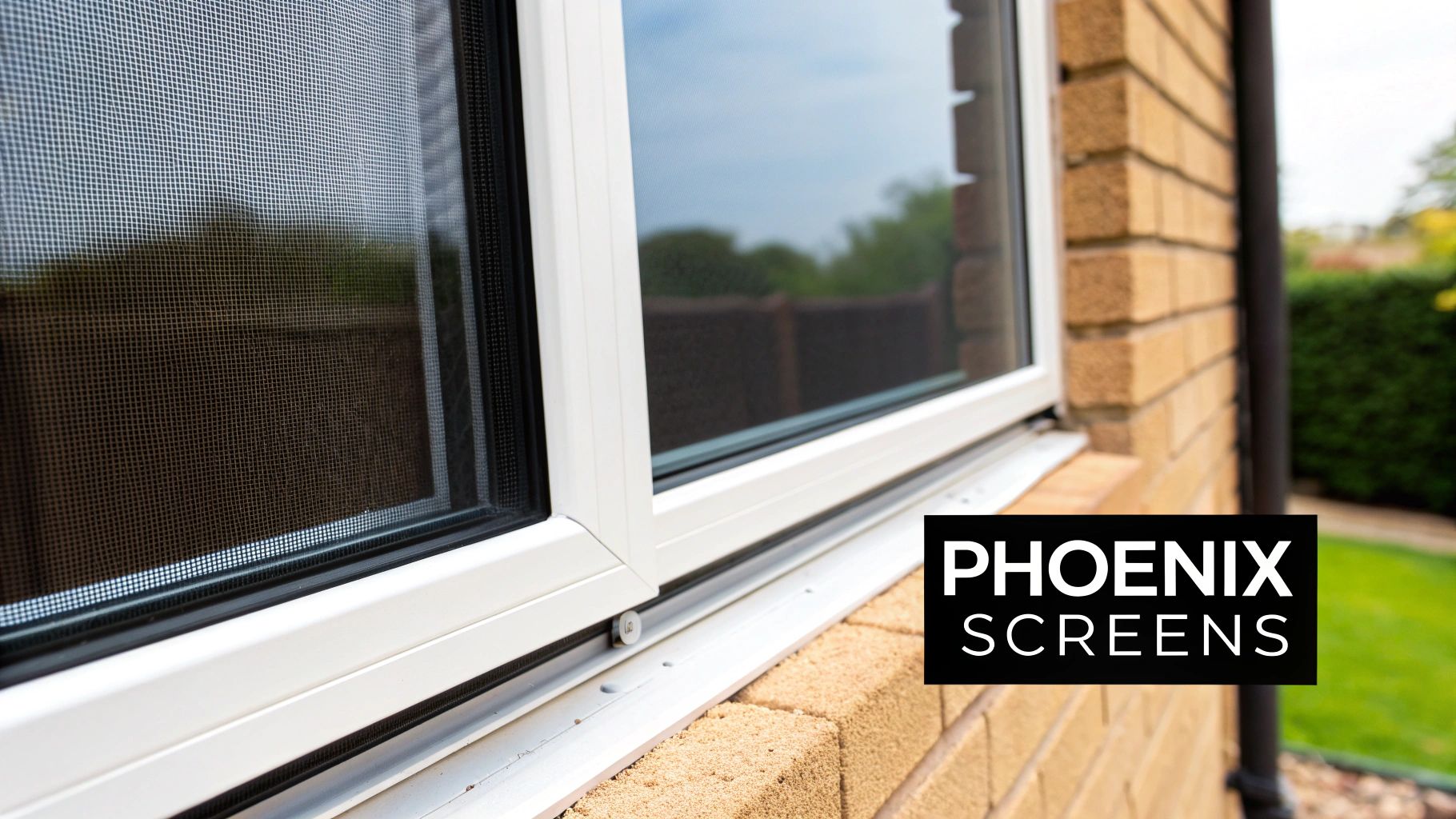
Taking care of your screens isn't just about comfort; it's a smart financial move. Homeowners everywhere are getting serious about energy efficiency. In fact, global spending on building efficiency jumped by about 14% in 2022, topping USD 250 billion as people look for smarter ways to manage their energy use.
Solar Screens vs. Bug Screens: Which One Is Right for Your Phoenix Home?
When it comes to window screens in Phoenix, you’re looking at two main players: traditional bug screens and modern solar screens. Think of it this way: a bug screen is like a basic screen door for your window. It does a great job keeping critters out while letting the breeze in. Simple and effective.
A solar screen, on the other hand, is like putting a high-quality pair of sunglasses on your house. It still keeps the bugs out, but its real job is to block the intense Arizona sun, cutting down on glare and, most importantly, heat. This decision isn't just about pests; it's about comfort and your energy bills.
The big difference is in how they're built. Solar screens are designed to block anywhere from 80% to 90% of the sun's harsh UV rays, while bug screens offer virtually no solar protection. The mesh tells the whole story: bug screens have a wider weave to maximize airflow, whereas solar screens use a much tighter, tougher weave to stand up to our relentless sun and block heat.
UV Protection, Glare, and What You See Outside
Let's get practical. A 90% UV-blocking solar screen can genuinely lower the temperature in a room by several degrees, which you can feel immediately. They also slash glare by up to 90%, so you can actually watch TV or work on your computer without squinting, even when the sun is blazing.
Bug screens, by contrast, let in maximum daylight. This keeps rooms feeling bright and airy, but it also means they get warmer, faster. And while you can see out of both, the view through a solar screen is often crisper because it cuts the haze and glare.
"Choosing the right screen is like picking the perfect pair of sunglasses for your lifestyle."
There's another benefit to solar screens that often gets overlooked: they protect everything inside your home. By blocking UV rays, they prevent your furniture, carpets, and wood floors from fading over time. Bug screens just can't do that.
If you want to dive deeper, we have a whole guide on the best solar screens for windows.
Weighing the Long-Term Savings
This is where solar screens really start to make sense for Phoenix homeowners. By blocking so much solar heat, they can cut your A/C runtime by 15-25%. That's not a small number when your air conditioner runs nonstop from May to September.
It’s a booming market for a reason. The global window film and screen industry hit USD 16.3 billion in 2024 and is projected to reach USD 17.57 billion in 2025, growing at a 7.8% clip. People are catching on to the savings.
I’ve seen it firsthand with clients. One homeowner in North Phoenix told me she saw her summer cooling costs drop by 20% the first year after we installed solar screens. When you multiply that by the 10-15 year lifespan of the screens, the initial investment more than pays for itself.
"Investing in solar screens is like putting money back into your pocket each summer."
Making the Final Decision
So, how do you choose? It really comes down to your primary goal.
- Budget vs. Benefit: Bug screens are cheaper upfront, no question. But solar screens are an investment that pays you back through lower energy bills every single month.
- Pests vs. Heat: If your only concern is keeping scorpions and flies out, a bug screen is all you need. If you're tired of battling the heat and high electricity bills, solar screens are the clear winner.
Whichever path you take, getting them installed by a professional Phoenix window screen service is key. A perfect fit ensures they look great and perform exactly as they should.
Now you can look forward to a cooler, more comfortable, and pest-free home all year long.
The Service Process: From First Call to Final Install
So, you’ve decided to get new window screens. What happens next? It’s not a complicated affair, but knowing the typical process can take the guesswork out of hiring a Phoenix pro. Think of it as a simple, four-step journey from that first phone call to enjoying your perfectly fitted new screens.
Each stage builds on the last, making sure the final result is exactly what you wanted for your home. It’s a well-oiled machine designed for a custom fit every time.
The Initial Consultation and Quote
It all starts when you first reach out, whether by phone or through an online form. This is more than just booking an appointment; it's a discovery call. You'll chat about what you need. Are you trying to beat back the brutal Arizona sun with solar screens, or just swapping out some old, torn bug screens? A good company will listen, ask the right questions, and give you a ballpark estimate based on how many windows you have and their general size.
Precision On-Site Measurement
This next part is the most important step of all: the on-site measurement. A technician comes to your home to measure every single window frame that needs a new screen. They aren't just slapping a tape measure on it, either. They're looking for the little things—like frames that have warped or settled over time—that can throw off the fit.
This is the make-or-break moment. A precise measurement is the difference between a screen that creates a perfect seal against bugs and dust and one that leaves tiny, annoying gaps along the edges. When it comes to custom screens, there’s no such thing as a “standard” window size.
Custom Screen Fabrication
With those exact measurements in hand, your screens are built from scratch. Some companies bring a mobile workshop right to your driveway and build them on-site, which is great for getting smaller jobs done quickly. Others prefer to build them in their own shop to keep a close eye on quality control, especially for bigger projects or when working with specialty materials.
The build process typically looks like this:
- Cutting the Frames: Aluminum frame stock is cut down to the exact dimensions for each window.
- Rolling the Mesh: Your chosen material—whether it's a solar or bug screen—is stretched taut into the frame and locked in with a rubber spline.
- Final Inspection: Every screen gets a final once-over to check for tightness and quality before it’s loaded up for installation day.
This photo shows a technician putting the finishing touches on an installation, a great example of the hands-on work involved.
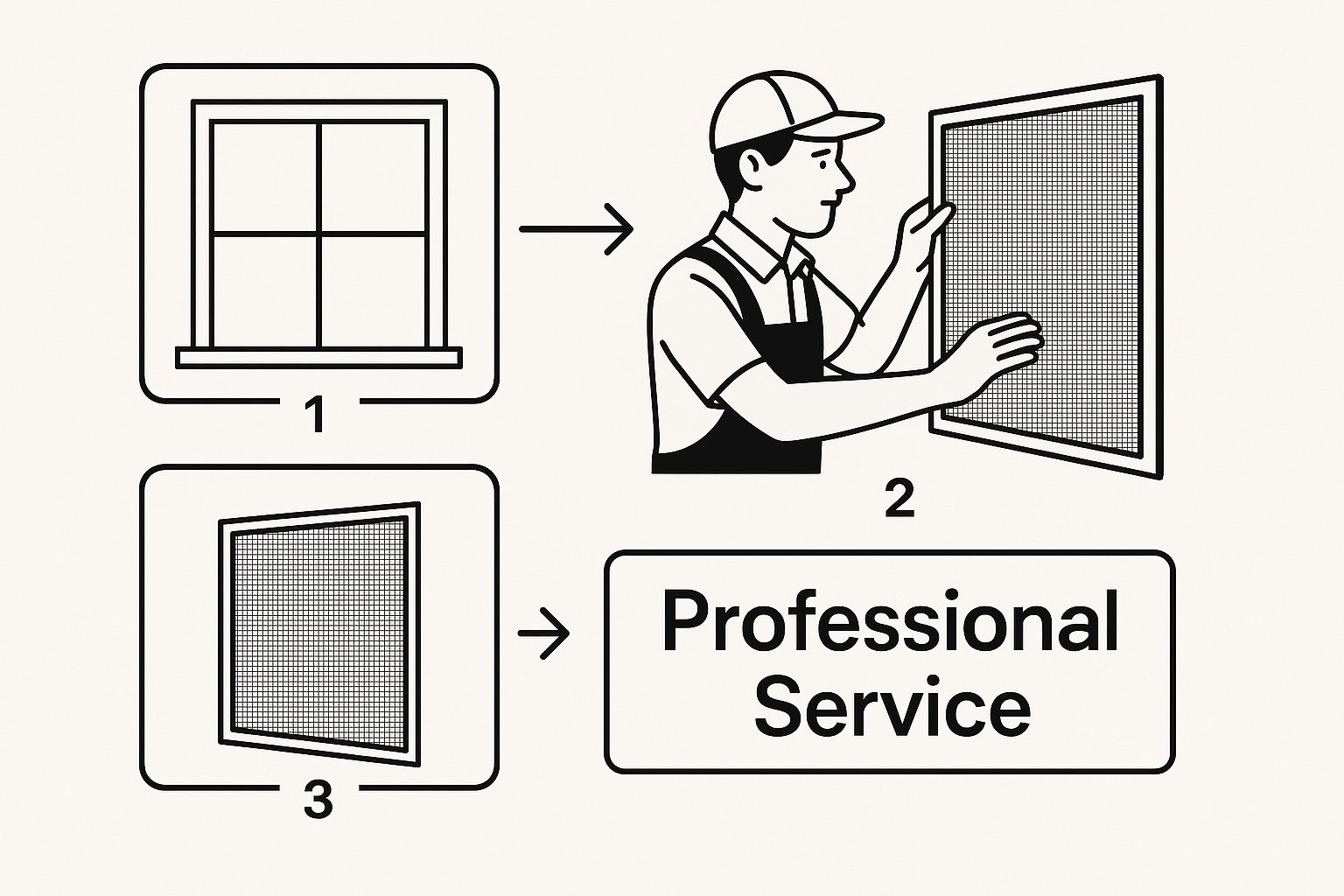
It really shows the detail and care that goes into getting the fit just right.
The Final Installation and Cleanup
When installation day arrives, the crew will show up with your brand-new, custom-made screens. They’ll pop out the old ones and fit the new ones, making sure each one is snug and secure. They'll also double-check any hardware and make adjustments as needed.
A true professional doesn't leave you with a mess. After the job is done, they clean up the work area and, most importantly, they haul away your old, unwanted screens. You're left with nothing to do but enjoy a cooler, bug-free home. This start-to-finish approach makes getting a Phoenix window screen service one of the easiest home improvement projects you can do.
Decoding The Cost Of Phoenix Window Screen Services
Numbers tell a story, but they don’t show the whole picture. When you get a quote for Phoenix window screen services, you’re really looking at several moving parts: materials, labor, project size, and sometimes even height. Understanding these elements helps you see why one estimate might differ from another.
Think of pricing like tailoring a suit. The fabric choice, the number of panels, and the craftsmanship all change the final bill. Window screens follow the same logic; they’re customized to fit your windows perfectly.
Key Factors Influencing Your Quote
Cost depends on what mesh you select:
| Mesh Type | Price Level | Benefits |
|---|---|---|
| Standard Fiberglass | Budget-Friendly | Basic pest protection |
| Pet-Resistant Mesh | Mid-Range | Stands up to claws and chewers |
| High-Performance Solar | Premium | Cuts heat, saves on cooling bills |
Beyond mesh, a few more things can shift the numbers:
- Window Size & Quantity: Bigger or more numerous windows mean more material and labor.
- Accessibility: Reaching second-story or awkwardly placed windows can require extra safety gear.
- Service Type: A simple rescreen uses your existing frames, while a full replacement creates brand-new frames and mesh.
The global window screen industry hit USD 2.40 billion in 2024 and is set to reach USD 3.99 billion by 2032. This surge mirrors homeowners’ appetite for energy-saving upgrades, as detailed in this market analysis from fortunebusinessinsights.com.
Understanding A Typical Quote
A clear, itemized estimate breaks down:
- Cost per screen
- Mesh and frame materials
- Separate charges for labor, height access, and disposal
Detailed quotes are a hallmark of professionalism. They show you exactly what you’re paying for and why.
For real-world pricing examples and budgeting advice, explore our guide on window screen installation costs. Armed with this insight, you’ll find a service that balances price and quality for your Phoenix home.
How to Choose the Right Window Screen Company
Picking the right Phoenix window screen service is every bit as important as choosing the right screen material. The best solar mesh in the world won't do you much good if the installation is sloppy. A top-notch company guarantees a perfect, custom fit, uses materials built to last, and backs up their work, which means no headaches for you down the road.
Making a smart decision just takes a little bit of legwork. Think of it as finding a long-term partner for your home, not just a one-time contractor. You need someone who truly gets the demands of the Arizona sun and can point you to the best solution for your home and your budget.
Start With the Basics: Licensing and Insurance
Before you even glance at a single review, your first move should be to confirm that any company you're considering is properly licensed and insured. Seriously, this is non-negotiable. A license shows they've met the state's requirements to do business, and insurance protects you from any liability if an accident happens on your property.
Any respectable company will gladly provide their license number and a certificate of insurance. If a contractor gets cagey or hesitant when you ask for this, consider it a giant red flag. This simple check is your first and most important defense against unqualified or shady operators.
Dig Into Online Reviews and Reputation
Next up, it’s time to see what past customers have to say. Head over to sites like Google, Yelp, and Angi to read their reviews. But don't just fixate on the star rating—the real gold is in the comments. Pay close attention to what people mention about:
- Punctuality and Professionalism: Were they on time? Did they treat the customer's home with respect?
- Quality of Workmanship: Are people raving about their new screens, or complaining about gaps and loose corners?
- Communication: Was the company easy to reach? Did they explain the process clearly and keep the customer in the loop?
- Problem Resolution: When something didn't go as planned, how did the company step up to fix it?
A couple of bad reviews aren’t always a deal-breaker—nobody’s perfect. What you’re looking for are patterns. If you see consistent complaints about missed appointments, poor communication, or shoddy work, that’s your cue to move on.
Always Get Multiple Detailed Quotes
Never, ever go with the first quote you get. Make it a rule to get at least three detailed, written estimates from different companies. This lets you compare apples to apples, not just the final number at the bottom of the page. A professional quote will be itemized, breaking down the costs for materials, labor, and any other fees.
As you look over the estimates, ask a few key questions:
- Are the materials spelled out? One quote might seem cheaper, but it could be because they’re using a lower-grade fiberglass mesh instead of durable solar screen fabric.
- Is a warranty included? A solid warranty covering both the materials and the installation shows that the company has confidence in their product and their work.
- What’s the timeline? Get a clear idea of when they can schedule the job and how long it should take from start to finish.
This process is about more than just finding the lowest price; it's about finding the best value. To help you stay organized and compare companies effectively, use this checklist.
Contractor Vetting Checklist
Use this table to ask the right questions and keep track of your notes as you speak with different Phoenix-area window screen companies. It’s a simple way to ensure you cover all the important bases before making a final decision.
| Evaluation Criterion | What to Ask or Look For | Why It Matters |
|---|---|---|
| Licensing & Insurance | "Can you provide your ROC license number and a certificate of insurance?" | Protects you from liability and ensures they are legally qualified to work in Arizona. |
| Experience & Specialization | "How long have you been installing window screens in the Phoenix area?" "Do you specialize in solar screens?" | Local experience means they understand the climate's unique challenges. Specialization often leads to higher-quality work. |
| Online Reputation | Check reviews on Google, Yelp, and Angi. Look for patterns in feedback. | Past customer experiences are the best predictor of your future experience. Look for comments on quality, communication, and professionalism. |
| Materials & Products | "What brand of screen material do you use?" "What are my options for frame colors and mesh types?" | Ensures you're getting high-quality, durable materials from reputable manufacturers like Phifer or Twitchell. |
| Detailed Written Quote | Request an itemized estimate that breaks down material costs, labor, and any extra fees. | A transparent, detailed quote prevents surprise charges and helps you compare offers accurately. |
| Warranty Information | "What kind of warranty do you offer on your materials and your installation labor?" | A strong warranty shows the company stands behind its work and protects your investment. |
| Project Timeline | "What is your current lead time?" "How long will the installation take once you start?" | Sets clear expectations for when the work will be completed and helps you plan accordingly. |
| Professionalism | How did they communicate during the initial call and estimate? Were they on time and respectful? | Their initial behavior is often a good indicator of the level of service you can expect throughout the project. |
Choosing the right Phoenix window screen service is a real investment in your home's comfort, energy efficiency, and protection. Taking the time to follow these steps will help you find a trustworthy pro who will get the job done right the first time.
Got Questions About Window Screens? We've Got Answers.
It’s completely normal to have a few lingering questions before you pull the trigger on a Phoenix window screen service. After all, you want to make sure you're making a smart investment for your home, especially with our intense desert climate. Getting straight answers helps you feel confident you're choosing the right product and service.
Let's dive into some of the most common questions we hear from homeowners across the Valley. Think of this as clearing up the last few details so you can make the best call for your home.
How Often Should I Replace My Screens in Phoenix?
Here in the desert, the sun is the number one enemy of window screens. That constant, beating UV radiation relentlessly breaks down the screen material, eventually making it brittle and weak.
A standard fiberglass bug screen usually gives you a solid 5 to 8 years before it starts looking tired. You'll know it's time when the mesh feels stiff to the touch, looks faded, or tears at the slightest provocation. On the other hand, high-quality solar screens are built tougher and can easily last 10 to 15 years, sometimes even longer if you take care of them.
It's time for a replacement when you spot these tell-tale signs:
- Obvious rips and holes that are too big for a simple patch.
- The screen is pulling away from the frame, leaving gaps for bugs to sneak in.
- The mesh feels chalky and brittle when you run a finger across it.
- It's so faded and discolored that it's hurting your home's curb appeal.
Do Solar Screens Really Lower My Cooling Bills?
Yes, absolutely. This isn't just a sales pitch; it's one of the biggest practical benefits for anyone living in Phoenix. Think of solar screens as creating a shade barrier for your windows, stopping the sun's heat before it ever hits the glass.
By blocking anywhere from 80% to 95% of the sun's heat, these screens give your air conditioner a much-needed break. It doesn't have to work nearly as hard to keep your home cool, and that translates directly to savings on your electricity bill, especially during those brutal summer months.
It's not uncommon for homeowners to see their cooling costs drop by as much as 20% to 25% during peak season after installing solar screens, particularly on the sun-baked west and south-facing windows.
Should I Just Patch a Small Hole or Replace the Whole Screen?
This really comes down to two things: the size of the damage and the age of the screen itself.
If you have a tiny puncture in a screen that's only a year or two old, a simple patch kit can be a decent, quick fix. But if that screen is older, brittle, and starting to fade? A patch will likely look awkward and won't hold up for long. In that situation, rescreening—where we put brand-new mesh into your existing frame—is a much better long-term solution. It gives you a brand-new-looking screen for much less than the cost of replacing the entire unit, frame and all.
Will Dark Solar Screens Ruin My View?
This is probably the most common worry we hear, and the answer almost always surprises people. Dark-colored screens—especially black or charcoal—actually give you the sharpest, most glare-free view outside.
It sounds counterintuitive, but here's how it works:
- They Absorb Light: Dark colors soak up sunlight instead of reflecting it, which immediately cuts down on that blinding glare.
- Your Eyes See Past Them: Your eyes are naturally drawn to the brighter world outside, so they automatically focus past the dark mesh. From inside, the screen practically disappears.
Lighter colors like grey or beige tend to reflect light back at you, which can make the view look a bit hazy or washed out. If maintaining a crisp, clear view is a top priority, a dark solar screen is definitely the way to go.
Ready to make your home more comfortable and efficient? The crew at Sparkle Tech Screen Service handles expert installations, repairs, and replacements all over the Phoenix area. You can get a fast, no-hassle quote by checking us out at https://sparkletechscreenservice.com or just giving us a call at 623-233-0404.


