


The best sun shades for patio aren't just about escaping the heat—they’re about creating a space you truly love to live in. From breezy shade sails and push-button retractable awnings to the classic market umbrella, the right choice will block harsh UV rays, cool things down, and blend beautifully with your home's aesthetic.
Creating Your Perfect Outdoor Oasis
Picture this: on a scorching summer afternoon, you step out onto your patio. Instead of a sun-baked, unusable slab of concrete, you find a cool, comfortable retreat. That's what the right sun shade can do. It transforms that patch of your yard into the go-to spot for morning coffee, family dinners, or just relaxing with a good book.
Think of it as more than just a purchase; it's an investment in your home and your lifestyle. It protects your family's health, preserves your outdoor furniture, and can even boost your home's curb appeal.
Before we get into the nitty-gritty of fabrics and installation, let's take a quick look at the main players. Understanding the basic options, from the architectural flair of a shade sail to the simple charm of an umbrella, will give you a solid foundation for making the best choice.
Key Benefits at a Glance
So, what do you really get when you install a quality sun shade? The benefits go far beyond just a bit of relief from the sun.
- Serious UV Protection: A good shade fabric is like sunscreen for your patio, blocking 80-95% of harmful UV rays. This protects your family’s skin and stops your beautiful patio furniture from fading and cracking.
- A Noticeable Temperature Drop: By intercepting direct sunlight, a shade can lower the temperature underneath by a refreshing 5 to 15 degrees Fahrenheit. You can feel the difference instantly.
- More Livable Space: Suddenly, your patio is a true extension of your home—a comfortable, functional area ready for anything you can dream up.
The image below gives you a great visual on how these benefits stack up.
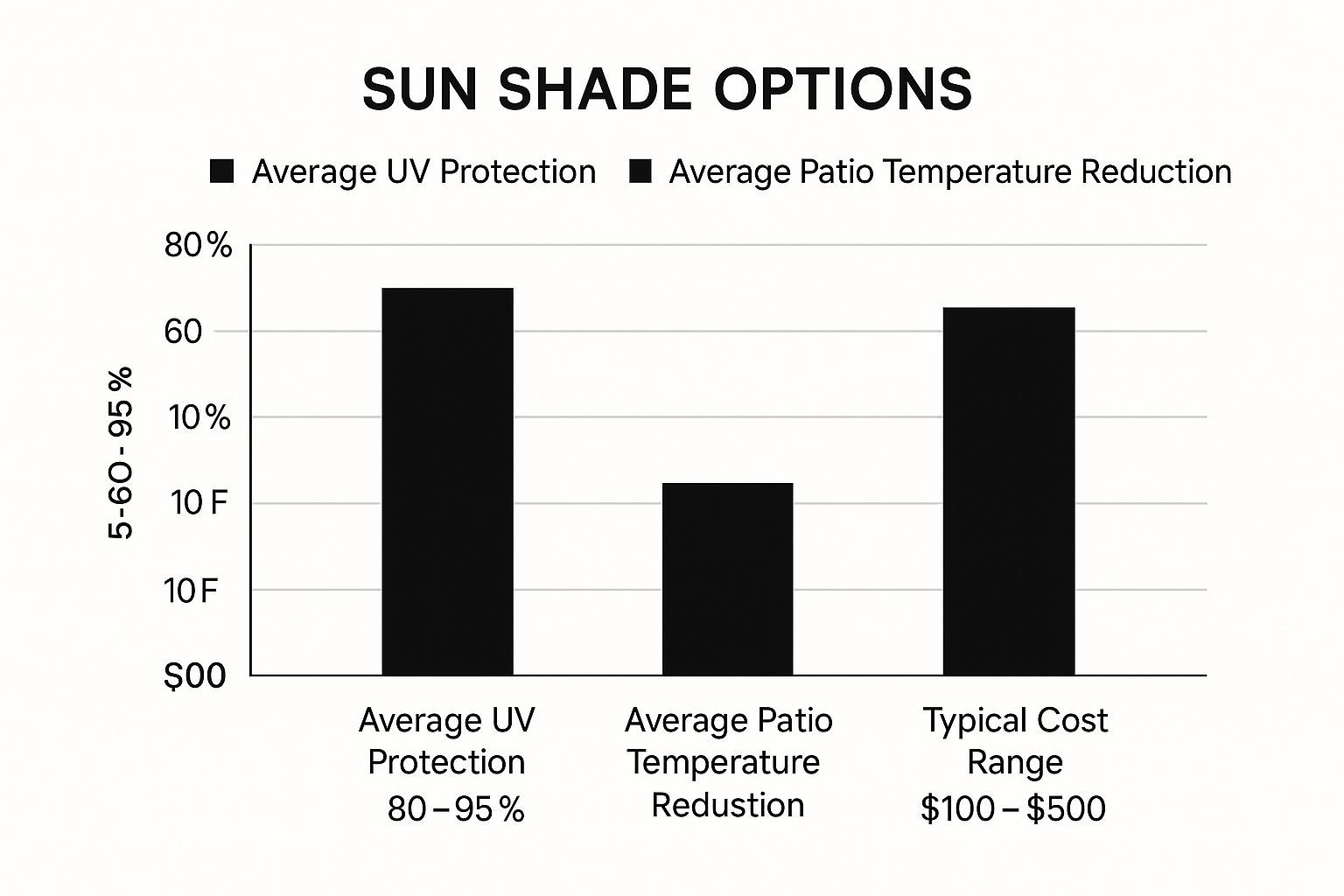
As you can see, patio shades pack a serious punch, offering high UV protection and a significant temperature drop for a relatively small investment. It's no wonder they're becoming more popular every year. The global market for sun shade sails was valued at $2.1 billion in 2023 and is expected to nearly double in the coming years. You can read the full research on the growing popularity of sun shades to see just how quickly people are catching on.
Finding the Right Style of Patio Shade
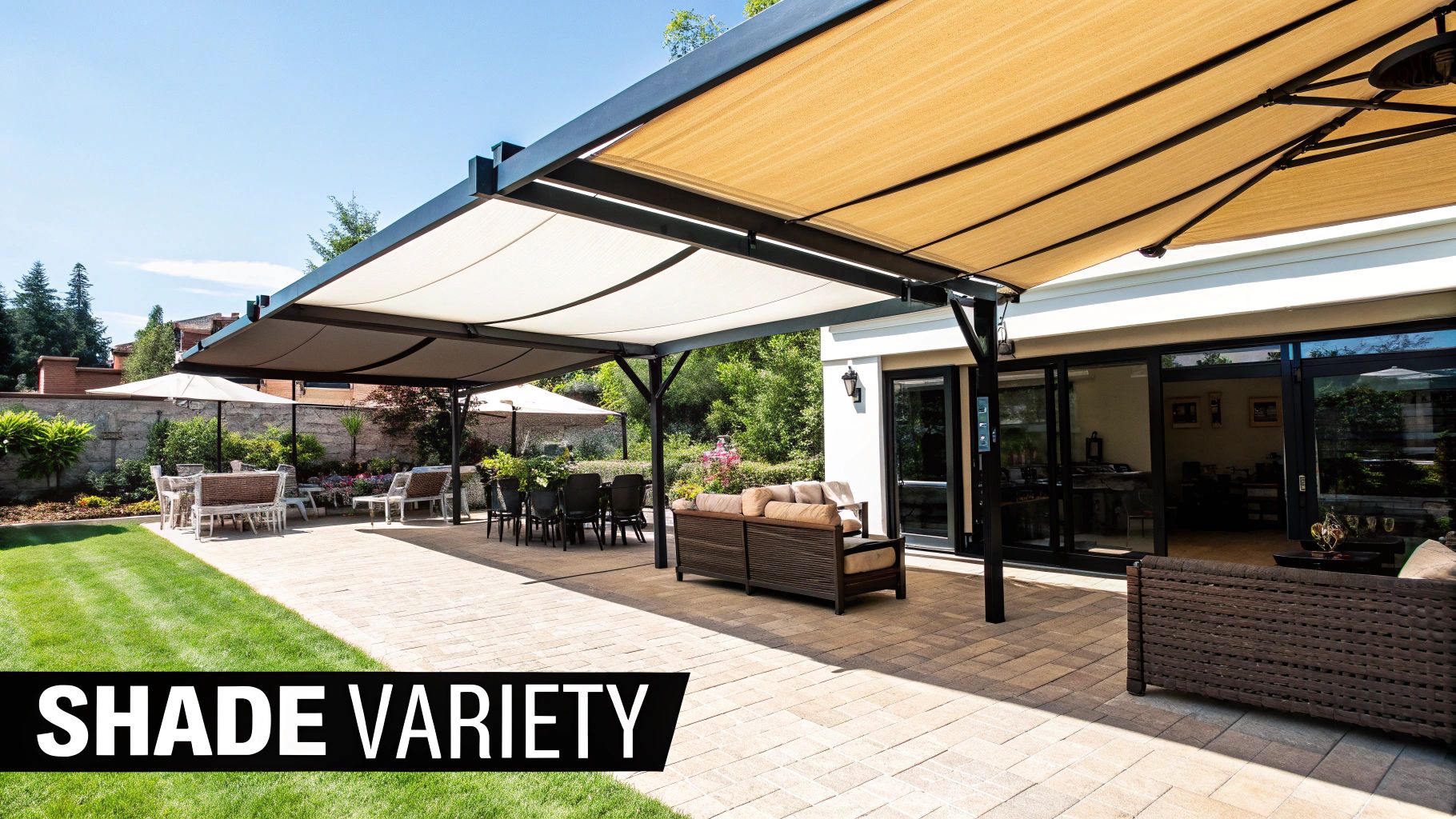
When it comes to choosing the right sun shades for your patio, there really isn't a single "best" option. It’s all about finding what fits your space, your lifestyle, and your home's look. Think of it like buying a coat: a light windbreaker serves a very different purpose than a heavy winter parka. Both are great, but you need the right one for the job.
Let's walk through the most popular styles so you can figure out which one is the perfect match for your backyard.
Shade Sails: The Architectural Choice
For a truly modern and sculptural look, shade sails are hard to beat. These are large swaths of durable fabric, usually in a triangle or rectangle shape, stretched taut between several anchor points. The result is a floating, kite-like canopy that adds a dash of architectural flair to any outdoor space.
- Best For: Open patios, pool decks, and any area where you want a contemporary, airy vibe without feeling closed in.
- Keep in Mind: A successful installation hinges on having solid anchor points. This could mean attaching them to your house eaves, sturdy trees, or dedicated posts set in concrete. You can even layer multiple sails for a really dynamic and custom-designed look.
Retractable Awnings: The On-Demand Solution
Picture having a roof for your patio that appears only when you need it. That’s the magic of a retractable awning. These systems are mounted right onto the side of your house and extend or retract with a simple crank or the push of a button. You get total control over sun and shade, instantly.
These systems are the ultimate in convenience, offering immediate shade without any permanent structure taking up space. It's the perfect blend of function and flexibility, making them a popular choice for homeowners who want a seamless transition between indoors and out.
Because they attach to your house, they’re perfect for covering a dining set or lounge area that's located just outside your back door, creating a true outdoor room.
Pergola Covers and Outdoor Curtains
If you already have a pergola or gazebo, you’ve got the perfect framework for creating shade. Pergola covers are designed to fit right into your existing structure, whether as fixed fabric panels or as retractable canopies that essentially form a soft, beautiful ceiling.
And don't forget outdoor curtains. They do more than just add a touch of style; they're fantastic for blocking that low-angle sun you get in the early morning or late afternoon. Curtains also give you a major privacy boost, turning your open patio into a much more secluded retreat. While these solutions are great for the patio itself, consider how the sun hits your windows, too. You can complement your setup by exploring options for exterior window sun screens to protect your home's interior.
Market Umbrellas: The Classic and Portable Pick
The market umbrella is the timeless, go-to choice for targeted shade. It's easily the most portable and often the most affordable option out there, making it ideal for shading a small bistro table or a couple of lounge chairs.
Many modern umbrellas come packed with handy features like tilting heads and 360-degree rotation, so you can easily adjust them to block the sun as it moves across the sky. While they don't cover a huge area, their biggest advantage is their mobility—you can move one from the dining area to the poolside in seconds.
Picking the Right Fabric for Your Local Climate
When you're choosing a sun shade for your patio, the single most important decision you'll make is the fabric. It’s a lot like picking out a coat—you wouldn't grab a thin windbreaker for a blizzard. In the same way, the best fabric for a hot, dry climate like Arizona is worlds away from what you’d need in a rainy area like the Pacific Northwest.
Let's walk through the top contenders so you can find the perfect match for your backyard.
HDPE: The Breathable Workhorse
There’s a good reason High-Density Polyethylene (HDPE) is such a popular choice. It's a special kind of plastic fabric that's tightly knitted, which allows it to block a huge percentage of UV rays while still being breathable.
That woven design is its secret weapon. It lets hot air rise and escape right through the fabric, so you don't get that stuffy, trapped-heat feeling. This makes HDPE the hands-down winner for places where your main goal is simply cooling things down. You get fantastic shade without creating a sweltering pocket of still air.
PVC-Coated Polyester: The Weatherproof Shield
If you need your patio shade to pull double duty as rain protection, then PVC-coated polyester is what you're looking for. This material is genuinely waterproof, not just water-resistant, making it a lifesaver in climates with those classic summer downpours.
The big trade-off here is breathability. Since it's a solid, non-porous surface, it's going to trap more heat underneath than HDPE will. It’s an excellent choice for all-weather protection, but it’s less focused on pure cooling power.
This fabric’s toughness also makes it a go-to for many robust shade systems. The market for sun shade curtain systems, which often rely on durable materials like this, is expected to jump from $2.837 billion in 2025 to $4.625 billion by 2033. This trend shows just how much people value long-lasting outdoor solutions. You can discover more about this market growth on cognitivemarketresearch.com.
Acrylic Fabrics: The Vibrant and Stylish Option
Think of acrylic fabrics as the style gurus of the sun shade world. They are solution-dyed, which is a fancy way of saying the color is locked deep inside the fibers, not just painted on the surface. This process gives them incredible resistance to fading, so they’ll keep their beautiful, vibrant color for years, even under intense sun.
While they provide solid UV protection and water resistance, their real claim to fame is that they look great for a long, long time. They blend eye-catching aesthetics with reliable performance, making them a premium choice for anyone who wants their patio to look sharp season after season.
Of course, shading your patio is just one part of the equation. Protecting the inside of your home from the sun is just as important. For a complete solution, it’s worth learning about the benefits of sun-blocking window screens, which stop heat and glare before they can even get through your glass.
Key Factors for Your Purchase Decision
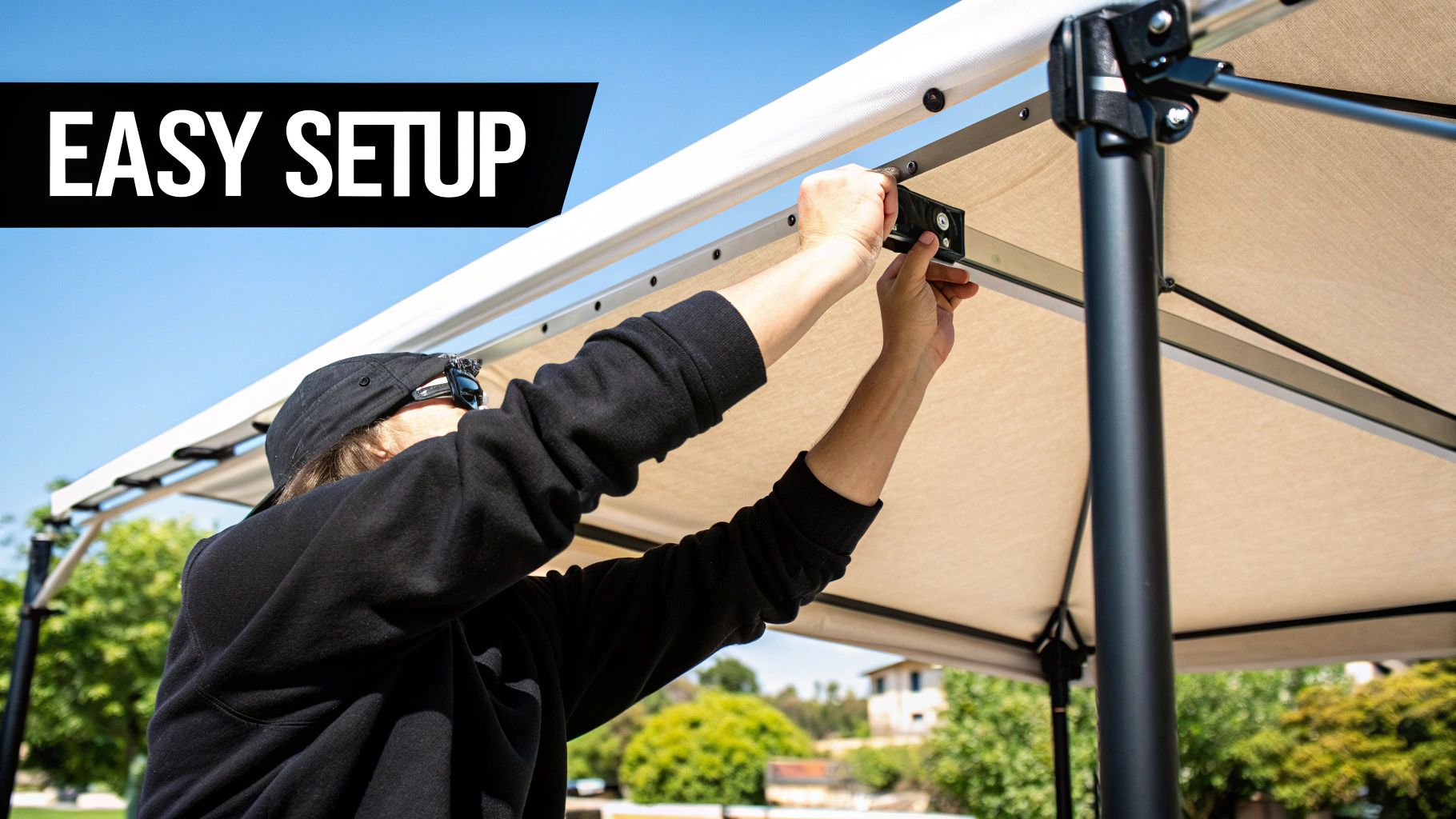
Alright, you've got a style and fabric in mind. Now it's time to get into the details that separate a decent patio shade from a great one. Think of this as the final checklist before making your choice. Getting these last few things right is what guarantees your investment will not only look fantastic but also perform perfectly for years to come.
First up, and arguably the most important factor, is its protective power.
Understanding UV Protection and UPF Ratings
Believe it or not, not all shade offers the same level of safety. The true measure of how well a fabric shields you from the sun is its Ultraviolet Protection Factor, or UPF rating. This number tells you precisely how much of the sun's nasty UV radiation is being blocked.
It’s a lot like the SPF rating you see on sunscreen, but it’s designed for textiles. Simply put, a higher UPF number means more robust protection for your skin and your outdoor furniture.
A fabric with a UPF 50 rating blocks over 98% of UV rays, allowing only 1/50th of the radiation to penetrate. This is what we consider the gold standard in the industry, creating a genuinely safe retreat from the sun's most damaging effects.
When you're shopping, keep an eye out for that UPF rating. It’s one of the easiest ways to ensure you’re creating a healthier outdoor space.
To make sense of the different ratings you'll encounter, here's a quick guide to what the numbers really mean for your health and safety.
Understanding UV Protection Factor (UPF)
| UPF Rating | UV Blockage % | Protection Level |
|---|---|---|
| 15-24 | 93.3% – 95.9% | Good |
| 25-39 | 96.0% – 97.4% | Very Good |
| 40-50+ | 97.5% – 98%+ | Excellent |
As you can see, aiming for a rating in the "Excellent" category provides the most comprehensive defense against sun exposure.
Getting the Size and Coverage Just Right
This one is critical. Measuring your space correctly is the key to a good fit. A shade that’s too small will have you playing musical chairs with the sun all day. On the other hand, one that’s too big can look clumsy or be a real pain to install securely.
Start by figuring out the exact area you want to shade. Is it your dining set? A couple of lounge chairs by the pool? Once you know your target, grab a tape measure and get the length and width.
Here's a little pro-tip I always share with clients:
- Mark Your Corners: Use whatever you have on hand—stakes, a bit of chalk, or even your garden shoes—to mark the corners of where you want the shade to be.
- Measure Between Points: Now, measure the distance between those markers. This gives you the real-world dimensions you're working with, not just a guess.
- Leave a Buffer: For shade sails, you'll want to buy a size that's about 10-12 inches smaller than your measurements. This little bit of wiggle room is essential for the tensioning hardware and helps you get that taut, professional-looking finish.
Climate, Wind, and Aesthetic Harmony
Your local weather has a huge say in this decision. If high winds are common where you live, the quality of the hardware—the turnbuckles, D-rings, and mounting points—is just as vital as the fabric itself. I always recommend looking for shades with marine-grade stainless steel hardware. It offers superior strength and won't rust on you.
Lastly, think about the overall look. Your sun shades for patio should feel like a natural extension of your home's style. A sleek, solid grey sail might be perfect for a modern home, while a classic striped retractable awning could beautifully complement a more traditional house. Don't forget, this is a major visual element.
For a complete approach to home comfort, remember that the sun's rays don't stop at the patio. It’s also wise to check out the best solar screens for windows to keep your home's interior cool and protect your furniture from fading.
Getting Your Shade Set Up Right: Installation and Long-Term Care
https://www.youtube.com/embed/uG7bI3tQk_0
Even the highest-quality sun shade for your patio will fall short if it’s not installed properly. Getting the installation right isn’t just about making it look good; it's a matter of safety, performance, and making sure your investment can actually stand up to Mother Nature. Whether you're a seasoned DIYer or calling in a pro, a solid setup is everything.
Think of it like the foundation of a house. Without a sturdy base, the whole structure is compromised. For a shade sail, this translates to rock-solid anchor points. These are the critical spots that will take all the tension and wind load. You'll want to use a structurally sound part of your house (like the eaves), a big, healthy tree, or—the gold standard—dedicated steel or wood posts sunk deep into concrete footings.
Retractable awnings are a different beast. Here, the game is all about securely mounting the main unit to your wall. It has to be perfectly level and bolted directly into the house's framing studs, not just the flimsy siding. A poorly mounted awning is a serious safety risk that can tear away from the wall under its own weight or during a gust of wind.
A Simple Plan for Keeping Your Shade Looking Great
Once your shade is beautifully installed, a little bit of seasonal care will go a long way in extending its life. Think of it as a quick annual check-up that protects your investment and prevents small, fixable issues from turning into major headaches.
A well-maintained sun shade isn't just about appearances; it's about preserving its protective qualities. Regular cleaning stops mold and mildew from breaking down the fabric, while hardware checks ensure it stays securely fastened and safe for everyone underneath.
Follow this simple checklist, and your patio shade will stay in top-notch condition for years to come.
Your Seasonal Maintenance Checklist
Keeping your shade in prime condition is surprisingly easy. Just a few simple steps each season will ensure it performs its best and continues to look fantastic.
-
Clean the Fabric Gently: Start by rinsing off loose dirt and pollen with a garden hose. For more stubborn spots, use a soft-bristled brush and a mild soap and water solution (dish soap works great). Steer clear of harsh chemicals or pressure washers, as they can damage the fabric and strip away its UV-protective coating.
-
Inspect All the Hardware: At the beginning and end of the sunny season, give all the connection points a once-over. For shade sails, this means checking the D-rings and turnbuckles for rust or wear. For awnings, make sure the mounting bolts and brackets are still tight and secure against the wall.
-
Store It Smartly: If you get heavy snow or live in a high-wind area, taking your shade down for the winter is your best bet. Give it a good cleaning, let it dry completely to prevent mildew, and then roll it up and store it in a dry spot like a garage or shed.
Answering Your Top Patio Shade Questions
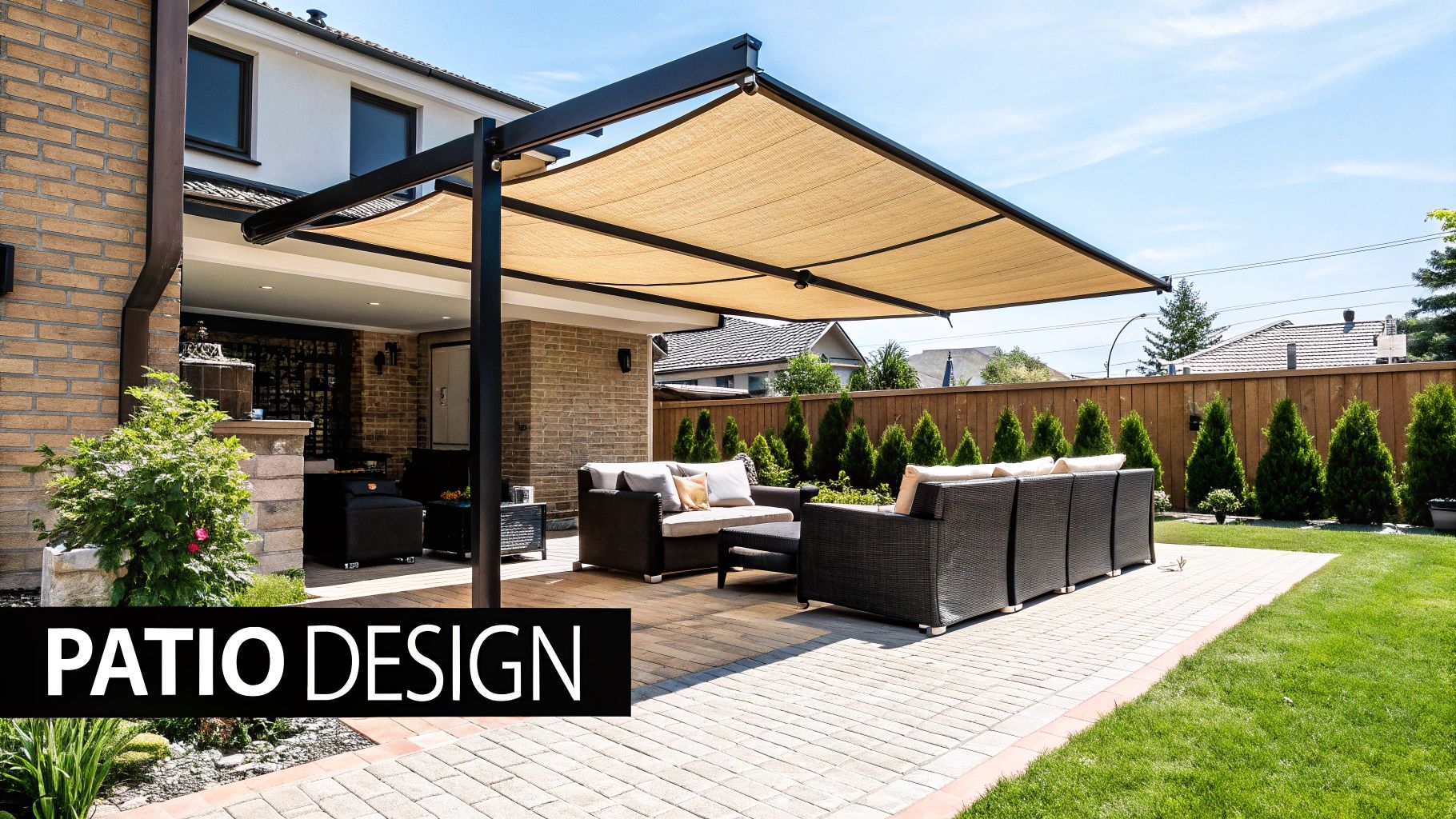
Alright, we’ve covered a lot of ground. But even after exploring all the different styles and materials, a few key questions always pop up. Let's get those answered so you can feel 100% confident in your choice.
One of the biggest concerns I hear is about weather—specifically, wind. How much can these things really handle? Well, it depends entirely on the type of shade you choose.
A good-quality market umbrella is generally rated for winds around 20-25 mph. Go much beyond that, and you're risking a Mary Poppins situation. On the other hand, a sturdier, professionally installed retractable awning or a properly tensioned shade sail can often withstand winds up to 40-50 mph. Always check the manufacturer's specs and, when in doubt, retract it or take it down.
Common Installation and Performance Questions
Another question that comes up all the time is about installation. Is this something you can tackle yourself? For simpler shades, like umbrellas and smaller sail kits, absolutely. Many are designed for a straightforward DIY setup.
However, when you get into large retractable awnings or intricate, multi-point sail installations, I always recommend calling in a pro. It’s not just about convenience; it’s about making sure everything is anchored securely and safely for the long haul.
Do darker shades actually make it hotter underneath?
It’s a great question, but the answer is usually no. While it's true that dark colors absorb more solar energy, the fabric's breathability is what really matters. A dark, high-quality HDPE fabric blocks more harsh UV rays while still allowing hot air to rise and escape. This can actually feel cooler than being under a lighter, non-breathable vinyl shade that traps heat like a greenhouse. Airflow is king.
And what about waterproof shades? They seem like a great two-for-one deal, blocking both sun and rain. They can be, but there's a trade-off. A fully waterproof material won't be breathable, which means it can trap a pocket of hot, stagnant air underneath.
For pure cooling comfort, especially in a dry, hot climate like ours, a water-resistant yet breathable fabric is almost always the better choice. It keeps you cool and will still shed a light drizzle.
Ready to create that perfect shady retreat for your home? The team at Sparkle Tech Screen Service lives and breathes custom sun screen solutions, from patios to windows. Get a quick quote and enjoy same-week service.
Call or text us at 623-233-0404 or learn more about our services.


