


Ever feel like your house is cooking in the summer sun, even with the AC cranked up? You might be missing a key piece of the puzzle: solar screen windows.
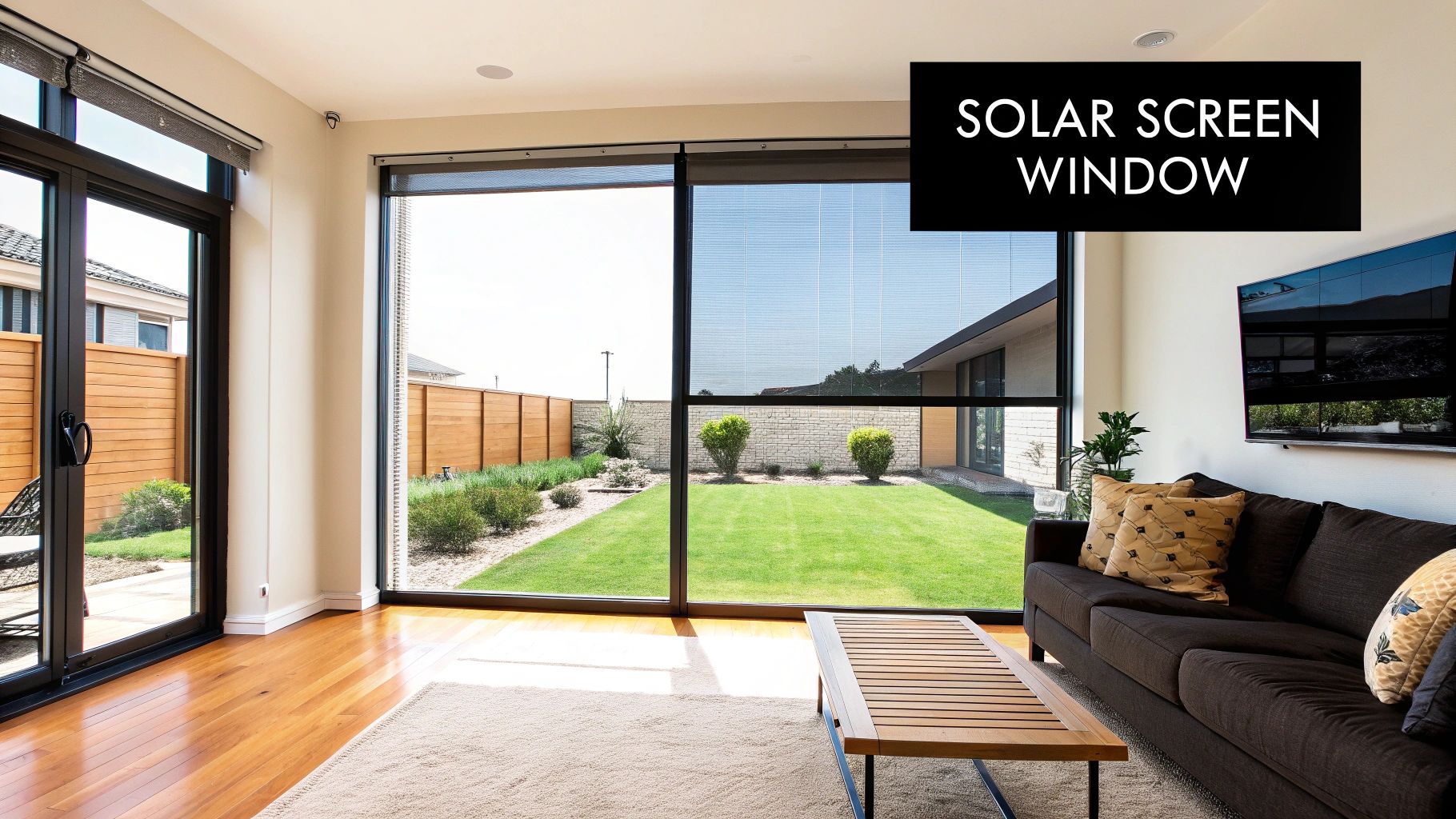
Think of them as a heavy-duty, high-tech version of your standard window screen. Instead of just keeping bugs out, they're specifically designed to block a huge chunk of the sun's heat and harmful UV rays before they even hit your window glass. It's like putting a pair of premium sunglasses on your home.
How Do Solar Screens Actually Work?
If a regular window is an open door for solar heat, a solar screen window is the bouncer standing guard. It intercepts the most intense rays right at the source, stopping them from baking your glass and turning your living room into a sauna.
This is where they really outshine interior solutions like window tint. Tint is applied directly to the glass, which means the glass itself still heats up and radiates that heat inside. Solar screens, on the other hand, are installed on the exterior of the window. This creates a small air gap between the screen and the glass, allowing heat to dissipate away from your home instead of transferring through the window. It's a simple, brilliant concept that makes a world of difference.
What Are the Real-World Benefits?
Adding solar screens is one of those home improvements that pays you back in multiple ways, from comfort to cost savings. You’ll feel the difference almost immediately.
Below is a quick overview of the main advantages you can expect.
Key Benefits of Solar Screen Windows at a Glance
| Benefit | Description | Impact |
|---|---|---|
| Energy Savings | Blocks up to 90% of solar heat from entering your home. | Your AC doesn't have to work nearly as hard, leading to noticeably lower electricity bills. |
| UV Protection | Acts as a powerful barrier against damaging ultraviolet rays. | Prevents fading on furniture, flooring, curtains, and artwork, preserving your investments. |
| Daytime Privacy | The dark mesh makes it difficult to see inside from the outdoors. | Enjoy natural light without feeling like you're in a fishbowl, while still seeing out clearly. |
| Glare Reduction | Softens and diffuses harsh, direct sunlight. | Makes it much more comfortable to watch TV, work on a computer, or just relax without squinting. |
These benefits combine to create a more pleasant and economical living space, which is why solar screens are becoming such a popular choice for homeowners.
A Smart Choice for Modern Homes
People are catching on to just how effective this technology is. The global market for solar control solutions, including solar screens, was recently valued at around USD 0.98 billion and is steadily climbing. It's especially telling that new construction projects accounted for 85% of installations, which shows that modern builders see them as essential for creating energy-efficient homes from the ground up. You can dig into the research behind the expanding solar control film market to see the trends for yourself.
A solar screen is more than a window covering—it's an energy management tool. By stopping solar heat at the source, it keeps your home cooler, protects your interiors, and puts money back in your pocket through energy savings.
The Real-World Benefits of Solar Screens
So, what’s the big deal with solar screens? It’s one thing to understand what they are, but the real magic happens when you see what they can do for your home day in and day out. This isn't just about adding something new to your windows; it's an investment that pays you back in three huge ways: serious energy savings, powerful UV protection for your stuff, and a big upgrade in comfort and privacy.
Slash Your Energy Bills
Think of your windows, especially the ones that get blasted by the afternoon sun, as heat magnets. That solar heat gain is the main reason your air conditioner is constantly fighting a battle it can't win. Solar screens are your first line of defense, stopping a huge chunk of that heat before it ever even hits the glass.
By absorbing and reflecting the sun’s intense energy, these screens drastically cut down on how much heat gets inside. This means your HVAC system can finally catch a break. Instead of running nonstop, it cycles less often, which leads to a noticeable drop in your monthly energy bill.
The impact can be pretty staggering. For anyone living in a sunny climate, putting up solar screens is one of the smartest moves you can make to lower your cooling costs all summer long.
By blocking the sun's intense energy, a solar screen window essentially gives your air conditioner a much-needed break. This efficiency gain isn't just about comfort—it's about putting real money back into your pocket every single month.
Protect Your Valuables from Sun Damage
That beautiful sunlight streaming into your rooms has a dark side: destructive ultraviolet (UV) rays. Over time, that constant UV exposure acts like a slow-bleaching process, causing permanent fading and damage to everything you own. Hardwood floors get discolored, vibrant rugs turn dull, and the fabric on your favorite couch loses its pop.
It helps to think of a solar screen as a powerful sunscreen for your home's interior. It filters out the vast majority of those harmful UV rays, creating a protective shield for everything inside.
This protection covers more than you’d think:
- Furniture: Keeps the color and integrity of wood and fabric looking new.
- Flooring: Prevents ugly fading and sun spots on hardwood, laminate, and carpets.
- Artwork & Photos: Protects your paintings, prints, and family photos from losing their vibrancy.
- Curtains & Drapes: Helps your window treatments last longer by keeping them from getting brittle and faded.
Installing a solar screen window isn't just about improving your home; it’s about actively preserving the things you've already invested in.
Enhance Comfort and Daytime Privacy
Beyond the savings and protection, solar screens just make being at home better. They solve two of the most common frustrations: glare and lack of privacy. The specially designed mesh cuts down on that harsh, direct sunlight, dramatically reducing the blinding glare on your TV and computer screens.
Suddenly, your living room is perfect for a movie, and your home office is a much more comfortable and productive space. You can finally enjoy all that natural light without the squinting and eye strain.
At the same time, these screens provide incredible daytime privacy. From the outside, the dark, dense mesh makes it incredibly difficult for prying eyes to see in. From the inside, though, your view of the world remains surprisingly clear. This one-way effect means you can leave your blinds open and enjoy the scenery without feeling like you're on display.
For a deeper dive, check out our guide on solar window screens. This combo of less glare and more privacy creates a calm, comfortable vibe throughout your home. In fact, studies show that solar screens can block up to 70-80% of solar heat, and the payback period is often less than three years. You can learn more about the growing market and economic benefits of solar control films to see just how effective they are.
Choosing the Right Solar Screen Material
When you're ready to add solar screen windows to your home, the material you choose is what does all the heavy lifting. It can feel a bit technical at first, but it really just comes down to a few key decisions that impact how well your new screens will perform. Getting these right means you'll nail that perfect balance of sun protection, clear views, and long-lasting durability.
The first thing to wrap your head around is the openness factor. It’s a simple concept. Imagine you're looking through a piece of fabric—the tighter the weave, the less you can see through it, but the more it blocks.
Solar screens work exactly the same way. The openness factor is just a percentage that tells you how much sun is getting blocked.
- An 80% solar screen has a slightly looser weave. It does a fantastic job blocking about 80% of the sun's intense heat and UV rays while still giving you great, clear visibility to the outside.
- A 90% solar screen is woven much tighter. This screen will block roughly 90% of solar heat, which is ideal for maximum energy savings and daytime privacy. The trade-off is that your view will be just a little bit softer.
This simple map shows how these different benefits—savings, protection, and comfort—all tie together.

As you can see, the material you pick is the foundation that holds up all the other perks.
Comparing Fiberglass and Polyester Screens
Beyond just the weave, the actual thread material is a huge deal. It determines how long your screens will last and how good they'll look years from now. The two main options you'll encounter are standard fiberglass and modern, PVC-coated polyester. From a distance, they might look alike, but up close, they're worlds apart.
Fiberglass screens are the traditional, budget-friendly choice. They're okay at keeping bugs out and adding some shade, but they just don't have the muscle to stand up to years of intense sun. In climates with a lot of sunshine, fiberglass tends to get brittle, fade, and tear.
On the other hand, polyester solar mesh is a different beast entirely. It's engineered from the ground up for sun control and serious durability. The threads are coated in a tough layer of PVC, making the mesh incredibly strong and resistant to tearing, fading, and even mildew. A quality polyester screen can easily last 10 years or more with very little upkeep, making it a much smarter investment in the long run.
While fiberglass might save you a little money upfront, PVC-coated polyester is the hands-down winner for durability, UV protection, and overall performance. It's what we recommend for a true solar screen window that’s built to last.
Making the Right Choice for Your Home
So, which one is right for you? It really boils down to what you value most—initial cost versus long-term performance. This table lays out the key differences to make the decision a little easier.
Comparing Solar Screen Materials: Fiberglass vs. Polyester
The table below offers a side-by-side comparison of the two main solar screen materials. We've broken it down to help you see where each one shines and decide which is the best fit for your home and budget.
| Feature | Fiberglass Screens | Polyester Solar Mesh |
|---|---|---|
| Durability | Prone to becoming brittle and tearing over time, especially in high-heat areas. | Exceptionally strong, tear-resistant, and built to withstand harsh sun and weather. |
| UV Resistance | Can fade and degrade significantly after a few years of direct sun exposure. | PVC coating provides excellent protection against fading, ensuring color stability. |
| Visibility | Offers decent visibility, but the strands can be thicker, slightly obstructing the view. | Engineered for superior clarity, providing a sharper and clearer view to the outside. |
| Cost | Lower initial cost, making it a common choice for budget-focused projects. | Higher upfront investment, but offers a better long-term value due to its longevity. |
In the end, for a dedicated solar screen window that you can count on for years of comfort and energy savings, polyester mesh is the clear choice. Its incredible strength and UV resistance mean your investment will keep paying you back for a long, long time.
To dig a little deeper, you can learn more about the best window screen material in our comprehensive guide.
Thinking Beyond the Window: Creative Ways to Use Solar Screens
When you hear "solar screens," you probably picture a standard bedroom or living room window. And you're not wrong, but that's just the beginning. The same material that blocks UV rays and cools down your interiors can be put to work in some pretty clever ways all around your property. Let's look at how you can get the most out of them.
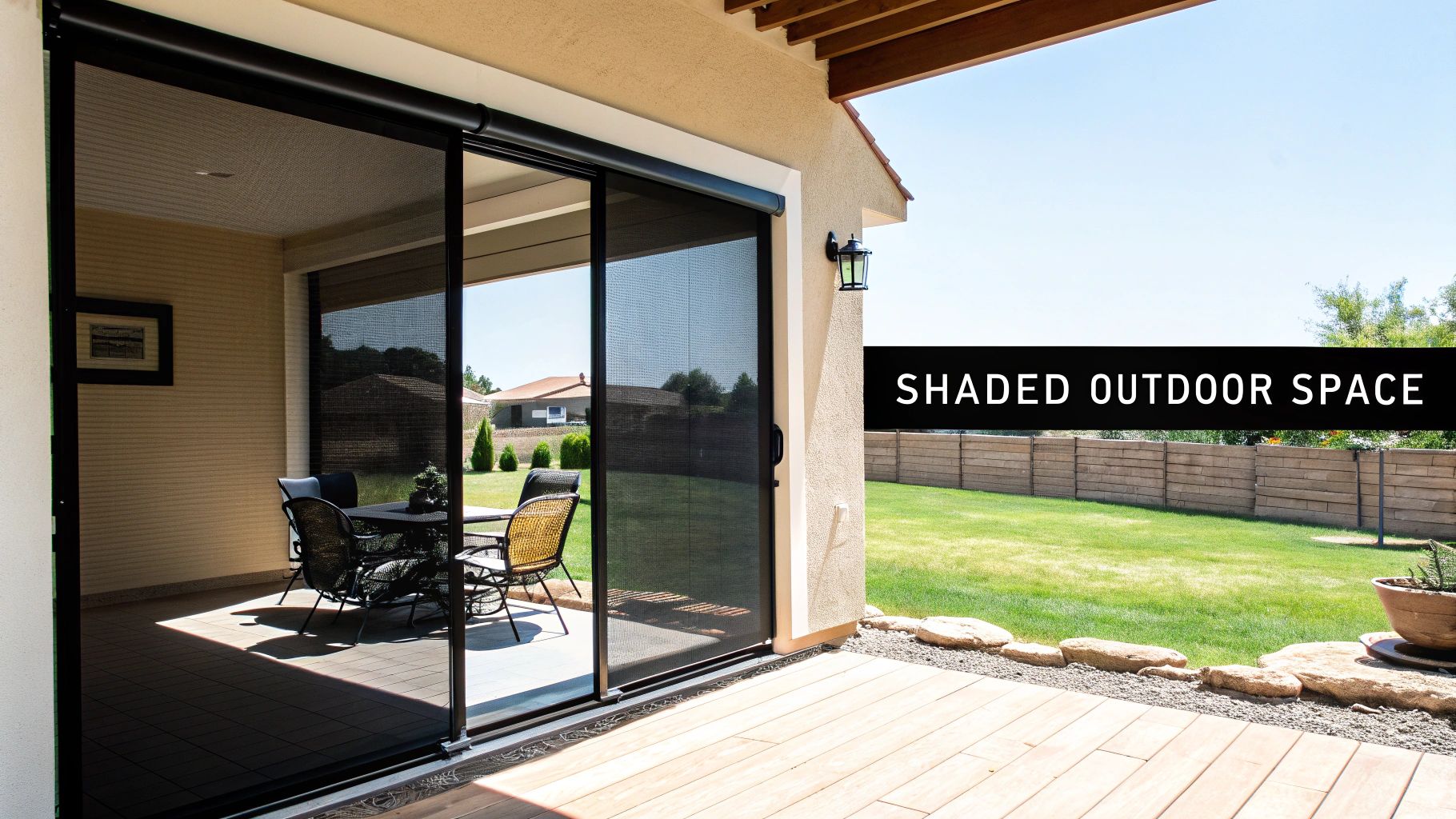
Think about those big, beautiful sliding glass doors. They let in tons of light, but they're also massive heat magnets, basically giant windows that can bake the whole room. A custom-fit solar screen on a slider is a total game-changer.
Not only does it stop the heat from pouring in, but it cuts that blinding glare you get in the afternoon. You still get to enjoy the view of your backyard, but the room itself becomes so much more comfortable and easier to keep cool.
Upgrade Your Outdoor Living Spaces
How often does your patio or porch become a no-go zone during the hottest part of the day? Instead of hiding inside, you can reclaim that space. Enclosing a patio with durable solar screen panels creates a cool, private outdoor retreat you can actually use.
It’s an upgrade with a few huge perks:
- Feel the Difference: These screens can drop the temperature in the space by up to 15 degrees. Suddenly, your patio is the perfect spot for afternoon hangouts.
- Bug-Free Zone: The mesh is a fantastic barrier against mosquitoes, flies, and other pests, which is a major win for comfort.
- A Little More Privacy: You get a nice sense of seclusion without feeling totally boxed in.
Wrapping a porch in solar screens is like adding a brand-new room to your home—one that perfectly blends the comfort of the indoors with the fresh air of the outdoors.
Enclosing a patio isn’t just about shade; it’s about creating a whole new functional living area. It's easily one of the most popular and impactful ways we see people use solar screen material.
A Smart Solution for Barns and Stalls
Solar screens aren't just for the house. If you've got a rural property with animals, you know how critical it is to manage heat, especially in barns or horse stalls. Those structures can get dangerously hot in the sun.
Stretching heavy-duty solar screens over stall openings or large barn doors is a fantastic solution. It provides much-needed shade but still allows for that all-important airflow, helping to prevent heat stress in your animals. It’s a practical use that really shows how tough and versatile this material is—proving it can protect a whole lot more than just your floors and furniture.
Getting Your Solar Screens Installed
So, you’ve picked out the perfect solar screen material for your home. Now what? The next step is getting it installed, and you’ve got a few different ways to go about it. The right choice really comes down to the state of your current window screens and your budget.
You're basically looking at three main options: a full replacement, a simple rescreen, or a minor repair. Each one solves a different kind of problem. A full replacement is for when the frames are shot, rescreening is for upgrading good frames, and a repair tackles small, accidental damage. Let's break down when to choose each one.
Full Replacement: When the Frames Are Worn Out
A full replacement means we build a brand-new custom frame to fit your window perfectly and then install your chosen solar screen mesh into it. This is your go-to option when your existing screen frames have seen better days.
It’s probably time for a full replacement if your current frames are:
- Bent or Warped: If a frame doesn't sit flat and tight against your window, it's not doing its job.
- Faded and Brittle: Decades of sun can turn old aluminum frames chalky and make any plastic parts super fragile.
- Missing or Damaged Hardware: Broken pull tabs, weak springs, or busted corner pieces mean the screen just won't work right.
Going with a full replacement guarantees a perfect seal and a completely fresh start. It’s the best all-in-one solution for windows that need more than just new mesh.
Rescreening: A Smart Upgrade for Healthy Frames
What if your frames are still solid, but the mesh is just that cheap, standard big-box store stuff? This is the ideal situation for rescreening. It’s a really popular and cost-effective way to get the job done. We just take out the old, flimsy mesh and professionally install the new, high-performance solar screen fabric right into your existing frames.
Rescreening is the way to go when your frames are still straight, sturdy, and all the little hardware pieces are intact. You get all the amazing benefits of solar protection without having to pay for brand-new frames you don't actually need.
Think of it like this: your wheel rims are in great shape, but the tires are worn out. You don't buy new wheels—you just put a fresh set of high-performance tires on them. That's exactly what rescreening is for your window screens.
This approach gives you the full heat-blocking and UV-protection power of a solar screen while reusing your perfectly good frames. To see how our team handles this, check out our professional screen installation services for a closer look at our process.
Simple Repairs: The Quick Fix for Minor Damage
Sometimes, a big project isn't necessary. If your otherwise great solar screen gets a small hole or tear—maybe from a pet's claw or a stray pebble from the lawnmower—a simple repair is often all you need. This usually just means patching the small spot.
A repair makes the most sense for isolated damage when the rest of the screen mesh and the frame are still in top-notch condition. It’s a targeted, fast fix to get your screen looking good again without the expense of a full rescreen. That said, if the screen is already old and becoming brittle, putting new mesh in the whole frame is a much better investment for the long run.
Finding a Professional Solar Screen Installer
Picking out the perfect solar screen is only half the job. The other, equally crucial half is finding a skilled professional to install it. After all, a flawless installation is what ensures your new solar screen window performs as it should and stands the test of time.
Think of it like hiring for any important role—you're bringing someone in to work on your biggest investment, your home. A little due diligence upfront goes a long way.
Vetting Potential Installers
When you start reaching out to local companies, have a quick checklist in mind. Asking a few key questions can help you separate the seasoned pros from the rest of the pack. To get a feel for what to expect, it helps to understand the standards within the home services industry.
Here’s what you should zero in on:
- License and Insurance: This is non-negotiable. Always ask for proof of current licensing and liability insurance. It’s your safety net against any unexpected mishaps or damage during the job.
- Customer Reviews: Don't just stick to the glowing testimonials on their company website. Dig into recent reviews on independent sites like Google or Yelp to get the real story from other homeowners.
- Material Samples: Any installer worth their salt will happily provide physical samples of the screen materials. This is your chance to actually see and feel the difference between an 80% and 90% screen and judge the fabric quality for yourself.
Always insist on a detailed, itemized quote in writing. A vague, back-of-the-napkin estimate is a red flag for hidden fees. A proper quote breaks down all the costs—materials, labor, and any other charges—so there are no surprises.
Understanding Market and Regional Factors
While your search for an installer is local, it's interesting to know that solar screens are part of a much bigger global push for energy efficiency. The Asia Pacific region currently leads the pack, but North America is seeing steady growth, largely driven by new energy regulations.
In fact, the U.S. solar control films market, which solar screens are a part of, is expected to hit around USD 243.19 million by 2032. This boom is fueled by both new construction and homeowners retrofitting their existing windows. You can dive deeper into the global trends in the solar control films market if you're curious.
What does this mean for you? More experienced pros are out there, but it also makes it even more important to choose a company with a solid, proven track record. By taking the time to find the right installer, you’re making sure your investment is a smart one. Here at Sparkle Tech Screen Service, we stake our reputation on transparency and quality, delivering clear quotes and using top-tier materials to protect your home.
Common Questions About Solar Screens
Thinking about upgrading your windows is a big decision, so it's only natural to have a few questions. Let's walk through some of the most common things homeowners ask us, so you can feel confident you're making the right choice.
How Much Do Solar Screens Cost?
This is usually the first thing on everyone's mind, and the honest answer is: it depends. The final price for your solar screens is shaped by a few things—the size of your windows, the specific material you pick (like a super-durable polyester solar mesh), and the mesh density you need (like an 80% vs. 90% screen).
Because every home's windows are different, the only way to get a solid number is with a custom quote. That way, you know the price is tailored exactly to your home's needs, with no surprises.
Will Solar Screens Make My Home Too Dark?
That's a fair question—nobody wants their home to feel like a dungeon. The good news is that modern solar screens are designed to be smart about light. They excel at cutting down on that harsh, blinding glare while still letting in the soft, ambient natural light that makes a room feel bright and inviting.
How much light comes through really comes down to the openness factor you choose. An 80% screen will give you a brighter room and a clearer view outside, while a 90% screen offers the most heat-blocking power but with a cozier, more shaded feel. You're in control of the final balance.
The goal of a solar screen isn't to block light, but to manage it. Think of it as turning down the sun's intensity from a harsh spotlight into soft, comfortable room lighting, all while maintaining your view.
Can I Still Open My Windows With Solar Screens?
Absolutely. We hear this one a lot, and it's a crucial point. A professionally installed solar screen works just like the insect screen you already have. It fits neatly into the window frame and won't get in the way of you opening or closing your single-hung, double-hung, or sliding windows.
You can let in a fresh breeze anytime you want. The screen just stays put, quietly doing its job of blocking heat, UV rays, and bugs. When you hire a professional, you're also benefiting from their expertise in things like the importance of efficient scheduling for service businesses, which ensures the whole installation process is seamless and doesn't disrupt your day.
How Do I Clean and Maintain My Solar Screens?
One of the best things about high-quality solar screens is how low-maintenance they are. These screens are built tough to handle sun, wind, and rain for more than a decade.
Keeping them looking great is simple. Here’s all you need to do:
- Gentle Cleaning: Once or twice a year, just wipe them down with a soft brush and some mild soap and water.
- Rinse Thoroughly: Use a garden hose to rinse away any soap residue.
- Avoid Harsh Chemicals: Steer clear of pressure washers and abrasive cleaners, as they can damage the screen's protective coating.
With just a little bit of care, your solar screens will keep protecting your home and saving you money on energy bills for years.
Ready to enjoy a cooler home and lower energy bills? The team at Sparkle Tech Screen Service specializes in expert installation of high-performance solar screens designed for your home. Contact us today for a fast, free quote by visiting https://sparkletechscreenservice.com or calling 800-370-3998.


