


Choosing the right screens for patios isn't a one-size-fits-all decision. It's really a balancing act between what you need most—whether that’s bug control, shade, or privacy—what your local climate throws at you, and of course, your budget.
For example, a home in the humid Florida Keys is going to need a top-notch bug screen to keep the no-see-ums out. But if you’re in sun-scorched Arizona, a solar screen that knocks down the heat is going to be your best friend.
Picking the Perfect Screen for Your Patio
Before you can kick back and enjoy a bug-free evening or a cooler afternoon, you've got to land on the right screen material. This choice is about so much more than just looks; it directly affects how comfortable and usable your patio will be for years to come. The best screen for a lakeside cabin swarming with mosquitoes is worlds away from what you'd need for a city patio that gets hammered by the afternoon sun.
Thinking through your specific situation is the most important part of the process. If you have kids and a big, energetic dog, durability should be at the top of your list. A tear-resistant polyester screen would be a much smarter investment than standard fiberglass in that case. Or, if your patio offers a direct view into your neighbor’s kitchen, a privacy screen can instantly create that secluded retreat you’re looking for.
Bug Screens vs. Solar Screens vs. Privacy Screens
Your lifestyle and where you live will naturally guide you toward one of three main types of patio screens. Each one does a very different job, so knowing the a-ha difference is key.
-
Standard Bug Screens: These are the old faithfuls, usually made from fiberglass or aluminum. Their mission is simple: keep pests out while letting the breeze and the view in. They’re a fantastic choice for areas with moderate weather and your average, everyday insect population.
-
Solar Screens: An absolute game-changer in hot, sunny climates. These screens have a much tighter weave and can block 70-90% of the sun's intense heat and damaging UV rays. This keeps your patio noticeably cooler and also saves your outdoor furniture from fading.
-
Privacy Screens: Feeling a little too exposed? A privacy screen is your answer. These are usually darker and more opaque from the outside, making it tough for people to see in during the day. You get that wonderful sense of seclusion without feeling like you're in a cave.
The desire for comfortable, functional outdoor spaces is exploding. The global market for outdoor privacy screens hit nearly USD 2.98 billion and is expected to climb to USD 5.16 billion by 2033. This isn't just a fad; it's a real shift toward people investing in their backyard oases, a trend you can read more about at Business Research Insights.
To make things even clearer, here’s a quick rundown of your options.
Comparing Patio Screen Types at a Glance
This table breaks down the most common screen types to help you quickly match a material to your main priority, whether that's keeping bugs out, blocking the sun, or getting a little more privacy.
| Screen Type | Primary Benefit | Best For | Average Cost (per sq. ft.) |
|---|---|---|---|
| Fiberglass | Affordability & Clarity | General bug protection in low-traffic areas | $0.40 – $0.60 |
| Aluminum | Durability & Strength | Homes in sunny climates where screen won't rust or sag | $0.60 – $0.80 |
| Solar Screen | Heat & UV Reduction | Patios with direct sun exposure, especially in hot regions | $1.00 – $1.75 |
| Pet-Resistant | Tear & Puncture Proof | Households with active pets (dogs, cats) or small children | $0.90 – $1.50 |
| Privacy Screen | Daytime Seclusion | Patios that are close to neighbors or public view | $1.25 – $2.00 |
Ultimately, the best choice depends on what problem you're trying to solve. For most people, a good quality fiberglass or aluminum screen does the job, but for specific challenges like intense sun or a destructive pet, a specialty screen is well worth the investment.
A Look at Screen Materials
Beyond the functional type, the actual material plays a huge part in how long your screen will last and how it looks. Fiberglass and aluminum are the traditional go-tos, but some newer materials offer some seriously impressive performance upgrades.
For a much deeper dive, check out our guide on the https://sparkletechscreenservice.com/best-window-screen-material/—a lot of the same logic applies directly to patio screens.
And if you're planning a full patio enclosure, you'll want to choose screens that work well with any existing glass doors and walls. Thinking about the whole picture from the start is the secret to creating a cohesive and truly functional outdoor living space.
How to Measure Your Patio for a Perfect Fit
Let's be honest, nothing screams "bad DIY job" like a saggy, ill-fitting patio screen. The secret to a tight, professional-looking installation isn't some fancy tool—it's getting your measurements right from the very beginning. An error of just a quarter-inch can be the difference between a perfect fit and a frustrating mess.
Taking the time to measure properly is about more than just getting a basic height and width. It's about accounting for the small imperfections every patio frame has, ensuring the final screen is taut and seamless.
The Right Way to Measure Each Opening
Here's something most people don't realize: your patio openings are almost certainly not perfectly square. Years of the house settling and weather exposure can cause tiny shifts you’d never notice with the naked eye. But trust me, your new screen will notice.
To get it right, you need to measure each panel opening in a few key spots.
- For the width, measure across the top, the middle, and the bottom of the frame.
- For the height, do the same thing: measure along the far left side, down the center, and along the far right.
- Always, and I mean always, use the smallest of the three measurements for both your final width and height. This little trick ensures your screen frame will fit, even in the tightest part of the opening.
Following this method guarantees a snug fit, eliminating those annoying gaps that let bugs in or wrinkles that come from having too much material.
Don't Forget to Account for Spline Channels
If your patio uses a spline system (that little rubber cord tucked into a groove), you have one more crucial step. A classic rookie mistake is cutting the screen mesh to the exact dimensions of the opening. If you do that, you'll have zero extra material to push into the channel with the spline.
Pro Tip: As a rule of thumb, add at least two inches to your final height and width measurements. This gives you a one-inch overlap on all four sides, which is plenty of mesh to work with when you're pressing the spline into its channel. It's far easier to trim off a little excess than it is to realize you've cut the whole piece too short.
Making the right choice really boils down to a few key decisions. This simple flowchart breaks down the process of picking the perfect screens for patios based on what matters most to you.
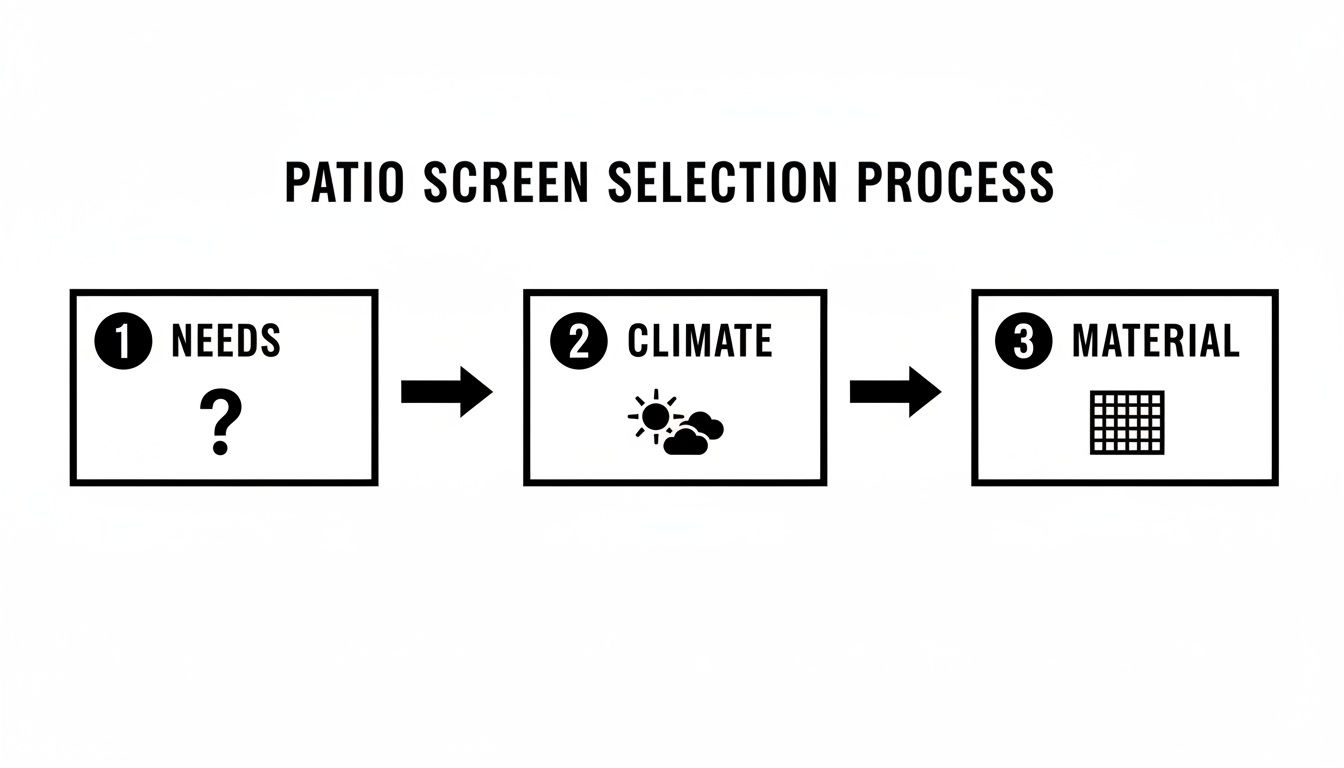
As you can see, your personal goals, the local climate, and the material itself all play a role in finding the ideal screen. Think through these points before you start measuring, and you’ll end up with a solution that adds real comfort and value to your home. When you combine smart selection with precise measurements, you're setting yourself up for a successful project.
So You're Ready to Install Your Own Screens?
Rolling up your sleeves for a DIY screen replacement is one of those home projects that's genuinely satisfying. With a bit of patience and the right technique, you can get a tight, professional-looking finish that makes your whole patio feel new again. Let’s walk through the essential tools and tips from the field to make sure you get it right the first time.
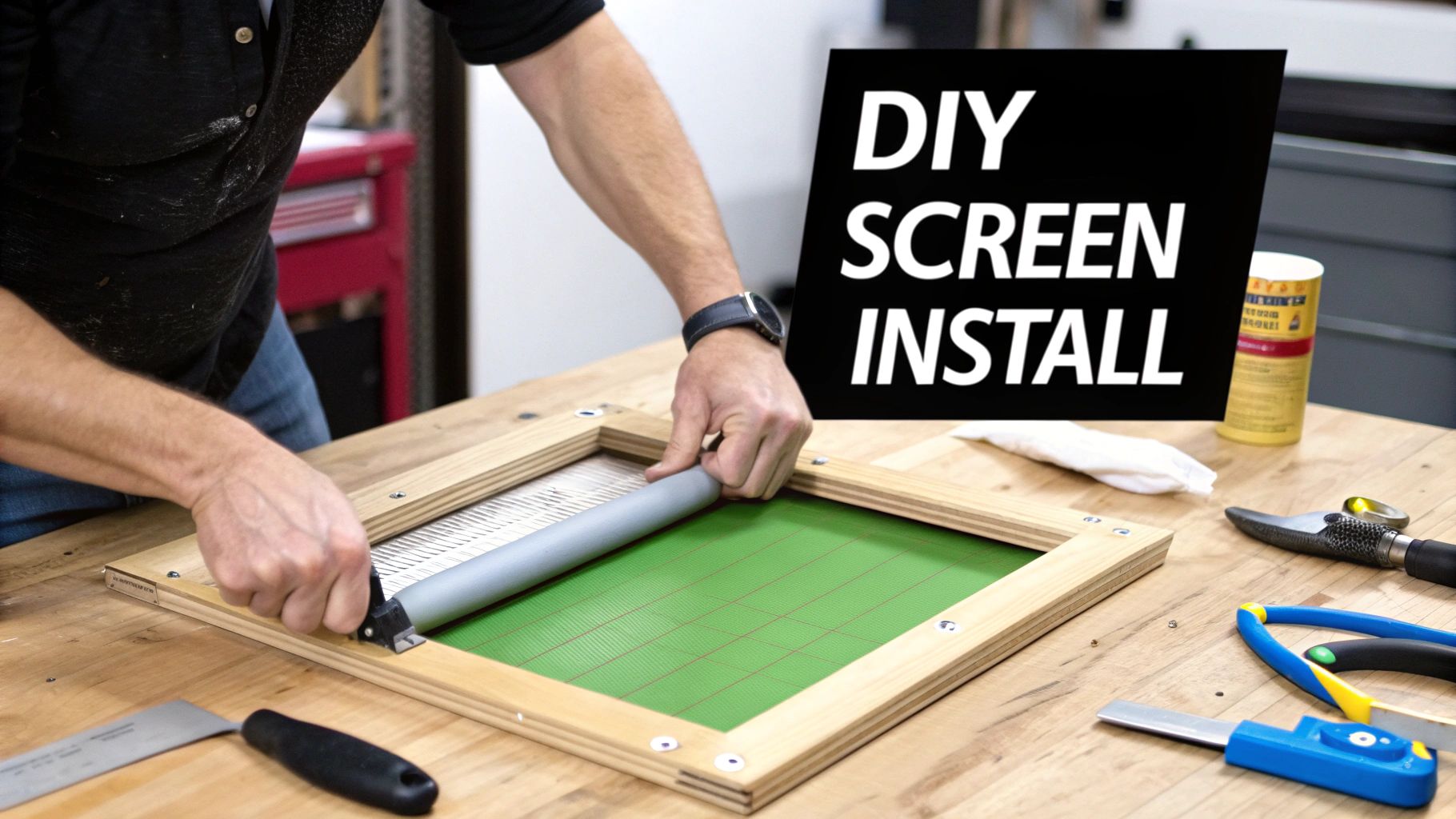
It's no surprise that homeowners are investing more in their outdoor spaces. Screened-in patios are a huge part of that trend, and the numbers back it up. The market for privacy screens is expected to hit USD 443.5 million by 2035, and homeowners account for a massive 60% of that. It just goes to show how many people are realizing this is a valuable and totally doable upgrade.
Get Your Toolkit Ready
You don't need a garage full of professional gear, but a few specific tools are absolutely essential. Trust me, having these ready before you start will save you a world of headache.
- Spline Roller: This is your MVP. Get a good one with two wheels: a rounded (convex) one to press the screen into the channel and a grooved (concave) one to push the spline in after it.
- Utility Knife: Don’t skimp here. A fresh, sharp blade is the only way to get a clean cut on the excess screen. A dull blade will just snag and ruin your new mesh.
- Clamps: A few small spring clamps are like having a second pair of hands. They're my secret weapon for holding the screen tight while I work the spline in.
- Flat-Head Screwdriver: Perfect for digging out the old, stubborn spline and for tucking the new spline neatly into the corners where the roller can't quite reach.
How to Handle Metal vs. Wood Frames
Your installation technique will change slightly depending on whether you're working with metal or wood frames. The core idea is the same, but the feel is different.
Aluminum frames are pretty straightforward. They have a nice, clean channel for the spline to sit in. Just lay your screen over the frame, clamp it so it’s snug (not stretched like a drum), and use your spline roller to push everything into place. The rigid metal channel gives you a firm guide.
Wood frames can be a little trickier. The groove might not be as perfectly uniform. A great trick I've learned is to pre-roll the spline by itself first. Just run the roller over the spline before you install it. This softens it up and makes it way easier to press into the channel without it wanting to pop back out.
Insider Tip: The key to a wrinkle-free screen is all in the tension. After you spline the first side, pull the screen taut on the opposite side before you spline that one. Then do the remaining two sides, always pulling away from the side you just finished. This method balances the tension perfectly across the whole panel.
For a more in-depth look at the entire process, our guide on how to install screens is a fantastic resource. It breaks everything down with visuals and clear steps, showing you that a great installation is more about proper technique than brute strength.
Keeping Your Screens Clean and Making Quick Repairs
A little bit of upkeep goes a long way in keeping your patio screens looking and working their best. Knowing how to handle the small stuff—a little cleaning here, a quick fix there—can save you from bigger headaches and costly replacements down the road. It's really about protecting the investment you've made in your outdoor space.
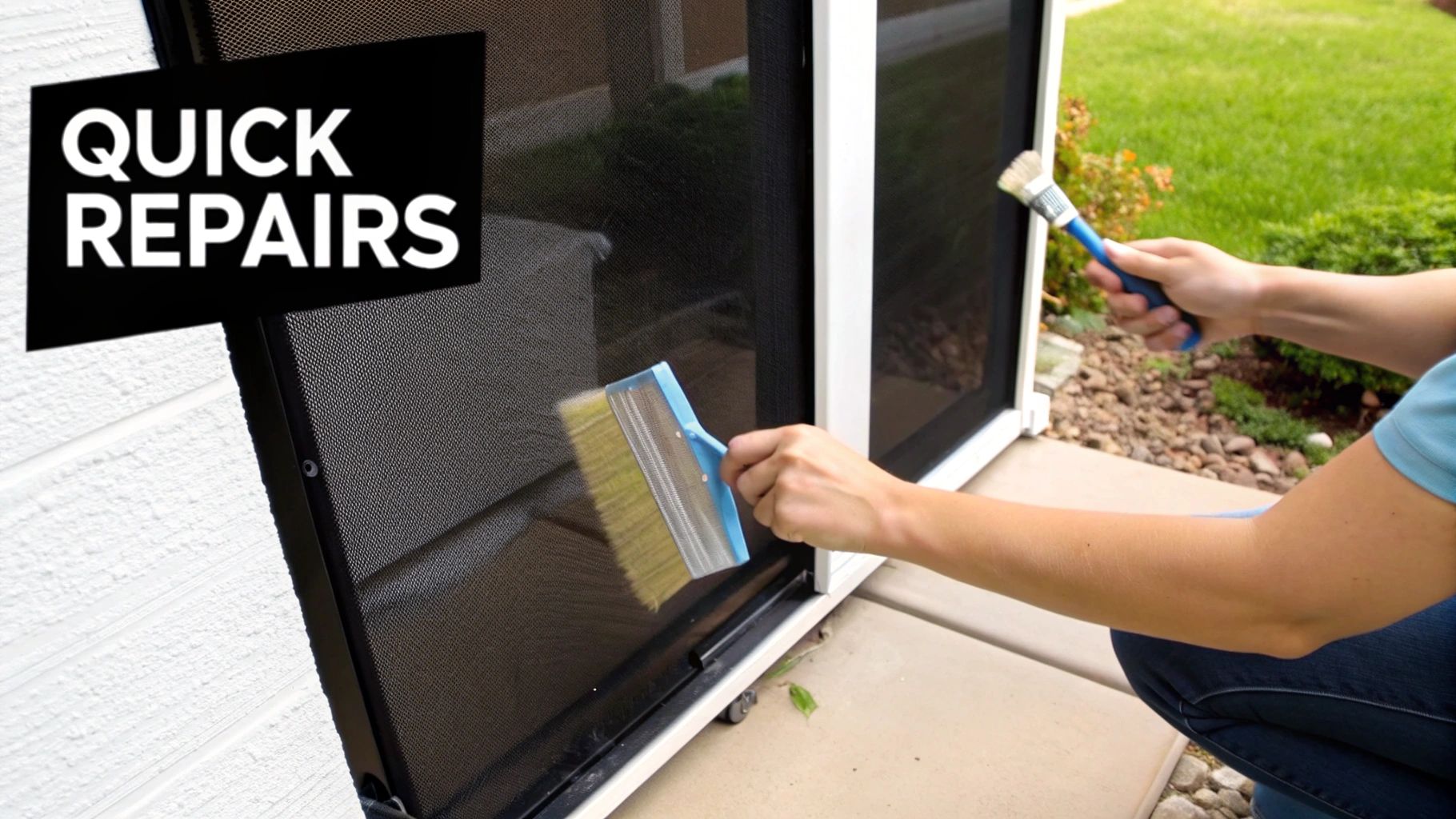
And it's a skill worth having. The market for outdoor privacy screens, once valued at USD 1.5 billion, is on track to hit USD 3.2 billion by 2033. With homes accounting for 65-70% of that market and a majority of new North American homes coming with pre-installed screens, basic care has become a fundamental part of homeownership. You can dig into the numbers yourself by checking out the latest market research.
Gentle Cleaning for a Clear View
Regular cleaning does more than just give you a better view. It washes away things like pollen, dust, and bird droppings, which can actually break down the screen mesh over time if left to sit. The good news? Cleaning is a breeze and doesn't require any harsh chemicals.
All you really need is a bucket of warm water with a squirt of mild dish soap and a soft-bristled brush. Just gently scrub the screen to loosen any grime, then give it a good rinse with your garden hose. Stick to a gentle "shower" setting, though—a high-pressure jet can easily stretch or even tear the mesh.
A Quick Tip: Try to wash your screens on an overcast day. If you do it in direct, hot sun, the soapy water can dry before you rinse it off, leaving a sticky, spotty film behind. Working in the shade makes for a much cleaner finish.
Tackling Common DIY Repairs
Even the most durable screens for patios can run into trouble now and then. Before you pick up the phone to call for help, here’s a look at some simple fixes you can probably handle yourself.
A lot of common screen issues are surprisingly easy to fix if you know what you're looking for. From tiny holes to a screen that's starting to sag, a few simple tools can often get the job done in minutes.
Quick Guide to Common Patio Screen Repairs
| Problem | Cause | DIY Solution | Tools Needed |
|---|---|---|---|
| Tiny Pinholes | Sharp object puncture, insect damage | Dab a small amount of clear nail polish or super glue on both sides of the hole to seal it. | Clear nail polish or super glue |
| Small Tears (<1") | Snags, pet claws, weather damage | Apply a self-adhesive screen repair patch over the tear. | Screen repair patch kit, scissors |
| Loose Spline | Age, sun exposure, improper installation | Use the concave wheel on a spline roller to press the spline firmly back into the frame's channel. | Spline roller tool |
| Minor Sagging | Uneven tension, frame settling | Carefully remove the spline on one side, pull the screen mesh taut, and re-insert the spline. | Spline roller tool, utility knife |
As you can see, you don't need a massive workshop to handle the basics. Most of these repairs just require a steady hand and the right, inexpensive tool for the job.
Budgeting Your Project: DIY vs. Professional Help
Let's talk money. Figuring out the budget is often where homeowners hit a wall, and the biggest factor is deciding whether to tackle the project yourself or call in a pro. There’s no universal right answer here—it really boils down to the size of your project, your own handiness, and what your time is worth.
A simple screen replacement on a single, easy-to-reach panel can be a great weekend project. In this case, your main expense is materials. You can find basic fiberglass mesh for as little as $0.40 per square foot, while premium options like solar or pet-resistant screens can climb to over $1.50 per square foot. Toss in a couple of essential tools like a spline roller and a utility knife, and you could easily get a small panel done for under $50.
Calculating DIY Material Costs
To give you a real-world idea of what you'd spend, let's walk through a common scenario: rescreening a standard 36" x 84" patio door panel.
- Screen Mesh: You're looking at about 21 square feet. If you opt for a tough pet screen, plan on spending around $25-$30.
- Spline: You'll need a 25-foot roll of the right size, which usually costs about $5-$8.
- Tools: If you're starting from scratch, a spline roller and utility knife will set you back another $10-$15.
All in, your total DIY cost for one panel should land somewhere in the $40-$55 ballpark. It’s an incredibly affordable and satisfying project if you have a little patience.
When to Call a Professional
The financial picture starts to look very different as the job gets bigger and more complicated. If you're screening an entire patio enclosure—especially one with second-story panels or funky, custom-sized openings—hiring a professional is almost always the smarter, and frankly, safer move.
A pro brings speed, the right tools for the job, and the know-how to get that perfect, drum-tight finish that can be so elusive for a first-timer. Labor rates can run from $50 to $100 per hour, though many companies charge by the panel—often $30 to $75 for a standard size, depending on your area and the complexity. Yes, it costs more, but you're paying for peace of mind and a quality result without the headache.
For a complete, multi-panel patio re-screening, a professional job might cost anywhere from $400 to over $1,200, factoring in both labor and higher-quality materials. It's an investment in getting the job done right, the first time.
If you're on the fence, the best thing you can do is get a detailed quote. It brings a lot of clarity to the decision. For a deeper dive into professional pricing, our guide on window screen installation cost has numbers that are also quite relevant for patio projects. And while you’re upgrading your outdoor space, remember that some jobs are best left to the experts; for instance, many people planning a full backyard makeover look into expert patio paver installation services to ensure a solid foundation.
Common Questions We Hear About Patio Screens
It's totally normal to have a few last-minute questions before you pull the trigger on a new patio screen. In fact, we talk to homeowners every day who are weighing the same things you are. Getting these details ironed out is the final step to feeling confident you’re making the right call for your home.
Most of the time, the questions boil down to real-life concerns. Will it survive my dog’s zoomies? Will I still be able to see the kids playing in the yard through a solar screen? Let's dive into the answers.
What Is the Most Durable Patio Screen?
If you’re looking for the toughest screen out there, you can’t beat polyester-based mesh. You'll often see it sold under brand names like Super Screen, and it's in a different league than standard fiberglass. This stuff is built to take a beating from pets, stray soccer balls, and whatever else life throws at it.
But the mesh is only half the battle. For the frame, extruded aluminum is the gold standard, blowing the more common roll-formed aluminum out of the water. Yes, it costs more upfront, but its ability to resist bending and denting makes it a no-brainer for long-term value, especially here in Florida. A pet-resistant screen paired with an extruded frame is the toughest combination you can get.
Think of it this way: choosing the right materials from the start is an investment. You're not just buying a screen; you're buying years of hassle-free enjoyment of your patio.
Can I Add a Pet Door to My Screen?
Absolutely! We install pet doors in screen enclosures all the time. It’s a fantastic upgrade. The pet doors made for screens are designed with a two-piece frame that sandwiches the mesh, clamping down securely to create a sturdy little entryway for your pet.
Here’s a pro tip, though: if you're adding a pet door, you really need to use a pet-resistant screen. Standard mesh just can't handle the constant pushing and scratching around the door's frame. It will tear, and you'll be calling for a repair sooner than you'd like. The stronger mesh is essential for making the installation last.
How Do Solar Screens Affect My View?
This is probably the number one question we get, and it’s all about a trade-off. Solar screens work by having a much tighter weave to block the sun's heat and UV rays. Because of that, they're naturally a bit darker and less transparent than a standard bug screen.
During the day, they provide excellent privacy—it's tough for anyone to see in. Looking out, your view will be clear but slightly tinted, almost like you're wearing a good pair of sunglasses. The big trade-off comes at night. When your lights are on inside, the effect reverses, and it becomes easier for people to see in. You give up a little bit of brightness, but you gain a dramatically cooler patio with way less glare.
When a small tear becomes a big problem, or you're ready for a brand-new professional installation, the team at Sparkle Tech Screen Service has you covered. We're all about fast, reliable work that lets you get back to enjoying your patio. Get your quick quote today.


