


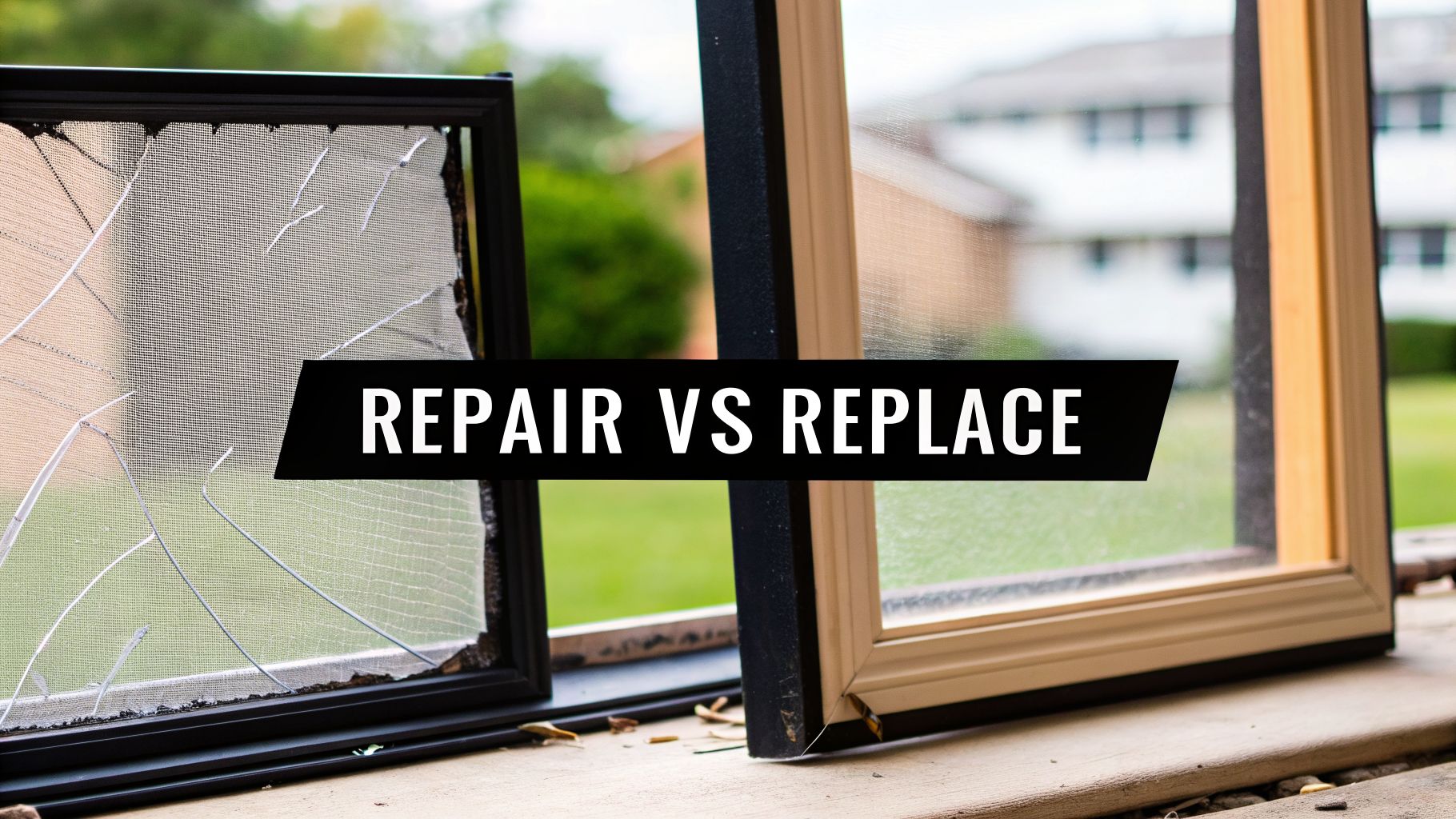

When you spot a tear in your window screen or damage to your patio enclosure, you're immediately faced with a choice: repair it or replace it? The best path forward really boils down to the type of damage you're looking at, the screen's condition, and your budget. After all, a small puncture is a clear case for repair, but a huge tear in an old, brittle screen means full replacement is the only practical choice.

Deciding Between Screen Repair and Replacement
Making the call between repairing and replacing a screen doesn't have to be complicated. The first thing to assess is just how bad the damage is. A tiny puncture, a spline that’s popped out of its channel, or a small tear from a pet's claw are all perfect candidates for a quick, inexpensive repair. This approach saves you money and keeps your original frame and mesh in service longer.
On the other hand, replacement becomes the much smarter long-term move when the damage is more serious. We're talking about large holes that compromise the screen's integrity, mesh that's become discolored and fragile from years in the sun, or a frame that's noticeably bent or warped.
While replacing the screen has a higher upfront cost, it’s also an opportunity to upgrade. You can improve your home's look and function with newer, more durable materials. For example, modern solutions like Fenetex Screens offer significant advances in both durability and style.
Interestingly, this "repair vs. replace" logic shows up everywhere. Take the smartphone market, for instance, where screen replacements make up a staggering 42% of all repair jobs. It just goes to show that when a key component fails, fixing it is often more economical than buying a whole new device.
Quick Decision Matrix Repair or Replace
To help you make a fast decision, here’s a straightforward table that breaks down common screen problems and the most logical solution for each.
| Screen Issue | Best Option | Key Consideration |
|---|---|---|
| Single, small puncture (<1") | Repair | A patch kit offers an inexpensive and fast fix. |
| Multiple small holes | Replace | Repairing many small holes is tedious and unsightly. |
| Large rip or tear (>6") | Replace | A patch is not strong enough; the entire mesh is compromised. |
| Brittle or faded mesh | Replace | The screen material has reached the end of its life. |
| Bent or damaged frame | Replace | The frame is crucial for proper tension and function. |
| Loose or pulled spline | Repair | A simple re-splining can easily fix this issue. |
Ultimately, this matrix helps you see that while a quick patch is great for minor issues, replacing the screen is often the right call for widespread damage or aging materials.
When Screen Repair Is the Smartest Choice
Sometimes, a full screen replacement is simply overkill. Choosing a screen repair is a savvy move when the damage is small and the rest of your screen—the frame and the mesh—is still in great shape. It's about making a practical, targeted fix instead of paying for a whole new screen you don't really need.
Knowing when a repair is the right call can save you a surprising amount of time and money while squeezing a few more years out of your existing screens.
Perfect Scenarios for Screen Repair
Think of screen repair like fixing a chip in your car's windshield instead of replacing the entire pane of glass. If the damage is localized and hasn't compromised the whole screen, a direct repair is almost always the better choice.
Here are a few classic situations where a targeted repair is the way to go:
- Small Rips or Punctures: A single hole smaller than a quarter is the ideal candidate for a patch. Whether it’s from a flying pebble from the lawnmower or an accidental poke, a pro can apply a nearly invisible patch that restores the screen's integrity.
- Loose or Pulled Spline: That rubber cord holding the mesh in the frame is called a spline. If it pops out in one section, it creates a saggy, loose spot. This is an easy fix; a technician uses a simple tool to roll the spline back into its channel, making the screen taut again in minutes.
- Pet Damage in One Corner: Has your cat used the corner of your patio screen door as a scratching post? If the rest of the mesh is perfectly fine, repairing just that one section is far more cost-effective than replacing the whole door screen.
A professional repair isn't just a quick fix; it's about restoring full function and a clean look without the unnecessary expense. The goal is to make the damaged area strong and blend it seamlessly, so you can forget it was ever there.
Why Repair Works for These Issues
In the cases above, the screen's core components are still doing their job. The frame is solid, and most of the mesh is perfectly intact. Tossing out a good frame and perfectly usable mesh is wasteful and costs you more.
A repair zeros in on the actual problem. A technician can re-spline a loose screen on the spot, making it as tight as it was on day one. For tiny tears, a durable, matching patch brings back full protection from insects without getting in the way of your view.
This approach is not only cheaper but also incredibly fast. Many professional window screen repair and replacement services can handle these kinds of jobs the same day you call. Ultimately, repairing minor damage is a smart investment that resolves the problem and keeps your costs down.
To see what's possible for your windows, you can learn more about how professional window screen repair can preserve the life and look of your screens.
Knowing When to Opt for a Full Replacement
While a quick patch is great for minor issues, there comes a time when it’s just not a practical or smart use of your money. At a certain point, a full screen repair and replacement isn't just necessary—it's a much better long-term investment. Knowing the signs that your screens are past the point of a simple fix helps you avoid throwing good money after bad and lets you make a real upgrade to your home.

Sometimes, the decision is pretty clear-cut. A big hole from a stray baseball or a determined pet instantly ruins your home’s defense against bugs. As a rule of thumb, any tear larger than a few inches is too big to patch reliably, which makes a full replacement the only truly secure choice.
Beyond Obvious Holes and Tears
But the damage isn't always as dramatic as a gaping hole. After years of baking in the sun and getting blasted by the elements, screen mesh can degrade to the point where it's not really doing its job anymore. This is where you have to look a little closer for the tell-tale signs that a replacement is needed.
Here are some of the less obvious but critical signs that it's time for new screens:
- Brittle and Faded Mesh: Go ahead and gently press on the screen. If the material feels dry, stiff, or even cracks a little under light pressure, it has lost all its flexibility. This kind of sun-rot means the mesh offers almost no protection and will just keep falling apart.
- Severely Bent Frames: A warped or bent aluminum frame is a dealbreaker. It keeps the screen from sitting flush in the window, creating gaps that let insects wander right in. A damaged frame also can’t hold the mesh taut, which leads to sagging and even more problems down the line.
- Outdated Materials: Maybe your old screens are technically still in one piece, but that doesn't mean they're the best option. For instance, a standard fiberglass screen does nothing for UV protection. Swapping it out for a modern solar screen can make a huge difference in cutting down heat and glare inside your home.
Opting for a full replacement is more than just a fix; it's an opportunity to significantly upgrade your home's performance and protection. It allows you to choose materials that are stronger, more energy-efficient, and better suited to your lifestyle.
An Opportunity for an Upgrade
Deciding to replace a screen is the perfect excuse to explore better materials. Instead of just getting a new version of the same old thing, you can invest in a real solution. This forward-thinking approach is becoming more common, with the market for specialized repair and restoration services projected to grow at a compound annual rate of 11.2% through 2033 as people seek out better, more durable products.
Thinking about a replacement as an upgrade opens up a world of possibilities. Our guide to custom screen installation can walk you through how to choose new screens that are perfectly tailored to your home’s needs and style.
Comparing the Cost, Time, and Effort

Ultimately, every home project comes down to a trade-off between money, time, and your own effort. Deciding whether to repair or replace a screen is a classic example of this balancing act. The right answer really depends on which of those resources you value most right now. A quick repair might save you some cash upfront, but a full replacement could spare you from future headaches and weekend projects.
Thinking about these trade-offs is crucial. We see this same logic play out in other industries, too. For instance, the global smartphone repair market was valued at an incredible USD 215.2 billion in 2023, a figure driven by millions of people weighing the cost of a new phone against a targeted fix. You can get a sense of these major consumer trends from the global repair market data—and the same thinking applies directly to your window screens.
The Cost Breakdown
When you look purely at the numbers, the choice seems pretty straightforward. A DIY repair is easily the cheapest option, with simple patch kits often costing less than $20. If you opt for a professional repair for a single window screen, you're typically looking at a bill between $40 and $80. This gets you a durable, professional-looking fix without the expense of all-new materials.
A full replacement, on the other hand, is a bigger investment. A brand-new screen for one window can run anywhere from $60 to $150 or even more. The final price tag depends heavily on the materials you choose—whether it's standard fiberglass, a tough pet screen, or a high-efficiency solar screen. While it costs more, you're paying for brand-new materials and a guaranteed, perfect fit.
Factoring in Time and Effort
This is where professional services really start to shine. Your time is valuable. A DIY re-meshing project can quickly swallow up an entire afternoon, especially if it’s your first time. You have to gather the right tools, wrestle the old screen out, carefully install the new mesh with just the right tension, and then get the frame back in place. It can be a genuinely frustrating process.
In contrast, a professional service is designed for efficiency. Many companies offer same-week service or even same-day pickup, which means the whole job is done in a fraction of the time it would take you. A small repair might be finished in under an hour. A full replacement is handled correctly and quickly, saving you all that labor.
Hiring a professional for screen repair and replacement transforms a potentially frustrating weekend project into a quick, hands-off task. You're not just paying for a new screen; you're buying back your time and guaranteeing a quality result.
To help you decide, let's break down how these factors stack up side-by-side.
Trade-Off Analysis: Cost vs. Time vs. Effort
This table gives you a clear snapshot of the investments required for screen repair and replacement, whether you tackle it yourself or bring in a pro.
| Factor | Screen Repair | Screen Replacement |
|---|---|---|
| Cost | Low: A DIY patch kit is very inexpensive. A professional repair is moderately priced and often the best value for small-to-medium damage. | High: This involves the cost of all-new mesh and spline, which drives up material expenses. Labor is also higher for a full replacement. |
| Time | Fast: A professional can often fix a small tear in minutes. DIY patching is also quick, though re-meshing a full screen takes time. | Moderate: A pro can replace a screen efficiently, but a DIY replacement can easily become a multi-hour project per screen. |
| Effort | Low to Moderate: Patching a small hole is easy. Re-splining an entire screen, however, requires some skill, patience, and the right tools. | High: A full DIY re-meshing demands precision and strength to get the tension right and avoid wrinkles or a loose, saggy finish. |
Looking at the comparison, the best path forward really hinges on the condition of your screen and what you're willing to invest—not just in money, but in your own time and energy.
Choosing Between a DIY Project and Professional Service
So, should you tackle that screen repair yourself or call in a pro? It’s the classic homeowner’s dilemma. Going the DIY route feels like an easy way to save a few bucks, but it can quickly turn into a frustrating weekend project with hidden costs for tools and wasted materials. Hiring an expert, on the other hand, gets you a perfect finish but costs more upfront.
Ultimately, the best path forward comes down to what you’re trying to fix, your own handyman skills, and how much a flawless, professional result matters to you. For a tiny tear you can cover with a patch kit, doing it yourself makes a lot of sense. But for anything bigger, it’s worth weighing the trade-offs.
The Reality of a DIY Screen Project
Taking on a full screen replacement, or what we call a "re-meshing," is a bigger job than most people expect. It requires a specific set of tools and a healthy dose of patience to avoid a sloppy outcome.
Essential Tools and Common Hurdles:
- Spline Roller: You absolutely need this little wheel-like tool to push the rubber spline into the frame’s channel. There’s no good substitute for it.
- Utility Knife: A sharp, fresh blade is crucial for getting a clean cut on the excess mesh.
- Flat Surface: You’ll need a large, clean workspace where the screen frame can lie completely flat without bending.
The single biggest challenge—and where most DIY jobs go wrong—is getting the screen tension just right. If it’s too loose, the screen will look saggy and ripple in the wind. But if you pull it too tight, you can easily bend the aluminum frame into a bowed, concave shape. That slight bend can turn a simple repair into a much bigger problem, often requiring a whole new frame.
We’ve seen it countless times. The real value a pro brings isn't just the finished screen—it's knowing exactly how to get perfect, even tension every single time. That experience eliminates the guesswork and prevents the kind of bowed frames that are the hallmark of a first-timer's attempt.
The Advantages of Professional Screen Service
When you hire a professional for your screen repair and replacement, you're paying for skill, speed, and the confidence that it’s done correctly from the start. A technician who has re-meshed hundreds, if not thousands, of screens knows all the little tricks to avoid problems before they even begin.
This kind of expertise is a lifesaver for more complicated jobs. Think about those huge sliding patio doors, oversized custom windows, or even entire porch enclosures. These require a level of precision that’s incredibly tough to achieve without specialized equipment and years of practice. The same goes for handling specialty materials, like tough pet-resistant screens or fine solar mesh, where one wrong move can ruin a costly roll of material. You can learn more in our guide to screen door repair and replacement.
Hiring a pro means the job is done right on the first try. You won’t have to worry about a bowed frame, a screen that’s too loose, or edges that start fraying a month later. You just get a durable, perfectly fitted screen that looks great and works perfectly, all without giving up your entire weekend.
Making the Right Choice for Your Arizona Home

So, what's the final call for your home's screens? After walking through the signs of damage, you should have a much clearer picture of whether you’re looking at a quick screen repair or a full replacement. The right move always comes down to the extent of the damage, what your long-term goals are, and how much time you realistically have to spend on it.
A small puncture might be a simple weekend patch job. But when a solar screen is brittle from the sun and has multiple tears, a repair is really just a temporary fix. It’s the same logic when weighing a DIY project against calling a pro—it’s about balancing your own skills and free time against the guaranteed quality and speed of an expert job.
Your Local Phoenix Screen Experts
For anyone living from Scottsdale to Peoria or anywhere else in the Valley, finding the right company is half the battle. A true local expert doesn't just show up with the right equipment; we understand exactly what the Arizona climate does to screens and recommend materials built to withstand years of intense sun.
Making the right call on your screens isn't just about fixing a hole. It's an investment that saves you money and headaches down the road while making your home more comfortable and secure.
Don't spend another weekend wrestling with frustrating projects or putting up with torn screens. We provide fast, straightforward service across the entire Phoenix metro area.
Whether you need a quick repair to get you by or are ready to upgrade to new, high-quality sun or bug screens, we've got you covered.
Call or text us at 623-233-0404 for a quick, no-hassle quote today!
Your Top Questions Answered
When it comes to screen repair, we get a lot of the same questions. Homeowners are usually trying to figure out the most practical and cost-effective solution, and we're here to give you the straight answers you need to make the right call.
What's the Real Cost Difference Between a Repair and a Full Replacement?
It really comes down to the scope of the job and whether you hire a professional. If you're tackling it yourself, a simple DIY screen repair kit will only set you back about $20.
For professional work, a single window screen repair usually runs between $40 and $80. If you opt for a full replacement on that same window, you’re looking at a range of $60 to $150. The final price tag depends heavily on the type of screen material you choose. Of course, costs will scale up for bigger jobs like patio doors or entire screen enclosures, so getting a quick quote is the best way to pin down the exact price.
Can I Switch to a Better Screen Material If I'm Replacing It?
Yes, and you absolutely should consider it! A replacement is the perfect time to upgrade. Many homeowners, especially in sunny areas, switch to solar screens to cut down on heat and UV rays, which can genuinely help with energy bills.
Other popular upgrades we see all the time are tough, pet-resistant screens for homes with furry friends, or high-visibility screens that offer a much clearer view. We can walk you through the options and help you decide what makes the most sense for your home and lifestyle.
For answers to common queries regarding glass repair, replacement, and maintenance, you might find valuable insights in a dedicated section on frequently asked questions about glass services.
How Long Will My New Screens Actually Last?
A screen's lifespan really depends on two things: the material it's made of and how much direct sun it gets. A standard fiberglass screen will typically give you 5-8 years of service.
On the other hand, high-quality solar screens are engineered for harsh climates and can easily last 10-15 years—sometimes even longer—as long as they’re installed correctly and looked after.
Ready to solve your screen problems without the hassle? The experts at Sparkle Tech Screen Service offer fast, reliable screen repair and replacement with same-week service.


